Trees Vulnerable to Wind Damage: 6 to Watch
Bradford pear, cherry, fir, poplar, silver maple, and scarlet oak are wind-prone. Spot failure signs, prune safely, and know when removal is smarter.
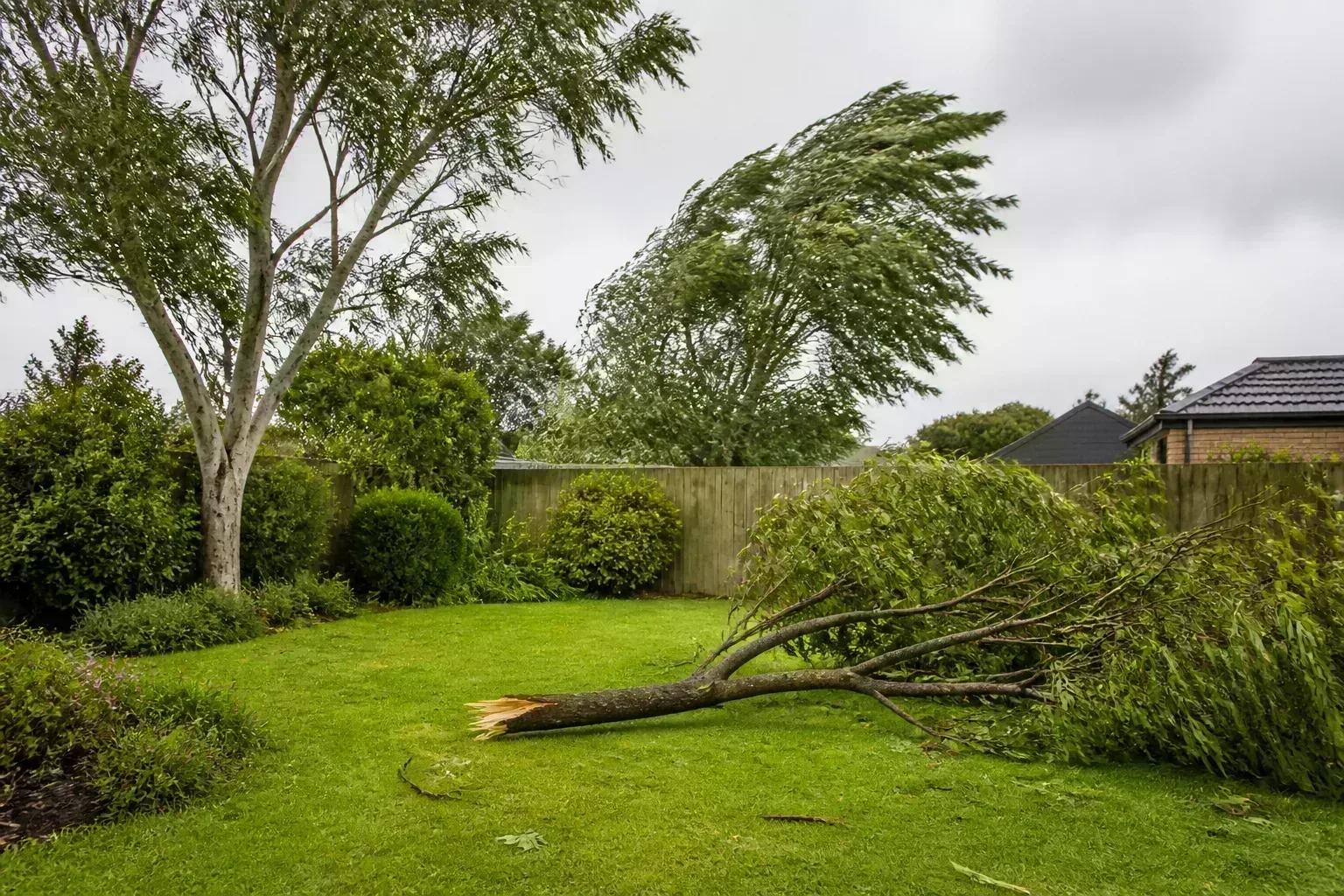
A mature tree can shade a patio, buffer traffic noise, and raise property value — until one windy night leaves half of it across your driveway. Not every species fails the same way. Bradford pear, cherry, fir, poplar, silver maple, and scarlet oak show up again and again on storm-damage lists because they combine fast growth, weak wood, shallow rooting, or awkward branch structure with the kind of open yard exposure that turns gusts into leverage.
That does not mean every tree on this list should be cut down tomorrow. It does mean these species deserve a closer look before storm season, especially when they are tall, close to the house, or showing early warning signs. The goal here is practical: understand why these six are vulnerable, inspect what you already have, and decide whether monitoring, selective pruning, or replacement is the smarter move.
Why Some Trees Fail in Wind While Neighbors Stay Standing
Wind damage is rarely random. Trees fail when wind force exceeds what the trunk, roots, and branch attachments can hold. Researchers who measured urban forests after multiple hurricanes found large differences in survival between species at the same wind speed — and even between individual trees of the same species depending on crown size, soil moisture, and prior injuries.
The Sail Effect and Crown Shape
The sail effect is what happens when a broad, dense crown catches wind like a ship’s sail. More leaf and branch area above the trunk means more force transferred to stems and roots. That is why selectively thinning small peripheral branches on a cherry tree can reduce leverage without hacking the canopy apart. It is also why fast-growing privacy trees with narrow upright crowns — Lombardy poplar is the classic example — look stable until they are 40 or 50 feet tall and suddenly act like levers.
Species with stiff, heavy crowns and leaves that stay attached in wind can face a different problem: the crown does not shed load quickly, so trunks and major limbs take the full hit. UF/IFAS hurricane research noted that some vulnerable species lose heavy branches while others survive partly by shedding leaves rapidly — but you cannot count on leaf drop to save a poorly structured tree.
Shallow Roots and Saturated Soil
Roots are the anchor. Trees with shallow, spreading root plates — silver maple is the textbook case — uproot more easily than tap-rooted species when soil is wet and wind is strong. Saturated ground reduces friction between roots and soil, which is why the same storm that topples a poplar in a lawn may barely lean a live oak on the same block.
NC State Extension’s silver maple profile notes that silver maple roots are shallow enough to heave sidewalks and invade drains, which is a useful clue above ground: if roots are already lifting pavement, the tree may be poorly anchored for high wind as well. Recent irrigation, heavy rain before a front, or poor drainage all raise uprooting risk even for species that might tolerate dry gusts.
Weak Wood, Fast Growth, and Included Bark
Fast growth often means weak wood. Poplars, silver maples, and many ornamental cherries put on height quickly but do not build the dense, flexible wood that helps a tree bend instead of snap. Branch attachments matter just as much. Included bark — bark pinched between two stems growing too close together — creates a weak V-shaped crotch that splits under load. Bradford pear is infamous for this: the cultivar was selected for a tight, symmetrical crown, not storm strength.
Large diameter makes things worse. After Hurricane Ivan, UF/IFAS researchers found that the largest trees lost the most branches on average, and many studies link stem size to direct wind damage. A small, young tree may flex; a mature specimen with decay, old topping cuts, or codominant trunks is a different calculation.
Bradford Pear (Pyrus calleryana)
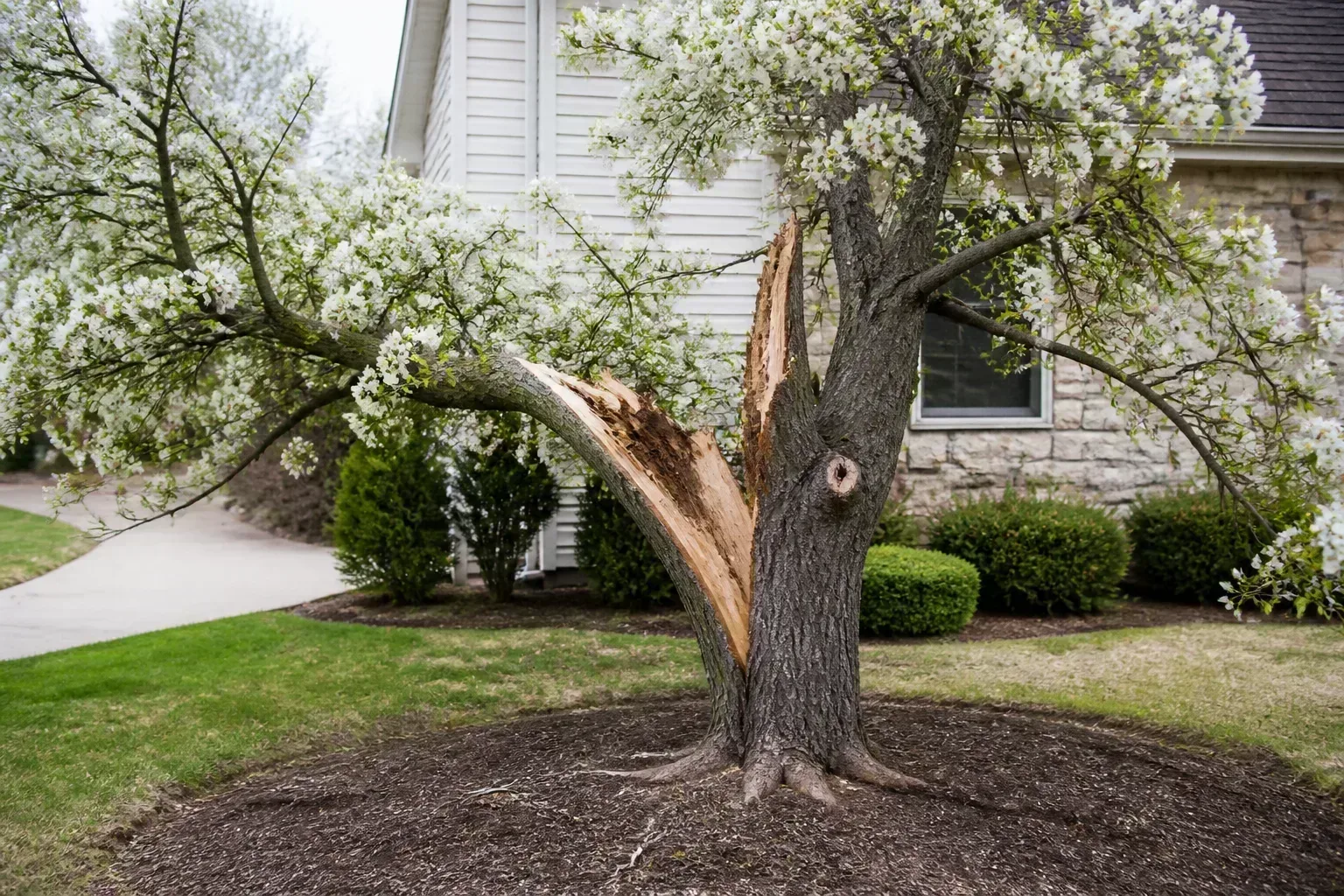
If you have seen a Bradford pear split cleanly through the trunk after a moderate storm, you have seen included bark in action. The species was planted heavily from the 1960s onward because it grew fast and held fall color, but the narrow branch angles that made it look tidy in nursery rows become structural faults in real yards.
UF/IFAS wind-resistance research lists Bradford pear among exotic urban trees with low wind-resistance ratings from Florida arborists, with 58% of surveyed experts ranking it low. Hurricane Ivan survival for the species was 68% in measured stands — meaning nearly one in three were down or leaning — and that is before counting trees that remained standing but were structurally finished. NC State Extension’s callery pear profile and many municipal forestry programs now treat callery pear as a problem species for invasiveness as well as breakage.
What to do: For a mature Bradford pear near structures, parking, or power lines, removal and replacement is often cheaper than repeated emergency cleanup. If the tree is young and small, corrective pruning of competing leaders may help briefly, but the species’ architecture rarely becomes truly storm-stable. Better replacements in the same size class include serviceberry, redbud, or a wind-rated oak where your climate allows.
Cherry Trees (Prunus spp.)
Ornamental cherries — Kwanzan, Yoshino, and other flowering Prunus — are prized for spring bloom, not hurricane engineering. As cherries gain height and crown mass, they become more likely to lose large limbs or snap at the trunk in strong wind, especially if the tree was never structurally pruned when young.
Cherries are not automatic removals. The more useful approach is ongoing crown management: remove dead, crossing, and tightly clustered small branches that add sail area without contributing much to structure. Watch for fungal cankers, boring insect damage, and dead tips that weaken attachments before wind arrives. UF/IFAS measured black cherry survival at 64% after Hurricane Ivan — better than tulip poplar, worse than dogwood — which is a reminder that even within wind-prone groups, species and condition differ.
What to do: Schedule inspection after bloom, when dead wood is easier to see. Thin the outer crown lightly to reduce sail effect, but avoid stripping the interior or topping the tree. If more than 25% of the crown is dead or the trunk shows cracks or fungal conks, get a certified arborist involved before the next front.
Fir Trees (Abies and Pseudotsuga)
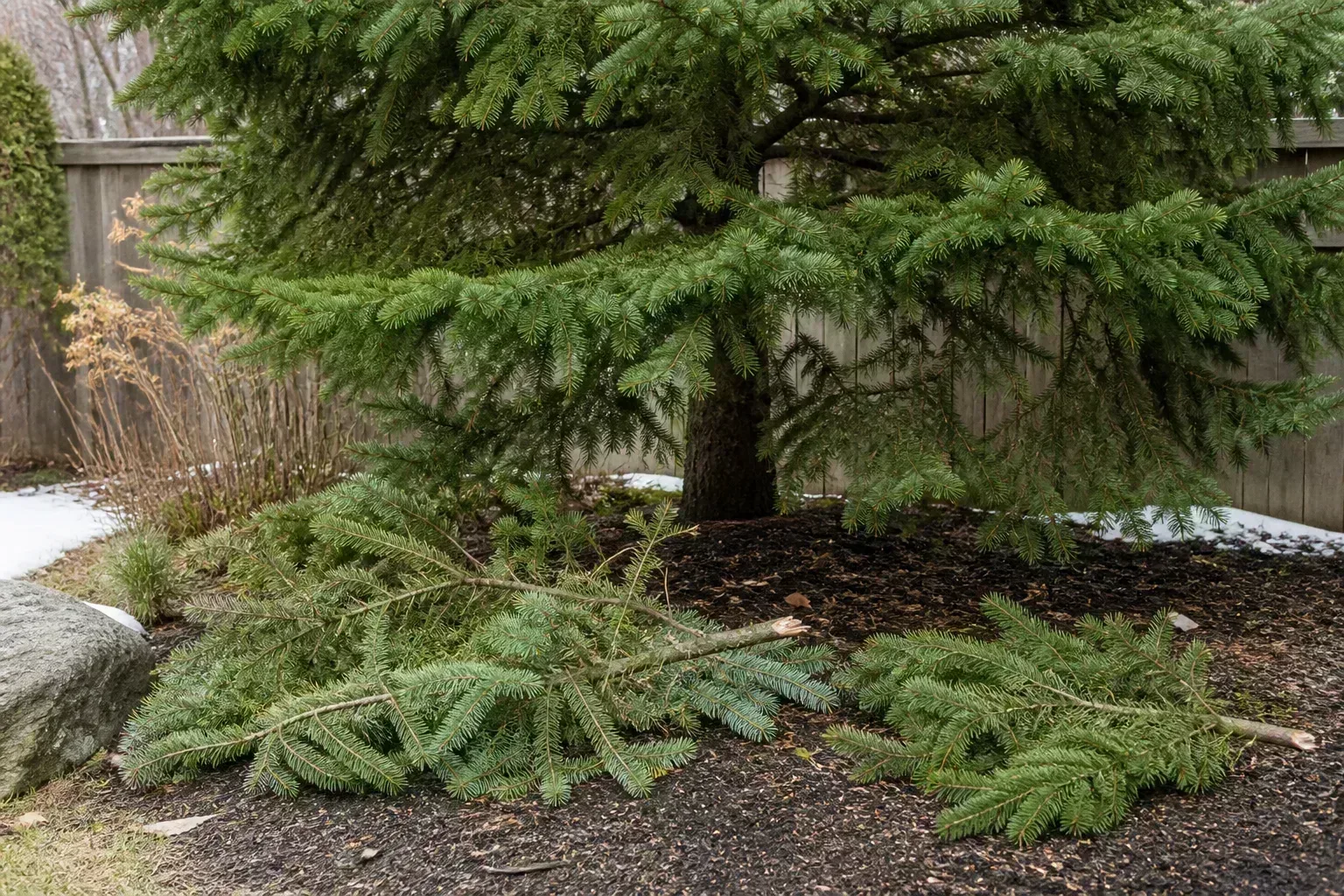
Homeowners often underestimate conifers. Firs and Douglas-fir used as yard specimens or windbreak rows can look solid year-round, yet tall evergreen crowns catch winter and spring storms with full foliage. Scott Arboretum staff noted after a windy winter that coniferous evergreens were among the most damaged trees on their grounds, including snapped white pines and hemlocks with double leaders that failed at narrow crotches.
In hurricane-prone regions, UF/IFAS data show mixed conifer performance: some pines survive at moderate rates but lose heavy branches, while species like sand pine perform poorly. For landscape firs outside the Gulf and Atlantic hurricane belts, the more common issue is dead branch accumulation and height that puts tops into turbulent wind above the roofline.
What to do: Have a professional remove deadwood in the crown before winter wind season. Never top a fir to shorten it — that triggers weak epicormic sprouts and makes future breakage more likely. If the tree is taller than your comfort zone with a ladder and near the house, hire a certified arborist rather than guessing from the ground.
Poplar Trees (Populus spp.)
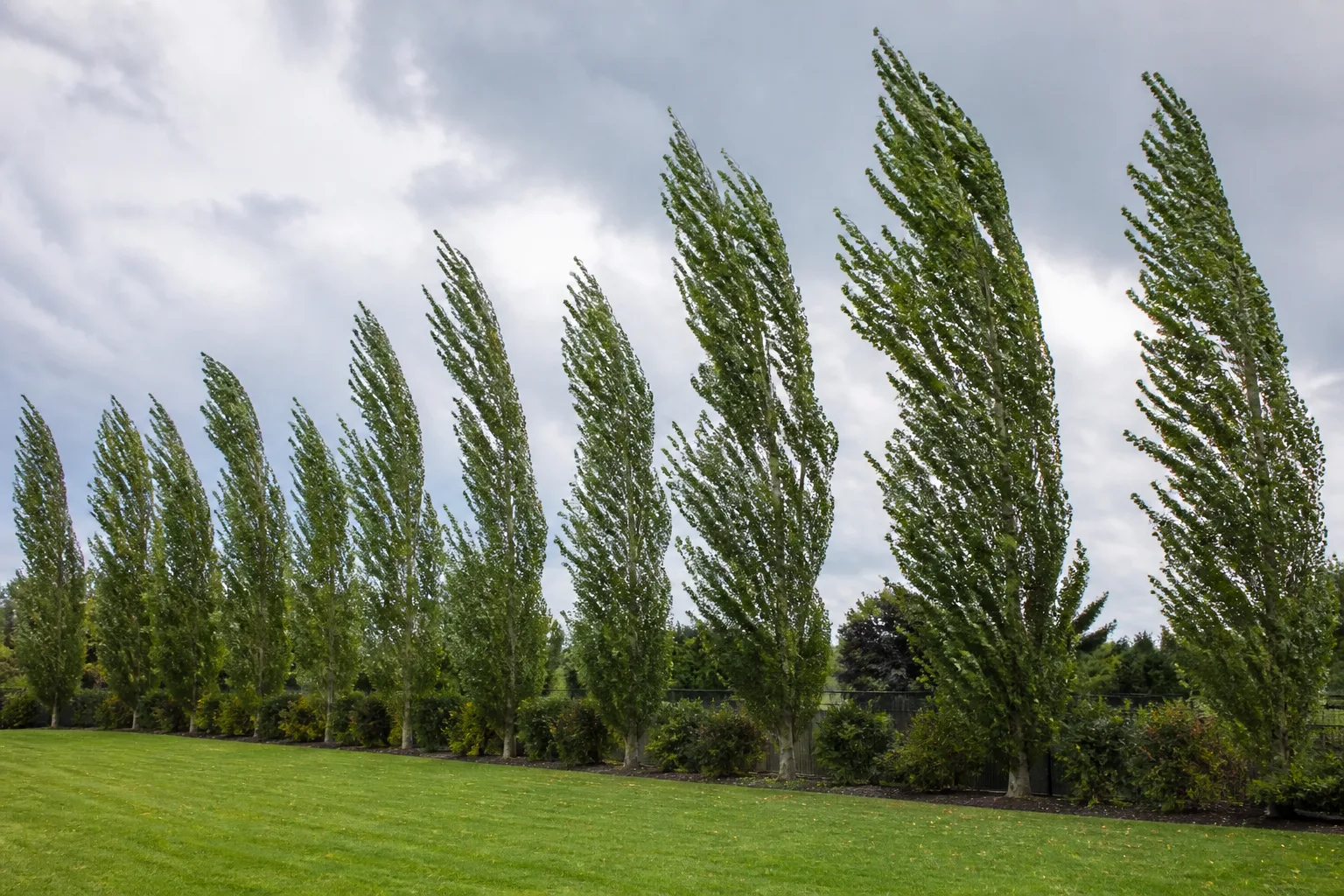
Poplars were planted for decades as quick privacy screens because they shoot upward fast. Lombardy poplar, with its columnar habit, can add 6 feet of height in a good year and reach 50 feet or more — often on a shallow, spreading root system and soft wood.
That combination is exactly what wind exploits. UF/IFAS measured tulip poplar survival at just 24% in Hurricane Ivan’s 130 mph winds at landfall — one of the poorest performances in the study — and arborist surveys consistently rate poplars and closely related fast growers toward the low end for wind resistance. Tulip poplar (Liriodendron tulipifera), often called tulip poplar rather than poplar in garden centers, belongs in the same caution group for exposed sites even though it is a different genus.
What to do: Treat tall poplars near homes, driveways, and play areas as temporary trees, not legacy plantings. If a poplar is already leaning, showing root plate lift on the windward side, or shedding large dead limbs, plan removal before the next storm does it unpredictably. For privacy, a staggered hedge of slower, sturdier species beats a single row of Lombardy poplars every time.
Silver Maple (Acer saccharinum)
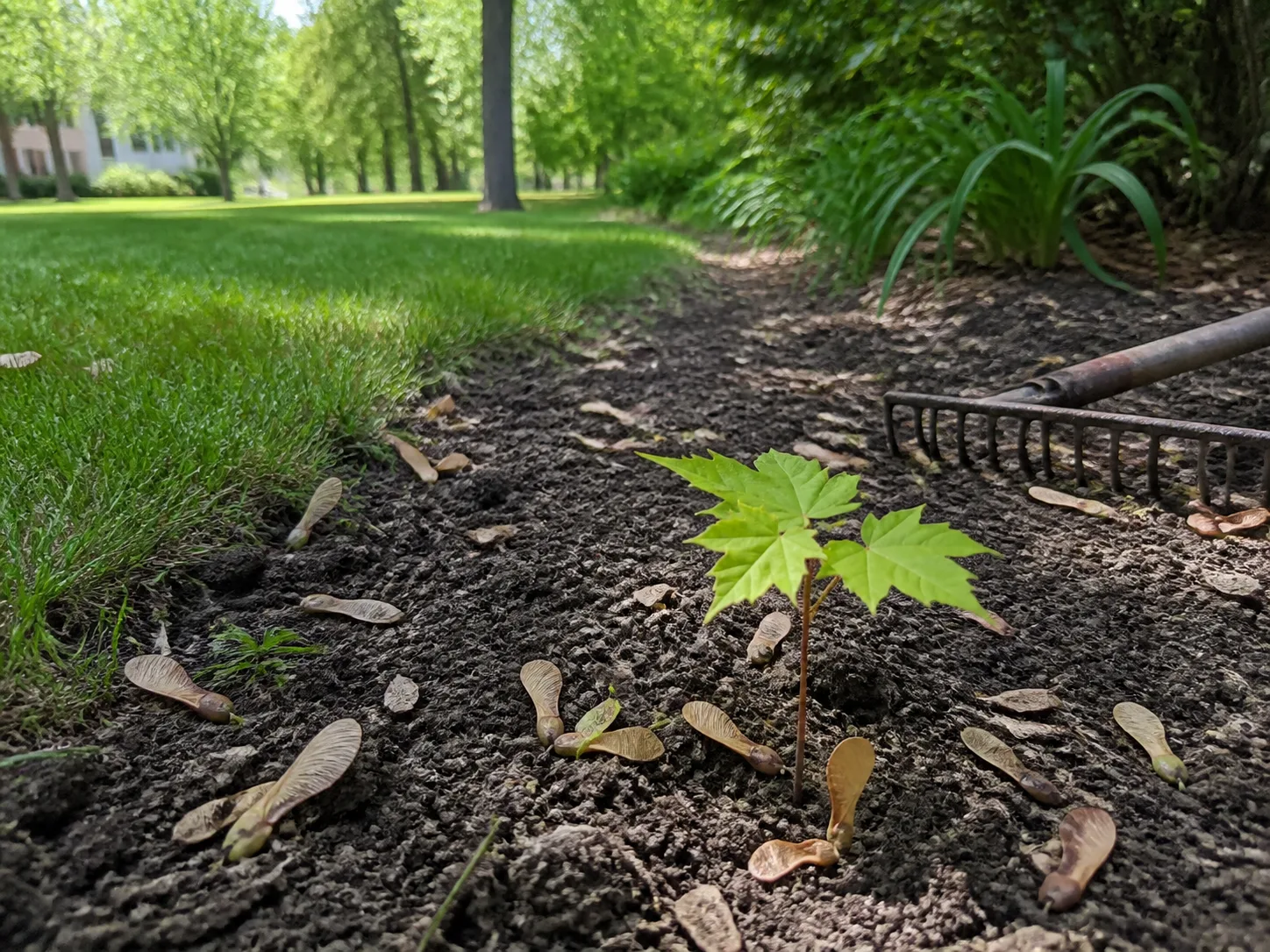
Silver maple is the fast shade tree that keeps on giving — until a gust meets its shallow roots, weak wood, and heavy crown. NC State Extension describes the species as highly adaptable and fast-growing, but explicitly notes weak wood that breaks in storms and snow loads, plus shallow roots that disturb pavement.
UF/IFAS research aligns with that field experience: silver maple was among species losing the most branches in early panhandle hurricanes, and Florida arborists rated it toward low wind resistance, with 55% of respondents placing it in the low category. Survival percentages can look deceptively okay in one storm and collapse in the next when soil is saturated.
You may know silver maple by its spinning samaras — the “helicopters” that clog gutters each spring. That prolific seeding is another sign of a tree optimized for speed, not longevity near structures.
What to do: Crown thinning to remove deadwood and reduce weight helps only on trees with sound trunks and no major root heaving. If sidewalks or driveways are lifting, or the tree sits inside the fall zone of your roof, replacement is usually wiser than repeated pruning. Freeman maple (Acer × freemanii) hybrids are commonly recommended as tougher, more garden-worthy shade trees where a maple look is still wanted.
Scarlet Oak (Quercus coccinea)
Oaks are generally considered sturdy, which makes scarlet oak’s storm record surprising until you look at how it is used. This large oak — up to 70 feet tall and 50 feet wide in ideal conditions — is often planted as a street or lawn tree for fall color. In open wind, a big, high crown on a relatively fast-growing oak can still fail, especially when combined with summer drought stress, construction injury, or old flush cuts.
UF/IFAS lists southern red oak among species with heavy branch loss in hurricanes; scarlet oak is frequently cited in arborist field guides as an oak that suffers more wind damage than live oak or white oak in exposed plantings. That does not make every scarlet oak hazardous. It does mean a mature scarlet oak close to the house deserves the same pre-storm inspection you would give a maple or poplar.
What to do: Focus on deadwood removal, clearance pruning away from roofs, and correcting past bad cuts if they created decay pockets. On dry, sandy sites where the species naturally thrives (USDA Zones 4–9), keep mulch off the trunk flare and avoid grade changes that bury roots. If the trunk shows a long vertical crack, a lightning scar, or a cavity you can fit your arm into, get professional assessment.
How to Inspect a Tree Before Storm Season
You do not need to climb to gather useful information. Walk the drip line and look up from several angles. RHS weather-damage guidance notes that wind damage often appears first on the windward side as leaning, torn bark, or dieback — but root failure can show up on the opposite side as a raised soil mound.
Warning Signs That Failure Is Likely
Call a certified arborist if you see multiple red flags:
- New lean after a storm, especially if the soil mound at the base moved
- Cracks or splits in the trunk or where major limbs meet the trunk
- Dead or hanging branches high in the crown (widow-makers)
- Fungal conks or cavities along the trunk
- Root plate lifting, exposed roots on one side, or soil cracking around the base
- Power line contact or limbs that sway into service drops
Gardening Know How emphasizes that many storm-damaged trees can recover with correct pruning after the event — but that advice applies to moderate limb loss on healthy structure, not to a tree that is now leaning 15 degrees toward the bedroom window.
Pruning and Crown Management That Actually Helps
Good pruning reduces sail area and removes weak attachments. Bad pruning makes the next storm worse. Scott Arboretum’s wind-damage guidance is still relevant: remove crossing and rubbing branches, narrow V-crotches, and competing leaders while the tree is young enough to respond.
Practices that help:
- Thin small outer branches selectively to let wind pass through
- Remove dead, broken, and diseased wood promptly
- Maintain one dominant leader on young trees when species allow it
- Cut back to the branch collar on large limbs — no stubs
Practices that hurt:
- Topping (heading large branches arbitrarily) produces weak regrowth and is explicitly discouraged by extension and RHS pruning guides
- Stripping the interior leaves while leaving a heavy outer shell — the “lion-tailing” look — can increase rather than decrease breakage risk
- Heavy pruning right before storm season on already stressed trees
If you are not comfortable identifying branch collars or working with a pole saw near utilities, hire an ISA-certified arborist for crown cleaning and structural pruning. The cost of a preventive visit is usually far less than emergency removal on a Saturday night.
When Removal Is the Safer Choice
Removal is the right call when structural defects cannot be pruned away, when the tree targets something valuable, or when the species itself is a repeat offender in your climate. Bradford pear near a driveway, a leaning poplar with lifted roots, and a silver maple undermining foundation plantings all fit that category more often than a healthy young cherry with one broken limb.
UF/IFAS is blunt in its broader message: no species is windproof. Removal decisions should also weigh tree health, soil, exposure, and what happens if the tree fails at 2 a.m. versus coming down on your schedule. Many municipalities require permits or arborist documentation for large trees — check local rules before you book a crew.
Wind-Resistant Replacements Worth Planting
If you are replanting after removal, match the species to your actual wind exposure, not just to the fastest catalog photo. UF/IFAS and decades of Gulf Coast experience consistently rank live oak, baldcypress, and sabal palm among the strongest performers in high-wind coastal plain conditions. In colder and inland yards, consider American holly, dogwood in the right site, musclewood, hornbeam, ginkgo, or white oak where space allows.
Scott Arboretum suggests beech, sour gum (Nyssa), hickory, and oak as wind-resistant choices, and notes that trees with strong taproot development often fare better — another reason to avoid replacing a failed poplar with another fast screen tree. RHS guidance on windbreaks and shelterbelts adds a design layer: semi-permeable barriers (hedges or grouped smaller trees) slow wind more effectively than a single brittle row.
Plant new trees at the correct depth with the root flare visible, break circling roots at planting, and keep mulch off the trunk. Those establishment steps matter as much as species choice for long-term anchorage.
Storm-Prep Checklist for Homeowners
Use this list a few weeks before your region’s windy season — not the hour the forecast turns red:
- Walk the property and photograph trees near the house, fence, and driveway.
- Clear dead branches you can safely reach from the ground; flag high hazards for an arborist.
- Check for new lean, cracks, conks, and root lift on the six vulnerable species above.
- Secure outdoor furniture, pots, and tools that can become projectiles into bark.
- Confirm insurance and contractor contacts before demand spikes after regional damage.
- Avoid parking under large limbs when a wind advisory is posted.
- After the storm, assess damage in daylight; do not climb or chainsaw near energized lines.
If soil is saturated and winds are forecast above 45 mph, treat large vulnerable trees as active hazards even if they looked fine last week. Wet ground is the quiet multiplier that turns a borderline maple into an uprooted one.
Conclusion
Wind does not pick on trees at random. Bradford pear, cherry, fir, poplar, silver maple, and scarlet oak earn their reputations through weak attachments, shallow roots, fast weak wood, or oversized crowns in exposed yards — and hurricane research backs up what arborists see after every major front. Your job is not to panic about every trunk on the block. It is to inspect honestly, prune correctly, plant smarter replacements when removal is due, and call a professional when failure would land on someone or something irreplaceable.
No tree is guaranteed safe in extreme weather. A well-chosen, well-maintained tree, though, is far less likely to turn the next gust into a insurance claim — and that is the difference between enjoying your shade and fearing it.