23 Types of Lavender Varieties for Any Garden
Compare 23 types of lavender by hardiness, size, flower color, fragrance, and garden use, then choose the right variety for your climate and space.
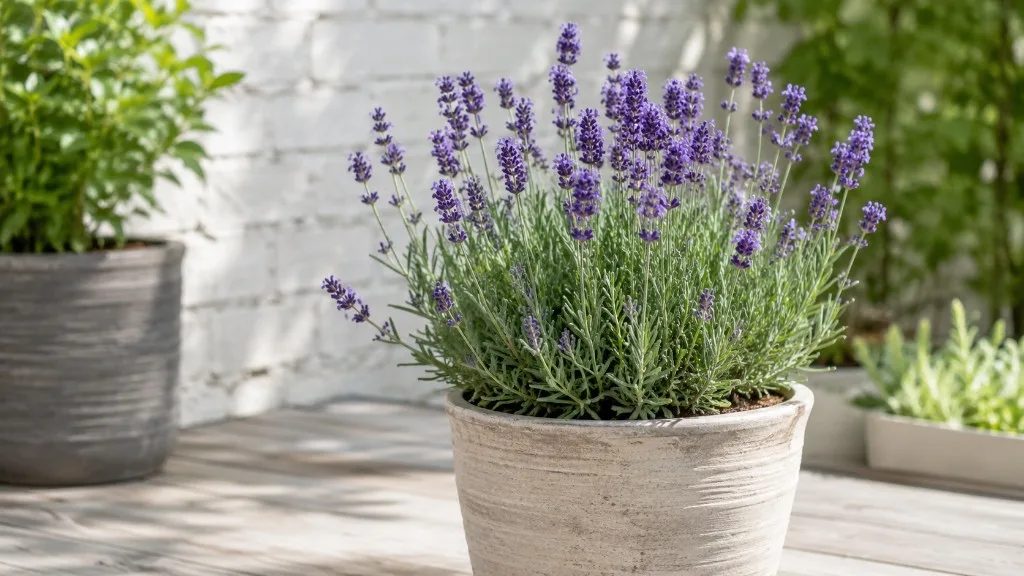
The best lavender variety is not the one with the darkest flower or the most romantic name. It is the one that matches your winter, summer humidity, drainage, available space, and intended use.
Most garden lavenders fall into a few recognizable groups. English lavender is the dependable choice for cold-winter borders and edible herb gardens. Lavandin is taller, later, and often more powerfully scented, making it excellent for long stems and dried bundles. Spanish and French lavenders bring unusual flower shapes and longer displays to warm gardens, while Portuguese and fernleaf types reward gardeners who want something less familiar.
The 23 selections below are a practical shortlist, not a claim that every lavender plant sold under a common name behaves identically. Hardiness and mature size vary by cultivar and supplier, so use the botanical name and plant label as the final check. The Royal Horticultural Society likewise separates the hardy English group from more tender French, Spanish, and specialist lavenders rather than treating “lavender” as one interchangeable plant. (RHS growing guide)
Start with the type, not the flower color
English lavender is the cold-climate baseline
English lavender, usually Lavandula angustifolia, is the classic narrow-leaved plant with compact flower spikes and a sweet, recognizable fragrance. Despite the common name, it is Mediterranean in origin; “English” refers to its long history of successful cultivation in England, not its native range. Missouri Botanical Garden describes it as a semi-woody plant for full sun and dry, well-drained, somewhat alkaline soil, with winter survival depending heavily on drainage. (Missouri Botanical Garden)
This is the group to start with if you want lavender to return in a cold climate, edge a path, or supply a kitchen herb garden. Cultivars such as ‘Munstead’ and ‘Hidcote’ are widely available, but a hardy name cannot rescue a plant sitting in heavy clay or a pot that stays wet through winter.
Lavandin is the larger, later, stronger-scented hybrid
Lavandin, Lavandula × intermedia, is a hybrid of English lavender and spike lavender, L. latifolia. It commonly forms a larger mound with longer stems and branched flower stalks, and it usually blooms later than English lavender. A peer-reviewed review found that lavandin produces more essential oil but also tends to have sharper camphor notes than L. angustifolia, which explains why it is prized for quantity, sachets, and many fragrance uses but is not always the first choice for fine perfumery. (peer-reviewed lavandin review)
Choose lavandin when you have room for a broad plant and want an abundant harvest of stems. Do not choose it solely because a tag says “French lavender”; French lavender and lavandin are not the same group. Lavandin is a hybrid with intermedia in its botanical name, while “French” is commonly used for L. dentata or, confusingly, for Spanish-looking L. stoechas.
Spanish, French, Portuguese, and fernleaf types are specialty choices
Spanish lavender, Lavandula stoechas, is easy to recognize by the tuft of larger bracts above each flower head. French or fringed lavender, L. dentata, has toothed leaves and a softer, more open flower display. Portuguese or spike lavender, L. latifolia, has longer, branched flower stems and a stronger, more pungent scent; it is also one of the parents of lavandin.
Fernleaf lavender, L. multifida, is the outlier in appearance, with deeply divided, silvery foliage and a more unusual fragrance. These types can be superb in hot, sunny containers or warm-climate borders, but they are less forgiving of cold, damp winters than English lavender. In a marginal climate, a container you can shelter is often a better plan than gambling on a borderline in-ground planting.
Quick comparison: 23 lavender varieties at a glance
The zone ranges below are typical retail or horticultural starting points, not guarantees. A wet Zone 7 bed can be harder on lavender than a dry, sheltered Zone 6 bed, and container roots experience colder temperature swings than in-ground roots. Confirm the exact cultivar’s current label before buying.
| Lavender | Botanical group | Typical zones* | Flower or foliage cue | Best garden use |
|---|---|---|---|---|
| English lavender | L. angustifolia | 5–9 | Purple-blue spikes | Hardy border or herb garden |
| ’Hidcote’ | English cultivar | 5–9 | Dark purple flowers | Formal edging and drying |
| ’Munstead’ | English cultivar | 5–8 | Blue-purple, compact mound | Cold-climate starter |
| ’Betty’s Blue’ | English cultivar | 5–9 | Deep blue flowers | Fresh or dried stems |
| ’Royal Purple’ | English cultivar | 5–8 | Long purple stems | Cutting and low hedge |
| ’Melissa’ | English cultivar | 5–8 | White flowers blush pink | Border contrast and pots |
| ’Jean Davis’ | English cultivar | 5–9 | Pale pink flowers | Culinary garden and containers |
| ’Thumbelina Leigh’ | English cultivar | 5–9 | Dwarf violet spikes | Small spaces and pots |
| Lavandin | L. × intermedia | 5–8 | Tall, branched spikes | Large mound or harvest row |
| ’Grosso’ | Lavandin cultivar | 5–8 | Long blue-purple spikes | Strong fragrance and drying |
| ’Provence’ | Lavandin cultivar | 5–9 | Long light-lavender spikes | Heat-tolerant hedge |
| ’Impress Purple’ | Lavandin cultivar | 6–8 | Dark flowers, long stems | Bouquets and mass planting |
| ’Edelweiss’ | Lavandin cultivar | 5–10 | White flowers | White dried arrangements |
| ’Hidcote Giant’ | Lavandin cultivar | 5–8 | Tall violet-blue spikes | Rows and cut flowers |
| ’Phenomenal’ | Lavandin cultivar | 5–9 | Purple-blue mound | Heat, humidity, and drought |
| Spanish lavender | L. stoechas | 8–10 | “Rabbit-ear” bracts | Early color in warm gardens |
| ’Anouk’ | Spanish cultivar | 7–10 | Dark flowers, violet bracts | Dry beds and containers |
| ’Ballerina’ | Spanish cultivar | 8–9 | White bracts blush pink | Bicolor borders and pots |
| ’Curly Top’ | Spanish cultivar | 8–10 | Ruffled bracts | Repeated ornamental bloom |
| ’Goodwin Creek Grey’ | French hybrid | 7–9 | Silvery foliage, dark spikes | Container specimen |
| French lavender | L. dentata | 8–11 | Toothed leaves, purple bracts | Long display in mild climates |
| Portuguese lavender | L. latifolia | 6–9 | Long, pungent flower spikes | Fragrant wildlife garden |
| Fernleaf lavender | L. multifida | 8–10 | Deeply divided leaves | Warm-climate accent |
English lavender varieties for borders, pots, and culinary gardens
These are the most useful English-lavender starting points when you need compact form, winter resilience, or a milder, sweeter fragrance. NC State Extension lists English lavender as a full-sun plant for perfectly drained soil, borders, low hedges, mass plantings, containers, herb gardens, cutting gardens, and pollinator gardens. (NC State Extension)
1. English lavender (Lavandula angustifolia). Choose the species when you want the classic plant and are happy to evaluate individual nursery stock rather than chase a named trait. It is usually the safest group for cold-winter gardens, and its flowers and foliage are more commonly selected for culinary use than those of the showier tender types. It typically grows as a compact, semi-woody mound rather than a giant field lavender.
2. ‘Hidcote’. This is the dark-flowered choice for a crisp edge or a strong purple-and-silver contrast. Its compact mound suits borders and containers, and the deep flower color remains attractive when dried. Give it room for airflow; a tightly clipped hedge in a humid bed can still hold too much moisture.
3. ‘Munstead’. A dependable, compact English lavender with blue-purple flowers, ‘Munstead’ is a smart first purchase for a colder garden. It is useful for edging, herb beds, pollinator planting, and small bouquets. If your site is borderline, prioritize a sunny raised bed and excellent drainage over a promise that the cultivar will survive any winter.
4. ‘Betty’s Blue’. The rich blue flowers and useful stems make this cultivar a good bridge between ornamental and cutting gardens. It is often recommended for fresh and dried arrangements, but its success still depends on a dry crown and enough space for air to move through the mound.
5. ‘Royal Purple’. Select this one when long, strongly colored stems matter more than a tiny footprint. It works as an informal low hedge and is especially appealing for cutting and drying because the flowers keep their color well. Allow for a larger plant than you would expect from a small nursery pot.
6. ‘Melissa’. This pale-flowered cultivar opens white and can take on a pink blush as the flowers age. It is a useful choice when purple-on-purple planting feels predictable, especially along a gravel path, in a rock garden, or in a container with dark foliage nearby.
7. ‘Jean Davis’. ‘Jean Davis’ brings soft pink flowers to the English-lavender palette and stays relatively compact. It is often chosen for culinary gardens, but “edible lavender” should mean a correctly identified plant grown without ornamental pesticides or unknown treatments—not a license to taste any florist bouquet.
8. ‘Thumbelina Leigh’. This dwarf cultivar is made for small gardens, path edges, and containers. Its compact, mounding habit solves the common problem of buying a full-size lavender for a narrow space, while repeat flowering can extend the display when spent spikes are removed. Protect a pot from winter rain even if the same cultivar is hardy in the ground.
Lavandin varieties for long stems and big fragrance
Lavandin earns its place when your priority is volume: tall flower stems, a larger mound, intense scent, or a row that looks more like a small lavender field. Penn State Extension notes that commercial lavender production depends on choosing cultivars for the intended climate and that raised beds and deep, infrequent irrigation help protect lavender from wet soil. (Penn State Extension)
9. Lavandin (Lavandula × intermedia). The hybrid category is the useful choice when you want long stems and a later summer display. It is vigorous, broad, and often more camphoraceous than English lavender. Because lavandin is a hybrid, it is normally reproduced by cuttings rather than reliable seed; buy a named plant if you want a predictable result.
10. ‘Grosso’. One of the best-known lavandins, ‘Grosso’ makes a large mound with long, abundant purple-blue spikes and a powerful fragrance. It is excellent for sachets, dried bunches, and a dramatic mass planting. Its size is the catch: a small border can disappear beneath it, and humid, wet regions still need exceptional spacing and drainage.
11. ‘Provence’. This tall lavandin has long, pale lavender-blue flower spikes and a reputation for performing in heat. Use it for a roomy hedge, a harvest row, or a warm, sunny border. “Heat tolerant” does not mean “wet-soil tolerant,” so do not place it where summer storms or irrigation keep the crown damp.
12. ‘Impress Purple’. Choose ‘Impress Purple’ for straight stems and dark flowers that read well in bouquets. It can become a substantial plant, so group it in a bed where its mound has space rather than squeezing it between small perennials. In humid climates, wider spacing and morning sun are more valuable than extra fertilizer.
13. ‘Edelweiss’. This white-flowered lavandin gives dried arrangements a clean, pale counterpoint to purple varieties. The flowers can emerge with a pinkish cast before opening white, adding interest without sacrificing the long-stemmed lavandin habit. Use it as a color choice, not as evidence that white cultivars need different basic care.
14. ‘Hidcote Giant’. Despite the name, this is best understood as a large, long-stemmed hybrid suited to rows, cutting gardens, and dried wands. Its height makes it visually impressive but less appropriate for a narrow walkway or a small pot. Prune to leafy growth after flowering; a hard cut into old bare wood can leave gaps that do not refill.
15. ‘Phenomenal’. ‘Phenomenal’ is a strong option for gardeners who want a large, fragrant lavender with better tolerance of heat and humidity than many traditional lavandins. It still needs sharp drainage and full sun, and its mature width deserves honest spacing. Use it where a broad mound is an asset, not where you need a tidy twelve-inch edge.
Spanish lavender varieties for early color and “rabbit ears”
Spanish lavender is the ornamental specialist of this list. The showy bracts are not the same thing as large petals; they sit above the small flowers and create the distinctive topped flower head. Spanish types can bring early and repeat color in warm climates, but they are less reliable than English types in cold, wet winters. The RHS recommends checking labels carefully because French and tender lavenders vary widely in hardiness and may need frost-free shelter. (RHS growing guide)
16. Spanish lavender (Lavandula stoechas). Grow the species for its unusual flower form, warm-climate performance, and early seasonal display. It suits sunny rock gardens, patio containers, and hot borders, but it is a poor choice for an exposed cold garden where winter soil stays wet. Lightly shape after flowering rather than cutting into the woody base.
17. ‘Anouk’. ‘Anouk’ combines dark flower heads with violet bracts and a compact habit. It is a good candidate for a sunny container or dry bed in a mild climate, especially if you want more ornamental drama than a standard purple spike. Check the local label rather than assuming every plant sold under the name has the same winter rating.
18. ‘Ballerina’. This bicolor Spanish lavender opens with white bracts that mature toward pink or lilac, giving it a more theatrical look than a single-color cultivar. It works well in a container, low border, or repeated clump where the bracts can be seen at eye level. Shelter it from hard freezes in climates outside its listed range.
19. ‘Curly Top’. The ruffled bracts make ‘Curly Top’ one of the clearest choices for flower form rather than fragrance. It can rebloom when spent flowers are removed and the plant is kept compact. Use it where the display is the point, and do not plant it in a wet corner just because the site gets plenty of sun.
French, Portuguese, and fernleaf lavenders for warm gardens
The remaining four choices are valuable because they widen the palette of leaf shapes, flower forms, and fragrance. They are also the group where common names become least reliable. Read the botanical name on the tag, especially when a retailer uses “French lavender” as a catch-all for any lavender with bracts.
20. ‘Goodwin Creek Grey’ (Lavandula × ginginsii). This French hybrid is a silvery, container-friendly choice with dark purple flowers and a longer display than many classic English forms. It is useful for a patio or a warm, sheltered border where the foliage is visible even between bloom flushes. Treat it as a warm-climate or container plant unless your local supplier gives a stronger, region-specific rating.
21. French or fringed lavender (Lavandula dentata). The toothed leaves are the quick identifier, and the plant can flower for a long season in mild conditions. Its fragrance is more camphoraceous and its winter tolerance lower than English lavender, so it is best in a warm border or a pot that can be moved under cover. It is mainly an ornamental choice for gardeners who value foliage and duration over classic culinary scent.
22. Portuguese or spike lavender (Lavandula latifolia). This species has coarse, aromatic foliage and longer, branched flower stems. It is an important parent of lavandin and can be a strong choice for a dry, sunny wildlife or fragrance garden. It is not a compact edging plant, and its stronger scent may read as medicinal rather than sweet.
23. Fernleaf lavender (Lavandula multifida). The deeply divided foliage gives this lavender a fern-like silhouette that stands apart from the narrow leaves of English types. It suits warm climates, containers, and seasonal accent planting, and its fragrance can be more lemony or earthy. In a freezing climate, grow it as a movable pot or seasonal plant instead of expecting a permanent outdoor shrub.
Match a lavender to your garden job
Start with the job, then narrow by color. This avoids the most common buying mistake: choosing an attractive photograph without checking whether the plant will fit the space or survive the winter.
Best lavender for cold winters
Choose an English cultivar first, especially ‘Munstead’, ‘Hidcote’, or another locally proven L. angustifolia. Some lavandins such as ‘Phenomenal’ can also work where winters are cold, but they are larger and their exact performance depends on the site. Utah State University Extension lists English lavender as suitable roughly from USDA Zones 5 to 10 with well-drained soil and specifically recommends ‘Munstead’ and ‘Hidcote’ among the available choices. (Utah State University Extension)
The zone number is only the beginning. A sunny raised bed, gravelly soil, and shelter from winter wind can improve the odds; a low pocket that collects rain can defeat a supposedly hardy cultivar. If you are near the edge of the rating, buy a small number first and observe one full winter before planting a long hedge.
Best lavender for containers and small spaces
Look for compact English cultivars such as ‘Thumbelina Leigh’, ‘Jean Davis’, ‘Hidcote’, and ‘Munstead’. In mild climates, compact Spanish cultivars such as ‘Ballerina’, ‘Anouk’, and ‘Kew Red’ can provide more unusual bracts, but they need more winter protection.
The pot should have a generous drainage hole, a gritty mix, and enough width for the mature root ball. A container is not a shortcut around bad conditions: it dries faster in summer and freezes faster in winter. Keep it outdoors in full sun during the growing season, then move tender types to a bright, sheltered place before repeated cold and rain.
Best lavender for fragrance, cutting, and drying
For the sweetest classic lavender scent, begin with English lavender. For sheer intensity and long stems, choose a lavandin such as ‘Grosso’, ‘Impress Purple’, ‘Hidcote Giant’, ‘Phenomenal’, or ‘Provence’. The strongest-smelling plant is not automatically the best-smelling plant; lavandin’s higher camphor content can make its aroma sharper than the softer scent many people expect from sachets or cooking.
Harvesting also changes the result. Cut stems when the first flowers on a spike are opening for a balance of color and fragrance, and dry them quickly in a dark, airy place. If your priority is a bouquet that holds its shape, give long-stemmed lavandins more weight in the decision than a dwarf English cultivar.
Best lavender for culinary use
Use a correctly identified, food-grown English lavender, with ‘Jean Davis’ often chosen for its pale pink flowers and mild, fruity profile. Missouri Botanical Garden notes that English lavender is more often used for culinary purposes than other types. (Missouri Botanical Garden)
Do not assume that every ornamental lavender is interchangeable in the kitchen. Avoid eating plants treated with ornamental pesticides, flowers from a florist or unknown source, and all essential oils; a few drops of an oil are not equivalent to a measured culinary herb. Wash and dry flowers, use small quantities, and treat “culinary lavender” as a sourcing and identification question, not just a flower-color label.
The growing conditions every variety shares
Once you choose a group, the baseline is remarkably consistent: full sun, fast drainage, lean soil, and enough airflow for the foliage to dry quickly. UC IPM recommends at least six hours of sun and well-drained soil around pH 6.5–7.5, and says soil that forms a tight clump when squeezed is too wet for lavender. (UC IPM)
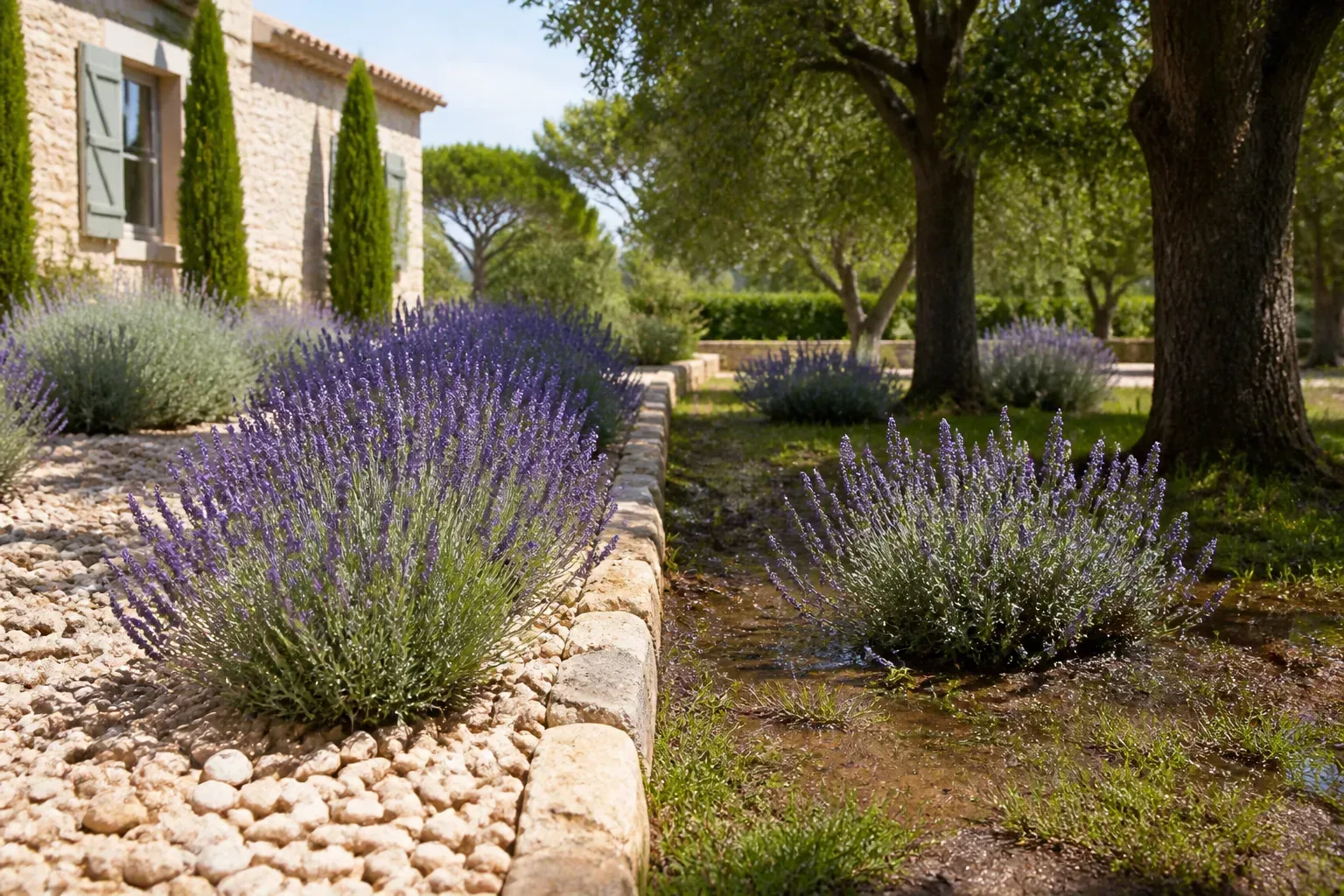
Give lavender six hours of direct sun as a minimum; eight hours is a better target for dense growth and flowering. Avoid placing it beneath evergreen shade, beside a downspout, inside a lawn sprinkler’s spray, or in a pocket where summer humidity cannot move through the foliage. A sunny but stagnant courtyard can still be difficult if the plant is crowded and the soil stays wet.
Drainage matters more than adding fertilizer. In heavy clay, plant on a raised mound or in a raised bed rather than burying the crown in a deep hole filled with rich compost. In containers, use a porous mix and never leave the pot standing in a saucer of water. For a detailed site check, see the lavender site-selection guide.
Watering, feeding, and pruning without shortening its life
Water new plants regularly while roots establish, then stretch the interval as the plant grows. Established in-ground lavender is drought tolerant, but that does not mean it should be ignored during prolonged drought or flowering; it means the plant prefers a thorough drink followed by a meaningful dry-down rather than frequent shallow sips. Container plants need more frequent checks because their smaller soil volume dries rapidly.
Lavender usually needs little fertilizer. Excess nitrogen can produce soft foliage at the expense of flowers and can make plants less resilient in winter. If a soil test or container mix shows a genuine need, use a light, measured feeding in the active growing season rather than a heavy dose around the crown.
Prune after flowering by removing spent stems and shaping only the leafy growth. The RHS warns that lavender does not break new growth easily from old bare stems, so do not shear deep into the woody framework. (RHS growing guide) A light spring cleanup can remove frost damage, but wait until live buds are visible before making a major cut. For propagation, cuttings preserve a named cultivar more reliably than seed; the lavender propagation guide covers the timing and stem stages.
Why a “hardy” lavender can still die
Winter death is often a moisture problem wearing a cold-weather costume. A hardy English lavender can rot in waterlogged clay, a pot can freeze and thaw around a wet root ball, or a dense shrub can stay damp long enough for disease to take hold. NC State Extension lists root rot as a lavender problem associated with overwatering and says good air circulation helps prevent leaf spot. (NC State Extension)
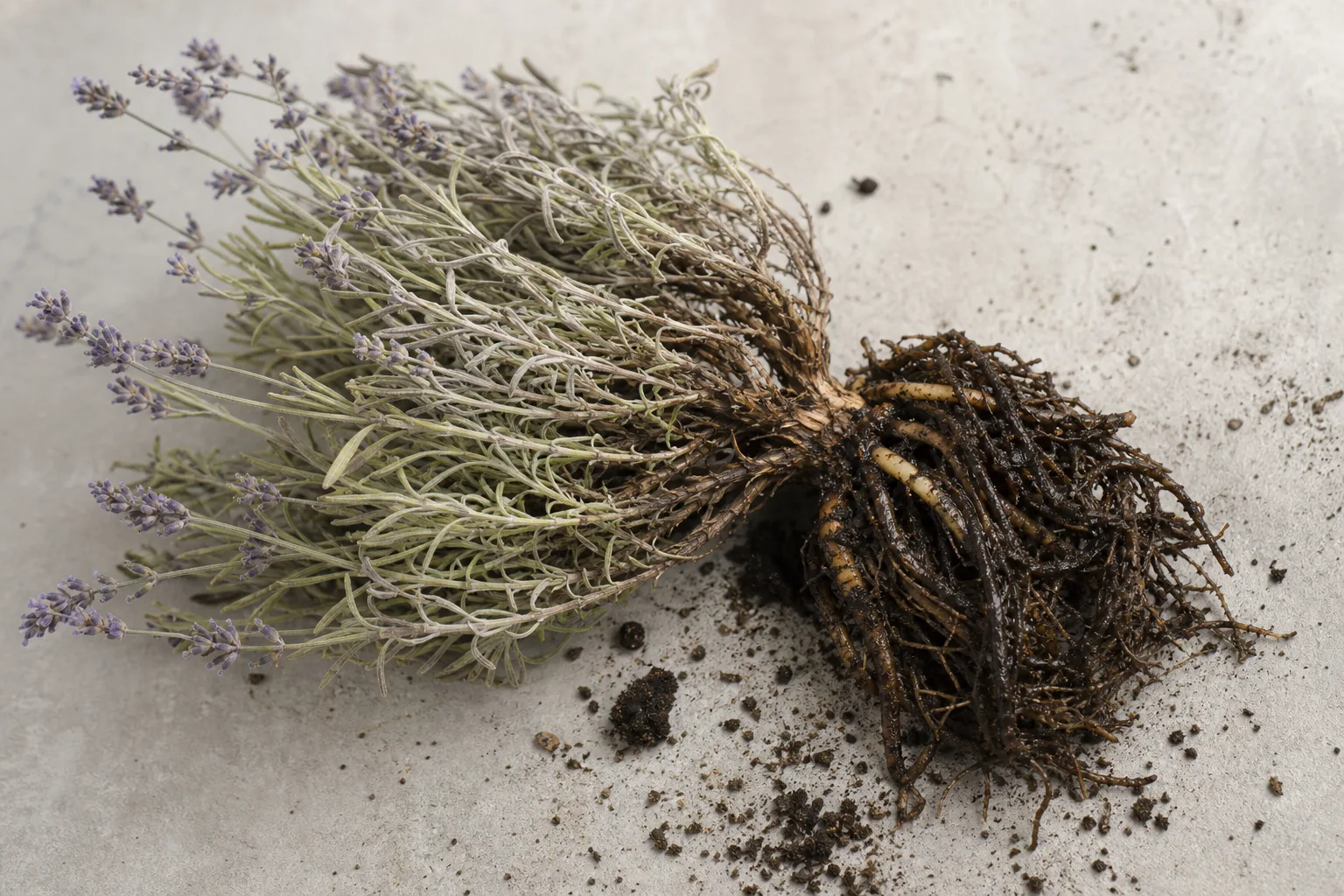
If a plant is declining, check the crown and soil before adding water or fertilizer. Soft black stems at the base, a sour smell, and dark collapsing roots point toward rot; gray-green foliage that is dry and brittle after a cold snap points toward exposure or desiccation. Improve the site first, remove badly damaged material, and do not keep a dying plant in the same saturated pot while hoping a spray will solve the cause.
RHS guidance also separates hardy English types from tender French and specialist lavenders that may need frost-free protection. (RHS growing guide) In a marginal climate, the honest choices are a hardier cultivar, a raised bed, a rain-sheltered pot, or a willingness to replace a tender plant. There is no pruning trick that turns a wet winter site into a dry one.
Buying labels, botanical names, and cultivar questions
At the nursery, read the whole label rather than stopping at the common name. Look for the botanical name, mature width, hardiness range, flowering window, and whether the plant is sold as a species, cultivar, or hybrid. “French lavender” may refer to L. dentata or may be used casually for a Spanish-looking L. stoechas; “lavandin” should show L. × intermedia. The more specific the plant name, the easier it is to match the care plan.
Ask three questions before you buy: Will this plant fit after three years? Will its hardiness rating fit my actual winter, including wet? What do I want to do with the flowers? A 14-inch English cultivar is a better path edge than a four-foot lavandin, and a long-stemmed lavandin is a better drying crop than a dwarf pot variety.
One final safety note: the ASPCA lists lavender under its toxic plant information for dogs, cats, and horses. (ASPCA) Keep plants and especially concentrated lavender oils away from pets that chew foliage, and contact a veterinarian or animal poison service if a pet may have ingested it. A plant’s culinary reputation for people does not make it safe for every animal.
Conclusion
For most gardeners, the decision narrows quickly. Choose English lavender for cold-winter reliability, compact borders, and the most broadly useful culinary and drying profile. Choose lavandin for long stems, large mounds, and an intense, often sharper fragrance. Choose Spanish or French lavender for distinctive bracts, unusual foliage, and longer ornamental displays in warm climates, and reserve Portuguese or fernleaf types for a sunny site where their specialty form is worth the extra climate caution.
Whatever the name on the tag, plant lavender in full sun, keep the crown out of standing water, and give the mature width more room than the young pot suggests. The right variety is the one that fits those conditions and the job you want it to do.