Where Not to Plant Lavender: 8 Common Mistakes
Lavender dies in shade, wet soil, and acidic beds long before pests show up. See eight spots to avoid, quick site tests, and fixes when your yard is imperfect.
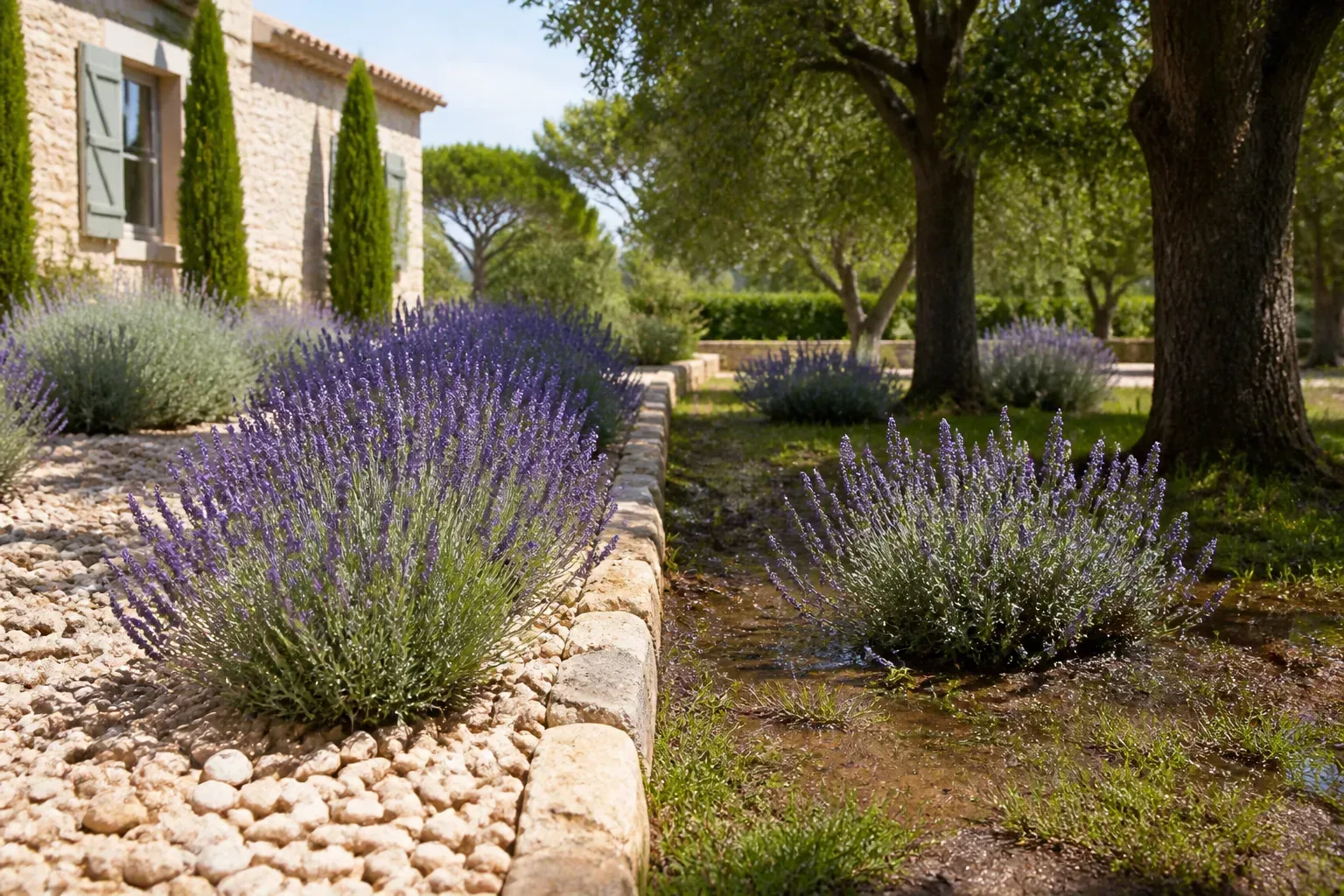
Lavender looks tough. It smells tough. It survives summer drought on a roadside. That reputation makes it easy to plant in the first open hole you find — and then wonder why the stems went leggy, the crown turned soft, or the whole mound died after one wet winter.
Location is the first lavender decision, not cultivar choice. A perfect ‘Munstead’ in a shady, soggy bed will still fail. A modest seedling on a sunny, gritty slope can outlive both. The eight spots below are the ones gardeners repeat most often. Avoid them when you can, fix them when you must, and use the quick site check so you are not guessing in the nursery parking lot.
For full culture after you pick a site, see the lavender care guide and the lavender plant hub.
Why Lavender Punishes a Bad Site Faster Than Most Perennials
English lavender (Lavandula angustifolia) and its lavandin hybrids are Mediterranean subshrubs built for bright sun, lean soil, and roots that dry between rains. NC State Extension notes that English lavender requires perfectly drained, preferably dry soil and full sun, and that it will die out in heavy clays. It is susceptible to root rot when overwatered. (NC State Extension)
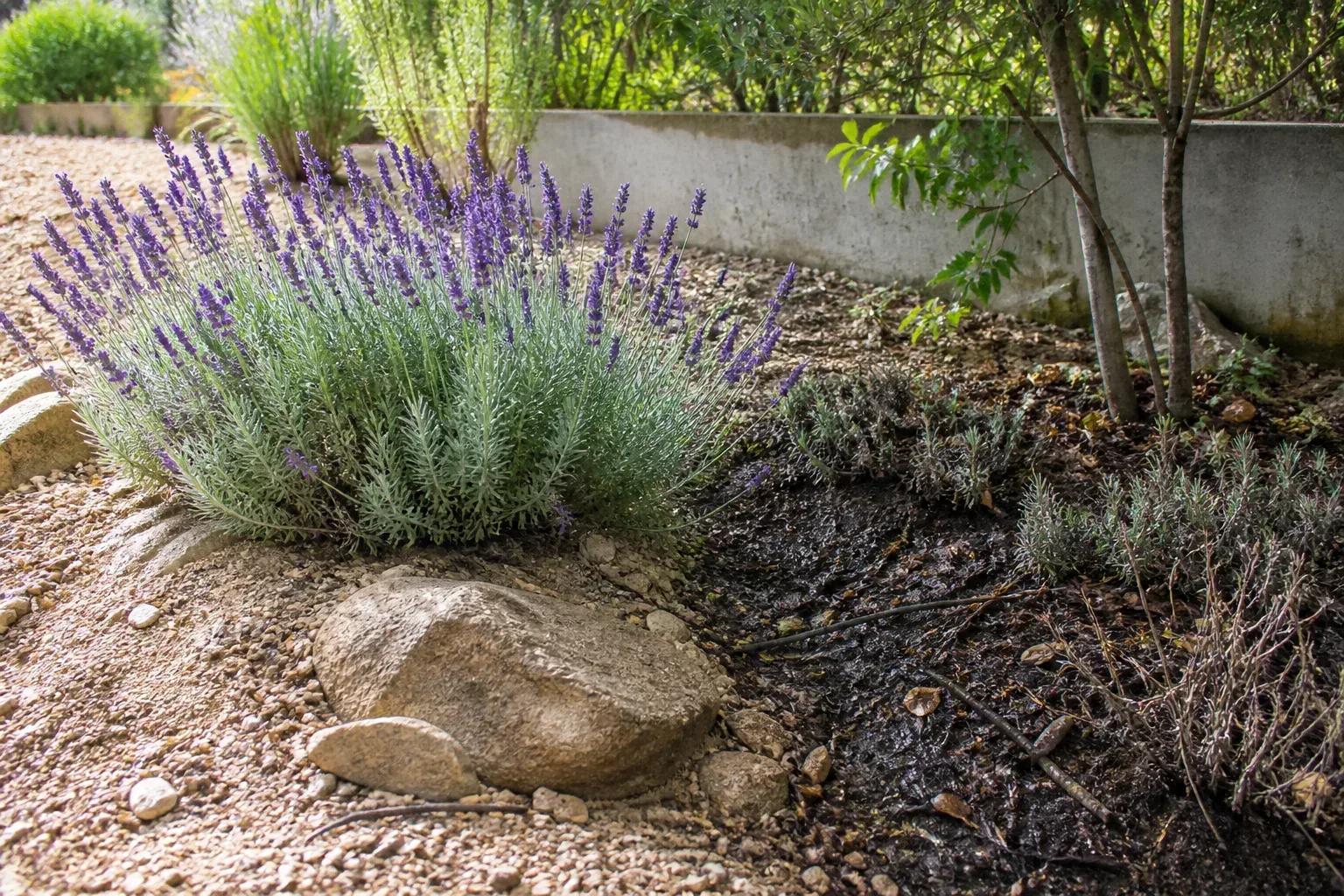
That biology explains why bad sites fail quietly at first. In shade or wet soil, lavender may green up in spring, then stretch toward light, bloom weakly, and collapse at the crown once heat and humidity arrive. UC IPM adds that damp soil surfaces encourage slugs, sowbugs, and root diseases — problems lavender does not shake off the way a moisture-loving perennial might. (UC IPM)
The Royal Horticultural Society is blunt: lavender is a Mediterranean plant in needs if not always in origin, and it will not survive long in shady, damp, or extremely cold conditions. It also warns against planting in heavy clay or any soil that waterlogs over winter. (RHS)
So the goal is not to find a spot where lavender merely survives one season. It is to find a spot where foliage stays compact, flowers stay fragrant, and roots stay dry enough that winter does not finish the job pests started.
Run a 10-Minute Site Check Before You Dig
You do not need a laboratory to reject a bad lavender site. You need sun, drainage, pH, and airflow answers before the plant goes in the ground.
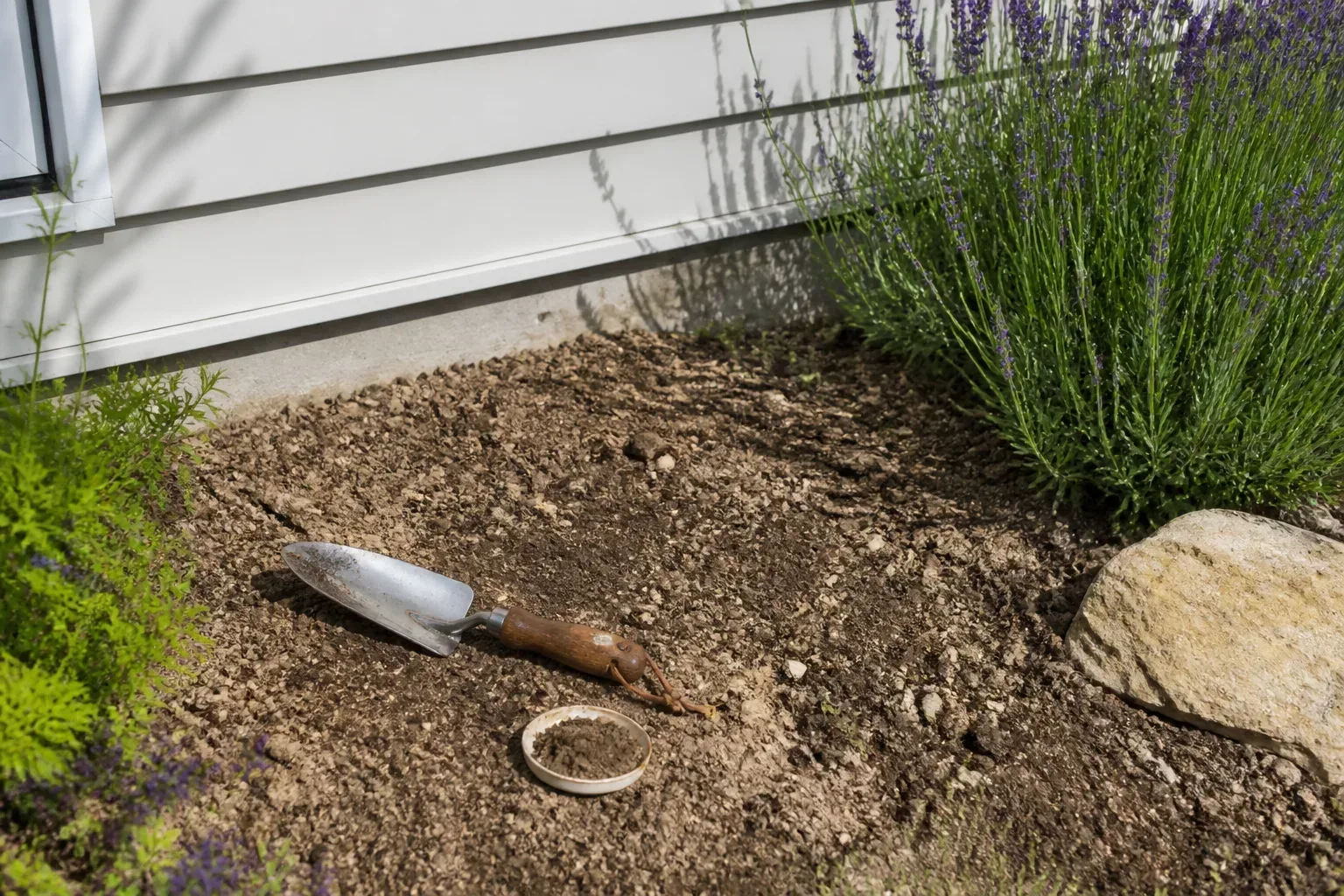
Map sun hours and winter wet
Watch the candidate bed on a clear day. Lavender wants at least six hours of direct sun, with eight or more better for dense bloom. Morning shade from a deciduous tree that leafs out later is still risky; evergreen shade or a north-facing wall is worse.
Also note where water collects after rain. A bed that looks bright in July can sit in puddles all March. Utah State University Extension stresses that lavender does not perform well in wet or waterlogged soils and is susceptible to Phytophthora root rot when overwatered. (USU Extension)
Squeeze-test drainage and check soil pH
Scoop damp (not muddy) soil and squeeze it. UC IPM says if soil forms a tight clump when squeezed, it is too wet for lavender; if it crumbles easily, you are closer to workable texture. (UC IPM)
Run a simple pH test on the same spot. Lavender prefers roughly 6.5 to 7.5 — neutral to slightly alkaline. UC IPM lists that range directly. Acidic woodland edges and peat-heavy beds fail even when drainage looks acceptable.
If the site fails two or more checks, treat it as a relocation or raised-bed project, not a “we will see” planting.
Spot 1 — Shady Areas Under Trees and North-Facing Walls
Shade is the most common lavender mistake because the plant still looks alive for months while it is already losing.
Under thick tree canopies or on the north side of a house, lavender cannot photosynthesize enough to support tight growth. Stems lengthen, leaves thin, and flower spikes shrink. Moisture also lingers longer in shade, which raises leaf spot and rot risk. NC State Extension lists good air circulation as helpful for preventing leaf spot on lavender. (NC State Extension)
Red flags: fewer than six hours of direct sun; dew that stays on foliage past mid-morning; neighboring shrubs that will grow into the light path within two seasons.
Better move: the sunniest open edge of the yard, a south- or west-facing foundation strip, or a container you can shift until you find the brightest stable spot. If you are growing indoors, see the light section in the lavender care guide — partial window light is usually not enough for long-term health.
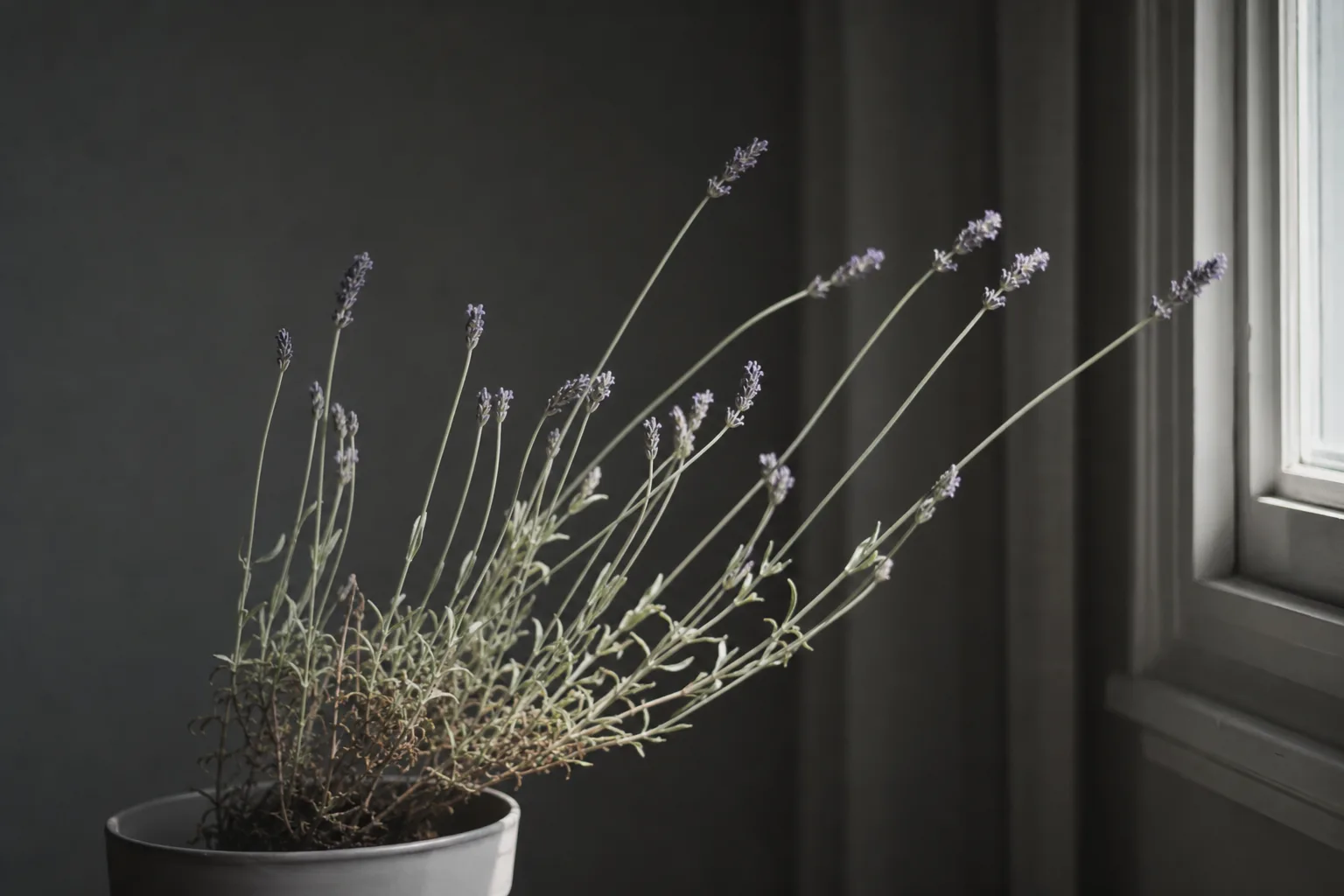
Leggy, pale growth often means the plant is reaching for sun it is not getting.
Spot 2 — Low Pockets and Heavy Clay That Stay Soggy
Lavender’s second fatal enemy is wet feet. Low swales, bottom-of-slope clay, and compacted construction fill hold water after every storm. Roots suffocate, then rot.
NC State Extension is explicit: English lavender does not like wet feet and will die out in heavy clays. The RHS recommends planting on a 20–30 cm (8–12 inch) mound, ridge, or raised bed when soil is heavy so roots do not sit in wet soil. (RHS)
Red flags: water pools for more than an hour after rain; shovel goes in like butter in spring but cracks like brick in summer; existing plants in the bed show chronic yellowing.
Better move: build a raised bed or berm with grit, coarse sand, or fine gravel worked into the top 30 cm (12 inches). Never plant lavender in a bottomland “because it is flat and easy.” Flat and wet is worse than sloped and gritty.
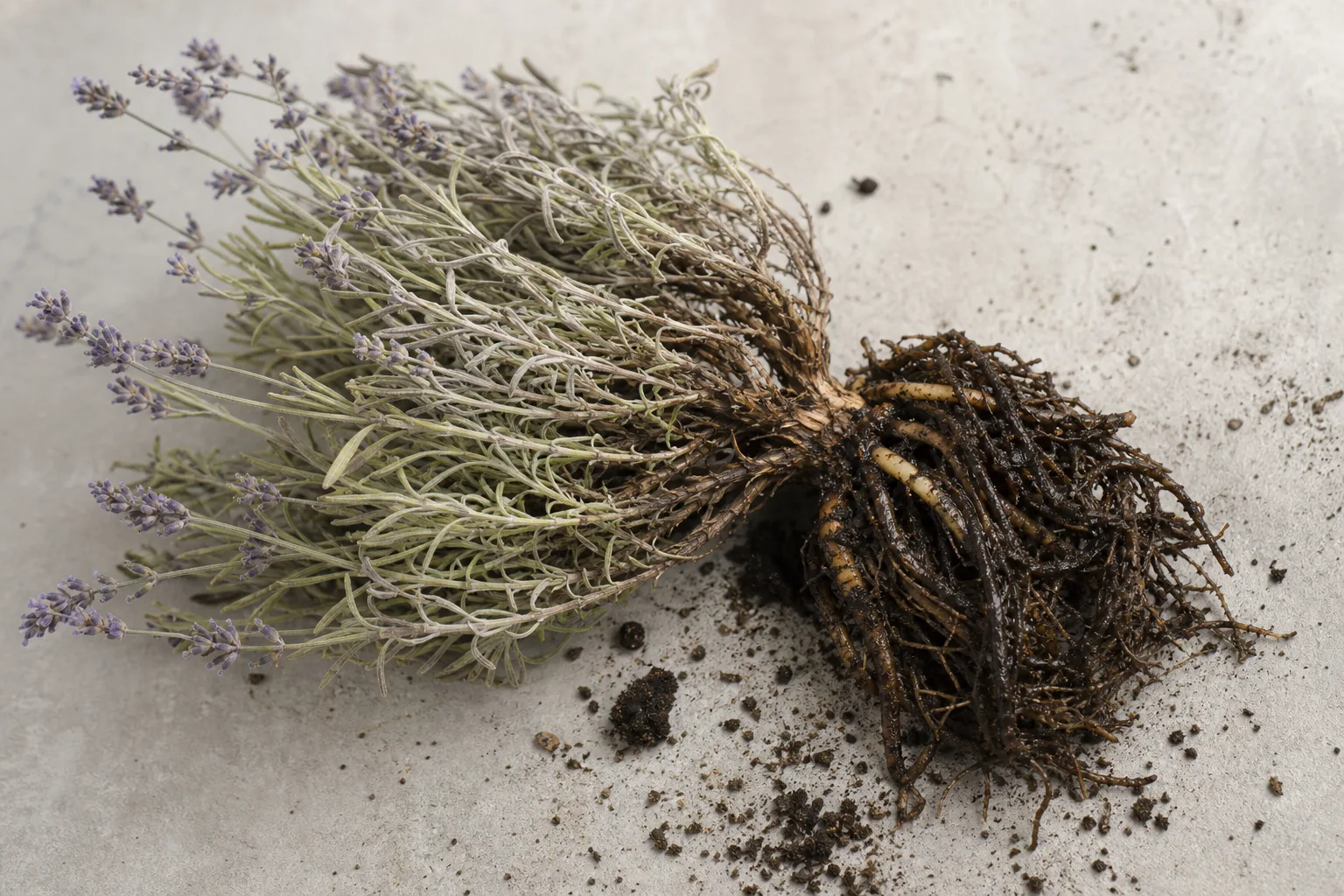
Root rot often starts invisibly while the top still smells like lavender.
Spot 3 — Sprinkler Heads, Downspouts, and Lawn Irrigation Zones
Even a sunny bed fails if automatic water keeps the root zone moist. Lawn sprinklers, spray heads, and roof downspouts deliver the steady moisture lavender hates.
UC IPM advises planting away from areas that will be watered by lawn sprinklers and recommends drip irrigation rather than overhead watering, which can damage plants and promote disease. (UC IPM)
Downspouts are the hidden killer. A gutter that dumps on a foundation planting can keep soil saturated through weeks of “dry” weather. Splash also wets foliage and invites fungal problems.
Red flags: mist hitting lavender leaves on timer days; moss or algae on soil surface; gutter splash line visible on mulch or siding.
Better move: redirect downspouts with extensions or rain barrels; put lavender on a separate drip zone that you run deeply but infrequently; keep at least 1–2 m (3–6 ft) from spray heads unless you can cap or relocate them.
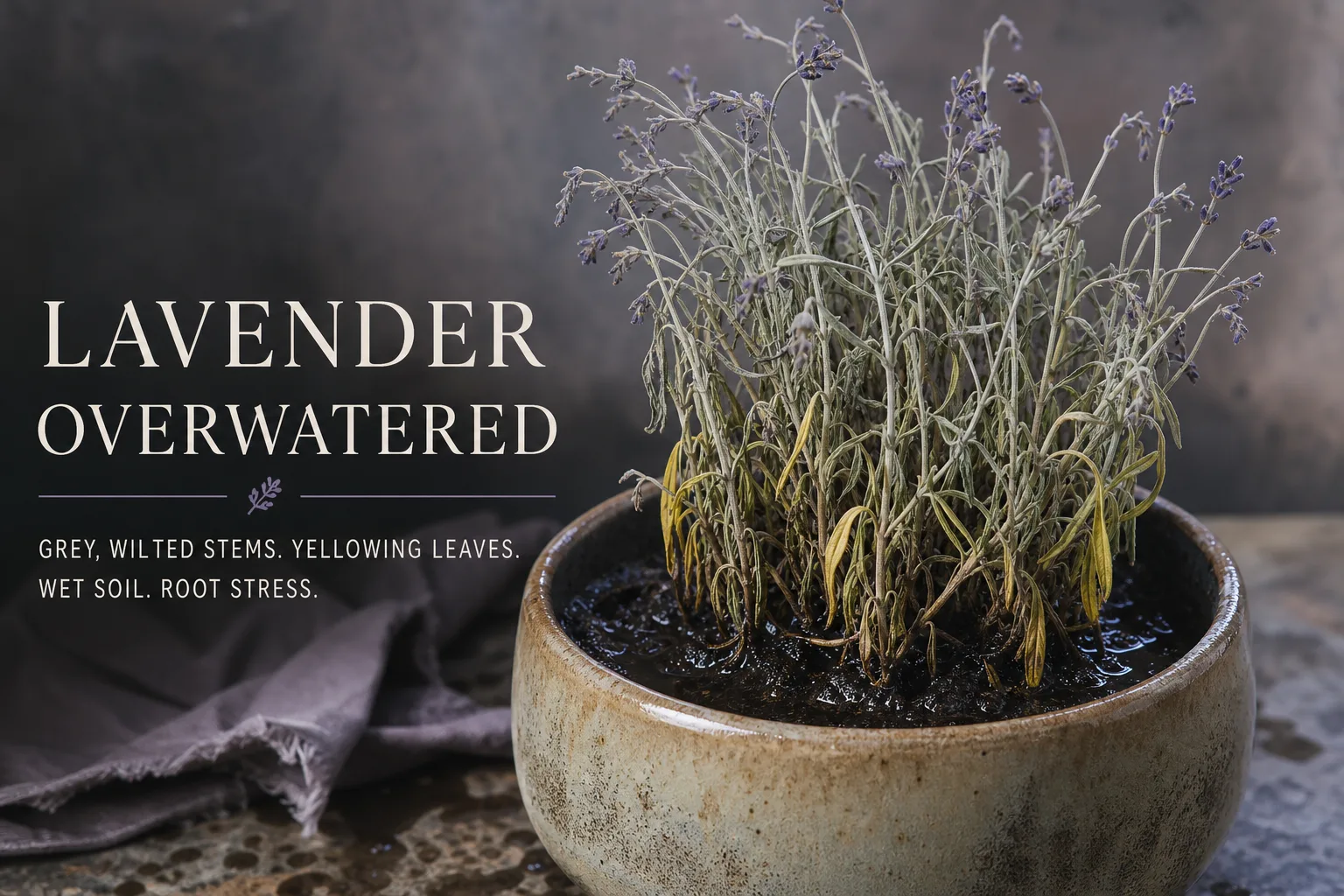
Chronic wet soil softens stems at the base long before leaves turn fully brown.
Spot 4 — Crowded Flower Beds With Poor Airflow
Lavender is not a filler plant for tight cottage borders. When stuffed between aggressive perennials, it competes for sun, stays wet longer after rain, and loses the airflow that keeps foliage dry.
Overcrowding raises humidity around stems and leaves, which favors powdery mildew and gray mold (Botrytis). NC State Extension notes that providing good air circulation helps prevent leaf spot. (NC State Extension)
Spacing guide: allow 45–60 cm (18–24 inches) between young English lavender plants; mature lavandin hybrids may need up to 90 cm (3 ft) in groups. UC IPM suggests spacing plants about 3 feet apart in rows for field-style plantings. (UC IPM)
Red flags: neighboring plants already touching at mid-summer; irrigation meant for thirsty annuals soaking lavender roots; mildew on nearby phlox or bee balm.
Better move: use lavender as a low hedge or sunny edge plant where it has room on all sides, or grow it in its own container beside the crowded bed.
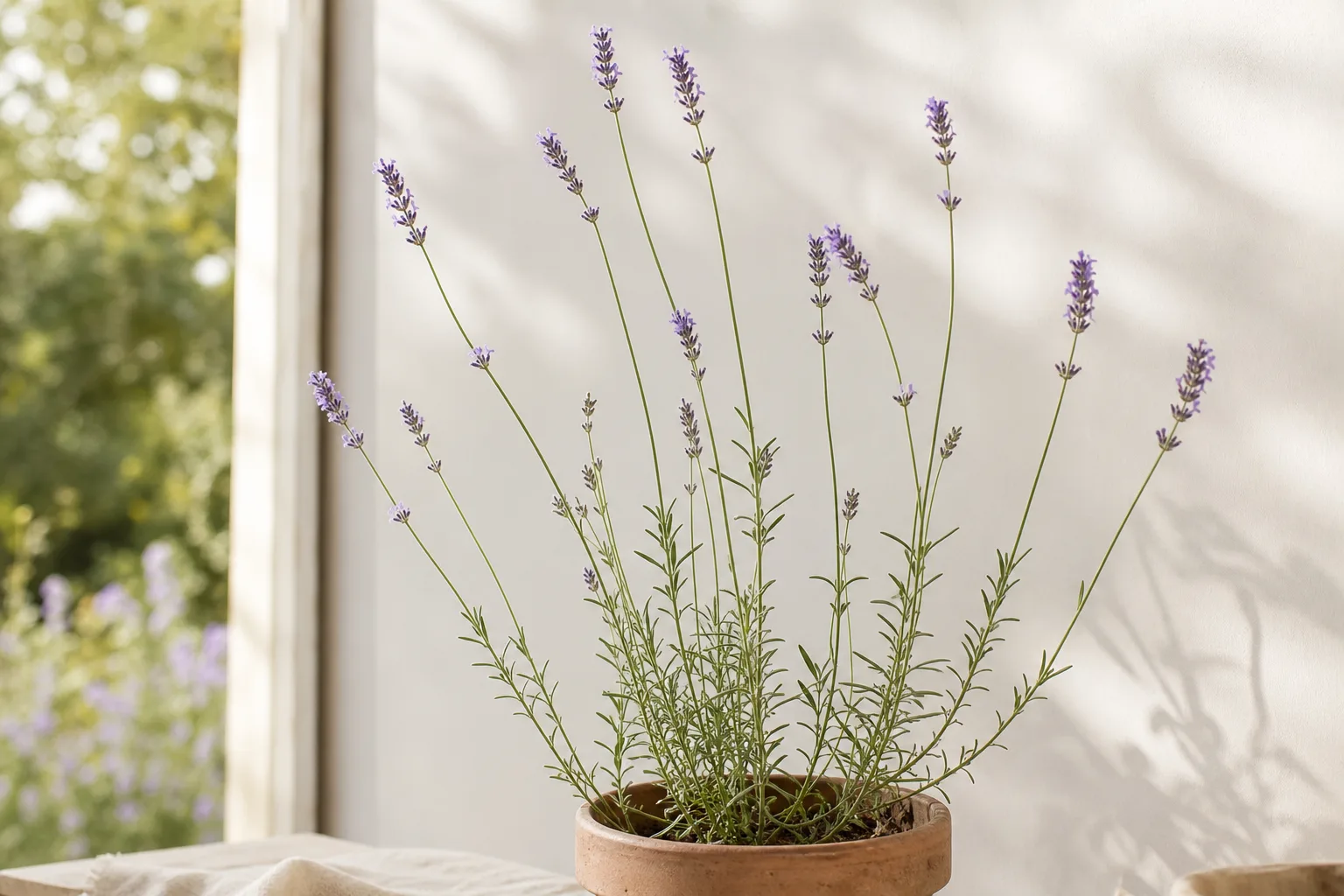
Tight spacing and competing roots often produce thin, stretched stems before mildew appears.
Spot 5 — Acidic Soil Near Pine, Peat, and Decaying Leaves
Lavender prefers neutral to alkaline soil. Acidic conditions below about pH 6.0 lock up nutrients and produce yellow, weak growth even when drainage is acceptable.
Acidic pockets show up under pines, in woodland edges where leaves accumulate, and anywhere peat-based amendments were used heavily. Pine needle mulch can acidify surface soil over time — a double problem when combined with moisture retention.
Red flags: rhododendrons and blueberries thrive nearby; soil test reads below 6.0; iron-stained or sour-smelling topsoil.
Better move: lime or wood ash can raise pH on acidic sites, but only after a soil test and gradual application. Do not dump lime and compost together and call it fixed. Sometimes the better answer is a raised bed filled with neutral, gritty mix above the acidic native layer.
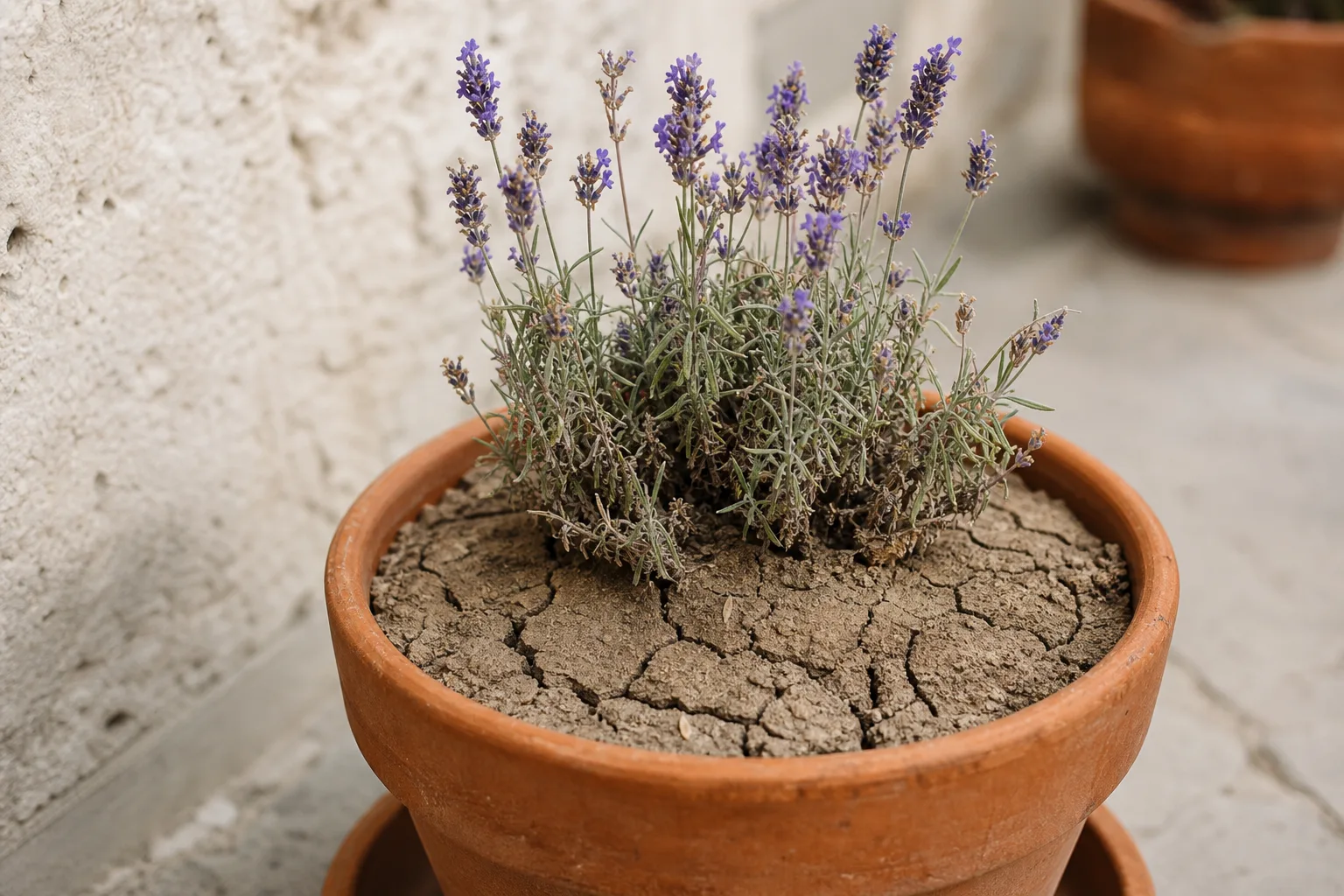
Heavy, acidic soil compacts easily and keeps roots wet even between rains.
Spot 6 — Rich, Freshly Fertilized Vegetable and Rose Beds
Lavender is the rare garden plant that often does better in lean soil than in a heavily amended vegetable patch. High nitrogen pushes soft foliage at the expense of flowers and can shorten the plant’s useful life.
USU Extension warns that over-fertilized lavender produces more foliage but fewer flowers and becomes more vulnerable to disease and cold injury. If compost was worked in at planting, supplemental fertilizer is often unnecessary the first year. (USU Extension)
The RHS similarly cautions that high-nitrogen fertilizers and manure can produce floppy growth. (RHS)
Red flags: fresh manure or balanced fertilizer just incorporated; tomato and rose bed on drip daily; lavender planted to “fill a gap” in a hungry crop rotation.
Better move: plant lavender at the dry edge of the kitchen garden, in a gravel path border, or in a separate pot. If you must share a bed, keep fertilizer bands away from lavender roots and water the lavender zone less often than the vegetables.
Spot 7 — Thick Organic Mulch Piled Against the Crown
Mulch that helps hostas can kill lavender. Dense bark, wood chips, compost, and pine needles hold moisture against the woody crown and encourage rot, especially in humid or rainy climates.
The RHS growing guide discusses amending soil, not smothering crowns. In practice, Mediterranean herbs do better with gravel, crushed stone, or a thin mineral topdressing that sheds rain than with a wet organic doughnut around the base.
Red flags: mulch pulled up against stems; soil under mulch stays dark and damp for days; crown feels soft when you press near the soil line.
Better move: leave a bare ring around the stem, or use 2–5 cm (1–2 inches) of gravel that does not touch foliage. Refresh organic mulch in other beds, but not here.
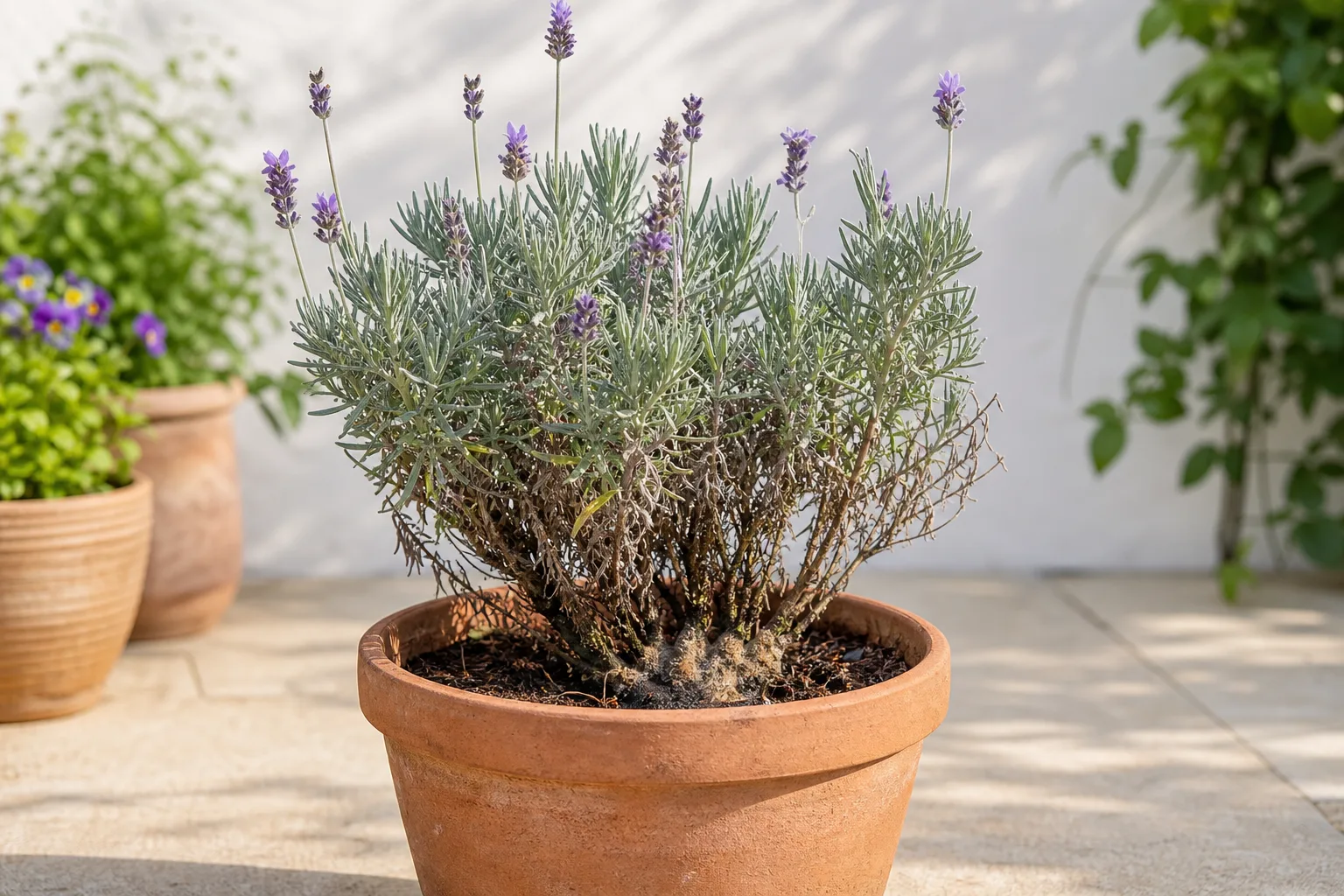
A soft crown at the soil line is often mulch and splash moisture, not sudden disease from nowhere.
Spot 8 — Exposed, Cold, Windy Open Fields
Wind and cold interact badly with lavender roots. English types such as ‘Munstead’ and ‘Hidcote’ tolerate more winter cold than Spanish or French lavender, but frozen soil plus drying wind can desiccate foliage when roots cannot take up water.
The RHS warns against cold, damp spots and notes that tender lavenders need frost-free shelter. Even hardy English lavender benefits from a south-facing wall or windbreak in zone 5–6 gardens. (RHS)
Red flags: open hilltop with no shrub line; winter winds that burn evergreen needles nearby; pots on an exposed deck with no leeward side.
Better move: plant on the leeward side of a wall, hedge, or fence that blocks wind but does not shade the bed. In containers, cluster pots against a south wall and elevate them so they do not sit in winter puddles.
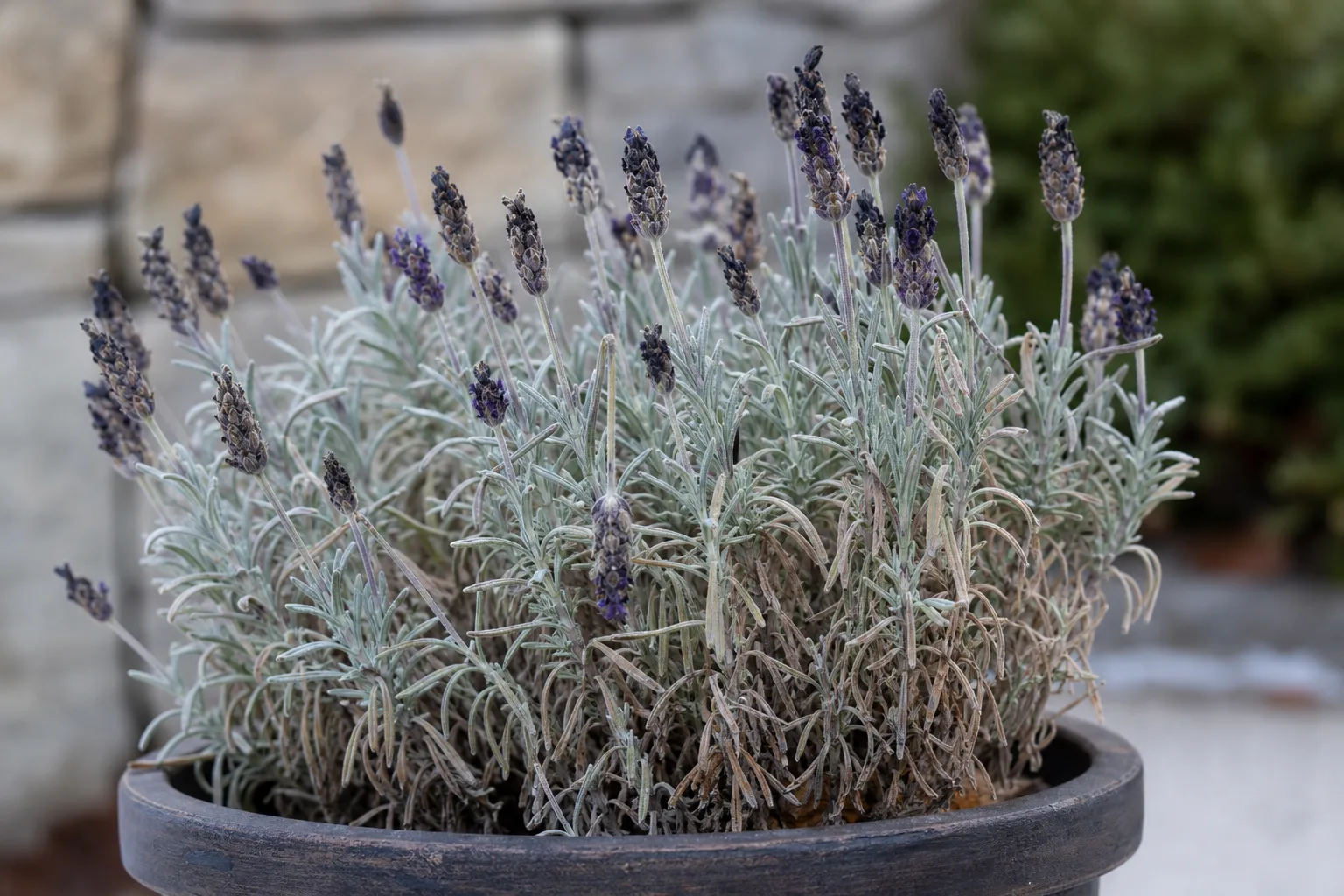
Frozen soil plus drying wind can brown foliage even when the thermometer reading looks survivable.
What to Do When Your Only Space Is a “Bad” Spot
Most yards are imperfect. The question is whether the spot can be changed or only bypassed.
Raised beds, mounds, and containers
If sun is adequate but soil is clay, acidic, or wet, a raised mound or bed is usually the highest-success fix. The RHS mound guidance exists precisely because in-ground clay kills lavender. Mix grit or coarse sand into a free-draining planting medium and top with gravel.
Containers are the escape hatch for renters, patios, and downspout zones. Use a pot with large drainage holes, a gritty mix, and no standing water in the saucer. A decorative outer pot without drainage is a lavender trap — the same failure pattern described in the lavender care guide.
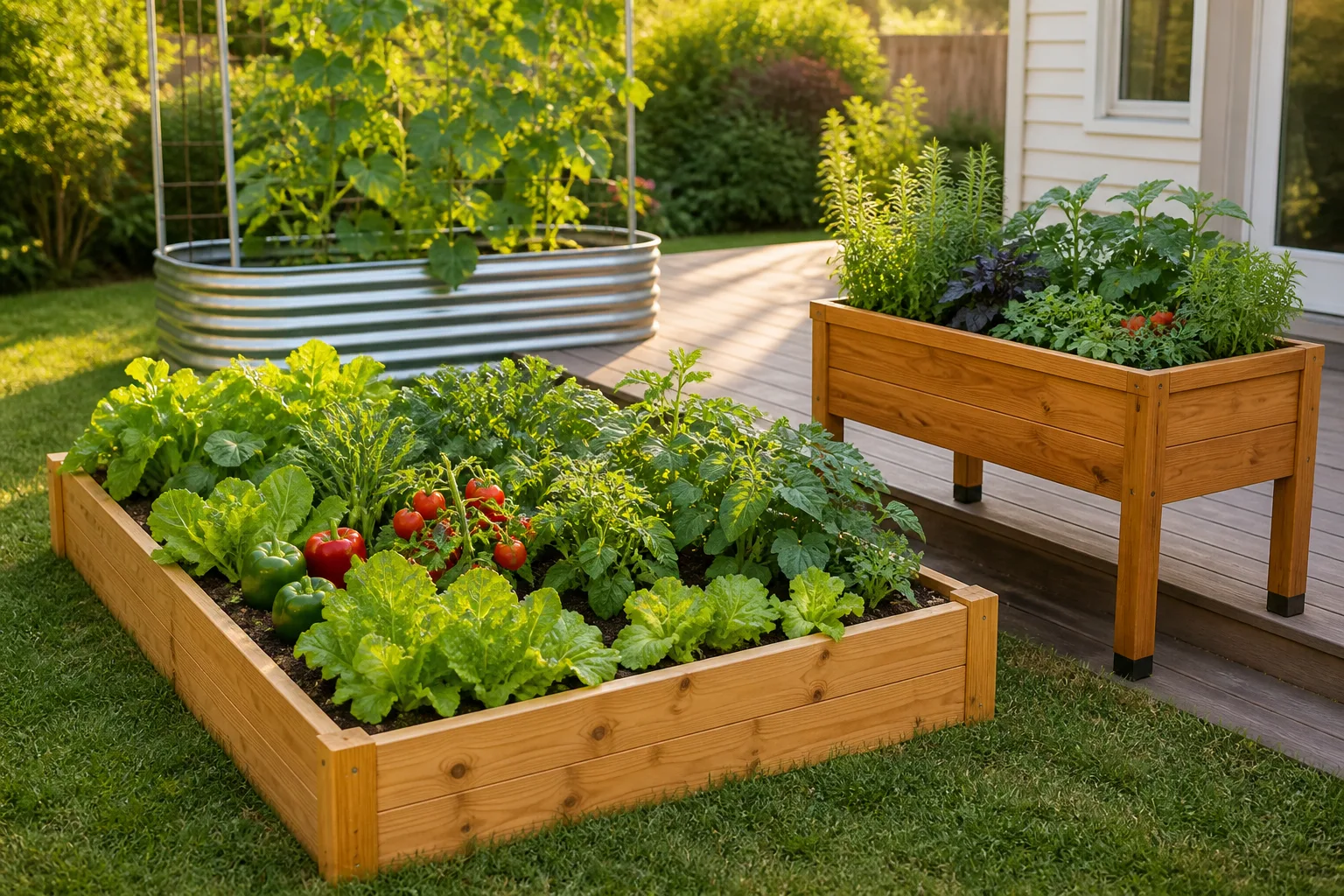
A raised bed lifts lavender roots above chronic wet native soil.
When relocating beats amending
Move the plant instead of fighting the site when:
- Shade is structural (north wall, evergreen canopy)
- Downspout or sprinkler water cannot be rerouted
- Soil pH is far below 6.0 and the bed is shared with acid-loving plants
- Winter wind exposure cannot be moderated
Relocate in spring after frost danger, or in early fall with enough rooting time before hard frost. Water once to settle, then let soil dry. If stems are already leggy from shade, read leggy lavender growth before you prune hard into old wood.
Where Lavender Actually Belongs
Use this positive checklist against the eight spots above:
- Six to eight or more hours of direct sun daily
- Fast drainage — crumbly soil or elevated planting
- Neutral to slightly alkaline pH, tested not guessed
- Lean fertility — no fresh manure band at planting
- Open spacing for air movement
- Separate irrigation from lawn and thirsty annuals
- Gravel or mineral mulch, not wet bark at the crown
- Wind protection without sacrificing sun
Good real-world homes include sunny path edges, herb knots, rock garden pockets, gravel drive borders, and south-facing patio pots. Pair lavender with other dry-sun plants — rosemary, thyme, santolina — only if each plant keeps its own root space and water schedule.
If symptoms already appeared after a bad planting, match the problem on the hub: overwatering, yellow leaves, or root rot.
Conclusion
Lavender does not ask for constant pampering. It asks for the right address: sun, grit, dry roots, neutral soil, and room to breathe. The eight spots gardeners regret — shade, soggy clay, sprinkler spray, crowded beds, acidic pockets, rich fertilizer zones, wet organic mulch, and exposed winter wind — all violate that address in predictable ways.
Run the ten-minute site check before you buy plants. Reject or fix bad spots early. When the only available ground is wrong, raise the roots, move the pot, or choose a hardier English cultivar for cold edges. Get the location right and lavender returns the favor for years of fragrance and bloom.



