What to Do After Heavy Snow Damages Plants
After a snowstorm, one wrong move can snap more branches. Get a pro-style recovery plan for shrubs, trees, perennials, and when to call an arborist.
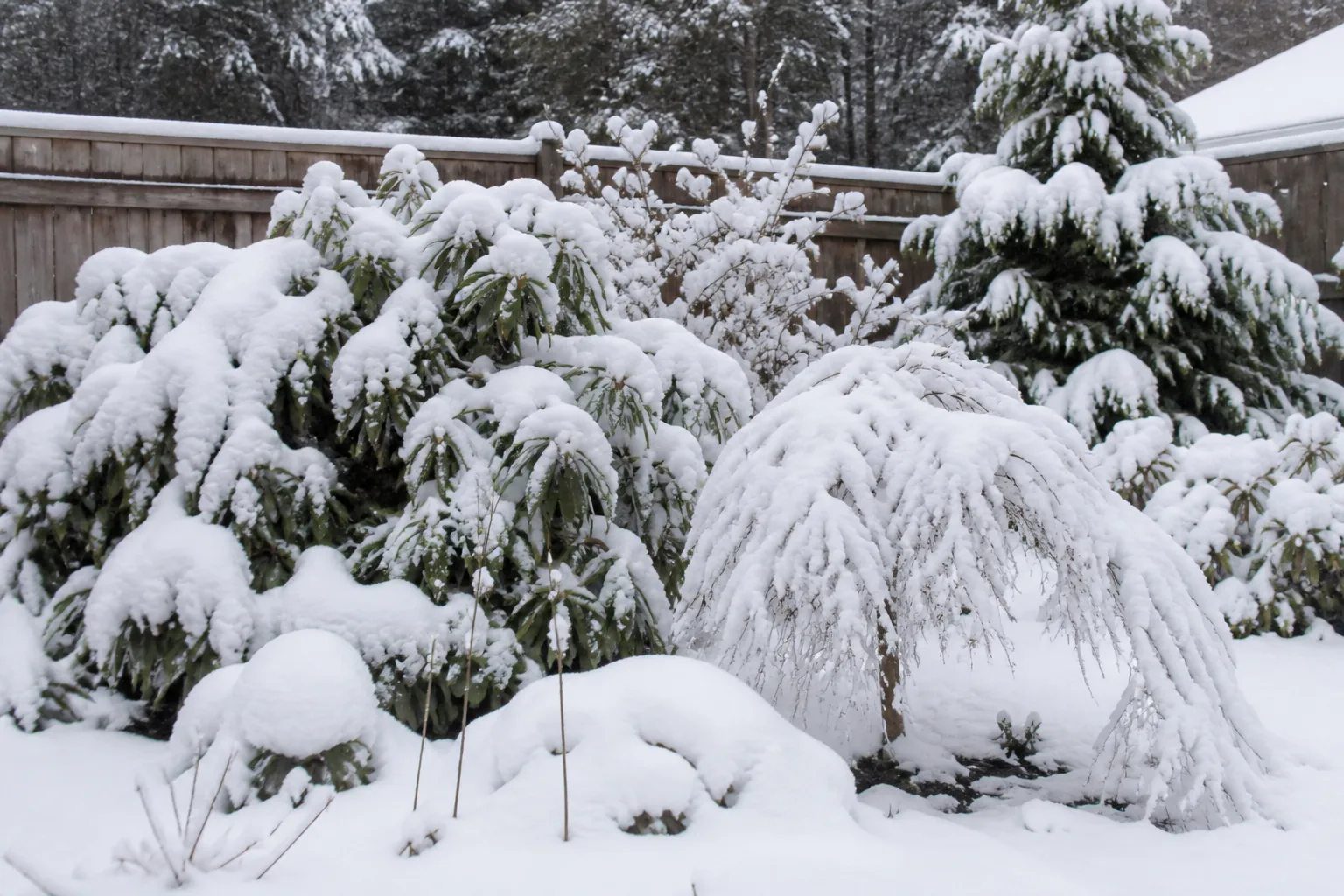
A foot of fresh snow can look peaceful until you walk the yard and find arborvitae splayed open, rhododendron branches pinned to the ground, and a maple limb resting on the fence. Heavy, wet snow is deceptively destructive. It bends flexible wood, splits narrow branch unions, and loads evergreens until something snaps.
The good news: many plants survive bending, minor twig loss, and even serious shrub damage if you respond with the right sequence. The bad news: the instinct most gardeners reach for first—shaking, whacking, or yanking snow off bent branches—is often what turns a recoverable bend into a clean break.
This guide walks through what to do in the first day after a storm, what to leave alone until melt, how to sort save-from-remove decisions, and how to set plants up for spring without making winter damage permanent.
Start With Safety, Then Assess the Damage
Before you touch a single branch, scan the property from a safe distance. Look for downed or hanging power lines, limbs caught under tension, trees leaning toward the house, and ice-heavy branches over walkways. If a wire is involved, stay back, call your utility’s emergency line, and read our storm yard cleanup guide for hazard priorities that apply after any severe weather.
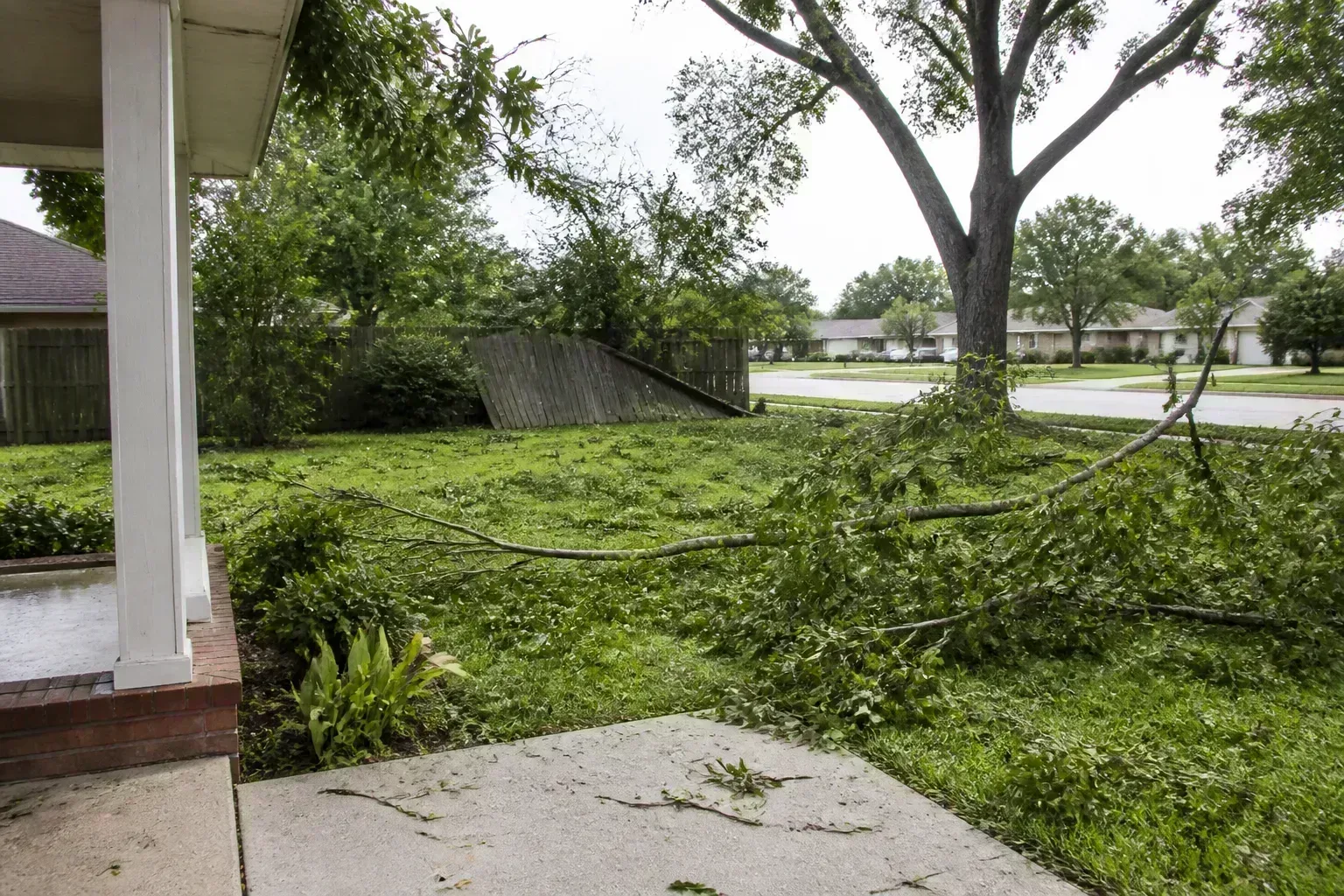
Once the immediate hazards are flagged, do a slow walk-through after the snowfall stops. You are gathering information, not fixing everything tonight. Note which plants are merely bent, which have cracked wood, which evergreens are splayed, and whether any young trees have lifted out of the soil. Photographs help if you later need an arborist or insurance documentation.
What Heavy Snow Actually Does to Wood and Foliage
Powdery, light snow often insulates dormant perennials and cool-season crops without causing structural failure. Wet, heavy snow—common in the 32°F range—is the problem. It adheres to needles and broad leaves, adds weight far beyond what summer foliage carries, and exploits weak branch angles.
Ice is worse still. Where snow may slide off after a warm afternoon, ice bonds to twigs and keeps loading branches for days. That is why the recovery playbook splits: loose snow on shrubs can sometimes be brushed off; ice-frozen branches should usually melt on their own.
Snow load also exposes structural flaws you cannot see in summer. Narrow crotches, multi-leader evergreens, and weak-wooded species like Bradford pear and Leyland cypress fail predictably in storms—not because the plant is “unhealthy,” but because the architecture cannot carry the weight.
The One Mistake That Makes Snow Damage Worse
The single most damaging post-storm habit is aggressive snow removal on frozen, stressed wood. Shaking a shrub to “loosen” snow, beating branches with a shovel, or pulling bent stems upright while they are still loaded converts elastic bending into splintering breaks.
NC State Extension horticulturists are explicit: do not shake trees and shrubs to remove snow. Wood that is cold and loaded is brittle. Vibration travels through the branch, and the snap often happens at a node you cannot see from the ground.
Why Shaking Branches Backfires
Think of a loaded branch as a spring held under tension. Shaking adds sudden force on top of existing weight. Even when the branch looks fine afterward, internal fibers may have cracked, setting up dieback weeks later.
The same logic applies to sweeping from the top down on shrubs. Snow you knock off upper branches lands on—and adds weight to—limbs below that were already struggling. Always work from the bottom upward when you do brush snow, so you are lightening the load instead of transferring it.
When Frozen Snow Stays Put
If snow is crusted or frozen to needles and twigs, put the broom away. Forcing it loose tears foliage and bark. Wait for a thaw, sun, or rain to soften the load. Mature trees in particular offer little safe intervention from the ground; patience until melt is usually the only realistic option.
The exception is loose, fluffy snow on small shrubs and hedges you can reach without a ladder. Those are worth clearing before the next freeze cements the load—using the technique below.
First 24 Hours: Your Priority Checklist
Use this order so you protect people first and plants second.
Wait until active snowfall and high wind have stopped, then survey hazards from a distance. Flag power lines, hanging “widow maker” limbs, and uprooted trees leaning on structures.
Clear access paths only—driveway, front walk, meter access—before deep yard work. Slipping on ice under a damaged canopy is how minor storms become ER visits.
Brush loose snow off reachable shrubs with an upward sweep, starting at the lowest branches. Skip frozen crust and anything above shoulder height.
Leave mature trees alone unless a broken limb is an immediate threat to people or property. You cannot safely unload a 40-foot canopy with a household broom.
Cover exposed roots on any young tree that has partially uprooted. Roots dry out and freeze quickly once soil is disturbed.
Document damage with photos while branches are still in place. You will prune later; you need a record now.
Schedule professional help for lines, hangers, chainsaw work, or any removal that requires climbing.
Do not fertilize, do not paint wounds, and do not perform major pruning in the emotional first hour. Those steps belong on a calendar, not in a snow boot.
How to Brush Snow Off Shrubs Without Breaking More Wood
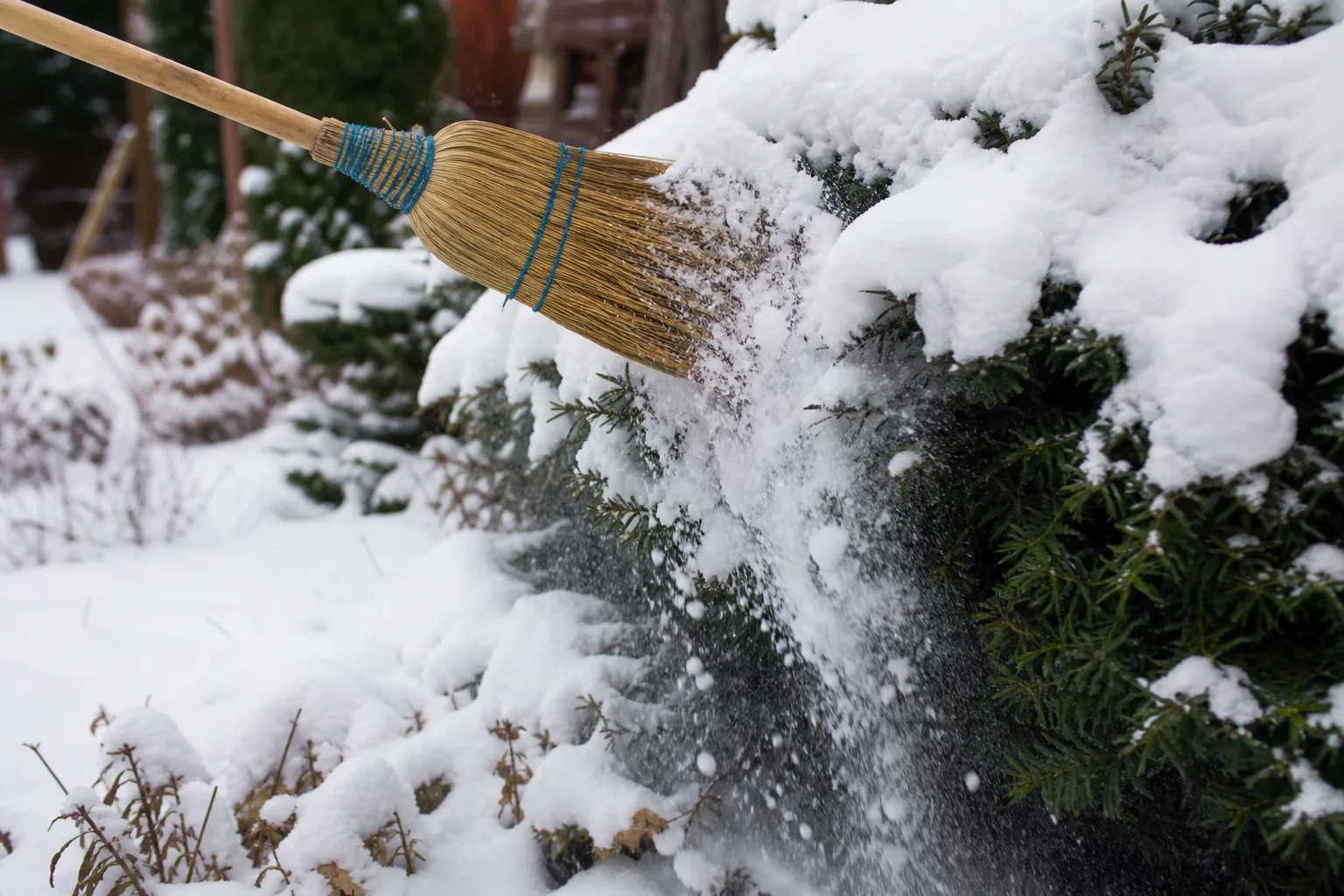
For small shrubs, hedges, and young ornamental trees you can reach from the ground, use a soft broom, foam rake, or your gloved hands—not metal tools and not a snow shovel edge.
Stand beside the plant and sweep upward along each branch, starting at the bottom of the plant. Work around the shrub in sections so you are never dumping an upper load onto an uncleared lower branch. Gentle is the operative word; you are lifting weight, not whipping the wood.
Multi-stem evergreens like arborvitae and upright junipers often splay outward under snow. If snow is still loose, clear the outer stems first to let the center breathe. If the shrub is already frozen into a bowed shape, stop and wait. Forcing it vertical while iced up strips bark along the trunk.
Tie-up is a pre-storm tactic, not a mid-storm rescue. Binding narrow evergreens before heavy snow can prevent splaying, but ropes must come off after melt to avoid girdling. If you did not tie before this storm, note which plants splayed for next year’s prep.
Why Mature Trees Usually Need Patience, Not Intervention
Homeowners understandably want to “help” a bent oak or pine, but large trees are not shrub-scale projects. You cannot safely remove significant snow load from high scaffolding without professional rigging, and climbing an ice-loaded tree is never a DIY job.
Until melt, the best course for most mature specimens is watchful waiting. Many trees and shrubs that appear dramatically bent will gradually rebound as weight disappears. NC State Extension notes that plants bent but not broken often recover without special care once the load is gone.
Intervene only when a limb threatens a roof, walkway, or vehicle, or when a split is actively tearing down the trunk. Even then, if the branch is large or under tension, hire an ISA Certified Arborist rather than improvising with a chainsaw in winter gloves.
Assess Damage: Save, Prune, or Remove
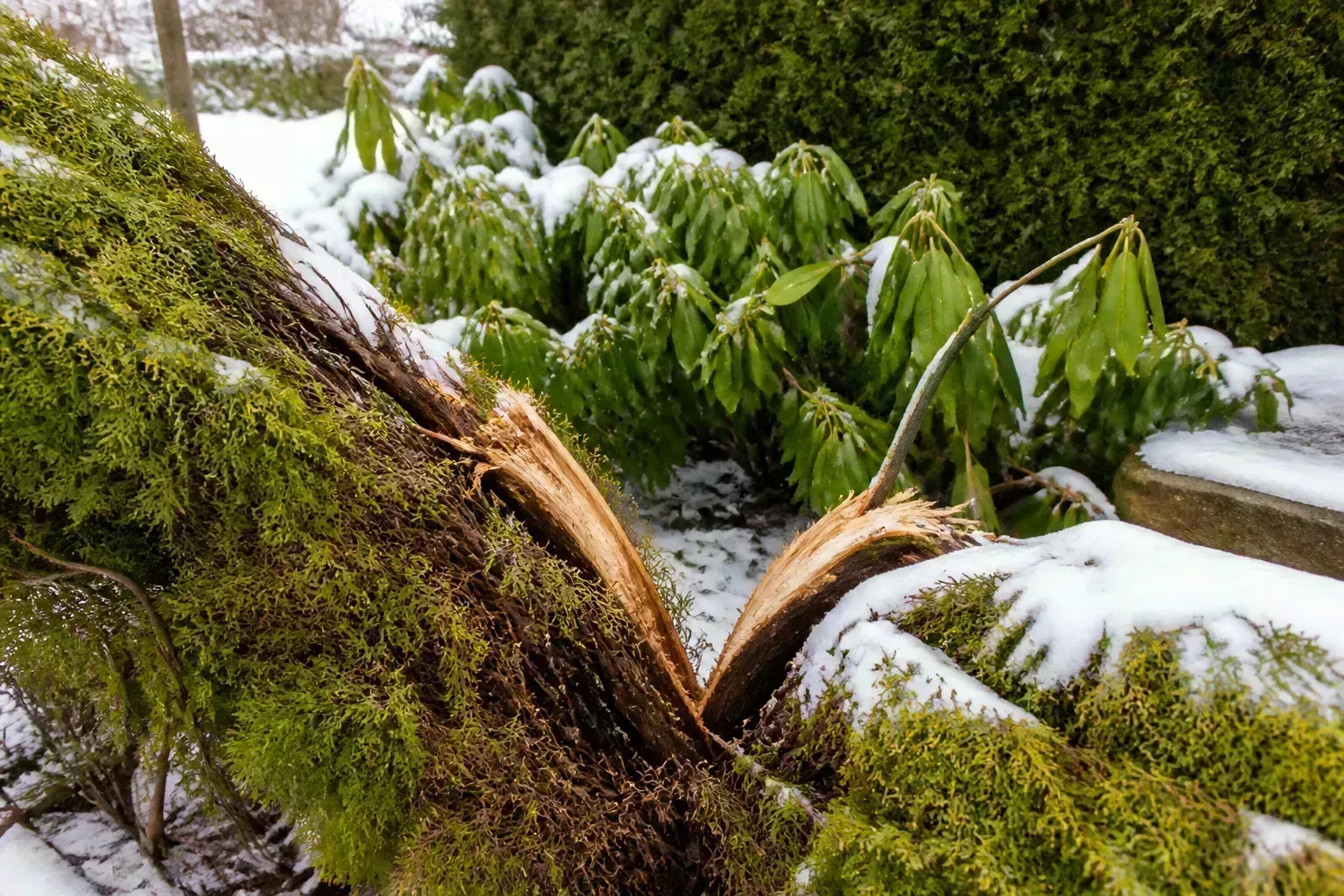
After snow melts, shift from emergency mode to triage. Walk each damaged plant with three questions: Is the structural skeleton intact? Is the root system stable? Is there a path to regrowth this species actually supports?
Minor twig and tip damage on deciduous trees and hardy shrubs is cosmetic. The plant will leaf out in spring; cleanup pruning can wait until late winter or early spring when you can see live wood clearly.
Moderate branch loss—several limbs under a few inches diameter—often allows recovery if the central trunk and major scaffold branches remain. Conservative pruning back to proper branch collars preserves photosynthetic area; stripping the canopy “to balance the look” weakens the tree for years.
Severe canopy loss changes the math. If more than about half the crown is destroyed, or the central leader is snapped on a tree that depends on a single trunk (many pines and conical shade trees), replacement is frequently smarter than heroic pruning.
Red Flags That Mean Removal
Remove the plant—or at least the damaged trunk—when you see a broken central leader on a single-stem tree that will not resprout from the top, major trunk splits with torn bark, mature trees fully uprooted or with more than one-third of the root plate exposed, or conifers (arborvitae, juniper, cedar) shattered through multiple leaders.
Shrubs are more forgiving. Broadleaf evergreens like camellia, holly, and azalea, plus deciduous shrubs such as spirea and butterfly bush, can often be cut back hard near the ground and regrow within one or two seasons—at the cost of this year’s flowers if they bloom on old wood.
Wax myrtle is a classic snow-breaker in the Southeast but responds well to drastic renewal pruning. Conifers do not. Once a juniper or arborvitae trunk splits, patch pruning rarely restores form.
Snow Damage by Plant Type
Perennials, Kale, and Dormant Beds
Most herbaceous perennials under snow are fine. Their tops are meant to die back; snow insulates crowns from extreme cold swings. Unless stems were physically crushed flat before dormancy completed, wait until spring to judge.
Cool-season vegetables—kale, collards, Brussels sprouts, and other brassicas—often tolerate light snow and even taste sweeter after a freeze. Damage appears when stems snap under weight or ice bends them below the crown. Harvest what you can eat; mulch exposed crowns if soil heaved.
For beds you are unsure about, resist digging up “dead” plants in February. Our guide on whether a plant is dead or dormant applies to outdoor crowns too: scratch tests and firm buds beat panic pulling.
Broadleaf Evergreens vs. Conifers
Broadleaf evergreens—rhododendron, boxwood, cherry laurel, holly—carry large leaf surface area that holds wet snow. They bend dramatically but often straighten. Broken stems should be pruned to a healthy side branch or trunk junction in late winter.
Needled conifers behave differently. Upright arborvitae and Leyland cypress splay outward when leaders split; they rarely regain a tight pyramidal habit after major breakage. Single-trunk pines with snapped tops will not restore their former silhouette. Plan replacement with stronger-wooded species—bald cypress, ginkgo, white oak, ironwood, hickory—if storms are recurring in your area.
Saving Uprooted Young Trees
Recently planted trees that tip over in wet snow can sometimes be reset if the trunk is less than about 4 inches diameter and roots are not torn extensively. Act quickly: exposed roots desiccate in cold wind.
Straighten the tree, pack native soil back into the void, water gently to settle (if soil is not frozen solid), and stake for one growing season—not permanently. Remove stakes once roots re-anchor. Trees with trunks over 10–12 inches that fully uproot, or any mature tree with a third or more of the root plate lifted, should be removed for safety.
Do not yank a partially lifted tree with a truck. That tears anchoring roots you need for recovery.
Pruning Broken Wood—Timing and Technique
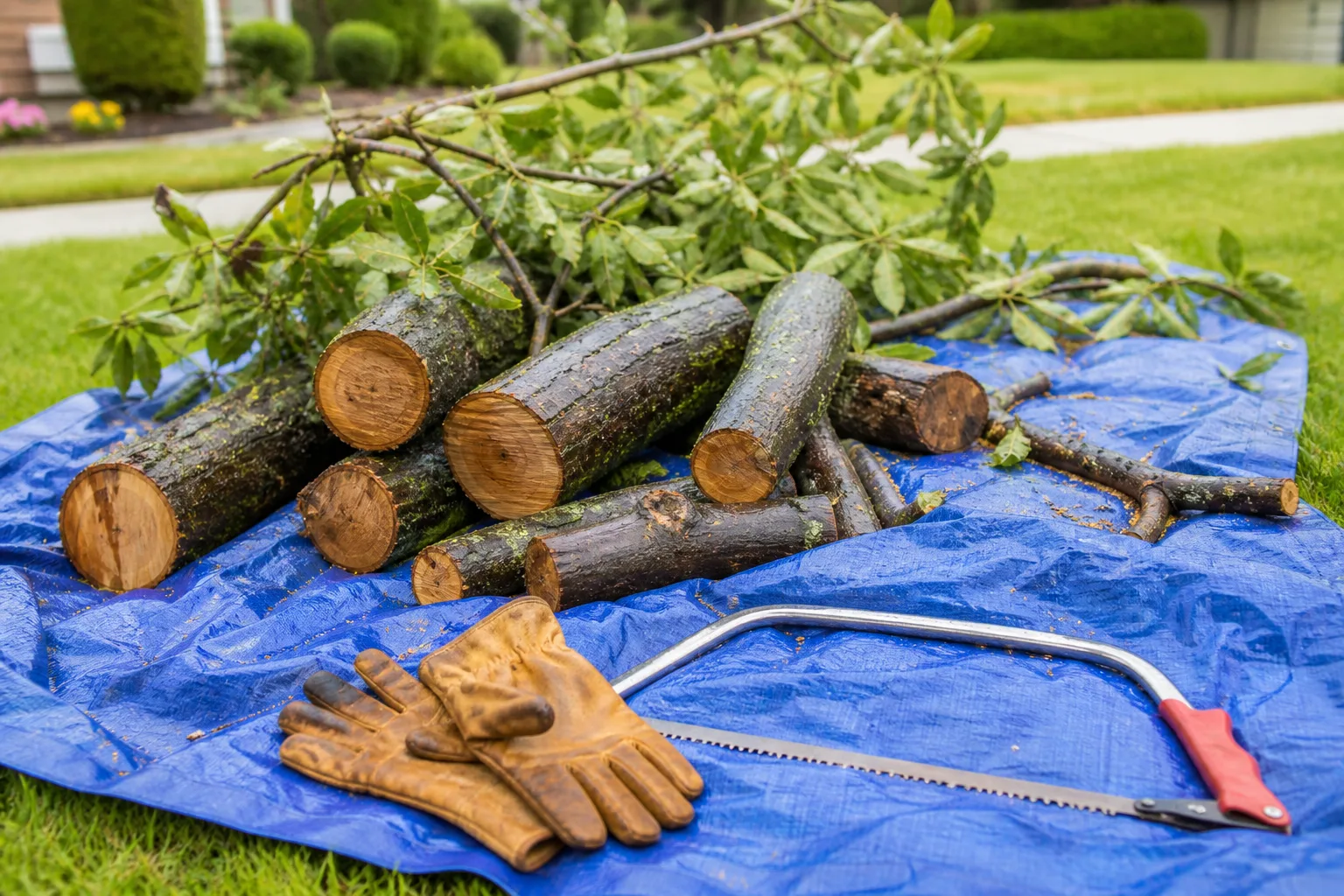
Storm damage feels urgent, but most pruning waits until late winter or early spring, when you can distinguish live from dead wood and pathogens are less active. Exceptions: hanging branches that threaten people, splintered stubs that tear bark further, or limbs interfering with utilities.
Cut back to the branch collar—the swollen junction where branch meets trunk—not flush with the bark and not leaving a long stub. Remove torn wood cleanly; jagged rips invite decay.
Never top a storm-damaged tree to “reduce height.” Topping removes the structural framework and triggers weak, crowded shoots that fail in the next storm. If the only option is topping, removal and replanting with a smaller or stronger species is the better long-term choice.
Skip wound dressings and tar. Research consistently shows sealers trap moisture and slow natural compartmentalization. A clean, proper cut beats black paint every time.
If you are unsure where to cut on a high-value tree, hire a certified arborist for structural pruning rather than guessing from a ladder. The International Society of Arboriculture publishes pruning basics that match extension guidance on proper branch-collar cuts.
Spring Recovery After a Bad Storm
Recovery does not end when snow melts. Stressed plants need steady moisture through the first dry summer after damage. Water deeply during drought weeks; shallow sprinkles do not reach damaged root systems.
A slow-release or organic fertilizer applied in early spring (March–April in most temperate zones) supports new shoot growth without forcing tender late-fall flushes. Hold off on heavy nitrogen until you see buds breaking; starving roots cannot support a fertilizer push in frozen soil.
Mulch conservatively—2–3 inches, pulled back from trunks—to reduce moisture swings. Watch for secondary pests on weakened wood; borers and cankers exploit storm wounds the following season.
For spring-blooming shrubs you cut back hard, accept a bloomless year. That trade is still cheaper than replacing mature foundation plantings.
Prevent Heavy Snow Damage Before Next Winter
Prevention starts in the growing season, not the night before a blizzard.
Choose resilient species for high-risk spots near the house and driveway. Avoid weak-wooded trees with tight branch angles. NC State Extension lists Bradford pear, silver maple, willow, and Leyland cypress among frequent winter failures; crape myrtle, bald cypress, and white oak rank among stronger replacements in many regions.
Prune young trees for structure in late winter while dormant. Removing competing leaders and narrow crotches early prevents catastrophic splits when the tree is large enough to hit your roof.
Water deeply in fall and mulch beds before hard freeze. University of Minnesota Extension recommends fall watering and mulch to help woody plants resist winter injury.
Stop late-summer pruning and high-nitrogen feeding that pushes soft growth unlikely to harden off before snow.
Remove holiday lights, bird feeders, and wind chimes from branches before ice events so ice does not accumulate on attachments and add weight.
Use plant-friendly de-icers near beds. NC State Extension notes sodium chloride damages roots and evergreen foliage within roughly 30 feet of treated pavement. Calcium chloride, potassium chloride, calcium magnesium acetate, or sand for traction reduce salt burn. Rinse splashed evergreen leaves with plain water when temperatures allow, and leach salty soil with slow soaker irrigation in spring if runoff pooled around sensitive trees like white pine, boxwood, and pin oak.
For fall leaf management that feeds soil without smothering crowns, see mulching vs. bagging leaves before winter sets in.
When to Call an Arborist or Power Company
Call the power company first for any limb contacting lines—or anything you suspect might be a line under snow. Purdue Extension is blunt: never touch wires. Assume they are energized.
Call a certified arborist when removal requires a chainsaw off the ground, when you cannot tell if a leaning trunk is stable, when major scaffold branches are torn, or when the tree overhangs structures and failure would cause injury.
You do not need an arborist for small shrub renewal pruning you can reach with hand pruners—but you do need one when the job stops being gardening and starts being tree surgery.
Conclusion
Heavy snow damage rewards calm sequencing more than heroic effort. Keep people safe, resist the urge to shake loaded branches, brush loose snow upward on small shrubs only, and let mature trees melt out before you judge them. After thaw, triage with a save-prune-remove mindset that respects how each species actually regrows.
Most bent plants straighten. Most broken shrubs can be renewed. The losses that hurt longest are usually the ones made worse by rushed winter pruning—or by keeping weak trees that will fail again next year. Document this storm, fix true hazards now, schedule proper pruning for late winter, and use the growing season to plant stronger wood where failure keeps repeating.