What Attracts Wasps to Your Yard? 8 Causes
What attracts wasps to your yard? Learn why food, ripe fruit, garbage, water, and nest sites bring them in—and how to reduce visits safely.
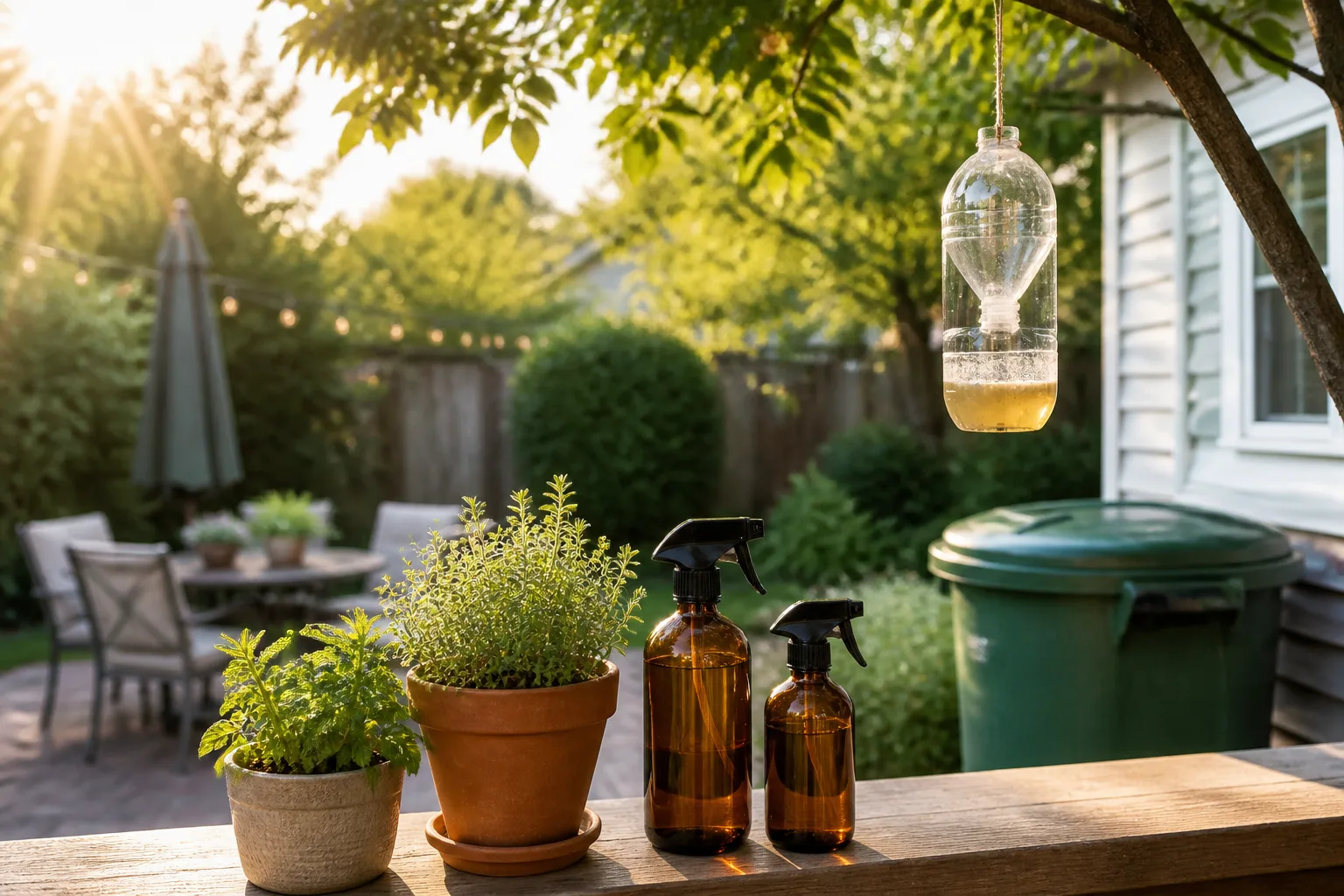
If wasps keep circling your patio, hovering over the trash, or appearing beside the back door, there is usually a nearby payoff: food, water, a nest site, or a steady supply of insects. The fastest way to reduce the traffic is to identify which of those jobs the wasps are doing before you reach for a spray.
That distinction matters because “wasp” covers many insects. Yellowjackets can scavenge meat, soda, pet food, and garbage; paper wasps often hunt caterpillars and visit flowers; mud daubers may build a small mud nest and rarely defend it. A yard with a few useful hunters is a different problem from a yellowjacket colony beside a doorway.
Quick answer: what attracts wasps to a yard?
The most reliable attractants are exposed protein, sugary food and drinks, ripe or fallen fruit, open garbage, aphid- and caterpillar-rich plants, water or mud, sheltered cavities, and weathered wood fibers. The balance changes with the season: developing larvae need protein in spring and early summer, while mature colonies often send workers after sugar and scavenged food in late summer and fall.
Start with a five-minute inspection. Cover drinks and pet food, close the garbage and compost, pick up fallen fruit, fix a leaking faucet, and watch where the wasps go when they leave. If several wasps repeatedly enter one hole or gap, stop cleaning around that spot and treat it as a possible nest.
Identify the wasp before you decide what to do
Color alone is a poor identification tool. Look at the body shape, the nest structure, and whether the insect is scavenging human food or simply moving between flowers and foliage.
Yellowjackets, paper wasps, hornets, and mud daubers behave differently
Yellowjackets are usually compact, black-and-yellow wasps with a very narrow waist and jagged abdominal markings. They are the group most likely to patrol a picnic, crawl into an open soda can, scavenge garbage, or defend a ground or wall cavity. Do not put your fingers into a hole or mow over a suspicious entrance.
Paper wasps are more slender, with long legs and an open, umbrella-like nest whose cells are visible from below. They are generally less defensive than yellowjackets, but a nest over a doorway, play area, or outdoor dining spot still deserves attention. Hornets build larger enclosed paper nests in trees or on buildings, and they can become highly defensive if the nest is disturbed.
Mud daubers are thread-waisted solitary wasps that build hard mud cells on walls, ceilings, or sheltered surfaces. They rarely sting and often spend their time hunting spiders for their young. If a mud nest is in a low-traffic corner, leaving it alone is often the safest and most ecologically useful choice.
Why wasp sightings spike as summer ends
A sudden late-summer surge does not necessarily mean a new nest appeared overnight. In many social wasp colonies, spring and early summer are growth months: workers collect insects and other protein to feed the larvae. As the colony matures and its demand changes, workers seek more sugary liquids and easy calories.
UC IPM describes this shift from protein-focused foraging to sugar-seeking and scavenging, especially when natural prey becomes less available. That is why a yard can seem quiet in June and suddenly have wasps at the grill, recycling bin, fruit tree, or pet bowl in August or September. UC IPM’s guide to yellowjackets and other social wasps also notes that defensive behavior can increase as colonies grow and the season progresses. Utah State University Extension’s wasp guidance describes the same late-season pressure around ripe fruit and outdoor food.
The 8 unexpected things drawing wasps into your yard
1. Protein-rich food and outdoor pet bowls
The burger, chicken scraps, deli meat, fish, and grease left on an outdoor table can be more attractive to yellowjackets than a flower bed. Outdoor pet food creates the same opportunity, especially if a bowl sits in the sun for hours or a few crumbs remain under it. The food does not need to look spoiled to a foraging wasp; an uncovered meal is enough.
During a cookout, keep protein under a lid and bring pet bowls inside between meals. Wipe tables and chair arms after eating, rinse recyclable cans before storing them, and do not leave meat scraps in an open container while you work in the yard. These small changes remove the strongest reason for scavenging wasps to return.
The exception is a flower-visiting paper wasp that briefly crosses the patio while hunting insects. Sanitation will not make every wasp disappear, but it can sharply reduce the persistent traffic that makes an eating area uncomfortable.
2. Sweet drinks, desserts, and sticky residue
Late-season yellowjackets are drawn to soda, fruit punch, juice, ripe fruit, jam, and the sticky film left in a cup or on a picnic table. An open can is also a sting hazard because a wasp can crawl inside unnoticed. UC IPM recommends keeping food and drinks covered and specifically warns about wasps entering soda cans.
Use a lidded tumbler outdoors, cover serving dishes, and check the rim of a can before drinking from it. If you spill a sweet drink, rinse the surface with water rather than wiping only the visible puddle; a thin sugary film can keep the scent going after the table looks clean.
This is also why a recycling bin can become a wasp hotspot even when there is no food lying around. Rinse sticky containers, keep the lid closed, and move the bin away from the seating area if collection day leaves it open for long periods.
3. Ripe, split, or fallen fruit
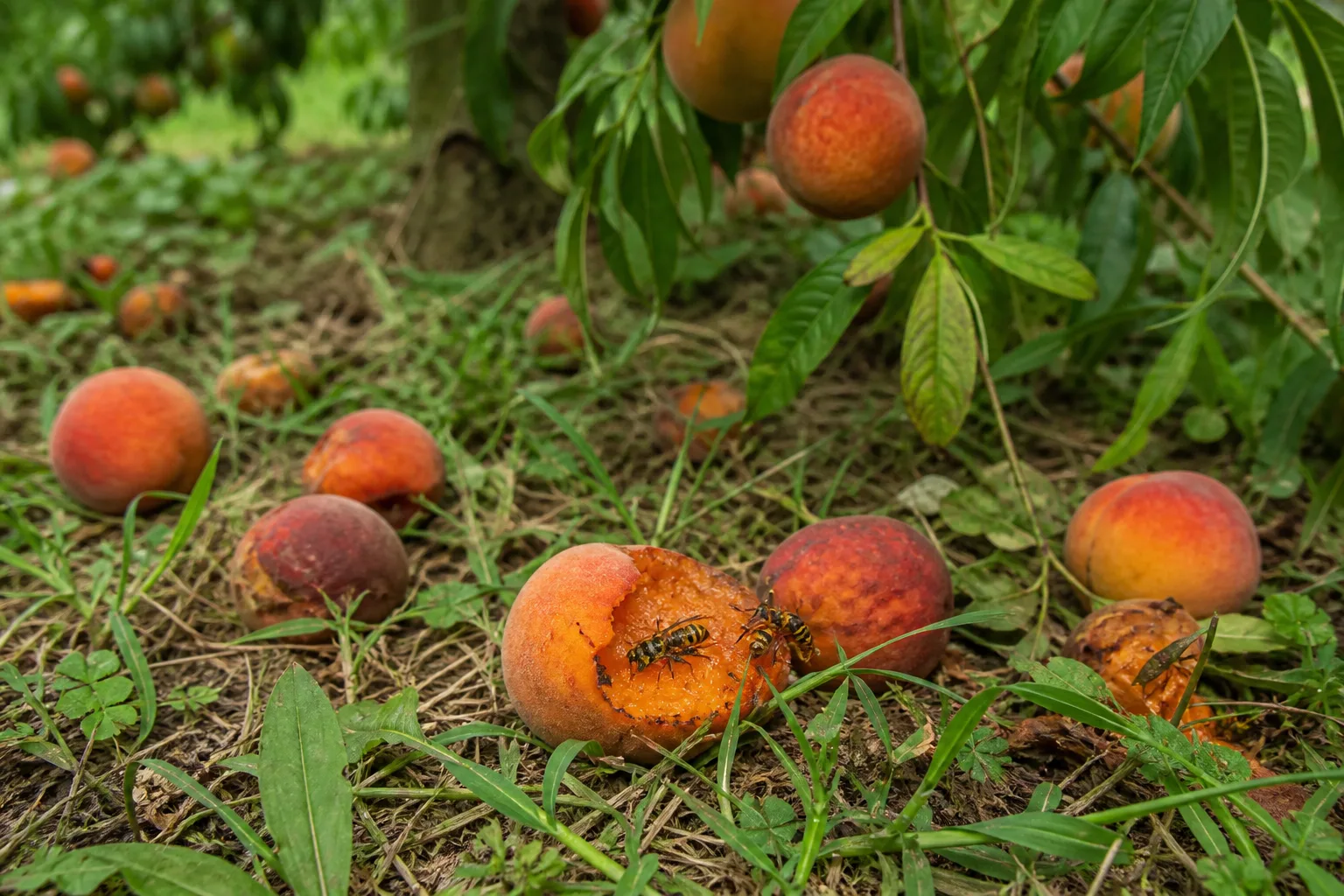
A peach that split on the tree, a plum softening on the ground, or grapes beginning to ferment can turn a productive garden into a wasp feeding station. Soft-skinned fruit is especially easy for wasps to pierce. BBC Gardeners’ World Magazine’s fruit guidance describes wasp damage as small holes or hollowed cavities in soft fruit, while Utah State University Extension lists raspberries, blackberries, peaches, and cherries among the crops that can draw heavy feeding.
Harvest fruit as it reaches eating ripeness, collect windfalls daily during peak season, and remove damaged fruit rather than letting it ferment beneath the tree. For a small number of prize fruits, a breathable bag or mesh covering can protect the fruit without spraying the whole plant. Pick up fruit before placing traps, because a trap cannot compete well with a large, continuously replenished food source.
Do not assume every wasp at a fruit tree is nesting there. The tree may simply be the closest snack, while the colony is in a wall, hedge, stump, or ground cavity somewhere else.
4. Aphids, caterpillars, and other garden prey
Wasps can be attracted by what is living on your plants, not just by what you put on a table. Many paper wasps, hornets, and yellowjackets capture caterpillars, aphids, flies, and other insects to feed developing young. A shrub covered in caterpillars can therefore become a reliable hunting ground.
That is not automatically a pest problem. Wasps are part of the garden’s biological control system, and adults also visit nectar and pollen. BBC Gardeners’ World Magazine’s discussion with entomologist Professor Seirian Sumner highlights their role in hunting aphids and caterpillars and in pollination; Utah State University Extension likewise notes their value as predators of caterpillars and other insect pests. Read the Gardeners’ World wasp discussion for that broader garden context.
Inspect the plant before trying to repel the wasps. If the wasps are moving calmly through foliage and the plant is not beside a doorway, allowing them to work may reduce the pest outbreak without an insecticide. If the plant is next to a play area, porch, or path, manage the location and the underlying plant pests together rather than spraying visiting wasps indiscriminately.
5. Open garbage, recycling, and compost
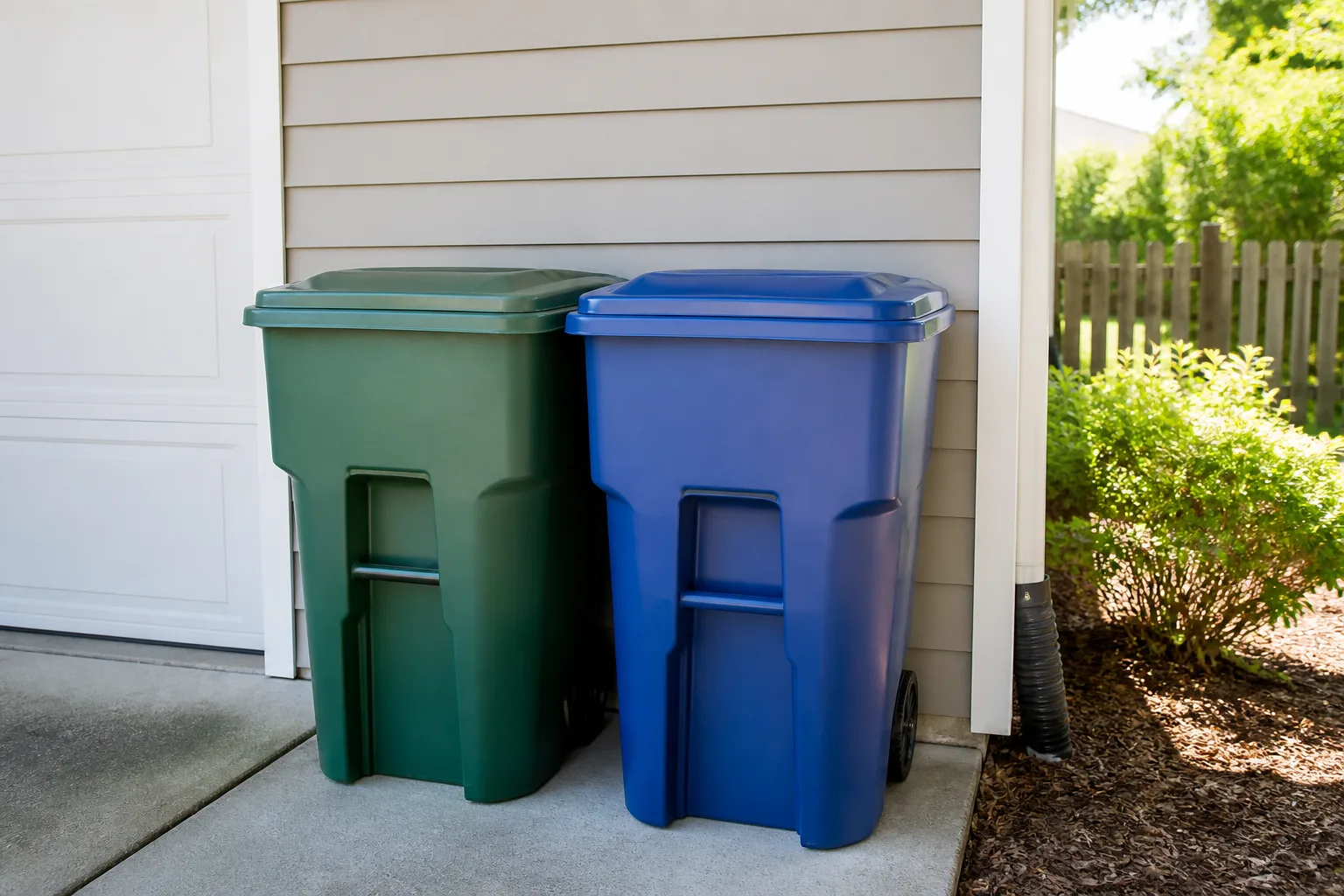
Garbage combines protein, sugar, moisture, and strong odors in one place. A loose lid, torn bag, uncovered compost caddy, or overflowing recycling tub can support repeated scavenging even after you remove the original food from the patio.
Use a tight-fitting lid, keep the outside of the bin clean, and place meat scraps or sweet food waste in a sealed container until collection day. Compost should be covered or enclosed when it is close to a house, patio, or children’s play space. If a bin is already busy with wasps, do not lean over it or swat at the insects; close it from the side if you can do so without disturbing a nest.
The best first response is sanitation, not a perimeter spray. UC IPM recommends sealed garbage cans and regular removal of attractive food sources because killing a few foragers does not remove the colony’s reason to search that location.
6. Water, mud, and leaking outdoor fixtures
Wasps need water for drinking, cooling, and in some cases nest construction. A dripping hose connection, leaky outdoor faucet, birdbath, pool edge, irrigation puddle, or damp patch beneath a downspout can keep them visiting even when food is covered. Mud-nesting species may also collect wet soil and carry it back to build cells.
Fix leaks, empty shallow puddles near doors, and adjust sprinklers that wet walls or paths unnecessarily. If you have a pond or birdbath, do not drain an important wildlife water source solely because a few wasps visit it; move seating farther away and monitor the traffic instead. Utah State University Extension specifically cautions that water and mud also support beneficial mud daubers and other helpful insects.
Water is most suspicious when you see wasps repeatedly landing on the same wet edge and leaving without visiting food or flowers. That pattern points to a water or mud job, not necessarily a nest in the house.
7. Sheltered cavities close to people
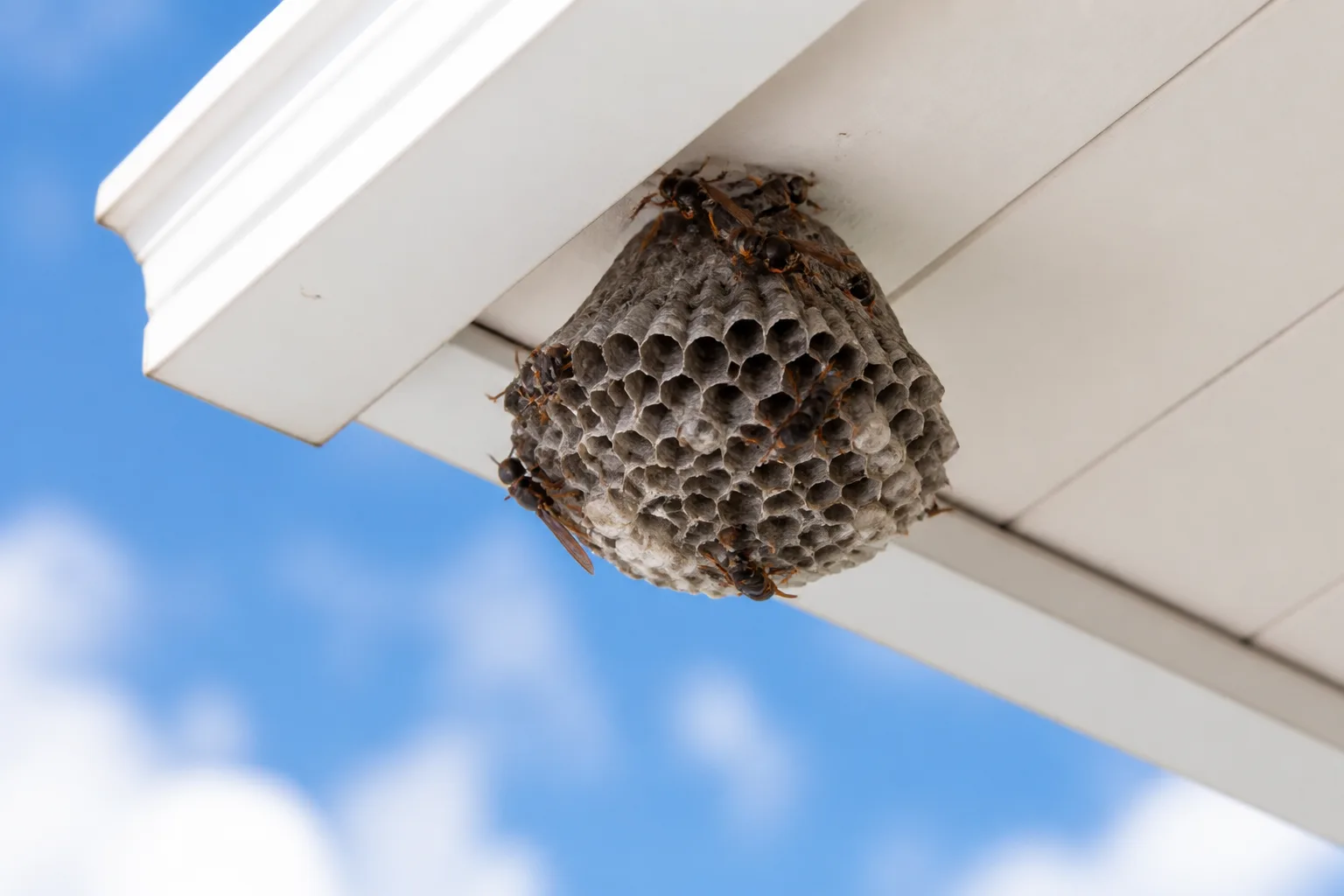
Wasps choose nest sites that protect the colony from weather and disturbance. Common possibilities include roof overhangs, eaves, attic vents, wall voids, sheds, hollow trees, dense shrubs, old rodent burrows, rock piles, and gaps beneath decks or steps.
A sheltered site becomes a nuisance when it overlaps with daily life. An otherwise harmless paper-wasp nest under a quiet shed roof is different from a yellowjacket nest beside the front walk. UC IPM explains that yellowjackets may nest in ground holes, wall cavities, or enclosed paper nests, while paper wasps often attach open nests beneath eaves or branches.
Do not block an active entrance, poke the nest, or remove siding to look for it. Wasps can exit through another opening, and disturbing the nest is the moment when defensive behavior is most likely. Savvy Gardening’s paper-wasp guidance also recommends giving a nest a wide berth when it can be safely isolated. Mark the area from a safe distance and decide whether it can be avoided until the colony dies naturally or needs professional treatment.
8. Exposed wood fibers and dry plant debris
Paper nests are built from cellulose fibers mixed with saliva. Weathered fencing, unfinished decks, fallen limbs, dead stumps, cardboard, and dry plant stems can provide accessible material, especially around a sheltered nesting site.
You do not need to strip every piece of wood from a healthy garden. Store firewood away from the house, remove rotting debris that sits beside doors or play areas, and repair damaged wood where it creates a cavity. Utah State University Extension notes that vespids use wood fibers, leaves, or mud in nest construction, while UC IPM describes yellowjacket nests as paper made from scraped wood fibers.
This attractant is easy to overestimate. Wasps do not choose a home merely because a deck is wooden; they need a suitable protected location and a reason to build there. Focus repairs on sheltered, high-traffic structures rather than treating all untreated wood as a wasp magnet.
Do flowers, bright colors, or perfume attract wasps?
Flowers can bring wasps into a garden because many adults feed on nectar and pollen. That is normal foraging, not evidence that the flowers created a nest. A bloom-heavy border beside the patio may therefore have more brief visits than a lawn, but it is rarely the first thing to remove when yellowjackets are persistently patrolling a table or garbage can.
Bright clothing and sweet scents are often blamed, but the practical evidence is weaker than for exposed food, ripe fruit, and garbage. A strongly scented product may make you more noticeable to insects already foraging nearby, yet changing perfume will not solve a colony nesting in a wall. Prioritize food, waste, water, and nest-site checks before uprooting flowers or relying on essential oils.
If you want to protect pollinators and beneficial predators, keep nectar plants in a low-traffic part of the yard and keep seating, children’s play areas, and doorways away from dense flowering patches. The goal is separation, not a chemically silent garden.
How to tell a nearby nest from a food stop
Watch the flight path from a distance for several minutes. A foraging wasp typically wanders between several food or flower sources; a nesting wasp often travels repeatedly in and out of one crack, hole, eave, shrub, or ground opening.
| What you observe | More likely explanation | First response |
|---|---|---|
| Wasps circle fruit, flowers, or a drink and leave in different directions | Foraging stop | Remove the food source or move the activity |
| Wasps travel in and out of one ground hole | Ground or cavity nest | Keep people and mowers away; call a professional if the route is unavoidable |
| Slender wasps visit an open paper comb under an eave | Paper-wasp nest | Leave it if isolated; arrange removal if it is beside a door or path |
| Dark, thread-waisted wasps carry mud to a small cell | Solitary mud daubers | Usually leave them alone unless the nest is in a sensitive location |
| Many wasps appear at a bin, but no fixed flight path is visible | Scavenging | Seal, clean, and relocate the bin before considering a trap |
The distinction is not perfect. A nest may be hidden far from the food source, and wind or dense foliage can make a flight path hard to follow. If you cannot confidently identify the route, use distance as your safety rule and do not investigate by opening cavities or digging.
A low-risk plan to reduce wasp traffic today
Work from the least disruptive change to the most targeted response:
- Cover food and drinks. Bring pet food indoors between meals and put lids on serving dishes and cans.
- Clean the food trail. Rinse recycling, wipe sugary residue, close garbage, and cover compost.
- Remove ripe food. Pick fallen fruit, harvest soft fruit, and discard damaged fruit in a sealed bag.
- Correct water sources. Repair leaking faucets, hose fittings, and sprinklers; keep seating away from unavoidable wildlife water.
- Watch the route. From indoors or a safe distance, note whether wasps are foraging broadly or entering one spot.
- Protect people from the overlap. Move a chair, play area, or pet bowl away from the flight path while you decide what to do about the source.
Do not expect every wasp to vanish immediately after one cleanup. Foragers may continue checking a place where they previously found food, and other insects may still be visiting flowers. Judge the plan by whether nuisance traffic declines and whether people can use the space safely.
Traps, sprays, and nest removal: what actually works
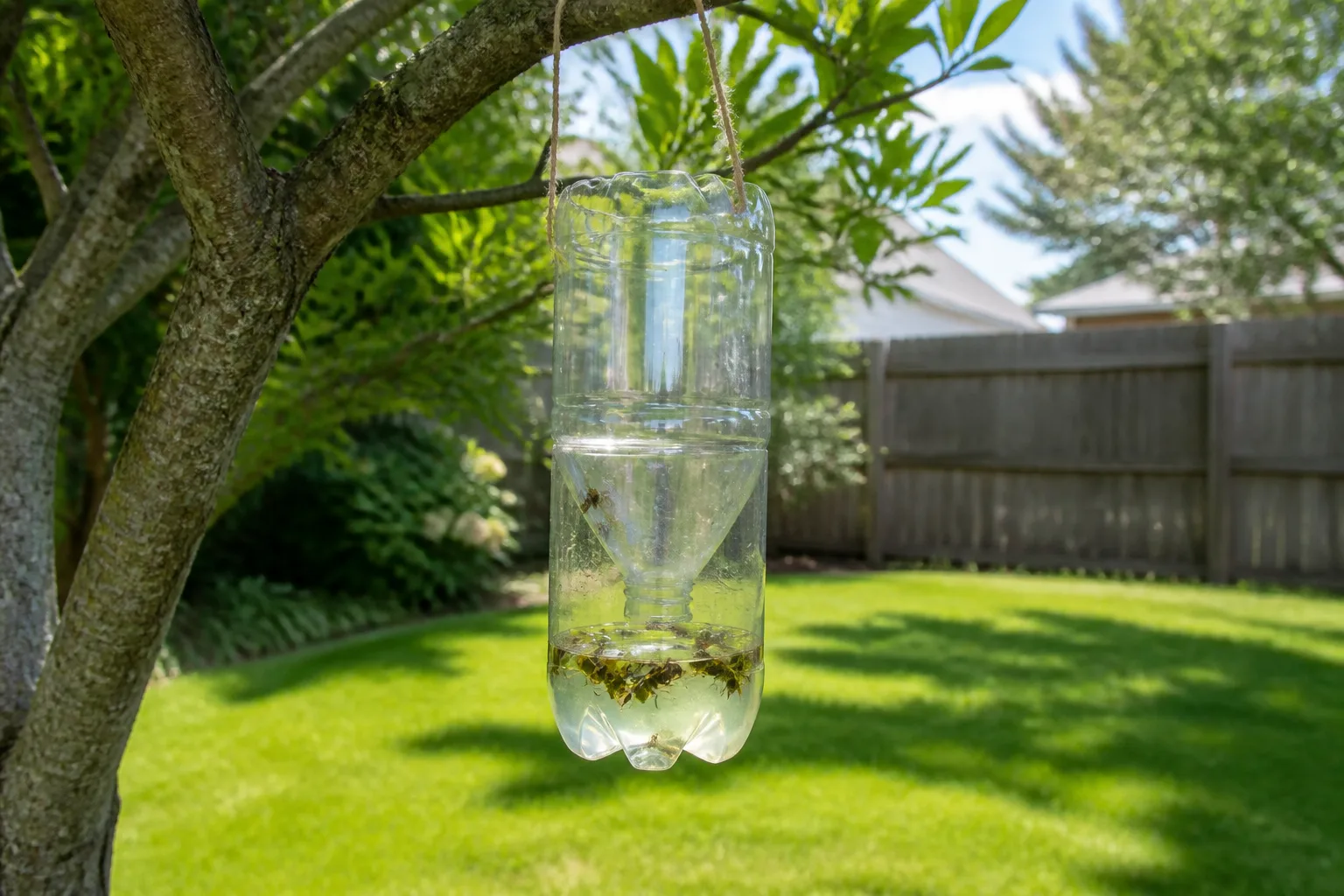
Traps can reduce localized yellowjacket activity, but they are not a universal wasp solution. UC IPM notes that common lure traps attract some yellowjacket species more strongly than others and that traps do not eliminate a large colony. If you use one, place it at the property edge and away from doors, patios, play areas, and food—not beside the table you are trying to protect. Follow the product label and keep the trap inaccessible to children and pets.
Do not use a yellowjacket lure as a general-purpose trap for paper wasps or mud daubers. A trap near a patio can also increase the number of wasps you notice if it is placed where people gather. A trap is a targeted tool for foraging yellowjackets after sanitation, not permission to leave food and garbage exposed.
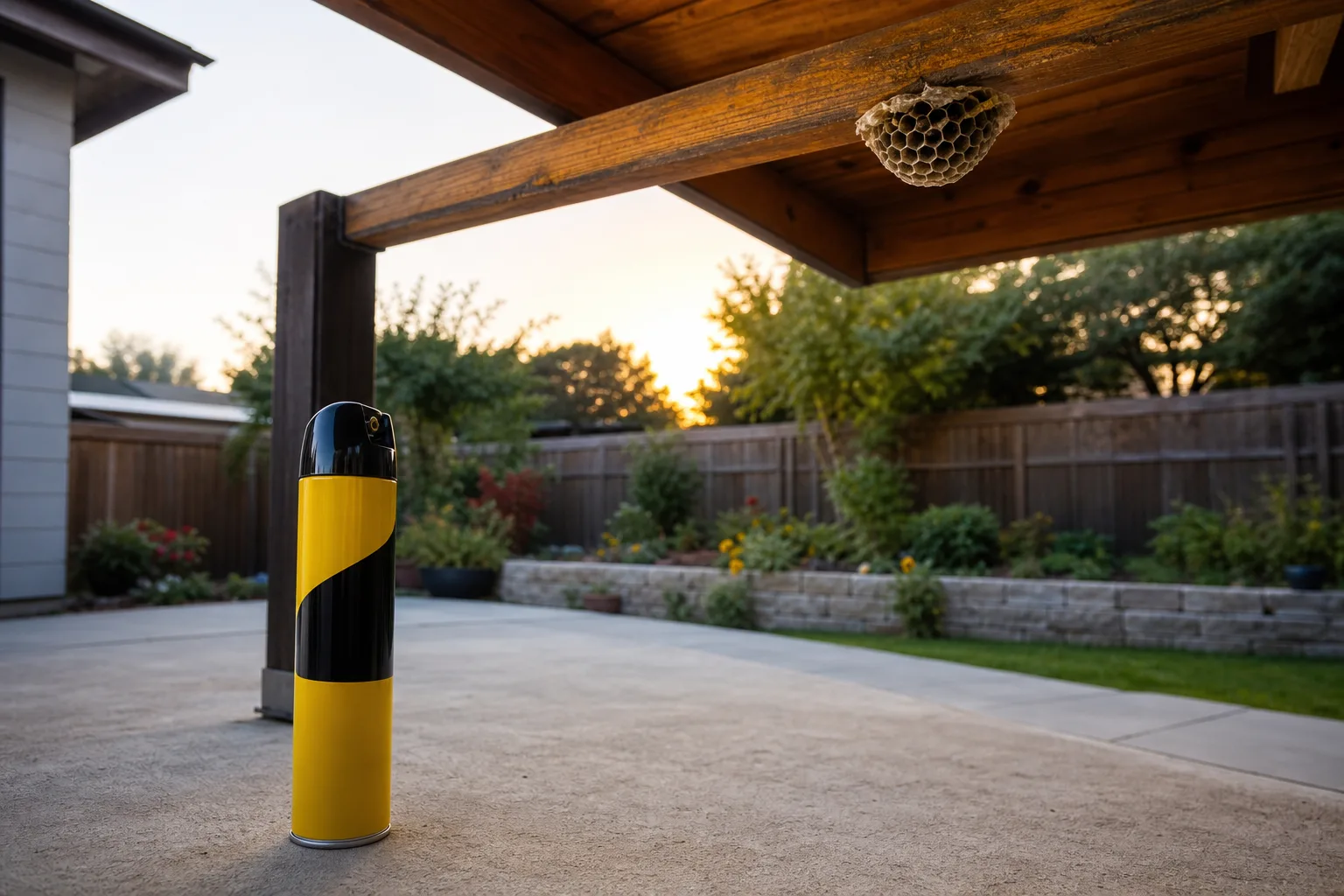
Nest treatment is a different job. A wasp spray can be effective only when it is labeled for the species, nest type, site, and use pattern, and even then the person applying it is exposed to an agitated colony. UC IPM warns that spraying after dark is not risk-free and that underground nests may extend beyond the visible entrance. Skip unlabelled dish-soap mixtures, essential-oil promises, and improvised attempts to flood a wall or ground hole.
The safest choice for a large nest, a nest in a wall or roof, a ground nest near a path, or any nest that cannot be approached without crossing the flight path is a licensed pest professional. Ask for a targeted treatment and advice about sealing the access point only after the colony is confirmed inactive.
Wasp-sting safety for people, pets, and children
Most wasps are trying to forage or defend a nest, not chase people. If one lands on you, stay still and let it leave or gently brush it away; swatting and running can turn a brief encounter into a sting. Never shake a nest, mow over a suspected ground entrance, or reach into a cavity to see what is inside.
If you are stung, watch for symptoms beyond ordinary pain and localized swelling. Trouble breathing, wheezing, chest tightness, or hives and swelling away from the sting site can signal a life-threatening allergic reaction; Oregon State University Extension’s yellowjacket guidance advises calling 911 for those signs. Follow the person’s emergency plan and epinephrine instructions if they have them.
Multiple stings also deserve medical attention, especially in a child, older adult, or anyone who feels unwell. Move away from the nest or food source first, because yellowjackets can sting repeatedly and a disturbed colony can send out more defenders. When in doubt about a nest near people or pets, the cost of professional help is lower than the cost of a preventable attack.
Conclusion
Wasps keep showing up when your yard is offering one of four things: an easy meal, a drink of water, useful hunting, or a protected place to live. The pattern tells you which response fits. Cover food, secure waste, remove fallen fruit, correct leaks, and observe the flight path before deciding that every wasp needs to be killed.
Leave low-traffic paper wasps and mud daubers alone when you can, because they help control insects and contribute to pollination. If yellowjackets are entering a wall, nesting beside a path, or creating a sting risk for your family, stop experimenting and bring in a professional.