14 Beautiful Types of Hydrangea to Grow
Compare 14 standout hydrangea varieties by species, zone, bloom time, and pruning wood—plus a decision guide so you pick the right shrub the first time.
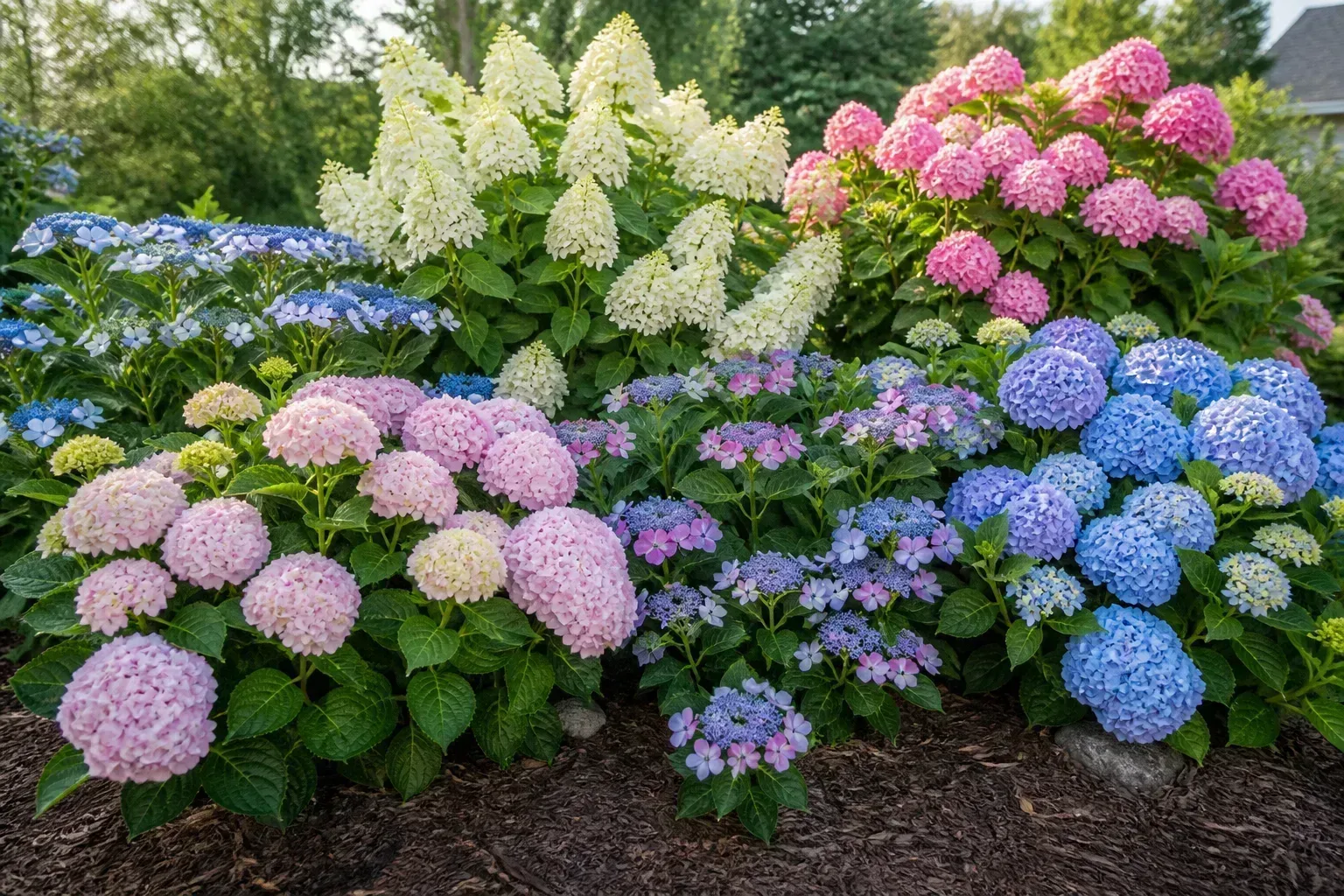
Walk into any garden center in June and you will see mophead globes, lacecap rings, and cone-shaped panicles fighting for attention on the same bench. They are all hydrangeas, but they do not all want the same sun, the same pruning schedule, or the same winter protection. Pick the wrong group for your USDA hardiness zone and you get a healthy shrub with no flowers—a frustration that shows up constantly in hydrangea rebloom troubleshooting.
This guide covers 14 beautiful hydrangea cultivars worth planting, but it starts where most variety lists stop: the six species groups that explain why each plant behaves differently. Once you know whether a shrub blooms on old wood or new wood, whether it tolerates afternoon sun, and whether soil pH will shift its color, the cultivar choice gets much easier.
Six Hydrangea Species Behind Every Garden Favorite
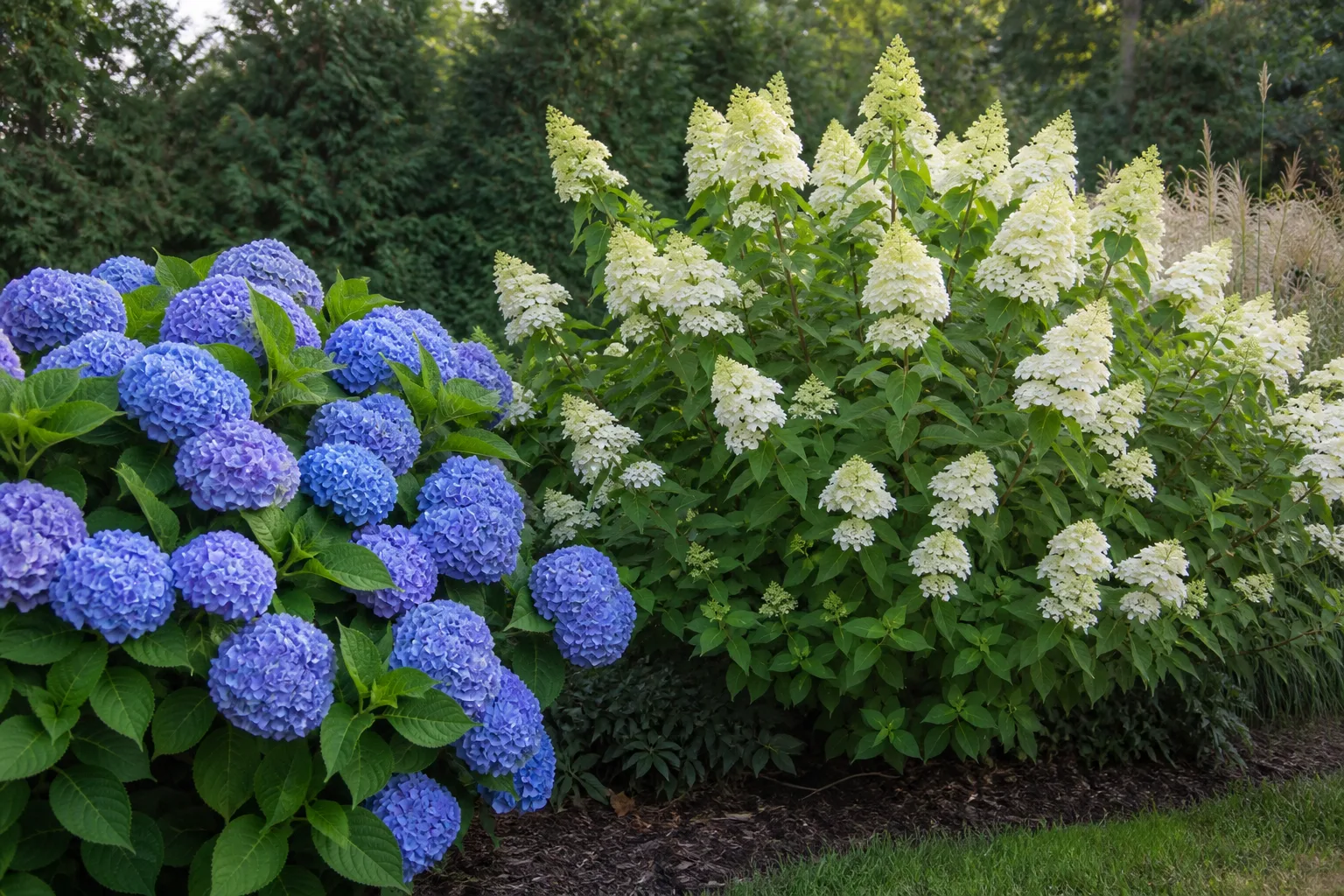
Roughly 70 to 80 hydrangea species exist worldwide, yet North American home gardens rely on six main groups. NC State Extension describes them as deciduous shrubs or climbers with terminal flower clusters in white, pink, blue, or purple—depending on species and, for some types, soil chemistry.
Smooth hydrangea (Hydrangea arborescens)
Native to the eastern United States, smooth hydrangea produces round white flower heads on new wood—stems that grow in the current season. That makes it one of the most forgiving choices in cold climates down to about USDA Zone 3. Classic ‘Annabelle’ set the template; modern cultivars like Incrediball push flower size and stem strength further. Smooth types prefer moist, humus-rich soil and tolerate more shade than panicle hydrangeas, though flower size is best with at least four hours of direct sun.
Bigleaf and mountain hydrangeas (H. macrophylla and H. serrata)
Bigleaf hydrangea is the mophead and lacecap group most people picture: round or flat-topped clusters, often blue or pink depending on soil pH and aluminum availability. Most older bigleaf cultivars bloom primarily on old wood—buds formed the previous year—so late frosts or fall pruning can erase an entire season of flowers. Reblooming series such as Endless Summer and BloomStruck also set buds on new wood, which is why they perform better in Zone 4 and 5 gardens with unpredictable winters.
Mountain hydrangea (H. serrata) is a close cousin with smaller lacecap flowers, finer foliage, and similar pH-driven color. It tends to be more bud-hardy than many bigleaf types and suits woodland edges and dappled shade.
Panicle hydrangea (Hydrangea paniculata)
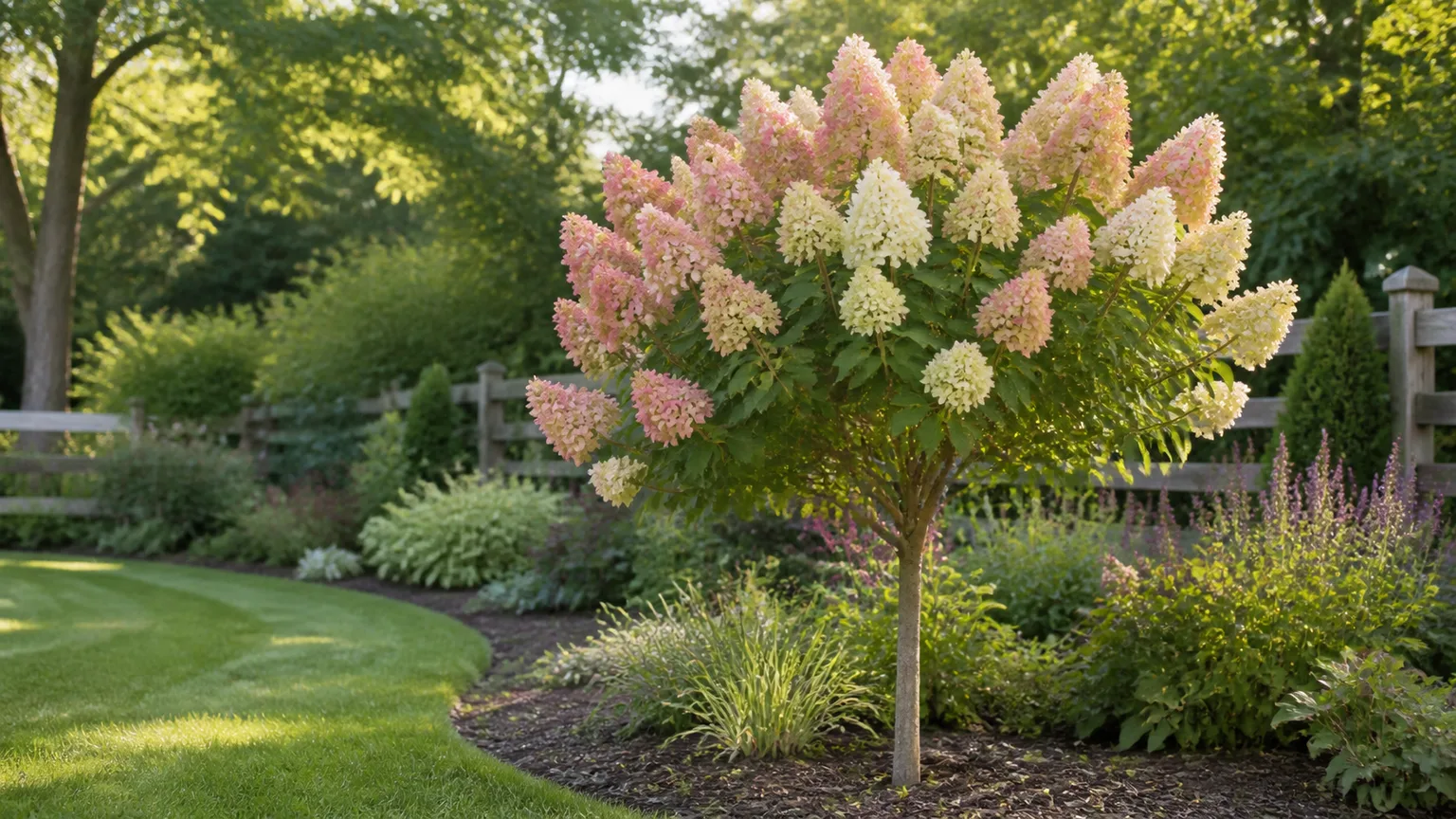
Panicle hydrangeas carry cone-shaped flower clusters on new wood, bloom from mid-summer into fall, and tolerate more sun and drought stress than bigleaf types. They are the backbone of cold-climate hydrangea plantings from Zone 3 through 8. Many cultivars age from white to pink or red as nights cool. For deeper panicle culture and tree-form training, see our tree hydrangea (PeeGee) guide.
Oakleaf hydrangea (Hydrangea quercifolia)
A southeastern U.S. native, oakleaf hydrangea combines white summer panicles with lobed leaves that turn wine red in autumn and exfoliating bark for winter interest. It blooms on old wood and prefers morning sun with afternoon shade in hot regions. It is one of the best hydrangea choices for dry shade once established, though it still needs consistent moisture its first two years.
Climbing hydrangea (Hydrangea anomala subsp. petiolaris)
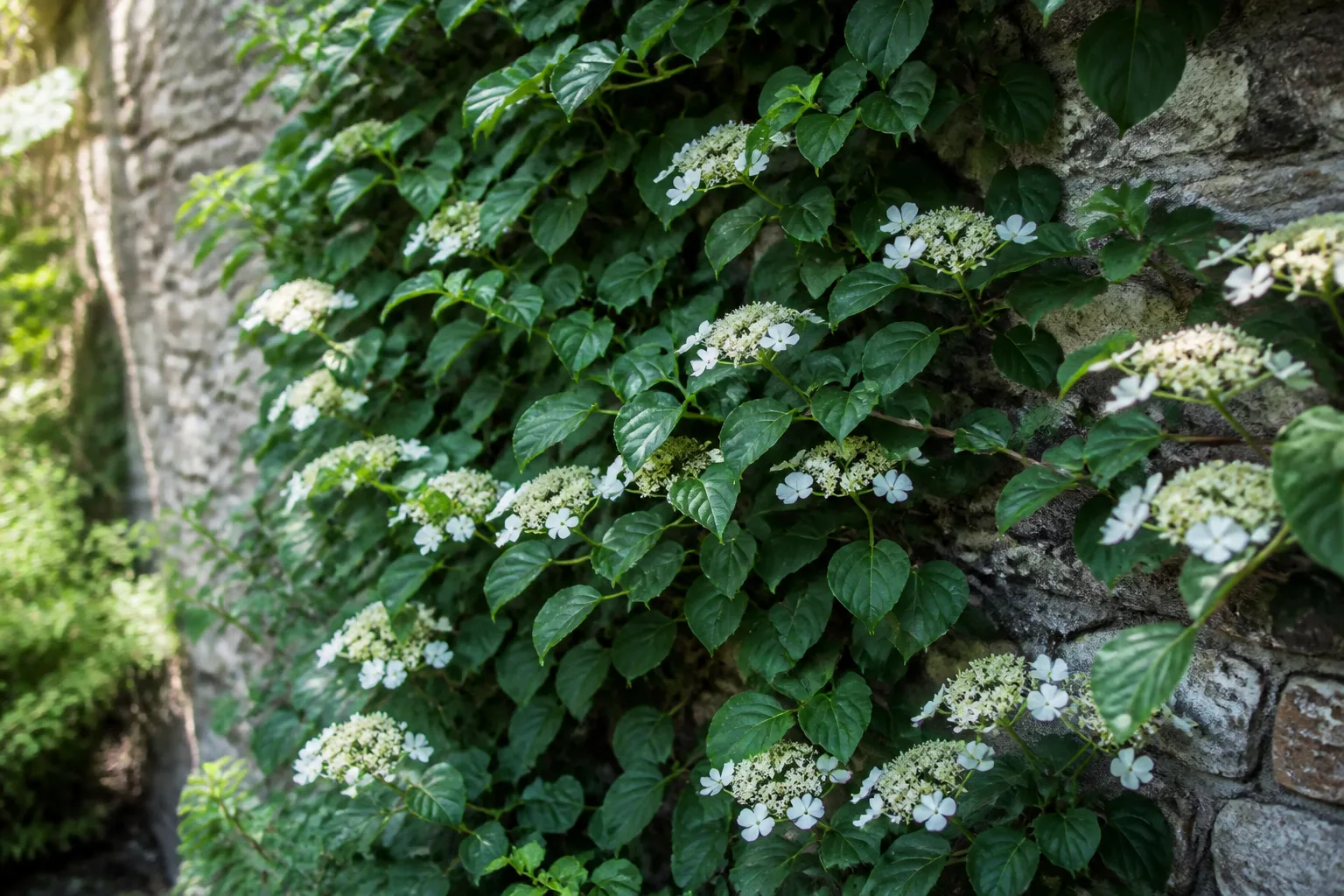
This self-clinging vine attaches by aerial rootlets and can cover a north-facing wall or mature tree trunk. It blooms on old wood, establishes slowly for three to five years, then becomes a long-lived feature. It is not a quick fix for a bare trellis this season—plan for patience.
Old Wood vs New Wood: The Rule That Controls Blooms
If you remember one technical detail, make it this: hydrangeas bloom either on old wood, new wood, or both.
Old-wood bloomers (most oakleaf, climbing, and traditional bigleaf types) set flower buds on stems produced the previous year. Prune them right after flowering or not at all except to remove dead wood. Hard spring pruning removes the buds you need. Late-spring frosts can damage those buds in marginal zones—exactly why Nikko Blue and other old-wood bigleaf types struggle in Zone 6 without protection.
New-wood bloomers (smooth and panicle species) flower on current-season growth. Prune in late winter or early spring before buds swell. Even if winter kills stems to the ground, you still get blooms that year—one reason Incrediball and Limelight are staples in northern gardens.
Reblooming cultivars flower on both old and new wood. They forgive late pruning and frost better than old-wood-only bigleaf types, though they still perform best when you protect buds over winter. Full pruning timing by type lives in our when to prune hydrangeas guide.
How to Choose the Right Hydrangea for Your Site
Sun, soil moisture, and space
Hydrangeas share a love of fertile, moist, well-drained soil rich in organic matter, but sun tolerance splits by group. Panicle and smooth types handle full sun in cool climates if soil stays evenly moist. Bigleaf, mountain, and oakleaf types prefer morning sun and afternoon shade—especially where summers run hot and dry. Climbing hydrangea tolerates deep shade but flowers more heavily with bright indirect light.
Shop using mature width and height, not the quart pot on the bench. A Limelight labeled “compact” still wants 6 to 8 feet. For tight beds and patios, look at dwarf series (Cityline, Little Lime, Tiny Tuff Stuff types) or plan a container with a compact panicle cultivar. Spacing guidance is in our how far apart to plant hydrangeas article.
Flower color and soil pH
Only bigleaf and mountain hydrangeas (and a few interspecific hybrids) shift between blue and pink based on soil chemistry. Acidic soil with available aluminum tends toward blue; alkaline soil pushes pink. NC State Extension notes purple often appears between pH 5.5 and 6.5. White cultivars stay white regardless of pH. Panicle and smooth types age through white, pink, and red tones naturally without soil treatments.
Changing color is a multi-season project—aluminum sulfate applications in early spring can nudge toward blue; lime raises pH toward pink. Expect one to two growing seasons before the shift shows clearly. Our bigleaf hydrangea care guide walks through the chemistry without overselling instant results.
Safety note: ASPCA lists hydrangea as toxic to dogs, cats, and horses. All parts contain cyanogenic glycosides that can cause vomiting and gastrointestinal upset if large quantities are eaten. Severity is usually mild, but keep pets from chewing stems or fallen flowers.
14 Standout Hydrangea Cultivars Worth Planting
The cultivars below span all six species groups. Each entry lists zones, size, light, and a honest fit check so you can shortlist before visiting a nursery.
Smooth and panicle picks for cold climates and full sun
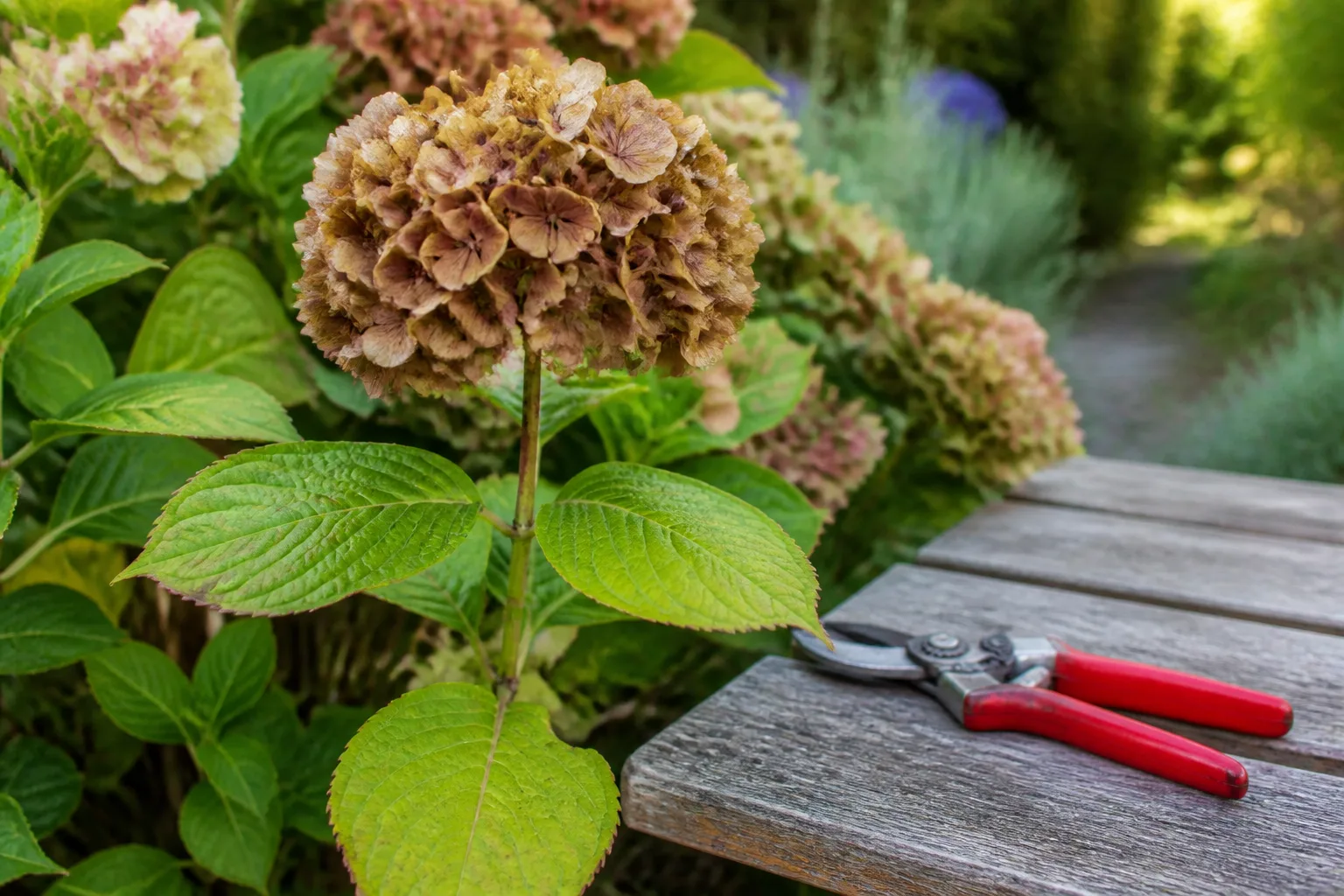
Incrediball (Hydrangea arborescens ‘Abetwo’) improves on the classic ‘Annabelle’ with sturdier stems that hold 12-inch white globes without flopping after rain. USDA Zones 3–8; 4–5 feet tall and wide; full sun to partial shade. Blooms on new wood. Choose it if you want massive white heads in a cold climate and hate staking. Skip it if you need blue or pink flowers—smooth hydrangeas stay white or blush only slightly.
Limelight (H. paniculata ‘Limelight’) opens chartreuse-white cone panicles in mid-summer, aging to pink and burgundy tones by fall. Zones 3–9; 6–8 feet tall and wide (dwarf ‘Little Lime’ stays near 4 feet). Full sun to partial shade; new wood. Choose it if you want a long bloom season and strong cold hardiness. Skip it if your bed is only 3 feet wide—this is a statement shrub, not an edging plant.
Zinfin Doll (H. paniculata ‘Zinfin Doll’) blends panicle hardiness with mophead fullness: large rounded clusters open white and deepen to strawberry pink without soil treatments. Zones 3–8; 4–6 feet; full sun to partial shade. Choose it if you want pink tones in a sunny foundation bed. Skip it if you need a true dwarf—look at ‘Bobo’ or Little Quick Fire instead.
Unique (H. paniculata ‘Unique’) is a vigorous upright panicle with white flowers blushing pink with age. Zones 3–8; 6–10 feet tall, 8 feet wide. Responds well to training into a single-trunk tree form. Choose it if you want a large specimen or patio tree hydrangea. Skip it if you cannot commit to annual late-winter pruning to manage size.
Bigleaf and mountain picks for color and compact spaces
Nikko Blue (H. macrophylla ‘Nikko Blue’) is the classic mophead with intense blue in acidic soil or pink in alkaline conditions. Zones 6–9; 4–6 feet; partial shade preferred. Blooms primarily on old wood from June for about eight weeks. Choose it if you want a traditional blue-pink mophead in a mild climate. Skip it if you live in Zone 5 or colder without heavy winter protection—bud loss is common.
Cityline Mars (H. macrophylla Cityline ‘Mars’) is a compact 1–3 foot series plant with picotee-edged petals that may show blue, pink, or purple on the same bush while soil chemistry stabilizes. Zones 5–9; full sun to partial shade with consistent moisture. Choose it if you need a patio pot or front-bed color in a small footprint. Skip it if you want a hedge taller than 3 feet.
BloomStruck (H. macrophylla ‘BloomStruck’, Endless Summer series) reblooms on old and new wood with rose-pink or blue-purple clusters, red-purple stems, and better heat tolerance than older bigleaf types. Zones 4–9; 3–4 feet tall, 4–5 feet wide. Choose it if you are in a borderline cold zone and want repeat flowering. Skip it if your site bakes all afternoon without irrigation—pair with mulch and consistent watering.
Blue Deckle (H. serrata ‘Blue Deckle’) is a mountain hydrangea with frilly lacecap flowers in blue or lavender depending on pH. Zones 6–9; 3–4 feet; dappled shade under deciduous trees. Late summer bloom with strong red-purple fall foliage. Choose it if you want lacecap texture in a woodland border. Skip it if you need a full-sun hedge plant.
Eldorado (H. macrophylla ‘Eldorado’) delivers rare true red mophead tones in late summer when many shrubs are finished. Zones 6–9; about 3 feet; full sun to partial shade. Old-wood blooming with moderate winter hardiness. Choose it if you want late-season red in a protected courtyard. Skip it if you garden in Zone 5 or colder.
YOU&ME Together (H. macrophylla YOU&ME ‘Together’) produces dense double mophead or lacecap flowers in light pink or light blue. Zones 6–9; about 3 feet. Choose it if you want showy double florets for containers or front beds. Skip it if you dislike trademarked series pricing—standard mopheads may suffice.
Madame Emile Mouillere (H. macrophylla ‘Madame Emile Mouillere’) is a century-old French cultivar with white sterile flowers that fade to pale blue or dusky pink by late summer. Zones 5–9; 5–6 feet tall, 6–8 feet wide. Choose it if you want elegant white that subtly shifts tone. Skip it if you need a tight 3-foot shrub without pruning.
Miss Saori (H. macrophylla ‘Miss Saori’, PP21,513) won Chelsea Flower Show Plant of the Year for creamy double flowers with picotee rose edges, burgundy fall foliage, and peeling cinnamon bark on mature stems. Zones 5–11 per breeder data; 3 feet in many gardens. Choose it if you want a four-season specimen in a flower border. Skip it if you need proven extreme-cold performance—treat as Zone 5 with protection.
Oakleaf, climbing, and specialty forms
Gatsby Pink (H. quercifolia ‘Gatsby Pink’) is a Proven Winners oakleaf with large white panicles aging to pink, plus red fall foliage. Zones 5–9; 6–8 feet; morning sun, afternoon shade. Old-wood blooms. Choose it if you want native character and autumn color in a partly shaded bed. Skip it if you cannot give it room—oakleafs look best unpruned.
Climbing hydrangea (H. anomala subsp. petiolaris) covers walls and tree trunks with white lacecap clusters once established. Zones 4–8; 30–50 feet vertical reach, 5–6 feet spread against a surface. Partial shade to sun; old wood. Variegated ‘Miranda’ adds cream leaf margins. Choose it if you have a permanent masonry or bark surface and time to wait. Skip it if you need flowers this year—establishment commonly takes three to five years.
Hydrangea Comparison at a Glance
| Cultivar | Species group | Zones | Bloom wood | Peak bloom | Signature trait |
|---|---|---|---|---|---|
| Incrediball | Smooth | 3–8 | New | Early–mid summer | Huge white globes, strong stems |
| Limelight | Panicle | 3–9 | New | Mid–late summer | Chartreuse aging to pink |
| Zinfin Doll | Panicle | 3–8 | New | Summer–fall | Mophead-like pink panicles |
| Unique | Panicle | 3–8 | New | Summer | Tree-form potential |
| Nikko Blue | Bigleaf | 6–9 | Old | June–July | Classic blue/pink mophead |
| Cityline Mars | Bigleaf | 5–9 | Old/new | Summer | Compact picotee bicolor |
| BloomStruck | Bigleaf | 4–9 | Both | Summer–fall | Reblooming Endless Summer type |
| Blue Deckle | Mountain | 6–9 | Old | July–August | Frilly lacecap, fall color |
| Eldorado | Bigleaf | 6–9 | Old | Late summer | Red mophead tones |
| YOU&ME Together | Bigleaf | 6–9 | Old | Summer | Double flowers |
| Madame Emile Mouillere | Bigleaf | 5–9 | Old | Summer | White aging to pastel |
| Miss Saori | Bigleaf | 5–11* | Old | June+ | Picotee doubles, bark interest |
| Gatsby Pink | Oakleaf | 5–9 | Old | Early summer | Pink-aging panicles, red fall |
| Climbing hydrangea | Climbing | 4–8 | Old | Early summer | Vine for walls and trees |
*Miss Saori: confirm local winter protection in Zone 5.
Shared Care Basics Every Hydrangea Needs
Regardless of cultivar, hydrangeas perform best in loamy, well-drained soil with consistent moisture—never bone-dry and never waterlogged. A 2–3 inch mulch ring preserves soil moisture and moderates root temperature. Water deeply during the first growing season and in drought; wilting on hot afternoons is common and often recovers overnight if soil is not actually dry. See hydrangea care tips and keeping hydrangeas from going limp for heat-wave tactics.
Fertilize lightly in spring with a balanced slow-release product or compost top-dressing. Excess nitrogen pushes leaves at the expense of flowers—especially on panicle types. Deadheading spent bigleaf blooms can tidy the plant; on panicles, many gardeners leave dried heads for winter interest. Timing for deadheading in summer depends on whether you want rebloom or dried structure.
Common Mistakes When Picking Hydrangea Varieties
Buying for flower color on the tag without knowing your soil pH. A pink-labeled pot may turn blue in acidic garden soil within two seasons—or stay pink in alkaline clay regardless of cultivar name.
Planting old-wood bigleaf types in exposed Zone 5 beds. Without bud protection, you get foliage balls with no flowers. Choose reblooming or new-wood species instead, or wrap and mulch through winter.
Expecting instant coverage from climbing hydrangea. It is one of the most beautiful long-term vines, but the first years look sparse. Patience is part of the cultivar.
Pruning every hydrangea in March. Panicle and smooth types yes; oakleaf, climbing, and traditional bigleaf types no—unless you are removing dead stems only.
Ignoring mature size. Limelight, Unique, and Gatsby Pink are gorgeous—and large. Measure the bed first.
Conclusion
The 14 hydrangea varieties above cover smooth globes for cold gardens, panicle cones for sun, bigleaf and mountain color for patios, oakleaf natives for shade and fall drama, and climbing hydrangea for vertical walls. Start with species group and bloom wood, match sun and space to the cultivar’s real mature size, then fine-tune color with soil chemistry where it actually applies. Get those three decisions right and hydrangeas become one of the most rewarding summer shrubs you can grow—with deeper pruning, watering, and rebloom help waiting in the LeafyPixels hydrangea guide cluster whenever you need it.