How to Grow and Care for Limelight Hydrangea
Grow Limelight hydrangea with confidence: light, soil, watering, pruning on new wood, cultivar choices, containers, and fixes for weak blooms.
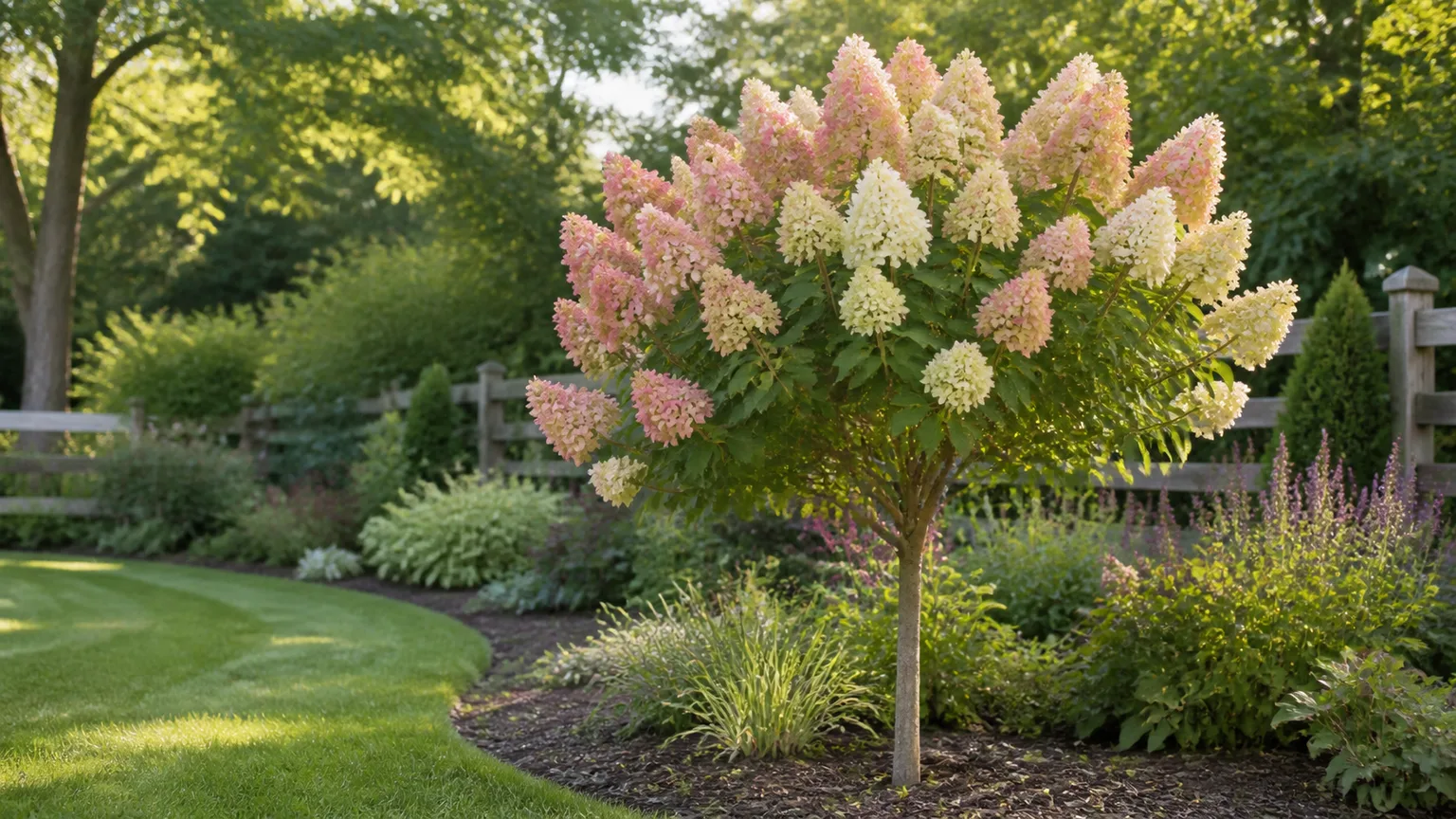
Limelight hydrangea (Hydrangea paniculata ‘Limelight’) is the panicle hydrangea cultivar many gardeners reach for when they want cone-shaped flower heads that open lime green, fade through creamy white, and finish the season in dusty pink and burgundy. It is cold-hardy, blooms on new wood, and does not need acidic soil to “turn blue” the way bigleaf hydrangeas do. That combination makes it a strong choice for borders, foundations, cutting gardens, and large containers—if you give it enough room and prune at the right time of year.
The care mistakes I see most often are not exotic. People treat Limelight like a shade-loving, old-wood bigleaf type, prune it in summer after flowers fade, or plant the full-size cultivar where only a dwarf will fit. This guide organizes care around panicle hydrangea biology so you can place, water, feed, and cut the shrub with fewer surprises.
Limelight hydrangea care at a glance
Plant Limelight in USDA zones 3–9 with morning sun and afternoon protection in hot climates, or more sun where summers are cool. Use rich, well-drained soil and keep the root zone evenly moist while the plant establishes. Unlike bigleaf hydrangeas, soil pH does not change flower color on panicle types.
Expect 6 to 8 feet tall and wide for the original cultivar at maturity, with smaller options in the Little Lime and Limelight Prime lines. Blooms typically appear from mid- to late summer into fall. Prune in late winter or early spring before new growth extends, because Limelight flowers on current-season wood. All hydrangea parts can upset pets if eaten; the ASPCA lists hydrangeas as toxic to dogs, cats, and horses, usually causing vomiting and diarrhea rather than severe cyanide poisoning.
Know the plant before you plant it
Limelight is a deciduous woody shrub with opposite, serrated leaves and large terminal panicles—upright cone-shaped flower clusters made of hundreds of small four-petaled florets. NC State Extension describes panicle hydrangea as a rapid-growing, coarsely textured plant that can reach roughly 8 to 15 feet in the species, though named cultivars are bred to stay smaller and more manageable in residential gardens.
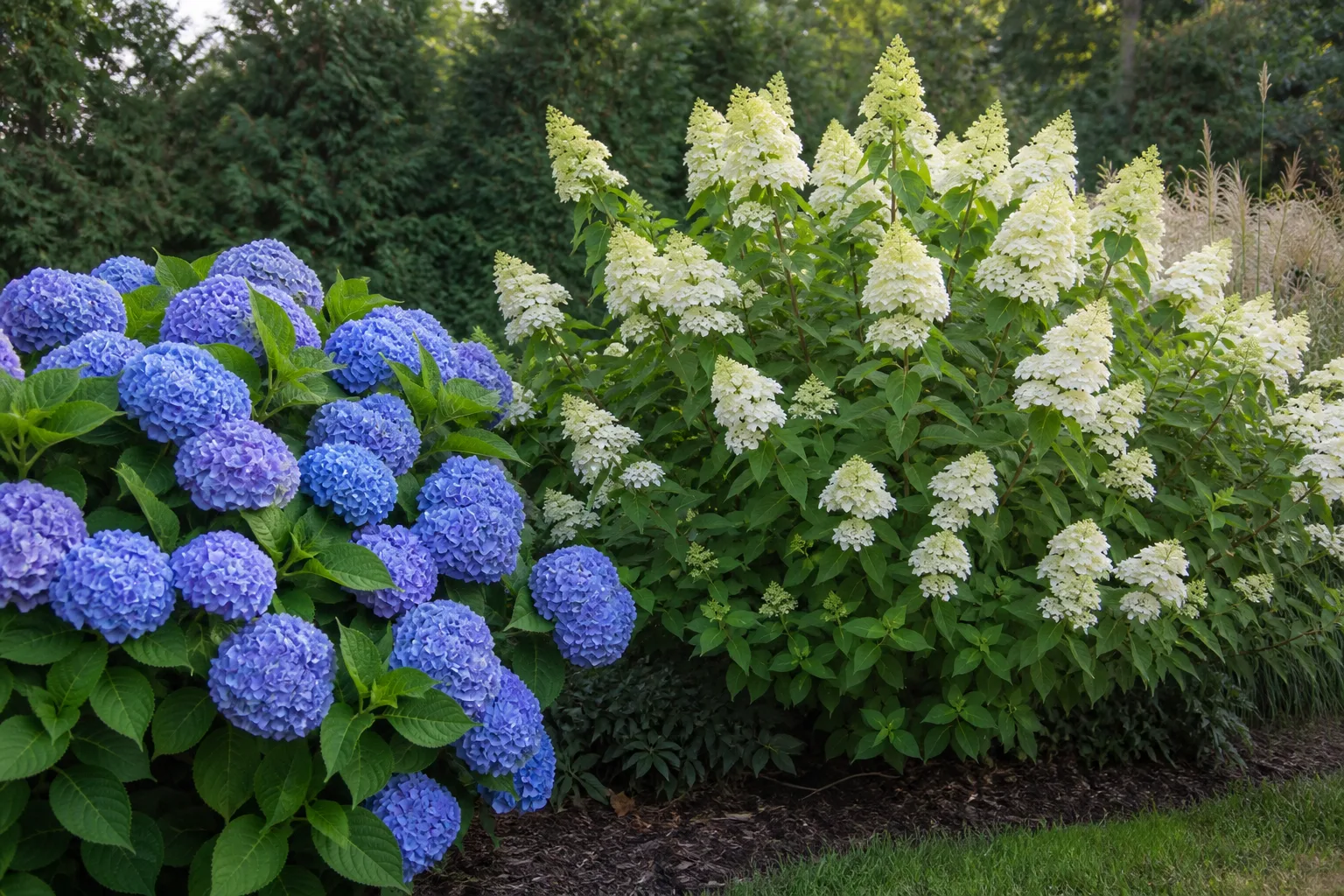
The trademark name Limelight refers to a specific selection introduced by Pieter Zwijnenburg and marketed widely through Proven Winners. When you buy a plant, check the label for Hydrangea paniculata ‘Limelight’ so you know you are getting the lime-green panicle type, not a similarly named bigleaf or oakleaf hydrangea.
Panicle blooms and the seasonal color shift
Limelight’s show is a progression, not a single snapshot. New panicles often open with a fresh green cast, then lighten to white or cream as florets mature. Cool nights and aging flowers bring pink, rose, and burgundy tones that can persist into autumn, sometimes alongside red fall foliage on the leaves. Garden Design notes flower heads up to about 12 inches long on mature plants, with exceptionally long vase life fresh or dried.
Because panicles keep developing over weeks, a healthy shrub often carries green, white, and pink stages at once. That is normal. What is not normal is brown, crispy panicles in July on a plant in full afternoon sun with dry soil—usually a heat and moisture problem, not a mysterious disease.
How Limelight differs from bigleaf hydrangeas
If you have grown mophead or lacecap hydrangeas, reset two assumptions. First, Limelight blooms on new wood (stems that grow in the current year), so late-winter pruning does not remove next year’s flower buds the way it would on many bigleaf types. Second, flower color is cultivar-driven, not soil-driven. Lime, white, and pink tones on Limelight will not turn blue because you acidified the soil.
Panicle hydrangeas also tolerate more sun than bigleaf hydrangeas in many regions. They are shallow-rooted like other hydrangeas, so they still need consistent moisture and mulch, but they are often the better hydrangea choice where winter kills bigleaf buds or where you want a larger, later-season display. For a broader pruning calendar across types, see when to prune hydrangeas.
Choose the right cultivar for your space
Full-size Limelight is a statement shrub. Before you dig, measure the bed width and the height of nearby windows, eaves, and power lines. A plant sold in a 3-gallon pot will look modest the first year and imposing by year five if it has full sun, good soil, and regular water.
Original Limelight versus Little Lime and Limelight Prime
| Cultivar | Typical mature size | Best for |
|---|---|---|
| ’Limelight’ (original) | 6–8 ft tall and wide | Specimens, hedges, large borders |
| Limelight Prime® | 4–6 ft tall, 4–5 ft wide | Earlier bloom, stronger stems, mid-size beds |
| Little Lime® | 3–5 ft tall and wide | Small yards, foundation fronts, large pots |
Limelight Prime is marketed as an improved form with earlier flowering and sturdier stems—useful in short-season climates where you want color before autumn arrives. Little Lime delivers the same general color story in a footprint that will not swallow a walkway. If you need a single-trunk “tree” look, panicle hydrangeas—including Limelight—can be trained into standard form, similar to the approach in our Pee Gee hydrangea guide, but that is a multi-year shaping job, not a different species.
Light needs by climate
Limelight needs at least about four to six hours of direct sun during the growing season to build strong stems and full panicles. In cool northern gardens, full sun is often ideal. In hot southern or western exposures, morning sun with afternoon shade reduces scorched blooms and midday wilt.
Read the site, not just the compass direction. Reflected heat from pavement, south-facing walls, and dark mulch can stress a plant that technically receives “partial sun.” A shrub tucked under a high canopy may look healthy for years and then bloom lightly once the tree matures—Limelight tolerates more shade than many panicle types in catalogs suggest, but weak flowering is often the first sign of too little direct light.
If panicles brown at the tips while leaves look otherwise healthy, look for afternoon shade or increase deep watering before you reach for fungicides. NC State Extension notes that panicle hydrangea is more sun-tolerant than many hydrangea species but still benefits from afternoon protection in intense heat. Windy corridors count, too: constant desiccating wind can scorch leaf margins even when the compass reading says “part shade.”
Soil, drainage, and pH
Limelight adapts to a range of soils if drainage is good. Heavy clay that holds water for days after rain invites root rot and winter crown problems. Sandy soil may need more organic matter to hold moisture around shallow roots.
A slightly acidic to slightly alkaline pH (often roughly 6.0–7.0) is fine. Do not buy aluminum sulfate expecting blue flowers. Instead, focus on structure: loosen the planting area, mix in compost, and plant so the top of the root ball sits level with or slightly above the surrounding grade. After planting, apply 2–3 inches of shredded bark or compost mulch over the root zone, keeping mulch a few inches away from the stems.
Because roots are shallow, mulch also limits soil temperature swings and reduces competition from lawn grass or aggressive ground covers right against the trunk—both common reasons young hydrangeas stall.
Watering and summer heat stress
Established Limelight hydrangeas have moderate water needs: they want evenly moist soil, not constant sogginess and not repeated drought cycles. During the first growing season, water deeply one to three times per week depending on rainfall, heat, and soil type. Probe 2–3 inches down; if it is dry, soak the root zone slowly rather than sprinkling the leaves.
Newly planted shrubs are the most vulnerable. Their root balls can dry out faster than surrounding soil even when rain seems adequate. Build a shallow watering basin around the plant for the first summer, fill it slowly, and let water percolate rather than running off compacted clay. Once stems are sturdy and roots have spread beyond the original hole—often after one full growing season—you can shift to maintenance watering.
In heat waves, even well-established plants may droop in midday and recover overnight. If wilting persists into the cool morning, water deeply. If soil stays wet and the plant still declines, suspect poor drainage rather than thirst. Our hydrangea watering guide walks through the finger-test rhythm that works for most landscape hydrangeas.
Avoid overhead irrigation late in the evening in humid regions, as constantly wet foliage can encourage leaf spot and mildew. Drip irrigation or early-morning watering is kinder to leaves. Mulch helps here, too: it slows evaporation from shallow roots but should never touch the stems, where trapped moisture can encourage bark rot.
When and how to fertilize
Limelight does not need heavy feeding. In average garden soil, one light application in spring is enough for many plants. Use a slow-release granular fertilizer labeled for trees and shrubs, following package rates—overfeeding, especially with high nitrogen, produces leafy growth and weaker stems that struggle to hold large panicles.
If you prefer an organic route, compost or well-rotted manure worked into the mulch layer in spring supplies gentle nutrition and improves soil biology. Skip fertilizer on newly planted shrubs until they have rooted out for a full season unless a soil test shows a clear deficiency.
Planting and spacing in the landscape
The best planting windows are early spring or early fall, when soil is workable and extreme heat is less likely. Dig a hole twice as wide as the root ball and the same depth. Loosen circling roots on container plants, set the plant level, backfill with native soil amended with compost, and water thoroughly.
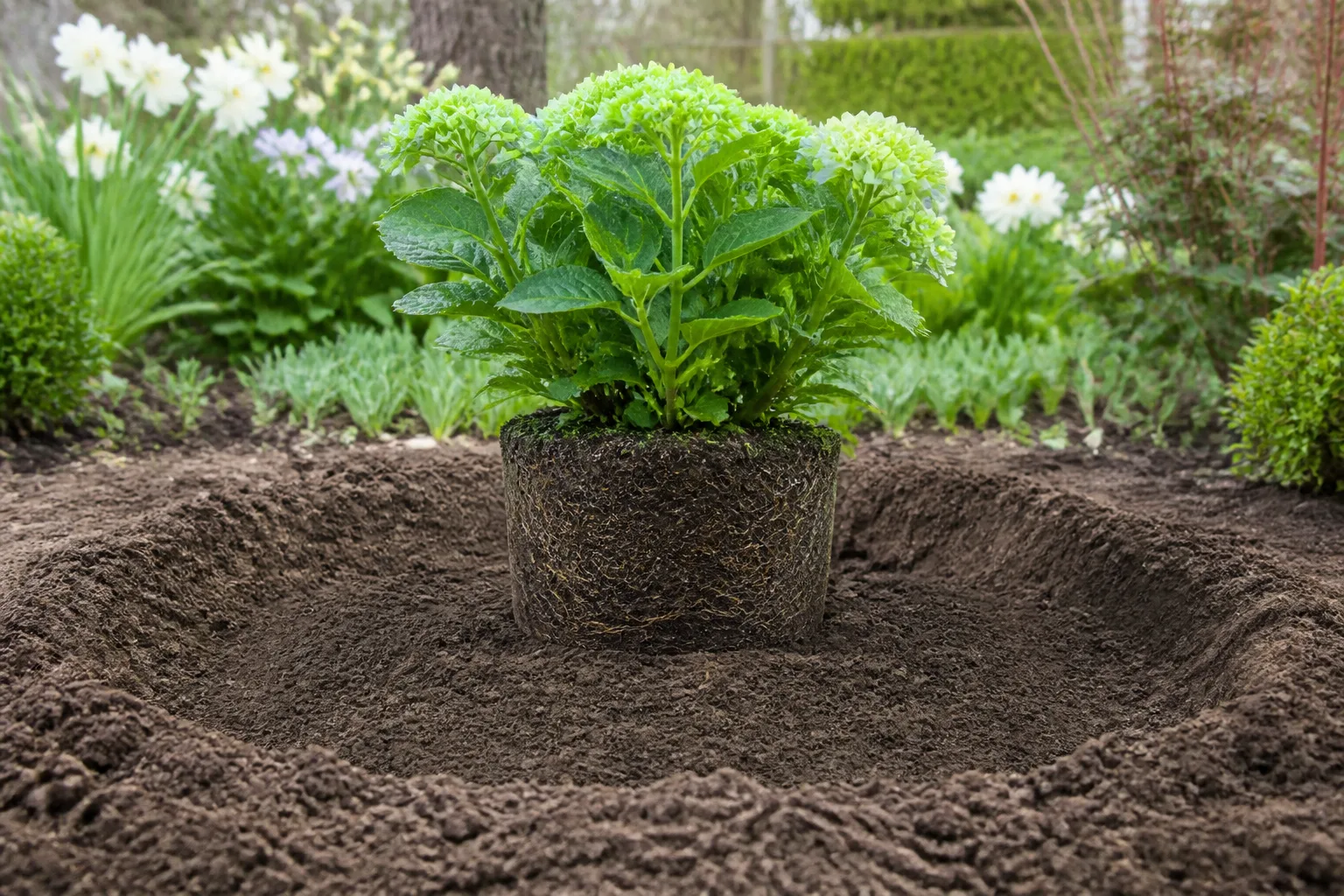
Space full-size Limelight 6 to 8 feet apart for individual specimens, or slightly closer for a hedge you plan to prune annually. Smaller cultivars can go 4 to 5 feet apart. Do not bury the crown or pile mulch against the stems.
Limelight works as a specimen, grouped drift, or informal hedge. It pairs well with evergreens, ornamental grasses, and late-season perennials that hide the shrub’s bare legs in winter. Avoid planting aggressive spreaders that will climb over the shallow root zone and steal moisture.
Pruning on new wood
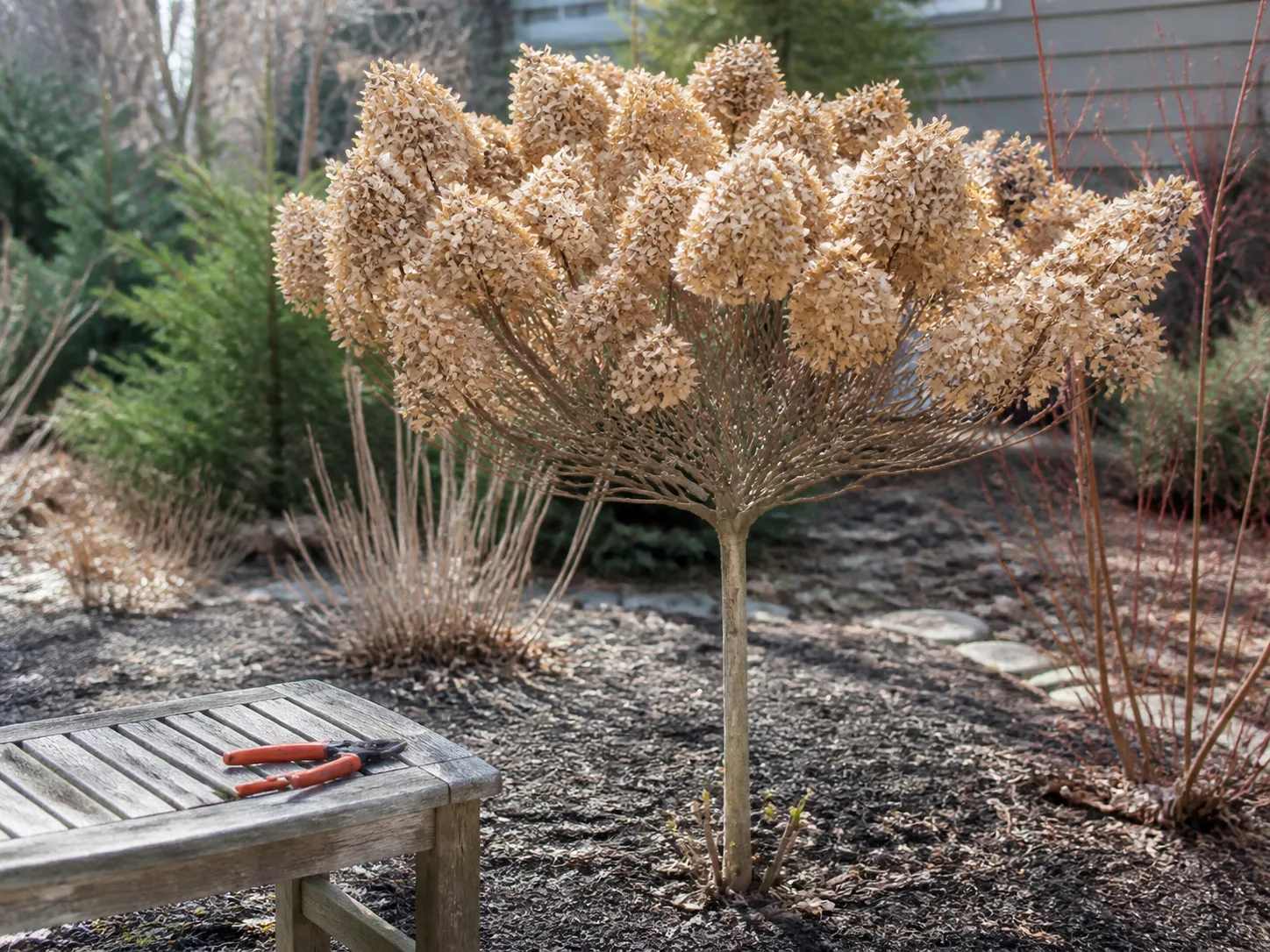
Panicle hydrangeas, including Limelight, flower on new wood. That means the flower-bearing shoots grow after you prune in late winter or early spring. You can remove dead or damaged wood any time, but structural pruning belongs to the dormant season.
Late-winter cutbacks that encourage blooms
In late winter or early spring—after the coldest weather but before buds swell and push strongly—inspect the plant with clean pruners or loppers. Remove dead, broken, crossing, and inward-facing stems first. Then shorten remaining healthy stems by up to one-third of their length, cutting just above a healthy outward-facing bud.
The goal is an open, vase-shaped framework that lets light into the center. Avoid shearing Limelight into a tight ball unless you accept fewer, smaller panicles. Harder rejuvenation cuts to near ground level are possible on healthy panicle hydrangeas because they resprout and bloom on new wood, but you sacrifice height for a year and should not combine that with drought stress the same season.
Do not prune in late spring or summer for size control if you want maximum bloom that year. Late cuts remove the shoots that were preparing to flower. Gardening Know How’s Limelight pruning guidance aligns with this calendar: dormant-season shaping builds sturdier branches that hold snow and rain better than leggy, unpruned wood.
If you are unsure whether a stem is alive, scratch the bark lightly; green tissue beneath indicates live wood. Delay major cuts until you can tell dead from dormant on borderline winters.
Growing Limelight in containers
Little Lime and Limelight Prime are the practical container choices; full-size Limelight quickly outgrows most pots. Choose a large, stable container with drainage holes—often 18 inches or wider for a mature dwarf—and use high-quality potting mix, not garden soil. Terra cotta breathes well but dries faster; plastic retains moisture but can heat roots on hot pavement.
Water containers more often than in-ground plants. Roots circling out of drainage holes signal time to repot one size up or plant into the garden. For general pot-versus-ground trade-offs, see growing hydrangeas in pots or in the ground.
Winter protection and hardiness
In the ground, established Limelight shrubs in zones 3–9 generally need no special winter wrap beyond a mulch layer over the root zone. Avoid late-season nitrogen that pushes soft growth before frost. Panicle hydrangeas are among the most cold-tolerant hydrangeas commonly sold, which is why they work where bigleaf types struggle—but flower buds still form on new wood after winter, so severe dieback from drought going into freeze-thaw cycles can delay the summer show even if the plant survives.
Wait until late winter to assess cold injury. Stems that look blackened or split after a hard winter can be cut back to live tissue during normal pruning. Do not panic-prune brown leaves in autumn; they are part of the plant’s normal dormancy signal.
Container plants are more vulnerable. Move pots to a sheltered spot against a wall, cluster them, insulate the pot with bubble wrap or burlap, or heel the plant into a garden trench for winter if you are in a marginal zone. The goal is to keep the root ball from cycling between frozen and thawed, which cracks roots and heaves the plant. In zone 3, even in-ground young plants benefit from a windbreak their first winter while roots establish.
Pests, diseases, and common problems
Limelight is relatively trouble-free when sited with sun, air movement, and good drainage. Powdery mildew, leaf spot, rust, and bud blight appear more often when plants are crowded, shaded, or kept wet overnight. Prune for openness, water at the base, and remove heavily infected leaves if problems recur.
Aphids and spider mites may appear on stressed plants but rarely require aggressive treatment if beneficial insects and water sprays keep populations in check. For broader hydrangea disease identification, see hydrangea diseases.
When limp panicles mean drought, not disease
Heavy panicles naturally arch as they mature. That is different from a whole shrub collapsing in afternoon heat. Check soil moisture before spraying pesticides. Brown, papery florets on an otherwise healthy plant often trace to sun and drought, especially on western exposures.
No blooms usually trace to one of four causes: too little sun, pruning too late, drought during bud formation, or excessive nitrogen. Work through that list in order. Opening nearby tree canopy for more morning light often helps more than another fertilizer application.
Cut flowers, drying, and landscape use
Limelight is a cut-flower workhorse. Harvest panicles when florets feel papery but before they turn fully brown for the longest vase life. Strip leaves below the water line, recut stems under water, and change vase water every few days. Early-morning cuts, when stems are fully hydrated, last longer than afternoon harvests on hot days.
For drying, hang small bunches upside down in a cool, dark, airy space. Panicles picked with a little green still showing often hold color better than fully brown heads. Dried Limelight stems work in wreaths and winter arrangements without the fragile crumble of bigleaf mopheads.
In the landscape, the shrub’s late-season color partners well with sedums, asters, and ornamental grasses. Use it as a back-of-border anchor where its bare winter stems will be screened by evergreens, or as a repeating rhythm along a fence line. White-variegated or blue-toned evergreens make the lime and pink panicles pop in August. Because it is toxic if ingested, place it thoughtfully in yards with chewing pets or curious toddlers, and teach children not to eat landscape plants.
Propagation note: Limelight is a trademarked cultivar associated with plant patent PP12874. Commercial propagation by cuttings or seed without a license is restricted. Home gardeners who want more plants should purchase additional licensed shrubs rather than assuming softwood cuttings are unrestricted. General hydrangea propagation techniques are covered in our how to propagate hydrangeas guide, but always check current patent status before cloning a named cultivar.
Conclusion
Limelight hydrangea rewards a simple formula: enough sun for your climate, steady moisture, well-drained soil, and dormant-season pruning on new wood. Pick the cultivar that actually fits the space—Little Lime or Limelight Prime when full-size Limelight would outgrow the bed—and treat bloom color as a seasonal shift rather than a soil chemistry project.
Get those basics right and the shrub largely takes care of itself: lime-green panicles in high summer, richer tones into fall, and sturdy stems that handle cold better than many hydrangeas you may have tried before. When something looks wrong, check light and pruning timing before you change fertilizers or reach for sprays. That troubleshooting order solves most real-world Limelight problems faster than copying generic hydrangea advice meant for a different species.



