Tree Hydrangea Care: Growing, Pruning, and Bloom Tips
Learn tree hydrangea care from planting and watering to new-wood pruning, tree-form training, winter protection, and fixes for yellow leaves or no blooms.
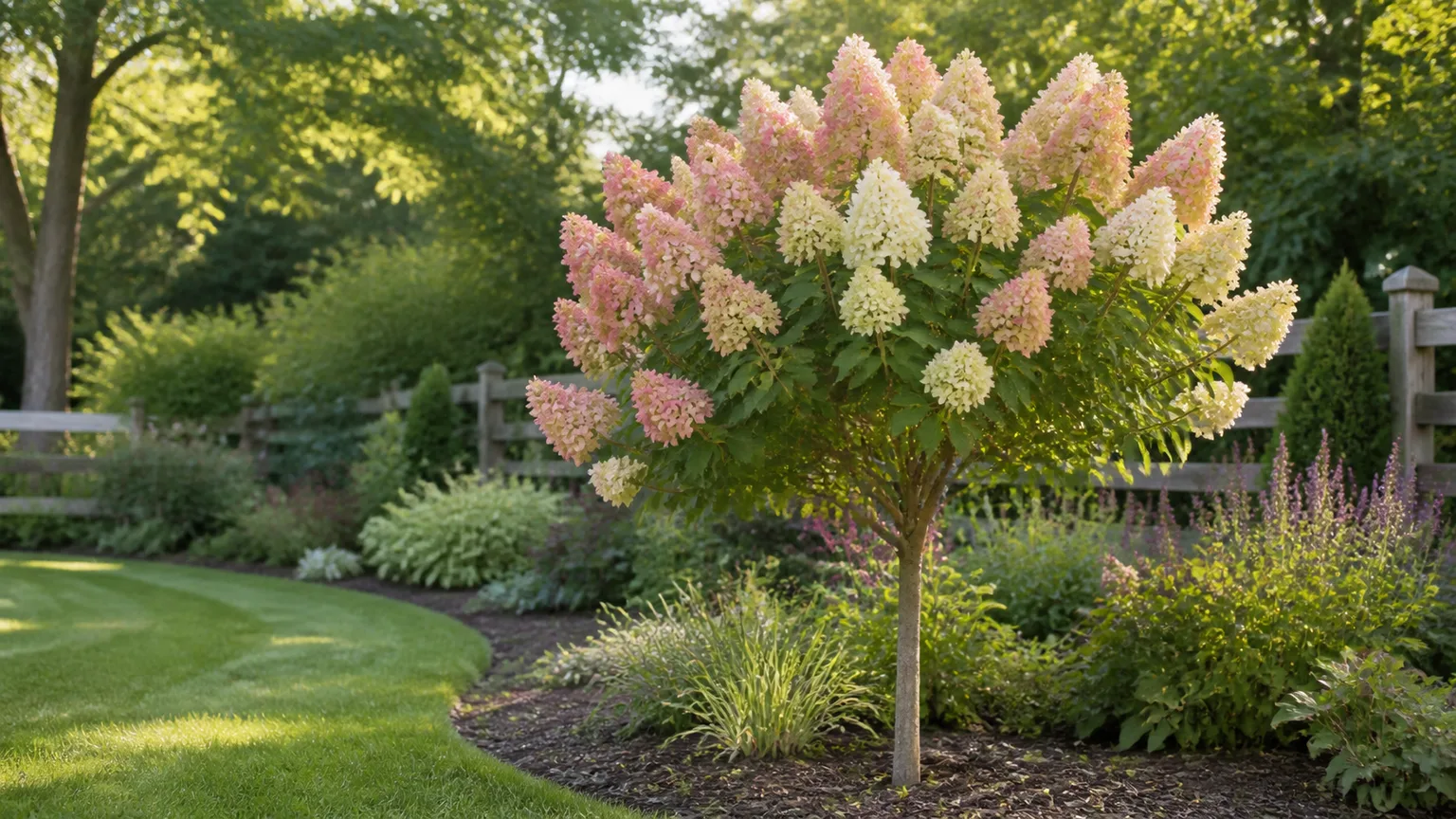
A tree hydrangea is a showy solution when you want the flowers of a hydrangea with the height and structure of a small ornamental tree. The important distinction is that it is not a separate tree species: it is usually a panicle hydrangea, Hydrangea paniculata, trained into a single-trunk or standard form.
That difference explains nearly every care decision. A shrub can replace a stem from the base, while a tree-form plant depends on one trunk and a carefully maintained canopy. Give it enough sun, consistent but well-drained moisture, and early-season pruning, and it can produce cone-shaped flower panicles from summer into fall. Ignore the trunk, overfeed it, or plant it where wind rocks the root ball, and the “tree” form becomes the problem.
What a Tree Hydrangea Actually Is
Panicle hydrangea is a deciduous, woody shrub or small tree with opposite, serrated leaves and terminal flower panicles that open creamy white, then often age through green, pink, red, or brown tones depending on the cultivar and weather. NC State Extension’s Plant Toolbox describes it as a rapid-growing, cold-hardy plant that can reach roughly 8 to 15 feet, with some plants growing larger.
“Tree hydrangea,” “panicle hydrangea tree,” “standard hydrangea,” and “Pee Gee hydrangea” are related terms, but they are not interchangeable in every nursery catalog. “Pee Gee” originally referred to Hydrangea paniculata ‘Grandiflora’, while modern garden centers often use it loosely for many tree-form panicle hydrangeas. Check the botanical name and cultivar label before you buy; the mature size and flower habit matter more than the common nickname.
Tree Form Versus Shrub Form
The natural habit of H. paniculata is a multi-stemmed shrub. A tree form has been trained by selecting one dominant stem, removing competing growth, and building a canopy above a bare trunk. Some plants are trained from a young shrub over several seasons; others are sold already shaped, which is convenient but makes the plant more expensive and more vulnerable to poor aftercare.
The tree form does not mean the plant has the deep anchoring root system of a true shade tree. Panicle hydrangeas are relatively shallow-rooted, and their large flower heads can act like sails in wind. Stake a newly planted standard until its roots establish, keep mulch away from the trunk, and inspect the trunk and graft-free stem for rubbing or cracks after storms.
Pick a Variety That Fits Your Space
Choose the cultivar before choosing the planting hole. Full-size panicle hydrangeas can become much wider and taller than the nursery tag suggests at the time of purchase, while dwarf cultivars such as ‘Bobo’, ‘Little Lime’, or ‘Little Quick Fire’ are more realistic for small yards and large containers. ‘Limelight’, ‘Pinky Winky’, ‘Phantom’, and ‘Grandiflora’ can make dramatic specimens, but their mature canopy, flower weight, and pruning needs are different.
Use this decision rule:
- For a narrow entry bed: choose a compact cultivar and allow room for the canopy to widen rather than planting directly against a wall.
- For a focal point in a lawn or border: choose a tree-form plant whose mature height fits the sightline, then keep the trunk protected from mower and string-trimmer damage.
- For large flower heads: plan for stronger branching, good light, and occasional support; the biggest panicles are not always the most windproof.
- For a container: start with a naturally compact panicle cultivar instead of trying to keep a full-size plant permanently small by severe pruning.
Proven Winners’ panicle hydrangea guide is useful for comparing bloom timing, mature size, and the trade-off between full-size and dwarf cultivars. Treat the nursery’s label for your specific plant as the final authority, because names and size claims can vary by seller and growing conditions.
Find a Site With Sun, Drainage, and Shelter
The best site balances three competing needs: enough light to make flowers, enough moisture to prevent summer stress, and enough drainage that roots never sit in saturated soil. A bright open site is not automatically a good site if wind constantly rocks a newly planted trunk or the ground stays wet after rain.
How Much Sun It Needs
Panicle hydrangeas are among the more sun-tolerant hydrangeas. In a cool or mild summer climate, aim for at least four hours of direct sun, with more light often producing sturdier stems and more flowers. In a hot climate, morning sun with protection from the harshest afternoon heat is safer, especially if the plant cannot receive deep root-zone watering.
The plant’s leaves are your feedback system. Long, thin stems leaning toward one direction and sparse flower production suggest insufficient light. Crispy margins, scorched afternoon-facing leaves, and repeated wilt despite moist soil suggest too much heat or reflected light rather than a simple need for more water. Move or shade a young container plant before trying to solve every symptom with fertilizer.
Soil and Spacing That Prevent Stress
Use a site that drains freely but does not become bone-dry immediately after watering. Panicle hydrangeas tolerate a range of soil textures and pH levels; slightly acidic to neutral soil is a good target, but you generally do not need to chase a particular pH to make panicle flowers blue. Unlike many bigleaf hydrangeas, panicle flower color is primarily a cultivar and aging trait, not a reliable soil-acidity project.
Do not bury the root flare or the trunk. The top roots should sit close to their original depth, and the hole should be wide enough for the root ball to spread without circling. Leave air space around the mature canopy, avoid a low pocket that collects runoff, and keep the plant far enough from a foundation, fence, or path that future pruning will not require constant hard cuts.
There is a useful planting trade-off around soil amendment. Some horticultural guidance favors incorporating compost into a broad planting area, while Proven Winners cautions against filling only the planting hole with rich amended mix because water can collect at the interface between the amended pocket and surrounding soil. If your native soil needs organic matter, improve a broad bed or top-dress with compost rather than creating a small, water-holding pocket around the roots.
Plant a Tree Hydrangea Without Setting It Up to Fail
Spring and early fall are usually the easiest planting windows because moderate temperatures reduce transplant stress. The RHS growing guide for shrubby hydrangeas likewise emphasizes planting when soil is workable and moist but free-draining, rather than asking a new plant to establish during peak heat or frozen ground.
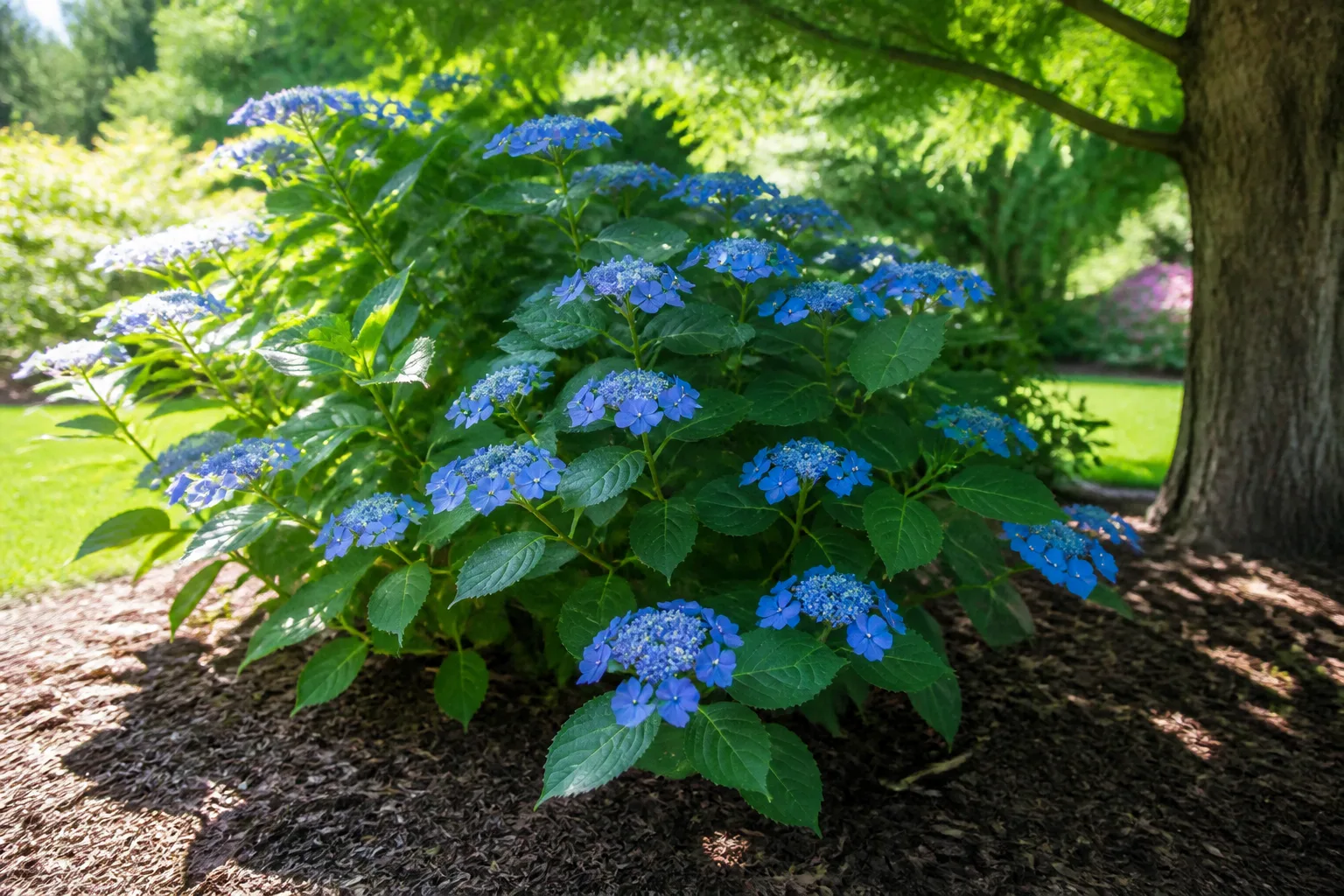
Before digging, water the nursery plant if its root ball is dry and decide where the canopy will sit, not just where the trunk looks attractive today. Then use this sequence:
- Dig a hole about as deep as the root ball and substantially wider. The goal is loosened soil to the sides, not a deep bowl.
- Slide the plant out without pulling on the trunk. If roots are circling tightly, loosen a few on the outer edge rather than shredding the whole root ball.
- Set the plant so the root flare and original soil line remain visible at the finished grade.
- Backfill with the soil appropriate to the site, firming gently to remove large air pockets but not compacting it hard.
- Water slowly across the full root-ball area, then apply a 2- to 3-inch layer of bark or leaf mulch over the root zone.
- Keep mulch several inches away from the trunk and attach a stake loosely if the trunk or root ball moves in wind.
Water again when the upper soil begins to dry, not automatically every day. Frequent shallow sprinkles encourage a shallow, unstable root zone and can keep the trunk collar wet.
Watering and Mulch: Steady Moisture, Not Constant Wetness
Tree hydrangeas need consistent moisture while establishing and during hot bloom weather, but “moist” does not mean permanently wet. Check the soil several inches down near the outer root zone. If it feels cool and damp, wait; if it is dry and the plant is beginning to wilt, water deeply enough to wet the root ball rather than misting the foliage.
A newly planted tree-form hydrangea often needs more attention than an established shrub because its canopy transpires while its root system is still small. Water at the soil line in the morning when possible, and increase the interval between waterings as roots move into the surrounding soil. During a heat wave, prioritize a slow, deep soak over a light daily splash, but do not flood a site that drains poorly.
Mulch moderates root temperature, slows evaporation, and helps shallow roots avoid the hot-dry-to-soaked cycle that causes stress. Keep the layer loose and replenished as it settles. If leaves wilt while the soil is wet, do not automatically add more water: inspect drainage, roots, trunk movement, heat exposure, and the color and texture of the leaves first.
Fertilizer and Support for Strong Stems
A healthy tree hydrangea usually needs less fertilizer than impatient gardeners expect. A thin layer of compost or an appropriate slow-release shrub fertilizer in early spring is often enough, especially when the plant grows in reasonably fertile soil. Follow the product label rather than combining multiple feeds.
Too much nitrogen produces fast, soft shoots and lush leaves at the expense of strong flower-bearing wood. It can also make a heavy canopy more likely to flop. Avoid letting lawn fertilizer wash into the root zone, and do not fertilize a drought-stressed, freshly transplanted, or diseased plant until the underlying stress is corrected.
Support has two jobs: stabilize the root ball during establishment and prevent a young trunk from rubbing or bending. Use a stake only as long as needed, tie with a flexible material, and allow slight movement. Permanent tight staking can create a weak trunk and can abrade the bark.
Pruning for Flowers and Structure
Panicle hydrangeas bloom on new wood, meaning flower buds form on growth produced in the current season. That gives them more pruning flexibility than old-wood hydrangeas, but it does not make every pruning date equally good. Gardening Know How’s panicle pruning guidance identifies late fall after dormancy or late winter to early spring as the useful windows and warns that early-summer cuts can remove developing flower growth.
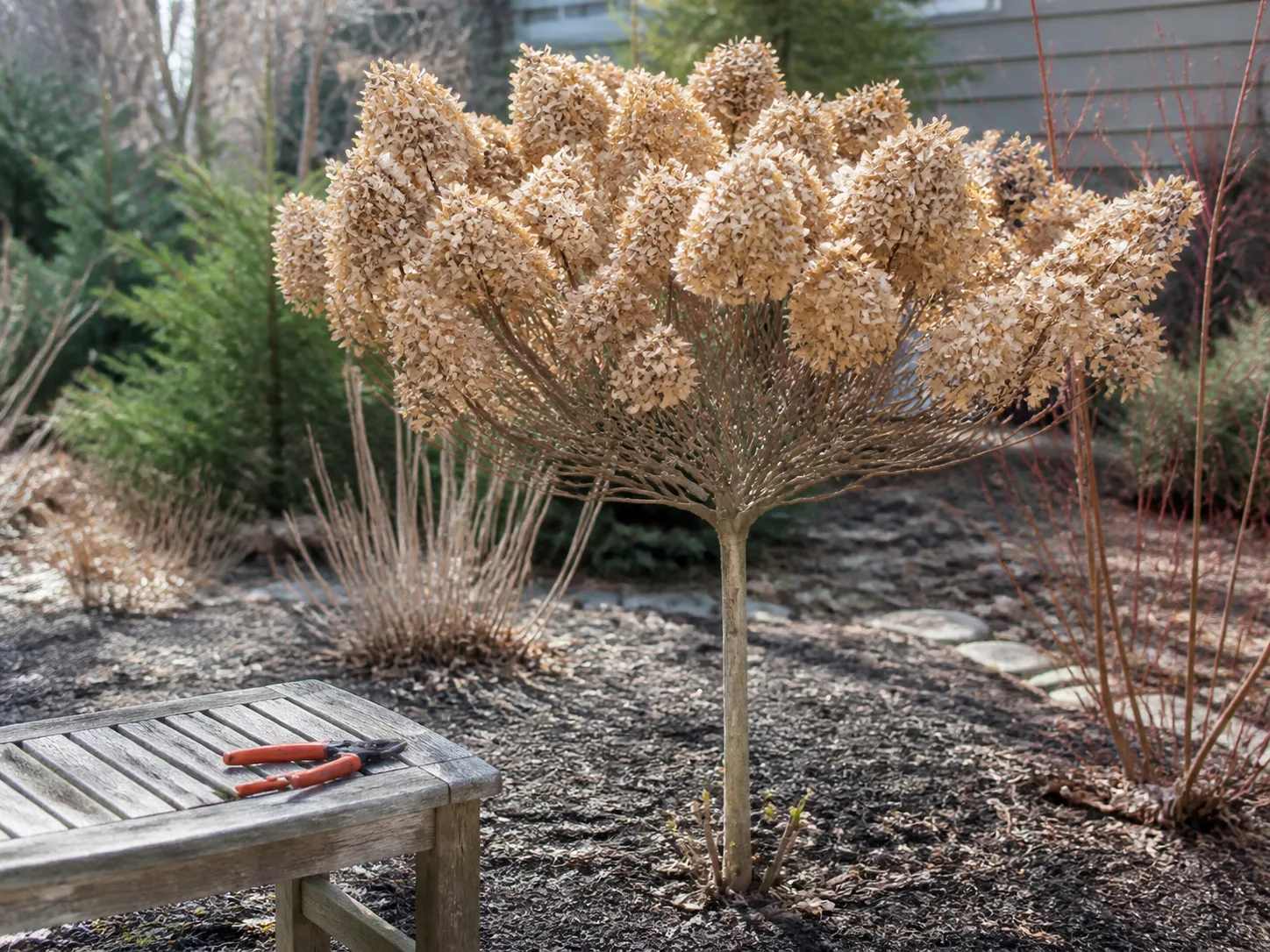
The safest default is late winter to early spring, just as buds begin to swell but before vigorous new shoots extend. You can see the structure clearly, remove winter damage, and preserve the season’s new-wood bloom potential. Avoid a major cut in late spring or early summer unless you are correcting storm damage or a genuine safety problem.
Prune a Shrub Form
For a multi-stem shrub, begin by removing dead, broken, crossing, or obviously weak stems at their point of origin. Then thin crowded growth so air can move through the center. If you want fewer, larger panicles, retain a smaller number of strong framework stems; if you prefer a fuller screen, make lighter cuts and accept smaller flowers.
Do not shear every branch to the same height. That creates a dense outer shell, weak regrowth, and an unnatural silhouette. Make selective cuts just above healthy buds that point outward, and step back often so the final plant has a broad base and a balanced crown.
Train and Maintain Tree Form
Training a hydrangea into a tree is a multi-season project, and buying an already trained plant does not end the work. If starting from a shrub, choose one upright stem with good thickness, remove competing basal stems, and stake the leader while it grows. Remove side shoots from the lower trunk gradually rather than stripping a large amount of foliage at once.
Once the trunk reaches the desired height, encourage a rounded canopy by shortening competing leaders and removing shoots that emerge below the crown. During every growing season, rub or cut off new shoots that appear along the trunk before they become thick. At the same time, thin crowded canopy branches and shorten long, weak extensions before they become leverage points for heavy flowers.
The most important tree-form rule is consistency. Skipping one or two seasons lets basal shoots and trunk sprouts become large, and removing them later creates big wounds. Epic Gardening’s tree hydrangea guide also emphasizes that tree-form care is largely ordinary panicle-hydrangea care plus regular pruning to preserve the trained shape.
Bloom Timing and Natural Color Changes
Expect flowers from mid- to late summer, with timing shaped by cultivar, latitude, spring temperatures, light, and plant age. A newly planted hydrangea may flower later or less heavily than it did at the garden center because greenhouse production can force an earlier display than the plant’s outdoor season.
The flower heads are cone-shaped panicles rather than the round mopheads of bigleaf hydrangeas. Many open white or greenish white and age toward pink, red, tan, or brown. The exact sequence is genetic and weather-dependent. Changing soil pH will not reliably turn a panicle hydrangea blue; reserve that experiment for the hydrangea types that actually respond to aluminum availability.
Leave fading panicles on the plant through winter if you like their texture and want to protect the visual structure of the garden. Remove them for a cleaner look by cutting just above a strong pair of buds, but do not treat deadheading as a requirement for next year’s flowers. The larger bloom decision is whether the plant had enough light, moisture, and healthy new growth.
Container Care and Transplanting
A compact panicle hydrangea can grow in a large container for a time, but a container is a more demanding root environment than the ground. Use a weather-resistant pot with generous drainage holes, a stable base, and enough weight that the canopy will not tip in wind. Tree-form plants are especially top-heavy when flowering.
Check container moisture more often than in-ground moisture because potting mix dries from the sides and the top. Water thoroughly until excess drains, then empty any saucer. Avoid keeping the pot standing in water or allowing the mix to alternate between bone-dry and saturated.
Repot or plant out when the root mass fills the container, watering becomes difficult to manage, or new leaves and flower heads become noticeably smaller. Move the plant in early spring or cool fall rather than during a heat wave. After transplanting, protect the canopy from harsh afternoon sun for a short acclimation period and keep the root zone evenly moist while new roots move outward.
Propagation From Cuttings
Seed is possible but rarely the efficient choice for a named cultivar because seedlings may not reproduce the parent’s flower form or size. Softwood cuttings taken in late spring or early summer are the practical route for making a genetic copy, provided the timing and moisture are right.
Choose a healthy, nonflowering tip with flexible new growth. Cut a 4- to 6-inch section just below a node, remove the lower leaves, and reduce the upper leaves if they are large. Insert the cutting into a sterile, airy medium such as a propagation mix with perlite, moisten it thoroughly, and cover it with a clear dome or loose bag that holds humidity without touching the leaves.
Keep the cutting in bright, indirect light and warm conditions. The medium should stay lightly moist, never waterlogged. Check for resistance after several weeks, but do not tug repeatedly; roots may form before there is much top growth. Once a cutting has a useful root system, pot it separately and acclimate it gradually to outdoor light. It will take time to build the trunk and crown needed for a true tree form.
Winter and Storm Protection
Panicle hydrangeas are among the hardier hydrangea groups, but hardiness does not eliminate winter injury. The shallow root system benefits from a 2- to 4-inch mulch layer applied after the ground cools, with the trunk kept clear. Continue watering until the soil freezes if autumn is dry; entering winter drought-stressed makes twig and bud damage more likely.
The canopy and trunk need different protection. Tie or support long branches only when heavy snow or ice threatens to split them, and remove the support once the load passes. In an exposed site, a breathable windbreak can reduce drying and breakage, but do not wrap the plant tightly in plastic or create a damp enclosure.
Inspect after winter for dead tips, cracked stems, and frost-damaged shoots. Wait until live buds begin to show before making broad cuts, then prune back to healthy wood. If the plant is trained as a standard, check that the trunk has not loosened at the root flare; rocking roots can delay establishment even when the canopy looks alive.
Pests, Disease, and Troubleshooting
Healthy, well-spaced plants usually have manageable pest pressure. Aphids, scale, mites, and leaf-chewing insects may appear, while leaf spot, powdery mildew, rust, blight, or bacterial problems become more likely in crowded, wet, poorly ventilated conditions. NC State Extension lists these as possible concerns and also notes that brittle stems can be damaged by wind.
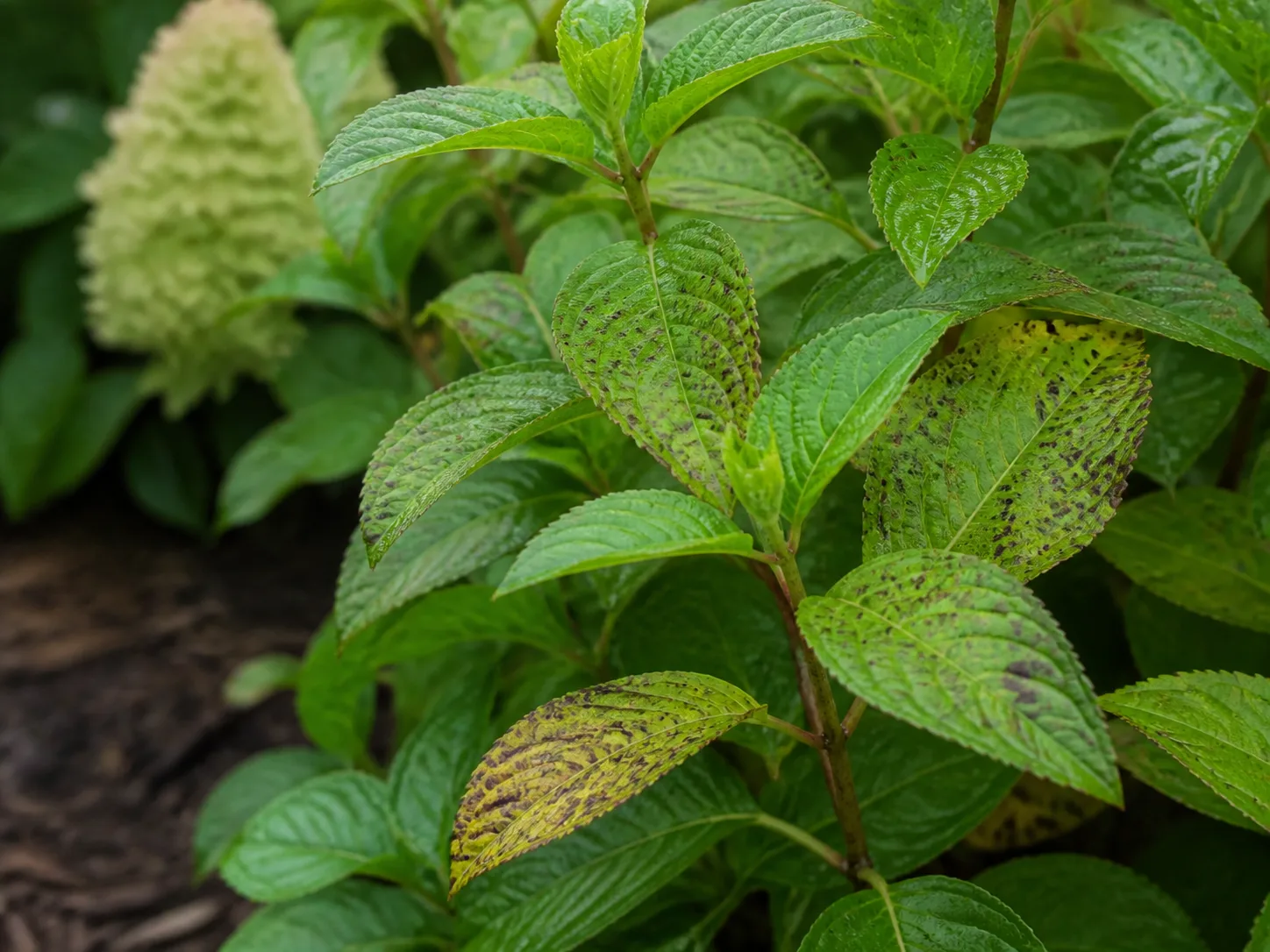
Start with the pattern, not the product. Hose small soft-bodied pests from foliage, remove badly damaged leaves, improve airflow, and avoid wetting leaves late in the day. For a serious disease or pesticide decision, identify the cause first and follow the product label for the plant, pest, rate, protective equipment, and legal use in your location.
Leaves turning yellow: Check soil moisture and drainage first. Uniform yellowing with wet soil suggests root stress or overwatering; yellowing on older leaves during natural autumn change may be normal. Yellow new leaves with green veins can indicate a nutrient or root-uptake issue, but adding fertilizer before checking roots and soil pH can make the problem worse.
Brown or black leaf spots: A few aging or mechanically damaged leaves are not a diagnosis. Expanding spots, yellow halos, or many affected leaves point toward a leaf-spot or blight problem, especially after overhead irrigation and prolonged leaf wetness. Remove fallen infected foliage, water at the root zone, prune for airflow during the correct season, and seek local extension identification if the problem spreads.
Wilting even though the soil is wet: This is a drainage or root-health question, not a signal to add more water. Inspect whether the planting hole holds water, whether the trunk is buried, whether roots smell sour or look brown and mushy, and whether the leaves are soft rather than crisp. Correct drainage and reduce irrigation; a waterlogged hydrangea cannot recover by being watered more.
Wilting in dry soil: Soak the root zone slowly, check the mulch depth, and look for a loose root ball or a broken irrigation line. A hydrangea under heat stress may wilt temporarily during the afternoon even when soil moisture is adequate, so compare the plant at dawn before deciding to transplant it.
No flowers: Check, in order: available sun, whether the plant is still establishing, late spring or early summer pruning, drought during bud development, root damage, and the cultivar’s normal bloom date. A tree hydrangea that was pruned in late winter should still bloom on new wood, but a late cut can delay or reduce the display. Heavy nitrogen feeding can also create vigorous leaves and weak, flower-poor stems.
Trunk shoots or a collapsing canopy: Remove basal shoots and trunk sprouts early, inspect ties for damage, and reduce leverage from long weak branches in the correct pruning window. If the trunk is cracked, the canopy leans from the base, or a major limb threatens people or property, stop trying to reshape it casually and ask a qualified arborist or local extension professional for an on-site assessment.
For household safety, keep fallen leaves, flowers, and pruning debris away from children and animals that chew plants. NC State lists Hydrangea paniculata as poisonous to humans and problematic for cats, dogs, and horses; the safest approach is prevention, supervision, and prompt professional advice if plant material is swallowed.
Conclusion
The simplest successful tree hydrangea routine is also the most consistent: choose a cultivar that fits its eventual size, plant it at the correct depth in soil that drains, water the root zone deeply while it establishes, mulch without touching the trunk, and prune in late winter or early spring. Treat the tree form as a trained shrub with a permanent trunk, not as a maintenance-free miniature tree.
If flowers are sparse, look at light, moisture, pruning date, and plant age before reaching for fertilizer. If leaves yellow or wilt, check the roots and drainage before adding water. With those decisions in the right order, Hydrangea paniculata can give you a reliable summer-to-fall display and a clear, graceful structure through winter.



