Potted vs. In-Ground Hydrangeas: Pros and Cons
Learn when hydrangeas do better in the ground, when a pot makes sense, and how to choose the right variety, container, soil, and care routine.
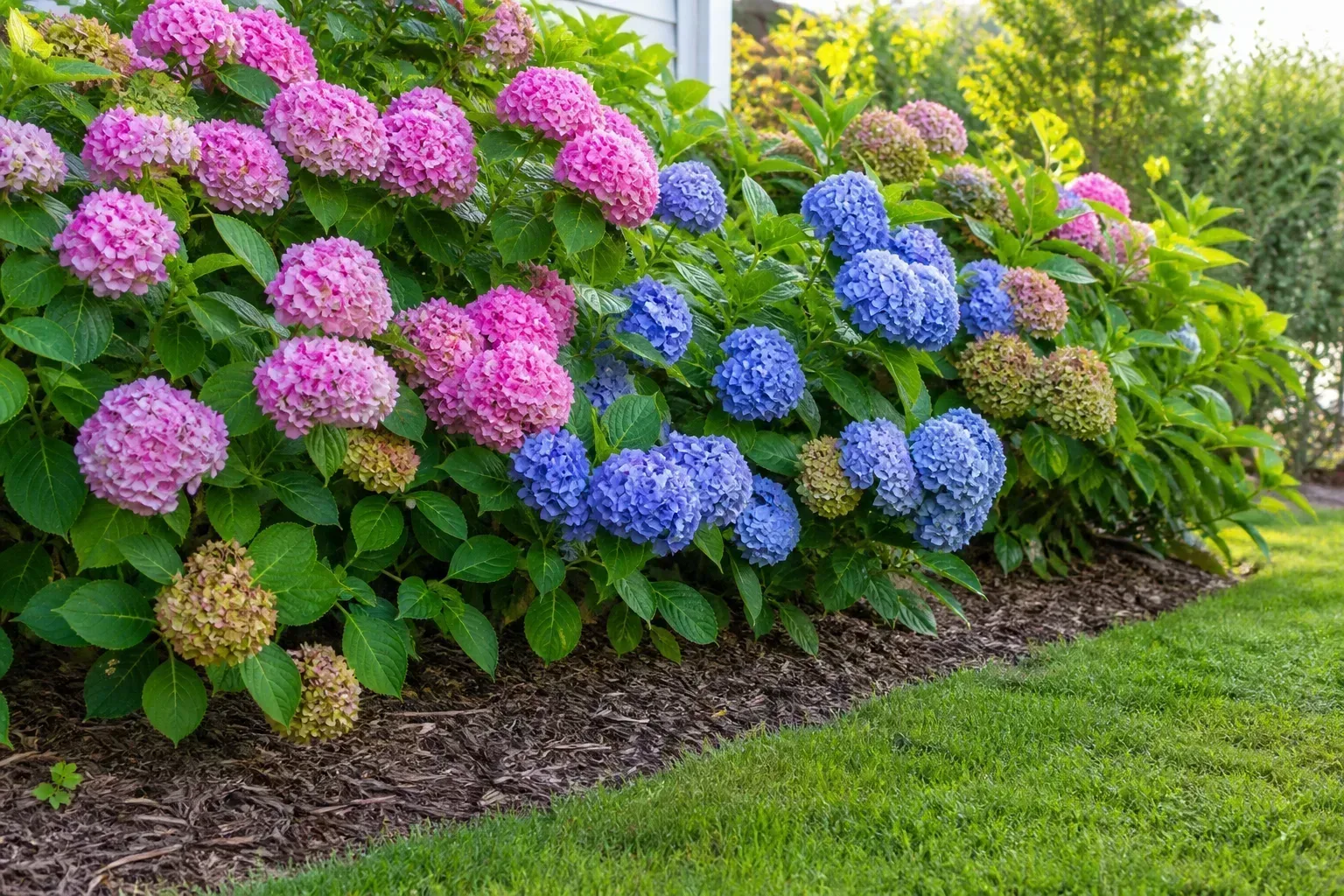
The better setup is usually the one that gives the hydrangea a stable root zone with the least daily intervention. For most gardeners who have a suitable bed, planting in the ground is the easier long-term choice: soil temperatures change more slowly, roots have room to spread, and the plant is less likely to dry out or freeze suddenly.
A pot can be the smarter choice when you need mobility, have no garden soil, want to isolate the root zone, or are growing a genuinely compact cultivar on a patio or balcony. The trade-off is real, though. Container hydrangeas need closer attention to moisture, drainage, feeding, wind, root crowding, and winter protection. The question is not whether hydrangeas can grow in pots—they can—but whether you can manage the smaller, faster-changing root environment.
The Short Answer: Ground for Longevity, Pots for Control
Choose the ground when your site has morning sun or bright filtered light, afternoon protection in hot climates, soil that drains after watering, and enough room for the cultivar’s mature spread. This gives a hydrangea the best chance to establish deep, stable roots and makes watering less of a daily chore after the first growing season.
Choose a pot when the ground is unusable or unavailable, when a hydrangea needs to move out of harsh sun or wind, or when you want to control the growing medium. Containers are also useful for a compact plant beside an entrance, on a balcony, or in a rental garden. They are not a shortcut to easier care; they are a way to trade root-zone stability for control.
That distinction explains why two gardeners can have opposite experiences with “potted hydrangeas.” A compact panicle in a large, well-drained pot on a partly shaded patio may thrive for years. A full-size bigleaf hydrangea in a small black pot on a west-facing deck may wilt every afternoon, become rootbound, and lose winter buds even when the gardener is doing everything else right.
Start With Your Site, Not the Container
Before you pick a pot or dig a hole, assess the conditions the root zone will face. The RHS shrubby hydrangea growing guide describes hydrangeas as happiest in evenly moist soil that drains well, with light shade as a reliable default. The same principles apply in a container, but a pot has less room for error.
Light, heat, and wind
Morning sun with afternoon shade is the safest starting point for many bigleaf and mountain hydrangeas, particularly where summers are hot. Some panicle hydrangeas tolerate more sun, but “full sun” on a plant label does not cancel out reflected heat from concrete, a south-facing wall, or a windy balcony. Sun exposure also dries a pot faster than a bed because the entire container is surrounded by warm air.
Watch the site for a full day if you can. A location that looks sunny at 9 a.m. may be shaded by a house at noon, while a patio that feels comfortable in spring may become a heat trap in July. If the plant wilts only during the hottest part of the afternoon and recovers by evening, heat load may be the problem rather than a lack of water.
Wind matters more in a pot. A large hydrangea canopy can act like a sail, while a lightweight container can tip or dry from every side. A sheltered position near a wall or among other sturdy pots is often more valuable than a few extra hours of sun.
Soil and drainage
Hydrangeas want moisture, not standing water. In a garden bed, a broad area of soil and organic matter can hold water while still allowing air around the roots. In a pot, the mix must drain freely through the holes without becoming hydrophobic or collapsing into a dense, airless mass.
The RHS container-maintenance guide notes that container plants generally need more attention than plants in the ground because their root area is restricted. It also warns that overwatering is a common cause of container losses. That is why “water-loving” should never be interpreted as “keep the pot constantly wet.”
Poor garden soil does not automatically mean a pot is better. If the ground is heavy clay, compacted, or contaminated, you may be able to improve a broad planting area or use a raised bed. A container solves the soil problem cleanly, but it creates a permanent dependence on purchased mix, drainage checks, and irrigation.
Space and mature size
The hydrangea you buy is not the size of the hydrangea you will keep. Read the mature height and width on the label, then compare that footprint with the space you actually have. A plant that looks “small enough for a pot” at the nursery may become unstable, thirsty, and difficult to move within two seasons.
The New York Botanical Garden hydrangea guide emphasizes choosing a site that accommodates the full size of the cultivar. That advice is especially important in a container because pruning a large shrub into a small pot can reduce flowering, increase stress, and turn routine maintenance into a cycle of hard cuts.
When a Container Is the Better Choice
A pot is a sound choice when it solves a specific site problem. It is especially useful in these situations:
- You do not have a planting bed. A balcony, patio, roof garden, or small courtyard can still support a compact hydrangea if it receives suitable light and has a plan for watering.
- Your soil is a poor match. A container lets you use a quality, well-drained mix instead of trying to correct a shallow layer of rocky, compacted, or strongly alkaline soil.
- You need mobility. A pot can move out of afternoon heat, away from a storm, or into a sheltered position before severe winter weather.
- You want a controlled pH experiment. Bigleaf and mountain hydrangeas can respond to soil chemistry, so a container makes it easier to keep an acid-loving mix separate from alkaline garden soil. This only helps cultivars that actually change color; white, red, green, and many panicle or smooth types will not turn blue because the mix is acidic.
- You are renting or redesigning the garden. A container gives you a reversible way to test a cultivar and a location before committing to a permanent shrub.
The best container candidate is not necessarily the smallest plant at the garden center. Look for a cultivar with a naturally compact mature habit, a hardiness rating appropriate for your climate, and a bloom habit you understand. A plant that stays compact without repeated severe pruning is easier to keep balanced in a pot.
When In-Ground Planting Wins
The ground is the better home when you want the least complicated path to a mature shrub. It usually wins for a hydrangea that is expected to grow large, for a gardener who cannot check the plant every day, or for a site with hot summers and sharp winter freezes.
In-ground soil buffers temperature. The roots are not pressed against a thin pot wall that heats in the sun or freezes in a cold wind. Moisture also moves through a larger volume of soil, so the plant is less likely to swing from bone-dry to saturated after one missed watering.
The ground also gives roots room to explore. That matters during establishment, when the plant is building the root system that will support future stems and flowers. It does not make the shrub drought-proof: a new hydrangea still needs regular deep watering, and an established plant can wilt during a heat wave. It does make the care routine more forgiving.
Plant in the ground if the cultivar’s mature size would make a container cramped, top-heavy, or impossible to move. It is usually cheaper and more sustainable over time to prepare a suitable bed than to keep repotting a shrub that has outgrown every container.
Choose the Hydrangea Before the Container
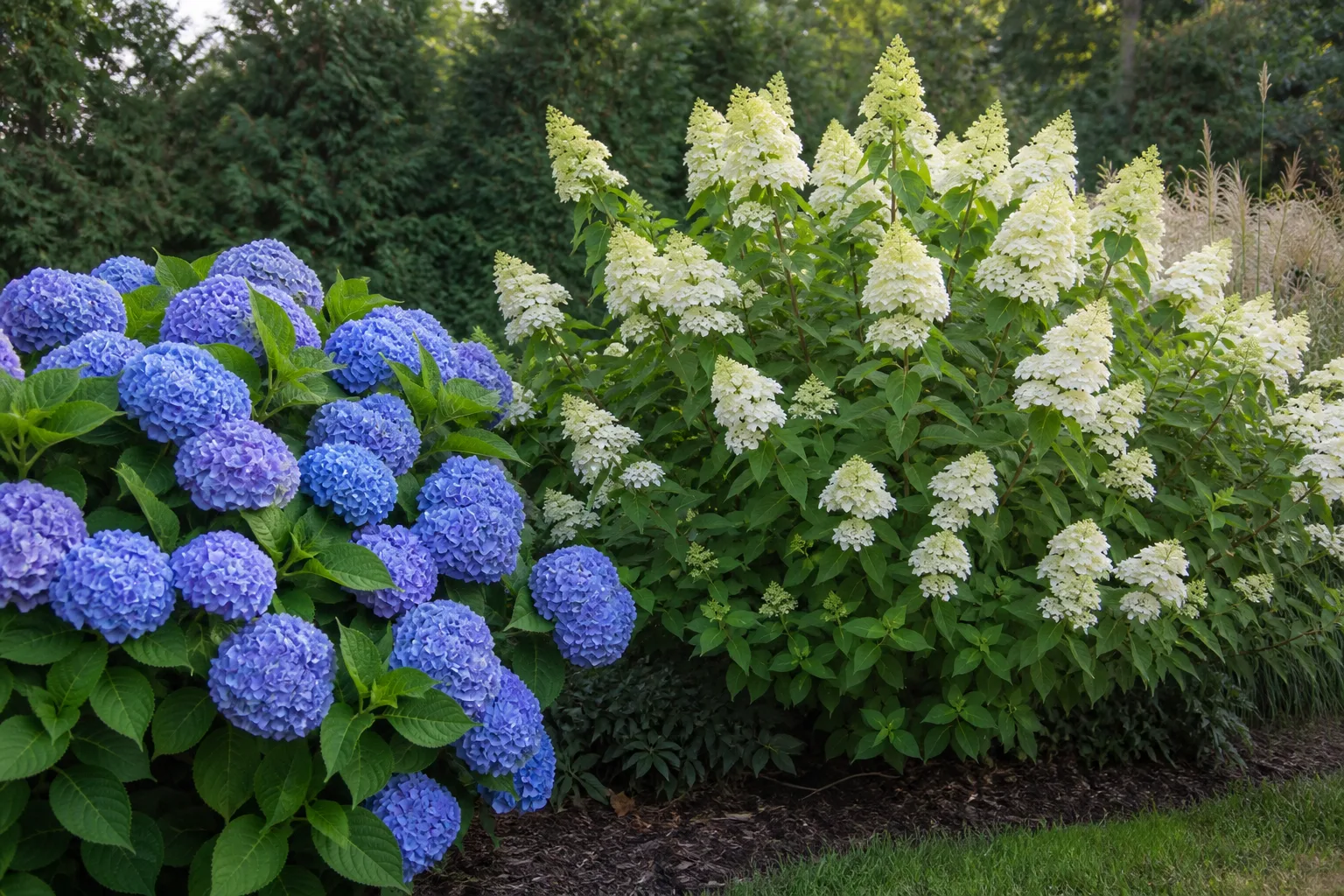
“Hydrangea” describes a group of shrubs with different light tolerance, mature size, hardiness, and pruning needs. Identify the type or read the full cultivar label before choosing where it will live.
| Hydrangea type | Container fit | What to watch |
|---|---|---|
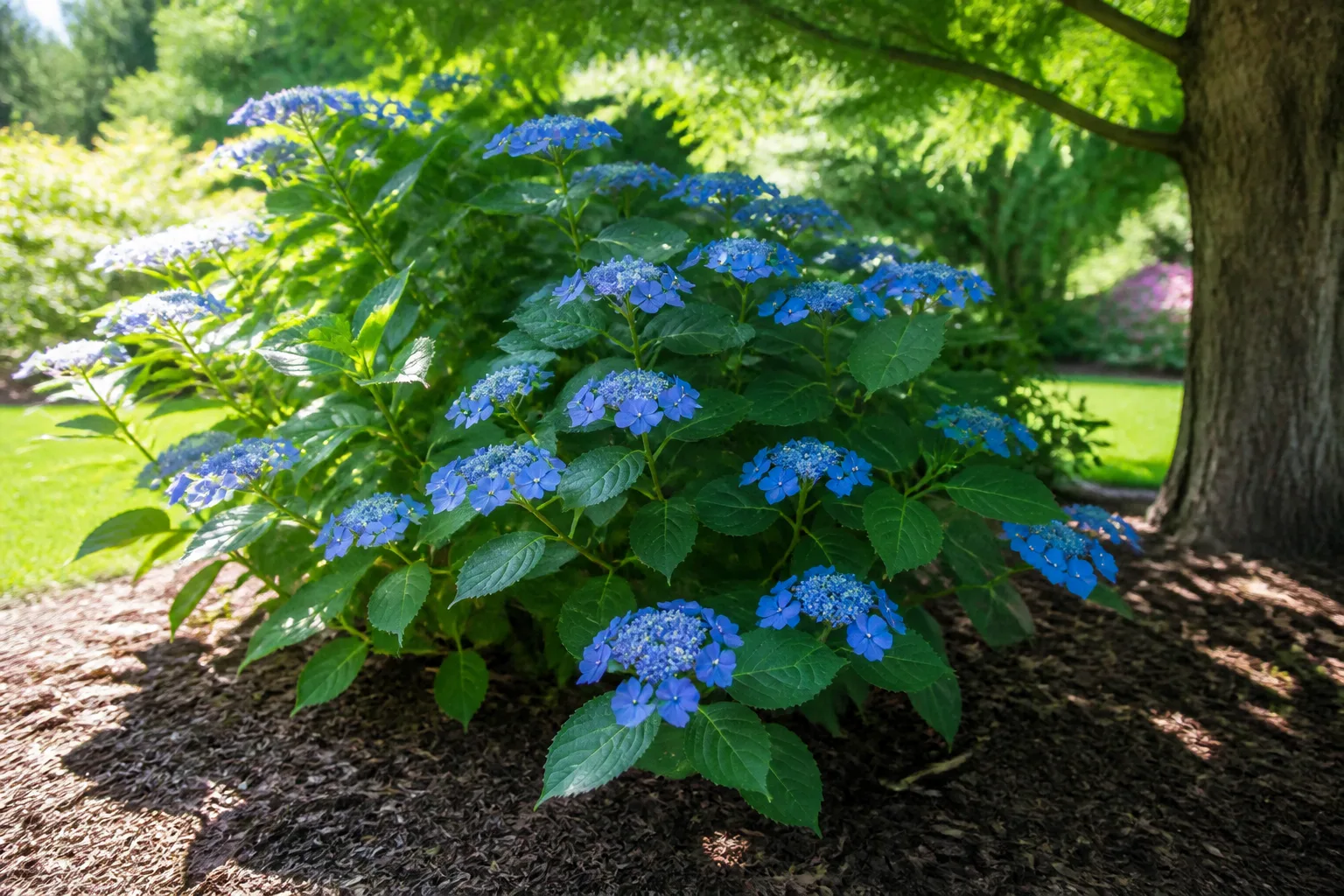
| Bigleaf (Hydrangea macrophylla) and mountain (H. serrata) | Good in a large pot when compact and protected | Often prefer morning sun and afternoon shade; flower buds can be vulnerable to cold; many cultivars respond to pH |
| Panicle (H. paniculata) | Good when the cultivar is compact | Usually handles more sun and blooms on new wood, but full-size plants can quickly outgrow a pot |
| Smooth (H. arborescens) | Possible with a compact selection and a stable pot | Needs even moisture; heavy flower heads can make weak or crowded plants flop |
| Oakleaf (H. quercifolia) | Better in the ground for most cultivars | Large leaves and mature size can make containers dry, tip, and need frequent root work |
This is a guide, not a substitute for the label. A compact panicle such as ‘Little Lime’ is a more practical container candidate than a full-size panicle, even though both belong to the same species. Savvy Gardening’s Little Lime care guide describes the cultivar as reaching roughly 3 to 5 feet and notes that its new-wood bloom habit and tidy size expand its planting options, including containers.
Do not choose only by bloom color. Also check mature width, hardiness zone, bloom wood, sun tolerance, and whether the cultivar naturally stays compact. A dwarf variety in a suitable pot can be a long-term plant; a large variety in a dwarf-sized pot is simply a delayed problem.
How to Plant a Hydrangea in a Pot
Start with a container that has unobstructed drainage holes and enough weight to support the mature canopy. The pot should be only modestly larger than the rootball when you first move the plant up. A container that is much too large holds a large volume of wet mix around a small root system, which can keep the center soggy after the outer surface appears dry.
Use a quality potting mix rather than garden soil. Set the rootball so the surface of its original mix sits close to the new mix level; burying the crown deeply can encourage stem and root problems. Leave a little headspace below the rim so you can water slowly without washing mix away.
Water the newly potted hydrangea thoroughly until water runs from the drainage holes. If the mix is dry and pulling away from the sides, water once, let it drain, and water again so the rootball is actually wetted rather than allowing water to run down a gap. Keep the pot on feet or a surface that lets the holes drain, and do not leave it standing in a full saucer.
Place the container where it gets the light the cultivar can use without turning the pot into an oven. Terracotta breathes but dries faster; plastic holds moisture longer and can be lighter or hotter depending on its color and location. The container material is a management choice, not a substitute for shade and a good potting mix.
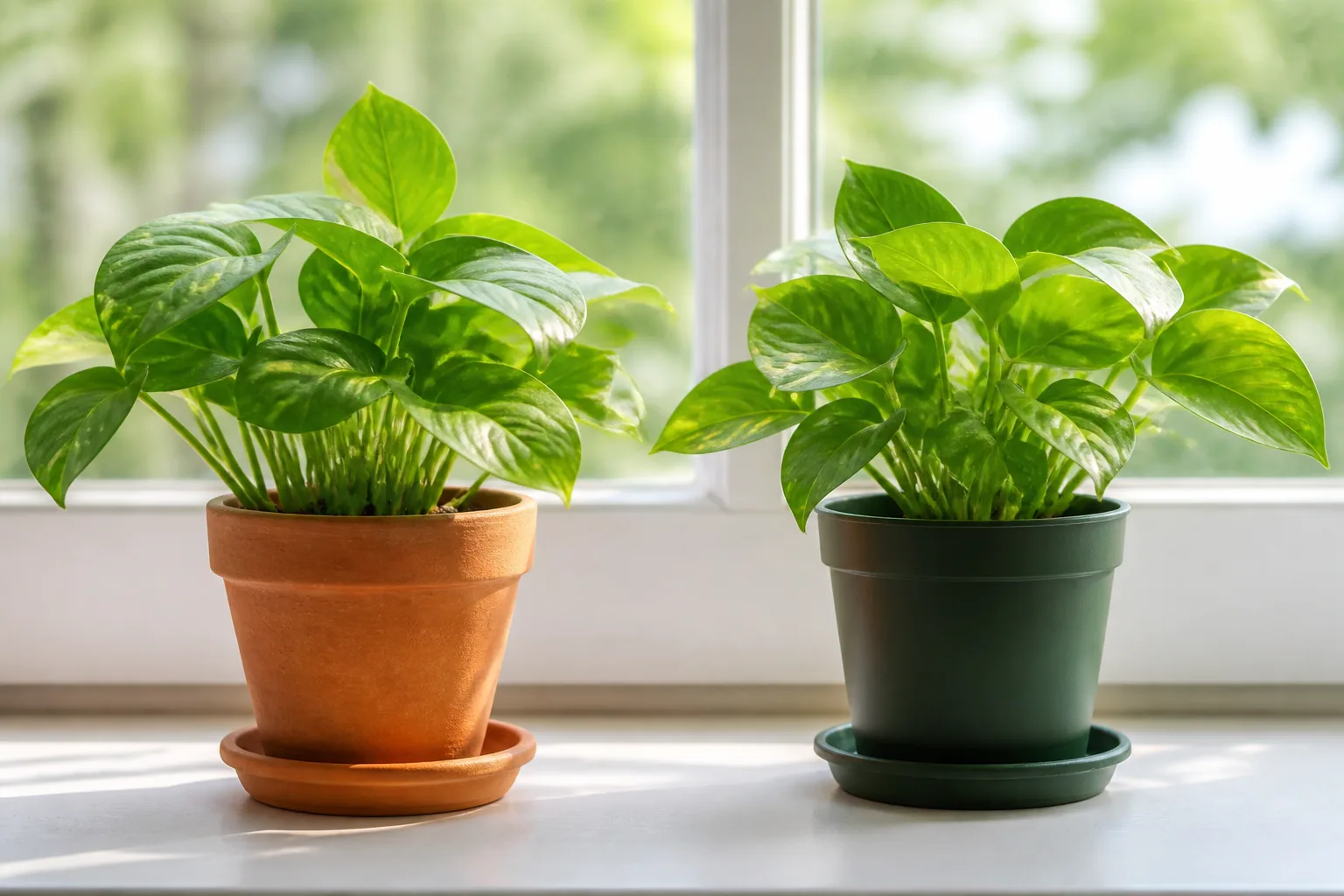
The Gardening Know How container-care guide recommends moving up to a pot several inches wider than the original and watering until the mix drains freely. That is a useful starting point, but the mature cultivar still determines how large and stable the final container must be.
For the first few weeks, check the moisture below the surface rather than watering by calendar. A hydrangea that is actively growing in a small pot may need water much more often than a shrub planted in a mulched bed. In hot or windy weather, daily checks are reasonable; twice-daily checks may be necessary for an exposed container.
How to Plant a Hydrangea in the Ground
Spring and fall are generally the easiest planting windows because the shrub has time to establish without the combined pressure of peak heat and new roots. Avoid planting into frozen, waterlogged, or bone-dry soil. If you must plant during a hot spell, choose a compact plant, provide temporary shade, and plan on close watering until the root system expands.
Before digging, confirm the site’s drainage and mature spacing. Dig a hole no deeper than the rootball and several times wider, loosen the surrounding soil, and blend organic matter through the wider planting area when needed. Do not create a rich, loose pocket in otherwise compact soil; water can collect at the boundary and leave the rootball saturated.
Set the hydrangea so the top of the rootball is level with, or just slightly above, the surrounding soil. Backfill firmly enough to remove large air gaps, water slowly to settle the soil, and add a 2- to 3-inch layer of organic mulch over the root zone. Keep mulch away from the stems so the base stays dry and visible.
The planting scene matters as much as the hole. An east-facing bed or a spot with morning sun and dappled afternoon light is often easier than an exposed west-facing border. Leave enough space for airflow and the plant’s full width so the shrub does not need annual shearing to stay off a path.
Care Differences That Decide the Outcome
Once a hydrangea is established, the basic needs are the same in a pot or in the ground. The frequency and margin for error are different.
| Job | In a pot | In the ground |
|---|---|---|
| Moisture | Check often; the root zone can dry quickly from every side | Water deeply during establishment and hot, dry spells; mulch slows loss |
| Drainage | Inspect holes, saucers, and mix structure | Correct compacted or poorly drained soil before blaming the watering schedule |
| Feeding | Nutrients leach from frequent watering; use a labeled slow-release or container feed | Feed modestly only if growth or a soil test suggests it is needed |
| Wind and heat | Pot and canopy can tip, heat, or dry quickly | Soil and surrounding planting buffer temperature and stabilize roots |
| Winter | Rootball is more exposed; shelter and insulation may be needed | Select a hardy type and protect vulnerable buds or stems in cold sites |
| Long-term size | Repot, refresh mix, or root-prune when the plant fills the pot | Give the shrub its mature footprint and prune only for a clear reason |
Water and feeding
Hydrangeas prefer an evenly moist root zone, not a fixed number of small drinks. Water a container deeply enough to wet the entire mix, then allow excess to drain. In the ground, soak the broader root zone rather than wetting only the stem’s immediate base. A soaker hose or drip line can keep foliage drier and reduce splash onto leaves.
Use your finger, a moisture probe, or the weight of the container to decide when to water. If the soil is dry several inches down and the leaves are drooping, water. If the pot is heavy, the mix is cool and soggy, or the plant remains wilted despite wet soil, adding more water can make the problem worse. Inspect drainage and roots instead.
The RHS container guidance recommends checking containers regularly in warm or windy weather because they can run short of water and nutrients quickly. That does not mean every pot needs a twice-daily watering routine forever; it means exposure, plant size, season, and mix determine the interval.
Container hydrangeas also lose nutrients through repeated drainage. Use a slow-release fertilizer or a liquid feed labeled for container plants, and follow the product rate. In-ground shrubs often need less supplemental feeding, especially when the soil contains organic matter. Heavy nitrogen can produce lush leaves without solving shade, root stress, or a pruning mistake.
Winter protection and repotting
Cold hardiness refers to the plant, not to a rootball suspended above the ground. A hydrangea that survives a winter in the ground may need extra protection in a pot because its roots are surrounded by cold air. The RHS growing guide recommends a sheltered location for container plants and notes that simply wrapping a pot may not prevent the rootball from freezing.
Move a container to a sheltered, unheated space or against a protected wall when severe cold or drying wind threatens. The plant is dormant, not dead, so do not keep it in a warm living room where weak growth can emerge. Check the mix occasionally during a dry winter, but avoid watering immediately before a hard freeze and never keep a dormant deciduous hydrangea saturated.
Repot when roots circle densely, emerge from the drainage holes, the plant dries unusually fast, or growth stalls despite suitable light and feeding. Move up gradually rather than jumping to a huge pot. If the cultivar has reached the limit of a safe container, refresh the mix and root-prune only when the plant and its bloom habit can tolerate the work—or plant it in the ground.
Pruning and Flower Color Still Depend on Type
The container does not change when a hydrangea forms flower buds. Bigleaf, mountain, and oakleaf hydrangeas commonly carry flowers on older stems, so a fall or late-winter hard cut can remove the next season’s display. Panicle and smooth hydrangeas bloom on new growth and are generally more forgiving of late-winter shaping. Confirm the type before pruning, especially when a plant came with an incomplete gift tag.
If the plant is too large for its pot, do not use repeated severe pruning as a substitute for choosing a better cultivar or a larger root zone. Hard pruning can reduce flowers, weaken stems, and leave the canopy out of balance with the container. Remove dead wood and make the smallest cut that solves the actual problem.
Potted hydrangeas can make flower-color experiments easier, but the effect is limited. In responsive bigleaf and mountain cultivars, soil pH changes aluminum availability and can influence blue or pink flowers. A pot can isolate the mix from alkaline garden soil, but it cannot make a nonresponsive white or red cultivar change color. Test before amending, change pH gradually, and follow product directions for any acidifier or lime.
Signs Your Setup Is Failing
Treat the symptoms as information about the root zone, not as instructions to water or prune immediately.
- Wilting every afternoon, then recovering at night: check heat, reflected light, wind, and pot temperature. Move or shade the plant before increasing water.
- Wilting with wet soil: check blocked holes, a full saucer, compacted mix, and root damage. Roots need air as well as water.
- A pot that dries in a single day: the container may be too small, the plant may be rootbound, or the site may be too exposed. Repot or relocate during a suitable season.
- Brown, crisp leaf edges: inspect afternoon sun, hot surfaces, wind, and moisture swings before assuming fertilizer burn or disease.
- No flowers after healthy leaf growth: review the hydrangea type, pruning date, winter bud damage, and light level. More fertilizer rarely fixes a missing flower-bud problem.
- The pot tips or leans: the canopy has outgrown the container’s footprint. Use a heavier, wider pot or plant the hydrangea in the ground.
- Stunted growth and roots circling the pot: the plant has likely filled its root zone. Move up one size, refresh the mix, or choose a permanent bed.
Conclusion
For most gardeners with a suitable bed, in-ground hydrangeas are the better long-term default. They offer more root room, steadier moisture, better temperature buffering, and less daily maintenance once established. That is especially valuable for large cultivars, hot sites, windy gardens, and cold climates.
Choose a pot when the benefits are specific: you need mobility, lack usable soil, want to control the mix, or have found a compact hydrangea that fits the container and your climate. Give it a stable pot with drainage, a moisture-retentive but airy mix, protection from the harshest exposure, and a plan for feeding, repotting, and winter.
If you are undecided, start with the plant label and the site. Measure the cultivar’s mature width, observe the light and wind, and test how quickly the proposed root zone dries. The right answer is the setup that can keep the roots evenly moist and well oxygenated without asking the plant—or you—to fight the location every day.