How to Prune Hydrangeas: Timing by Type
Prune hydrangeas with confidence using an old-wood versus new-wood calendar, clean-cut technique, deadheading rules, and recovery steps for mistakes.
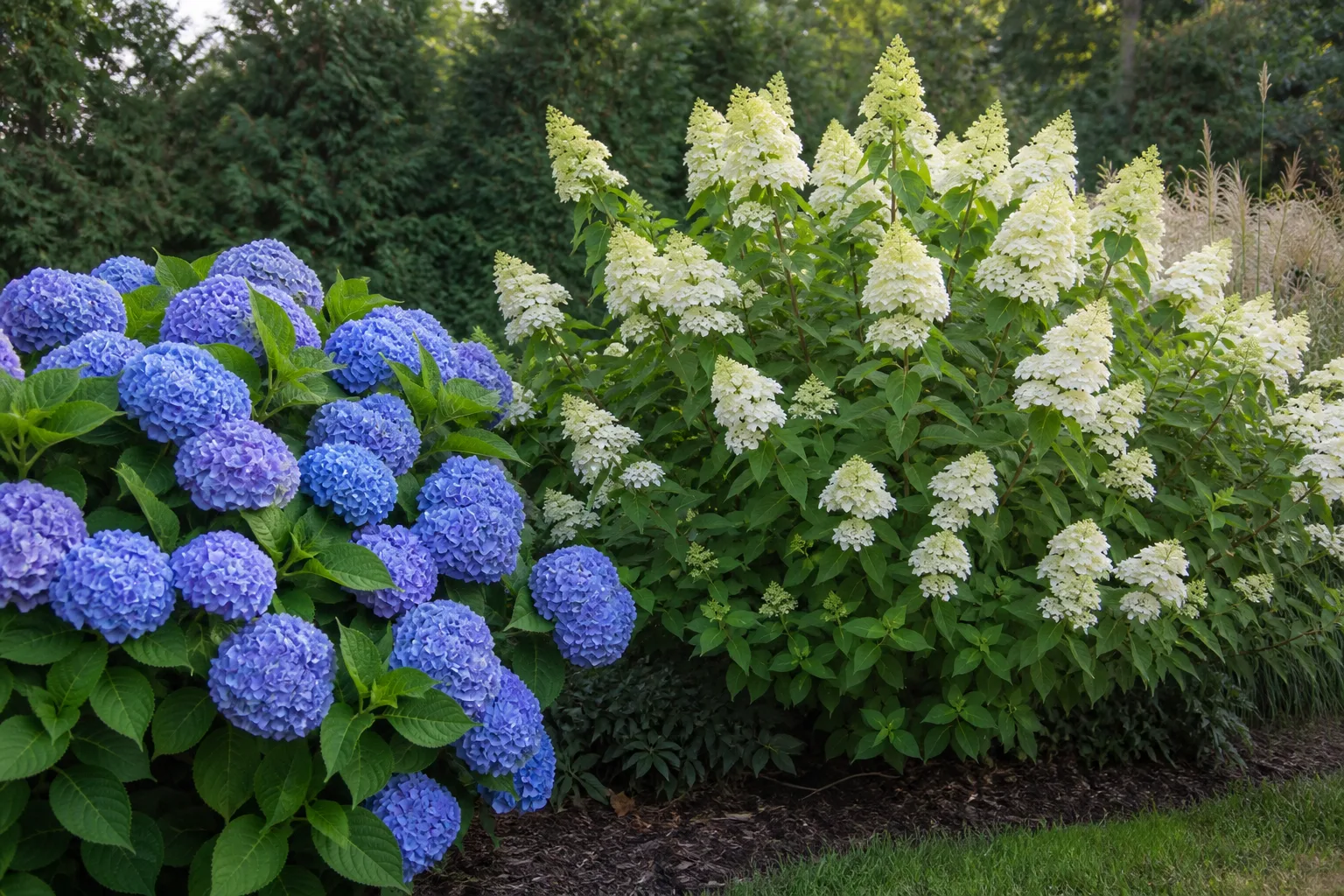
The safest way to prune a hydrangea is to identify when it makes flower buds before you remove a living stem. Some hydrangeas set next year’s flowers on this year’s woody growth, while others wait and bloom on shoots produced after winter. That single difference matters more than the month on your calendar.
If you cut an old-wood hydrangea in fall, winter, or early spring, you may remove the buds that were already waiting for summer. If you cut a new-wood hydrangea in late winter before growth starts, you can usually shorten it substantially and still get flowers later that season. When the label is missing, start with the plant’s leaves, flower shape, and visible stem buds; if you still cannot identify it, make only the minimum safe cut.
Start With the One Decision That Protects Next Year’s Flowers
Ask this before picking up the pruners: Will this plant bloom from buds already sitting on these stems, or will it make flower-bearing stems next spring? The first group is called an old-wood bloomer. The second is a new-wood bloomer.
Penn State Extension uses this distinction to explain why the same late-winter haircut can be helpful for a smooth hydrangea but disastrous for a bigleaf hydrangea. Old-wood plants generally need pruning right after flowering, and often need little more than deadwood removal. New-wood plants can be pruned during dormancy, before new shoots and their flower buds appear. (Penn State Extension)
Pruning is not a requirement for every hydrangea. If the shrub is healthy, fits its space, and flowers well, leaving it alone is a valid form of care. Prune to solve a specific problem—dead wood, winter damage, crossing stems, spent flowers, or excessive size—not because every shrub needs to be made perfectly round.
Hydrangea Pruning Calendar by Type
Use the table as a starting point, then adjust for your cultivar and local weather. “After flowering” means soon after the main flush fades, not automatically in fall. “Late winter or early spring” means while the plant is dormant but before strong new growth begins; in cold climates, waiting until the worst freezes have passed protects newly stimulated shoots.
| Hydrangea type | Flowering wood | Safest structural-pruning window | Best default cut |
|---|---|---|---|
| Bigleaf (H. macrophylla) | Old, unless labeled a rebloomer | Soon after flowering; otherwise wait | Remove dead stems and selected old branches; avoid routine hard cuts |
| Mountain (H. serrata) | Old, with reblooming exceptions | Soon after flowering | Light thinning or deadwood removal |
| Oakleaf (H. quercifolia) | Old | After flowering in summer | Shape selectively; preserve the woody framework |
| Climbing (H. anomala subsp. petiolaris) | Old | After flowering, only when needed | Control boundaries and remove damaged growth |
| Smooth (H. arborescens) | New | Late winter or early spring | Remove dead wood, then shorten for size or flower-head preference |
| Panicle (H. paniculata) | New | Late winter or early spring | Thin and head back moderately; preserve strong stems |
| Reblooming bigleaf or mountain | Old and new | Treat as old wood for the main crop | Light pruning; avoid assuming “reblooming” means “prune anytime” |
The safest window can be narrower in a short growing season and wider in a mild one, but the biology stays the same. A late-summer cut on an old-wood plant can be riskier than a July cut because the shrub may already be setting next year’s buds. A late-winter cut on a new-wood plant can be delayed until after the coldest weather if early pruning would expose tender shoots to a hard freeze.
Identify Your Hydrangea Before You Cut
The nursery label is the best answer, especially for modern cultivars whose common names blur species. If you do not have the label, identify the plant while it is flowering, take a photo, and note the leaf shape and flower head. Then confirm the type before making a structural cut.
Old Wood, New Wood, or Both?
Old-wood hydrangeas commonly include bigleaf, mountain, oakleaf, and climbing hydrangeas. Bigleaf and mountain plants have broad or narrower pointed leaves with rounded mophead or flat lacecap flowers. Oakleaf hydrangeas are recognizable by oak-shaped leaves and cone-shaped flower clusters. Climbing hydrangeas grow as woody vines and carry flattened white flower clusters against a support.
New-wood hydrangeas include smooth and panicle types. Smooth hydrangeas such as ‘Annabelle’ form rounded heads and relatively thin, textured leaves. Panicle hydrangeas such as ‘Limelight’ and ‘PeeGee’ have cone-shaped clusters and usually grow larger, with leaves that are narrower and less glossy than bigleaf leaves.
There is one important middle category: reblooming cultivars. Many newer bigleaf or mountain hydrangeas can flower on both older stems and new shoots. They may recover a late flush after winter damage, but the first crop still depends on old wood. Proven Winners therefore recommends treating rebloomers like old-wood plants and pruning only as much as necessary. (Proven Winners)
When the plant is dormant, inspect the stems for plump buds in the leaf axils or at the tips. Gardening Know How describes this as a useful clue: prominent buds on woody stems point toward old wood, while new-wood plants have not yet formed the buds that will become flowers. It is not a substitute for a confirmed cultivar name, but it is a good reason to pause before a spring haircut. (Gardening Know How)
Gather Tools and Set Up for Clean Cuts
For most hydrangeas, you need sharp bypass pruners, a bucket or tarp for debris, and gloves. Bypass blades make a scissor-like cut that is less likely to crush smaller stems. Use loppers for branches that are too thick for your pruners; do not force a small tool until the handles twist or the bark tears.
UConn Extension recommends matching the tool to the branch diameter: hand pruners for stems up to about three-quarters of an inch, loppers for larger branches up to roughly an inch and a half, and a pruning saw for still thicker wood. Hedge shears are for formal hedges, not for turning a naturally branching hydrangea into a meatball. (UConn Extension)
Clean the blades before you start and again after cutting diseased material. A household disinfectant or rubbing alcohol can be used according to its label; allow the blade to dry before making the next cut. Clean tools will not cure a plant disease, but they reduce the chance of carrying contaminated sap from one stem or shrub to another.
Use the Same Pruning Sequence on Any Hydrangea
The type determines when you prune. The sequence below determines what you do first, which keeps an easy cleanup from turning into an unnecessary haircut.
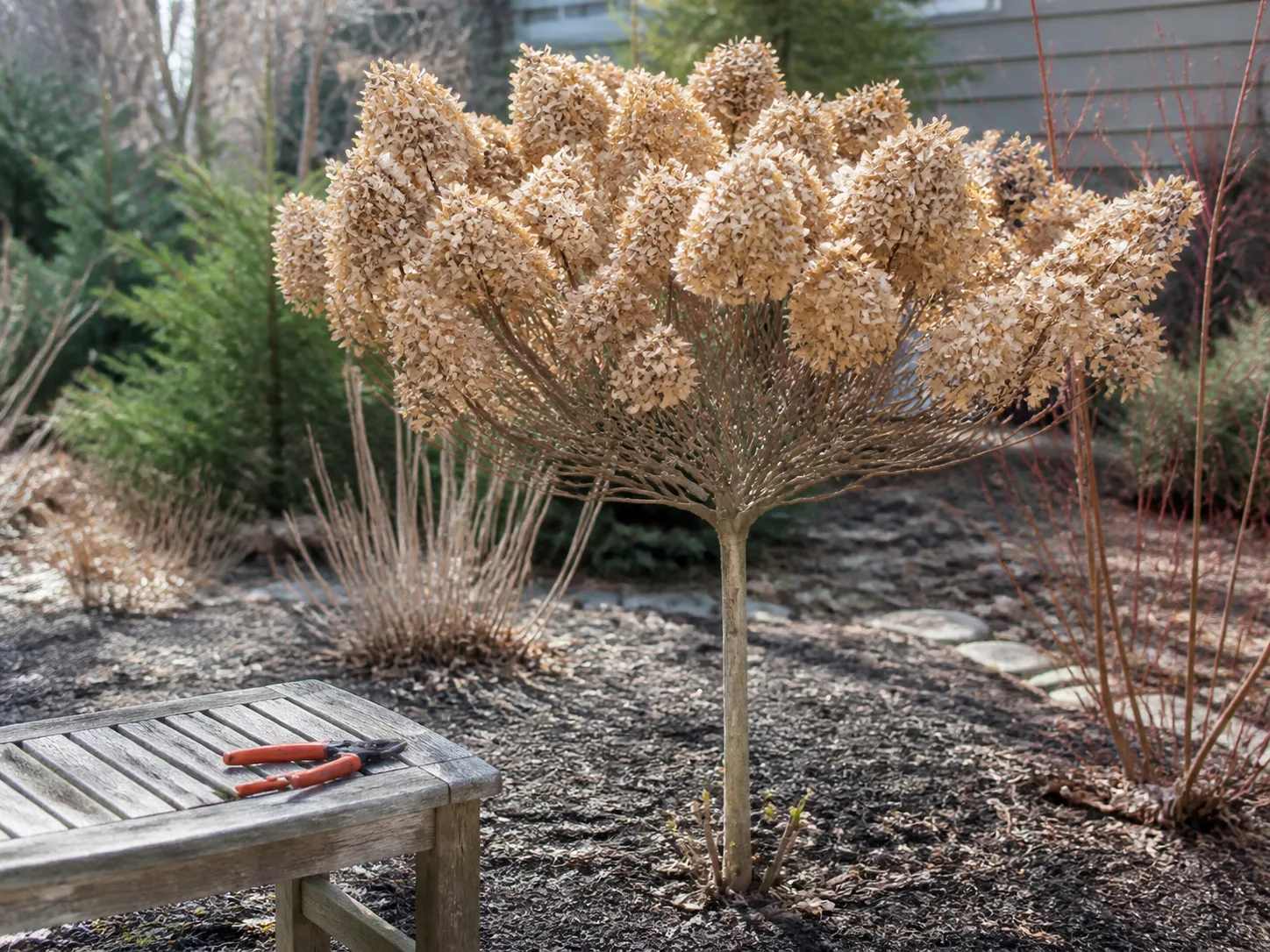
Remove Dead, Broken, or Diseased Wood First
Start at the base and work upward. Remove stems that are clearly dead, snapped, rubbing, or showing obvious disease symptoms. Cut a dead stem back to a healthy branch, the crown, or the ground, depending on where the living tissue ends. If you are unsure whether a leafless stem is dead, scratch a small patch of bark with a clean blade; green tissue underneath suggests it is alive, while dry brown tissue suggests dieback.
Dead or broken wood is an exception to the normal seasonal calendar: it can be removed when noticed because it will not carry viable flower buds. Winter damage on an old-wood hydrangea still deserves care, though. Wait until the worst freeze has passed and the plant begins to show which stems are alive before removing a large amount of apparently bare wood.
Deadhead Without Shortening Flowering Stems
Deadheading removes a spent flower head. Structural pruning shortens or removes the woody stem that may carry next year’s flowers. They are not the same job.
To deadhead, follow the flower stalk down until you reach the first healthy pair of leaves or strong buds. Cut just above that pair, leaving the rest of the stem intact. On old-wood types, finish this tidy-up soon after the flowers fade; once late summer is underway, leaving the dried heads in place is often safer than reaching deep into the shrub. The dried heads can also provide winter interest and a little protection for buds below.
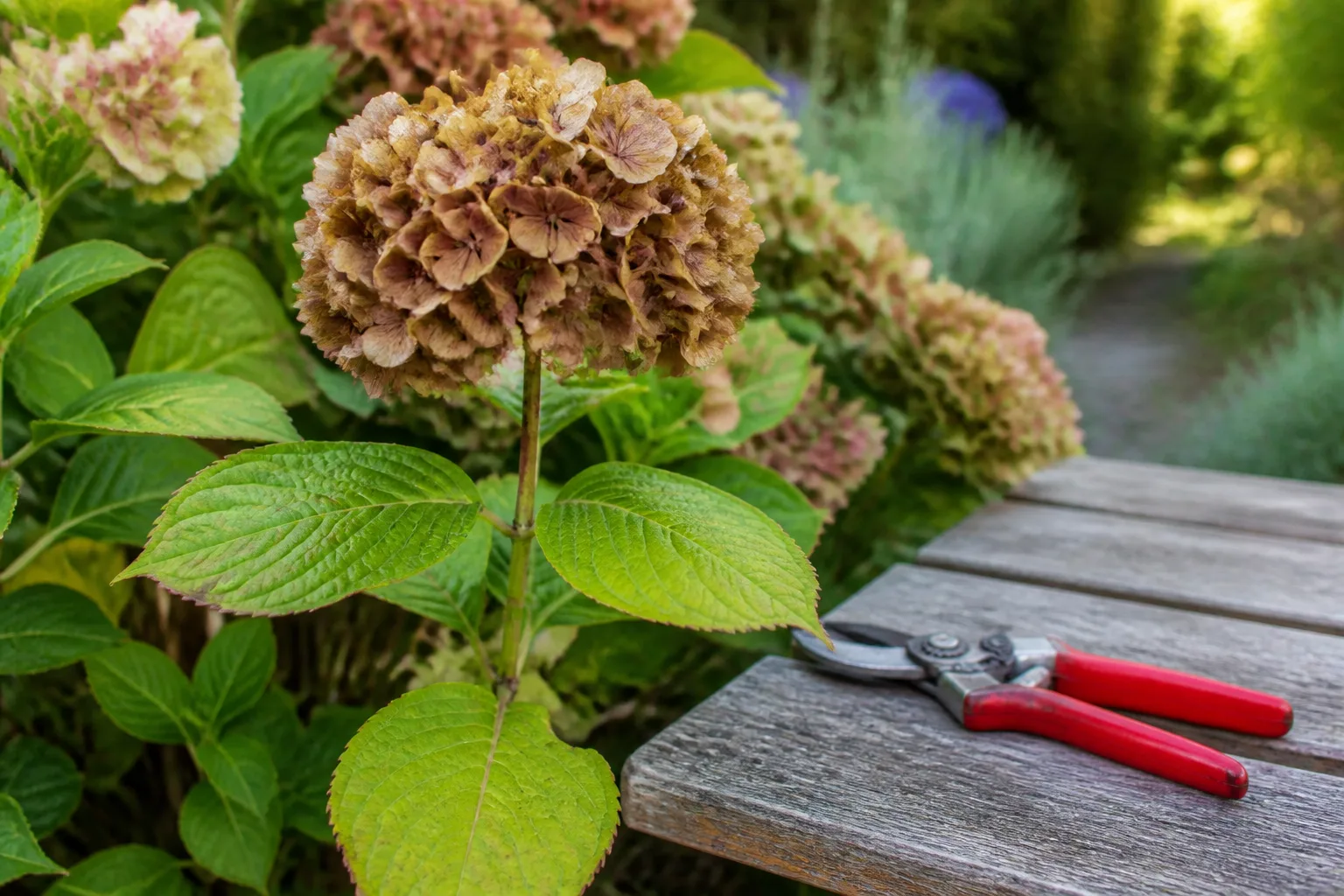
On panicle and smooth hydrangeas, removing spent flowers is less likely to cost next year’s blooms because those plants flower on new wood. Even so, deadheading is optional. If the dried panicles look good or provide winter structure, leave them and make the structural cuts in late winter.
Thin for Size and Airflow, Not a Round Hedge
When the shrub is too dense, choose individual stems to remove rather than clipping every branch to the same height. Take out a crossing or inward-growing branch at its point of origin, then step back and reassess. Selective thinning keeps the plant’s natural outline and distributes new growth more evenly.
University of Georgia Extension lists removing dead, damaged, and diseased wood, shaping, selective thinning, and deadheading as separate pruning goals. It also warns against excessive pruning, especially for old-wood types. A useful ceiling for a healthy established shrub is roughly one-third of the living growth at one session; young or stressed plants may tolerate less, and a plant that needs a drastic reduction may be the wrong size for its location. (University of Georgia Extension)
How to Prune Old-Wood Hydrangeas
Old-wood hydrangeas reward restraint. Their buds are already present on last year’s stems, so a spring or fall reduction can remove the next display before you ever see it. The safest time for shaping is shortly after flowering, when you can see which stems carried flowers and still leave the plant months to grow and set buds.
Bigleaf, Mountain, Oakleaf, and Climbing Types
For a bigleaf hydrangea, remove spent heads, dead stems, and a few weak or badly placed branches after flowering. If the shrub truly needs size control, remove selected older stems at ground level or back to a main branch rather than shearing the entire top. Keep healthy flowering stems, and do not cut more than you need to solve the problem. A spring prune that removes live green stems may mean sacrificing the entire season’s flowers, especially after a cold winter has already damaged some buds.
For a mountain hydrangea, use the same cautious approach: tidy spent flowers after bloom, remove winter-killed stems once the damage is clear, and thin only where the shape or crowding requires it. These shrubs are often smaller than bigleaf hydrangeas, so aggressive size reduction is rarely necessary.
For an oakleaf hydrangea, wait until after its early-summer flowers fade before shaping. Preserve its strong woody framework and distinctive leaves; there is little benefit in forcing it into a dense, clipped mound. If it is overgrown, remove up to a few of the oldest stems at the base over successive seasons rather than taking the whole shrub down at once.
For a climbing hydrangea, prune only to keep the vine within its support, away from windows, gutters, or paths, or to remove damaged growth. Most flowers appear toward the upper part of the vine, so indiscriminate side trimming can leave a tidy-looking plant with a sparse top. Make boundary cuts after flowering and retain the stems that are doing the climbing and flowering work.
If you miss the post-flowering window for any old-wood type, do less, not more. Remove only dead or broken wood and wait for the next flowering cycle to make a larger correction. Cutting late because the shrub looks untidy is usually a cosmetic trade-off that costs more than it fixes.
How to Prune New-Wood Hydrangeas
New-wood hydrangeas make their flower-bearing shoots after winter, so late-winter or early-spring pruning is the normal window. The goal is not always to cut as low as possible. The height and number of stems you leave determine the balance between flower size, stem strength, and the shrub’s final silhouette.
Smooth Hydrangeas
Smooth hydrangeas, including ‘Annabelle’, can tolerate a stronger dormant-season cut than old-wood types. First remove dead or damaged stems. Then choose a style:
- Light pruning leaves most of the framework in place and produces more stems with smaller flower heads.
- Moderate pruning shortens last year’s growth to strong buds and keeps the shrub compact without stripping its support.
- Hard pruning can produce fewer, larger heads, but those heads may become heavy enough to flop, especially after rain.
Cut individual stems just above healthy buds rather than making a flat, hedge-like top. If the plant is young, weak, or newly transplanted, stay conservative; it needs leaves and roots to build a framework. A mature shrub that flops every year may need staking, better light, or a cultivar with stronger stems—not just a harder cut.
Panicle Hydrangeas
Panicle hydrangeas such as ‘Limelight’, ‘Pinky Winky’, and ‘PeeGee’ also flower on new wood. Prune in late winter or early spring before vigorous growth begins. Remove dead and crossing stems, then shorten selected branches to healthy buds to keep the plant within its space.
Cutting a panicle hydrangea down to a low framework can yield large flower heads, but it is not the only correct method. Leaving more stems and making a lighter cut generally gives a fuller shrub with more, smaller panicles and can reduce the leverage that makes flower heads flop. A tree-form panicle hydrangea needs a different approach again: preserve the single trunk and canopy framework, removing shoots from the trunk and shaping the crown rather than cutting it as though it were a multi-stemmed shrub.
Do not hard-prune a panicle hydrangea in late summer simply because the flowers have faded. The next safest structural window is late winter. If you need to tidy the plant in fall, remove only a broken branch or a spent head, leaving the woody framework intact.
Pruning Reblooming Hydrangeas
Reblooming hydrangeas are easiest to damage through overconfidence. Cultivars sold as rebloomers can produce flowers on old and new wood, but the old-wood crop still provides the earliest or most reliable display. Treat the plant as an old-wood hydrangea unless the cultivar’s care label gives more specific instructions.
Deadhead lightly after the first flush if you want to encourage a later show, cutting only to a healthy leaf pair. Avoid fall or spring hard pruning, and remove only dead or winter-damaged stems once live growth is clear. If the plant has outgrown its space, correct it gradually after flowering or move it while dormant to a site that fits its mature size. A plant that is constantly cut back to fit a too-small bed will repeatedly lose the flowering wood you bought it for.
What to Do if You Pruned at the Wrong Time
First, stop cutting. Do not try to “even out” the shrub or remove more stems to make the mistake look intentional. A hydrangea that lost flower buds is usually not dead; it may simply have a flowerless season while it rebuilds.
If you cut an old-wood hydrangea in fall, winter, or early spring, leave the remaining live stems alone. Water during drought, keep the root zone mulched without piling mulch against the stems, and wait for new growth. If a few stems still carry buds, protect them from late frost and deer browsing. Do not compensate with extra fertilizer; excess nitrogen creates leaves and soft shoots, not replacement flower buds.
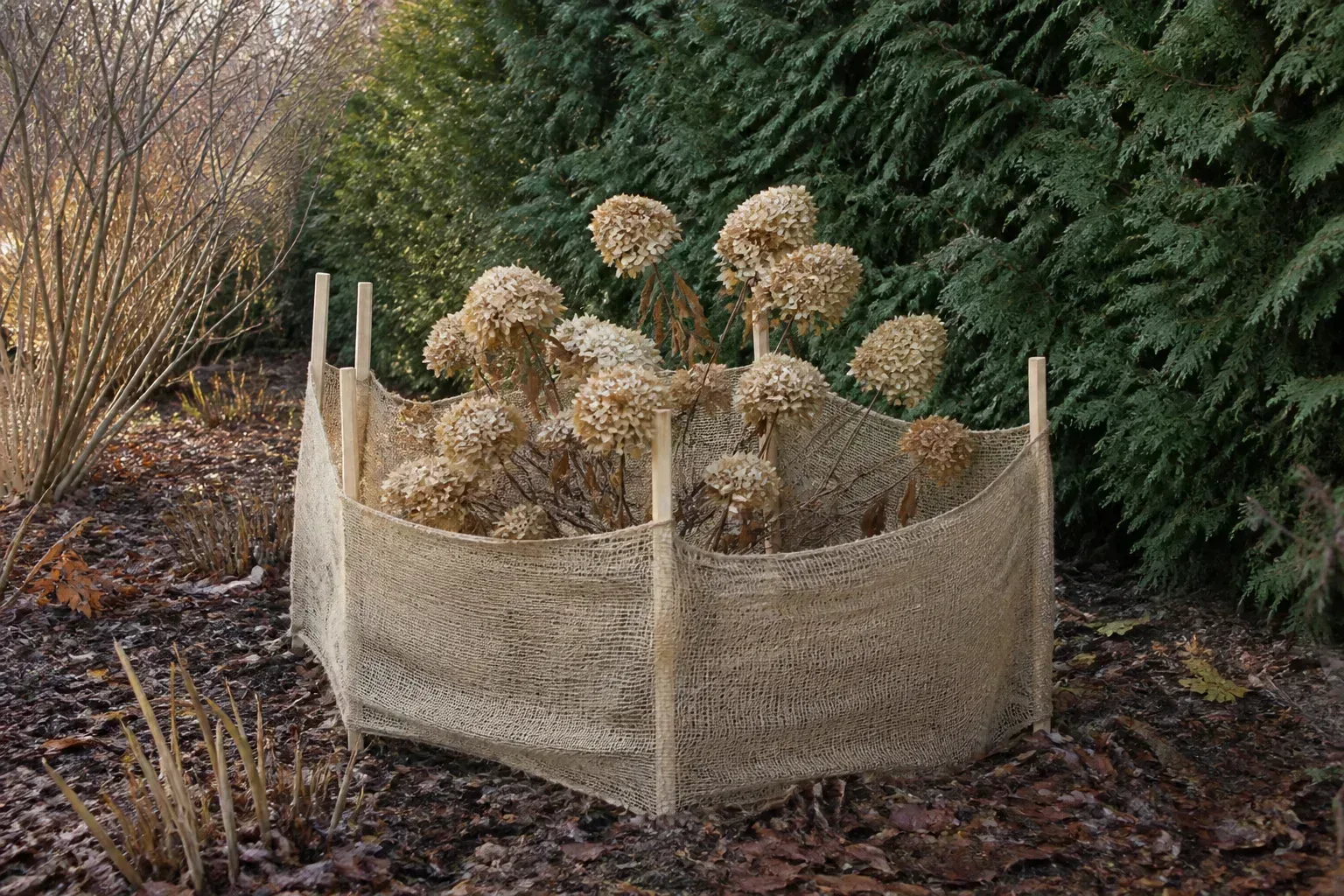
If you cut a new-wood hydrangea too early, inspect for frost damage after the last hard freeze. Pruning may have stimulated tender growth, so remove only tissue that is clearly blackened or dead and let the plant produce new shoots. If the plant was reduced far more than intended, keep moisture steady and avoid another major intervention until it has rebuilt foliage.
No pruning guide can promise flowers after a bad cut because frost, winter injury, deer, drought, low light, and plant age also affect bloom. The useful question is not “How do I force flowers now?” but “What is the next correct growth cycle, and what stress can I remove before it begins?”
Aftercare That Helps the Next Flush of Growth
After pruning, water deeply when the root zone begins to dry rather than giving frequent shallow splashes. Hydrangeas prefer even moisture but not waterlogged soil. A two- to three-inch layer of organic mulch can reduce temperature swings and evaporation; keep it a few inches away from the crown and woody stems.
Hold fertilizer until you know the plant needs it and the timing fits the season. A healthy hydrangea that was fed in spring usually does not need a late nitrogen push. If growth is weak, test the soil or evaluate light, drainage, moisture, and winter damage before adding nutrients. Pruning can reveal a problem, but it rarely solves one caused by a poor site.
Watch the plant for several weeks after a major cut. New shoots should emerge from living nodes, while continued dieback, sour soil, or repeated wilt points to a root or drainage problem that pruning did not create and cannot repair.
Finally, write down the plant’s type and the date it flowered. A note such as “oakleaf, bloomed in June, prune after bloom” is more useful next year than a generic reminder to prune in spring. Hydrangea care becomes much less mysterious when the calendar follows the plant’s buds.
Conclusion
Prune hydrangeas by flowering wood, not by habit. Bigleaf, mountain, oakleaf, and climbing types generally need light, post-bloom pruning because their next flowers form on older stems. Smooth and panicle hydrangeas are more forgiving and can be cut back in late winter or early spring because they bloom on new growth. Rebloomers deserve the old-wood approach even when they can produce a second flush.
Start with dead and damaged wood, deadhead only as far as the next healthy leaf pair, and remove living branches selectively. When the type or timing is uncertain, the best cut is often the smallest one—or no cut at all until you can identify the buds.



