10 Grass Alternatives for Low-Maintenance Lawns
Compare 10 grass alternatives—clover, moss, sedges, buffalo grass, sedum, xeriscape, and more—by traffic, shade, water use, and upkeep before you rip out turf.
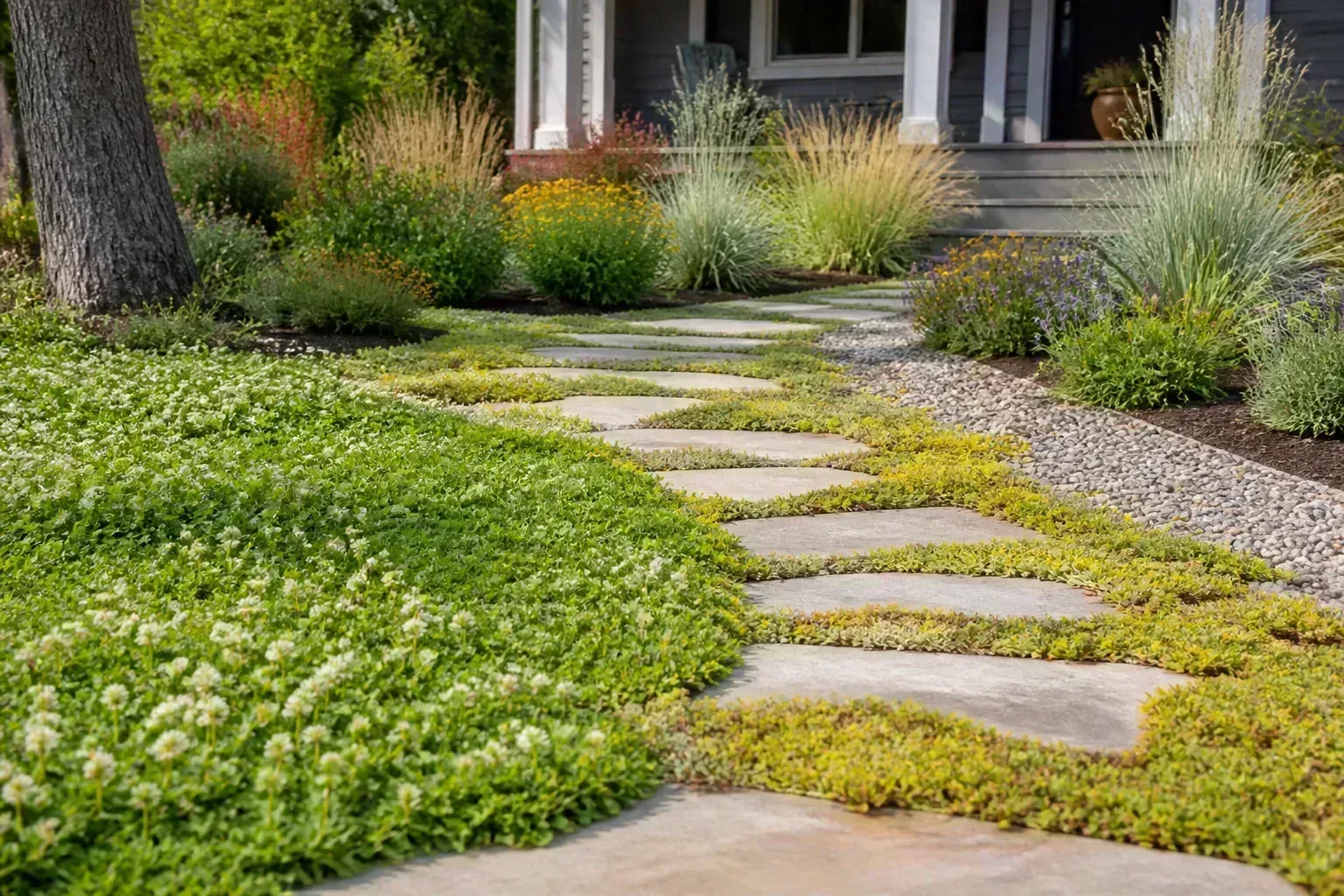
A traditional turf lawn still makes sense for soccer practice, daily dog runs, and the patch of green you actually walk across barefoot. Everywhere else, grass alternatives can cut mowing, watering, and fertilizer while giving you a yard that fits how you live—not how a lawn-care ad imagines you live.
The mistake is treating “lawn alternative” as one plant. Clover, moss, sedges, buffalo grass, sedum, xeriscape beds, gravel, and synthetic turf solve different problems. Match the option to foot traffic, sun, drainage, and climate first, then pick the plant.
Why grass is not the only lawn answer
Cool-season turf demands regular mowing, irrigation in dry spells, and feeding to stay dense. Runoff from fertilizers and pesticides is one reason homeowners look for turfgrass alternatives, but the practical triggers are usually simpler: brown summer patches, shade that thins grass, slopes that are hard to mow, or a front yard you rarely touch that still needs weekly maintenance.
Penn State Extension notes that conventional lawns support limited biodiversity and often rely on inputs many gardeners now want to reduce. That does not mean ripping out every blade of grass. It means keeping turf where you need a durable play surface and replacing the rest with plants—or well-designed hardscape—that earn their space.
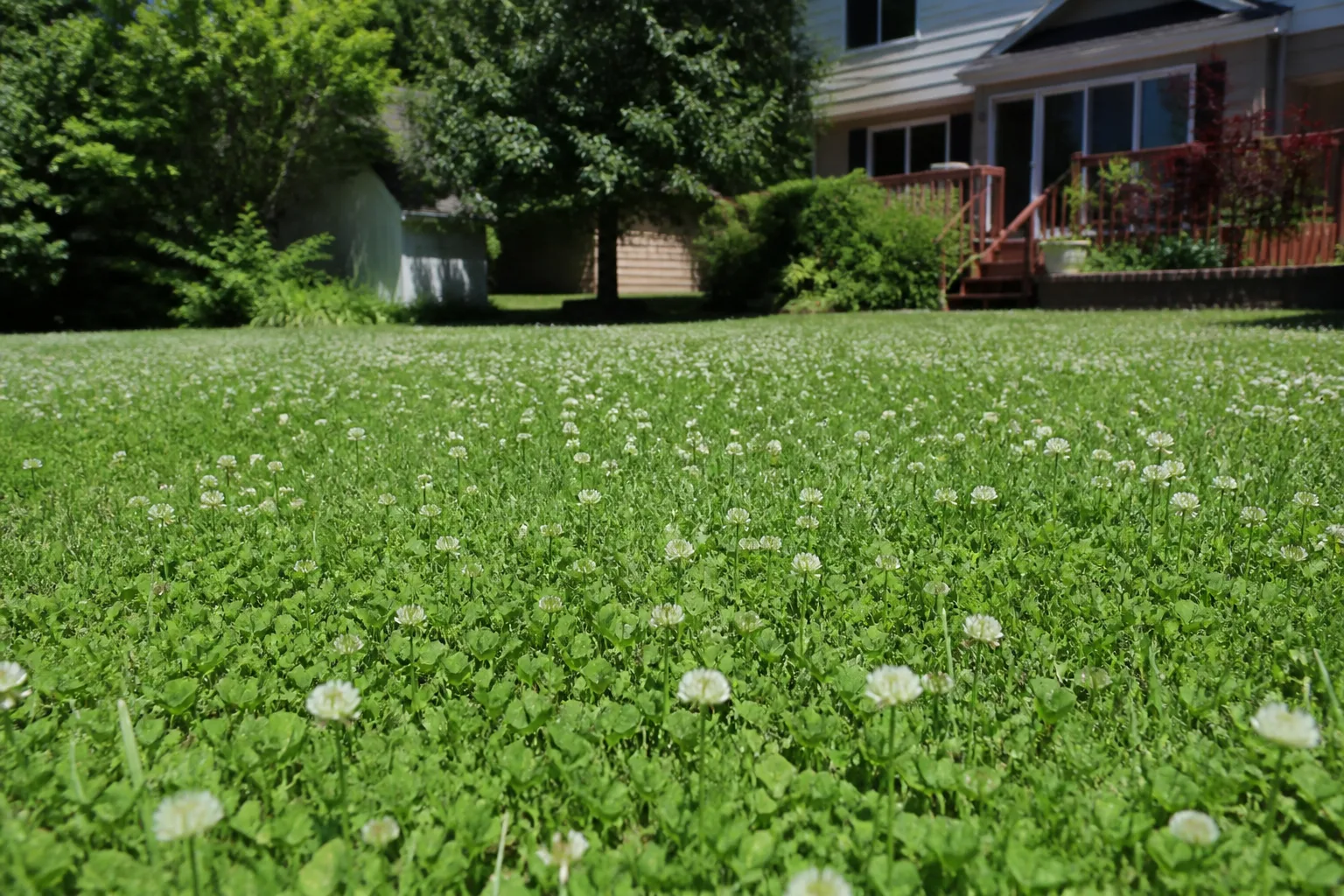
White clover was once a standard component of lawn seed mixes because it fixes nitrogen and stays greener in modest drought. Herbicides that eliminated “weeds” also eliminated clover, which is why clover lawns feel new even though the plant is familiar. The comeback is less about nostalgia than about matching plants to realistic upkeep.
Match the plant to traffic, light, and climate
Before you buy seed or gravel, sketch how the space is used. A path people cut across daily needs different plants than a front apron you view from the porch but rarely step on.
Foot traffic and use patterns
High traffic (kids, dogs, daily shortcuts): Buffalo grass, clover lawns, or a clover–fine-fescue blend handle regular use better than moss, most sedums, or decorative thyme mats. Keep a strip of conventional turf if you need a true sports surface.
Light traffic (occasional walks, garden hose dragged across): Sedges, microclover, carpetgrass, and some ground covers work if you add stepping stones on the actual route.
Display/low traffic: Moss, sedum mats, xeriscape plantings, and gravel paths shine here. Do not ask them to be a playground.
Sun, shade, and soil drainage
Full sun, fast drainage: Buffalo grass, sedum, carpetgrass (in warm humid climates), thyme, and gravel.
Partial shade to shade: Moss, Pennsylvania sedge, wild strawberry, and some clover stands—though dense shade still thins clover.
Slow-draining clay: Avoid thyme and sedum unless you amend or raise the grade. Sedges and carpetgrass tolerate more moisture; gravel only works with correct base prep and slope.
Hot, dry summers: Buffalo grass, sedum, xeriscape, and clover once established. Plan on extra watering the first growing season no matter which living alternative you choose.
Compare the top lawn alternatives at a glance
| Option | Best for | Mowing | Water once established | Foot traffic |
|---|---|---|---|---|
| Clover / microclover | Sunny to part-shade lawns, pollinator value | Optional; 2–4×/year or none | Low | Moderate |
| Moss | Shade, acidic soil, visual softness | None | Low; mist in drought | Very low |
| Regional ground covers | Slopes, edges, under trees | Varies | Low to moderate | Low |
| Buffalo grass | Full sun, central/western dry lawns | 1–3×/year | Very low | Moderate |
| Native sedges | Shade, no-mow texture | 1×/year or none | Moderate | Light |
| Carpetgrass | Warm, humid, part shade | Weekly in summer | Moderate | Moderate |
| Sedum mats | Hot, rocky, well-drained pockets | Rare | Very low | Low |
| Xeriscape | Maximum water savings, habitat | None on beds | Low with design | Paths only |
| Gravel / pavers | Paths, parking, modern courtyards | None | None | High |
| Artificial turf | Play areas where live turf fails | None | Occasional rinse | High; heat concern |
Use the table to narrow to two or three candidates, then read the sections below for trade-offs Spruce-style lists usually skip: bees on clover, moss and alkalinity, sedum and soccer games, and what artificial turf does on a July afternoon.
Clover and microclover lawns
White clover (Trifolium repens) and microclover—a lower, smaller-leaved cultivar of the same species—are the fastest way to get a green carpet that reads as “lawn” from the street. The National Garden Bureau’s microclover overview highlights nitrogen fixation, drought tolerance after establishment, and compatibility with low-mow fine fescues.
When clover is the right call
Choose clover when you want lower fertilizer bills, greener summer color without constant irrigation, and a living surface that tolerates moderate foot traffic. Microclover blends more evenly with turfgrass and flowers less aggressively than standard white clover, which matters if bare feet and bees are a concern.
Skip clover as a solo lawn if you need a formal, flower-free carpet, if dense shade keeps stems thin, or if your HOA forbids flowering lawns without a written exception. Our clover and four-leaf clover guide goes deeper on species, pollinator value, and what “microclover” actually means on a seed label.
Colorado State Extension notes that microclover seed often costs roughly $20–$30 per pound, with about one pound covering up to 1,000 square feet—making it one of the most budget-friendly full-lawn conversions if you seed yourself.
Planting and care basics
Overseeding into existing turf: Mow low, rake to expose soil, broadcast seed, and keep the surface moist until germination. Clover will compete with thin grass; thick, well-fed turfgrass slows establishment.
Starting fresh: Remove or smother old vegetation, loosen the top inch of soil, seed densely, and roll or tread lightly for seed-to-soil contact. Spring and early fall are the usual windows; avoid planting just before a heat wave or deep freeze.
Ongoing care: Pull broadleaf weeds by hand—many herbicides kill clover. Water deeply and infrequently once roots deepen. Mow if you want a lower profile or to reduce flowers; skipping mowing is valid if height stays acceptable. Reseed thin patches in fall.
Moss lawns for shady, low-traffic sites
Moss rewards patience in acidic, compacted, shady sites where grass struggles. It stays low without mowing, holds slopes when established, and needs no fertilizer. The limits are real: moss scorches in hot sun, struggles in alkaline soil, and collapses under heavy foot traffic or pet wear paths.
Establish moss by pressing fragments into prepared soil, keeping the surface moist for weeks, and removing leaves that block light. Weed by hand; chemical weed killers damage moss. If your site is sunny and alkaline, moss is the wrong tool—look at sedges or shade-tolerant ground covers instead.
Regional ground covers that knit together fast
“Ground cover” is a category, not a plant. The right mat depends on your region, soil, and whether roots will compete with trees. Penn State Extension lists beneficial low growers—creeping thyme, bugleweed, native violets, and others—that historically shared lawn space and fed pollinators.
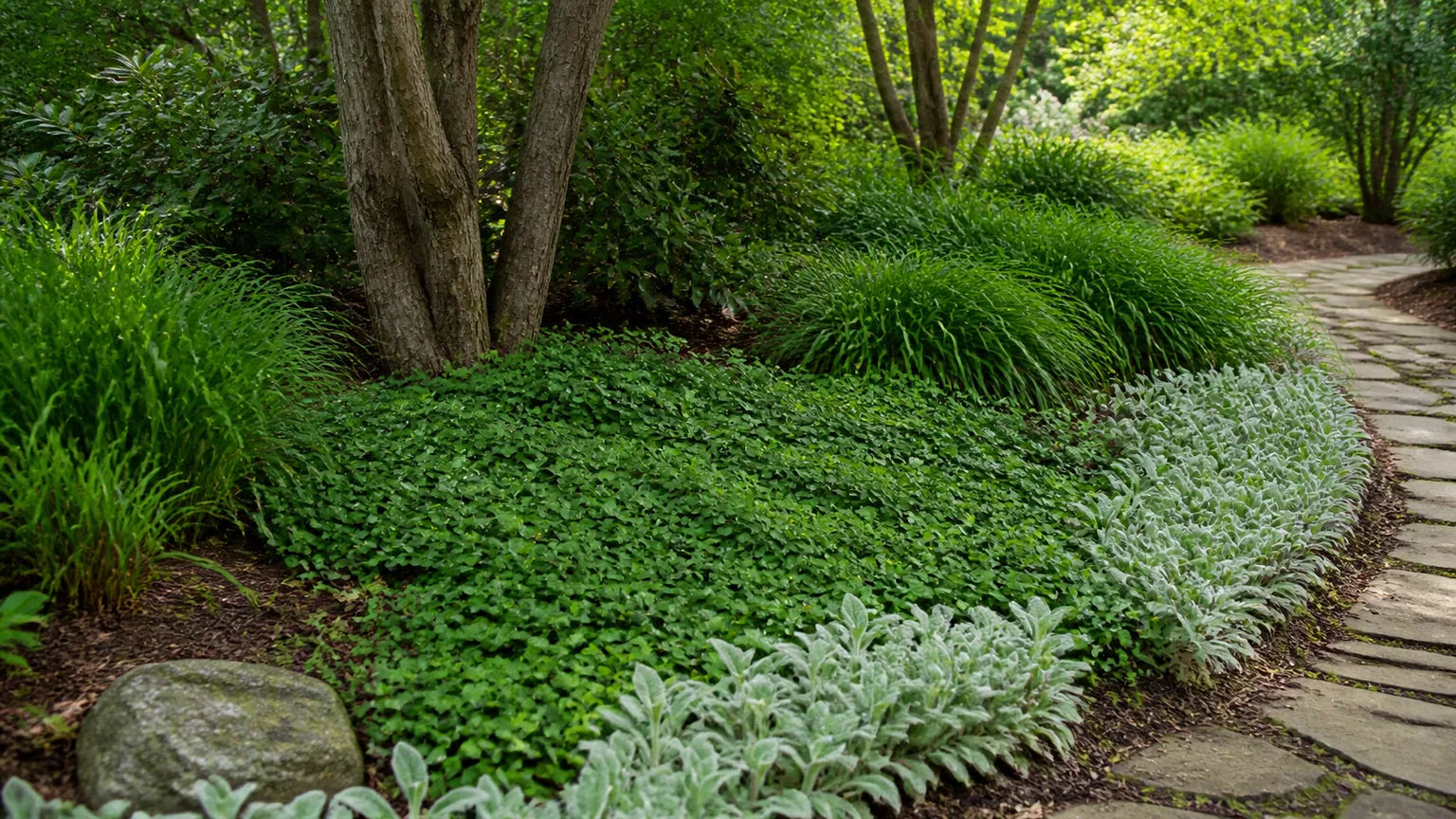
Strong regional examples include wild strawberry (Fragaria virginiana) for informal native carpets, creeping juniper on sunny slopes, and periwinkle or ice plant where local climate and invasiveness rules allow. Our wild strawberry groundcover guide and best groundcovers for weed suppression help narrow species that fit shade, sun, and spread habits.
Watch for root girdling when planting aggressive covers against tree trunks; leave a mulch ring clear of stems. Dormant-season browning is normal for some covers—know whether your choice is evergreen in your zone before you panic in winter.
Buffalo grass for drought-prone sunny lawns
Buffalo grass (Bouteloua dactyloides) is a warm-season native turfgrass that behaves like a lawn in full sun while needing far less water and mowing than cool-season bluegrass or fescue. Left unmowed it reaches roughly 4–8 inches; occasional mowing keeps a tidier look. Deep roots help stabilize slopes.
It is not a universal substitute. Buffalo grass fades in deep shade, goes dormant and tan in winter in northern zones, and grows in distinct clumps rather than a billiard-table monoculture. For dry central and western lawns where summer irrigation is costly, it is often the best living option that still reads as grass.
Fertilize lightly with nitrogen in late spring if growth is pale; flood irrigate deeply every two to four weeks in prolonged summer drought only while establishing. Trim surrounding shade trees if branches encroach—sun is non-negotiable.
Native sedges for shade and no-mow texture
Sedges (Carex spp.) are grass-like perennials, not true grasses. Rhizomes knit a tough mat that tolerates light foot traffic and looks appropriate in shade or part shade where turf thins out. Penn State Extension recommends Pennsylvania sedge (Carex pensylvanica) and related natives for no-mow areas that grow 12–15 inches if left uncut, or shorter with an annual late-winter trim.
NC State Extension’s Cherokee sedge profile describes a clumping sedge for partial shade and moist soil—useful in the Southeast, though moisture needs differ by species. Always match the botanical name to your site; “sedge” on a tag is not enough information.
Plant plugs or small containers closely for faster fill. Most sedges will not mimic a golf-green lawn—they lean wispy and meadow-like. That is a feature if you want texture; it is a dealbreaker if you want striped mower lines.
Carpetgrass where humidity and partial shade dominate
Carpetgrass (Axonopus spp.) is a warm-season creeping grass for humid climates with moist, acidic soils and moderate shade. It can resemble turf when mowed, but it is a slow establisher and may need weekly mowing in summer—so it is not a magic escape from the mower if that is your main goal.
Use it where other warm-season grasses struggle in wet, shady lawns. Avoid heavy fertilization; a little nitrogen at establishment is usually enough. It is a regional specialist, not a national default.
Sedum and stonecrop for hot, dry pockets
Low sedum mats—stonecrop—excel in full sun, sharp drainage, and low fertility. They are ideal for hellstrips, rocky slopes, and courtyard pockets where a traditional lawn would bake. Most sedums are not soccer-field tough; occasional steps beside a path are fine, daily dog patrol is not.
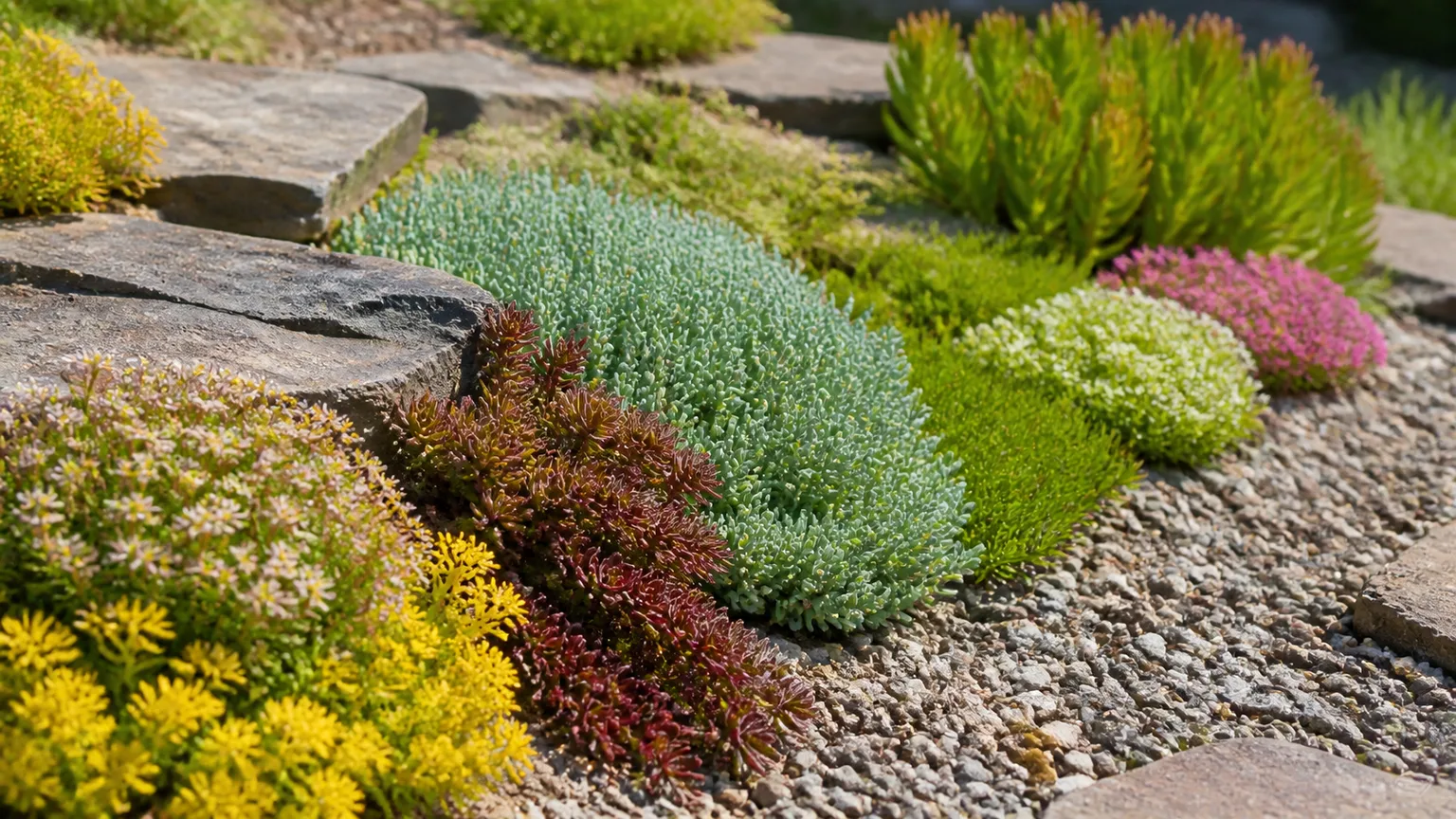
Our sedum ground cover guide compares cultivars by height, spread, and traffic tolerance. Fine Gardening’s lawn-alternative experiments note that tall clover can shade out shorter sedums in mixed plantings—keep clover and sedum in separate zones unless you enjoy troubleshooting.
Water sparingly after the first year; trim after flowering if mats look messy. Deer resistance is a plus in many regions; invasiveness is not—check local guidance before planting aggressive spreaders.
Xeriscape when you want the deepest water savings
Xeriscape is not one plant; it is a design approach that groups drought-adapted plants, mulch, rock, and efficient irrigation by water need. The City of Mesa’s xeriscape guidance cites typical conversion costs of roughly $2.50–$5 per square foot when turf is removed and replaced with designed beds—before rebates that many western municipalities offer.
Done well, xeriscape cuts irrigation dramatically and supports pollinators with native shrubs, grasses, and succulents. Done poorly, it looks barren and still needs weeding. Remove all turf before planting; weed consistently the first two years; water new plants on a establishment schedule even if long-term irrigation is minimal.
This is the right direction when you are ready to redesign how the yard works, not just swap one green carpet for another. Our 2026 landscaping trends guide walks through mixing turf, native beds, clover, and hardscape in the same property.
Gravel and permeable hardscape
Pea gravel and crushed stone suit paths, seating courts, and parking pads where you want zero mowing and high foot traffic tolerance. Installation is DIY-friendly: edge restraint, landscape fabric or similar weed barrier, compacted base, and rake to grade.
Gravel migrates, weeds eventually appear despite fabric, and dark stone heats up in sun. Crushed angular gravel stays put better than rounded pea gravel. Use gravel for defined human routes, not as a full-yard substitute for habitat unless that matches your aesthetic and heat tolerance.
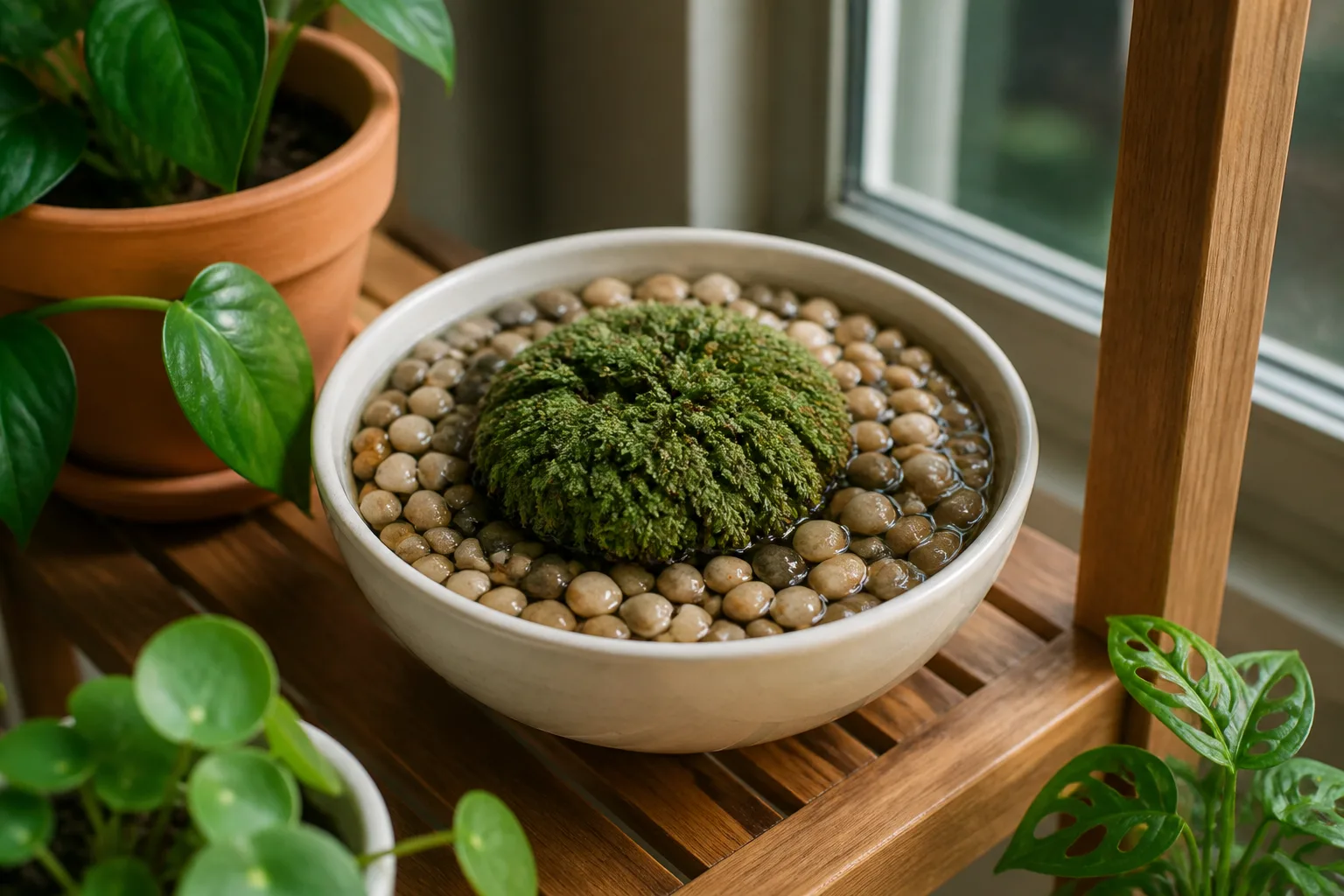
Pair gravel paths with living beds at the edges so the yard does not read as a parking lot. Permeable pavers and chip seal paths solve similar jobs with less scatter.
Artificial turf: honest trade-offs
Synthetic turf looks like mowed grass year-round and survives heavy use on sports fields. For homeowners, the honest list is shorter on chores and longer on caveats. Installation is labor-intensive; surface temperatures exceed natural turf on hot days; and infill materials have drawn scrutiny in health literature.
A Sports Health review of synthetic turf discusses design and maintenance factors for athletic surfaces; Environmental Pollution research on artificial turf highlights ongoing questions about chemical exposure from certain infill types. If you choose synthetic turf, research infill options, plan for heat mitigation in full sun, and rinse occasionally to reduce dust and pollen buildup on fibers.
Treat artificial grass as a specialty surface for small high-use zones—not the default eco-friendly lawn replacement marketing suggests.
How to convert an existing lawn
Test before you transform. Convert a 50–100 square foot patch first. You will learn germination timing, weed pressure, and whether the HOA or neighbors care—cheap insurance before a full-yard project.
Remove or smother turf: Mechanical stripping, repeated solarization with cardboard and mulch, or herbicide where legally permitted and label directions allow replanting. Fine Gardening compares sod cutters, digging, and “lawn lasagna” sheet mulching—six months to a year for smothering, but less disposal hauling.
Prepare soil: Loosen compaction, fix drainage, and adjust pH if moss or clover targets demand it. Most failures are site problems blamed on the seed.
Plant and water: Keep soil evenly moist through germination and the first dry spell afterward. Year one weed control matters more than year five mowing frequency.
Check rules: Meadow and native plantings may trigger weed-height ordinances. Document a plan; mow edges neatly; apply for variances where available. Our low-maintenance front yard landscaping guide covers curb appeal while reducing turf.
Conclusion
The best grass alternative is the one that matches how you use the yard: clover or buffalo grass for living surfaces with moderate traffic, sedges and moss for shade you rarely walk on, sedum and xeriscape for hot dry zones, gravel for paths, and synthetic turf only where live plants truly fail. Keep conventional turf where it earns its keep; replace the rest intentionally.
Start with one test bed, one season of observation, and realistic first-year watering. A lawn alternative that thrives on your site will still look like work in month three—and like freedom by year three.



