8 Late-Summer Flowers for Pollinators
Plant anise hyssop, Joe Pye weed, goldenrod, asters, and five more late-summer natives that feed bees and butterflies when spring flowers fade—plus how to design the bed.
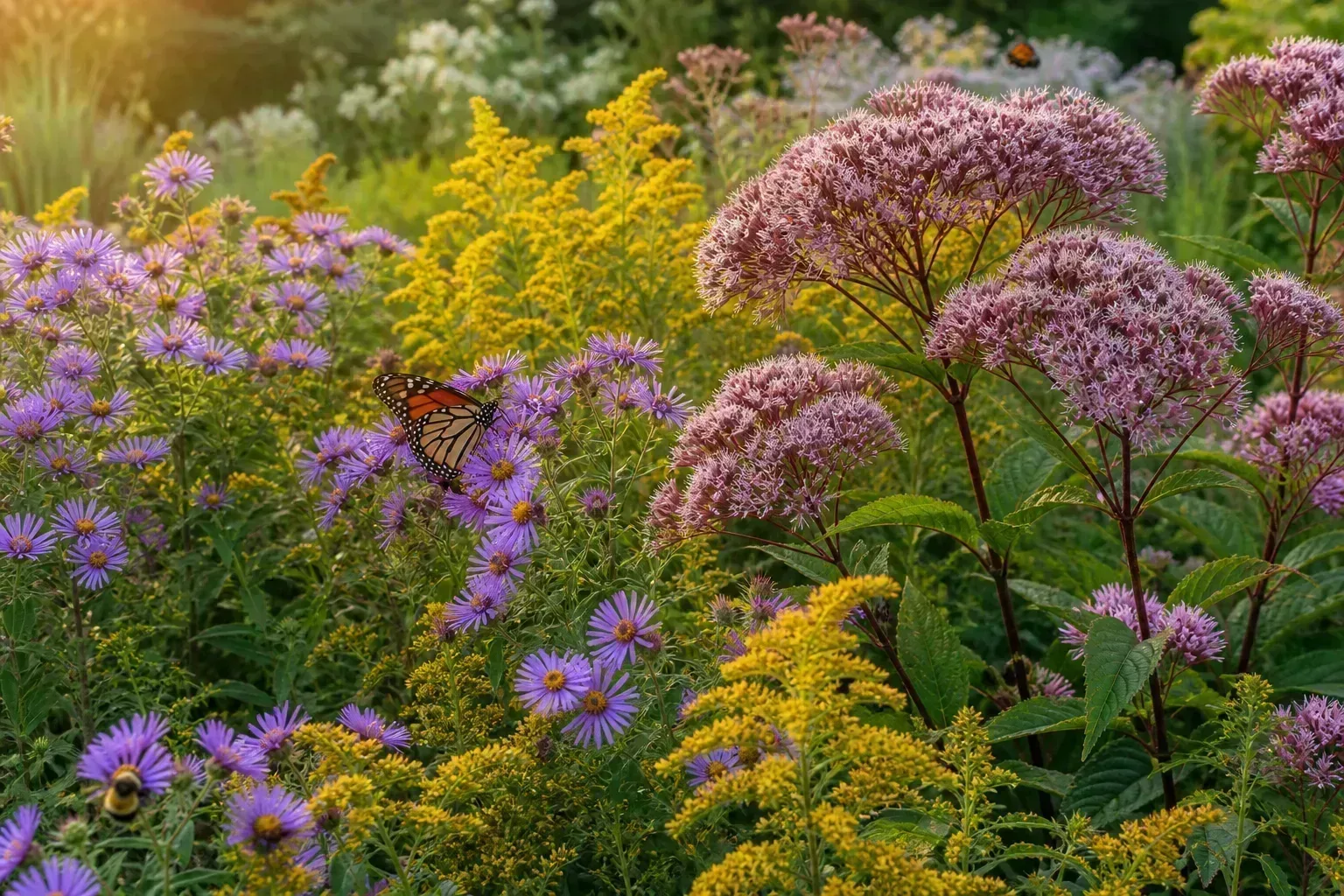
Spring beds explode with color, then quiet down just when bees, butterflies, and migrating monarchs need fuel most. Late summer through early fall is the season when many gardens look tired but pollinator metabolism stays high—queen bumble bees fatten up for winter, monarchs stage on nectar routes south, and specialist native bees finish their final broods. The eight late summer blooming flowers below are chosen because they open when earlier natives fade, tolerate real garden conditions, and support more than honeybees alone.
This is not a generic “plant something purple” list. Each entry includes bloom window, site requirements, who visits, and honest spread warnings so you can match plants to your sun, soil moisture, and tolerance for self-seeding—then combine them into a bed that feeds wildlife from August into your first hard frost.
Why Late Summer Is the Hard Season for Pollinators
Pollinator pressure does not follow the calendar on your seed packets. Spring ephemerals and early-summer perennials supply nectar when populations are building. By late July and August, those sources dry up in many yards—even lush-looking gardens can be ecological deserts if nothing reblooms.
Brooklyn Botanic Garden notes that asters and goldenrods bloom after much of the landscape has already flowered, providing beauty and wildlife resources from midsummer into late autumn. That late window matters because future queen bumble bees consume nectar to build fat stores before hibernation, and numerous native bees, wasps, flies, butterflies, and moths use late blooms for food, breeding sites, and overwintering spaces.
The practical takeaway: if you only plant for May and June, you are leaving pollinators hungry during the stretch that determines whether they survive winter or complete migration. Adding even two or three of the plants below can change the calorie map in a typical suburban lot.
How to Choose Plants That Actually Bridge the Gap
Before you buy, sort candidates by three filters: bloom time relative to your frost date, light and moisture on the actual planting site, and whether the species is native to your ecoregion rather than merely “North American.” A Montana gardener and a Pennsylvania gardener both need late-season nectar, but not the same Solidago cultivar.
Match Bloom Time to Your First Frost Date
Count backward from your average first frost using the USDA Plant Hardiness Zone Map and local extension frost calendars. You want flowers that open at least six weeks before frost and keep producing nectar until cold nights shut them down.
Late July through September is the target band for this list. Plants like anise hyssop and garden phlox start earlier and keep going; New England aster and goldenrod peak in early fall. If frost arrives in early October (typical zones 5–6), planting gallon-sized perennials in August still gives roots time to establish before bloom peaks. If you are within four weeks of frost, prioritize container-grown plants already in bud, not bare-root bargains.
For broader August planting context—including vegetables and additional perennials—see our guides on what to plant in August and perennials to plant in August.
Prioritize Species Native to Your Region
“Native” is not one-size-fits-all. Joe Pye weed, goldenrod, and New England aster are eastern North American staples; gardeners in the Plains or Southwest should swap in regional Solidago, Symphyotrichum, and Eutrochium species matched to local rainfall and soil. Native status matters because co-evolved pollinators often prefer the flower morphology they evolved alongside—tube depth, landing platform width, and bloom phenology all filter who can feed.
When nursery tags say only “pollinator friendly,” check the botanical name and cross-reference your state extension native plant or pollinator plant lists before you checkout.
Anise Hyssop (Agastache foeniculum)
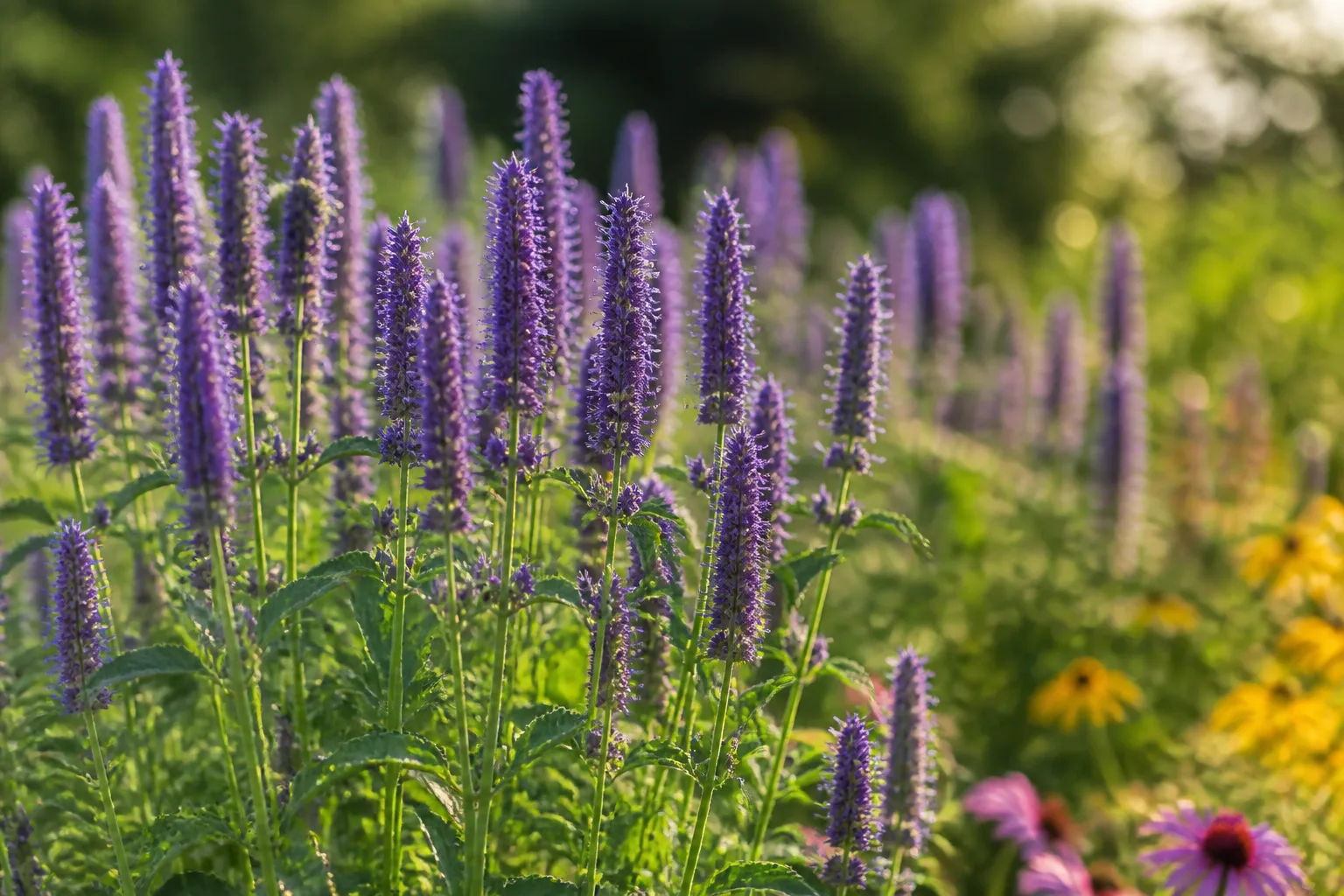
Anise hyssop is a mint-family perennial with licorice-scented foliage and purple-blue spikes that start in late July and continue until late autumn on healthy plants. NC State Extension describes it as native to Midwest prairies, reaching 3–5 feet in full or partial sun with mesic to dry, well-drained soil. It attracts bees, butterflies, and birds, resists deer and rabbits, and self-seeds modestly in open soil.
Who visits: Short- and long-tongued bees work the dense whorled spikes; goldfinches may pick at seed later. NC State lists anise hyssop among key August-blooming plants for pollinator census work in the Southeast—evidence that its bloom timing hits a measurable nectar gap.
Where to plant: Back of a sunny border, meadow edge, or dry cottage garden. Space 12–36 inches apart; crown rot appears in poorly drained clay that stays wet through winter.
Maintenance: Divide in spring or fall if the clump opens in the center. Deadheading extends bloom but is optional if you want volunteer seedlings in naturalized areas.
Joe Pye Weed (Eutrochium purpureum)
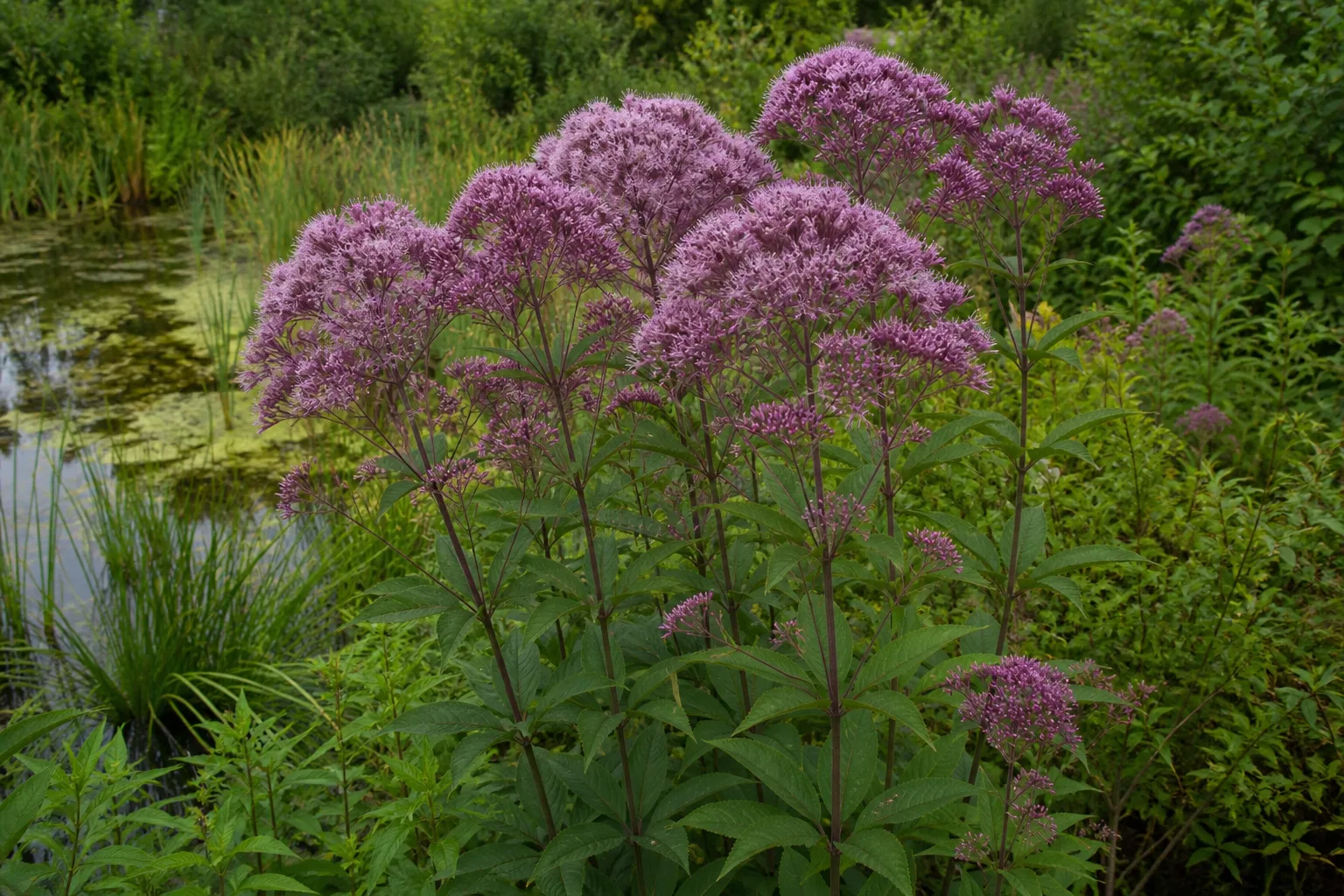
Joe Pye weed (formerly Eupatorium purpureum) is a 6–7-foot eastern native with vanilla-scented, dusty pink-purple domes that appear in late summer. NC State recommends full sun to part shade, moist fertile soil, and notes it works in rain gardens, meadows, and along streams. Butterflies—including swallowtails and monarchs—work the flat-topped inflorescences heavily.
Who visits: Butterflies dominate, but native bees and beneficial wasps feed on nectar. The tall structure also creates perching and hunting habitat for predatory insects that help control garden pests.
Where to plant: Moist rear border, pond edge, or low spot that does not dry out in August. In lean soil, a single spring application of compost supports bloom; in rich soil, skip heavy fertilizer to avoid floppy stems.
Maintenance: Cut stems to 18 inches in late fall if you must tidy, but consider leaving hollow stems for stem-nesting bees (see below). Clumps spread slowly by rhizomes; divide every four to five years if the center dies out.
Cardinal Flower (Lobelia cardinalis)
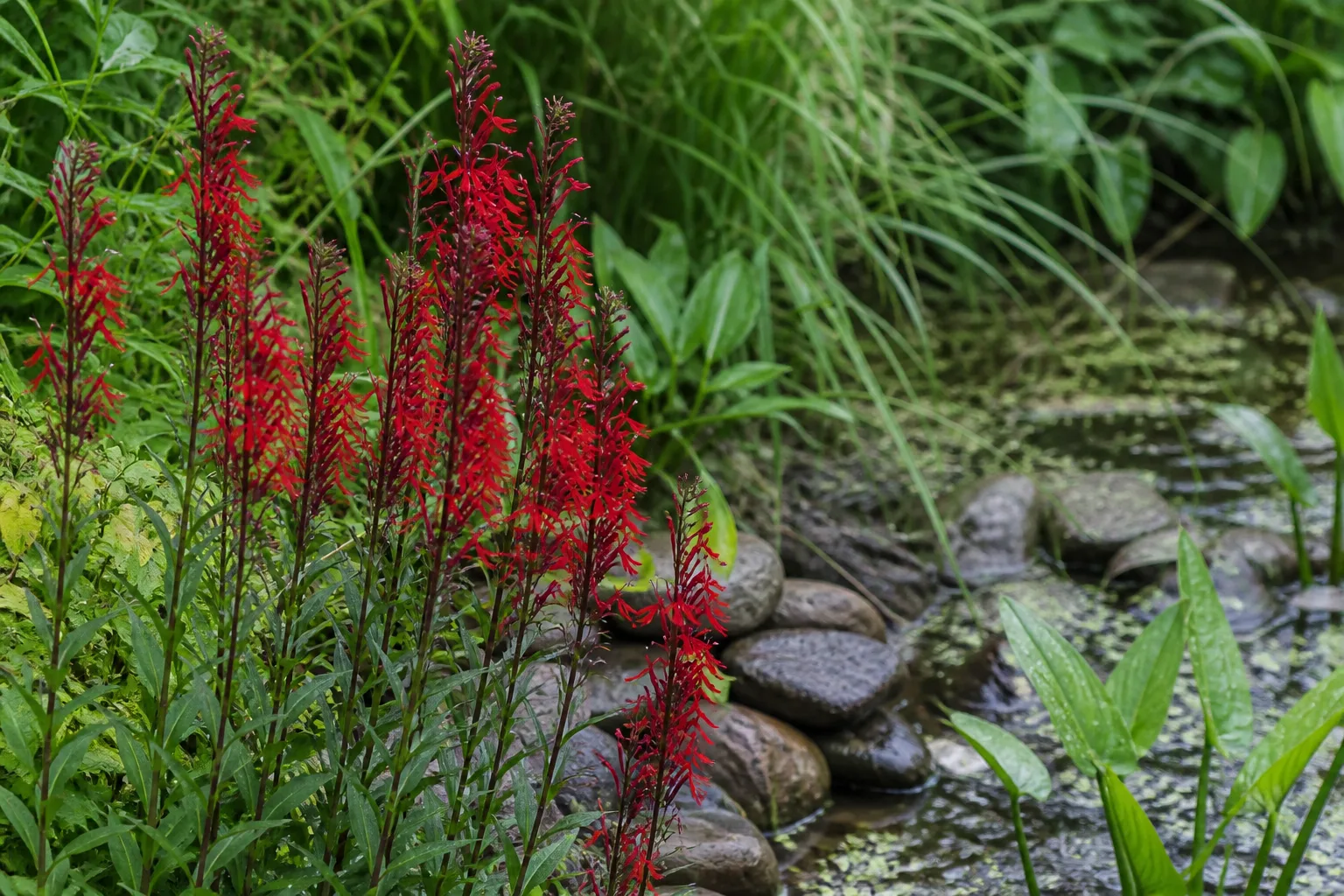
Cardinal flower delivers scarlet spikes from midsummer into early fall—exactly when hummingbirds still need high-sugar nectar. It wants full sun to part shade and consistently moist, neutral to acidic soil, making it ideal for rain gardens, pond margins, and irrigated beds.
Who visits: Ruby-throated hummingbirds are the headline visitors; swallowtail butterflies also feed. The tubular red flowers exclude many bee species that cannot reach nectar—plant it alongside flat landing platforms like asters or Joe Pye weed so diverse pollinators share the same bed.
Safety note: The ASPCA lists cardinal flower as toxic to dogs, cats, and horses. Keep it out of beds pets chew on, or grow it in ** fenced wildlife zones** away from dog runs.
Spread warning: Cardinal flower self-seeds aggressively in moist soil. Deadhead before seed set if you do not want volunteers in lawn edges—or embrace seedlings in wet shade where nothing else thrives.
Helenium — Sneezeweed (Helenium autumnale)
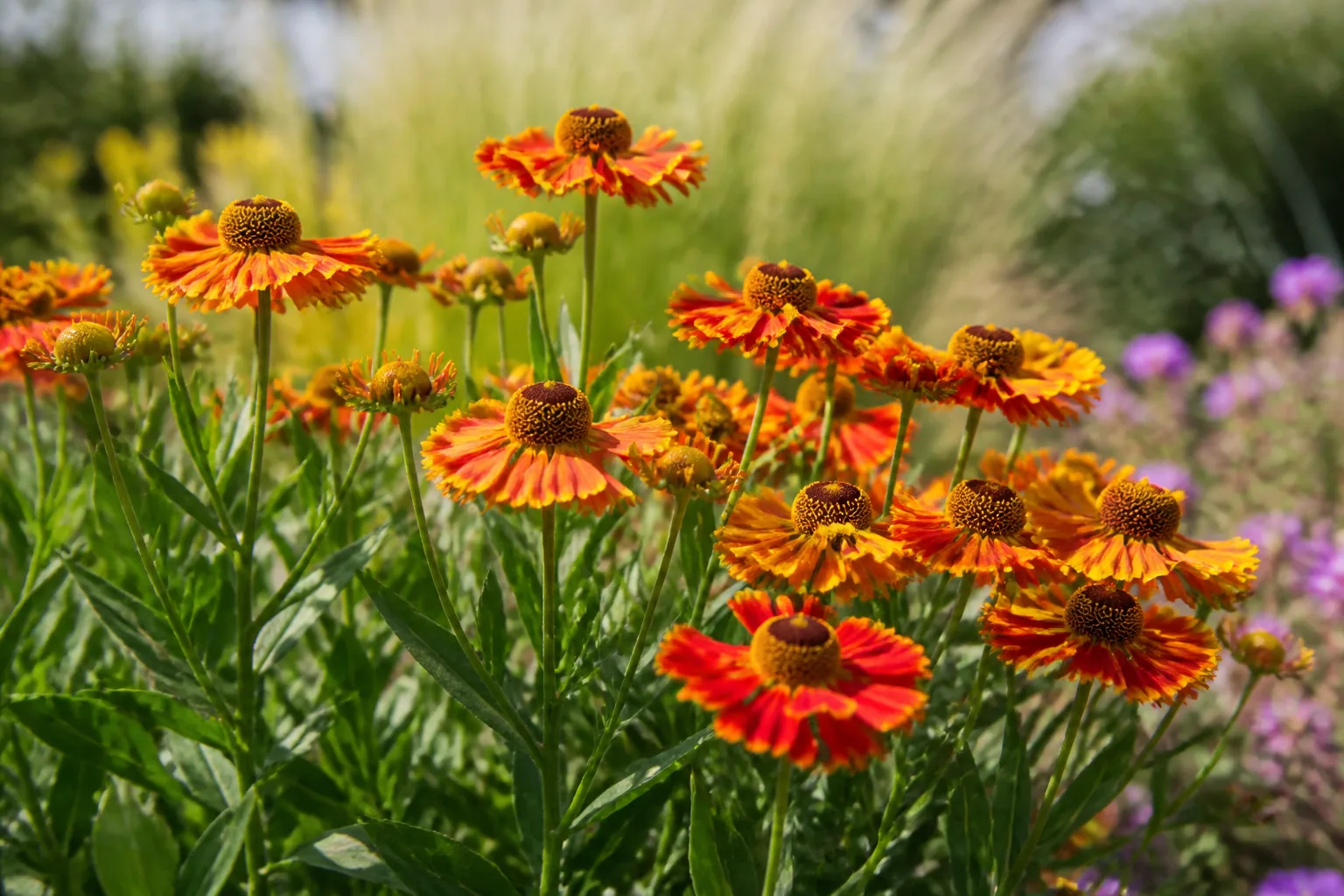
Helenium, commonly called sneezeweed, produces yellow, orange, and red daisy-like blooms from summer into fall. Despite the name, helenium does not cause hay fever; the old label refers to dried foliage used in snuff, not wind-borne pollen. It wants full sun, moist well-drained soil, and regular water during drought.
Who visits: Bees and butterflies feed on the broad composite heads; helenium is a reliable late-season source when coneflowers finish. Deadheading spent flowers extends bloom and keeps nectar flowing into September.
Maintenance: Divide clumps every three years to prevent bare centers. Taller cultivars may need staking in windy sites. Pair with moisture-loving Joe Pye weed or cardinal flower in the same hydrology zone.
Garden Phlox (Phlox paniculata)
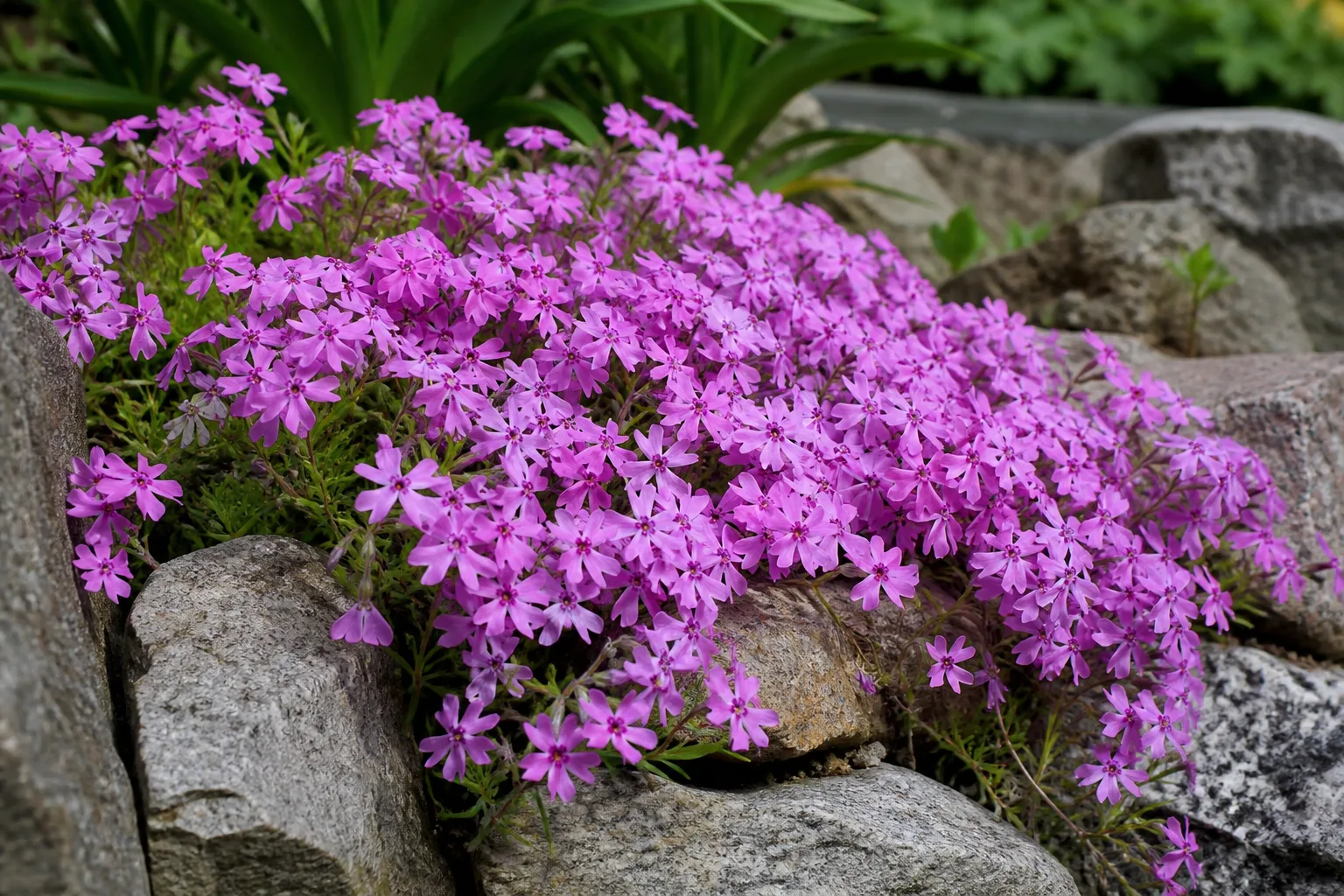
Garden phlox is the fragrant midsummer-to-fall backbone of many eastern pollinator borders, with pink, purple, and white panicles that attract bees, butterflies, and hummingbirds. NC State and regional extensions recommend full sun, well-drained soil, and consistent moisture—especially during late-summer dry spells when nectar concentration drops in stressed plants.
Who visits: Butterflies and hummingbirds favor open-faced cultivars with accessible nectaries; some double-flowered varieties offer less nectar—choose single-flowered selections for wildlife.
Disease reality: Powdery mildew is common in humid summers. Improve air circulation (space 18–24 inches, thin stems), water at the base, and select mildew-resistant cultivars such as the 'Jeana' or 'David' types widely recommended by pollinator gardeners. Mildew looks ugly but rarely kills the plant; do not spray fungicides during active bee visitation.
Maintenance: Deadhead individual panicles to side-shoot buds for repeat bloom. Cut back to the ground after hard frost.
Goldenrod (Solidago species)
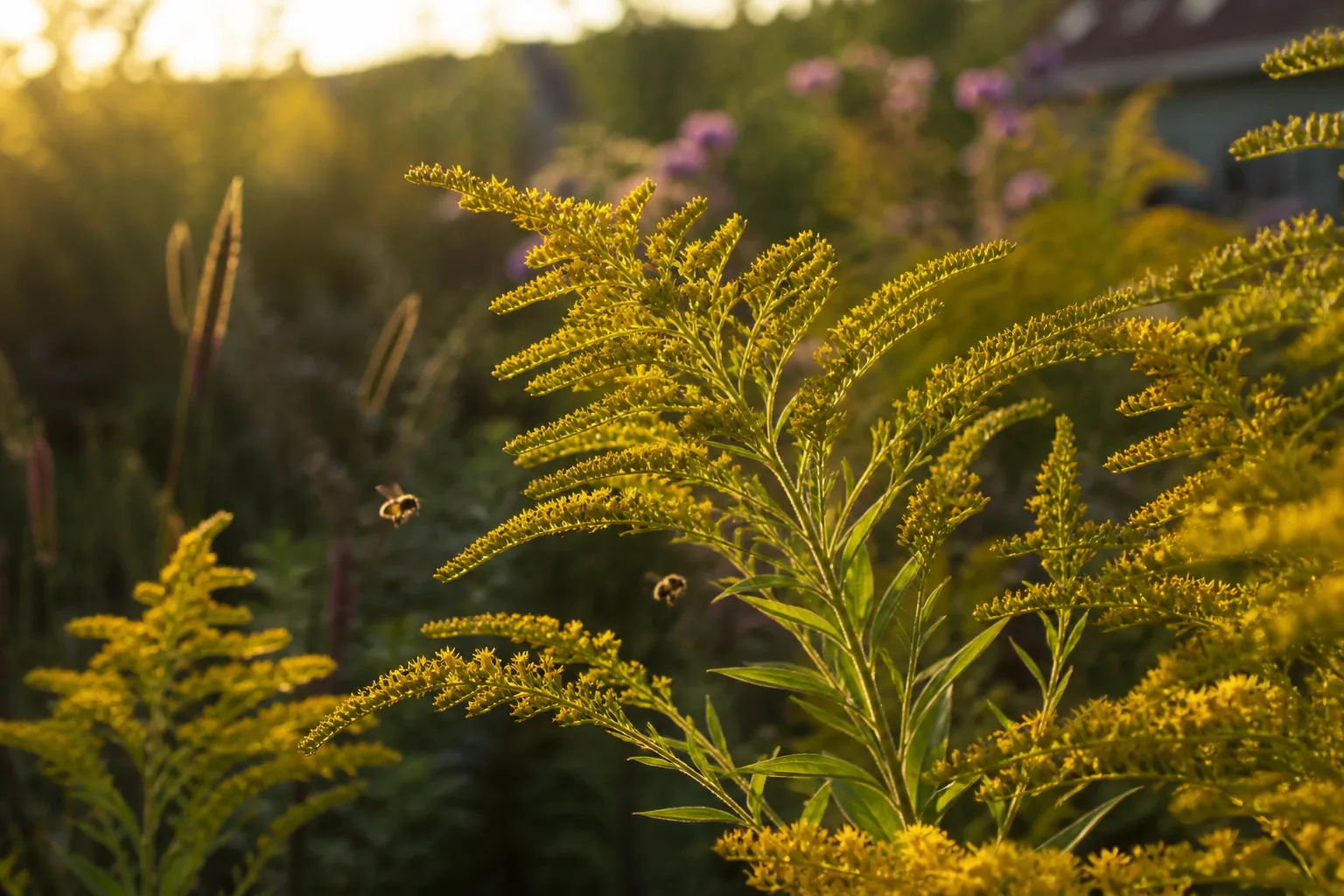
Goldenrod is the poster plant for late-summer and fall nectar, with architectural yellow plumes that feed bees, monarchs, and migrating songbirds on seed later. NC State’s profile of Canada goldenrod (Solidago canadensis) notes full sun, tolerance of clay and poor soil, and value for butterflies and native bees.
Allergy myth: Goldenrod is insect-pollinated with heavy, sticky pollen that does not drift. Ragweed (Ambrosia), which blooms at the same time, causes most late-summer hay fever. If neighbors blame goldenrod, point them to ragweed’s green, inconspicuous flower spikes along roadsides.
Species choice: Tall species like S. canadensis and S. rugosa suit meadows; compact cultivars such as Solidago odora or Solidago sphacelata ‘Golden Fleece’ fit small beds without engulfing neighbors. Brooklyn Botanic Garden pairs goldenrods with asters because together they support bumble bee gynes, mason bees, pearl crescent butterflies, and goldenrod crab spiders—a whole food web, not just nectar.
Maintenance: Avoid high-nitrogen fertilizer, which produces leggy, floppy stems. Divide aggressive clumps every two to three years if they creep beyond their zone.
Blazing Star (Liatris spicata)
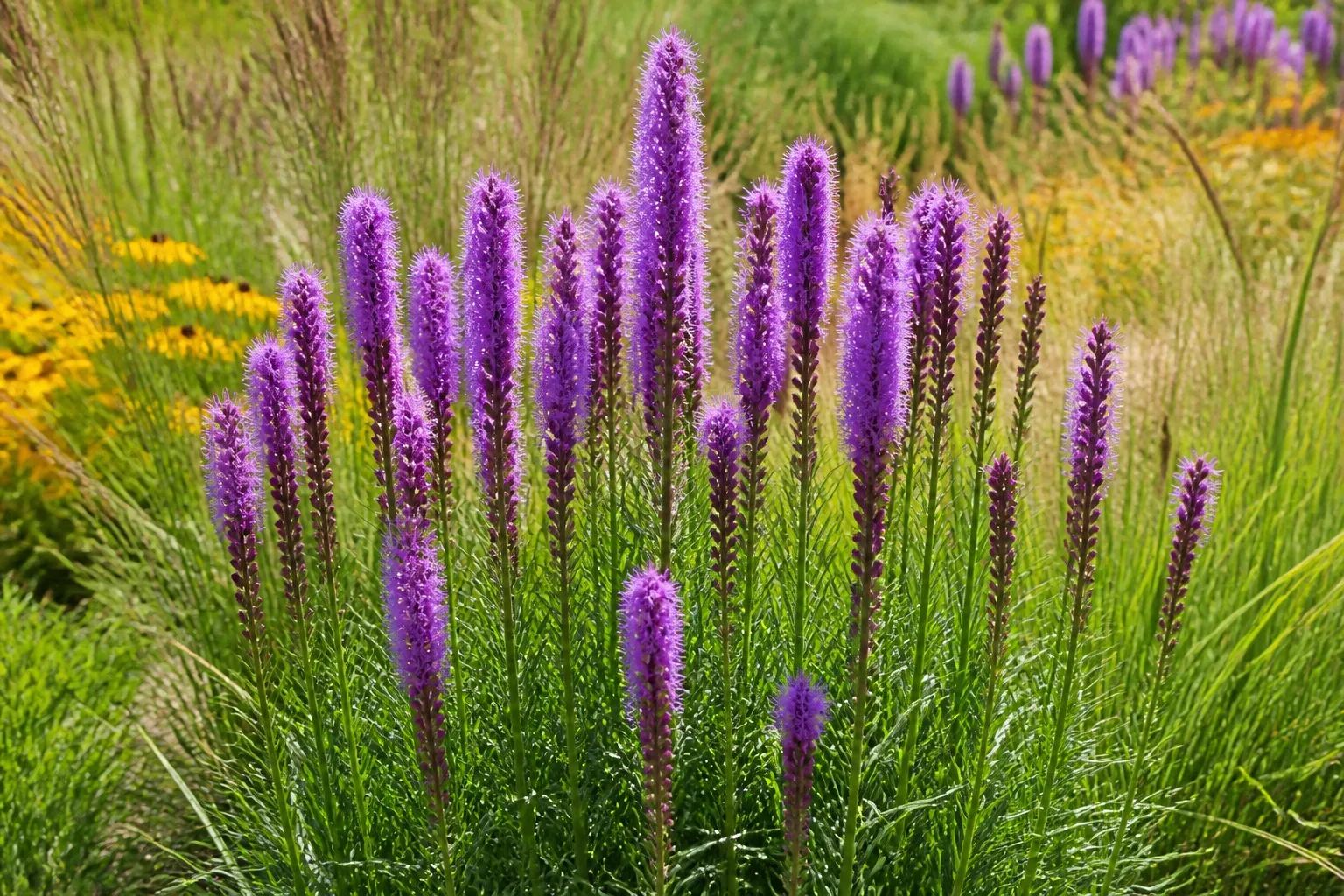
Blazing star, or liatris, sends up unmistakable purple (or white) spikes that bloom top to bottom in summer and fall. NC State describes Liatris spicata as tolerant of full sun, clay, ** drought**, and ** summer heat** once established—unusual flexibility for a pollinator showpiece.
Who visits: Bees, butterflies, and hummingbirds all work the dense disc flowers. The vertical form contrasts beautifully beside horizontal goldenrod sprays and mounded asters.
Maintenance: Corms can rot in soggy winter soil—plant in raised beds or amend heavy clay. Water at the base; wet foliage encourages leaf spot. Leave spent spikes until spring if you want finch seed and visual winter structure.
New England Aster (Symphyotrichum novae-angliae)
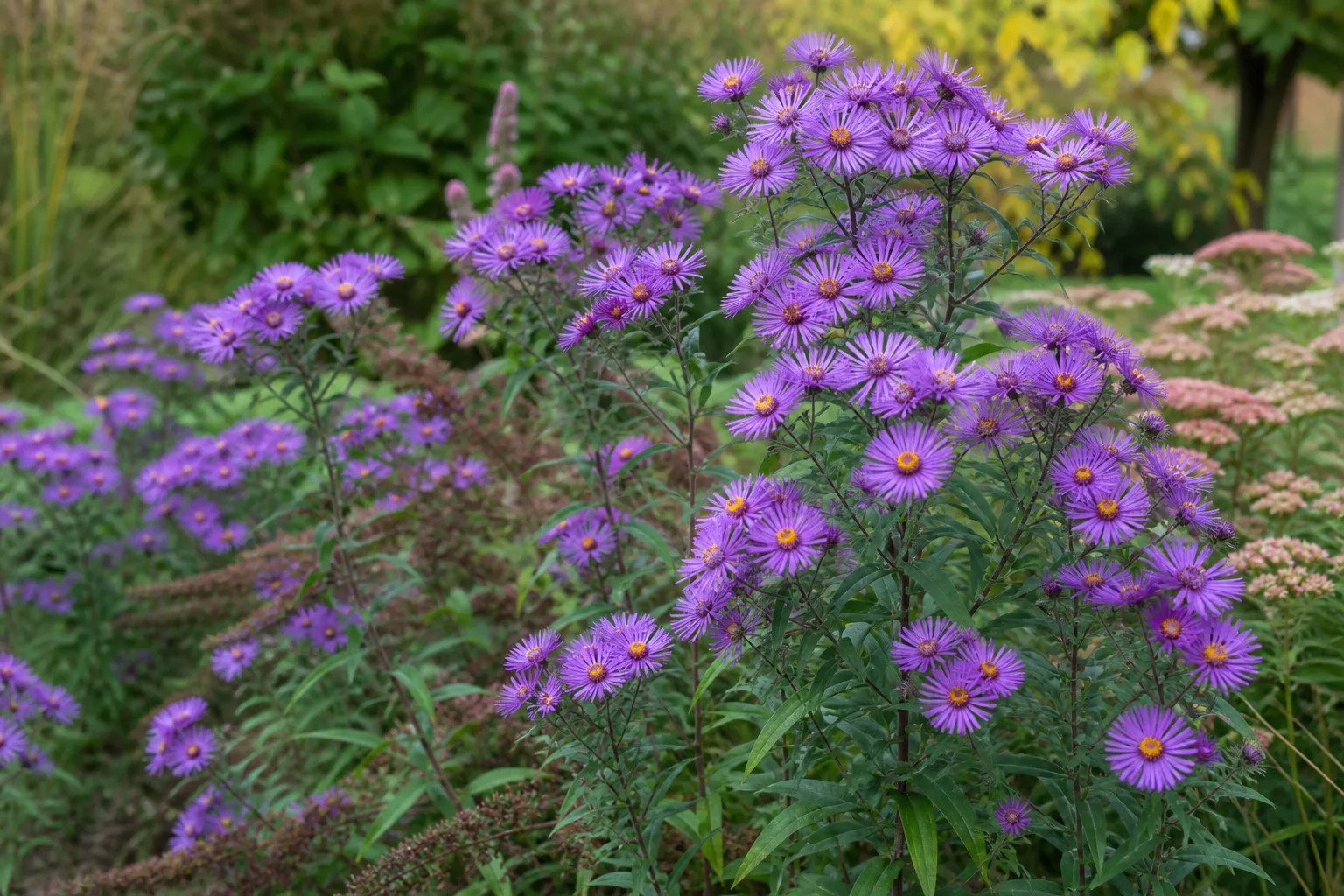
New England aster is the late-season aster most eastern gardeners know—a 3–6-foot cloud of purple-rayed daisies with yellow centers from late summer into fall. NC State recommends full sun, moist fertile well-drained soil, and notes flowers attract late-season bees and butterflies. Pinch stems in late spring for bushier plants and delayed, denser fall bloom.
Ecological pairing: BBG highlights asters alongside goldenrods because they provide nectar, breeding habitat, and overwintering stem sites for small carpenter bees, mason bees, and pearl crescent butterflies that lay eggs on aster foliage. Asters and goldenrod together are the highest-impact duo on this list if you only have room for two plants.
Cultivar tip: Wild-type plants can reach 6 feet and flop. Compact cultivars like ‘Purple Dome’ (about 2 feet) deliver the same pollinator value in small yards. Watch for powdery mildew and aster wilt; provide airflow and avoid overhead irrigation.
Maintenance: Divide large clumps every two to three years. Leave 18–24 inches of stem standing through winter for stem nesters unless disease requires removal.
Design a Late-Season Pollinator Bed That Works
A pollinator patch is a calendar, not a color scheme. The goal is overlapping bloom from late July until frost, with structural diversity so different insects can feed, nest, and overwinter on the same plot.
Layer Heights, Moisture, and Bloom Windows
Use a simple three-zone layout:
Back row (tall, moist): Joe Pye weed, New England aster, tall goldenrod—5–7 feet, consistent moisture.
Mid row (medium, average moisture): Anise hyssop, helenium, garden phlox—3–5 feet, well-drained but irrigated during drought.
Front row (accent, moist pockets): Cardinal flower in the wettest spot; blazing star in the driest front edge.
Sequence bloom so something is always open: phlox and anise hyssop start earliest; goldenrod and aster peak latest. For additional species that extend color into cooler months, our long-blooming perennials guide covers overlap plants worth mixing in.
Leave Stems Standing for Winter Nesting
Fall cleanup is where well-intentioned gardeners accidentally destroy next year’s bees. BBG notes that small carpenter bees overwinter and nest in the pithy stems of asters and goldenrods, and mason bees partition stem cavities with leaf paste. Cutting everything to the ground in October removes overwintering habitat.
Better approach: Remove only diseased stems and seed heads you cannot tolerate self-spreading. Leave 12–24 inches of healthy stalks until late March, then cut as new growth appears. Add a small brush pile or log section nearby for additional overwintering insects.
Common Mistakes That Cut Off Fall Pollinator Food
Planting only spring catalogs. If your bed peaks in June, August will stay quiet no matter how much you water. Add at least one August–September bloomer from this list.
Deadheading everything. Removing all spent flowers eliminates seed for finches and goldfinches and can reduce self-sustaining patches of native goldenrod and aster. Deadhead aggressive self-seeders (cardinal flower) and ** mildew-prone phlox**; leave goldenrod and aster seed heads if spread is under control.
Assuming “native” means zero maintenance. These plants still need correct moisture, airflow, and occasional division. Floppy Joe Pye weed in dry shade is not a pollinator plant—it is a disappointment.
Spraying pesticides during bloom. Even organic contact sprays hit non-target bees on open flowers. Treat mildew and aphids before bud break or after petals drop.
Buying double flowers for show. Fully double cultivars often lack accessible nectar. Choose species-type or single-flowered forms for wildlife value.
Ignoring the goldenrod–ragweed confusion. Removing goldenrod from public beds because of “allergies” destroys critical fall nectar while ragweed continues blooming unnoticed nearby.
Conclusion
Pollinators do not disappear in late summer—your nectar supply often does. The eight flowers above—anise hyssop, Joe Pye weed, cardinal flower, helenium, garden phlox, goldenrod, blazing star, and New England aster—cover the late July through frost window with overlapping bloom, diverse flower shapes for different visitors, and habitat value that extends into winter if you leave stems standing.
Start with two plants matched to your sun and moisture: a goldenrod–aster pair for maximum ecological impact, or anise hyssop plus blazing star for drier, smaller beds. Plant healthy gallon pots in August, water through the first dry month, and skip heavy fall cleanup. You will see fewer “empty” August afternoons—and more bees, butterflies, and hummingbirds working flowers you actually planted on purpose.



