12 Perennials to Plant in August for Fall Blooms
Choose 12 perennials to plant in August, matched to sun, shade, soil moisture, and frost timing, with realistic first-fall bloom expectations and aftercare.
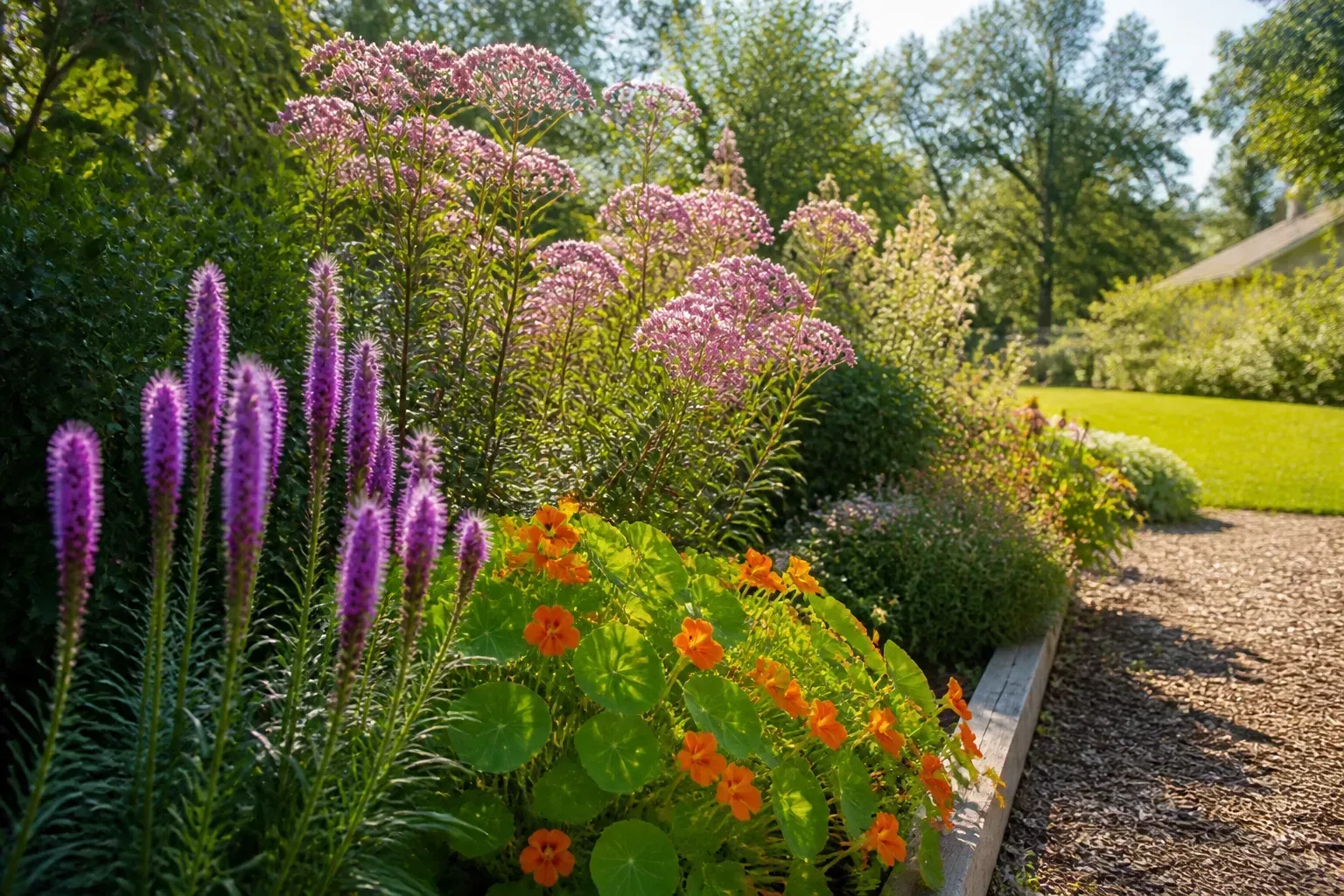
August is a useful planting window for perennials, but it is not a universal date on the calendar. In regions where the soil is still warm and nights are beginning to cool, a nursery-grown plant can spend the rest of the season making roots instead of trying to produce a whole new top growth cycle.
The important distinction is what the plant can do after transplanting. A budded sedum or sneezeweed may flower this fall, while a daylily or coral bells may spend the same weeks quietly anchoring its crown for a stronger display next year. The 12 choices below cover both outcomes, with the right plant matched to sun, shade, drainage, and moisture.
Is August a Good Time to Plant Perennials?
Often, yes—especially after the worst heat has passed. Warm soil encourages root growth, while cooler air reduces the water loss that makes a fresh transplant wilt. Iowa State University Extension identifies late August through mid-September as an excellent window for many perennials, but your local frost date and current weather matter more than the month name on its own. Iowa State University Extension’s late-summer planting guidance is a useful starting point for that regional decision.
August is also a good time to fill a gap in a bed with a plant that is already rooted in a container. It is a poor time to gamble on a tray of seeds producing a mature perennial before winter, or to plant a wilted, rootbound specimen simply because it is on clearance. The goal is to buy enough root mass and enough calendar time for the plant to settle.
Count Back From Your Average First Frost
Use a simple rule: aim to plant six to eight weeks before your average first frost. That gives the root system a meaningful establishment period before the soil cools and freeze-thaw cycles begin. In a cold zone, the viable August window may end in midmonth; in a warm zone, late August or early fall may still be comfortable.
Use this decision table rather than treating all August plantings alike:
| Time before average first frost | What to do |
|---|---|
| Eight weeks or more | Plant most healthy container-grown choices, then water consistently. |
| Six to eight weeks | Plant promptly; favor established plants and avoid slow-rooting or heat-sensitive choices. |
| Four to six weeks | Choose smaller, healthy plants with a strong root ball, and plan for winter mulch and weather protection. |
| Fewer than four weeks | Unless your local climate stays mild much longer than the average, wait for the more forgiving spring window. |
This is a planning estimate, not a guarantee. A heat wave can make an August planting harder even when the frost clock looks favorable, and an unusually early freeze can shorten the season. In the hottest climates, wait for the heat to break and plant in the evening; in very cold climates, move the same purchase earlier or choose a spring planting instead.
Buy Rooted Plants and Match Them to the Bed
Choose a plant that is moist but not saturated, with foliage that is reasonably firm and a root ball that holds together without circling densely around the pot. Remove the container before buying if the nursery allows it: white or tan roots filling the outside of the mix are normal, but a tight mat of roots or a sour, waterlogged center is a warning.
Do not choose by flower color alone. Colorado State University Extension’s perennial tables emphasize that successful plants are matched to sun exposure, soil conditions, water needs, height, and bloom period. Its herbaceous perennial reference is a good reminder that “low maintenance” only means low maintenance in the site the plant actually wants.
12 Perennials to Plant in August, Organized by Site
The list below is intentionally grouped by conditions rather than presented as a one-size-fits-all ranking. A plant that thrives in dry, bright soil can fail beside a downspout, while a moisture-loving plant may collapse in a raised bed that drains too quickly.
Dry, Sunny Beds
These choices appreciate bright light and drainage. They still need regular water while newly planted; “drought tolerant” describes an established root system, not a plant that can be ignored in its first August.
Russian Sage, Perennial Salvia, and Sedum
Russian sage (Salvia yangii, formerly Perovskia atriplicifolia) brings silver foliage and lavender-blue flower wands to a hot, open border. Give it full sun and soil that drains quickly. Its woody base can be slow to settle if it is moved while badly stressed, but once established it is one of the better choices for a dry bed. Avoid planting it where irrigation keeps the crown wet.
Perennial salvia is a broad group, so read the plant label instead of assuming every salvia behaves the same way. Perennial types such as Salvia greggii and Salvia nemorosa prefer sun and well-drained soil; many send up more flower spikes when spent blooms are removed. A late-summer planting may keep blooming if it is already well budded, but the first job is root establishment. The site and the cultivar determine whether it returns reliably in your winter.
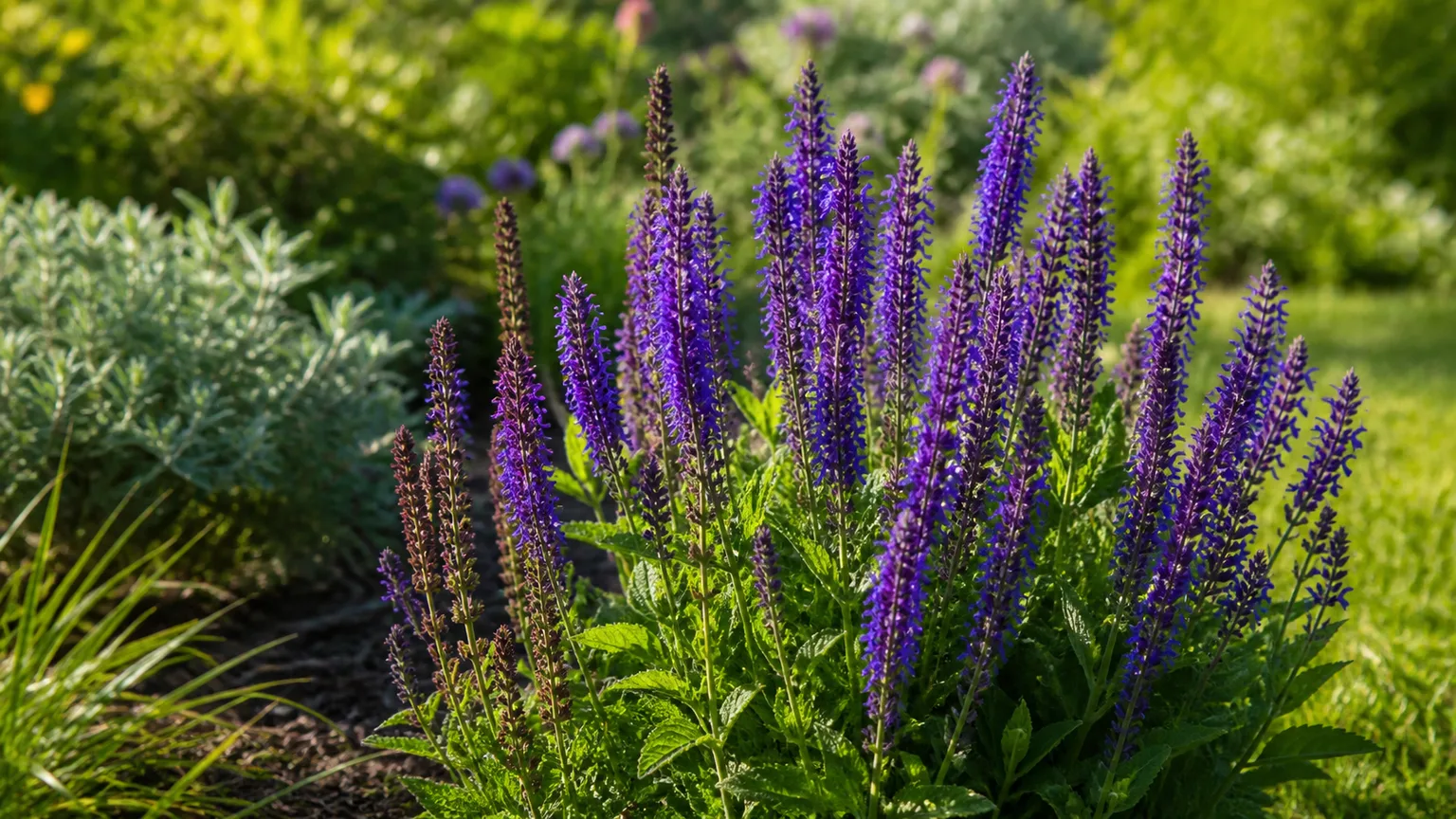
Sedum, especially upright stonecrop such as ‘Autumn Joy’ (Hylotelephium spectabile), is the safest pick here if you want a strong fall presence. It likes full sun, lean-to-average soil, and excellent drainage; its fleshy leaves store water, but wet soil can still cause trouble. Colorado State Extension lists showy stonecrop as an August-to-September bloomer, and the NC State Plant Toolbox profile for showy stonecrop describes its succulent foliage and adaptable landscape use. Plant the crown at the same level it was in the pot and keep mulch off the center.
Coreopsis, Purple Coneflower, and Black-Eyed Susan
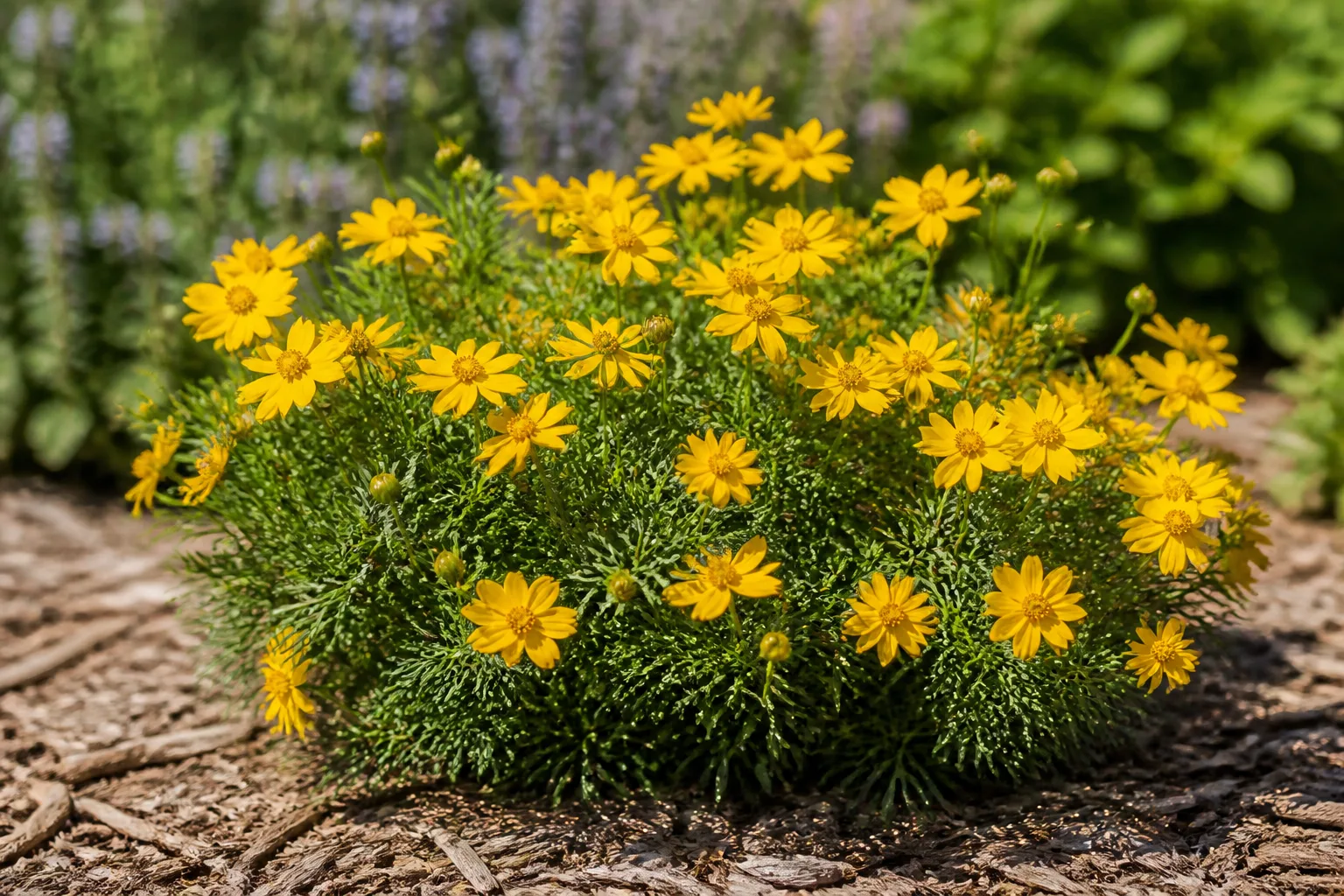
Coreopsis is a good August choice for a sunny edge that needs color without heavy feeding. Threadleaf and grandiflora types differ in height and longevity, but most want sun, drainage, and moderate moisture while young. Shearing or deadheading after a flush can encourage more flowers, although a newly moved plant may not have enough energy for a dramatic repeat bloom.
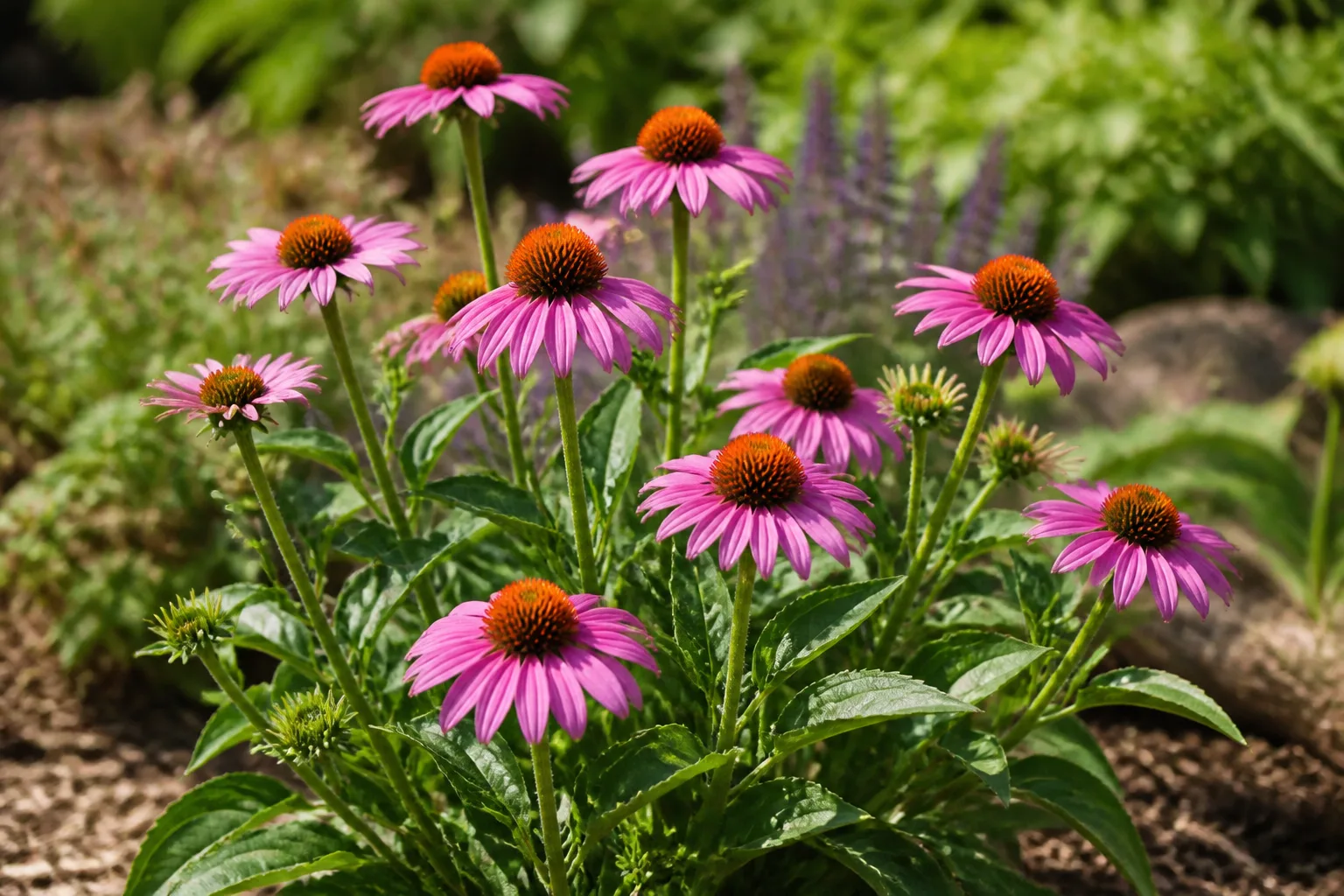
Purple coneflower (Echinacea purpurea) is more forgiving of heat, humidity, and a short dry spell once established than many showier border plants. It tolerates full sun and some light shade, prefers drainage, and often blooms for a long season from an established crown. The NC State Plant Toolbox profile for purple coneflower notes its native range, drought tolerance after establishment, and value to pollinators and seed-eating birds. Leave some cones standing after flowering unless you need a tidier border; the seedheads are part of its late-season usefulness.
Black-eyed Susan can mean Rudbeckia hirta, a relatively short-lived perennial or biennial in some gardens, or longer-lived species and cultivars such as Rudbeckia fulgida. That distinction matters if you expect one plant to last for decades. R. hirta is still an excellent August purchase for immediate golden color when sold as a healthy, budded plant, while the NC State profile for black-eyed Susan supports its full-sun, pollinator-friendly, drought-tolerant character. Let some seedheads remain if self-sowing and birds fit your garden plan.
Moist or Part-Shade Beds
These plants are better candidates for a bed that holds moisture or receives afternoon shade. They do not want a permanently stagnant root zone, so improve drainage if water sits after rain rather than trying to solve the problem with more mulch.
Japanese Anemone and Coral Bells
Japanese anemone is a graceful late-season plant for a rich, evenly moist bed in full sun to part shade. Depending on the plant sold, you may see it labeled Eriocapitella hupehensis or a hybrid Anemone × hybrida. Its flowers can arrive from late summer into fall, but a newly planted specimen may sulk or postpone a full display while it establishes. Give it room: some types spread by runners once happy. The NC State profiles for fall-blooming anemones and hybrid Japanese anemone are useful for checking the exact plant label.
Coral bells (Heuchera spp.) earn their place through foliage as much as flowers. Use them in part shade with rich, well-drained soil and enough moisture to prevent repeated wilting, especially through the first hot spell. Keep the crown at soil level—burying it under wet mulch is a common cause of decline. Cultivars vary dramatically in leaf color, so select for the fall foliage effect you want rather than expecting a tall flower show. NC State’s American alumroot profile explains the mounding habit, shade preference, and the value of dividing established clumps in spring or fall.
Bee Balm and Sneezeweed
Bee balm (Monarda didyma) suits a sunny to partly shaded bed that stays evenly moist. Its whorled flowers are valuable to hummingbirds and other pollinators, but crowded, dry conditions make powdery mildew more likely. Give it air space, water at the soil instead of wetting the foliage repeatedly, and accept that the clump may expand. The NC State bee balm profile highlights its preference for moisture and its tendency to spread, two details that matter more than the flower color on the nursery tag.
Sneezeweed (Helenium autumnale) is a strong late-summer and fall choice for full sun to part shade where the soil does not dry out. Its yellow, copper, or red daisy flowers are held above an upright clump, and tall cultivars may need support. The name is historical; the plant is not a typical hay-fever trigger. The NC State sneezeweed profile describes its moist-to-wet habitat and its late-summer-to-fall flowering, so do not plant it in the same bone-dry strip where sedum belongs.
Flexible but Climate-Dependent Choices
These plants can be excellent August purchases, but their “perennial” behavior or first-season result varies more by climate and cultivar.
Daylilies
Daylilies (Hemerocallis spp.) are among the most forgiving plants to move while actively growing. Plant them in sun to light shade, set the crown slightly above the surrounding soil, and water the root zone deeply while new roots form. A few cultivars may flower after an August planting, but it is more realistic to buy daylilies for a stronger clump and better bloom next season. If you are planting the common orange daylily or another vigorous type, check local invasive-plant guidance before adding it to a naturalized area.
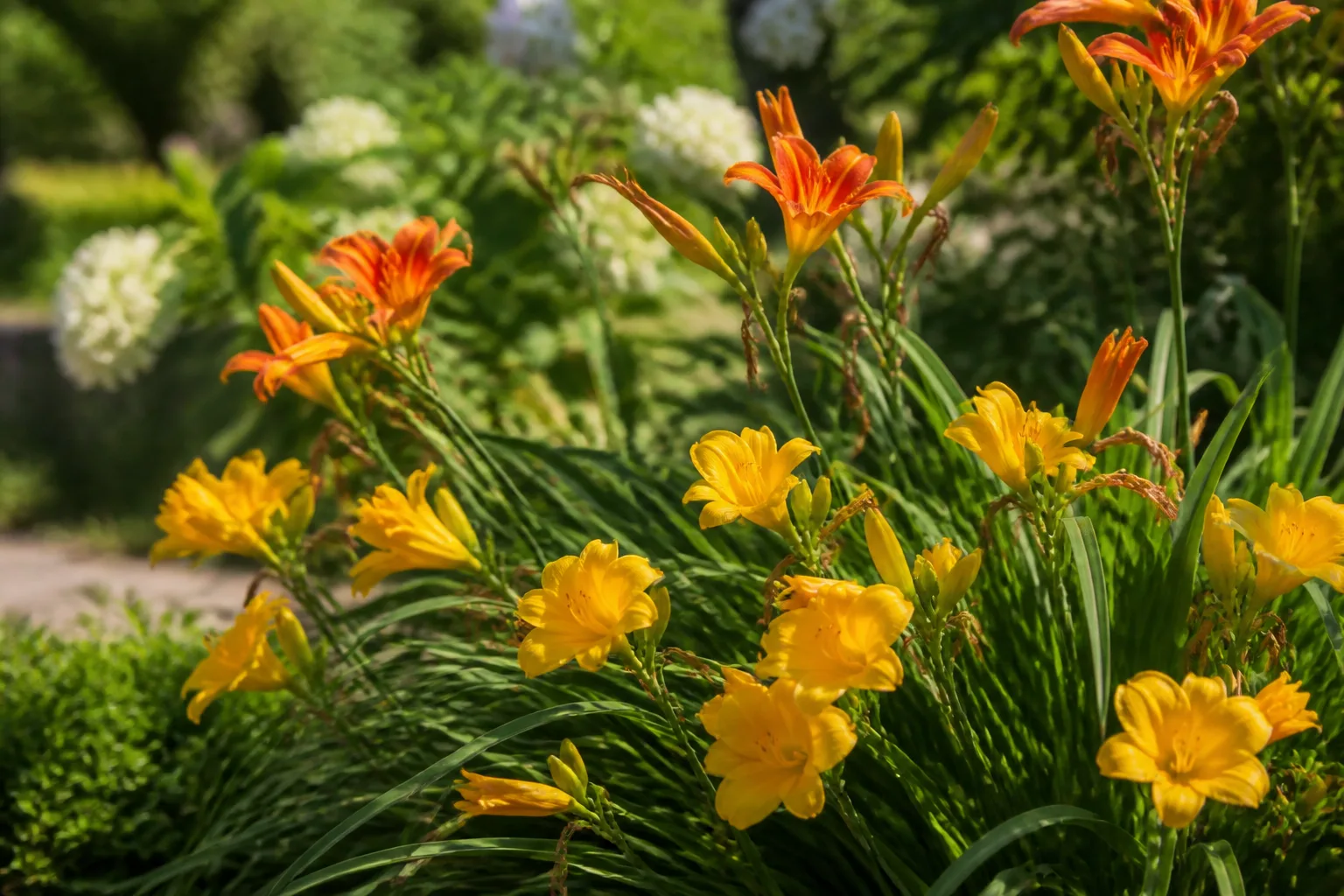
For a division or an established container, keep the foliage attached unless it is badly damaged; the leaves help rebuild the root system. Gardening Know How’s daylily transplanting guide also recommends protecting a fresh division from drying out while it re-establishes.
Snapdragons
Snapdragons (Antirrhinum majus) are the list’s important technical exception. They are tender perennials in mild climates, but most gardeners in colder regions grow them as annuals. They prefer cool conditions and can give a useful late-season display from nursery starts, yet a hard freeze may end the plant where a winter-hardy perennial would return.
Treat snapdragons as an excellent cool-season flower for immediate color, not as a guaranteed permanent investment. Choose a sunny site with fertile, well-drained soil, keep water consistent during establishment, and save seed only if you are comfortable with plants that may not match the parent. Gardening Know How’s annual-versus-perennial snapdragon explanation covers why the same plant is perennial in one climate and seasonal in another.
How to Plant and Care for August Transplants
The planting hole is easy. The first three weeks are where August success is decided.
The First Three Weeks
Prepare the bed before the plant leaves its pot. Remove weeds, loosen the soil across an area about twice the width of the root ball, and blend in a modest amount of finished compost only if the native soil is poor. Avoid building a rich pocket in heavy clay; roots are more likely to circle inside a soft hole while the surrounding soil stays compacted and wet.
Set the plant at the same depth it was growing in its container. Backfill firmly enough to remove large air gaps, water slowly until the root ball and surrounding soil are both wet, and add a thin layer of mulch over the root zone. Keep mulch a few inches away from the crown and stems. A buried crown is especially risky for coral bells, sedum, daylilies, and salvias.
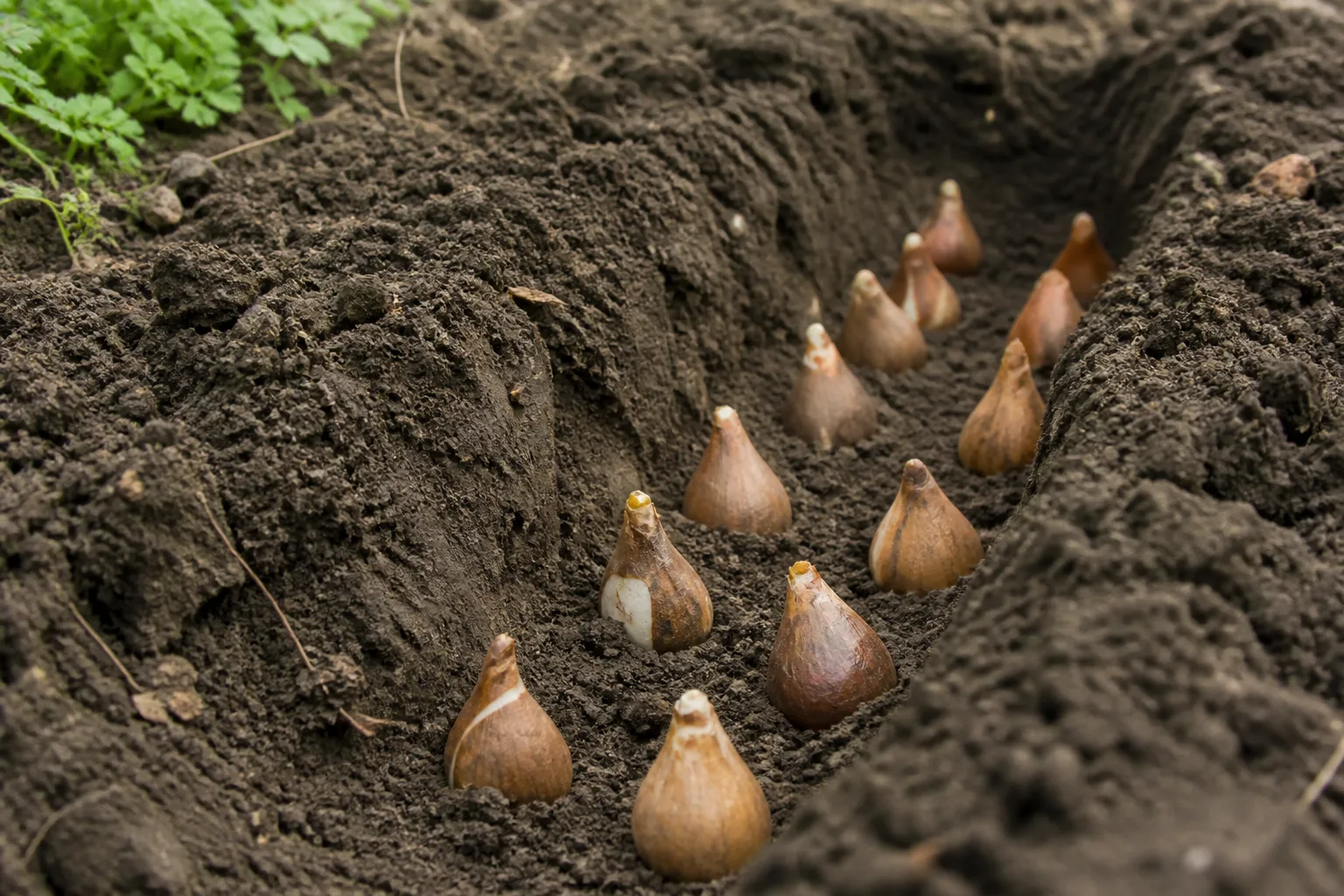
For the first week, check the soil and the plant daily rather than following a rigid calendar. Water deeply when the root ball begins to dry, and adjust for heat, wind, rain, soil type, and plant choice. Moisture-loving bee balm and sneezeweed should not be allowed to bake dry; Russian sage and sedum should not be left in saturated soil. In an active heat wave, a new transplant may need water every two or three days, a cadence also recommended in Epic Gardening’s August perennial planting guide, but the soil—not the calendar—should make the final call.
Do not push a newly planted perennial with a heavy nitrogen application. Nitrogen can produce tender leaves at exactly the point when the plant should be investing in roots and preparing for cold. Unless a soil test or a plant-specific label says otherwise, water consistently now and wait for the normal spring feeding window. Epic Gardening also recommends avoiding high-nitrogen growth before frost and using mulch to moderate the root-zone temperature.
Frost, Mulch, and Next Spring
As nights cool, keep watering until the ground begins to freeze, but reduce frequency if rainfall and cooler soil are doing the work. Before hard freezes, apply about 2 to 3 inches of loose mulch such as shredded leaves, clean straw, or fine bark over the root zone. Do not pile it against the crown, and do not use a wet, airless blanket that stays matted all winter.
New plants can heave when the soil repeatedly freezes and thaws. Mulch reduces that movement, but it cannot rescue a plant installed after the frost window with a tiny or damaged root system. In the coldest gardens, a healthy spring planting is often a better decision than forcing a late August purchase.
Set expectations by plant and purchase condition:
| What you buy in August | Likely first-season result |
|---|---|
| Budded sedum, sneezeweed, bee balm, Japanese anemone, or snapdragon | A reasonable chance of flowers now if the plant is not severely stressed. |
| Established salvia, coreopsis, black-eyed Susan, or coneflower | Some flowers are possible; root growth and reduced transplant shock are the priority. |
| Daylily division, coral bells, or a small, non-budded container plant | Often more root and foliage growth now, with the better bloom display next year. |
| A plant set out during a heat wave or within a few weeks of frost | Stress may prevent flowering and can reduce winter survival. |
Leave a few coneflower and black-eyed Susan seedheads standing for birds, but remove diseased foliage and any stems that are collapsing into neighboring plants. A tidy winter garden is not always the healthiest one; sturdy seedheads can provide structure and wildlife food while the crown rests.
Mistakes That Waste an August Planting
Treating the date as the rule. August works because of the relationship between soil temperature, air temperature, and frost—not because every plant likes the number eight. If the soil is baking, wait for a cooler spell; if frost is close, move the job to spring.
Planting a flower instead of a root system. A heavily blooming, rootbound plant can look like the best buy in the nursery and still struggle after transplanting. Choose a healthy root ball and accept that a plant may pause or drop a few leaves while it settles.
Watering every species the same way. Sedum and Russian sage need drainage; bee balm and sneezeweed need more dependable moisture; coral bells need protection from hot afternoon sun. Group plants by need so the hose does not turn a dry-bed plant into a wet-soil failure.
Feeding for instant size. Late nitrogen can create soft top growth that is more vulnerable to frost and does not replace missing roots. Let establishment happen first, then feed in spring if the plant and soil call for it.
Burying crowns and smothering them with mulch. Plant at the nursery depth, keep the crown visible where the plant demands it, and leave a small air gap around stems. This one detail prevents a surprising number of late-summer losses.
Expecting every perennial to live forever. Some black-eyed Susans and coral bells are shorter-lived than daylilies or coneflowers, and snapdragons may be annuals in your climate. A plant can still be worth growing when it self-sows, divides well, or earns its space with a long bloom season.
Conclusion
The best perennials to plant in August are not simply the ones with the prettiest flower tags. They are the plants that match your remaining frost-free weeks, your bed’s moisture, and the amount of aftercare you can provide while roots are getting established.
For a reliable short list, choose one drought-tolerant sun plant such as sedum or coneflower, one moisture-friendly late bloomer such as sneezeweed or bee balm, and one shade or foliage plant such as coral bells. Plant healthy container stock, water deeply through the first hot weeks, keep fertilizer modest, and mulch before hard freezes. You may get flowers this fall, or you may be buying the root system that makes next year’s display possible; both are successful August plantings when the choice fits the site.



