How to Grow and Care for Philodendron Silver Sword
Learn how to grow Philodendron Silver Sword with practical light, watering, soil, support, propagation, repotting, pest, and pet-safety guidance.
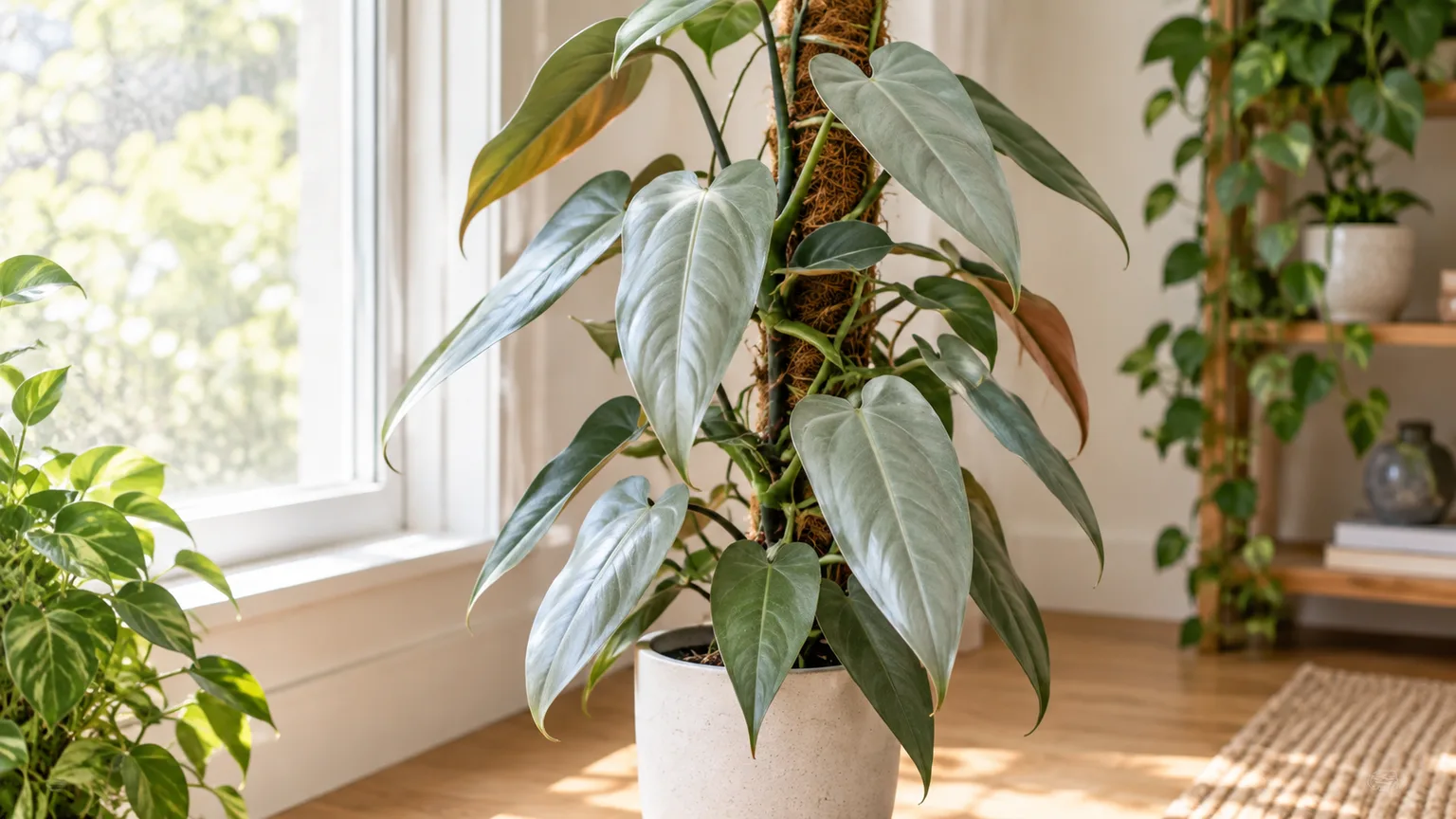
Philodendron Silver Sword (Philodendron hastatum) is a climbing aroid with metallic silver-blue leaves, not a compact tabletop philodendron. Give it bright filtered light, an airy mix, a real climbing support, and a watering rhythm based on soil dry-down, and it can become a tall, architectural houseplant with much larger leaves than the juvenile plant sold in a small nursery pot.
The most useful care distinction is between keeping it alive and helping it mature. A Silver Sword may tolerate a dim corner for a while, but low light stretches the vine, slows new leaves, and makes the plant less likely to develop the elongated foliage that makes the variety special. The guide below treats the plant as the climber it is, with practical checks for the problems that usually appear first.
The Silver Sword Growth Habit
NC State Extension identifies Philodendron hastatum as a tropical climbing herbaceous perennial native to Brazil. Its new foliage can emerge reddish or arrow-shaped, then mature toward longer silver-blue blades; established plants may also develop lobes, especially when the vine has something to climb. The underside of a mature leaf can show a copper tone, a useful clue when you are checking whether a plant sold under a generic philodendron label is the real Silver Sword.
Indoors, the plant can become several feet tall and may reach 10 to 15 feet when it has enough support and room. That is a potential mature size, not a promise that every living-room specimen will reach the ceiling. Pot size, light, warmth, root health, pruning, and the length of the growing season all change the result.
| Care decision | Practical target | What to watch |
|---|---|---|
| Light | Bright indirect or filtered light | Bleached patches and crisp edges mean the plant is too close to harsh sun |
| Temperature | About 65–85°F (18–29°C) | Cold drafts and sudden drops slow or damage tropical growth |
| Humidity | Average home humidity can work; moderate humidity helps | Pair added moisture with airflow |
| Soil | Moisture-retentive but airy and fast-draining | Heavy, wet mix starves roots of oxygen |
| Support | Moss pole or trellis placed behind the stem | Loose trailing growth tends to stay juvenile and leggy |
| Water | Thorough soak after the upper mix dries slightly | The interval changes with season, light, pot, and mix |
For a broader species profile and the plant’s place in the LeafyPixels collection, see the Philodendron Silver Sword plant profile.
Light, Temperature, and Humidity
Set Silver Sword close to a bright window where light is filtered by a sheer curtain, nearby foliage, or the angle of the room. An east-facing window often gives a forgiving mix of brightness and gentle morning sun; a bright west or south window may work if the glass, season, and local sun do not expose the leaves to hours of hot direct rays. The RHS philodendron growing guide recommends bright but indirect light and warns that strong summer sun can scorch foliage.
Do not interpret “indirect” as “across the room from the window.” Indoor light drops quickly with distance. A plant that gets a bright patch for an hour but sits in dim ambient light for the rest of the day may still produce long gaps between leaves. Turn the pot a quarter turn every week or two so one side does not stretch toward the glass, and clean dust from the broad leaves with a damp cloth when needed.
Keep the plant in a warm, stable room, ideally around 65–85°F (18–29°C). Protect it from an exterior door, an unheated window at night, air-conditioning discharge, and heating vents. A brief cool spell is not the same as sustained cold, but a tropical climber should not be used as a test of how low your room temperature can go.
Average household humidity is usually survivable, particularly when the plant is well rooted and the room is warm. If winter heating or a very dry climate makes new leaves stick, curl, or brown before they unfurl, use a hygrometer rather than guessing. A humidifier can help a group of plants, but leave space around the foliage so still, constantly damp air does not replace one stress with another.
Signs Light Is Too Low or Too Harsh
Low light usually shows up as long internodes, smaller new leaves, slower growth, and a vine that leans toward the window. Move the plant closer to a bright source or add a grow light gradually; a sudden jump from dim shade to intense unfiltered sun can burn the leaves you were trying to improve.
Harsh light produces pale, bleached, tan, or crispy patches on the window-facing surface. Those marks will not turn green again, so use the pattern on new growth to judge the correction. If new leaves are clean and the stem begins to produce shorter gaps, the placement is improving even though old damage remains.
Soil and Pot: Build an Airy Root Zone
Silver Sword roots need both water and oxygen. NC State describes P. hastatum as preferring moist, well-drained, rich soil, while the RHS recommends a loose, free-draining, slightly acidic compost for philodendrons. In a container, that means organic material for moisture and nutrition, plus coarse ingredients that keep pore spaces open after watering.
Avoid straight garden soil, dense topsoil, or a fine potting mix that stays compressed at the bottom of the container. A decorative pot without drainage holes is also a poor permanent home. You can use it as a cachepot if the plant remains in a removable nursery pot and the outer pot is emptied after watering.
A Practical Chunky Mix
For a reliable starting point, combine two parts quality indoor potting mix, one part perlite, and one part orchid bark by volume. This is not a sacred ratio. In a dry, bright room, you may use a little more moisture-retentive mix; in a cool room or with a heavy hand at the watering can, increase the coarse portion rather than watering less often into a permanently dense root zone.
Pre-moisten dry bark and potting mix before repotting so the ingredients do not repel the first watering. The finished mix should feel springy and open when squeezed, not like mud. If water races straight through the side of the pot while the center stays dry, the mix may have become hydrophobic; if the pot remains heavy and cold for many days, it is probably too fine, too large, or too poorly ventilated for the current conditions.
Water by Dry-Down, Not Calendar
Water when the upper 2–3 inches (5–8 cm) of mix have dried slightly, then soak the root ball thoroughly until water runs from the drainage holes. Let the pot drain completely and empty the saucer or cachepot. The RHS specifically advises letting compost dry out between waterings and never leaving philodendrons standing in water.
The exact interval is a consequence of the setup. A small plant in a bright room and a chunky mix may need checking every few days and watering roughly weekly during active growth; a large plant in a dim winter room may take much longer. Treat “every seven to ten days” as a starting observation window, not an appointment the plant must keep.
Use your finger or a wooden skewer to check more than the surface. You can also learn the weight of a freshly watered pot and compare it with the lighter, nearly dry pot before watering. A moisture meter can be a secondary clue, but it should not overrule a pot that is visibly staying wet, a mix that smells sour, or roots that are turning soft. This pot-weight and dry-down approach follows the practical emphasis in Ohio Tropics’ Silver Sword care guide.
Two watering mistakes cause opposite symptoms. Letting the mix become bone dry for repeated cycles can yellow older lower leaves and leave the plant limp; watering again while the lower root zone is still saturated can cause yellowing, soft stems, fungus gnats, and root rot. If the top looks dry but the pot is still heavy, wait and improve the mix or light rather than adding more water.
Room-temperature water is less shocking than very cold water. If your tap water leaves heavy mineral deposits or your region has hard water, occasional flushing with plenty of plain water can reduce salt buildup; changing to filtered or rainwater is optional unless your plant and local water quality show a persistent problem.
Fertilizer: Feed New Growth, Not Wet Soil
Feed a healthy, actively growing plant with a balanced liquid houseplant fertilizer at half the label strength about once a month, or use a complete dilute feed according to its label. Apply fertilizer to already moist mix, not to a severely dry root ball. The point is steady access to nutrients during active growth, not a stronger solution that forces a stressed plant to work harder.
Pause feeding after repotting until fresh mix and disturbed roots have settled, and stop or reduce feeding when growth slows in low winter light. Fertilizer cannot compensate for dim placement, compacted soil, cold roots, or a plant that is already losing roots. If white crust accumulates on the soil or pot rim, flush the container and reconsider dose and frequency before the next feeding.
Train the Vine on a Moss Pole or Trellis
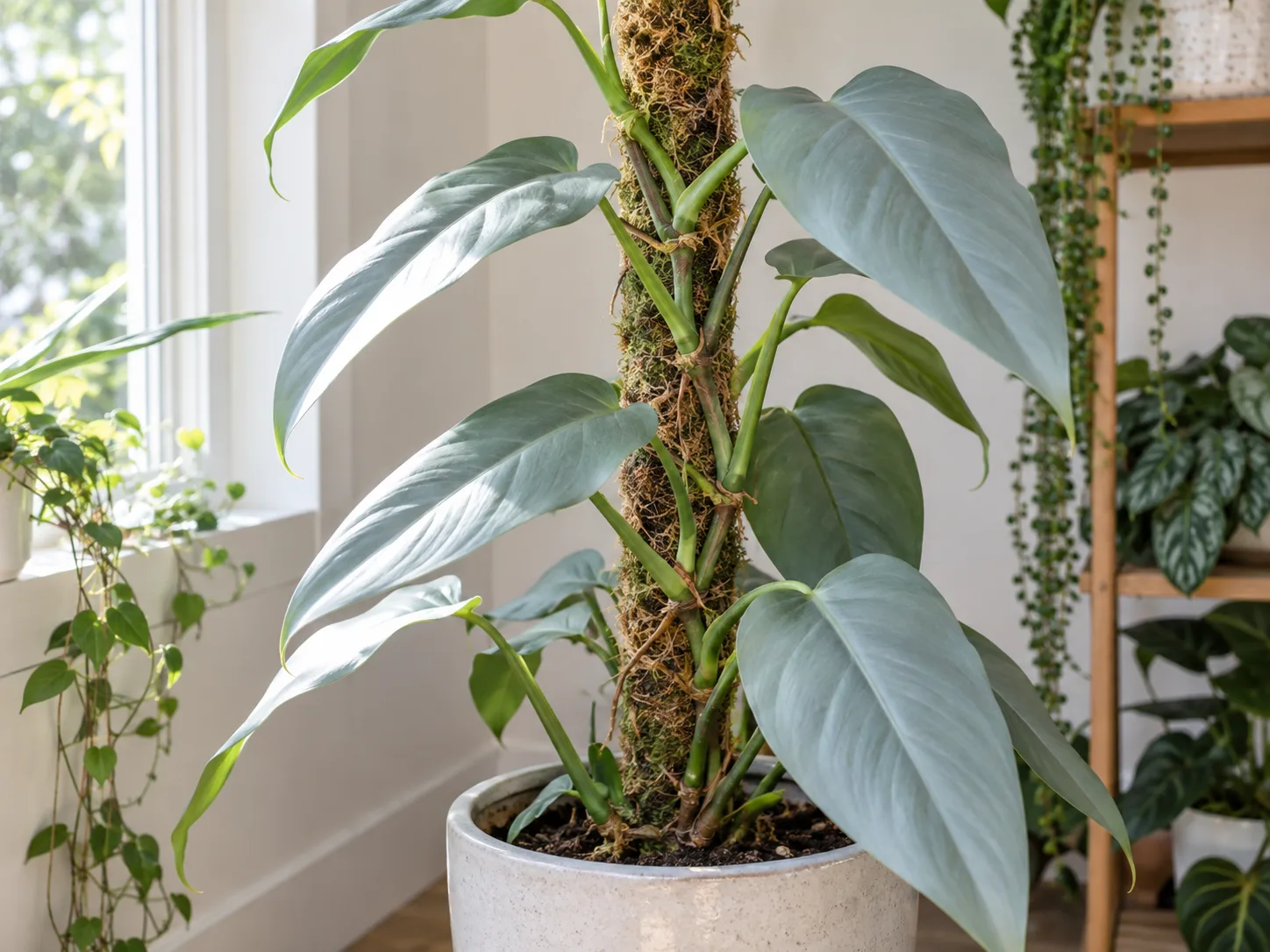
Support is part of Silver Sword care, not optional decoration. The species is a clinger: its aerial roots can grip a textured surface, and a vertical structure gives the stem a path to grow upward instead of leaving every new leaf suspended from a long, unsupported vine. NC State specifically lists a moss pole or trellis for supporting this plant.
Attach the main stem loosely with soft ties as it grows. Aim aerial roots toward the support, but do not bury a mature stem or cinch ties tightly enough to cut into it. A moss pole can be kept lightly moist so aerial roots have a surface to enter; it should not be so wet that the potting mix stays saturated or the pole becomes a source of constant stagnant moisture.
Choosing the Right Support
A moss pole is the better choice when you want aerial roots to attach and you can keep its surface lightly moist. A firm coir pole or textured plank can also work, though roots may attach more slowly. A trellis is simpler when you mainly need to control the vine’s direction and keep it off a wall; it does not provide the same moist rooting surface.
Install support early, ideally while repotting, so you do not drive a stake through an established root ball later. Place the pole behind the stem’s climbing side and anchor it deeply enough that the mature plant cannot tip the pot. If the pole is too short, extend it before the vine outgrows the top rather than sharply bending the stem around a tiny support.
Pruning for Shape and Propagation
Prune to remove damaged leaves, shorten a vine that has outgrown its space, or reset a plant that has become sparse. Use clean, sharp snips and wear gloves if sap irritates your skin. Make a cut just above a node on the parent stem when you want the dormant growth point below the cut to remain on the mother plant.
Do not cut every long stem at once on a stressed plant. Removing too much foliage reduces the plant’s ability to photosynthesize just when it is trying to rebuild roots. A better reset is to take one or two useful cuttings, improve light and support, then wait for active growth before making another shaping cut.
Propagate From a Node Stem Cutting
Silver Sword propagation begins with a piece of stem that includes at least one node. A leaf blade or petiole without stem tissue and a node may stay green for a time, but it does not contain the growth point needed to make a new vine. The RHS confirms that climbing philodendrons propagate from stem cuttings, and Ohio Tropics describes using the aerial-root-bearing nodes along the vine.
Choose a firm, healthy section with one to three leaves and, if possible, a visible aerial-root nub. With clean snips, cut below the lowest node you intend to keep. Remove leaves that would sit under water or in the propagation medium, but leave enough leaf area to support the cutting without turning the setup into a large, water-losing top.
Place the node in clean water or just under the surface of damp sphagnum moss. Keep the leaf above the waterline, set the cutting in bright indirect light, and maintain warmth. In water, refresh the water when it becomes cloudy or depleted; in moss, keep the medium evenly damp but airy rather than dripping wet. Once roots are several centimetres long and branching, pot the cutting into a small draining container of lightly moist chunky mix.
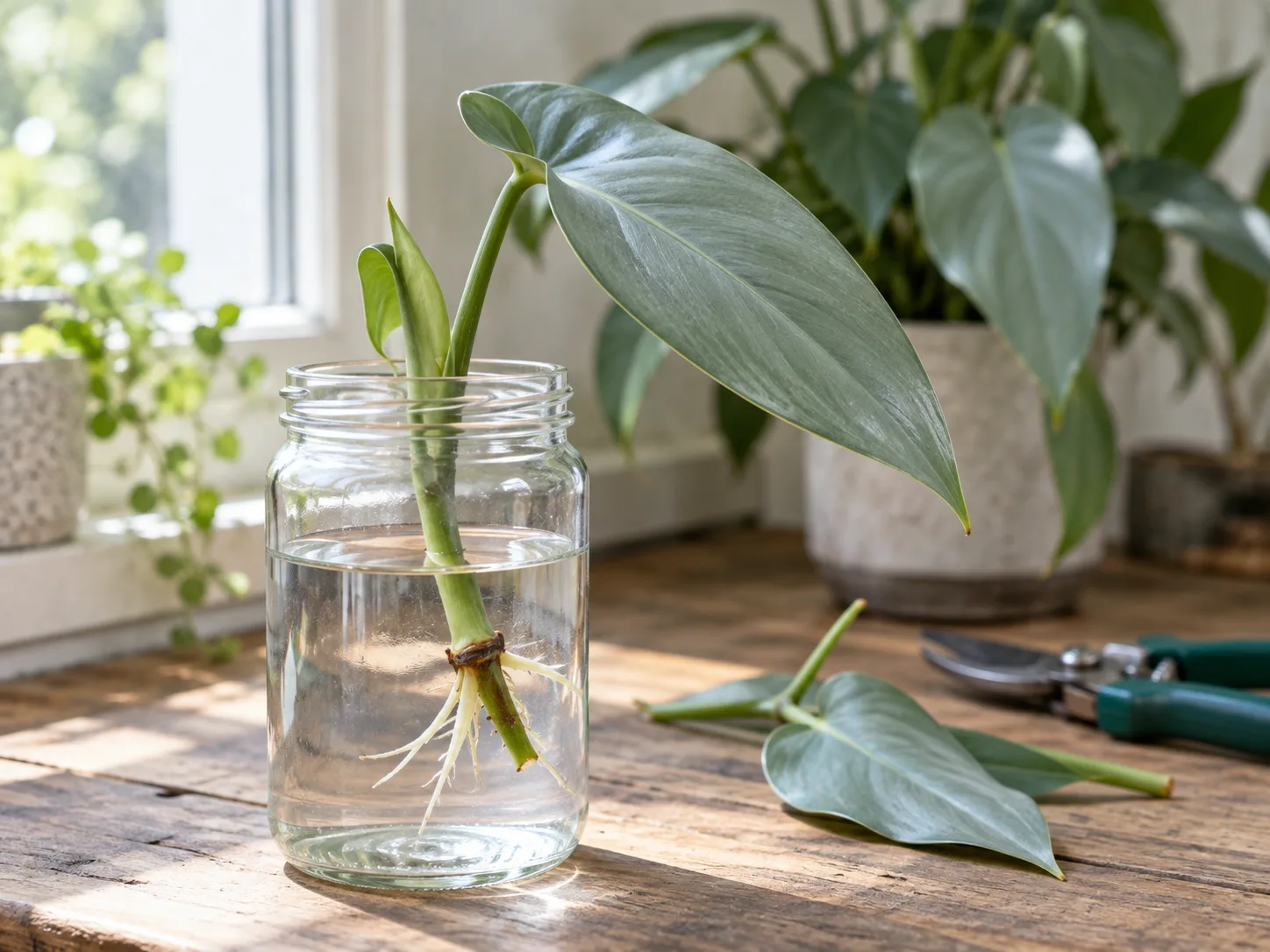
The first weeks after potting are a transition, not proof that the propagation failed. Keep the root zone from swinging bone dry to saturated, shield the cutting from direct sun, and wait for new growth before applying fertilizer. When the clone is established, install a small support early; a rooted cutting that is left trailing in low light can repeat the same leggy juvenile cycle as its parent.
Water vs. Moss vs. Soil
Water propagation makes the node and roots easy to inspect and is a useful choice for a fresh cutting with a healthy aerial root nub. Its weakness is the transition: roots grown in water can stall when moved into a dry or heavy mix, so pot them before they become excessively long and fragile.
Sphagnum moss is a good default when your room is dry or you want the node surrounded by even moisture. Use a clear lidded container only if you can open it for airflow and inspect for rot. Direct-to-soil propagation avoids a water transition, but it gives you less visibility and requires careful moisture control around an unrooted node.
LECA is another option for an experienced grower who understands a reservoir and airflow, but it is not required for success. Brittany Goldwyn’s hands-on care notes describe LECA as an optional way to monitor root development, not a prerequisite. Do not choose a propagation method because it sounds advanced; choose the medium you can keep warm, clean, lightly moist, and observable.
Repot When Roots or Mix Say So
Repot Silver Sword when roots circle densely, emerge from drainage holes, water runs through an exhausted mix without wetting the root ball, or the pot stays wet far longer than it used to. A healthy plant may remain in the same container for a couple of years; the RHS recommends repotting when roots become densely packed and identifies spring as the best general window.
Move up only one pot size, usually about 1–2 inches (2–5 cm) wider than the current root ball. A much larger container holds more unused wet mix and increases the chance of root rot. Choose depth and stability that match the climbing structure, but do not bury the stem deeper than it was growing.
At the same session, inspect the roots. Firm cream, tan, or light-brown roots can be viable; black, mushy, foul-smelling tissue should be cut away with clean tools. If most roots are compromised, use a smaller pot and a more conservative watering rhythm rather than placing a tiny remaining root system in a large decorative container.
Troubleshoot Yellow Leaves, Brown Spots, and Pests
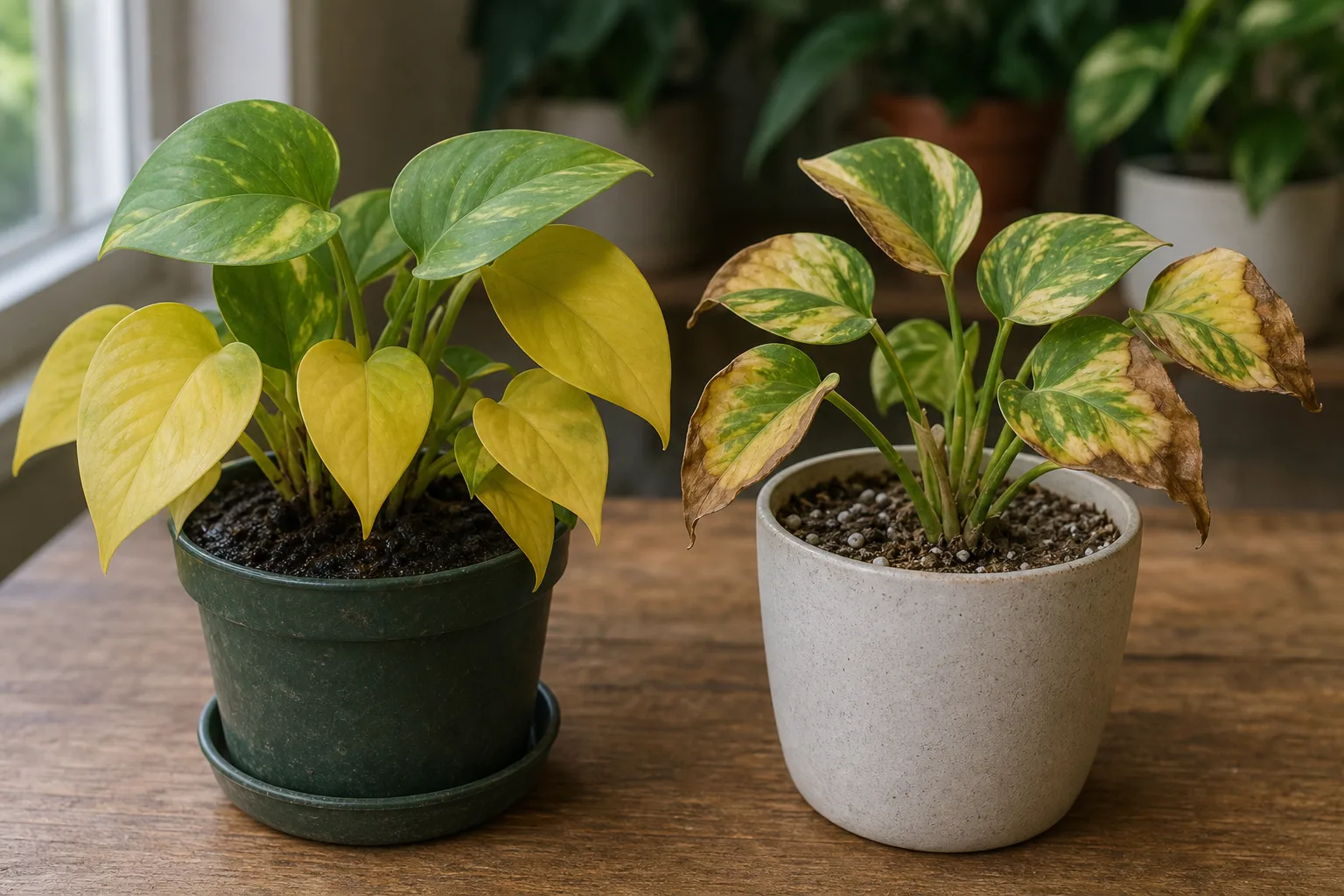
Read the pattern, then check the root zone and the leaf undersides before treating. One old leaf yellowing as the plant replaces it is different from several leaves yellowing while the pot stays wet. Likewise, a dry crispy edge does not have the same cause as small expanding spots with a yellow halo.
Yellow Leaves: Wet Roots or Dry Soil?
If the oldest leaves yellow slowly and the mix is dry deep into the pot, the plant may be under-watered, too root-bound, or losing water faster than it can replace it. Rehydrate the root ball thoroughly, then shorten the dry interval without keeping it constantly wet. Look for new growth over the next few weeks rather than expecting a yellow leaf to recover.
If several leaves yellow together and the mix remains wet, inspect drainage, roots, and the stem base. Root stress often comes with a heavy pot, a sour smell, fungus gnats, or soft tissue. Stop watering on autopilot, move the plant into brighter indirect light if appropriate, and repot into fresh airy mix if the root inspection confirms rot.
Yellowing can also follow a sudden cold event, a pest infestation, or a major change in light. Do not add fertilizer as a first response to every yellow leaf. Fertilizer in a damaged or waterlogged root zone adds salt without fixing the reason the plant cannot use nutrients.
Brown Spots, Crispy Edges, and Leaf Spot
Large pale-to-brown patches on the window-facing side point first toward sun scorch or heat. Dry, papery tips and edges are more consistent with low humidity, inconsistent watering, salt buildup, or a hot draft; check those conditions together rather than assuming humidity is the only variable.
Small dark or rust-colored spots that spread across multiple leaves deserve a closer inspection. Improve airflow, keep leaves from remaining wet overnight, isolate the plant from a collection while you assess it, and remove heavily affected foliage with clean snips. When a disease treatment is warranted, use only a product labeled for the plant and problem in your location and follow the label exactly.
Old brown tissue will not turn green again. Measure success by clean new leaves and stable roots after you correct the condition. If spots continue to appear on new leaves despite good airflow and dry-down, revisit pests and root health instead of repeatedly spraying the same symptom.
Pests: Inspect Nodes and Leaf Undersides
NC State lists spider mites, mealybugs, aphids, and scale among pests to monitor on P. hastatum. Check the leaf undersides, petiole joints, new cataphylls, and the textured surface of the support. Fine webbing and stippled fading suggest mites; cottony clusters suggest mealybugs; hard bumps or sticky honeydew can indicate scale or aphids.
Isolate an affected plant first. Physically remove what you can with a stream of water or a cotton swab, clean nearby surfaces, and repeat inspections on a schedule that catches newly hatched insects. For a larger infestation, select a houseplant-labeled treatment that is legal and appropriate where you live; never increase concentration or combine products because the first application did not produce instant results.
Pet Safety and Handling
Philodendron Silver Sword is toxic if eaten. NC State identifies calcium oxalate crystals as the toxic principle and notes that ingestion can cause mouth and stomach irritation, swelling, drooling, vomiting, and difficulty swallowing; its sap can also irritate skin. Keep the pot and fallen leaves away from cats, dogs, children, and any animal that chews plants.
Wear gloves when pruning or repotting if you are sensitive to plant sap, and wash your hands and tools afterward. If a pet may have chewed the plant, do not wait for symptoms to worsen: contact a veterinarian or an animal poison service. The ASPCA Animal Poison Control page advises contacting a veterinarian or its 24-hour poison hotline when an animal may have ingested a poisonous substance.
Conclusion
Philodendron Silver Sword becomes easier when you stop treating it like a generic leafy houseplant. Put it in bright filtered light, use a chunky mix in a draining pot, water after the root zone dries slightly, and support the vine before it becomes a loose, leggy tangle. Warmth, moderate humidity, and gentle feeding then help the plant turn steady care into larger, more mature silver-blue leaves.
When something goes wrong, start with the physical evidence: pot weight, mix depth, roots, light exposure, leaf pattern, and the underside of the foliage. That sequence prevents the two most expensive mistakes—watering a plant whose roots are already wet and treating a symptom before you know whether it came from light, pests, cold, or the container.