18 Water Loving Plants for Wet Outdoor Areas
Find the right plants for soggy soil, rain gardens, pond edges, and standing water, with light, size, habitat, and spread cautions for each choice.
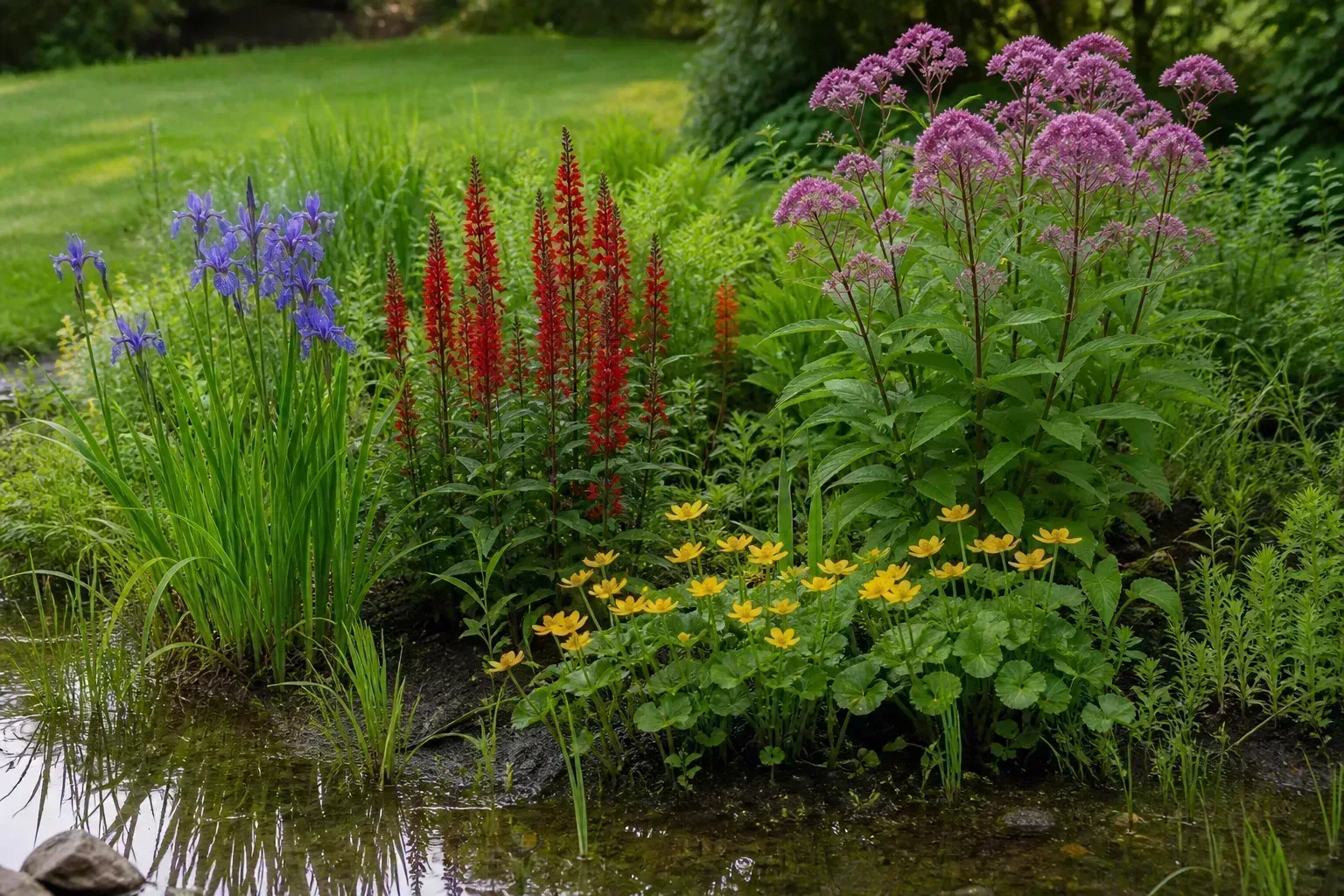
A wet patch is not automatically a bad garden site. It may be a shallow rain garden, a low spot that holds water for a few days, a shaded seep, or the edge of a pond—and each condition calls for a different plant list.
The key distinction is whether the soil eventually gets air again. Most “wet-soil” plants tolerate saturated periods but still need the ground to drain. True marginal plants can handle shallow standing water, while a site that stays flooded or receives contaminated runoff needs an engineering or drainage solution before it needs a plant.
The 18 choices below cover shrubs, perennials, pond-edge plants, and tropical foliage. Use the placement notes as a filter, not a guarantee: hardiness, cultivar, soil texture, water chemistry, and regional invasive-plant rules can change the result.
First, find out what kind of wet site you have
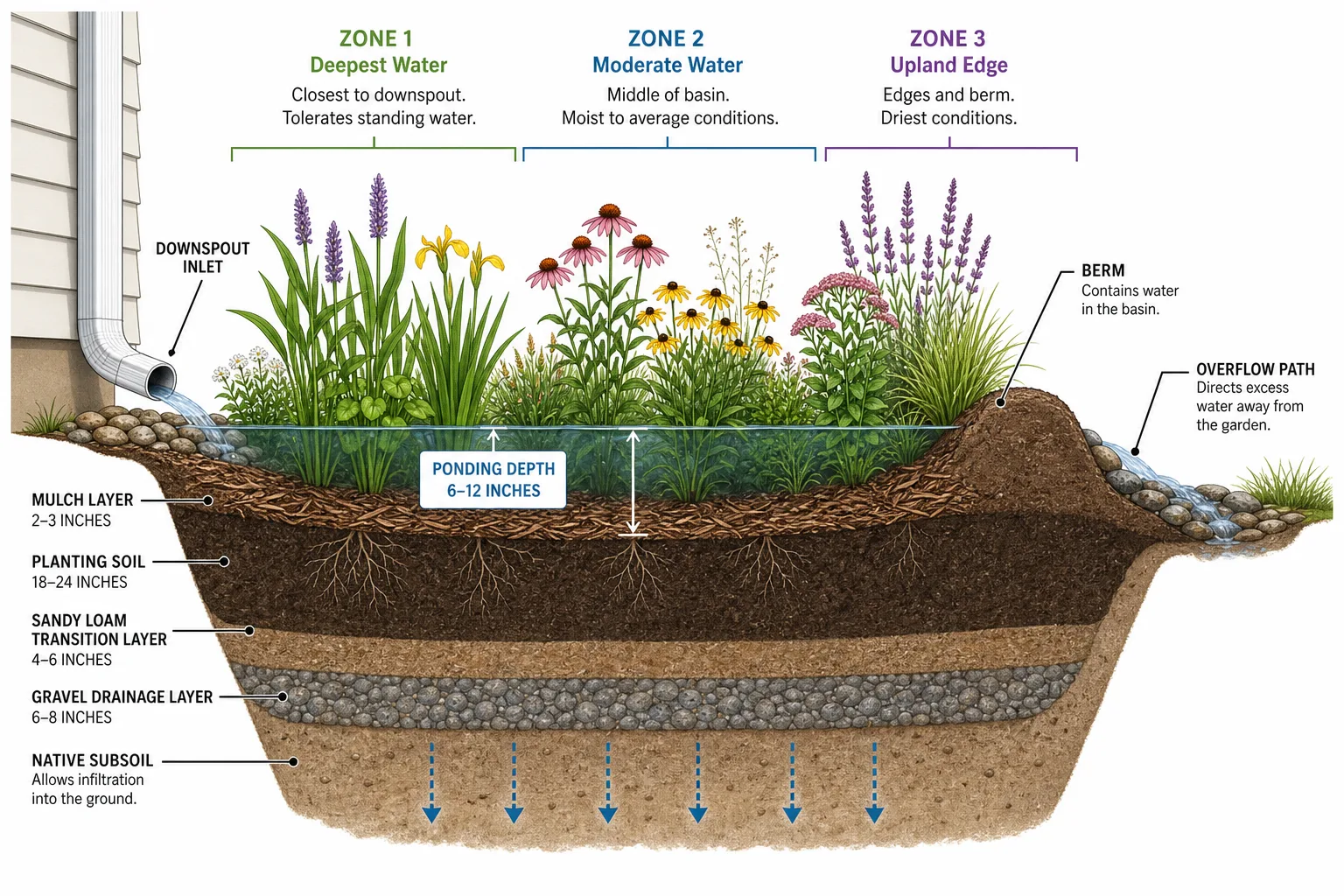
Watch the area after an ordinary storm and again after a heavy one. Mark where the water arrives, how deep it gets, how long the surface stays shiny, and whether the spot is sunny in summer or shaded by trees. That simple observation tells you more than the label “poor drainage.”
Damp after rain: the forgiving zone
If the soil feels cool and moist but the surface is usually dry within a day, you have the broadest plant palette. Many shrubs and perennials can handle this pattern, especially when the soil is rich in organic matter and the roots are not sitting in a sealed clay basin.
This is the right zone for a mixed rain-garden planting. Missouri Botanical Garden’s rainscaping guidance emphasizes matching plants to their position—basin, slope, bioswale, or surrounding landscape—rather than choosing a plant simply because it is called “water-loving.” Its rain-garden overview also explains how plants, mulch, and site design slow runoff and help water soak into the soil.
Saturated soil: the oxygen problem
When the ground stays waterlogged for several days, pore spaces that would normally hold air are filled with water. Roots may look as if they have plenty to drink, yet they can decline because they cannot respire; this is why a plant that likes consistent moisture can still fail in a swampy hole.
Separate winter wetness from summer wetness. Some trees, shrubs, iris, and ferns tolerate a seasonally saturated root zone but dislike hot, stagnant water all summer. Cloud Mountain Farm Center’s wet-soil plant list makes this distinction useful: several plants tolerate winter saturation, while far fewer are comfortable in permanent standing water.
Standing water: plant the margin, not the whole yard
If water remains on the surface, measure depth before shopping. A few inches at the pond edge is a different habitat from a deep depression that never dries. Pickerelweed and marsh marigold can occupy very wet margins; most shrubs in this guide belong on the bank or upper slope, with their crowns and trunks above the normal waterline.
Do not assume a planted basin should hold water indefinitely. Illinois Department of Natural Resources rain-garden guidance recommends testing infiltration before construction, while practical rain-garden guidance commonly treats roughly 24 to 48 hours as a useful drainage target. Some designed basins can hold water longer under local specifications, but water that remains for a week signals that you should reassess soil, grading, outlet, and water source before adding more plants.
Match the plant to sun, size, and spread
Use four filters in order. First, decide whether the spot is damp, seasonally saturated, or a true pond margin. Second, measure summer light. Third, check mature height and spread against windows, wires, paths, septic features, and the part of the yard you still need to mow. Finally, investigate how the plant spreads—by suckers, rhizomes, self-seeding, or a slowly expanding clump.
Native plants are a strong starting point because regionally native species are adapted to local rainfall patterns, soil, and wildlife. They are not automatically maintenance-free or non-invasive outside their natural range, however. Missouri Botanical Garden’s plant-selection guidance recommends combining plants with different heights, textures, root systems, and bloom times while still matching each plant to its moisture zone.
For a downspout-fed rain garden, keep the basin away from the foundation and confirm where underground utilities run before digging. A plant can intercept and filter some runoff; it cannot repair a clogged drain, stop water entering a basement, or make an unsuitable infiltration site safe.
18 water-loving plants at a glance
These are approximate starting points for common forms, not promises for every cultivar. “Wet edge” means the plant can live near shallow or periodically standing water; it does not mean every specimen should be submerged.
| Plant | Best fit | Light | Approx. mature size | Wetness and caution |
|---|---|---|---|---|
| Black chokeberry (Aronia melanocarpa) | Native shrub border | Sun to part shade | 3–6 ft. | Moist soil; remove suckers |
| Winterberry (Ilex verticillata) | Berrying shrub group | Sun to part shade | 3–12 ft. | Wet, acidic soil; male plant needed for fruit |
| Inkberry (Ilex glabra) | Evergreen wet-site anchor | Sun to part shade | 5–8 ft. | Moist to wet, acidic soil; can sucker |
| Pussy willow (Salix discolor) | Stream or pond bank | Sun to part shade | 6–15 ft. | Wet soil; allow broad spread |
| Tatarian dogwood (Cornus alba) | Winter-stem shrub mass | Sun to part shade | 6–10 ft. | Moist soil; renew old stems |
| Blue flag iris (Iris versicolor) | Wet meadow or pond edge | Sun to part shade | 2–3 ft. | Wet soil and shallow water |
| Cardinal flower (Lobelia cardinalis) | Hummingbird rain garden | Sun to part shade | 2–4 ft. | Never let new plants dry out |
| Sweet pepperbush (Clethra alnifolia) | Fragrant shrub border | Sun to part shade | 3–8 ft. | Even moisture; fragrant summer bloom |
| Joe-Pye weed (Eutrochium maculatum) | Tall sunny basin | Full sun | 4–7 ft. | Moist to wet; needs room |
| Swamp hibiscus (Hibiscus coccineus) | Warm-climate wet bed | Sun to part shade | 3–6 ft. | Tender outside its range; may need support |
| Hardy hibiscus (Hibiscus moscheutos) | Large summer flowers | Full sun | 3–4 ft. | Moist to wet; dies back in winter |
| Swamp milkweed (Asclepias incarnata) | Pollinator and monarch garden | Full sun | 3–5 ft. | Moist soil; avoid moving once established |
| Horsetail (Equisetum hyemale) | Contained wet accent | Sun to part shade | 2–4 ft. | Rhizomatous and aggressive in some regions |
| Yellow trout lily (Erythronium americanum) | Moist woodland edge | Part to full shade | 3–6 in. | Spring ephemeral; disappears in summer |
| Leopard plant (Ligularia dentata) | Cool, shaded wet bed | Part shade to shade | 2–3 ft. | Keep evenly moist; watch slugs |
| Marsh marigold (Caltha palustris) | Bog or pond margin | Sun to part shade | 1–1.5 ft. | Can grow in shallow standing water |
| Giant elephant ears (Colocasia spp.) | Tropical water-garden effect | Sun to part shade | 3–8 ft. | Tender; lift or replace in cold climates |
| Pickerelweed (Pontederia cordata) | Shallow-water planting | Sun to part shade | 1–3 ft. | Spreads by rhizomes; contain where needed |
Woody structure for wet yards
Shrubs give a wet site height, winter structure, and cover for birds while their root systems stabilize the soil. Plant woody species on the bank or upper edge unless the species and the local water table clearly support a wetter placement. Keep trunks and root flares at grade; burying them in a berm is a fast route to decline.
Shrubs and small trees
Black chokeberry (Aronia melanocarpa) is a compact, deciduous shrub for a moist border, rain-garden slope, or damp thicket. White spring flowers, dark berries, and red-to-purple fall color give it three seasons of interest. The berries feed birds, while the fruit’s astringency makes it more useful as wildlife food than as casual eating straight from the shrub. Choose it when you want a native-looking mass that stays smaller than a willow, and remove root suckers if the clump begins moving into paths or lawn.
Winterberry (Ilex verticillata) earns its place for bright red berries after the leaves drop. It handles moist, acidic soil and can work near a pond or low woodland edge, but fruiting requires a compatible male pollinator nearby; buying two unnamed plants does not guarantee that their bloom times match. Site it where the bare winter stems can be seen, and allow enough room for the selected cultivar rather than assuming every winterberry remains a small shrub.
Inkberry (Ilex glabra) is an evergreen option for a moist, acidic site in the eastern half of North America. Its small greenish flowers are subtle, but female plants can carry black berries and its dense foliage makes a useful low screen. Inkberry is a better choice for year-round structure than for showy flowers; it may become leggy or sucker in an unhappy site, so prune lightly and keep the root zone from swinging between flood and drought.
Pussy willow (Salix discolor) is a fast, bank-friendly shrub or small tree for a generous pond edge, streamside, or naturalistic wet meadow. Its early catkins are the attraction, but its mature spread and vigorous root system are the real design factors. Keep it away from small drains, foundations, and narrow beds, and expect to prune or renew stems as the plant matures. It is a poor “small tree” choice even if the nursery specimen looks easy to handle.
Tatarian dogwood (Cornus alba) is a deciduous shrub for moist soil where winter color matters. The young stems can glow red in the dormant season, and periodic removal of the oldest stems keeps that color strong. Give it a broad bed instead of a tight foundation slot; the best display often comes from a group of shrubs with space for the red stems to show against snow or evergreen foliage.
Sun-loving flowers for rain gardens
Sunny wet beds can be vivid without becoming a row of identical spikes. Combine a low or medium clumper with one tall plant, then stagger bloom times: early iris or foliage, midsummer cardinal flower and milkweed, and late hibiscus or Joe-Pye weed. The Illinois DNR’s rain-garden plant lists similarly mix forbs, sedges, rushes, and grasses so a planting can slow runoff while still looking intentional.
Pollinator plants that handle changing moisture
Blue flag iris (Iris versicolor) is one of the better choices for a sunny wet meadow, swale, or shallow pond margin. Its blue-violet flowers rise above narrow leaves in late spring, and the clump can tolerate moisture that would rot many ordinary garden perennials. Plant the rhizomes at the correct depth rather than burying them deeply, and expect occasional insect damage without assuming the whole clump is failing.
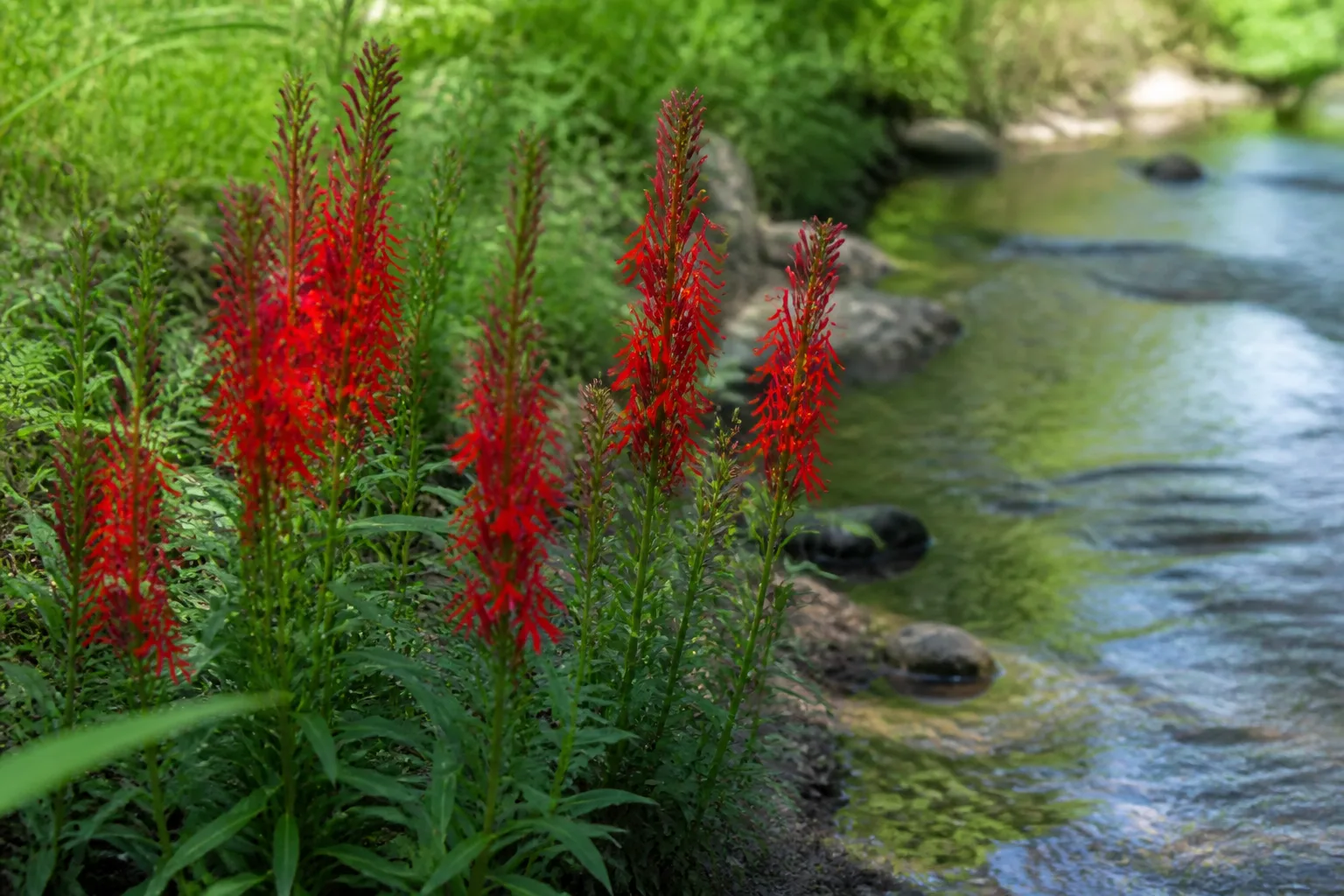
Cardinal flower (Lobelia cardinalis) brings intense red flower spikes to a moist, partly shaded or sunny edge. Hummingbirds use the tubular flowers, and the species works especially well where the soil stays evenly moist but does not bake dry between rain events. It can be short-lived, so let some seed mature or plant several young specimens over time instead of treating one disappearing rosette as a mystery.
Sweet pepperbush, also called summersweet, (Clethra alnifolia) is a fragrant shrub with white flower spikes that draw bees and butterflies in summer. It handles moist soil and part shade, yet it is more useful on a damp bank than in the deepest pond basin. Choose it when fragrance and a medium-sized shrub are more important than evergreen foliage, and give it enough width for its natural suckering tendency.
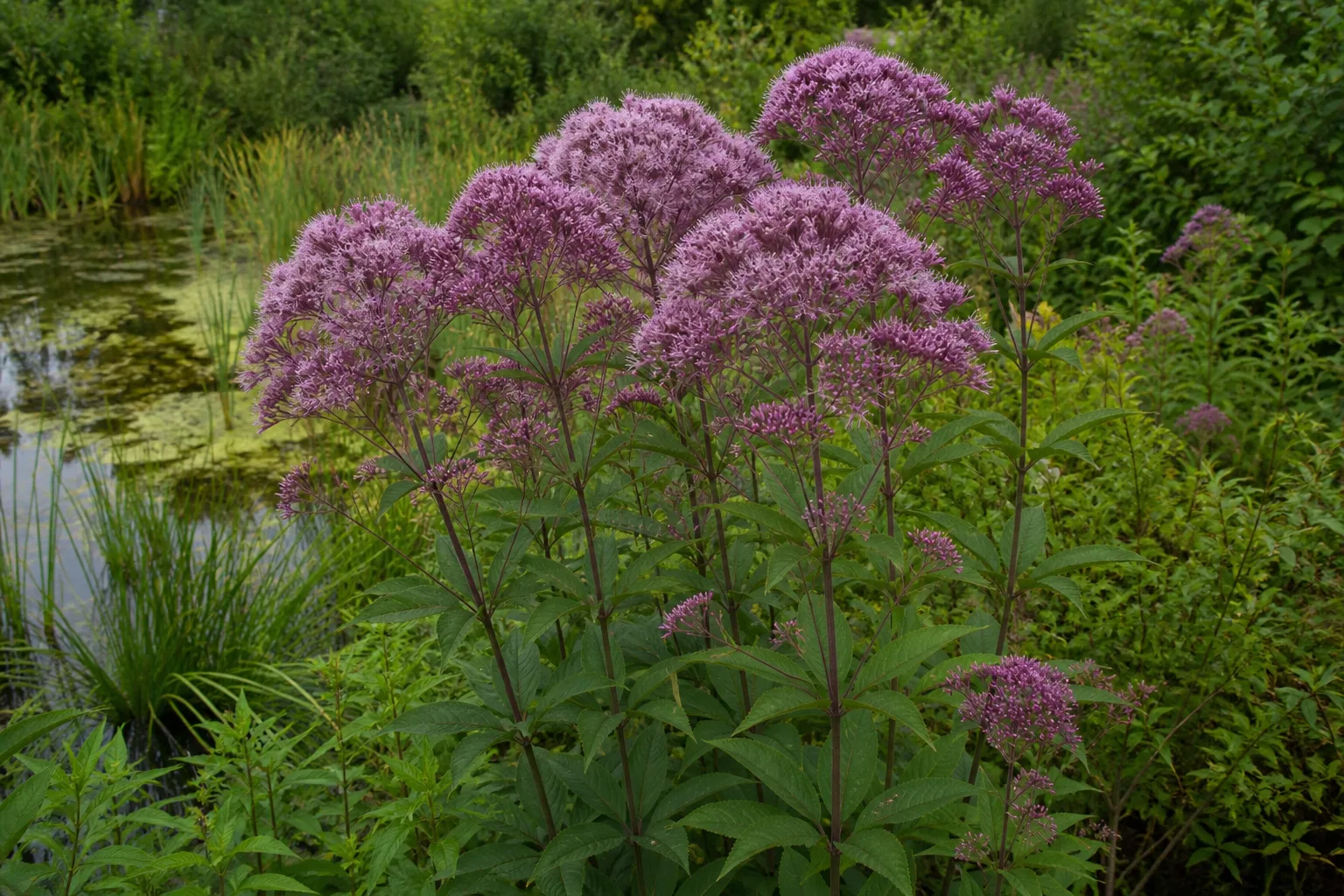
Joe-Pye weed (Eutrochium maculatum) is the tall, late-season choice for a sunny rain garden. Mauve flower clusters can reach above shorter plants and provide nectar for many insects, but the height means it belongs toward the back or center of a broad bed. Use the updated botanical name when shopping; older references may place the plant under Eupatorium. Cut the dry stems in late winter if you want a cleaner spring start, or leave some standing for winter habitat.
Swamp hibiscus (Hibiscus coccineus) is a dramatic warm-climate perennial with large scarlet flowers and finely divided leaves. It needs sun for the strongest flowering and a long enough season to make its height worthwhile. In cooler climates it is not a dependable hardy perennial, and even where it survives it may need a stake if the site is shaded or exposed to wind. Treat the plant as a regional choice, not a universal wet-yard answer.
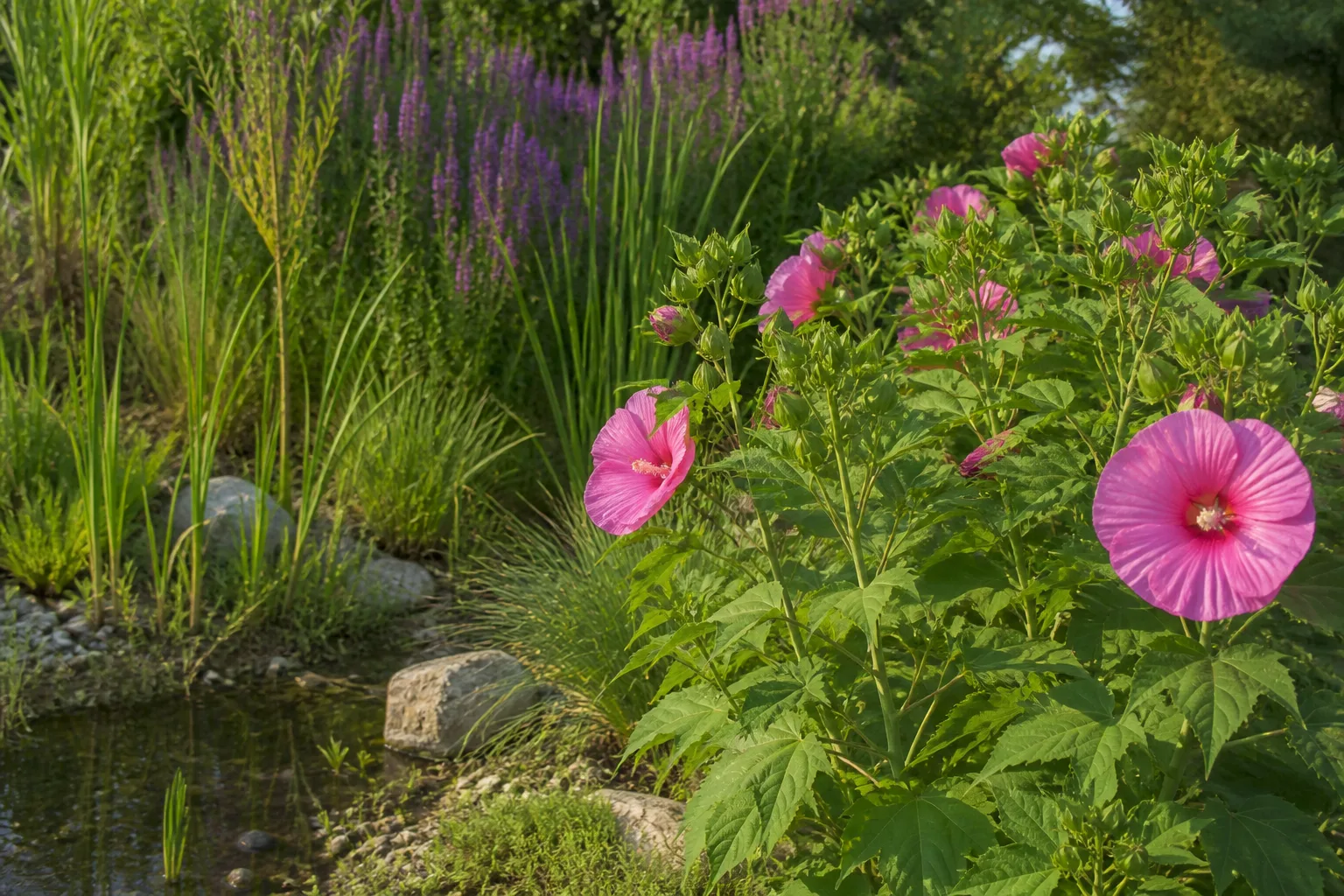
Hardy hibiscus (Hibiscus moscheutos) gives colder-climate gardeners huge pink, red, or white flowers on an herbaceous plant that dies back in winter. It likes full sun and consistently moist soil, making it a good accent in the wetter center of a rain garden as long as the crown is not buried under stagnant water. Remove old stems after dormancy, leave room for the broad foliage, and avoid placing it where roof runoff hits with erosive force.
Swamp milkweed (Asclepias incarnata) is a strong choice for a sunny wet meadow or rain-garden basin that can become merely moist between storms. Fragrant pink or white flowers feed adult pollinators, and the leaves serve as a host plant for monarch caterpillars. It develops a substantial root system, so choose the final location carefully and do not keep dividing or relocating an established plant. Birds & Blooms’ wet-soil pollinator guidance also notes that it may take a few seasons to reach a strong flowering display.
Shade and pond-edge plants
Wet shade is often created by tree roots, compacted soil, or a natural seep, and those causes are not interchangeable. Do not excavate aggressively around a mature tree just to make a basin; protect existing roots and work with the moisture pattern. For a pond edge, place taller plants behind the waterline and leave room to reach the margin for cleanup.
Damp shade
Yellow trout lily (Erythronium americanum) is a small spring ephemeral for moist woodland conditions. Its yellow flowers and mottled leaves appear early, then the foliage retreats as the plant goes dormant for summer. That seasonal disappearance is a feature, not a defect: pair it with a later-growing groundcover or fern so the bed does not look empty after the flowers finish, and avoid trampling the leaves while they are replenishing the bulb.
Leopard plant (Ligularia dentata) has large leaves that give a shady wet bed a bold texture. Yellow daisy-like flowers arrive later, but consistent moisture and protection from hot afternoon sun matter more than the bloom. Slugs can damage the foliage in damp conditions; improve spacing and hand-remove pests before reaching for a treatment, especially near a pond or wildlife area.
Horsetail (Equisetum hyemale) is an architectural, nonflowering plant with upright segmented stems that can tolerate very wet soil. It is also one of the riskiest choices in the list because its rhizomes can spread through an open bed and are difficult to remove completely. Use it only where spread is acceptable or where the root system can be contained, and check your local invasive-plant guidance before buying it.
Plants for shallow water and boggy margins
Marsh marigold (Caltha palustris) is a low perennial for a boggy hollow, seep, or pond margin with shallow water. Its bright yellow spring flowers arrive before much of the surrounding planting fills in. Give it relief from the hottest, driest summer exposure if your climate is warm, and let neighboring plants hide the foliage if it retreats or looks tired later in the season.
Pickerelweed (Pontederia cordata) is a true marginal aquatic for shallow water, with glossy leaves and purple flower spikes that continue through summer. Its dense roots and rhizomes help it hold a pond edge, but that same vigor can crowd a small water feature. Plant it in a contained pond setting or an isolated wet bed when appropriate, leaving access for thinning and keeping it out of natural waterways unless it is confirmed as locally appropriate.
Giant elephant ears (Colocasia spp.) provide the tropical effect people often want in a wet garden: enormous heart-shaped leaves, strong vertical stems, and a lush silhouette. They need warmth, moisture, and regular feeding during active growth, but most forms are not hardy in cold winters. Grow them as seasonal accents or lift and store the corms where that is practical, and keep them out of a place where a first frost will make a permanent planting look suddenly vacant.
These six plants are not interchangeable. Trout lily and leopard plant are woodland choices; horsetail is a contained architectural accent; marsh marigold and pickerelweed belong closer to water; and elephant ears are a climate-dependent tropical statement. Grouping them by the actual edge condition prevents the common mistake of putting every “wet-loving” plant into the lowest, wettest point.
Planting and establishing a wet-area garden
Planting wet ground is mostly a timing and access problem. Work when the soil is moist enough to dig but not so saturated that your boots leave deep smears; walking on wet clay collapses air spaces and creates a harder planting site. BBC Gardeners’ World’s wet-soil advice recommends avoiding traffic on waterlogged soil and using raised beds or mounds when you need a broader plant palette.
Lay out the plants before digging. Put shrubs where their mature width can be tolerated, place tall perennials behind shorter ones, and reserve the deepest wet pocket for species that genuinely tolerate it. If you are creating a rain garden, a shallow, level basin with gently sloping sides is easier to maintain than a steep hole with an unpredictable low point.
Choose healthy nursery plants or well-rooted plugs from a reputable native-plant source. Illinois guidance favors established plugs over direct seeding in small rain gardens because flooding and wind can move seed, and planted specimens make it easier to distinguish desired plants from weeds during the first seasons. Never collect plants from protected wetlands or roadside ditches.
Dig each hole wide enough for the root ball and no deeper than the root ball. Set the crown or root flare at the same grade it had in the container or field, then firm the backfill without packing it into a hard ring. A wet site is not a reason to plant deeply; oxygen-poor soil makes buried crowns even more vulnerable.
The first season: water, mulch, and weed control
New plants still need watering in a wet garden. Rain may fill the low spot while the root ball remains dry or fails to contact the surrounding soil, especially when a container-grown plant was installed in compacted clay. Check the root zone by hand and water slowly when it is drying; stop when the site is saturated rather than following a calendar blindly.
Apply a modest mulch layer to suppress weeds and reduce splashing, keeping mulch off crowns and woody trunks. Avoid turning the basin into a deep pile of fine mulch that floats into a drain during the next storm. Pull competing weeds while they are small, and learn the foliage of the plants you intentionally installed before using any broad treatment.
Expect the first year to look less full than the mature reference photo. Spend that season recording where water stands, which plants scorch when the surface dries, and which ones lean or spread. That observation gives you a better second-year edit than adding fertilizer to a site whose real problem is depth, light, or stagnant water.
Problems, limits, and when to change the site
Plants are part of a drainage strategy, not a substitute for one. If water flows toward the house, appears after plumbing or grading work, smells foul, carries oily runoff, or persists through dry weather, identify the source before planting. Do not redirect roof or driveway water toward a neighbor, septic field, well, or foundation simply because a low bed looks attractive.
Common failures are predictable. A willow or dogwood outgrows a narrow bed; winterberry produces no berries because there is no compatible male; cardinal flower dries out during establishment; elephant ears are killed by cold; horsetail escapes its planting area; and a rain-garden plant rots when the basin behaves like a pond. Diagnose the mismatch before replacing the plant.
If leaves yellow while the soil remains saturated, suspect root stress rather than a lack of fertilizer. If only the downhill side erodes, slow and spread the inflow with a stable inlet, stone, or professional design. If the bed stays wet for far longer than planned, repeat the infiltration test and inspect for a compacted layer; simply adding more compost at the surface will not fix a sealed subsoil.
When raised beds or drainage are the better answer
Use a raised bed or mound when the surrounding yard is persistently wet but you want plants that need an aerated root zone. Build it broadly, blend the new soil into the site rather than creating a sharp perched layer, and make sure the mound does not send water toward a building or neighboring property. This approach lets you keep the low area for wet-site plants while creating a drier shoulder for other species.
Use a professional drainage assessment when the water source is unclear, the site is steep, the proposed basin is large, utilities or septic infrastructure are nearby, or infiltration remains poor. Public rain-garden guidance differs in exact testing thresholds and basin hold times because design, soil, climate, and local regulations differ; treat local extension or municipal standards as the final authority. The goal is a planted site that drains safely—not a pond that happens to contain shrubs.
Conclusion
The best water-loving plant is the one matched to the wetness your yard actually has. Black chokeberry, winterberry, inkberry, pussy willow, and Tatarian dogwood add woody structure; blue flag iris, cardinal flower, Joe-Pye weed, hibiscus, and swamp milkweed bring height and pollinator value; and trout lily, leopard plant, marsh marigold, pickerelweed, horsetail, and elephant ears fill more specialized shade, bog, pond-edge, or warm-climate roles.
Start by observing the site, testing how quickly water leaves it, and measuring summer light. Then choose regionally appropriate plants, leave mature room for roots and spread, and monitor the first season before making changes. When the water problem comes from grading, infrastructure, or a site that never drains, fix the cause or reshape the bed first; plants should finish the solution, not carry it alone.