7 Fragrant Plants That Help Mask Yard Odors
Choose fragrant plants by scent timing, wind, sun, and mature size. These seven options help make a yard smell better without hiding the real odor source.
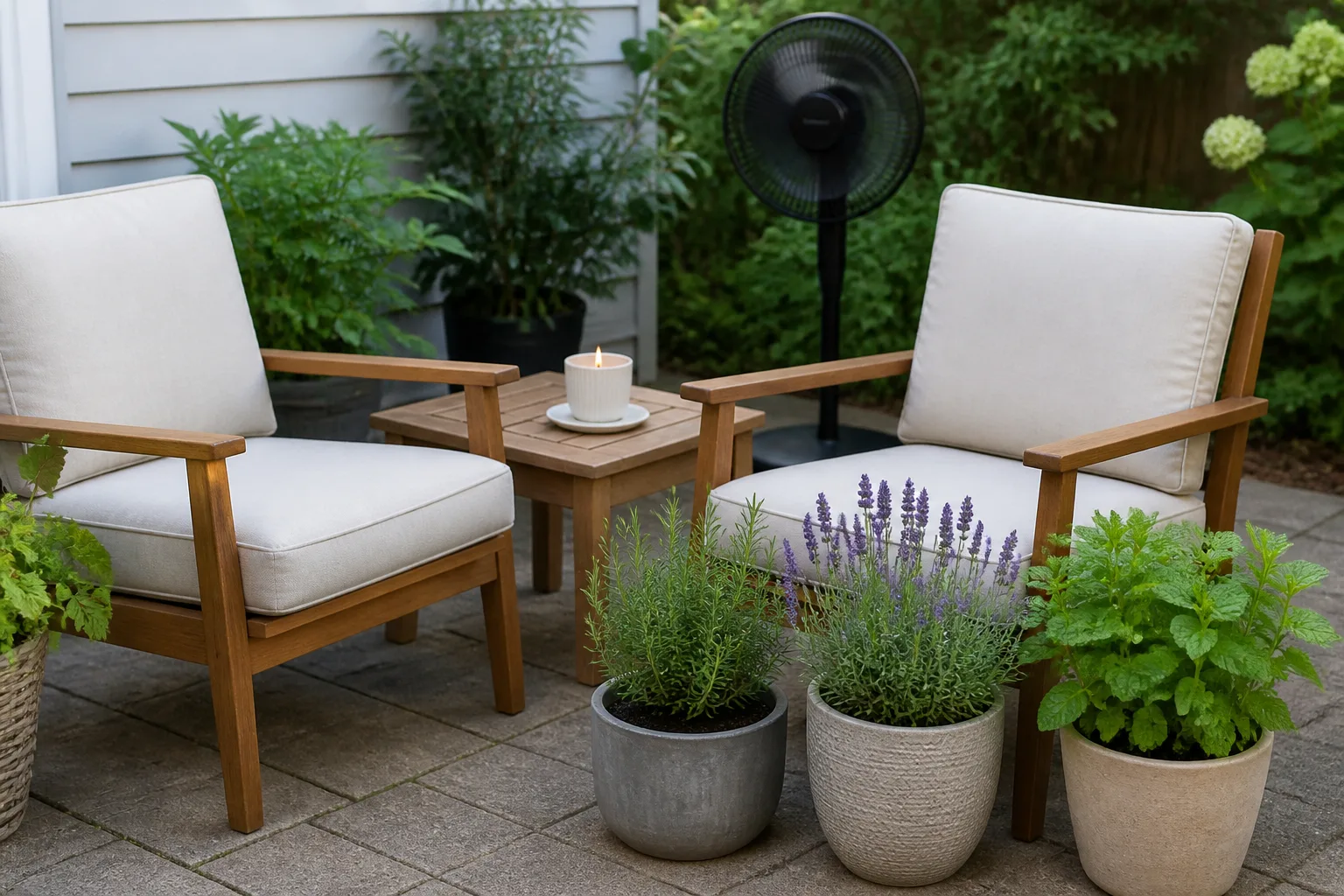
Fragrant plants can make an outdoor space more pleasant, but they are not air filters and they are not a substitute for fixing a foul-smelling source. A jasmine-covered trellis may add a sweet evening note near the patio; it will not correct a blocked drain, eliminate pet waste, or make a gas leak safe.
The useful way to think about this project is as scent placement. Put a plant with the right fragrance, at the right height, in the right light, and near the place where you actually sit or walk. Then use dense foliage or a trellis to slow and redirect incoming air when that makes sense. The goal is a more comfortable smellscape, not a promise that every odor will disappear.
These seven plants cover different jobs: climbers for warm-climate screens, herbs and low flowers for borders and pots, shrubs for seasonal bloom walls, and evergreens for year-round structure. Several have strict site requirements, so the best choice is the one that fits your yard—not necessarily the plant with the strongest perfume in the catalog.
What Fragrant Plants Can—and Cannot—Do for Yard Odors
A plant masks an odor by adding another scent to the air around it. Fragrant flowers release aromatic compounds, while herbs such as lavender release a noticeable aroma from their leaves when they are brushed or warmed. Dense foliage can also soften a view and slightly change how air moves around a patio, but foliage is not a sealed barrier.
That distinction matters because bad smells behave differently. A neighbor’s barbecue smoke may arrive in short bursts with the wind. Pet urine may come from a small, repeatable perimeter zone. Musty mulch, standing water, or a drain problem can produce a steady odor at ground level. The right response changes with each one.
Before choosing a plant, walk the yard at the time the smell is strongest. Note whether the odor is coming from one point, drifting over a fence, rising from wet soil, or collecting in a low spot. If you smell natural gas, sewage, solvent, or another potentially hazardous chemical, leave the area and contact the appropriate utility, sanitation service, or professional; a fragrant border is not a safety measure.
For ordinary garden odors, use a two-part approach:
- Correct what you control. Remove pet waste, rinse hard surfaces, improve drainage, turn or rebalance compost, clean trash and recycling containers, and investigate stagnant water or rotting organic matter.
- Add fragrance where people experience the odor. Place a plant near a patio, gate, path, or open window, or use a screen planting to interrupt the incoming air at the windward edge.
UF/IFAS describes fragrance gardens as a way to add another sensory layer to a landscape, not as a chemical odor-removal system. That is the honest promise here: better placement can make an unpleasant moment easier to tolerate, while the underlying problem still needs its own solution. (UF/IFAS Gardening Solutions)
Match the Plant to the Odor Window and Airflow
Fragrance is not constant. Some plants are most noticeable in bright warmth, some are strongest at dusk, and some are valuable because their leaves smell when touched even when no flowers are open. Temperature, humidity, wind, distance, and the number of blooms all affect what reaches your nose.
Start by matching the plant’s scent window to the problem. If smoke arrives during lunchtime, a lavender border may be more useful than an evening-blooming vine. If the odor is worst when you eat outdoors after sunset, star jasmine or another night-scented plant belongs beside the sitting area, provided your climate supports it. If the problem lasts through winter, a spring-only bulb will leave a long gap.
| Yard situation | Look for | Plants in this guide that may fit |
|---|---|---|
| Warm evening patio or grill area | A strong evening scent and a trellis or arbor | Star jasmine, gardenia |
| Dry, sunny path or fence edge | Aromatic foliage and excellent drainage | Lavender, sweet alyssum |
| Summer odor from a fence or neighbor’s grill | A larger shrub with a concentrated bloom period | Mock orange, sweetshrub |
| Small patio or rental-friendly planting | Fragrance in a pot at nose height | Gardenia, lavender, sweet alyssum |
| Warm-climate privacy planting | Evergreen structure plus repeated flowering | Tea olive, star jasmine |
| Cold-climate yard needing a shrub layer | Hardy deciduous structure and seasonal flowers | Mock orange, sweetshrub |
Airflow decides where the plants work. If the odor drifts from outside your property, observe the prevailing wind during the problem period and place a screen on the windward side of the space you want to protect. That may be the side the air enters from, not necessarily the side closest to the odor source. A plant row on the wrong side can look attractive while doing very little for the patio.
Do not create an impenetrable wall by guessing. Leave enough clearance for mature width, pruning, fence access, and utility covers. Fragrance works best when the plants are also close enough for people to smell them; a row of shrubs 30 feet away may improve the boundary but do little for the chair where the odor is noticed.
Seven Plants That Make an Outdoor Space Smell Better
1. Star Jasmine for Warm Evening Odors
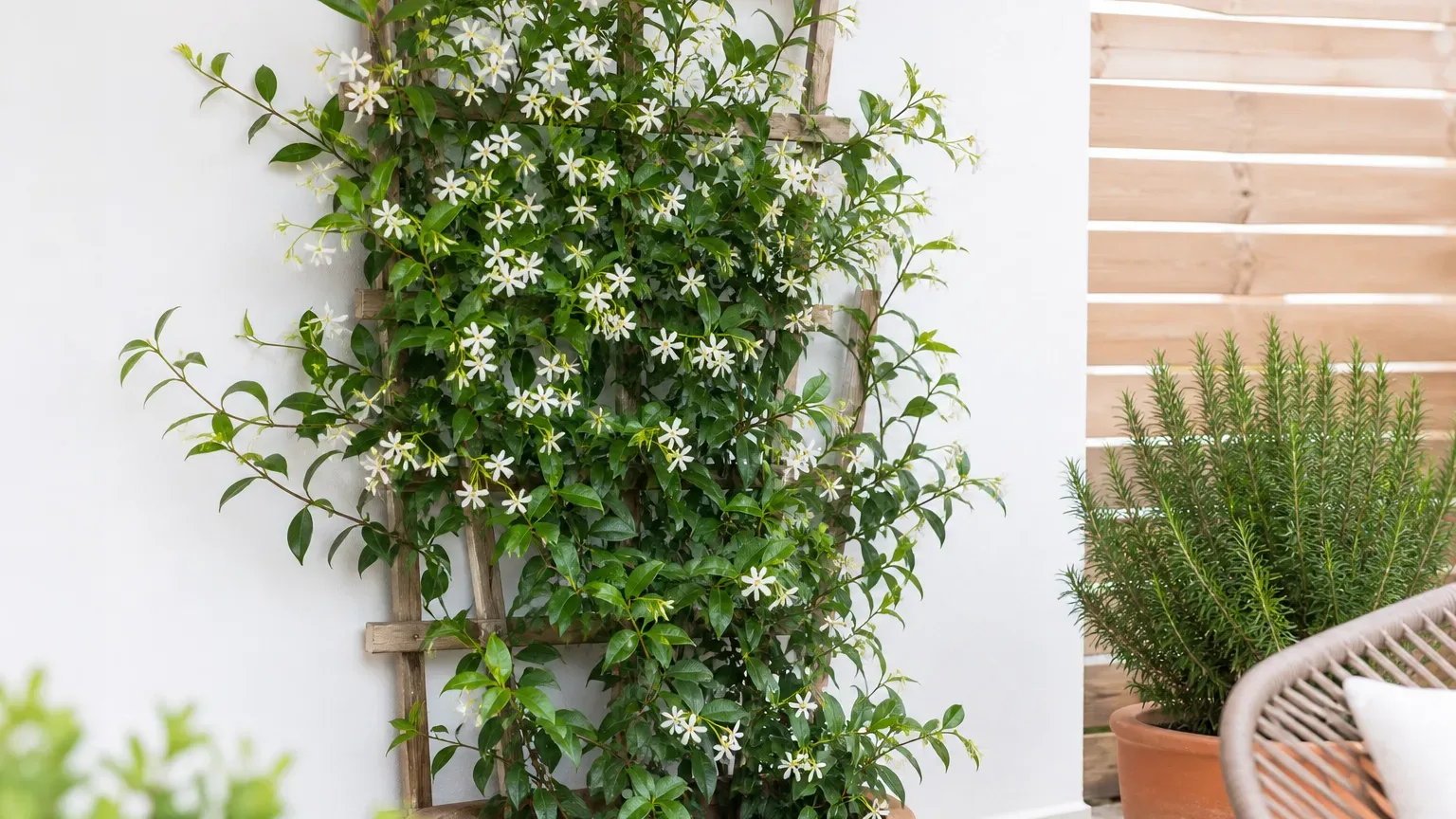
Star jasmine, Trachelospermum jasminoides, is one of the best choices for a warm-climate patio that needs both screening and evening fragrance. It is an evergreen, twining vine with glossy leaves and small white, pinwheel-shaped flowers. UF/IFAS notes that the flowers tend to be more fragrant at night, which makes this plant a natural fit for outdoor dinners, evening grilling, and a seating area near a fence.
Give it a sturdy trellis, arbor, railing, or wire support rather than expecting it to cling to every surface on its own. It is grown widely in the Southeast and can be planted throughout Florida, while practical horticulture guidance commonly places it in warm zones around 8 through 11. In cooler regions, it may need to be grown as a seasonal container plant or protected rather than treated as a permanent evergreen screen.
The common name creates an important trap. Star jasmine is not the same plant as the true jasmines in the genus Jasminum. NC State Extension describes Jasminum as a large group of fragrant shrubs and vines, with species that differ widely in hardiness and growth habit; its profile also notes that many jasmines prefer full sun, moist but well-drained soil, and pruning after flowering because flowers form on old growth. Read the botanical name on the tag before you buy. (NC State Extension’s jasmine profile)
Water star jasmine consistently during its first growing season so it can build a useful root system. After it is established, keep the root zone evenly supplied without leaving it in waterlogged soil. Place the vine where its flowers will be near the patio or a window, and prune after the main bloom rather than shearing it repeatedly just before flowering.
2. Lavender for Sunny, Dry Borders
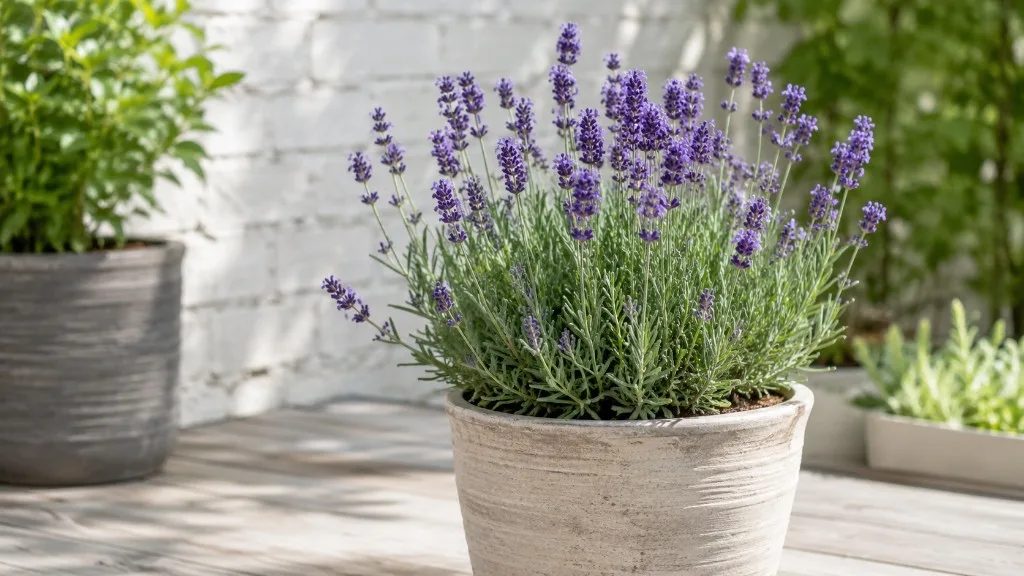
Lavender earns its place because the foliage is aromatic even when the flower spikes are finished. A border of Lavandula along a path, gate, or patio edge releases more scent when people brush past it, so it does not rely entirely on a brief bloom period. Its herbal, resinous fragrance is especially useful as a daytime layer beside a smoky or musty corner.
This is a plant for drainage-first gardeners. NC State Extension describes lavender as a fragrant plant that prefers well-drained soil and may struggle in hot, humid areas; wet soil can lead to root problems. The same profile lists neutral to alkaline conditions and notes that containers can be easier than heavy clay. If your yard stays damp after rain, a raised bed or pot is more realistic than amending a small planting hole and hoping for the best. (NC State Extension’s lavender profile)
Choose a spot with strong light and air movement, but be thoughtful in climates with severe afternoon heat. English lavender and its hybrids have different cold and heat tolerances, so choose a cultivar for your area rather than assuming every lavender behaves alike. Give mature plants enough room to dry after rain, and trim lightly after flowering without cutting deep into old, leafless wood.
Lavender is not a tall odor screen. Use it as the nose-height or touch layer in front of a fence, shrub, or wall. Several plants grouped along the place where you sit will usually make more difference than one lonely specimen at the far edge of the yard.
3. Mock Orange for a Summer Bloom Surge
Mock orange, Philadelphus, is a strong candidate when the unwanted smell is most noticeable in late spring or early summer. Its white flowers are famous for an orange-blossom fragrance, and the shrub can provide more vertical presence than a low herb or annual. Gardening Know How describes mock orange as a large, arching shrub that can reach about 10 feet in many gardens, with fragrance peaking in warm late-afternoon and evening conditions.
That size makes it useful as a loose fence-line screen, but it also creates a commitment. Check the mature width before planting near a path, window, or property line. A shrub that grows into the walkway will force harsh pruning, and a frequently hacked mock orange will not give the same flower display as one allowed to develop a natural arching shape.
Plant it in full sun to partial shade with well-drained soil. The key pruning rule is timing: mock orange flowers on older wood, so prune immediately after flowering if it needs shaping. Cutting it back in winter can remove the branches that would have carried the next fragrant bloom. (Gardening Know How’s fragrant patio planting guidance)
4. Gardenia for Containers Near a Seating Area
Gardenia, Gardenia jasminoides, is the high-fragrance option for gardeners who can meet its demands. The waxy white flowers have a rich, sweet scent, and the evergreen foliage keeps the plant attractive between flushes. UF/IFAS lists gardenia cultivars ranging from about 2 to 15 feet and describes them as suitable for USDA Zones 7b through 11b in full sun or partial shade.
The catch is that gardenia is a poor choice for a neglected, alkaline, or droughty corner. It prefers acidic conditions and consistent moisture, and the plant can suffer when roots swing from saturated to bone dry. In a colder climate or a small rental yard, a large container gives you more control over soil, placement, and winter protection. Set it beside the chair or outdoor dining table where its scent can reach people instead of planting it as an expensive perimeter screen.
Use morning light or a bright site with protection from punishing afternoon heat where that matches your climate. Keep the root zone evenly moist, provide drainage, and expect to spend more time monitoring it than you would with lavender. The payoff is concentrated fragrance close to the people who need it, not a claim that one gardenia can deodorize a whole yard.
Gardenias can also be a poor fit when pets or young children habitually chew plants. Before putting one at a low seating-area edge, check a current local or veterinary plant-safety reference and choose a higher container or a different plant if grazing is likely.
5. Sweet Alyssum for Low Edges and Pots
Sweet alyssum, Lobularia maritima, is small but strategically useful. UF/IFAS describes its clustered flowers as carrying a delicate, honey-like scent, and its compact form—about 12 inches tall and wide—works in beds, containers, and hanging baskets. That makes it a practical choice where a shrub would block a path or where a renter needs a movable fragrance layer.
Because sweet alyssum stays low, place it where noses pass close: along the front of a border, around a patio step, beneath a bench, or on the edge of a container grouping. It will not intercept smoke above a fence, but it can make the immediate area around a chair, doorway, or gate smell friendlier.
UF/IFAS lists a long flowering season in warm climates and hardiness around Zones 8 to 9. In colder regions, treat it as a seasonal annual or let it fill a pot during the milder part of the year. Give it sun to light shade, avoid a perpetually soggy container, and shear lightly when the first flush becomes tired so fresh growth can fill back in.
6. Sweetshrub for a Native-Leaning Shrub Layer
Sweetshrub, Calycanthus floridus, brings an unusual fragrance and useful structure to a temperate yard. Fine Gardening describes the species as a deciduous shrub native to woodland and streambank habitats in the United States, with aromatic foliage that smells spicy when crushed. The flowers are often described as fruity, clove-like, or reminiscent of bubble gum rather than simply “floral.”
The species and its cultivars vary, so smell the plant when possible before buying several. The hybrid Calycanthus ‘Venus’ has large, fragrant, magnolia-like flowers and can grow about 8 to 10 feet tall and wide. Fine Gardening recommends full sun to partial shade and moist, fertile, well-drained soil for that cultivar. (Fine Gardening’s ‘Venus’ sweetshrub profile)
Sweetshrub makes sense when you want a shrub layer that supports a more naturalistic planting rather than a clipped hedge. It can soften a fence, add seasonal height, and provide a scent you notice when walking past or gently brushing the foliage. In hot climates, give it more afternoon protection; in dry soil, do not expect the same performance as a drought-tolerant herb.
Prune only with a reason and do it after flowering. Sweetshrub can bloom on older wood as well as newer growth, so a hard winter cutback may trade away the very flowers you planted it for. Its fragrance is distinctive but not universally loved; one specimen is a sensible trial before a full row.
7. Tea Olive for Evergreen Fragrance in Warm Climates
Tea olive, or sweet osmanthus, Osmanthus fragrans, is a strong warm-climate choice when you want foliage and fragrance beyond one short flowering window. UF/IFAS describes it as an evergreen shrub with tiny creamy-white flowers, a light sweet fragrance, and the ability to bloom several times throughout the year. That repeat performance makes it more useful for a recurring odor problem than a plant that flowers for two weeks and then goes quiet.
Tea olive works as a foundation shrub, informal screen, or large container subject where winters are mild. UF/IFAS recommends full sun or partial shade in North and Central Florida and partial shade farther south; gardeners outside those regions should treat the plant’s hardiness and winter performance as a local question rather than assume it is evergreen everywhere. (UF/IFAS Gardening Solutions)
How to Place Fragrant Plants Where They Actually Work
Build a layered scent screen
Think in three layers rather than one long row. The screen layer is the taller plant or structure that changes the view and slightly disrupts incoming air: mock orange, sweetshrub, tea olive, or a trellised vine. The scent layer is a shrub or vine with blooms at the time the odor arrives. The touch layer is a low plant such as lavender or sweet alyssum placed beside the path, table, or chair.
Layering prevents one plant from carrying the entire job. A mock orange can handle a summer bloom surge while lavender continues to provide aromatic foliage near the path. In a warm climate, star jasmine can supply evening scent on a trellis while tea olive provides evergreen bulk. The exact combination should follow your climate and soil rather than a fixed recipe.
Group plants in drifts when you want fragrance to register. One plant can be a pleasant accent, but a cluster gives you more flowers and a more coherent scent. Avoid mixing too many intense fragrances in a confined courtyard; sweet, herbal, citrus, and spicy notes can become muddled instead of masking anything.
Use wind, height, and seating to your advantage
Spend a few minutes watching a ribbon, light fabric strip, or fallen leaves to understand air movement at the height of the patio. Note the direction during the specific event—grilling next door, traffic at rush hour, or the time a damp corner smells strongest. A screen planted on the windward side may slow and diffuse the first wave, while the fragrant plant itself belongs closer to the place where people breathe.
Keep the most fragrant flowers between knee and head height when possible. A tall hedge can provide privacy but put most flowers above your nose. A low shrub can be beautifully scented but fail to intercept smoke. The best layout often combines the two: structure farther out, fragrance near the patio, and a low edge along the route people take to reach it.
Respect mature dimensions and maintenance access. Do not plant a vigorous vine against a fence you need to paint, place a large shrub directly over irrigation valves, or put a thirsty gardenia where a hose cannot reach. If the planting becomes difficult to prune or water, it will eventually become sparse, stressed, or overgrown—and a stressed plant usually contributes less fragrance.
Fix the Odor Source Before You Plant
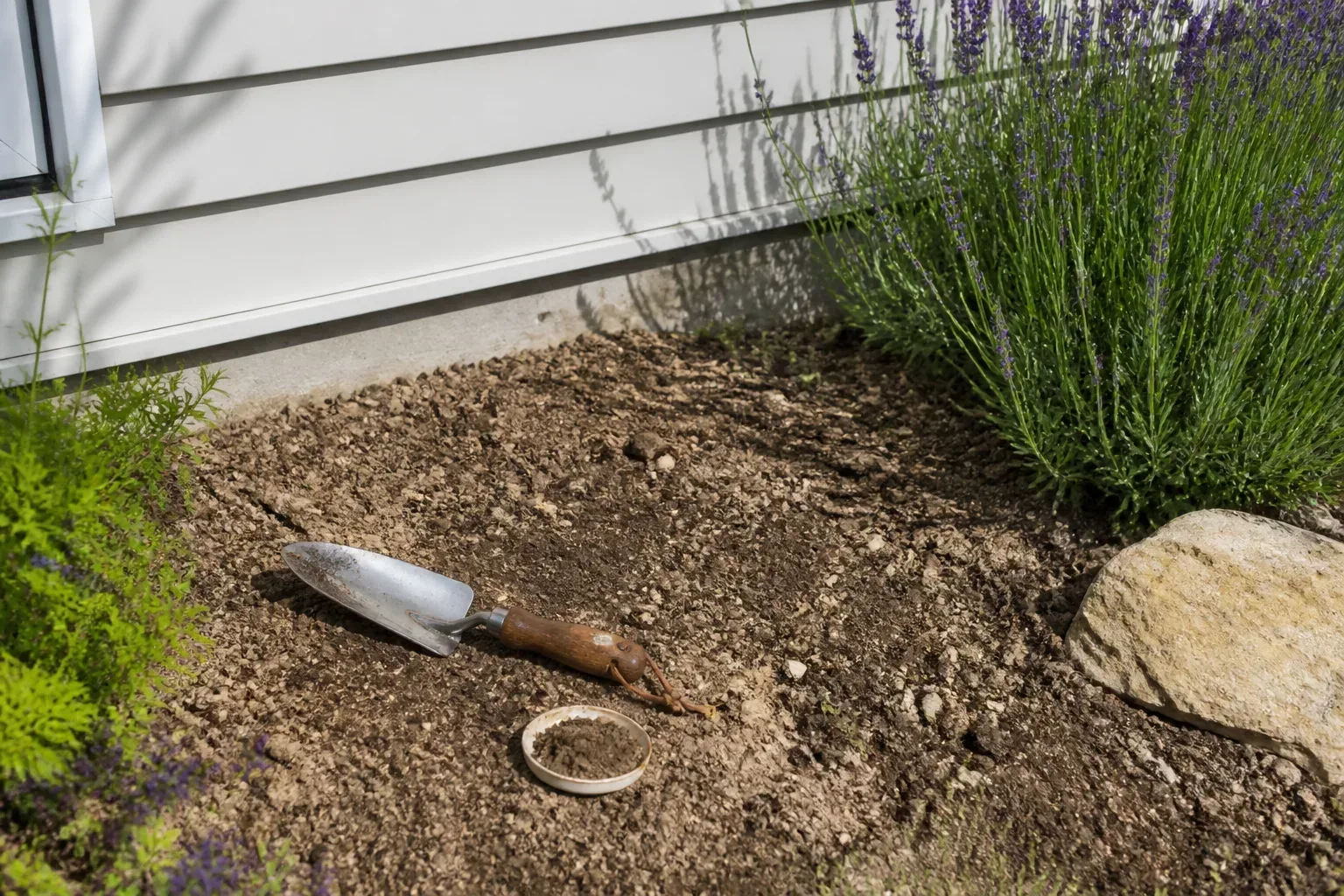
Planting is the final layer, not the first diagnosis. A pet area needs regular waste removal and a thorough rinse of hard surfaces; planting lavender beside untreated urine-soaked soil only adds a second smell. If the odor rises after rain, check for blocked downspouts, standing water, anaerobic mulch, or a low spot that stays wet.
Do not bury a drain, septic access, utility marker, or ventilation point beneath a new shrub screen. Roots and mature branches can make later maintenance harder, and the scent from a plumbing or septic problem will not be solved by flowers. If the smell is persistent, sudden, or associated with illness, fumes, or sewage, stop treating it as a landscaping problem and have the source checked.
Smoke is a special case. Plants can add a pleasant scent and give a patio more visual privacy, but they do not make smoke harmless or reliably remove airborne particles. Keep grills and fire features properly maintained, improve the patio’s physical airflow where possible, and address persistent smoke intrusion through practical home or neighborhood solutions rather than adding more plants alone.
Mistakes That Make Fragrant Plantings Disappointing
Choosing by common name only. “Jasmine” may refer to several genera with different hardiness and growth habits. Confirm the botanical name, mature size, and whether the plant is a vine, shrub, annual, or container subject before you place it beside a fence.
Ignoring drainage. Lavender and several Mediterranean herbs decline in wet soil, while gardenia and sweetshrub need more consistent moisture. Matching a plant’s water preference to the site is more important than adding compost to a poor planting hole.
Expecting a bloom calendar to solve a year-round problem. Mock orange and sweet alyssum can be excellent for a particular season, but they will not provide the same scent every month. Use foliage fragrance, evergreen structure, or staggered bloom periods if the odor is recurring.
Pruning at the wrong time. Mock orange and many jasmines can lose next year’s flowers if cut hard before the old wood has finished its job. Learn whether the plant flowers on old or new growth, and shape it immediately after flowering when that is the safer window.
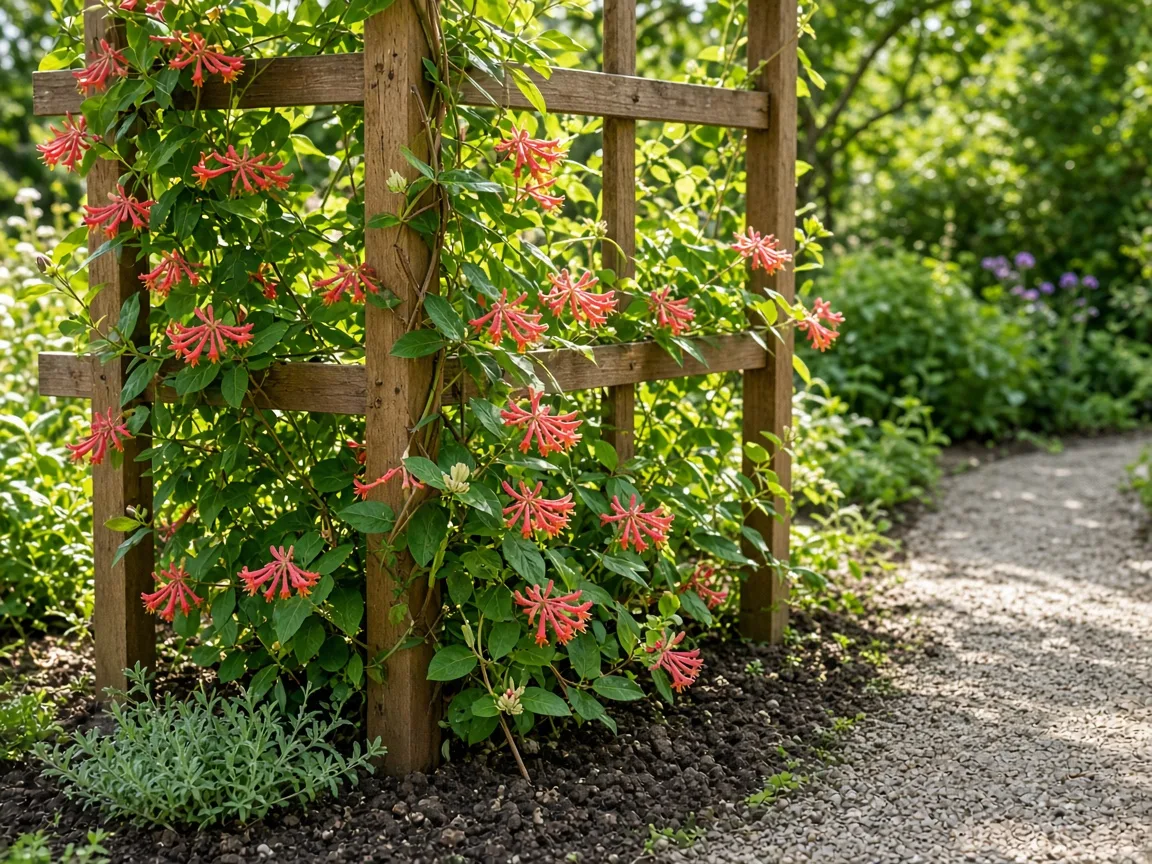
Planting the most invasive option because it grows fast. Fragrant honeysuckles deserve special care: Penn State Extension distinguishes native and garden-bred choices from invasive exotic vines and shrubs that spread quickly and displace native vegetation. NC State also warns that winter honeysuckle, despite its appealing winter fragrance, is invasive in many states. Check your state or local invasive-plant list before buying any honeysuckle, butterfly bush, or vigorous self-seeder. (Penn State Extension’s honeysuckle guidance; NC State Extension’s fragrant honeysuckle profile)
Putting a fragrant plant too far away. A border at the property line may be attractive, but it can be practically scentless at the dining table. Put at least part of the planting where you will pass close enough to disturb aromatic leaves or smell the flowers.
Using too many strong scents in a small area. Fragrance is personal. Start with one or two plants, observe the result for a season, and expand only when you know the notes work together and do not bother anyone who uses the space.
A Simple Planting Plan by Yard Problem
For neighboring barbecue smoke near a warm patio, begin with star jasmine on a trellis if your climate supports it. Add lavender or sweet alyssum around the seating area for a daytime and touch fragrance. If you have more room and a suitable climate, tea olive supplies evergreen structure; if you garden in a cooler region, substitute mock orange or sweetshrub for seasonal height.
For a pet-urine smell along a sunny perimeter, clean and rinse the area first and confirm that the soil drains. Then use lavender as a low aromatic edge where the foliage will be brushed, with sweet alyssum in pots or gaps. Avoid placing a moisture-loving gardenia in the same dry, heavily trafficked strip just because its flowers smell stronger.
For a musty corner after rain, fix the drainage before buying anything. Once the site is no longer staying wet, sweetshrub can suit a partly shaded temperate bed, while tea olive or gardenia can work in the warmer regions where they are hardy. Fragrance will be more successful when the plant is healthy enough to flower.
For a small yard, balcony, or rental patio, choose movable containers. Lavender and sweet alyssum are easy starting points for sun, while gardenia can provide concentrated fragrance if you can supply acidic soil, steady moisture, and winter protection. Use the containers to test wind, scent distance, and bloom timing before committing to a permanent hedge.
For a cold-climate yard that needs a seasonal shrub layer, look first at mock orange and sweetshrub. Use them as informal screens, prune them after bloom, and accept that the fragrance will be seasonal. Add a low edge such as sweet alyssum for the growing season rather than expecting one shrub to perform in every month.
For a warm-climate yard that needs year-round structure, compare tea olive and star jasmine by habit. Tea olive is an evergreen shrub; star jasmine is a vine that needs support. Choose the one that fits your available wall, fence, or open bed, then put a smaller aromatic plant near the seating area so the scent is not stranded at the boundary.
Conclusion
The best plants to mask bad smells coming into your yard are the ones that fit the odor’s timing and your site’s real conditions. Star jasmine and tea olive suit warm climates, lavender and sweet alyssum add low, close-range fragrance, mock orange and sweetshrub provide seasonal shrub-scale impact, and gardenia rewards a protected, well-managed container or bed.
Start with the source. Clean pet areas, repair drainage, turn compost, inspect drains, and protect utility access before you install a scent screen. Then observe the wind, place fragrance near the people who need it, and combine a structural plant with a low touch layer instead of planting a distant row and hoping it will do everything.
A thoughtfully placed fragrant border can change how a yard feels without pretending to purify the air. Choose one or two plants that your climate can support, let them establish, and expand the planting only after you see when their fragrance actually reaches the space.