7 Plants That Repel Cats From Your Yard
Looking for plants that repel cats? Compare seven fragrant choices, their care needs, pet-safety warnings, and the barriers that make them work better.
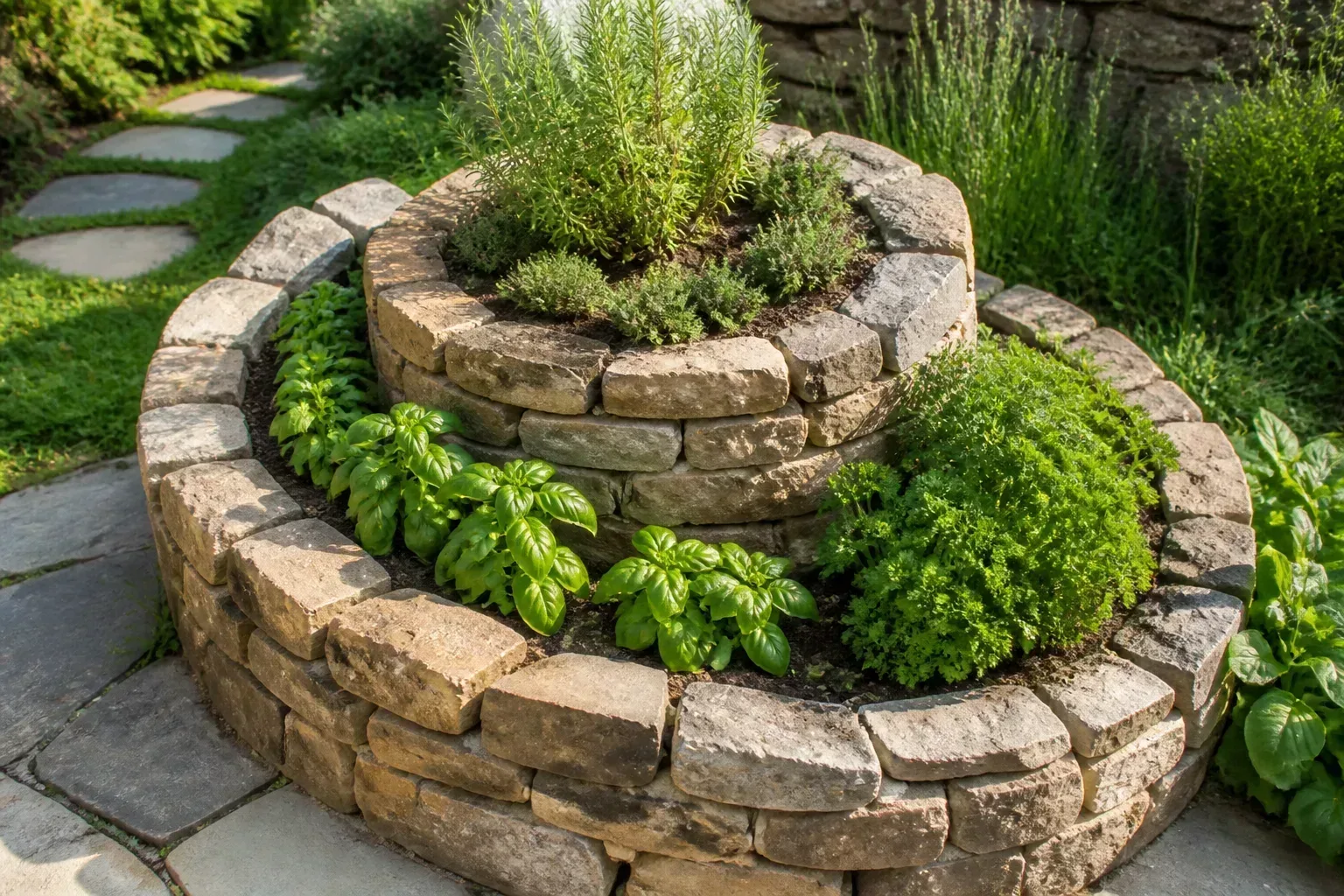
If neighborhood cats are digging in fresh soil, leaving feces in vegetable beds, or flattening young plants, fragrant plants are a reasonable place to start—but they are not a magic fence. A healthy aromatic border can make a route less appealing, especially when a cat is only passing through. A determined cat that has found food, shelter, or a preferred toilet may ignore the plants completely.
The most dependable strategy is layered: remove whatever is attracting the cats, make bare soil uncomfortable to dig without creating a hazard, and use plants as a living scent cue around the edges. The University of Maine Cooperative Extension’s garden guidance and Gardening Know How’s practical overview both make the important point that no single repellent works for every cat.
That limitation changes how you choose. Rosemary is the best first trial for many pet-conscious gardeners because it is useful in the kitchen and the ASPCA lists it as non-toxic to cats. Lavender, rue, mint, lemongrass, citronella grass, and eucalyptus can all be found on cat-deterrent plant lists, but several bring toxicity, skin-irritation, spread, climate, or size concerns. Treat the list below as a set of conditional options, not a promise that every plant belongs in every yard.
What plant-based cat deterrents can—and cannot—do
Plants may work through scent, texture, or placement. Strongly aromatic foliage releases volatile compounds when it grows, warms in the sun, or is brushed; coarse or prickly foliage can also make a border less comfortable to cross. The effect is usually local and inconsistent. Wind, rain, plant health, seasonal dormancy, and one cat’s personal tolerance all matter.
A plant is most useful as a boundary marker, not as the only defense in the middle of a bed. If you plant one lavender shrub beside a large rectangle of exposed, freshly watered soil, the cat still has a wide landing and digging area. If you put aromatic plants along the route the cat uses and cover the vulnerable soil with a stable mesh or coarse mulch, the cat has fewer reasons to enter and fewer easy places to settle.
Avoid judging success by whether a cat walks past the plant once. Watch the specific behavior you want to change: fewer paw prints, no new feces, no flattened seedlings, or less lounging on a warm patio. Give a new planting time to establish, but use a temporary barrier immediately; a small plant cannot protect a bed it does not yet fill.
Start by identifying why cats are visiting
Cats do not all enter a yard for the same reason. Soft, loose soil, sand, moss, and fine mulch feel like litter, so a freshly dug bed can become a bathroom even when no plants are being eaten. A shaded crawl space under a deck, an open shed, overflowing trash, outdoor pet food, or seed scattered beneath a bird feeder can create a stronger draw than any herb can overcome.
Walk the property at the time the damage appears, often around dawn, dusk, or overnight. Look for the entry gap, paw prints, disturbed soil, a regular resting spot, and nearby resources. If the issue is mainly digging, soil coverage is your first move. If cats are congregating near food or shelter, address that attractant before spending money on a fragrant border.
Remove feces with gloves, discard visibly contaminated loose material where appropriate, and wash your hands after working in the bed. Do not seal a shed, porch, or crawl-space opening until you have checked for cats and kittens inside. Orange County’s humane deterrent guidance also recommends securing trash, using physical digging deterrents, and blocking access only after making sure animals are not trapped.
Put safety before scent
“Natural” does not mean harmless. The ASPCA plant database says that even non-toxic plant material can cause stomach upset if eaten, and its individual entries classify rosemary as non-toxic to cats while listing lavender, eucalyptus, garden mint, and lemon grass as toxic to cats. A plant that smells unpleasant may still be a poor choice if your own cat, a neighbor’s cat, or a child can chew it.
Rue needs a separate warning. Its sap can irritate skin and become especially troublesome in sunlight, so do not place it beside a walkway where people brush against it, and wear gloves when handling it. Scented geraniums sold under citronella-style names are also not interchangeable with citronella grass; the ASPCA lists scented geranium (Pelargonium species) as toxic to cats.
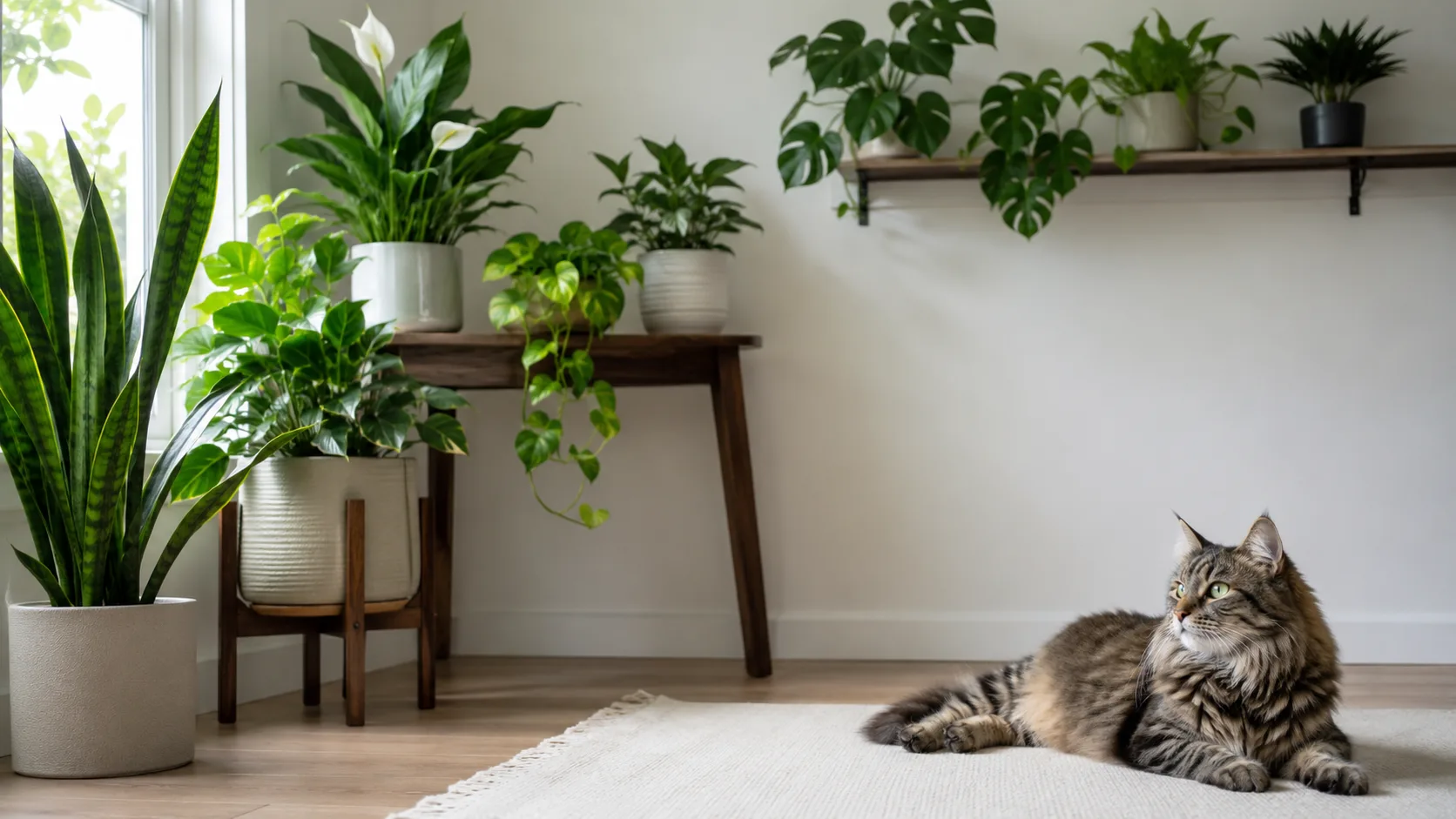
If you have a cat that roams your yard, start with rosemary, a physical barrier, and attractant removal rather than choosing a toxic plant because a list calls it a repellent. If a cat shows drooling, vomiting, diarrhea, weakness, unusual sleepiness, or trouble walking after chewing a plant, contact a veterinarian or an animal poison-control service promptly and identify the plant as precisely as possible.
7 plants people grow to discourage cats
The seven choices below cover the plants most often associated with cat deterrence while adding the details a quick list usually leaves out: where each one fits, what it can and cannot do, and when you should skip it.
1. Rosemary
Rosemary (Rosmarinus officinalis) is the strongest all-around starting point for a sunny, dry garden. Its resinous, piney scent is released from narrow evergreen leaves, and the plant earns its space even if a particular cat is unimpressed: you can cook with it, shape it into a low hedge, or grow it in a pot at a gate.
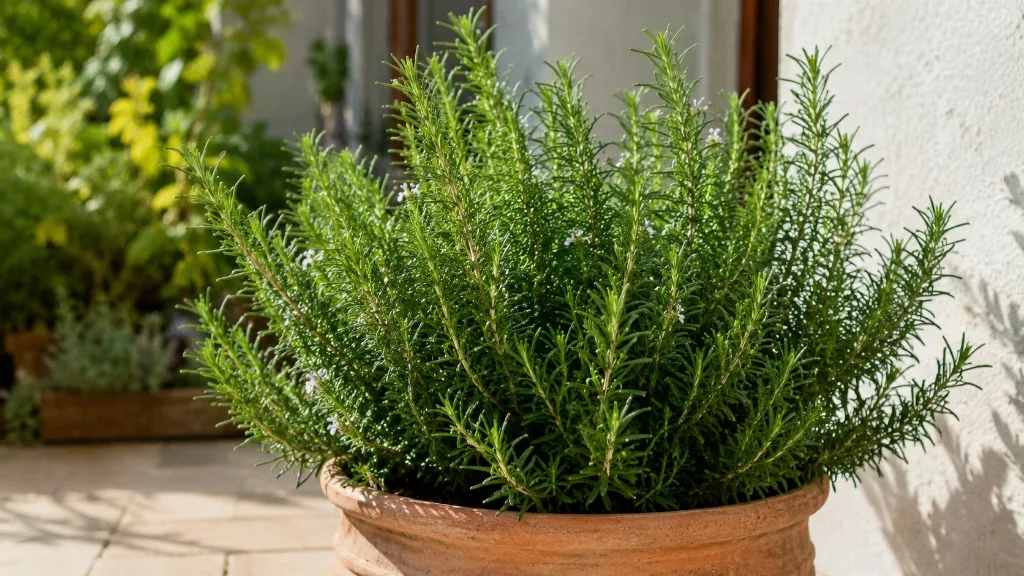
Plant rosemary in full sun with fast-draining soil. Let the root zone dry somewhat between thorough waterings once the plant is established; constantly wet soil is more likely to kill it than a short dry spell. In mild climates it can become a woody perennial, while cold-winter gardeners can grow it as a seasonal container plant and move it under cover before hard freezes.
Use rosemary where cats cross into the yard, around the sunny side of a raised bed, or in large containers beside a patio. Several plants create more of a continuous scent boundary than one isolated specimen. Keep the foliage dense with light harvests and pruning, but do not shear into old, leafless wood and expect it to refill quickly.
Rosemary is not guaranteed to repel cats, but it has the best combination of culinary value, manageable size, and pet-safety information in this list. The ASPCA’s rosemary entry classifies it as non-toxic to cats; still prevent heavy grazing because any plant material can upset a pet’s stomach.
2. Lavender
Lavender (Lavandula angustifolia and related garden species) is a good visual and fragrant border plant for hot, bright sites. Its silver foliage and purple flower spikes suit paths, dry beds, and the sunny edge of a vegetable garden. Many gardeners report that cats dislike the smell, but that observation is anecdotal rather than a measured guarantee.
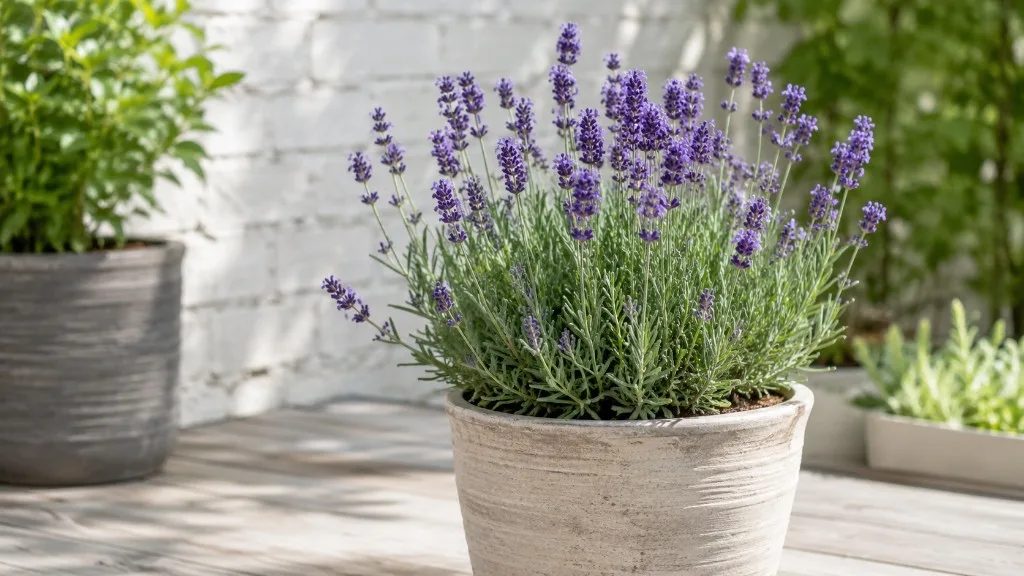
Choose a variety suited to your winter temperatures, then prioritize drainage over rich, wet soil. Lavender becomes lanky or declines when it sits in waterlogged ground. Water new plants as they establish, then allow the soil to dry before watering again; prune lightly after flowering to keep the shrub compact without cutting deep into bare stems.
The trade-off is pet safety. The ASPCA lists lavender as toxic to cats, naming linalool and linalyl acetate and noting possible nausea, vomiting, and reduced appetite. That does not mean every outdoor planting causes an emergency, but it does mean lavender is not the responsible first choice beside an accessible cat run or for a household pet that chews foliage. Use it only where animals cannot browse, or choose rosemary and mesh instead.
3. Rue
Rue (Ruta graveolens) is a blue-green perennial herb with yellow flowers and an unusually strong, bitter odor. It is one of the oldest plants repeatedly suggested as a cat deterrent, and University of Maine Extension describes rue as a traditional option rather than presenting it as a proven barrier.
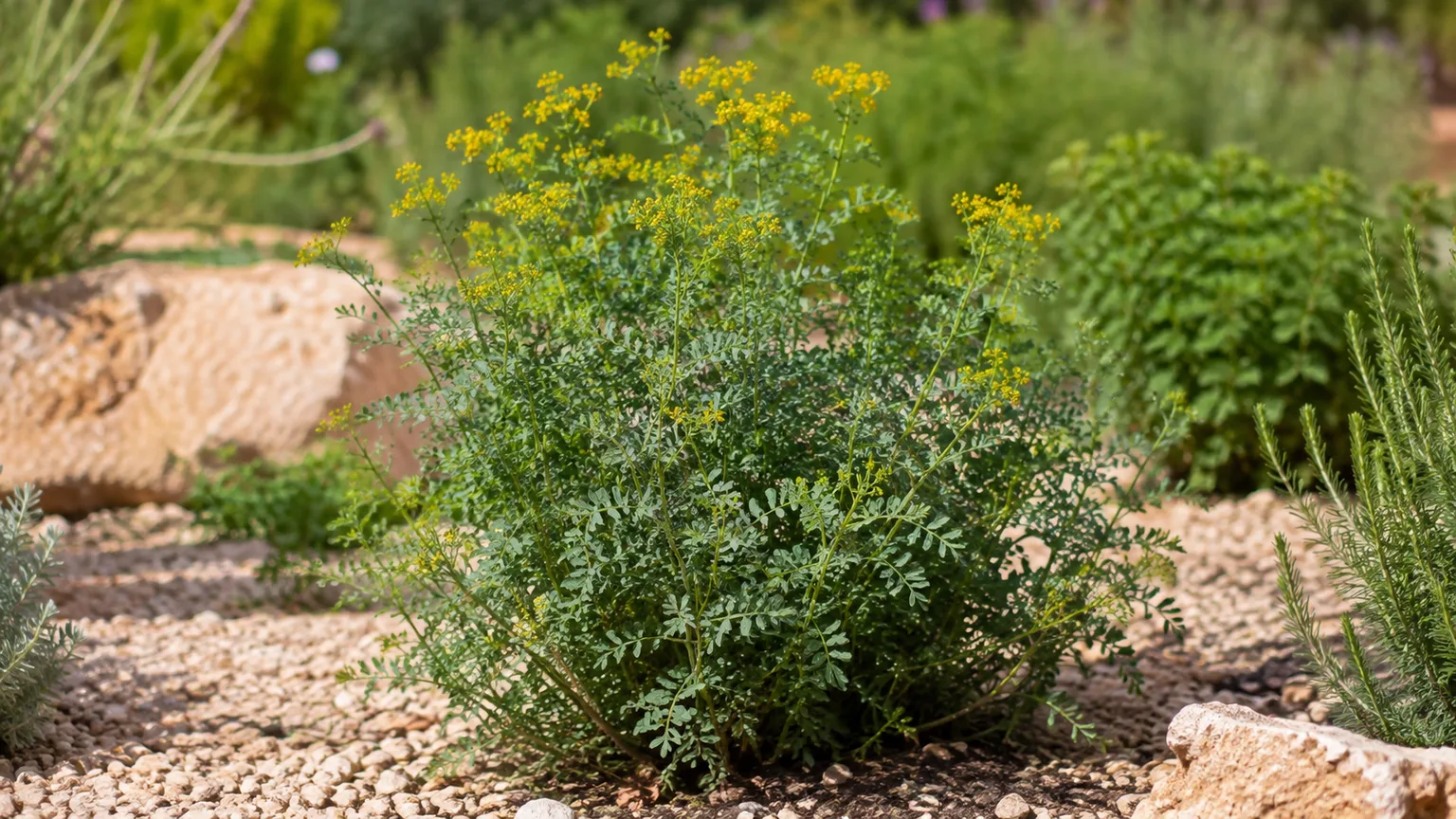
Rue prefers full sun, lean well-drained soil, and a site where people will not brush against it. It can fit a dry border or a container at the far edge of a property, but it is a poor plant for a narrow path, children’s play area, or dog run. Do not handle it with bare hands, and do not assume a cat will avoid it merely because it smells strong.
Consider rue a conditional plant for a garden without accessible pets or children, not a default recommendation. If your goal is simply to stop cats from digging, covering the soil is safer and more predictable than adding a potentially irritating herb. Never rub rue leaves onto a bed, scatter cut foliage where animals can chew it, or use rue oil as a homemade spray.
4. Mint, contained
Mint has a powerful cooling scent and is easy to grow, which explains why it appears on so many lists of plants that repel cats. It is also one of the easiest garden plants to regret. Runners can move through a bed and reappear well beyond the place you planted them, and a cat that likes the smell may walk straight through it.
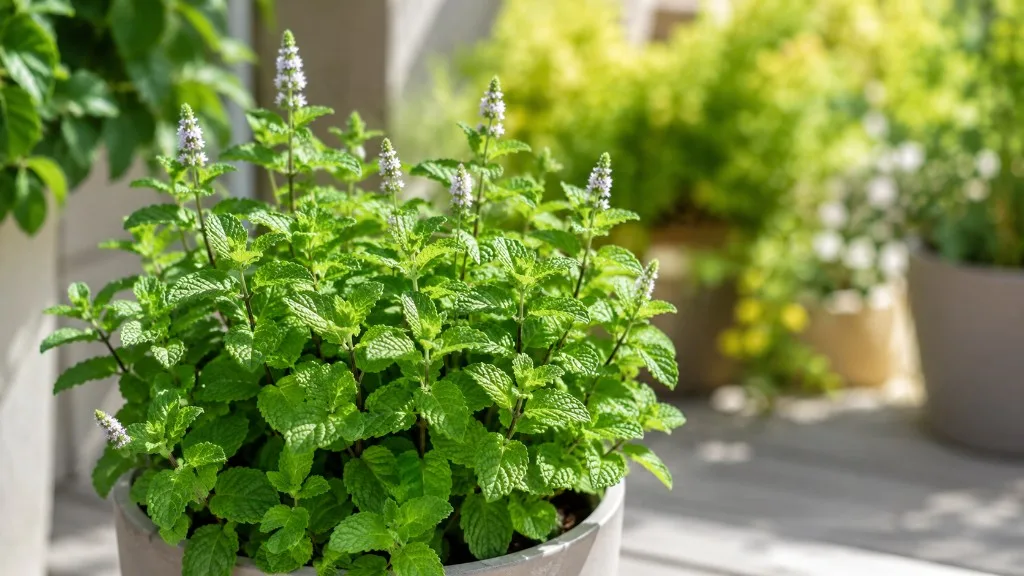
If you want to test mint, keep it in a pot with drainage and place the pot near a problem entry rather than planting it in the ground. A wide container gives roots room, while regular harvesting keeps the plant leafy and aromatic. Sink a pot into the soil only if you are prepared to check for escaping stems and lift or divide it regularly.
Pet owners need to read the fine print. The ASPCA’s garden mint entry lists Mentha species as toxic to cats with large ingestions, citing essential oils and vomiting or diarrhea. That is a reason to use a barrier or a different plant if your cat can reach the container, not a reason to spray mint oil around the yard. Also keep mint away from areas where pollinators or wildlife might be exposed to concentrated products.
Do not confuse mint with catnip or catmint. Catnip contains nepetalactone and attracts many cats, so it belongs in a protected cat garden—not in the bed you are trying to defend.
5. Lemongrass
Lemongrass (Cymbopogon citratus) forms a tall, grassy clump with a lemony fragrance when the leaves are bruised or cut. It can make a useful seasonal edge for a sunny patio or vegetable garden in a warm climate, and it provides edible stalks as a bonus. In cooler areas, grow it in a container and bring it into a bright, frost-free place before cold weather.
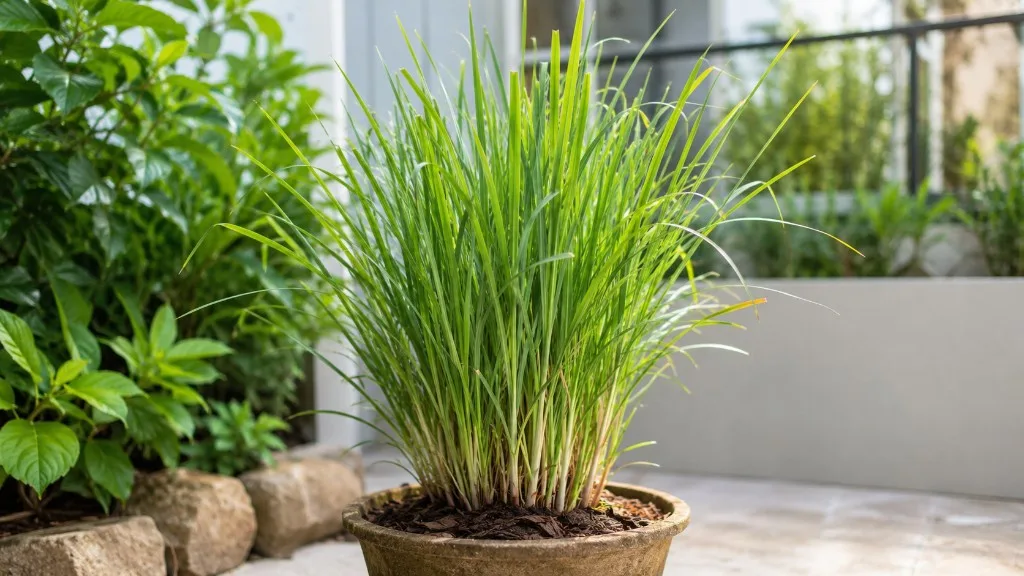
Give lemongrass full sun, regular moisture while it establishes, and soil that drains freely. It is not a dry-garden herb like rosemary; drought can thin the clump and reduce the foliage that produces its scent. Remove tired outer leaves and divide crowded clumps when growth is active, taking care not to create a loose, exposed patch that cats can use as a litter box.
The pet-safety caveat is significant. The ASPCA lists lemon grass as toxic to cats, citing essential oils and cyanogenic glycosides and noting stomach upset in cats and dogs. Keep the plant away from animals that chew grass, and do not substitute concentrated lemongrass essential oil for the living plant; concentration changes the exposure risk and can also injure garden foliage.
6. Citronella grass
True citronella grass (Cymbopogon nardus) is a warm-climate, grass-like plant grown for its aromatic oil. It is often confused with scented geraniums sold as “citronella plants,” even though those are different plants with different care and safety profiles. Read the scientific name on the label before buying, and do not assume that a citronella-scented pot is a proven mosquito or cat barrier.
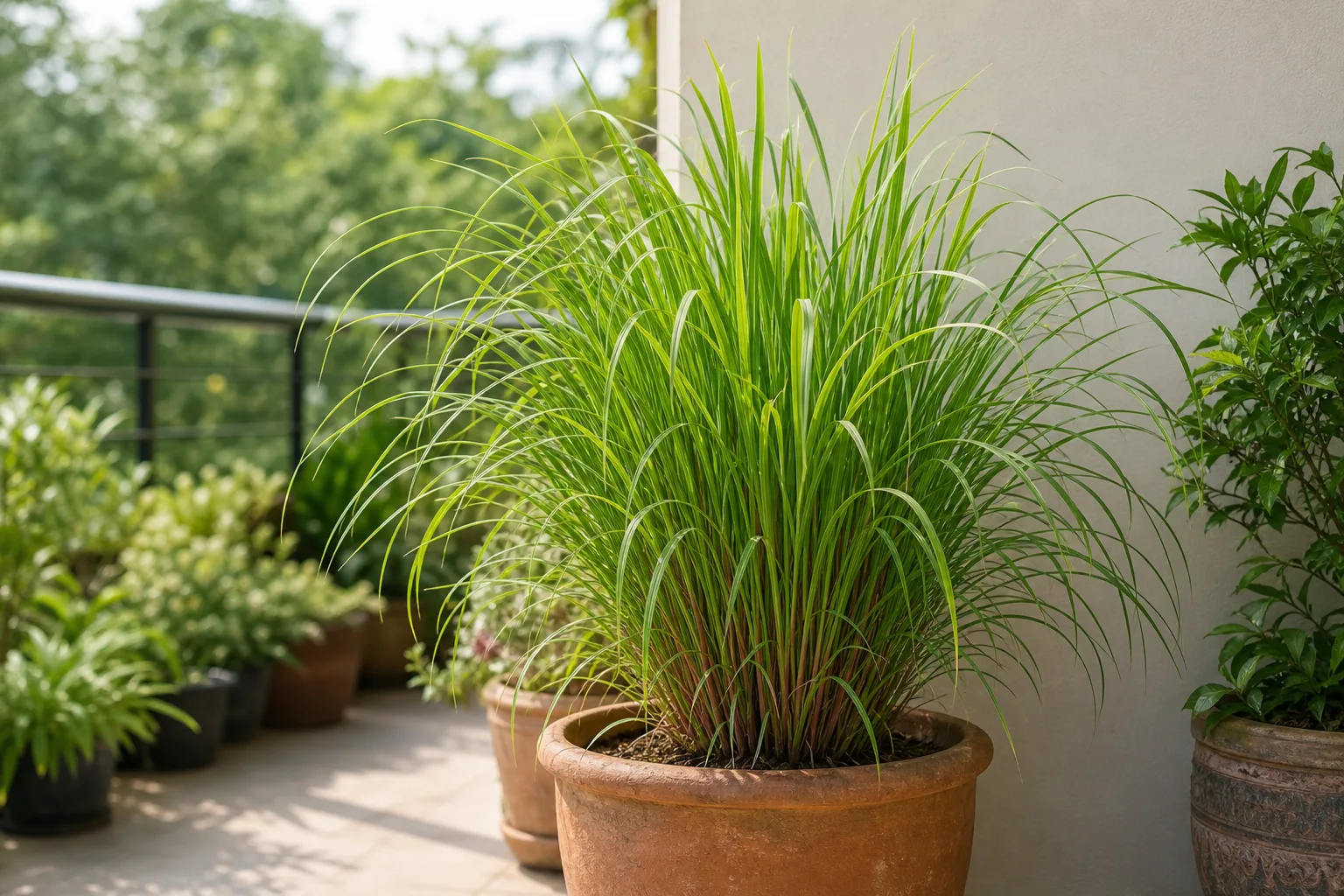
Plant citronella grass in full sun and well-drained soil, preferably in a container if your winters are cold or the clump could outgrow its position. It needs warmth and moisture during active growth, but standing water invites root problems. Place it near a gate or at the edge of a patio where a living fragrance cue is useful, rather than scattering small pots through the garden.
Evidence for a living citronella plant keeping cats away is limited, so make the claim modestly: it may make a frequently brushed route less appealing to some cats. Do not crush leaves onto an animal, diffuse citronella oil near pets, or use the plant as a substitute for a physical barrier. If you are considering a scented geranium instead, remember that the ASPCA classifies scented geranium as toxic to cats.
7. Eucalyptus, with conditions
Eucalyptus offers a strong, camphor-like fragrance and attractive silvery foliage, but it is the least practical choice for many residential yards. Different species can grow into substantial trees, roots and branches need room, and a small nursery plant can eventually become a maintenance or storm-risk problem if planted beside a house, fence, or overhead line.
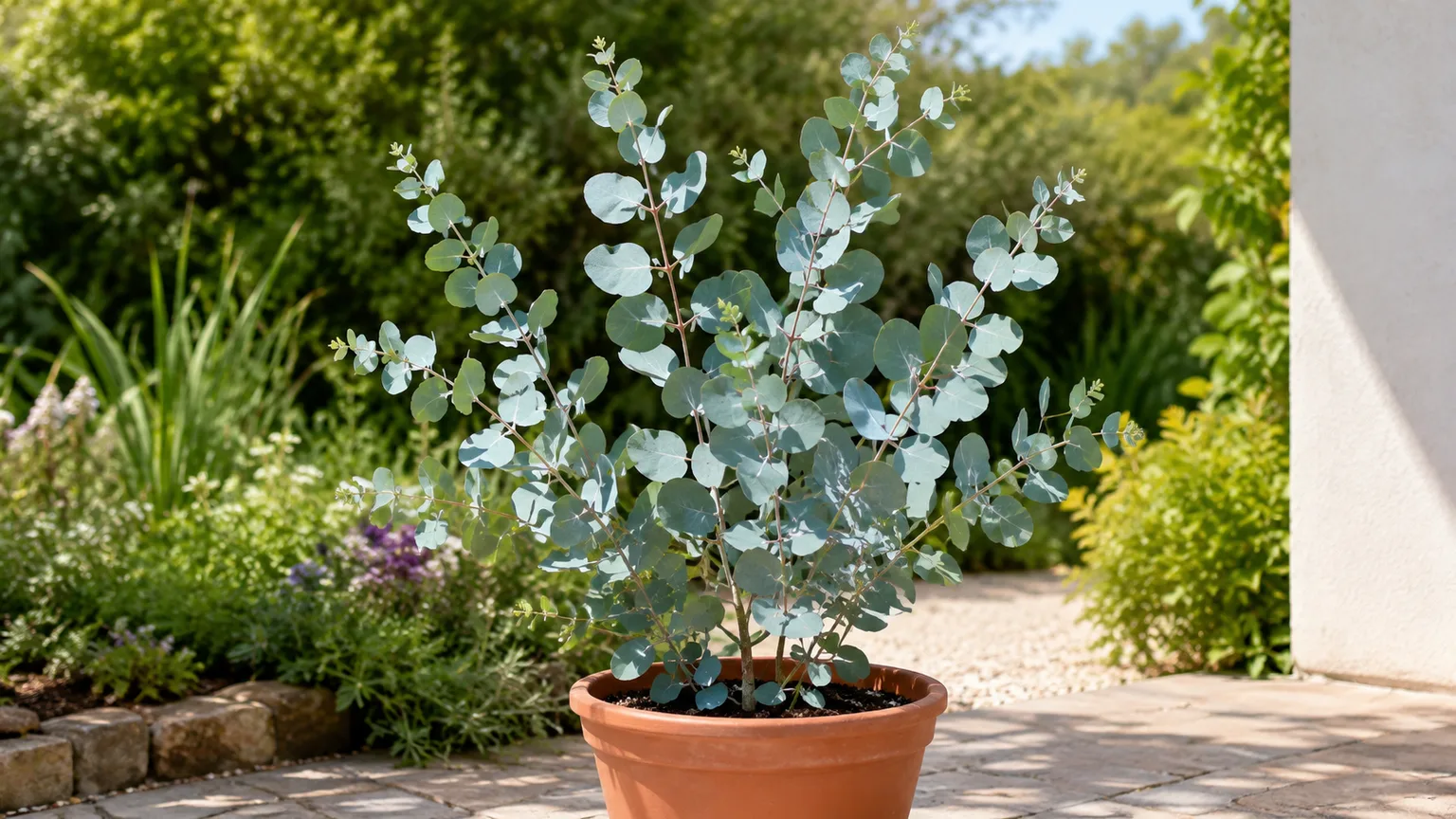
Choose a species that fits your climate and mature size, and grow it in a large container only if you can provide adequate sun, water, and winter protection. Pruning a eucalyptus is not a way to make any species permanently small; ask a local nursery or extension office about the mature dimensions before planting it in the ground.
Eucalyptus is not a pet-safe shortcut. The ASPCA’s eucalyptus entry lists it as toxic to cats, citing eucalyptol and possible salivation, vomiting, diarrhea, depression, and weakness. Skip it if cats can browse the foliage or if your yard is too small for the mature plant. For most readers, eucalyptus belongs in the “only under strict conditions” category, not at the top of a shopping list.
How to plant a fragrant border that actually helps
Place plants at routes and problem beds
Map the yard before buying seven of everything. Mark the point where cats enter, the bed they use, the sunny surface where they lounge, and any route to a food source or shelter. Plant the strongest candidates at those edges in a broken but continuous line, leaving enough room for the plants’ mature width and for you to maintain the bed without brushing against irritating foliage.
For a sunny, pet-conscious border, combine rosemary with a non-plant digging deterrent and treat lavender as optional only if animals cannot reach it. Use mint in a container near a gate, not as an in-ground hedge. Reserve rue, lemongrass, citronella grass, and eucalyptus for situations where their climate and safety constraints genuinely fit.
Healthy plants matter more than a crowded planting diagram. Aromatic foliage produces a stronger cue when the plant has adequate light, water, and airflow. Do not overwater dry-climate herbs in an attempt to make them grow faster; a stressed, rotting rosemary or lavender plant will not protect anything.
Cover bare soil while plants establish
Cats are attracted to the digging experience, so block the behavior while your plants are small. Lay chicken wire or rigid garden mesh flat over the soil, secure it so no edge can lift, and cut openings just large enough for plants to grow. The goal is a stable surface that prevents scratching, not exposed sharp points that can injure paws.
For established beds, use coarse mulch, large river rocks, or pavers to reduce the open, litter-like texture. Keep the cover stable enough that it does not roll under a cat’s weight, and leave irrigation and plant stems accessible. Avoid loose piles of broken glass, barbed wire, fishhooks, or anything that can cut an animal, child, or gardener.
If a temporary mesh cover is impractical, a motion-activated sprinkler can make the approach surprising without poisoning the bed. Aim it at the entry route rather than at a shelter, roadway, or neighbor’s walkway, and adjust the sensor so it does not waste water on every person or passing animal.
A practical 30-day plan for a persistent cat problem
Days 1–3: Reset the site and remove attractants
Start with the bed, not the garden center. Wear gloves, remove feces, clean up spilled food, secure trash lids, and bring outdoor pet bowls inside after feeding. Pause ground-level bird feeding while the problem is active or move feeders to an open position where cats cannot hide and ambush visiting birds.
Inspect under porches, decks, and sheds for shelter. Block an opening only after checking for cats and kittens; if a group of community cats is using the area, contact local animal services or a welfare organization for humane guidance. The ASPCA’s community-cat guidance supports Trap-Neuter-Return-Monitor programs as a humane way to manage free-roaming cat populations, rather than simply removing cats and allowing new animals to occupy the same food-rich territory.
Record the exact damage for three nights. A simple note—“freshly dug bed near gate,” “feces beside compost,” or “cat sleeping under bench”—will tell you whether you need a soil cover, an attractant fix, or a perimeter change. Do not mix five new repellents at once; you will not know what helped, and some combinations can harm plants or animals.
Days 4–14: Plant and add a physical cue
Choose one or two plants that fit the site. For a sunny bed with an accessible household cat, begin with rosemary in the ground or a sturdy pot. For a warm patio without pet access, test one of the more strongly scented options, keeping toxic plants physically separated from animals and children.
Cover the exposed soil the same day. Install flat mesh before planting if the bed is newly prepared, or spread stable coarse mulch around established plants. Keep the surface open enough for water to reach roots, but eliminate broad patches of soft, bare soil. This is the step that directly addresses the litter-box behavior; a fragrance border alone does not.
For a large yard, place a motion-activated sprinkler at the most-used entry point rather than trying to scent the whole property. The practical LawnStarter guide notes that motion sprinklers can work humanely but also spray people and other animals, so set the detection zone carefully and check it after dark.
Days 15–30: Monitor, maintain, and change one variable. Check plants after rain, heat, and cold snaps. Replace dead foliage, water according to the plant’s actual needs, and keep containers from becoming root-bound or waterlogged. Re-secure lifted mesh and top up coarse mulch where wind or irrigation has exposed the soil.
If paw prints stop but cats still lounge on the patio, the plants are doing a partial job; move the motion cue to the resting spot. If cats ignore the plants but stop digging once mesh is installed, keep the mesh and treat the plants as ornamental support. If nothing changes, do not respond by increasing toxicity or scent concentration. Move to a better physical exclusion method and ask local animal services about the neighborhood population.
Know when plants will not be enough—and what to avoid
A plant-based approach is unlikely to solve a problem caused by an open food source, a protected nest of kittens, a large feral colony, or a bed that offers perfect soft soil surrounded by easy access. It is also a poor fit when your own cat has unrestricted access to toxic plants, when the proposed plant cannot survive your climate, or when the only place to plant it is beside a narrow walkway.
Do not use poison, antifreeze, glue traps, snares, sharp glass, or barbed wire. Do not scatter mothballs outdoors; University of Maine Extension specifically warns against mothballs and naphthalene outdoors. Do not pour concentrated eucalyptus, peppermint, citronella, or other essential oils onto soil or around animals. A living plant and a concentrated oil are not the same exposure.
Be skeptical of powders that burn the nose or eyes. Cayenne, chili, ammonia, and similar irritants can injure or frighten animals and may damage plants, contaminate surfaces, or blow into a person’s eyes. Humane city guidance recommends scent reapplication because smells fade, but fading is a reason to choose a barrier—not a reason to keep increasing the dose.
When free-roaming cats are part of a managed neighborhood group, the long-term answer may require cooperation rather than a stronger garden product. ASPCA explains the role of Trap-Neuter-Return-Monitor, while local animal-services organizations can tell you what programs and laws apply in your area. You can protect your bed and still treat the animals as living creatures rather than pests to eliminate.
Conclusion
Start with rosemary if you want the most practical, pet-conscious plant in this group. Lavender, rue, mint, lemongrass, citronella grass, and eucalyptus may be useful in the right climate and placement, but their scent is not proof of effectiveness and several are toxic or irritating to cats. The safest recommendation is conditional: choose a plant that fits your garden, verify the scientific name, and keep any risky option out of reach.
Then solve the physical problem. Remove food and shelter attractants, clean the bed, cover bare soil with stable mesh or coarse mulch, and use a motion-activated sprinkler at the route that remains active. Plants can add a fragrant, attractive layer to that plan; they should not be asked to do the entire job alone.