9 Pollinator-Friendly Plants for Bees and Butterflies
Choose nine pollinator-friendly plants for bees and butterflies, then match them to sun, soil, bloom season, host-plant needs, and garden size.
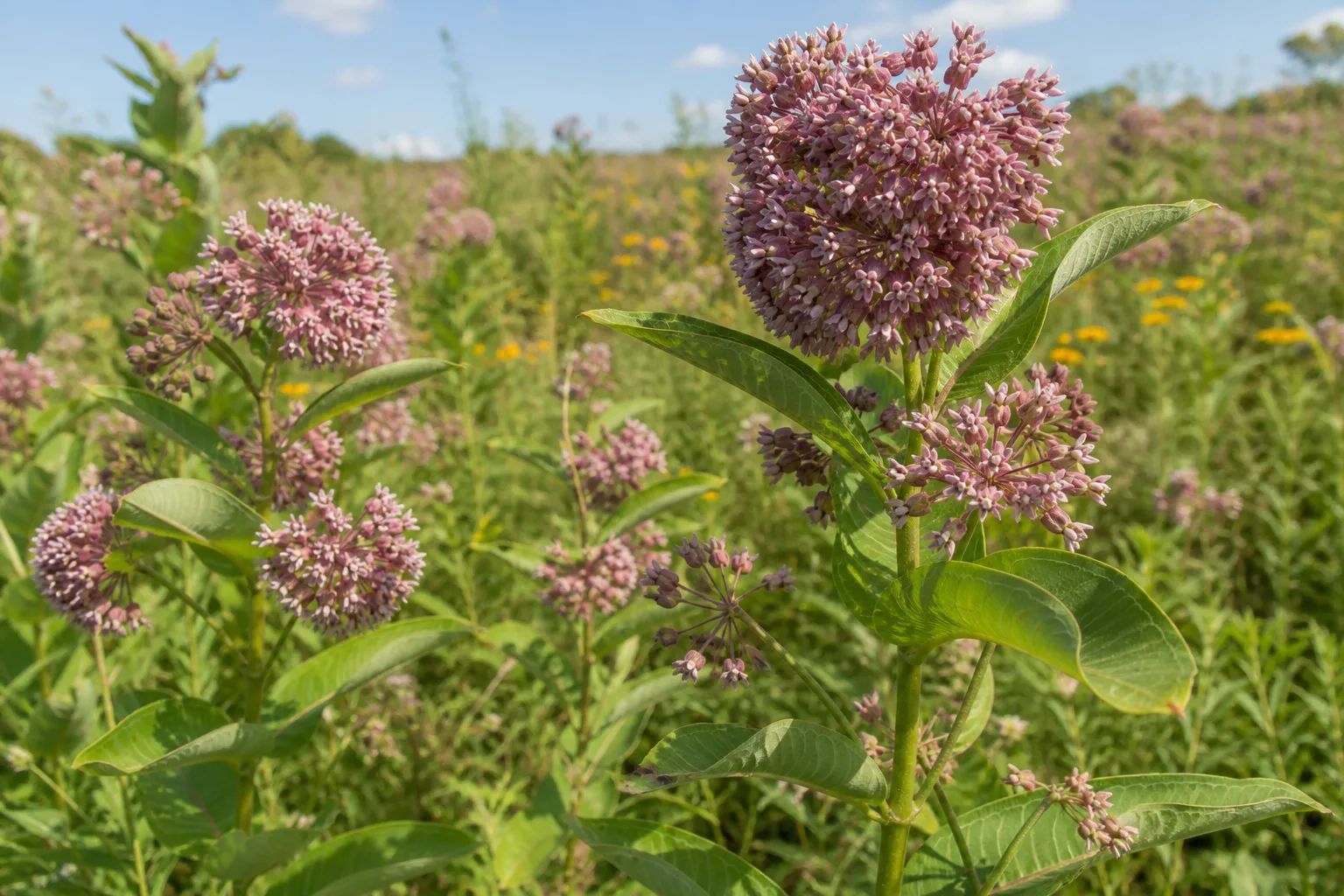
The best pollinator garden is not a pile of colorful flowers. It is a small, changing food web: nectar and pollen for adult insects, leaves for caterpillars, and enough cover that a bee or butterfly can use the space for more than one quick visit.
These nine plants give you a strong starting mix, but they are not a universal recipe. A plant that thrives in a dry prairie bed may sulk in wet clay, and a flower that is native in one region may be an introduced ornamental somewhere else. Use the list to identify each plant’s job, then confirm the species with your local extension office or native-plant database.
Start with a meal plan, not a shopping list
Before buying anything, look at the garden through a pollinator’s calendar. What will be flowering when the first bees emerge? What will still be offering nectar in late summer? Where can a butterfly lay eggs, and where can a ground-nesting bee find undisturbed soil?
You do not need a huge meadow to begin. The National Park Service’s regional recipe cards show that a pollinator planting can be designed for a space of roughly 3 by 6 feet, with plants selected for local conditions and bloom spread. That is a more useful target than chasing a fixed number of species. (National Park Service regional pollinator planting cards)
For a small bed, start with three questions: Does the plant fit the site? Does it fill a bloom-time gap? Does it feed a different life stage or pollinator group? If the answer is yes to all three, it earns its space. If it is merely pretty but too wet, too tall, or sterile, choose something else.
What makes a plant genuinely pollinator-friendly?
“Pollinator-friendly” describes a relationship, not a marketing color. A useful plant offers accessible nectar or pollen, blooms when insects need food, or supplies leaves and stems for the next generation. The strongest gardens combine all three functions rather than relying on one dramatic flower.
Nectar and pollen are only half the story
Bees usually need pollen as well as nectar, while adult butterflies depend heavily on nectar but their caterpillars need foliage. Penn State Extension recommends a diversity of plants because pollinators do not all feed in the same way; some are generalists, while specialists may depend on one or two plant groups. Its examples include compound flower clusters such as Joe-Pye weed, goldenrods, and milkweeds, which can bring many kinds of insects to one planting. (Penn State Extension on planting pollinator-friendly gardens)
Flower shape matters. Tubular blooms can favor long-tongued bees, butterflies, or hummingbirds; open daisy centers give many insects a landing place; tiny flowers gathered into a flat or rounded cluster create a larger visual target. That is why a good list has both bee balm’s tubes and coneflower’s open central disk.
Native, nonnative, and hybrid choices
Use regional native plants as the backbone whenever you can. Native species are not automatically maintenance-free, but they are more likely to line up with local insects, soil, weather, and seasonal cues. The National Park Service recommends using regional planting cards, while Penn State Extension advises choosing plants native to your region and including both generalist resources and specialist host plants.
That does not make every nonnative flower useless. Zinnias and sunflowers can provide abundant, accessible blooms in a home garden, especially when a gardener needs quick annual color. The practical rule is to avoid replacing a diverse native bed with a single ornamental cultivar, and to be cautious with highly doubled flowers: extra petals can hide the nectar or pollen that insects are trying to reach. Penn State Extension specifically warns that some modern hybrids have been bred into forms that may produce less accessible food.
The nine plants
The quick guide below shows the role each plant can play. Bloom periods are approximate because climate, latitude, cultivar, and planting date shift the calendar; the site match is more important than a zone number printed on a tag.
| Plant | Best pollinator job | Site to look for | Main limitation |
|---|---|---|---|
| Bee balm | Tubular nectar for bees, butterflies, and hummingbirds | Sun to part shade; moist but draining soil | Spreads and can get powdery mildew |
| Butterfly milkweed | Nectar plus monarch and moth host foliage | Full sun; dry to medium, sharply drained soil | Slow to establish and dislikes root disturbance |
| Purple coneflower | Long summer-to-fall nectar and seedheads | Sun to part shade; adaptable, draining soil | Some cultivars are less useful than simple open forms |
| Goldenrod | Late-season nectar and pollen in broad clusters | Sun; soil varies by species | Some types spread quickly |
| Native asters | Late-season food when fewer flowers remain | Sun to part shade, matched to species | Can become tall or mildew-prone in crowded beds |
| Black-eyed Susan | Bright, open summer flowers and seeds | Full sun; average well-drained soil | Often short-lived or self-seeding |
| Sunflowers | Fast annual bloom and later bird seed | Full sun; fertile soil and room | Tall types need support and water |
| Zinnias | Long annual color with accessible centers | Full sun; regular water and airflow | Double forms may be less accessible; mildew is possible |
| Dill, fennel, and parsley | Leaves for black swallowtail caterpillars; flowers for small insects | Sun; fertile soil, with moisture matched to the herb | Caterpillars will chew the foliage |
1. Bee balm
Bee balm, especially scarlet beebalm (Monarda didyma), is a high-value choice when your bed has sun, some moisture, and enough room for a plant that wants to make a colony. Its two-lipped, tubular flowers attract bees, butterflies, and hummingbirds, and its aromatic leaves add a second sensory reason to put it near a path. North Carolina State Extension lists full sun as the preference but notes that the plant tolerates some shade and prefers moist, well-drained soil. (NC State Extension Plant Toolbox: Monarda didyma)
Give it morning sun or open air rather than packing it into a stagnant corner. Powdery mildew is a common disappointment, and overhead watering or crowded stems make the foliage stay wet; choose a mildew-resistant cultivar, water at the soil, and divide or thin the clump when it becomes congested.
Bee balm spreads by underground stolons, so decide whether you want a generous drift or a polite border plant before planting. It is also one of the reasons not to cut every stem to the ground in autumn: native bees may use hollow stems for nesting. Leave standing stems at different heights through winter, then cut them back in spring when new growth makes the old structure easy to remove.
2. Butterfly milkweed
Butterfly milkweed (Asclepias tuberosa) earns its place by doing two jobs that many showy flowers cannot. Its orange to yellow-orange clusters supply nectar to adult insects, and its foliage is a larval host for monarchs and several other butterflies and moths. North Carolina State Extension describes it as a North American native perennial for full sun and dry to medium, well-drained soil, including poor soils once established. (NC State Extension Plant Toolbox: Asclepias tuberosa)
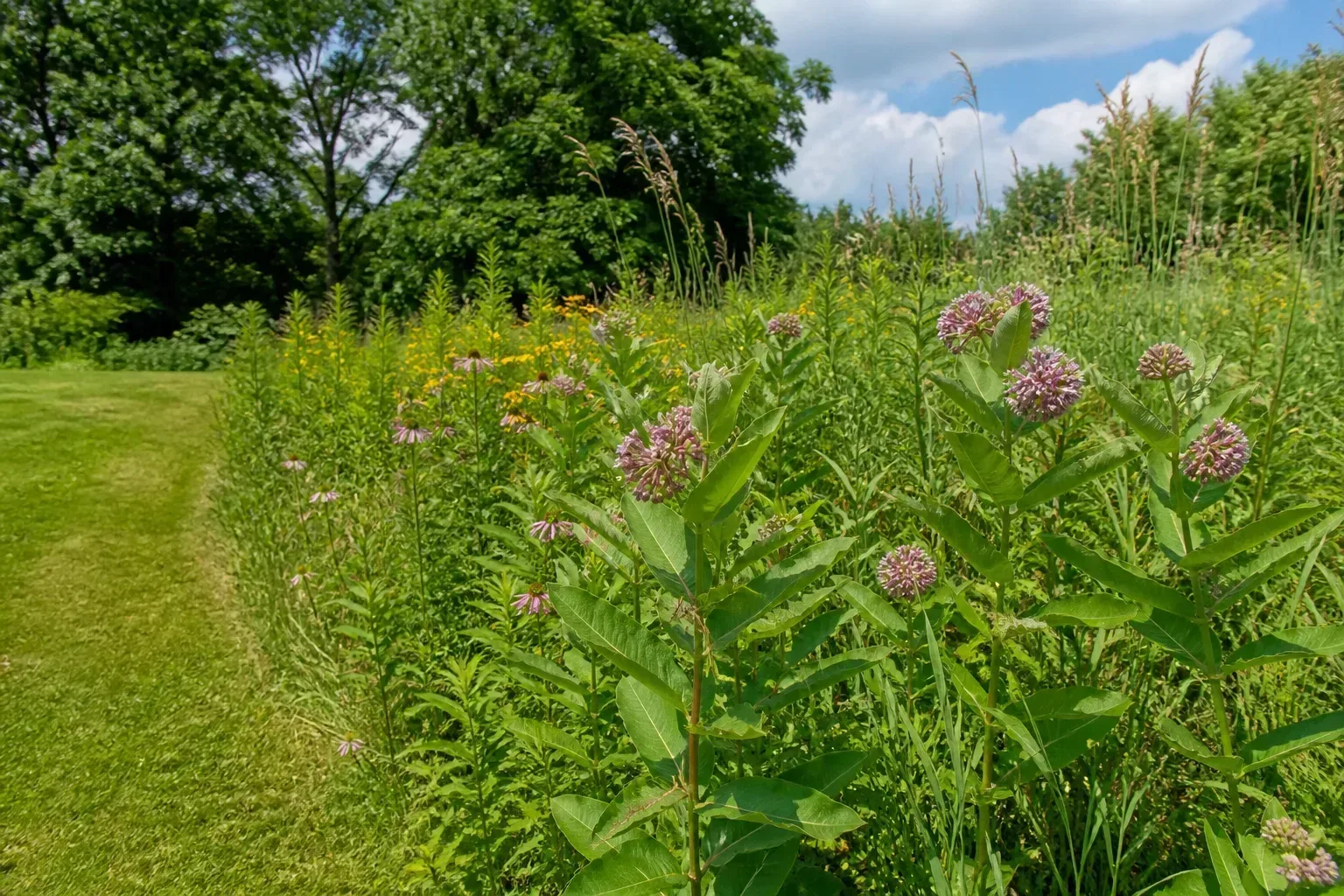
Plant it where water drains quickly and leave it alone once it is settled. Butterfly milkweed develops a deep taproot, does not transplant well, and may take two or three years to establish and flower from seed. That slow start is not a reason to dig it up after one disappointing summer; it is a reason to choose the location carefully.
Expect evidence of caterpillars. Ragged leaves and missing sections are often the point of a host plant, not a diagnosis demanding insecticide. If you have children or pets who may chew plants, note that the extension profile gives butterfly weed low-severity poison characteristics and that its sap can irritate skin; wear gloves while handling it and choose a different location if grazing is likely.
Do not treat “milkweed” as one interchangeable plant. Swamp milkweed belongs in a wetter place, while butterfly milkweed wants drainage. Use the botanical name on the tag and choose the species that matches your soil rather than planting the most familiar common name.
3. Purple coneflower
Purple coneflower (Echinacea purpurea) is the reliable middle-season anchor: a native perennial with open, daisy-like flowers that can carry a bed from early summer toward mid-fall. NC State Extension describes plants around 3 to 4 feet tall, adaptable to different soils, tolerant of drought once established, and useful in full sun to partial shade. Butterflies are frequent visitors, while the dried heads can feed birds later. (NC State Extension Plant Toolbox: Echinacea purpurea)
Use it in groups instead of as a single exclamation point. Three plants near goldenrod or aster make a more legible patch for a passing insect and create a stronger visual block for a gardener. Choose simple, open flower forms when pollinator value is a priority; the newest color or double-petal cultivar may be attractive to you but less accessible to insects than the species-type flower.
Leave some seedheads standing. NC State Extension notes that native bees can nest in dead hollow stems and recommends cutting stems back to roughly 12 to 24 inches, then letting them remain until they naturally disintegrate. A tidy winter bed is not always a living winter bed.
4. Goldenrod
Goldenrod is the late-season workhorse that keeps a garden from going quiet just as many summer flowers fade. The genus Solidago includes many species, so choose a regional one from a native plant nursery or local plant list rather than assuming every goldenrod has the same height, moisture tolerance, or spread. The small yellow flowers gather into branching sprays that are easy for many insects to find.
Plant it where it can be seen but does not have to be constantly restrained. Some species spread by rhizomes or seed, which is useful in a naturalistic planting and frustrating in a narrow formal border. A container can limit the roots, but it also dries faster and may need more frequent watering than an in-ground clump.
Goldenrod’s reputation for causing fall allergies is often confused with wind-pollinated ragweed. Goldenrod flowers are visited by insects, but anyone with severe allergies should still place a large planting away from a patio and use a local species recommendation. The practical benefit is bigger than a color story: the plant provides a strong nectar-and-pollen bridge into autumn, when a garden made only of summer annuals can leave pollinators with little to eat.
5. Native asters
Native asters are the answer to the late-season gap. New England aster (Symphyotrichum novae-angliae) and other regional Symphyotrichum species bring clusters of purple, pink, blue, or white flowers after many early perennials have finished, giving bees and butterflies a reason to keep using the bed.
Match the aster to your site before falling in love with a photograph. Some want evenly moist soil, others tolerate drier conditions, and mature height varies from a compact border plant to a tall back-of-bed perennial. Full sun generally produces the best flowering, while good spacing and airflow help reduce the floppy, mildew-prone look that appears when tall plants are wedged together.
Pair asters with coneflower, goldenrod, or sunflowers rather than planting a single late bloomer. The combination creates color, different flower shapes, and overlapping dates. It also gives you a better fallback if one species struggles in your microclimate.
6. Black-eyed Susan
Black-eyed Susan (Rudbeckia hirta) is a bright, forgiving bridge between a formal flower border and a more naturalistic patch. Its gold rays and dark center offer an open landing platform, and the plant handles heat and ordinary garden conditions better than many delicate annuals. Depending on the strain and climate, it may behave as an annual, biennial, or short-lived perennial, and it can reseed where seedheads are allowed to mature.
Give it full sun and soil that drains after rain. It may cope with a dry spell once established, but a newly planted clump still needs deep watering while roots explore the surrounding soil. Remove only the flowers that are collapsing if you want to encourage more bloom; leave a portion of the later heads for birds and for winter structure.
Watch the plant rather than treating every blemish. Leaf spots can follow wet foliage and poor air movement, while a sudden collapse points to a site or root problem rather than a need for broad pesticide use. Space plants so you can see the lower leaves, water at the base, and replace a weak reseeder with a locally adapted Rudbeckia if the species repeatedly fails.
7. Sunflowers
Sunflowers are the quick visual signal that tells a new gardener, “This space is for wildlife.” Annual sunflowers (Helianthus annuus) provide large flowerheads with many small disk flowers, and later the seedheads can feed birds. Choose an open-centered type when insect access matters; very double forms may sacrifice the exposed center for extra petals.
Treat a sunflower as a timed annual, not a permanent perennial. BBC Gardeners’ World Magazine notes that annual varieties can take about 11 to 18 weeks from seed to flower and recommends sowing every couple of weeks for a more continuous supply. In practical terms, two or three staggered sowings can bridge the gap between the first early sunflower and the last late-summer bloom. (BBC Gardeners’ World Magazine sunflower guide)
Plant tall types where they will not shade shorter flowers, and use sturdy support in an exposed garden. Keep seedlings watered while they establish, then decide what you want from the spent heads: remove them for another flush of flowers, or leave them to ripen so birds can harvest the seeds. Both are valid; the mistake is cutting everything down just because the petals have faded.
8. Zinnias
Zinnias are the dependable annual filler when you need color now and a long run of summer flowers. Zinnia elegans thrives in full sun, comes in many colors and heights, and gives butterflies broad petals to land on while bees work the central florets. Direct-sow or transplant after the soil warms, then keep harvesting or deadheading to encourage branching.
Favor single or semi-double flowers when the pollinator function matters more than a perfectly packed pom-pom. Some double flowers still attract insects, but the extra petals can obscure the center and reduce access. This is a good place to use a simple cultivar alongside a showier one rather than turning the entire bed into a sterile-looking color block.
Zinnias can bridge the first-year wait for slow perennials and fill empty spaces between young plants. Give them airflow, water at the base, and enough room for the foliage to dry after rain. When powdery mildew appears, improve spacing and reduce leaf wetness before reaching for a spray; a stressed annual is often better replaced at the end of its season than repeatedly treated while pollinators are visiting.
9. Dill, fennel, and parsley
The ninth “plant” is really a small family of herbs with an important difference: they feed caterpillars, not just adult visitors. Dill, fennel, and parsley are members of the parsley family that can host black swallowtail larvae. Penn State Extension emphasizes that a butterfly garden without larval host plants cannot support the next generation; its examples include black swallowtails depending on parsley-family plants. (Penn State Extension on butterfly host plants)
Plant more than you think you need and accept that some leaves will be eaten. A separate herb patch lets you harvest from one group while leaving another group for caterpillars, and succession sowing keeps tender dill and parsley available after the first plants bolt. Let some stems flower: the small umbels become useful nectar stops for tiny beneficial insects even after the herb is no longer at its culinary best.
Fennel can become tall and persistent, so a container or dedicated corner is sensible if you garden in a small space. Parsley is slower and more compact; dill is quick but short-lived. Do not spray caterpillars simply to keep the herb looking perfect—the chewed foliage is the service you planted it to provide.
Build a bloom calendar for your yard
These nine choices lean toward late spring, summer, and fall. That is valuable because the middle and end of the season are easy to fill with annual color, but a complete garden should also offer something in early spring. Add a locally native spring shrub, tree, bulb, or perennial if your regional list shows a food shortage before bee balm and coneflower begin.
Write the bloom window beside each plant on your garden plan, using your local climate as the final authority. A simple sequence might start with early parsley-family flowers or an existing spring perennial, move into bee balm and coneflower, then hand off to sunflowers and zinnias before goldenrod and asters carry the bed into fall. The goal is overlap, not a relay race with empty weeks between runners.
Penn State Extension recommends having several plants in bloom from early spring through late fall, and Savvy Gardening likewise stresses filling perennial gaps with annuals while using plants in groups rather than scattered singles. (Savvy Gardening pollinator garden design)
Plant in clumps and match each one to its site
Buy three or more of a plant when you have the room, then repeat the clump elsewhere if the bed is large. Penn State Extension recommends drifts of at least three, and the visual reason is practical: a patch of one flower is easier for a flying insect to locate than a yard where every bloom is isolated.
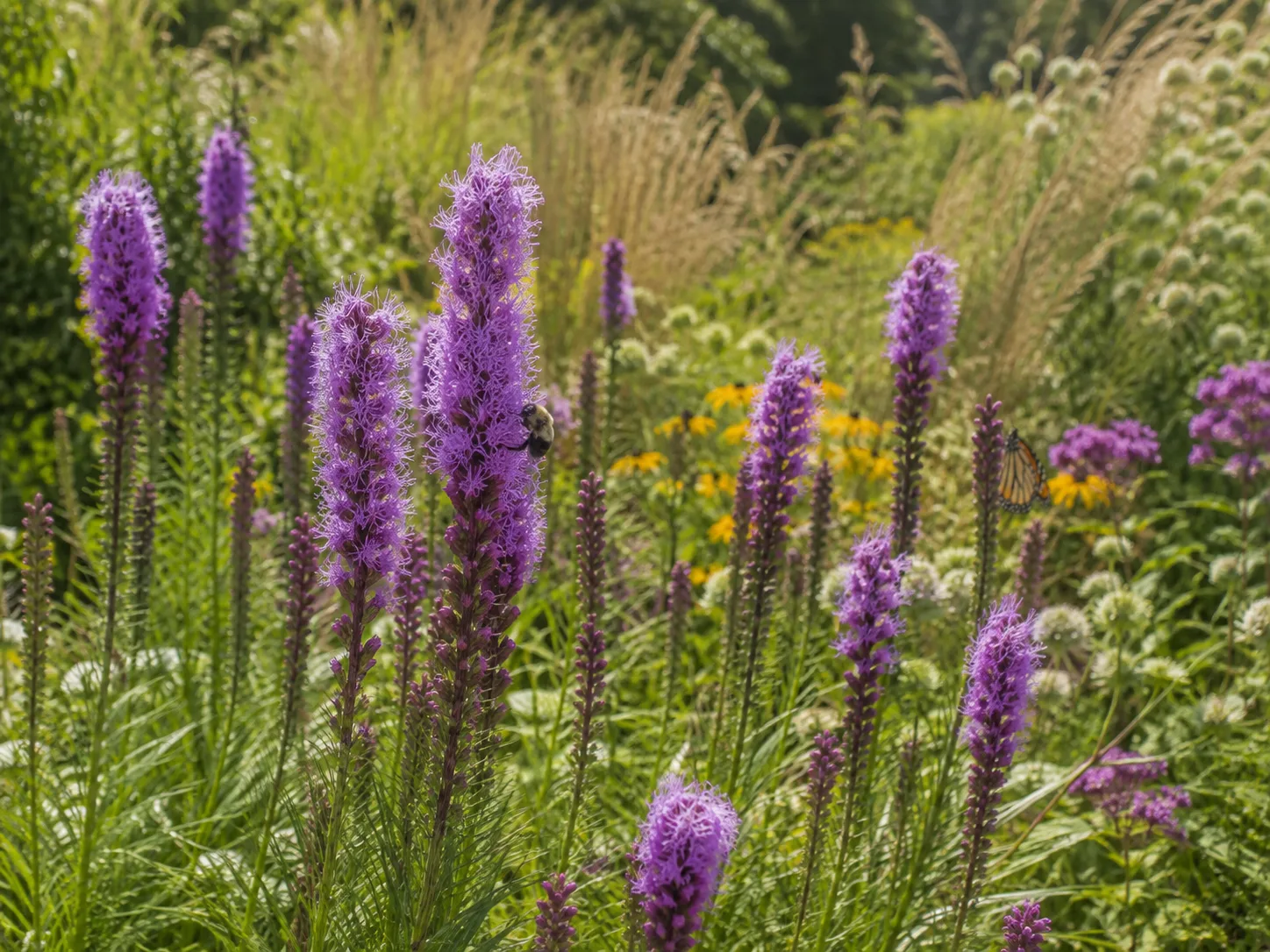
Start with the site constraints. Count direct sun at the planting spot, check whether rain sits there for hours, and look at the mature height instead of the height of the nursery pot. Use bee balm and some asters for a bed with reliable moisture; use butterfly milkweed and many goldenrods for a dry, sharply drained area; put sunflowers at the back and zinnias where you can reach them for deadheading.
For a small sunny bed, try one clump of coneflower, one of black-eyed Susan, a few butterfly milkweeds, two staggered sowings of zinnias, and a small patch of dill or parsley. For a moist border, swap in bee balm and a moisture-tolerant regional aster. The point is not to own all nine; it is to combine a few plants whose bloom times, heights, and life-cycle jobs complement each other.
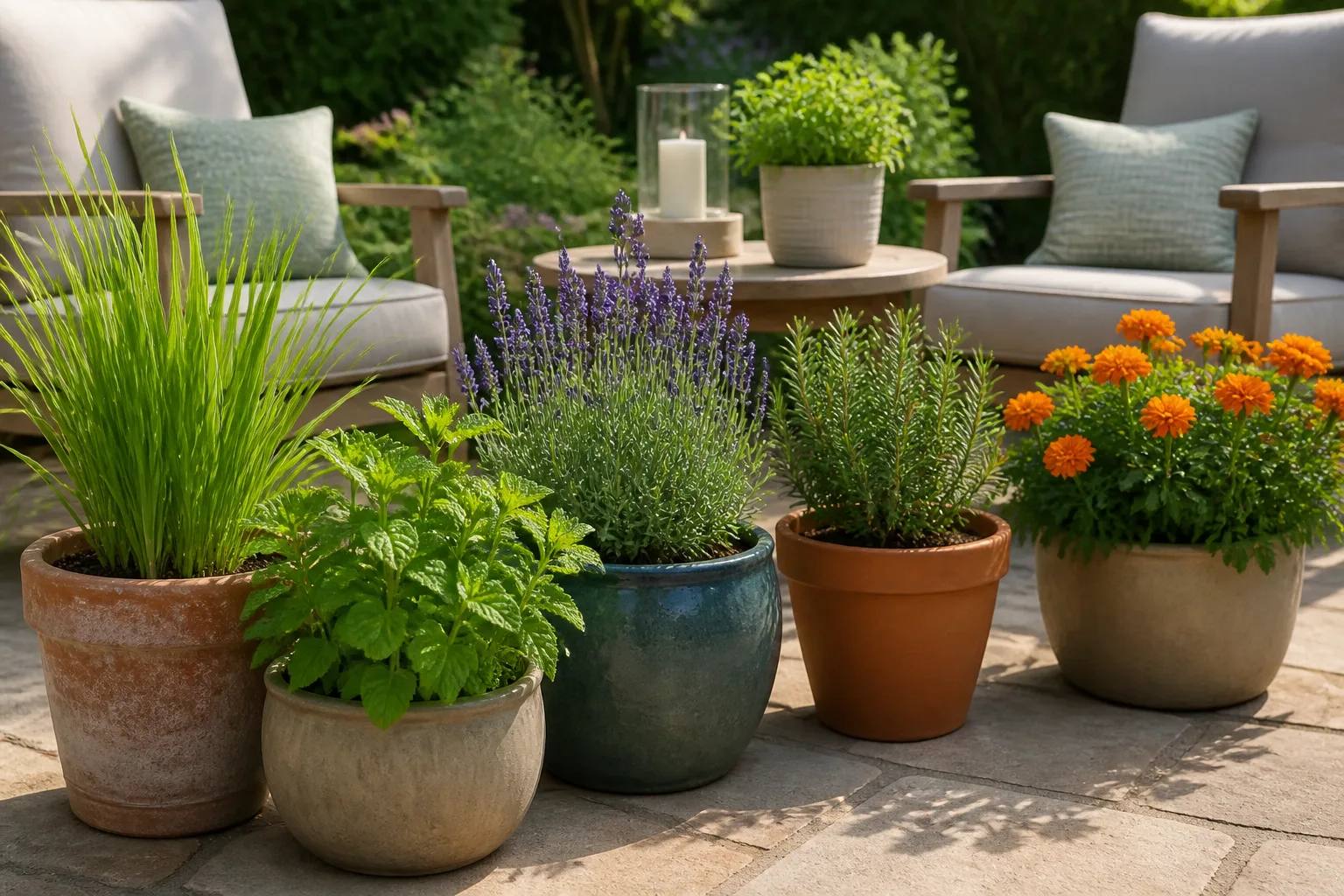
Containers work best for annuals and compact selections. A large pot can hold zinnias, a dwarf sunflower, or parsley, but it will dry and heat faster than the ground. A container also cannot replace a habitat patch for ground-nesting bees, so pair it with an undisturbed corner of soil or leaf litter when you can.
Keep the garden useful after the flowers fade
The most important autumn task may be restraint. Pollinators can overwinter as eggs, larvae, pupae, or adults in stems and leaf litter. Penn State Extension advises delaying perennial cleanup until spring, and NC State Extension specifically recommends leaving coneflower and bee-balm stems standing rather than cutting them flush with the ground.
Leave leaves in at least part of the bed, and keep a little bare soil free of landscape fabric for ground-nesting bees. A fallen log or brushy edge can provide shelter that a row of flowers cannot. You do not need to make the entire yard untidy; designate one visible “wild edge” and keep paths and seating areas orderly.
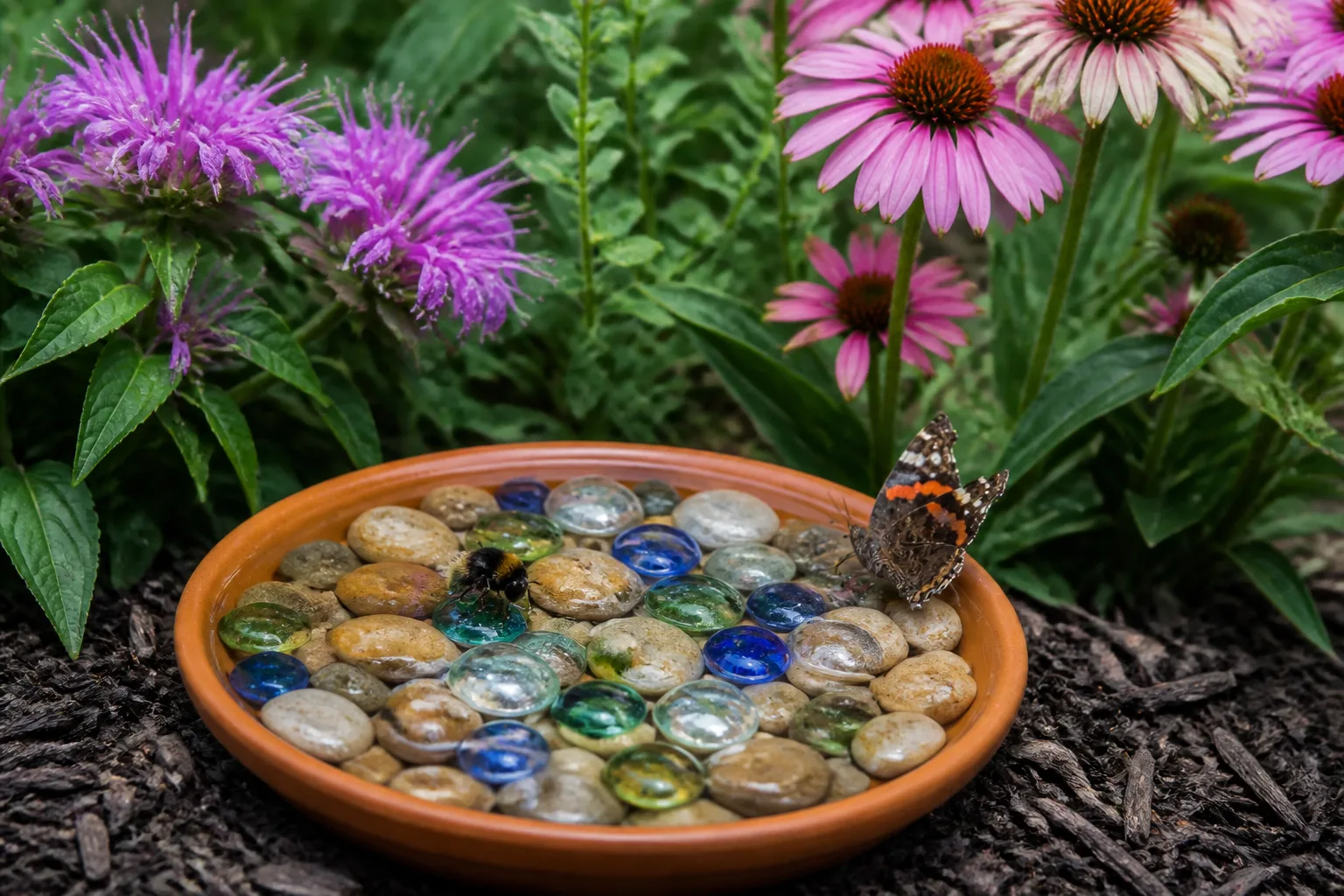
Water is another simple addition. The National Park Service recommends a shallow dish with stones that rise above the waterline, giving insects a place to land while drinking. Refresh it regularly so it stays clean, and place it near flowers but not where a constant puddle will keep the soil around drought-loving plants wet. (National Park Service backyard pollinator guidance)
Troubleshoot without undoing the habitat
If no bees or butterflies arrive, first check the calendar. A new planting may spend its first season establishing roots, and a garden can look flower-filled while offering only one short bloom window. Count flowers by month, add a different shape or later-blooming plant, and watch at warm, calm times of day before deciding that the garden has failed.
If leaves have holes, identify who is making them before acting. Caterpillars on milkweed, dill, fennel, or parsley may be the desired result; leafcutter bees also cut neat circles from leaves without destroying the plant. If a plant is declining rapidly, inspect the stems and soil, remove only the clearly identified pest by hand when practical, and protect the plant’s basic water and airflow needs.
If a plant spreads too aggressively, divide it, deadhead before seed ripens, move it to a contained bed, or replace it with a less vigorous local species. If a plant repeatedly rots, wilts in heat, or produces no flowers, believe the site evidence: the right pollinator plant is the one that thrives without constant rescue.
Pesticides deserve a separate decision. The National Park Service advises asking whether flowers are blooming, whether pollinators are active, and whether a nonchemical alternative exists; it also warns that insects can be exposed through nectar and pollen that contacts a pesticide. If treatment is unavoidable, identify the pest, follow the product label exactly, avoid spraying open flowers and active insects, and understand that applying at night only reduces exposure—it does not make a product harmless.
The healthiest pollinator garden usually needs fewer interventions than a conventional ornamental bed. Give the plants the correct site, leave a little leaf damage, keep flowers overlapping, and reserve treatment for a verified problem rather than a visitor you do not recognize.
Conclusion
Choose pollinator-friendly plants by function, not by a colorful photograph. Bee balm supplies tubular nectar in a moist spot; butterfly milkweed adds monarch host foliage in dry sun; coneflower, black-eyed Susan, sunflowers, and zinnias carry the summer display; goldenrod and asters cover the late-season gap; and dill, fennel, or parsley make room for caterpillars.
Start with three or four plants that match your site, buy them in clumps, and write their bloom periods on a calendar. Then leave stems and leaves through winter, add shallow water and undisturbed shelter, and treat holes as information before treating them as damage. A small garden built this way can feed more than the adult insects you notice—it can help support the complete, messy life cycle that makes a pollinator garden worth growing.