Rat Holes in Yard: Safe Control and Prevention
Found rat holes in your yard? Learn the signs that separate rats from other diggers, how to confirm activity, and the safest way to remove and seal them.
Read the whole scene before blaming rats
A round hole in a lawn is a clue, not a diagnosis. Rats are one possibility, but so are gophers, voles, chipmunks, insects, and harmless changes left by water or a settling root. The useful question is not simply “How big is the hole?” but “What animal could make this opening, and what other evidence is present around it?”
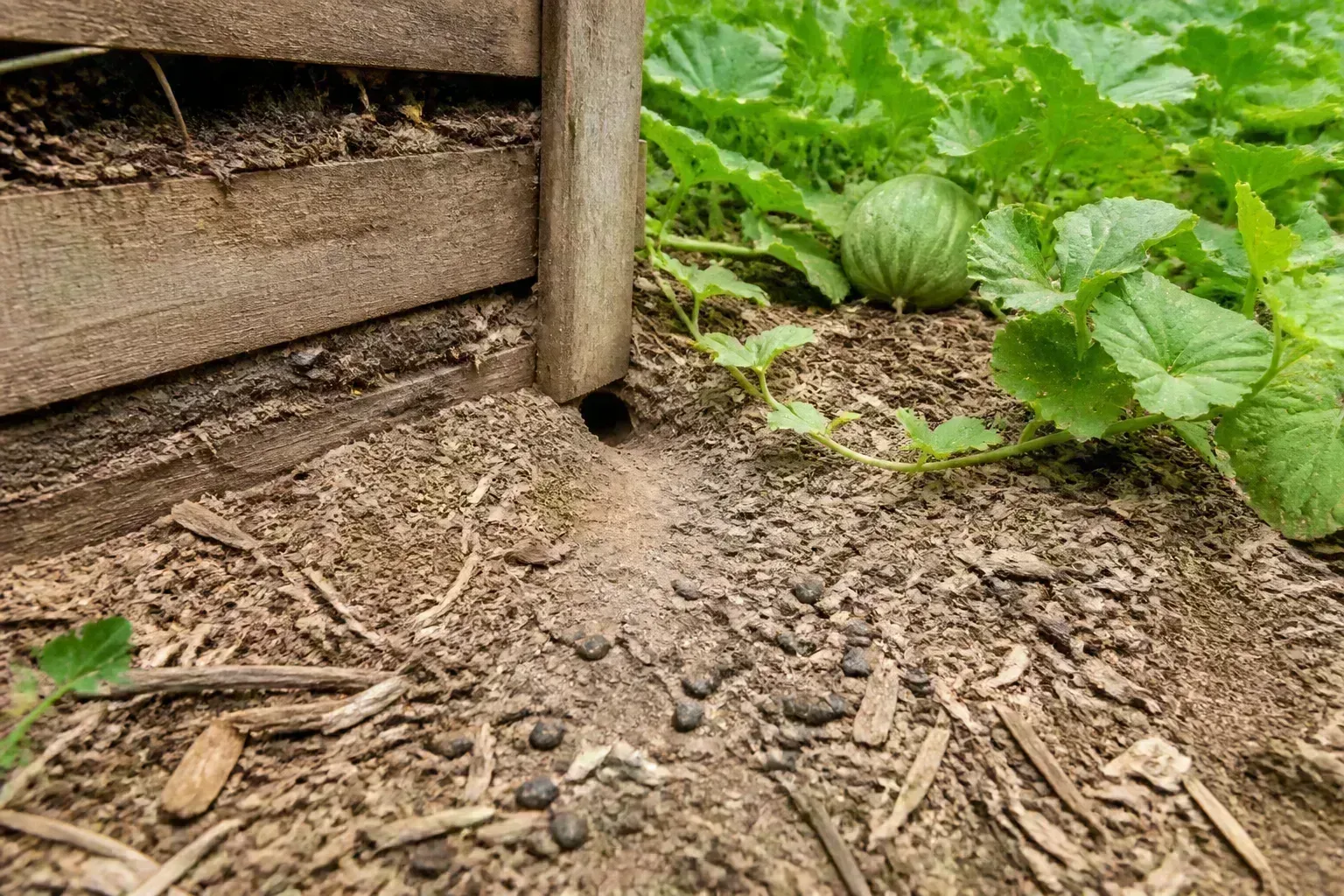
Start by looking from a safe distance. Photograph the opening beside a ruler or familiar object, note whether it is beside a shed, deck, compost bin, fence, foundation, or garden bed, and look for fresh soil, droppings, gnaw marks, or a worn path. Do not put your hand or a tool into the hole; an occupied burrow can have an unseen entrance, a defensive animal, or contaminated material inside.
In North American yards, an open, smooth entrance about 2 to 4 inches across is consistent with a Norway rat burrow, but that measurement is not exclusive to rats. Extension guidance describes rat nests as underground spaces with a main entrance and one or two less obvious exits, usually near food, water, and cover; tunnels may be shallow but extend several feet sideways.Pests in the Home Extension Treat that as a starting pattern, not a guarantee for every region or species.
What a rat hole looks like
Rat holes are usually entrances to a system, not isolated divots. A likely entrance is round or slightly oval, has smooth, compacted edges from repeated traffic, and may have loose soil fanned or scattered outside. Older openings can look tidier because rain packs the soil, grass grows around them, or rats carry excavated soil farther from the entrance.
Norway rats commonly place burrows along foundations, under porches and decks, beside sheds, near dense shrubs, along fence lines, and around gardens or compost. The location matters because rats choose a protected route close to food and water. A hole in the middle of an exposed, dry lawn with no other sign deserves a different level of confidence than a smooth opening beside a leaking tap, tipped compost bin, and flattened strip of grass.
Use three clues together
Think of identification as a three-part score rather than a single yes-or-no feature:
- Entrance: Is the opening roughly 2 to 4 inches wide, smooth-sided, and shaped like a short tunnel rather than a shallow depression?
- Activity: Is there fresh soil, a clear runway, dark droppings, greasy rub marks, gnawing, or new damage nearby?
- Opportunity: Is the hole close to a reliable food source, water, or cover such as a deck, shed, thick groundcover, woodpile, or compost?
One clue is weak. Two clues make rats plausible. Three clues in the same small area justify treating the site as a likely active rat route while you confirm it without disturbing the burrow. The Centers for Disease Control and Prevention recommends looking for droppings and gnaw marks because they are signs rodents have been present, while also warning that you cannot tell whether a rodent carries disease just by looking at it.CDC rodent-control guidance
Droppings can support the diagnosis, but do not handle them to measure them. Gardeners’ World describes rat droppings as cylindrical and roughly 15 millimeters long by 5 millimeters wide, while extension guidance gives a broader range and notes that diet changes color. That variation is exactly why droppings should be treated as supporting evidence, not a species test.
Rat holes vs. gopher, mole, vole, and chipmunk holes
Several yard animals create holes that look “rat-sized” at a glance. Local wildlife, soil texture, irrigation, and the time of year can change the appearance, so use the whole pattern and avoid using poison until you know what you are trying to control.
The quick comparison
| Likely cause | What you may see | What points away from a rat |
|---|---|---|
| Rat, especially a Norway rat | Open, smooth round entrance; loose soil; one or more nearby exits; runways, droppings, gnawing; food or water close by | A completely isolated hole with no fresh sign or attraction |
| Gopher | Mounds of loose soil, often with a plugged or inconspicuous opening; fresh soil pushed up from below | The classic sign is a mound rather than an open, smooth entrance |
| Mole | Raised surface ridges and rounded mounds from shallow tunnels | Moles usually announce themselves through ridges and mounds, not a clean open burrow entrance |
| Vole | Small openings, shallow surface runways, clipped vegetation, or gnawing at plant bases | The opening is often smaller and the damage is concentrated low on plants |
| Chipmunk | A clean entrance near a wall, foundation, retaining edge, or rock pile, sometimes with little excavated soil | No rat-style droppings, grease marks, or food-route evidence |
This table is a field guide, not a substitute for local identification. A rat can use an existing hole, a chipmunk can enlarge a cavity, and a storm can erase the soil pattern that would have helped. If the hole is beneath a foundation, beside a retaining wall, or in a place where collapse could damage a structure, skip experiments and ask a local extension office or pest professional for an assessment.
Use a 48-hour activity check
Before filling a suspected rat hole, confirm whether something is still using it. From a safe distance, smooth a very thin layer of loose soil across the mouth with a long-handled tool, or place a lightweight marker such as a small piece of dry paper at the entrance. Do not pack the opening, reach inside, flood it, or block a route under a building. Take a photo so you can compare the exact shape later.
Check once the next day and again after about 48 hours, preferably after a dry period. A disturbed plug, fresh soil, new droppings, tracks, or a reopened smooth edge raises confidence that the burrow is active. A motion-activated camera positioned well away from the entrance can help when the site is visible, especially because rats are mainly active at night.
This is a monitoring aid, not proof of absence. Rain, irrigation, pets, birds, and loose soil can move the marker, while a cautious rat may leave an opening untouched for a night. If you find several connected holes, fresh signs continue after two days, or the site is under a structure, treat it as active and use the response plan below rather than repeatedly disturbing the ground.
Find the food, water, and shelter keeping rats nearby
Rats stay where the property meets their basic needs. Removing one attractant can help, but removing the combination is what makes a yard less rewarding. Walk a loop from the hole to the nearest building and inspect the edges of the property, because rats often travel along walls, fences, hedges, and deck lines instead of crossing open ground.
Food is often more important than the garden itself. Secure garbage and compost with tight-fitting lids, store seed and animal feed in thick plastic or metal containers, clean spilled bird seed, bring pet food and water bowls in overnight, and pick up fallen fruit or nuts. Harvest ripe vegetables promptly. If a squash, tomato, corn ear, root crop, or other edible has been gnawed by a rat, discard the damaged item rather than trimming around the bite.
Water can be as simple as a dripping hose connection, outdoor tap, irrigation leak, pet bowl, clogged drain, or shallow puddle under a downspout. You do not need to remove a healthy pond or birdbath just because you found a hole; focus first on avoidable leaks and standing water next to shelter. Fix the source, then watch whether activity shifts rather than assuming one dry day solved the problem.
Shelter includes more than tall weeds. Check under decks and sheds, behind stacked lumber, inside unused containers, beneath thick groundcover, in dense ivy, around brush piles, and in compost that is rarely turned. Clear clutter in stages so you can see where you are placing your hands and feet, and never reach into a dark cavity without knowing what is inside.
Protect children, pets, and edible crops first
Mark the area and keep children and pets away while you investigate. Dogs may dig into a burrow, cats may catch or eat a rat, and children may touch contaminated soil without realizing it. Rat bites are uncommon, but direct contact with a live or dead rodent, urine, feces, saliva, nesting material, or fleas is an avoidable exposure.
Do not let pets roam around traps or bait. If you grow food, move harvest baskets away from the suspected route, wash hands after gardening, and discard produce with visible gnawing or contact contamination. A rat problem around a compost bin deserves extra caution: do not use compost that contains a nest or heavy rodent waste on edible crops until you have local guidance and have resolved the contamination concern.
The CDC notes that rodents can spread disease directly through handling, bites, droppings, urine, and saliva, and indirectly through fleas, ticks, or mites. That does not mean every yard hole is an emergency, but it does mean “natural” is not the same as risk-free. Your first goal is to reduce contact, not to prove the animal’s identity by digging into its home.CDC rodent-control guidance
Choose the response: exclusion, traps, or professional control
The right response depends on how much evidence you have and where the activity is. One questionable hole in an exposed lawn calls for monitoring and attractant removal. A confirmed active burrow beside a shed may require trapping or professional control before sealing. Several holes, indoor signs, structural damage, or heavy waste call for a qualified pest-management professional.
DIY control is most reasonable when the site is accessible, the species is reasonably clear, no one can touch the equipment, and there is no sign rodents have entered the home or a hard-to-clean space. Do not turn a yard project into an improvised pesticide application. Product labels, local rules, weather, wildlife, and the placement of the burrow all matter.
Remove attractants before trapping
Do the sanitation work first. Otherwise a trap is competing with an open compost bin, spilled grain, pet food, fallen fruit, or a dripping tap. Secure those sources on the same day you begin monitoring, and clean the route around them so you can tell whether new sign is actually declining.
If bird feeding is important to you, pause feeding during active rat evidence or move to a setup that minimizes spilled seed and can be cleaned from the ground. Store seed securely, sweep up what falls, and do not assume a raised feeder makes a property rat-proof. The practical garden advice from Gardeners’ World is consistent on this point: bird food, crops, compost, cover, and water can all contribute to the problem, and stronger control should follow habitat changes rather than replace them.BBC Gardeners’ World Magazine
Use snap traps only with a safety plan
For rodents around a home, the CDC recommends traditional snap traps, placed where rodents are traveling and kept away from children and pets. Its placement guidance is to put the baited end next to a wall so the trap forms a “T,” because rodents often run beside edges for cover. Rats may also need a pre-baiting period—bait present but the trap unset—because they can be cautious around new objects.CDC trap guidance
An outdoor yard is more complicated than a quiet indoor wall. If a trap can be reached by a dog, cat, child, bird, hedgehog, or other wildlife, do not place it there. Use a purpose-built protective enclosure only when it is legal and appropriate for your area, check it as directed, and have a plan for safe disposal before setting it. Never use glue traps or release a captured rat somewhere else as a casual solution; relocation can spread the problem and put another property or wildlife at risk.
Poison deserves an even higher safety threshold. If a persistent infestation requires bait, use only a current, legally sold product exactly as its label directs, keep it in the supplied tamper-resistant station, prevent access by pets and children, and remove carcasses promptly. The EPA warns that rodent baits can harm people, pets, and wildlife when misused, while the CDC recommends professional help when trapping does not resolve the infestation.EPA rodent-bait safety guidance
Confirm the burrow is empty
Do not seal a burrow simply because you have not seen a rat. A rat can be inside during the day, use a secondary entrance, or leave through a route that is not obvious from the surface. Continue checking for reopened holes, fresh soil, droppings, tracks, or new gnawing after any control step.
The practical threshold is a quiet, sign-free site over repeated checks, not one untouched paper plug. If you have trapped a rat, dispose of it promptly and continue looking for new evidence. If signs persist, if you cannot inspect the full route, or if activity is tied to a building, stop escalating DIY methods and call a professional.
Seal the burrow and nearby access points
Once you have good reason to believe the burrow is inactive, locate the main opening and any secondary entrances you can identify without digging into the tunnel. Fill a lawn opening with compactable soil or gravel in lifts, tamping as you go so the surface does not settle immediately. Restore the turf or mulch only after the hole is stable.
For a burrow under a shed, deck, porch, or wall, filling the visible mouth may not solve the access problem. Seal the gap around the structure with chew-resistant material such as properly fitted hardware cloth, metal sheeting, cement, or another building-appropriate repair. The CDC lists metal, cement, hardware cloth, and metal sheeting for larger gaps and recommends sealing outbuildings and garages as well as the house.CDC sealing guidance
Do not rely on spray foam as the only barrier. Foam can close a draft temporarily but is not a durable rodent-proof repair on its own. Also do not pour concrete into a questionable active tunnel, bury a trapped animal, or seal a foundation void before checking whether the ground is being undermined. If the opening is next to a footing, pipe, drain, electrical entry, or retaining wall, the repair needs more judgment than a bag of fill.
Why flooding, smoke, scents, and mothballs fail
Flooding a burrow sounds decisive, but it rarely gives you control over where the animal goes. Rats can use additional exits, move into a shed or wall void, or be driven into a neighboring yard. Water can also erode a bed, saturate a foundation edge, wash contaminated material across the garden, and create a new drainage problem. Do not flood a burrow under a building or near utilities.
Smoke, gas cartridges, and burning materials are worse choices for a home garden. Burrows can connect to hidden spaces, and fumes can reach people, pets, wildlife, plants, or a structure through openings you cannot see. Gardening Know How notes that burrows may have several openings, making smoke and gas difficult to contain; it also describes ultrasonic and flashing-light devices as short-lived deterrents rather than dependable control.Gardening Know How
Strong smells such as peppermint, garlic, vinegar, ammonia, citrus, or cayenne may alter a route briefly, but they do not remove a nesting site or close a food source. Planting aromatic herbs can make a bed attractive for other reasons, but it should not be presented as a rat-exclusion barrier. Mothballs are not a safe outdoor repellent; do not scatter them in soil or a burrow where children, pets, and wildlife can contact them.
A cat or terrier may occasionally catch a rat, but using a pet as pest control exposes the animal to bites, parasites, contaminated prey, and bait secondary poisoning. Good habitat management and an appropriately contained control plan are more dependable and kinder to the animals you already live with.
Clean contaminated soil, tools, and produce carefully
The main cleaning mistake is creating dust. Do not dry-sweep or vacuum rodent droppings, urine, or nesting material. The CDC explains that stirring contaminated material can put infectious particles into the air; its current cleanup guidance says to wear rubber or plastic gloves, thoroughly wet waste with a household disinfectant or fresh bleach solution, let it sit for the label time or about five minutes for the stated bleach mixture, then wipe it up with paper towels.CDC cleanup guidance
For a small amount of waste on a hard surface, bag the towels in a covered bin, disinfect the area, remove gloves safely, and wash your hands. If you find a dead rat or a nest, wet it first, double-bag it, and follow local disposal instructions. Do not use a pressure washer or hose to blast dry waste around a patio, shed, or garden bed.
Outdoor soil is not a countertop, so use judgment rather than trying to sterilize an entire bed. Remove obvious waste with the wet method, discard heavily contaminated mulch, clean tools and harvest containers, and keep children and pets out while you work. If waste is extensive, a shed or crawlspace is involved, or someone in the household becomes ill after exposure, contact your local health department or a qualified cleanup professional.
Prevent a repeat infestation
Prevention works best as a weekly perimeter check, not a one-time cleanup. Walk the edges of the house, shed, deck, beds, compost, and fence line after heavy rain and during harvest season. Look for new soil, greasy rub marks, droppings, gnawed plastic, missing fruit, and fresh runways before a small route becomes a network.
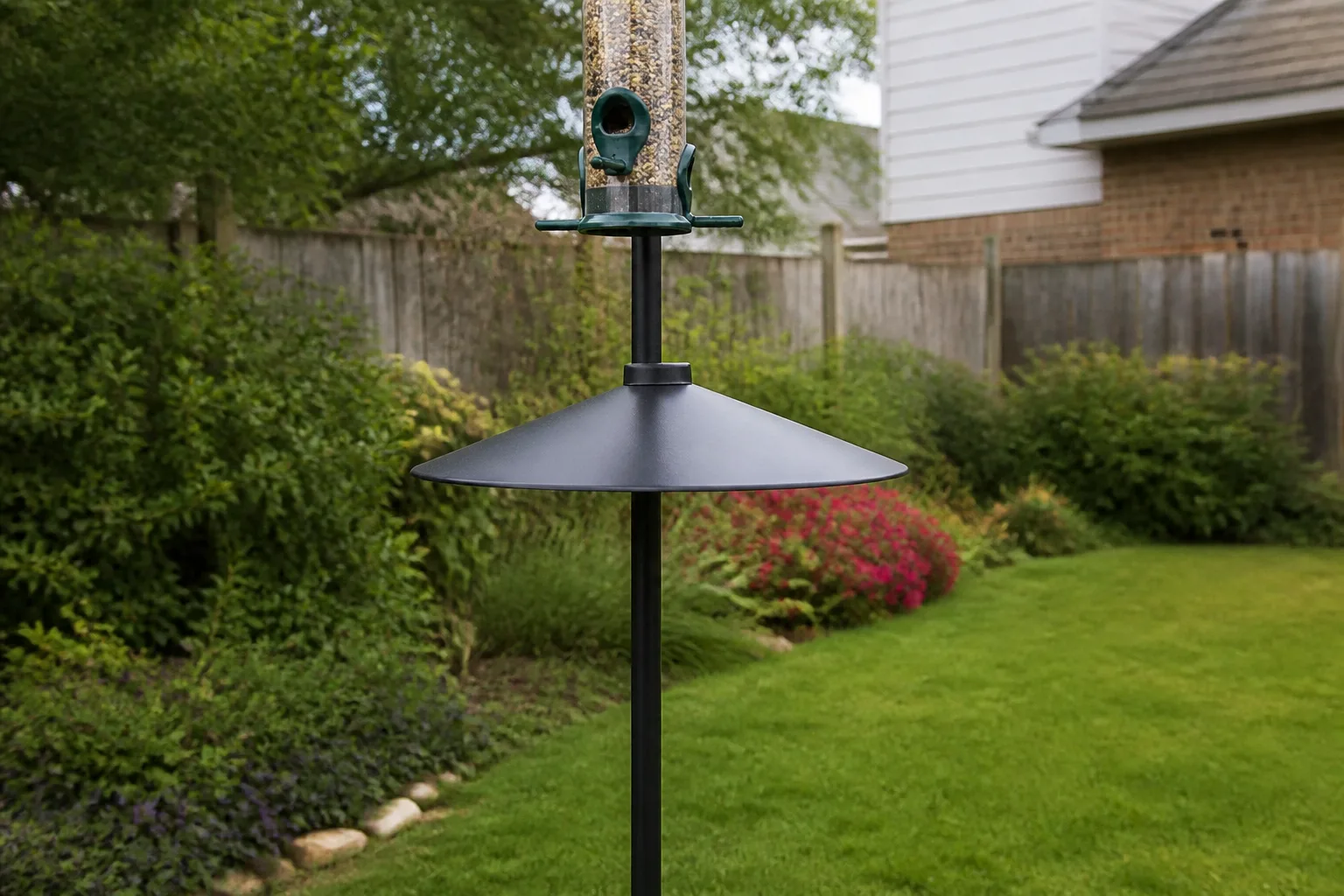
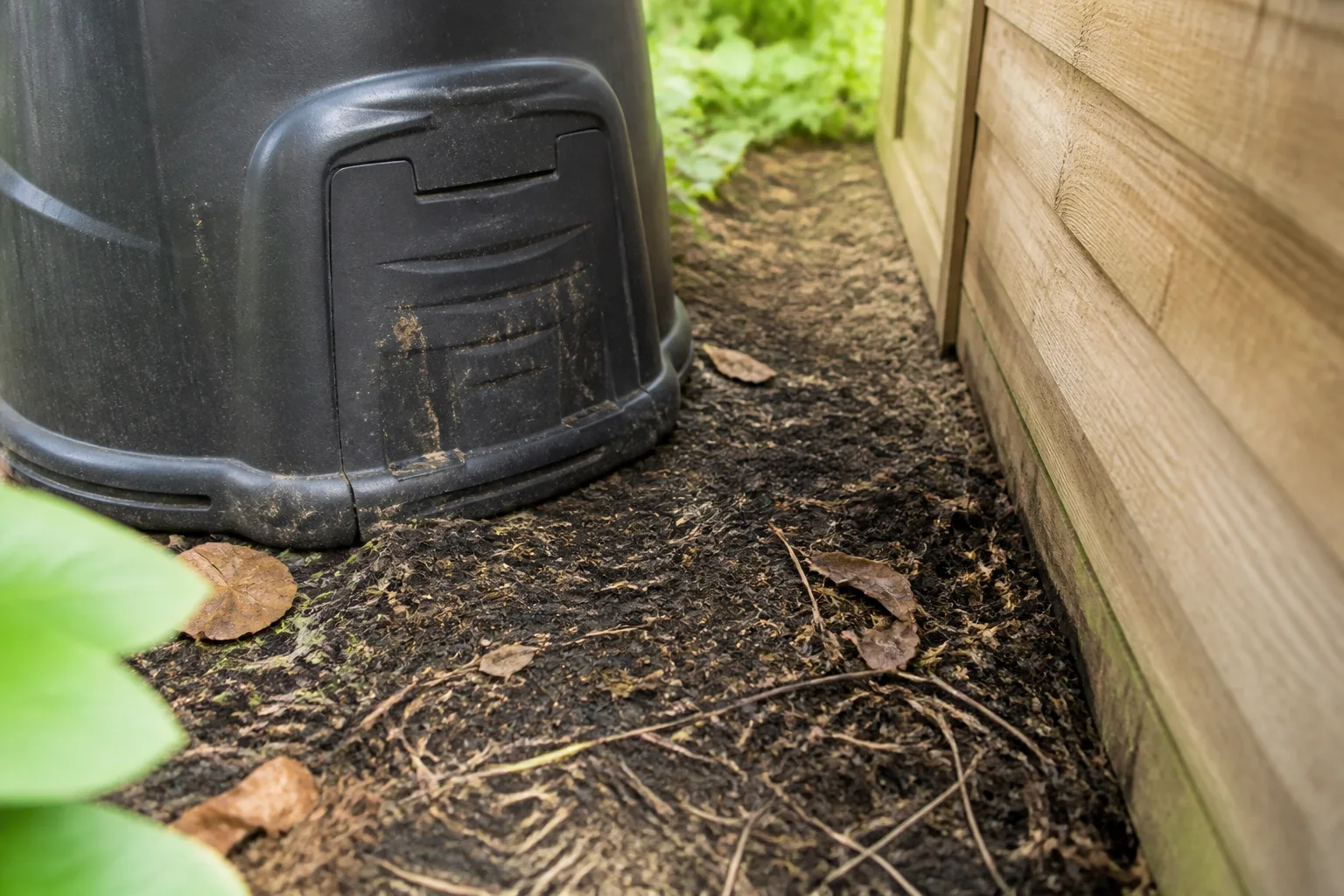
Keep the food system tight. Use secure garbage and compost lids, store seed and animal feed in rodent-resistant containers, clean bird-feeder spill, bring pet food inside, pick ripe fruit, and remove garden waste that could hide fresh damage. A compost bin should have a lid or base that discourages digging; do not add meat, dairy, cooked scraps, oils, or large quantities of grain where local compost guidance says they attract rodents.
Keep water from becoming a permanent invitation. Repair dripping taps and hoses, correct irrigation leaks, empty containers that collect rain, and keep pet bowls indoors overnight if rats are active. You can preserve wildlife water features while removing the accidental puddles and leaks immediately beside a burrow or building.
Reduce shelter without stripping the garden bare. Trim dense growth away from walls and sheds, raise firewood off the ground, close gaps beneath decks and outbuildings with durable mesh, and keep a visible inspection strip along foundations and fences. Do this with care: moving a woodpile or thick ivy can expose a nest, snake, stinging insect, or other wildlife, so wear suitable clothing and use tools rather than bare hands.
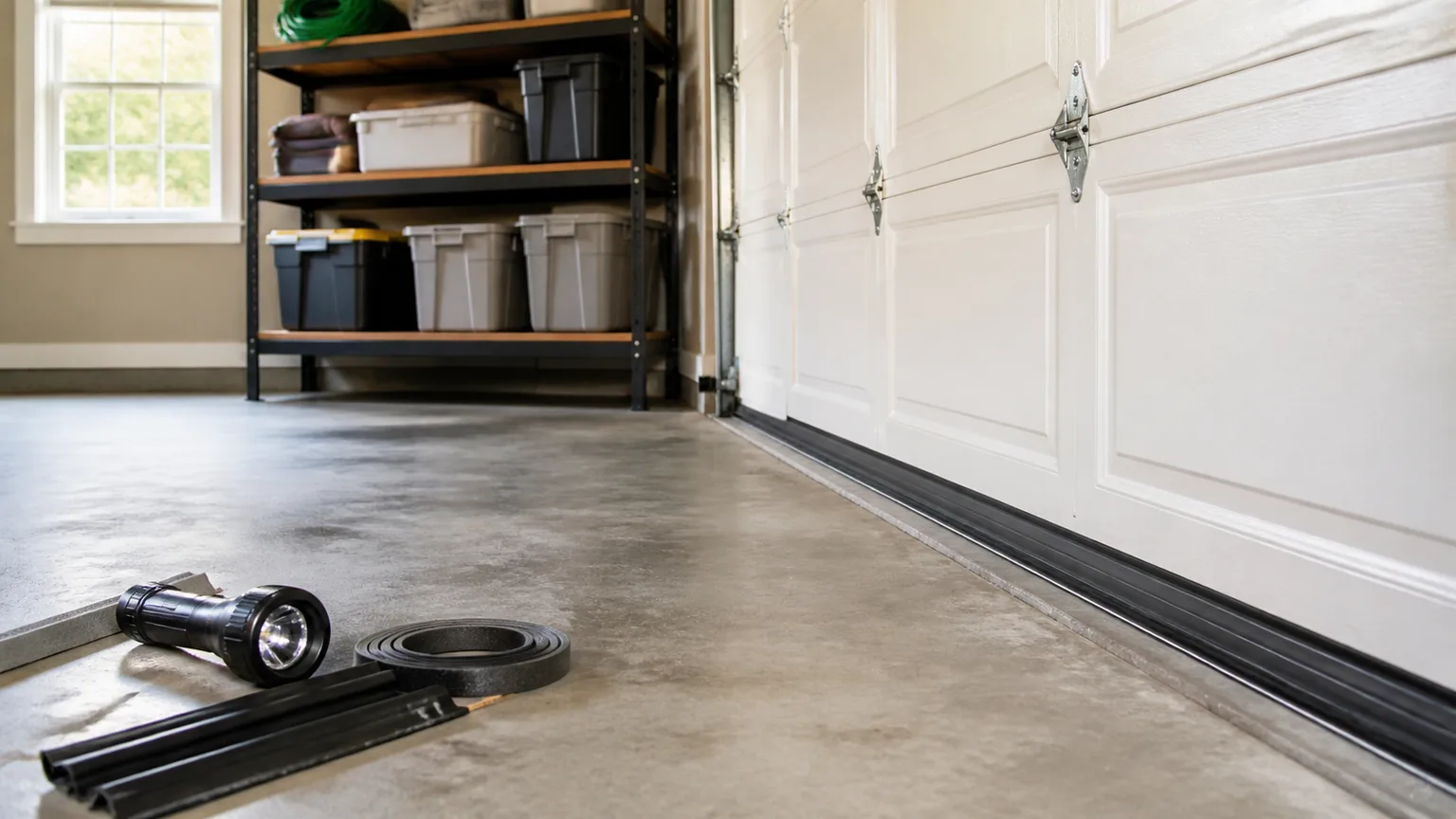
Finally, seal the building. Inspect doors, vents, drain and utility penetrations, garage edges, shed floors, and foundation cracks. The CDC recommends checking inside and outside, securing food and garbage, and using chew-resistant materials for larger gaps; exclusion is easier before rodents establish themselves indoors.CDC sealing guidance
Conclusion
The strongest evidence for rat holes in a yard is a combination of a smooth, open entrance, fresh activity, and nearby food, water, or shelter—not the diameter alone. Photograph the site, compare it with likely lookalikes, and use a cautious short-term activity check before you disturb the ground.
Then work in order: remove attractants, protect people, pets, and crops, choose a contained control method or professional help, confirm the route is quiet, and seal every accessible opening with durable material. Skip flooding, smoke, scattered poison, and miracle scents. A clean food system, fewer hiding places, sealed structures, and weekly monitoring will do far more to keep one suspicious hole from becoming a permanent rat problem.