Peppermint Care Guide: Light, Water, Soil and Growing
Mentha × piperita
Grow peppermint (Mentha × piperita) in full sun or partial shade, keep its soil moist but well-drained, and contain spreading rhizomes. Learn watering, harvesting, dividing, and pet-safety basics.
Peppermint Care Guide: Light, Water, Soil and Growing in Pots
Start with wateringThe most common care mistake for PeppermintWatering guide →Peppermint care essentials
Light
Water
Keep the root zone evenly moist but well-drained. Do not let the soil dry out completely, and do not leave roots standing in water. Container-grown peppermint dries faster and needs more frequent checks.
Soil
Rich, moisture-retentive soil that drains well; peppermint tolerates a range of soil textures but does poorly when allowed to dry out.
Humidity
Temperature
Fertilizer
About Peppermint
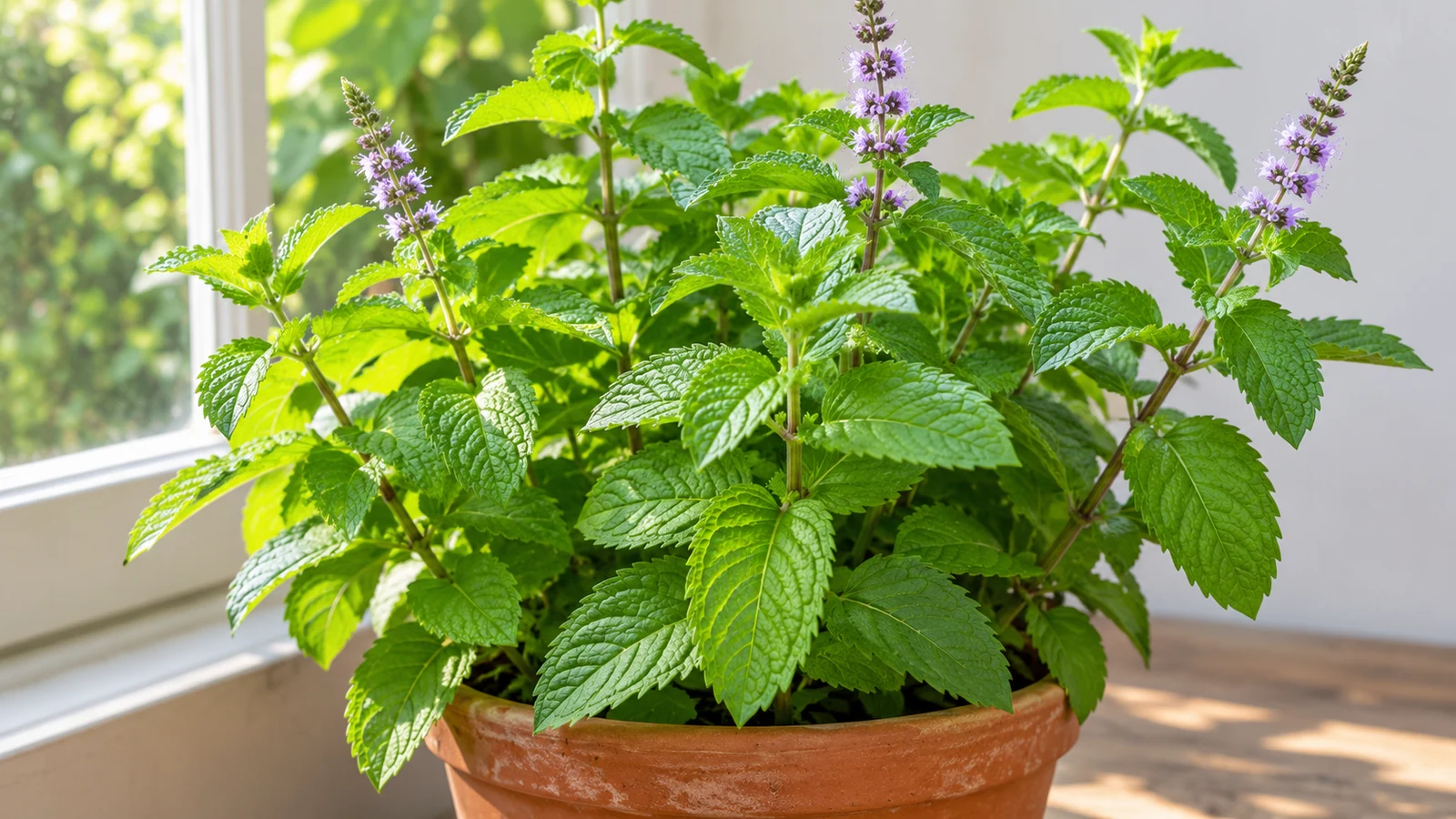
Peppermint is native to Europe; a natural hybrid of watermint and spearmint with an uncertain precise origin, typically reaches Usually 30–60 cm tall; RHS lists a 0.5–1 m maximum height and 1–1.5 m spread, with rhizomes extending farther indoors, with fast growth. Peppermint has a upright, rhizomatous herbaceous perennial mint hybrid growth habit and part of the Lamiaceae family. It is also known as Black mint, Candy mint, and Brandy mint.
| Detail | Information |
|---|---|
| Also known as | Black mint, Candy mint, Brandy mint |
| Native region | Europe; a natural hybrid of watermint and spearmint with an uncertain precise origin |
| Mature size | Usually 30–60 cm tall; RHS lists a 0.5–1 m maximum height and 1–1.5 m spread, with rhizomes extending farther |
| Growth rate | Fast |
| Growth habit | Upright, Rhizomatous Herbaceous Perennial Mint Hybrid |
| Scientific name | Mentha × piperita |
| Family | Lamiaceae |
Peppermint Care Guide: Light, Water, Soil and Growing in Pots
Peppermint care at a glance
Peppermint (Mentha × piperita) grows best with steady moisture, soil that drains after watering, and full sun to partial shade. Its most important special need is room for its rhizomes: grow it in a dedicated pot or use a reliable root barrier if it goes into a garden bed. NC State Extension describes peppermint as an upright perennial hybrid that spreads aggressively by rhizomes and prefers rich, moist soil; the NC State Plant Toolbox is a useful species-specific reference.
For a first setup, choose a pot with drainage holes, place it somewhere bright, and water when the surface of the mix begins to dry. Do not wait for repeated wilting, and do not keep the pot standing in a full saucer. Once new growth is established, harvest or pinch stems to keep the clump leafy and manageable.
What peppermint is
Peppermint is a naturally occurring hybrid of watermint (M. aquatica) and spearmint (M. spicata). It is grown for its aromatic leaves, but the plant is also a hardy perennial with upright stems, summer flower spikes, and fast underground growth. The Missouri Botanical Garden Plant Finder and NC State both describe its rhizomatous habit, while the Royal Horticultural Society profile lists full sun or partial shade and moist but well-drained soil.
In a pot, peppermint behaves like a dense clump that gradually fills its container. In open ground, runners can travel beyond the original planting area and send up new shoots. The distinction matters more than whether you call it an indoor or outdoor herb: decide first where its roots are allowed to go, then choose the light and watering routine for that spot.
How its growth habit changes the setup
Peppermint is not a delicate, slow-growing kitchen herb. It can fill bare soil, creep under edging, and reappear from small rhizome sections left behind when a clump is lifted. A container is the simplest way to keep one plant in one place. NC State suggests a pot roughly 12–16 inches wide, and the University of Delaware Cooperative Extension mint guide also notes that mint grows well in containers and may spread widely.
If you prefer planting in a bed, place peppermint where an expanding patch is acceptable, or install a root barrier and inspect the edges. A buried pot can slow spread but is not foolproof if runners cross its rim or escape through drainage openings. For a balcony, patio, or windowsill, keep the container separate from other herbs so peppermint does not root into a shared planter.
Light and placement
Give peppermint full sun when the climate is mild and the soil can stay evenly moist. Partial shade is also suitable, especially where hot afternoon sun would dry a pot quickly. NC State notes that the plant tolerates shade and can grow with a few hours of sun; the University of Florida IFAS mint guide recommends light or partial shade in Florida’s heat. These are compatible recommendations: more sun can support vigorous leafy growth in cooler conditions, while afternoon shade can ease heat and water stress.
Indoors, choose the brightest available window and rotate the pot if stems lean strongly toward the glass. Too little sun can make potted peppermint develop leggy growth. If you are moving a nursery plant outdoors, increase its exposure over several days instead of placing tender leaves straight into hot midday sun.
Watering rhythm
Peppermint likes soil that remains lightly moist, not a wet pot with stagnant water. Check the top few centimetres of mix; water thoroughly when that surface starts to dry, then empty the saucer after drainage. The Missouri Botanical Garden profile and the University of Delaware guide both describe rich, moist soil as a good fit, while Gardener’s Path points out that containers dry faster than garden soil.
Do not use a fixed calendar as the only trigger. A small terracotta pot in a sunny, windy spot may need water much sooner than a large plastic pot in partial shade. When the leaves droop, check the mix before watering: dry soil calls for a thorough soak, but wet soil points toward poor drainage or root trouble. This check prevents a wilted plant from receiving water it does not need.
Soil and drainage
Use a fertile mix that holds some moisture while allowing excess water to escape. In a garden bed, improve compacted soil with organic matter and avoid planting where water sits after rain. In containers, choose a quality peat-free potting mix and add a small amount of perlite or fine bark if it stays soggy. The RHS peppermint profile recommends moist but well-drained ground; NC State lists a preferred pH near 6.0–7.0.
Sources differ slightly on peppermint’s preferred pH, and healthy plants tolerate a range of soils. Do not add lime or sulfur just to chase a number unless a soil test shows a real problem. If growth is poor, first check moisture, drainage, light, and whether rhizomes have crowded the pot. Those are more common practical constraints than a narrow pH target.
Choosing a container
Choose a stable pot with drainage holes and enough room for a spreading root system. A roughly 12–16-inch-wide container is a practical starting point from NC State Extension; GrowHoss’s peppermint growing guide describes even larger containers for field-grown plants. Do not treat commercial production sizing as a strict rule for a windowsill: match the pot to the plant’s current root mass, then repot or divide when it fills the container.
Avoid a decorative cachepot that traps drainage water around the roots. If you use an outer cover, remove the nursery pot to water and let it drain before putting it back. A broad, shallow dish is not a substitute for a drainage hole, and a shared planter makes it harder to contain peppermint’s runners.
Feeding without forcing soft growth
Peppermint is vigorous, so routine heavy feeding is rarely the first fix for slow growth. Start with fertile potting mix or compost-enriched garden soil. If a container plant continues producing pale, weak growth during active growth after you have corrected light and watering, use a balanced liquid feed at the label’s lower indoor-plant rate. Avoid repeated high-nitrogen applications; lush, soft growth is not automatically better for flavor or plant structure.
Fertilizer guidance varies by production method. Gardener’s Path describes modest compost or feeding for garden peppermint, while GrowHoss gives a more intensive field-crop program. That production schedule is not a default for a small household pot. Follow the fertilizer label, reduce feeding in winter, and do not feed a dry or stressed plant.
Harvesting leaves
You can pick a few healthy leaves as needed once the plant is established. For a larger harvest, cut leafy stems rather than stripping every leaf from one shoot. University of Florida IFAS and Gardener’s Path describe regular harvesting as a way to keep mint productive; NC State Extension also notes that pinching stem tips encourages bushier growth.
For leaves you intend to dry, harvest as flower buds begin to appear, then dry them in a dark, low-humidity place. UF/IFAS warns that mint’s tender leaves can darken or mold if they dry slowly in a humid environment. Keep a portion of the stems on the plant so it can continue making leaves after the cut.
Pruning and flowering
Pinch or cut stems just above a pair of leaves to encourage side shoots. Remove damaged stems at their base and cut flower spikes if you want to focus the plant on leafy growth. The Missouri Botanical Garden describes shearing large plantings after bloom to remove flower spikes and stimulate vegetative growth. For a potted plant, a few clean stem cuts are easier to manage than shearing the whole clump.
Flowers are not a sign that care has failed. They are part of peppermint’s normal seasonal cycle and can attract pollinators outdoors. If the plant becomes leggy after flowering, cut it back modestly and keep it watered while new stems appear. Do not cut a stressed plant down to bare soil in the middle of hot weather and expect instant regrowth.
Propagating the plant
The dependable home methods are division, stem cuttings, and rooted runners. Division is useful when an established pot becomes crowded: lift the clump, separate a rooted section, and replant it promptly. The RHS profile recommends division in spring or autumn. NC State lists division and stem cuttings, and Gardener’s Path also describes propagation from cuttings.
For a cutting, use a healthy non-flowering stem, remove the lower leaves, and root it in water or moist potting mix. Keep the medium lightly moist and place the cutting in bright, indirect light until roots form. Peppermint is a hybrid, so seed-grown plants may not reliably match the parent; use vegetative material when you want a plant like the one you already grow.
Seasonal care
During active spring and summer growth, check container moisture more often, harvest regularly, and watch the pot edges for runners. In cooler weather, growth slows and the mix takes longer to dry, so reduce watering rather than keeping a summer schedule. Outdoor peppermint is a hardy perennial in many climates, but a small exposed pot can freeze more deeply than garden soil; shelter the container if severe cold is expected in your region.
In spring, remove dead stems, refresh the top layer of mix, and divide a congested clump if needed. Do not divide simply because a calendar says so. The plant can remain in the same container if it is healthy, has room, and still drains well.
Common problems
Dry soil can cause limp leaves and stalled regrowth; prolonged saturation can leave roots short of air. Check the root zone before changing watering. If a plant wilts in the afternoon but recovers by evening, heat may be increasing water loss; moving a container into partial shade can help without keeping the soil constantly soaked.
Sparse growth can result from too little light, a pot packed with roots, or repeated harvesting before the plant has recovered. Inspect the stems and roots, then correct one likely cause at a time. If leaves have spots or a powdery coating, improve airflow and avoid wetting foliage late in the day rather than applying a pesticide without identifying the problem.
Pet safety
The ASPCA lists mint (Mentha species) as toxic to cats, dogs, and horses and reports vomiting and diarrhea. Its profile is genus-level rather than a separate peppermint entry, but peppermint is a Mentha hybrid; see the ASPCA mint listing. Keep pets from chewing the plant and keep concentrated essential oils out of reach. The edible leaves are intended for people; do not assume that a product made from mint oil is safe for pets.
Common peppermint care mistakes
The most disruptive mistake is planting peppermint in a shared bed without planning for its rhizomes. A second is treating it like a drought-tolerant Mediterranean herb: peppermint wants more even moisture than rosemary or thyme. A third is responding to every wilt by watering without checking the soil. These three choices can create spread, dehydration, or saturated roots even when the plant is otherwise easy to grow.
Keep the setup simple: contain the roots, give it bright light suited to your climate, water when the surface starts to dry, and feed lightly only when growth and soil conditions justify it. If the plant remains weak, check for root crowding and drainage before adding fertilizer.
When to use this page vs other Peppermint guides
This overview gives you the whole setup. Use the Peppermint light guide to adjust a window or outdoor position, the watering guide when you are unsure whether the pot is too wet or dry, and the soil guide to choose a mix. For feeding, see Peppermint fertilizer; for a crowded pot, use the repotting guide.
The propagation guide covers cuttings and division, while the pruning guide focuses on harvest cuts, pinching, and end-of-season trimming. The separate topic pages give step-by-step help for one decision at a time.
Related Peppermint guides
- Peppermint light needs explains sun, partial shade, and indoor placement.
- Watering Peppermint helps you decide when to water a container or garden clump.
- Peppermint soil covers moisture retention, drainage, and pH.
- Fertilizing Peppermint covers compost, containers, and restrained feeding.
- Repotting Peppermint walks through root checks and dividing a crowded pot.
- Propagating Peppermint covers rooted runners, cuttings, and division.
- Pruning Peppermint explains how to harvest and shape new growth.
Conclusion
Peppermint is easy to keep growing when its moisture and rhizomes are managed deliberately. Give it sun or partial shade, rich soil that drains, and water when the surface begins to dry. Contain the roots in a dedicated pot or planned bed, then harvest and pinch stems regularly so the plant stays useful and manageable.
How to care for Peppermint?
When should you water Peppermint?
Keep the root zone evenly moist but well-drained. Do not let the soil dry out completely, and do not leave roots standing in water. Container-grown peppermint dries faster and needs more frequent checks.
- Feel the top few centimetres of soil or potting mix. Water when it is beginning to dry - Do not let the soil dry out completely, and do not leave roots standing in water.
- then let excess drain freely - Keep the root zone evenly moist but well-drained.
- Drain excess water - Keep the root zone evenly moist but well-drained.
What soil works best for Peppermint?
Rich, moisture-retentive soil that drains well; peppermint tolerates a range of soil textures but does poorly when allowed to dry out.
- Peat-free multipurpose potting mix with added compost
- Add perlite or fine bark if the mix stays wet for too long - Rich, moisture-retentive soil that drains well; peppermint tolerates a range of soil textures but does poorly when allowed to dry out.
- Use a deep container with drainage holes to contain rhizomes - Rich, moisture-retentive soil that drains well; peppermint tolerates a range of soil textures but does poorly when allowed to dry out.
Grower notes for Peppermint
Contain peppermint before it spreads
Peppermint is a vigorous rhizomatous perennial. Plant it in a deep pot or set a root barrier where it grows in the ground; its runners can travel well beyond the original clump. A container also makes it easier to move and divide the plant.
Choose sun or partial shade
Peppermint grows in full sun or partial shade. In hot locations, afternoon shade can help keep the root zone from drying too quickly. Give the plant bright light and room for its upright stems and spreading roots.
Keep soil moist and well-drained
Use rich soil that holds some moisture but drains freely. Water when the surface begins to dry, and check containers more often because potting mix dries faster than garden soil. Avoid both bone-dry conditions and standing water.
Refresh crowded containers by dividing
Peppermint can be propagated by division, stem cuttings, or runners. Divide an established plant in spring or autumn when rhizomes crowd the pot; keep the new section moist while it settles into its container or garden bed.
Harvest as flowering begins
For aromatic leaves, harvest stems as flower spikes begin to open, preferably early in the day. Regular trimming keeps the clump manageable and encourages fresh shoots. Cut the stems above a leaf joint so the plant can regrow.
Keep the plant away from pets
ASPCA lists mint (Mentha sp.) as toxic to cats, dogs, and horses because of essential oils, with vomiting and diarrhea reported after large ingestions. That listing is genus-level rather than peppermint-specific, but peppermint is a Mentha hybrid. Keep pets from chewing the plant or reaching concentrated mint oils.
Is Peppermint Safe for Pets?
ASPCA lists mint (Mentha sp.) as toxic to cats, dogs, and horses because of essential oils and reports vomiting and diarrhea with large ingestions. The listing is genus-level and does not name peppermint separately, but peppermint belongs to Mentha. Keep pets from chewing the plant or reaching concentrated mint oils.
ASPCA's mint profile identifies Mentha sp. as toxic to cats, dogs, and horses because of essential oils, with vomiting and diarrhea reported after large ingestions. This is a genus-level classification rather than a peppermint-specific profile; peppermint (Mentha × piperita) is a Mentha hybrid.
Watering Peppermint
For Peppermint, feel the top few centimetres of soil or potting mix. Water when it is beginning to dry, then let excess drain freely. and water water when the surface of the mix starts to dry; check pots more often during warm or windy weather and water thoroughly when needed. Check pots more often during hot, dry weather. In cool seasons, reduce watering as growth slows while keeping the root zone from drying out completely.
| Detail | Information |
|---|---|
| How often | Water when the surface of the mix starts to dry; check pots more often during warm or windy weather and water thoroughly when needed. |
| How to check | Feel the top few centimetres of soil or potting mix. Water when it is beginning to dry, then let excess drain freely. |
| Seasonal changes | Check pots more often during hot, dry weather. In cool seasons, reduce watering as growth slows while keeping the root zone from drying out completely. |
Signs of overwatering
- Soil remains saturated or water collects in the saucer
- Roots sit in water because the pot or bed drains poorly
Signs of underwatering
- The root zone dries completely between waterings
- Leaves wilt during hot, dry weather
Soil & potting for Peppermint
Use a mix of Peat-free multipurpose potting mix with added compost, Add perlite or fine bark if the mix stays wet for too long, Use a deep container with drainage holes to contain rhizomes for Peppermint. Keep the mix moist but not waterlogged. Grow peppermint in a pot or use a root barrier when its rhizomes must be contained. Target soil pH around Adaptable to acidic, neutral, or alkaline soils; consistent moisture and drainage matter more than a narrow pH target. Repot divide or move the plant to a larger container when rhizomes fill the pot or begin escaping through drainage holes., ideally in spring or autumn, when dividing an established clump.
| Detail | Information |
|---|---|
| Recommended mix | Peat-free multipurpose potting mix with added compost, Add perlite or fine bark if the mix stays wet for too long, Use a deep container with drainage holes to contain rhizomes |
| Drainage | Keep the mix moist but not waterlogged. Grow peppermint in a pot or use a root barrier when its rhizomes must be contained. |
| Soil pH | Adaptable to acidic, neutral, or alkaline soils; consistent moisture and drainage matter more than a narrow pH target. |
| Repotting frequency | Divide or move the plant to a larger container when rhizomes fill the pot or begin escaping through drainage holes. |
| Best season to repot | Spring or autumn, when dividing an established clump. |
Signs it needs repotting
- Rhizomes crowd the pot or emerge from drainage holes
- The container dries unusually quickly as the plant fills it
- The clump is spreading beyond its intended growing area