Wasp Repellents: 12 Natural Ways to Keep Wasps Away
Keep wasps away without harsh chemicals: 12 natural repellents ranked by what actually works—traps, essential oils, plants, habitat fixes, and when to call a pro.
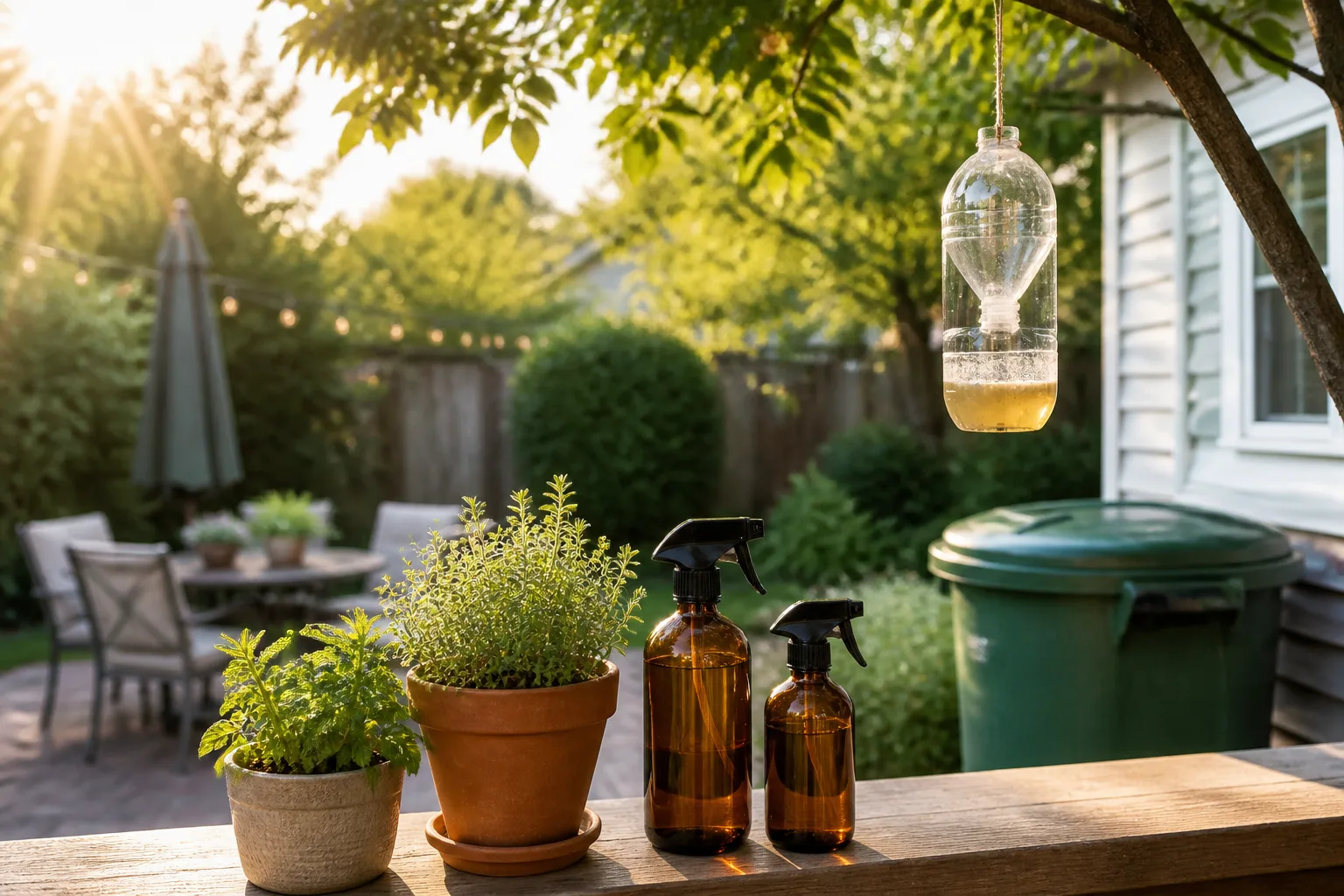
A single wasp hovering over your recycling bin is annoying. A nest under the porch rail is a summer-long problem. Natural wasp repellents work best when you understand what you are trying to change: wasps navigate by smell, hunt protein in spring, switch to sugar scavenging by late summer, and return to familiar nest sites year after year because pheromone traces linger on wood and siding.
Repellents will not magically erase a colony already defending a nest. They discourage new nesting, reduce foragers near your patio, and mask old scent trails so the same eave does not look like prime real estate every May. The twelve methods below rank from habitat fixes (most reliable) through scent barriers (helpful but temporary) to folk tricks (worth trying, weak alone). Combine several, reapply on schedule, and know when to shift from repelling to eliminating an active nest.
Why Wasps Keep Coming Back (and What Repellents Actually Do)
Social wasps—paper wasps, yellowjackets, and hornets—start each season with a single overwintered queen. She scouts sheltered ledges, wall voids, rodent burrows, and hollow fence posts. Once workers hatch, colonies grow through summer. By August and September, yellowjackets in particular turn into aggressive scavengers around garbage, grill drippings, soda cans, and ripe fruit (UC IPM Pest Notes).
Wasps communicate with pheromones—chemical signals that mark nest locations and alarm trails. Remove a nest and the paper comb may be gone, but scent cues on the substrate can still attract the next queen unless you stay consistent with cleaning and scent masking. That is why one peppermint spritz in June rarely solves a problem that starts with open trash and a gap in your soffit.
Repellent vs deterrent vs elimination
Repellents make an area smell wrong or feel risky so wasps look elsewhere. Deterrents remove what drew them—food, water, nesting cavities. Elimination kills an existing colony. Natural repellents excel at the first two. If workers are streaming in and out of a ground hole or enclosed gray football in a tree, scent sprays alone will not make them abandon home. Treat the nest at dusk or call a professional; use the methods here to prevent the next colony.
Method 1 — Build a Homemade Wasp Trap
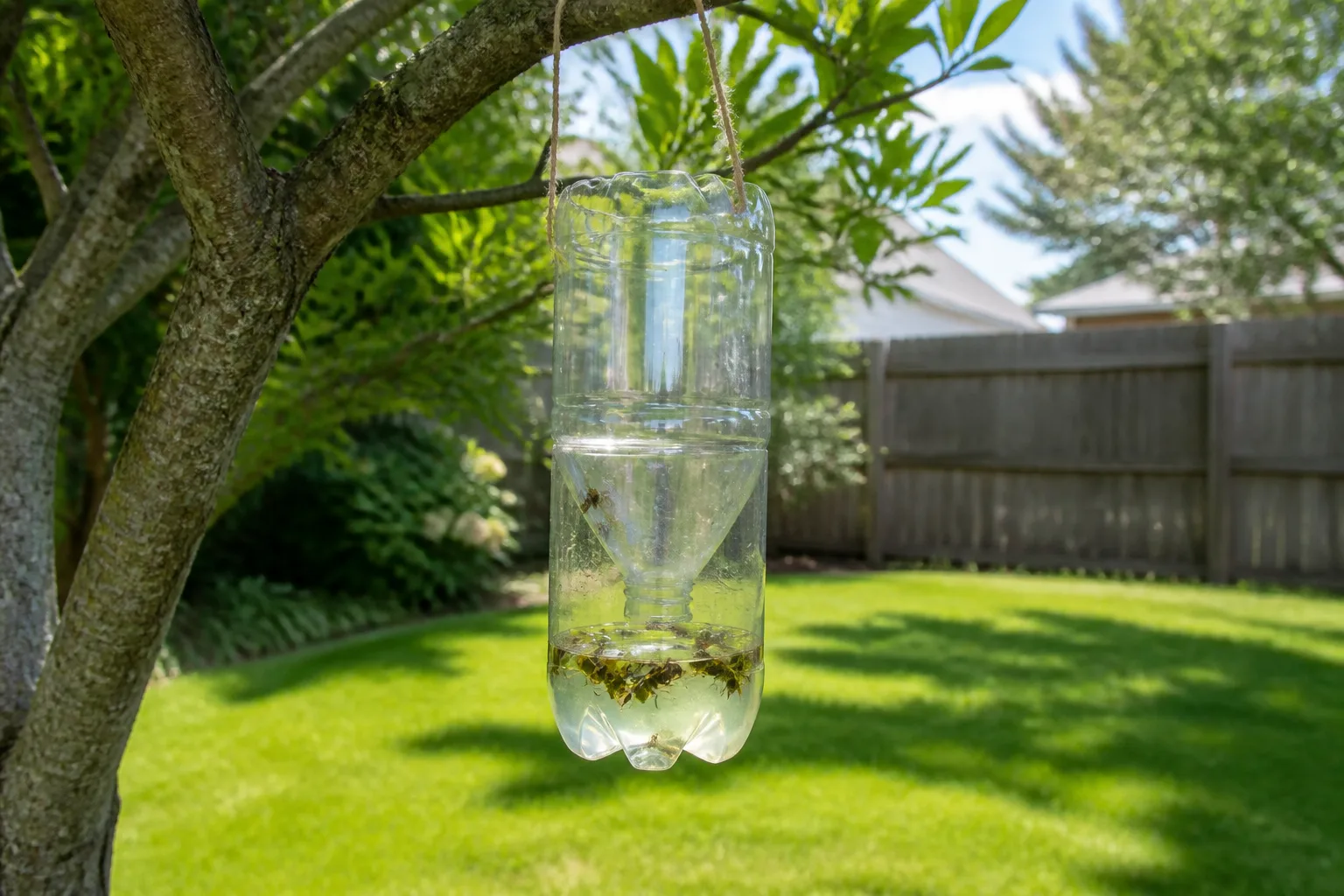
Trapping is not a repellent in the strict sense—it pulls foragers away from your table—but it belongs on every natural-control list because extension services recommend it for yellowjacket pressure around patios. UC IPM notes that lure traps with heptyl butyrate catch western yellowjackets well, while meat-bait water traps catch German yellowjackets and related species when fresh protein is suspended above soapy water (UC IPM Pest Notes).
The classic bottle trap works on the same principle:
- Cut the top third off a plastic soda bottle. Invert the top into the base so the neck funnels downward.
- Fill the bottom with 1 part sugar to 2 parts water (boiled and cooled) for late-season sugar seekers, or add a splash of beer or overripe fruit.
- For protein-focused species, dangle a small piece of fresh meat (ham or chicken) on a string 1–2 inches above soapy water in a bucket—the wasp drops the bait, falls, and drowns.
Placement rules matter more than bait choice. Hang traps along the property edge, not next to your patio, grill, or bird feeder. UC IPM suggests spacing traps roughly 150–200 feet apart along a perimeter so you intercept foragers before they reach your food. Check and refresh bait weekly; rotting meat repels yellowjackets. Traps reduce local numbers—they do not eliminate distant colonies.
Method 2 — Spray an Essential-Oil Blend
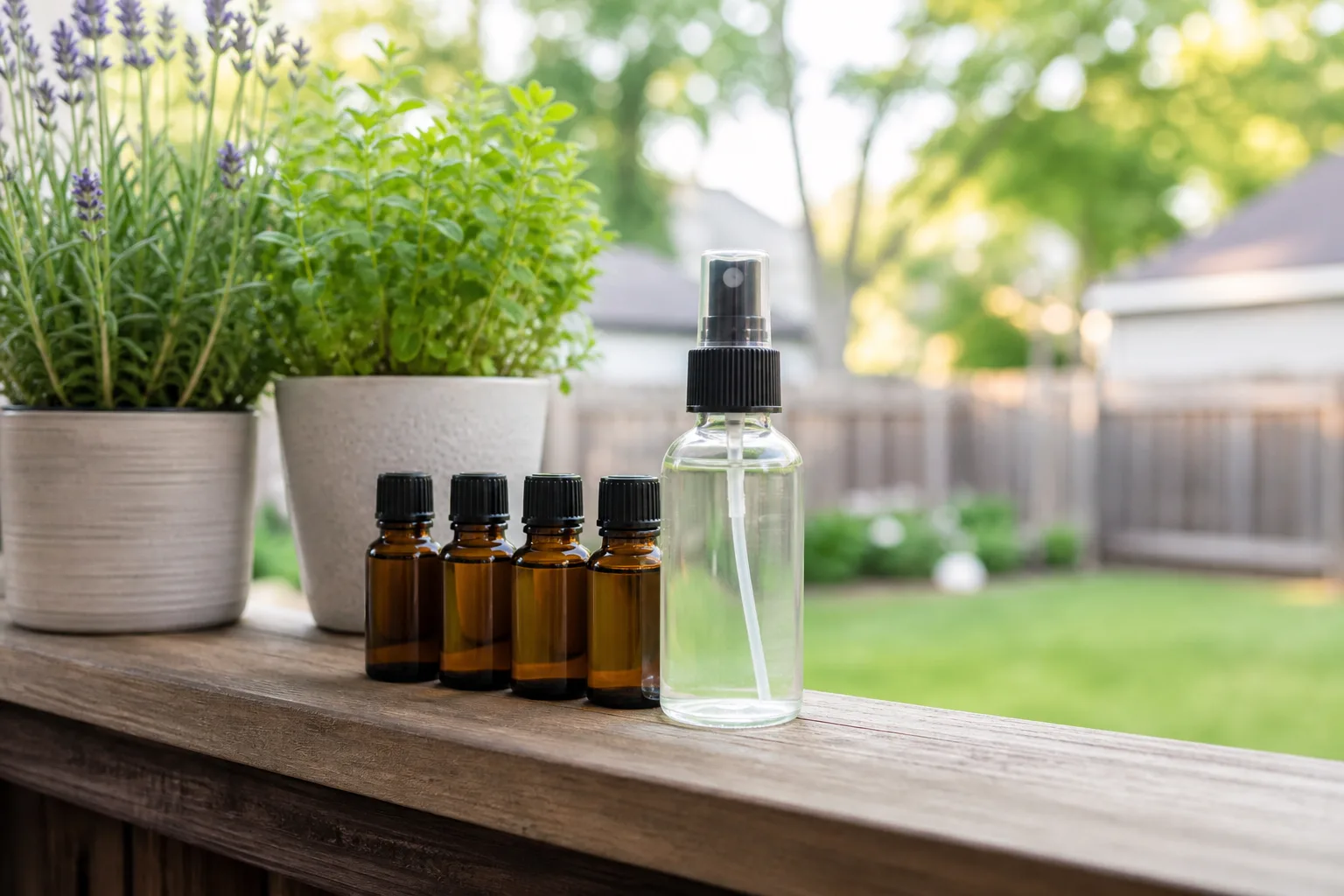
Wasps rely heavily on smell to find food and nest sites. Strong plant oils can overload olfactory receptors, creating a temporary “wrong neighborhood” signal. Peer-reviewed work found that blends of clove, geranium, and lemongrass essential oils—and a four-oil mix adding rosemary—completely blocked attraction of vespid workers to bait in controlled tests (PubMed 23081867).
Research-backed clove, geranium, and lemongrass mix
For a perimeter spray:
- Add 15 drops clove oil, 10 drops geranium oil, and 10 drops lemongrass oil to 2 cups water in a clean spray bottle.
- Add 1 teaspoon mild liquid dish soap to help the oils disperse (not sudsy enough to kill on contact).
- Shake well and spray eaves, porch posts, fence rails, and former nest locations—not directly at an active nest during daytime.
Reapply every three to five days and after rain. Essential oils are preventive, not a guaranteed cure for an established colony. Keep bottles away from children and pets; undiluted oils irritate skin and can harm cats. Test a small patch on painted surfaces first—clove oil especially can stain.
Method 3 — Use Peppermint Oil as a Perimeter Spray
Peppermint oil is the most cited natural wasp repellent for good reason: high menthol content produces a scent wasps avoid when stronger food cues are absent. A simple porch spray:
- 20 drops peppermint essential oil
- 1 tablespoon dish soap
- 1 quart water
Spray around door frames, deck stairs, mailbox interiors, and garage thresholds where queens scout in spring. Soak cotton balls in peppermint oil and tuck them into mesh bags hung near entry points—refresh every few days as the scent fades.
Peppermint works best as one layer in a broader plan. University of Maine guidance emphasizes that tight lids on trash and removing food attractants do more heavy lifting than scent alone (UMaine Extension). Do not spray peppermint directly into a live nest opening—you will agitate defenders without saturating the colony.
Method 4 — Apply Citrus Scents Near Old Nest Sites
Citrus oils—lemon, lime, orange peel, citronella, and lemongrass—share volatile compounds that confuse scent-driven insects. Use them the same way as peppermint: diluted spray on historical nest zones under eaves, inside empty birdhouses, and along fascia boards where you scraped off last year’s comb.
Fresh citrus peels placed in mesh bags can help short-term, but they mold quickly in heat—replace every two days. Pair citrus masking with light sanding and soapy water washing of the old attachment point to remove visible pheromone residue. This method targets site fidelity (queens returning to proven locations) more than random foragers flying through your yard.
Method 5 — Remove Outdoor Food Sources
The single most effective “repellent” is starving the message. Wasps hunt insects in spring, then pivot to human food and garbage when colonies peak (UC IPM Pest Notes). Once a worker finds your grill grease or soda spill, it keeps hunting that zone long after you wipe the table.
Protein draws: scrape grill grates after every cookout; bag meat scraps before they hit an open bin; rinse plates indoors. Sugar draws: cover drinks outdoors; rinse recycling cans that held soda or beer; pick up fallen fruit under trees. Pet food: bring bowls inside after meals. UC IPM warns that yellowjackets will crawl into soda cans—use cups with lids or check cans before sipping.
If wasps appear every afternoon at the same picnic table, food—not lack of peppermint—is the problem.
Method 6 — Seal Trash and Compost Bins
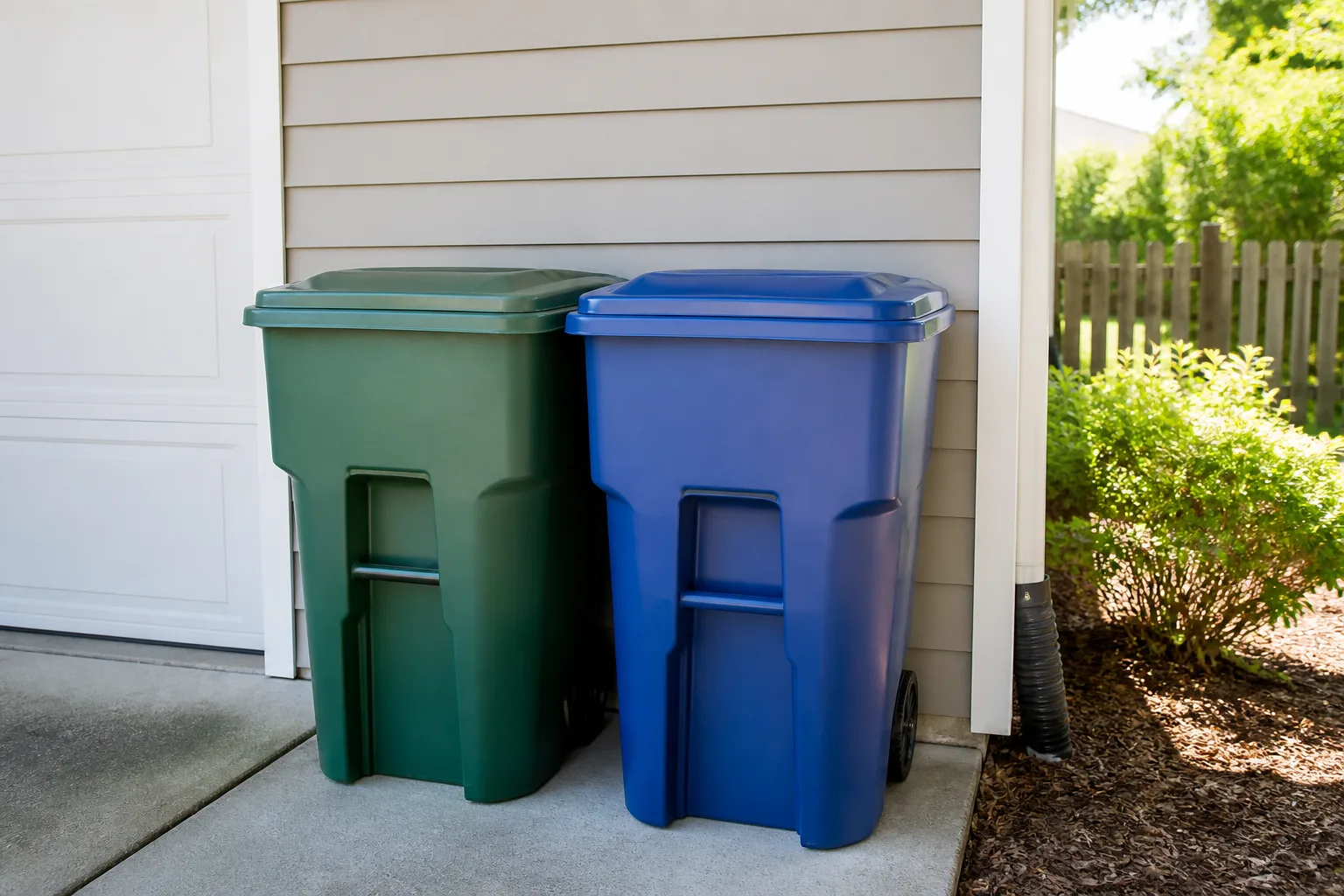
Wasps are not picky about gourmet trash. Loose lids on garbage, recycling, and compost turn bins into buffet stations—and sometimes nesting sites near constant food. UNH Extension recommends frequent waste removal and tight-fitting lids as core prevention (UNH Extension).
Check for:
- Broken hinge springs that let lids gape
- Drill holes or cracks in plastic bins where scouts enter
- Compost piles without secure lids—consider enclosed tumblers if yellowjackets persist
- Recycling bins stored outdoors with sticky residue
Rinse bins monthly with soapy water to remove odor films. If compost must stay open, relocate it far from patios and play areas, not beside the deck you are trying to protect.
Method 7 — Patch Cracks and Voids Before Spring
Queens nest in spring when weather warms. Exclusion work done in late fall or winter prevents next year’s problem better than any July spray. Walk the exterior and seal:
- Gaps where siding meets foundation
- Cable and utility penetrations
- Loose vent screens in attic and crawlspace
- Hollow fence posts (cap or fill)
- Abandoned rodent burrows in lawn edges—prime yellowjacket ground nests
Use caulk, steel wool plus foam for larger voids, and hardware cloth over dryer vents. Kentucky extension guidance notes that many wasps nest in protected cavities; blocking access before queens scout is cheaper than treating a wall void in August (UKY Entomology EF620 archive). Do not seal a live nest entrance from outside—you can trap wasps indoors.
Method 8 — Plant Wasp-Repellent Herbs and Flowers
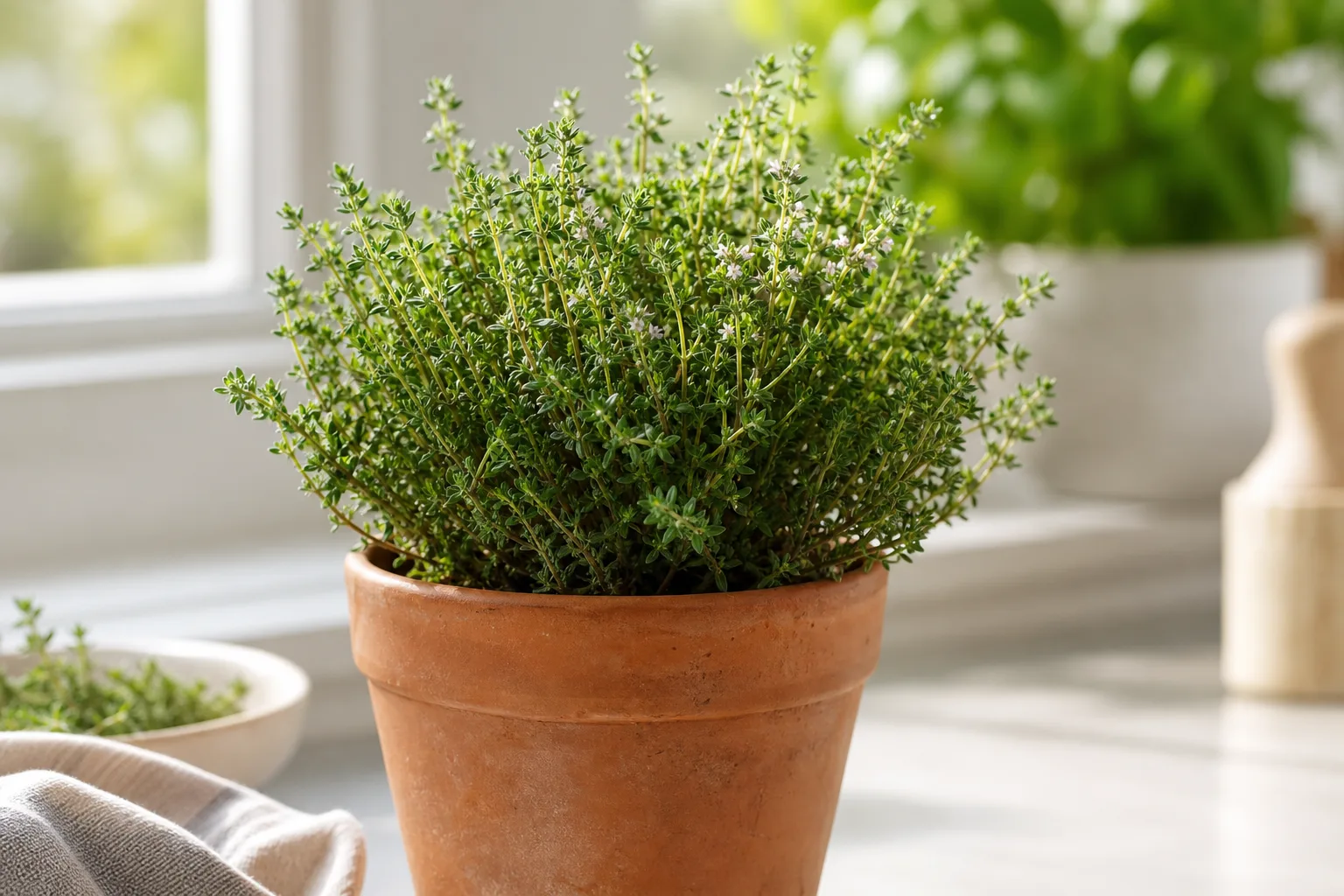
Aromatic herbs release the same volatile compounds as essential oils, but living plants provide a low-level scent barrier around doors, paths, and patio edges. Strong-scented options homeowners use successfully include:
- Spearmint and peppermint (contain in pots—mint spreads aggressively)
- Thyme, basil, and oregano
- Citronella grass and lemongrass
- Eucalyptus where hardy in your climate
- Wormwood in dry, sunny beds (toxic if ingested—keep away from pets)
- Marigolds and geraniums as border flowers with sharp scent profiles
Plant in containers near seating areas and entry paths rather than expecting one pot to shield a whole acre. Water and crush leaves occasionally to release fresh oils after rain.
Plants that accidentally invite wasps
Some garden favorites attract wasps because they produce extrafloral nectar or host aphids that wasps harvest:
- Sweet fennel
- Queen Anne’s lace
- Yarrow
You do not need to rip out a whole meadow, but avoid planting these next to patios, pool decks, and play structures if stings are a concern. Wasps also visit ripe figs and fallen fruit—pick promptly.
Method 9 — Hit Small Nests With Soap and Water
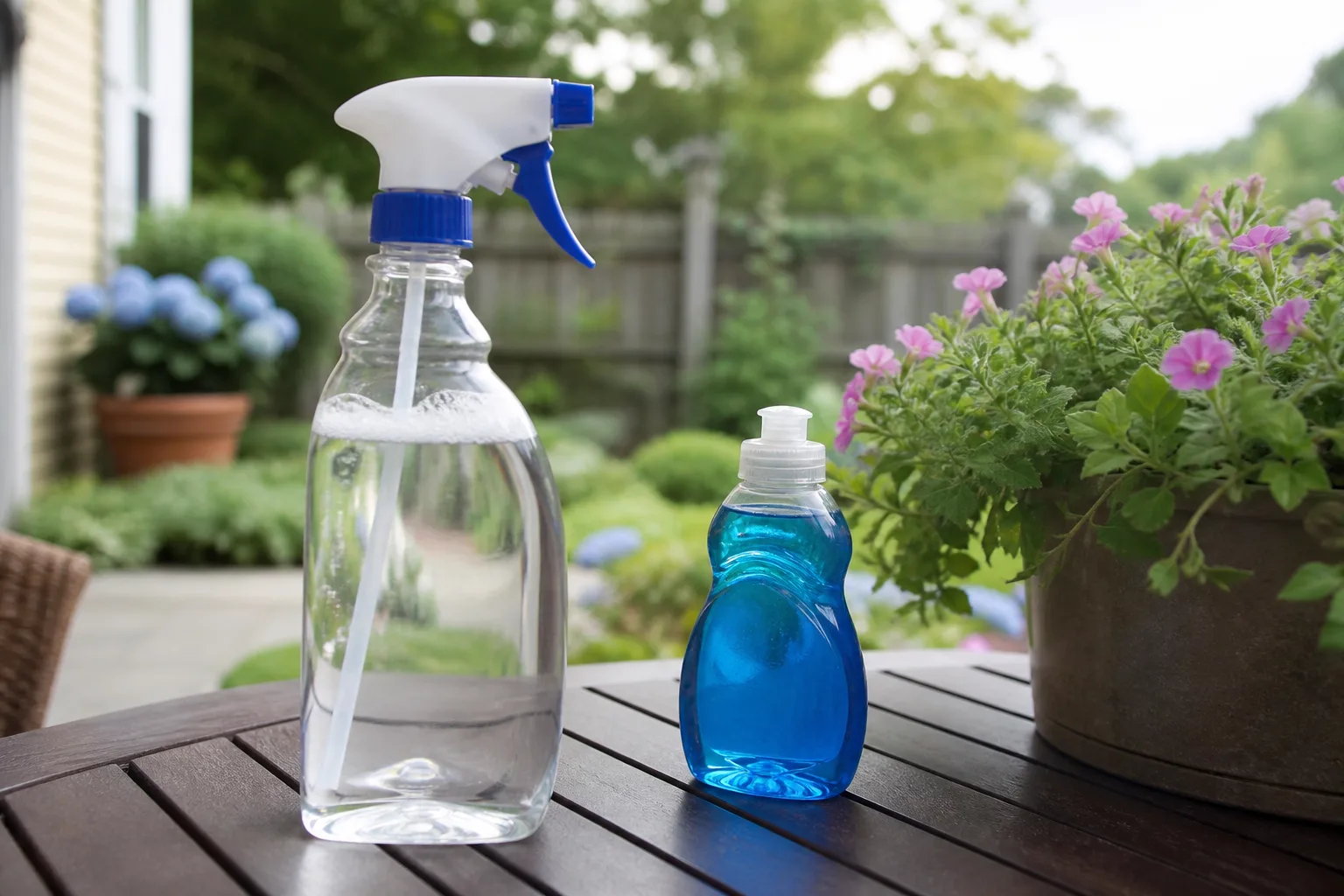
Soap and water straddle repellent and elimination. On a small, reachable paper-wasp comb—open umbrella shape under an eave—a tight stream of 2 tablespoons dish soap per quart of water suffocates wasps on contact. This is not a perimeter repellent; it is nest treatment for colonies you can safely reach.
Treat at dusk when workers are on the comb and slow to fly. Wear long sleeves, pants, closed shoes, and a hat; stand to the side, not beneath the nest. Saturate the comb and wait 24 hours before scraping. For larger enclosed nests or ground yellowjacket holes, soap alone is unreliable—see our guide on fast contact methods and labeled sprays. Never treat a nest if you have a history of sting allergy without professional help.
Method 10 — Hang a Decoy Wasp Nest
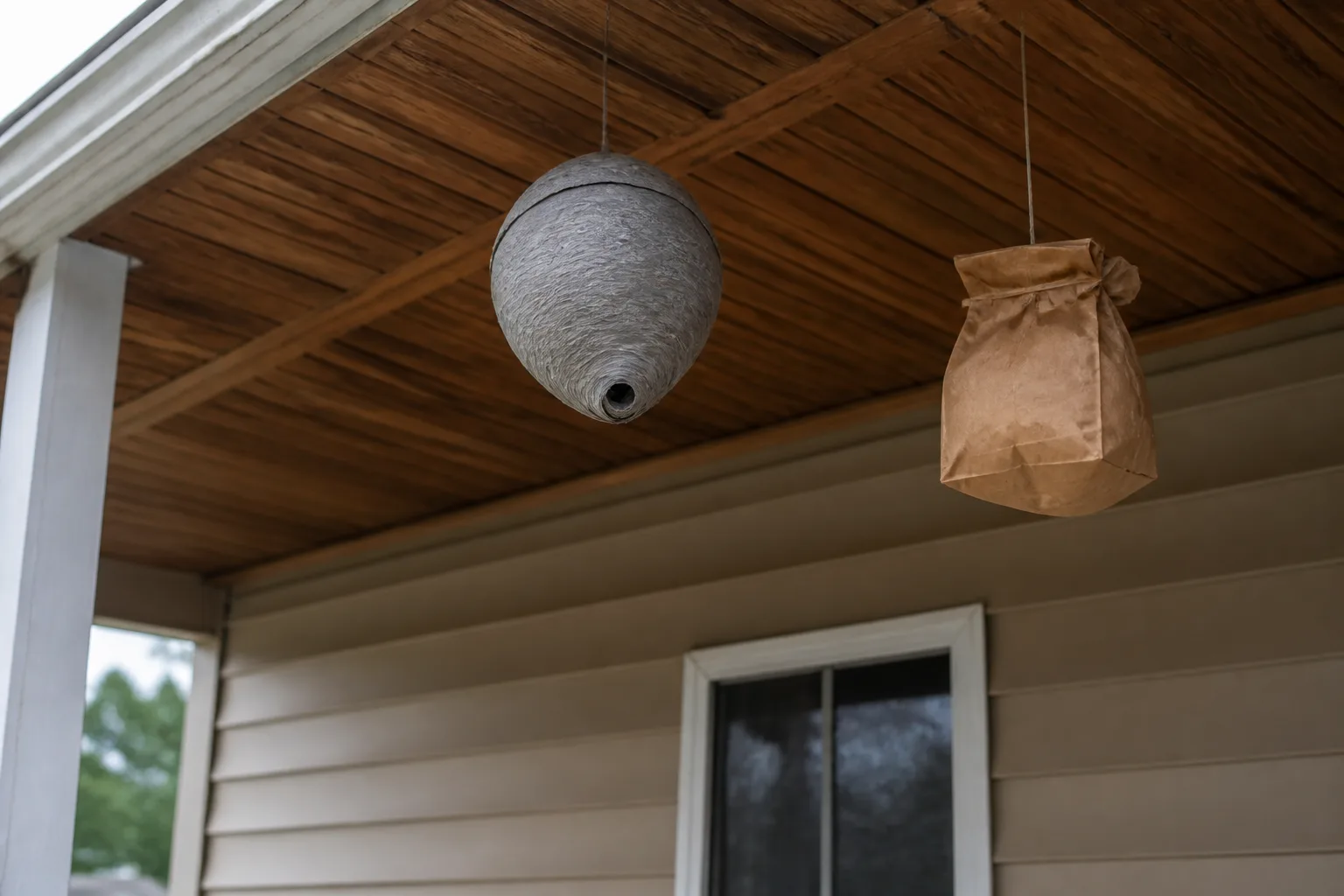
Fake nests exploit territorial behavior: some paper wasps and bald-faced hornets avoid building near existing colonies. Commercial decoys or a crumpled brown paper bag inflated and hung under eaves mimic an occupied nest.
Evidence is mixed. Decoys may reduce new paper-wasp combs on a quiet porch; they rarely stop ground-nesting yellowjackets that never see the hanging prop. Treat decoys as a low-cost experiment—hang two or three around rooflines in early spring before queens scout, not as your only strategy. Replace bags that sag or mold. Decoys do nothing about food sources or active nests already present.
Method 11 — Try Dryer Sheets on Patios and Eaves
Tucking dryer sheets under patio cushions, inside mailbox flaps, or clipped to deck railings is a popular folk trick. Some homeowners report fewer wasps; others see no difference. There is little formal research, but the strong fabric-softener fragrance may briefly mask food cues—similar logic to essential oils, weaker concentration.
If you try this, replace sheets weekly and keep them away from food prep surfaces. Do not rely on dryer sheets near active nests—disturbing defenders causes stings regardless of sheet scent. Consider this a supplemental nudge, not a replacement for sealed trash or traps.
Method 12 — Spray Patios With Vinegar and Soap
A light vinegar and water spray—equal parts white vinegar and water plus a few drops dish soap—can repel individual foragers from deck boards and patio stones when they are exploring, not defending a nest. Vinegar’s acetic acid smell disrupts scent navigation temporarily.
Spray tables and rails before guests arrive; reapply after rain. Avoid soaking garden beds—vinegar acidifies soil. This method handles occasional scouts, not colony-level pressure. Pair with food cleanup and perimeter traps for real results.
Build a Layered Repellent Plan That Sticks
One method fails. A stacked plan matches how wasps actually behave through the season:
Early spring (March–May): patch cracks and voids; hang decoy nests; plant herbs in patio containers; set queen traps along property edges.
Late spring–summer (June–August): run essential-oil perimeter sprays every few days on old nest sites; maintain sealed trash; deploy bottle or meat traps away from seating.
Late summer–fall (August–October): double down on food removal and sugar traps; rinse recycling; pick fruit; accept that scavenging wasps peak now—repellents alone will disappoint if soda and garbage remain accessible.
After nest removal: wash the attachment site with soapy water; sand lightly; apply citrus or peppermint spray weekly through fall to mask pheromones.
When to stop repelling and treat or call a pro: workers streaming from one entrance, nests over doorways, wall-void humming, or any nest if someone nearby carries an EpiPen. Extension services consistently recommend professional help for large hornet nests and inaccessible voids (UMaine Extension).
Remember: most social wasps are beneficial predators of caterpillars and flies. Leave low-traffic nests in far corners of the yard when possible. Repellents are tools for shared space, not a mandate to sterilize the ecosystem.
Conclusion
Natural wasp repellents work when you match the method to the problem: traps and food control for scavenging yellowjackets, essential-oil barriers for spring queen scouting, exclusion for cavity nesters, and honest nest treatment when a colony already moved in. Peppermint, clove, citrus, and repellent herbs help most as repeat applications on top of habitat fixes—not as magic spray on an angry nest at noon.
Start with sealed trash and grill cleanup, add perimeter traps and a research-backed oil blend, patch gaps before next spring, and keep masking old nest sites through fall. If wasps still own your doorway after that stack, switch from repelling to elimination—or call a pro. Your patio should feel like yours again without turning every wasp in the county into an enemy.