How to Kill Wasps Instantly: 7 Safe, Fast Methods
Need to kill wasps instantly? Compare soap spray, commercial wasp spray, and five other contact methods—plus timing, safety gear, and when DIY is too risky.
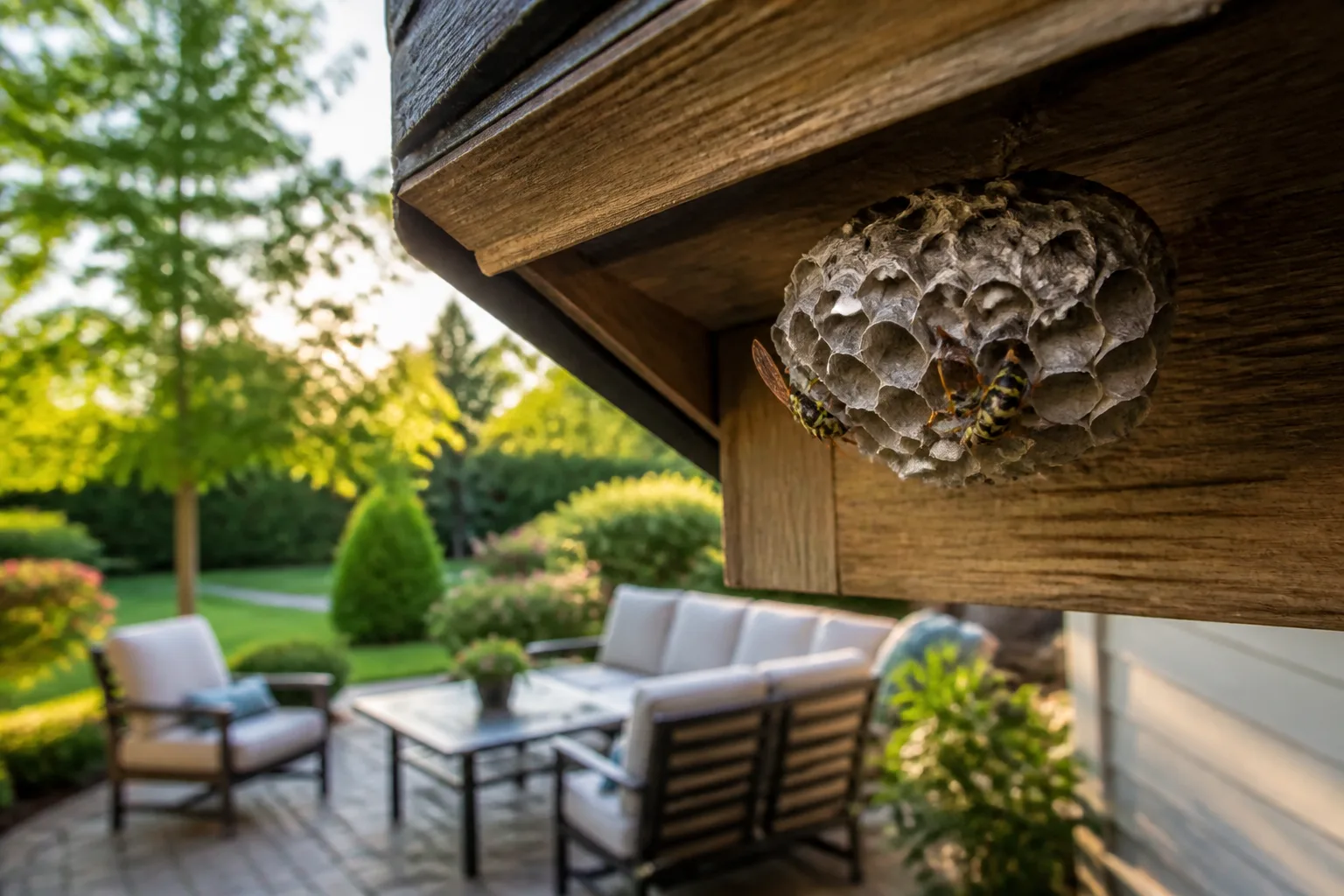
A wasp circling your drink or a nest tucked under the deck rail turns a normal summer evening into a standoff. You want something that works now—not a lecture about ecosystem balance. Fair enough. Several household and store-bought products kill individual wasps on contact within seconds. The harder part is choosing the right tool for the nest you have, treating it at the right hour, and not turning one annoyed insect into a dozen stingers racing toward your face.
This guide ranks seven fast contact solutions, explains what each one actually does to a wasp’s body, and walks you through the safety sequence extension services recommend when nests sit near doors, patios, pools, or play areas. Use it when you need immediate relief—not as permission to wipe out every wasp in the neighborhood.
What “Kill Wasps Instantly” Actually Means
Instant describes what happens to an individual wasp when the product hits its body: spiracles clog, nerves shut down, or wings freeze. It does not mean an entire colony vanishes the second you pull the trigger. Social wasps—paper wasps, yellowjackets, hornets—live in groups that defend together. Kill ten workers and more may pour out of the nest unless you saturate the structure and treat at low activity.
Think in two steps:
- Contact kill — stop the wasp flying at your head right now.
- Colony knockdown — treat the nest so returning foragers die and the queen cannot rebuild.
Soap spray, commercial aerosols, and the other methods below all excel at step one. Only thorough nest treatment—usually at dusk or dawn, often with a labeled insecticide—reliably finishes step two. If someone promises one squirt solves a basketball-size hornet nest at noon, they are selling confidence, not biology.
Before You Spray: Know What You’re Dealing With
The right killer depends on which wasp and where it nested. Illinois Department of Public Health guidance groups the usual suspects around homes into a few categories (Illinois DPH):
Paper Wasps, Yellowjackets, and Hornets
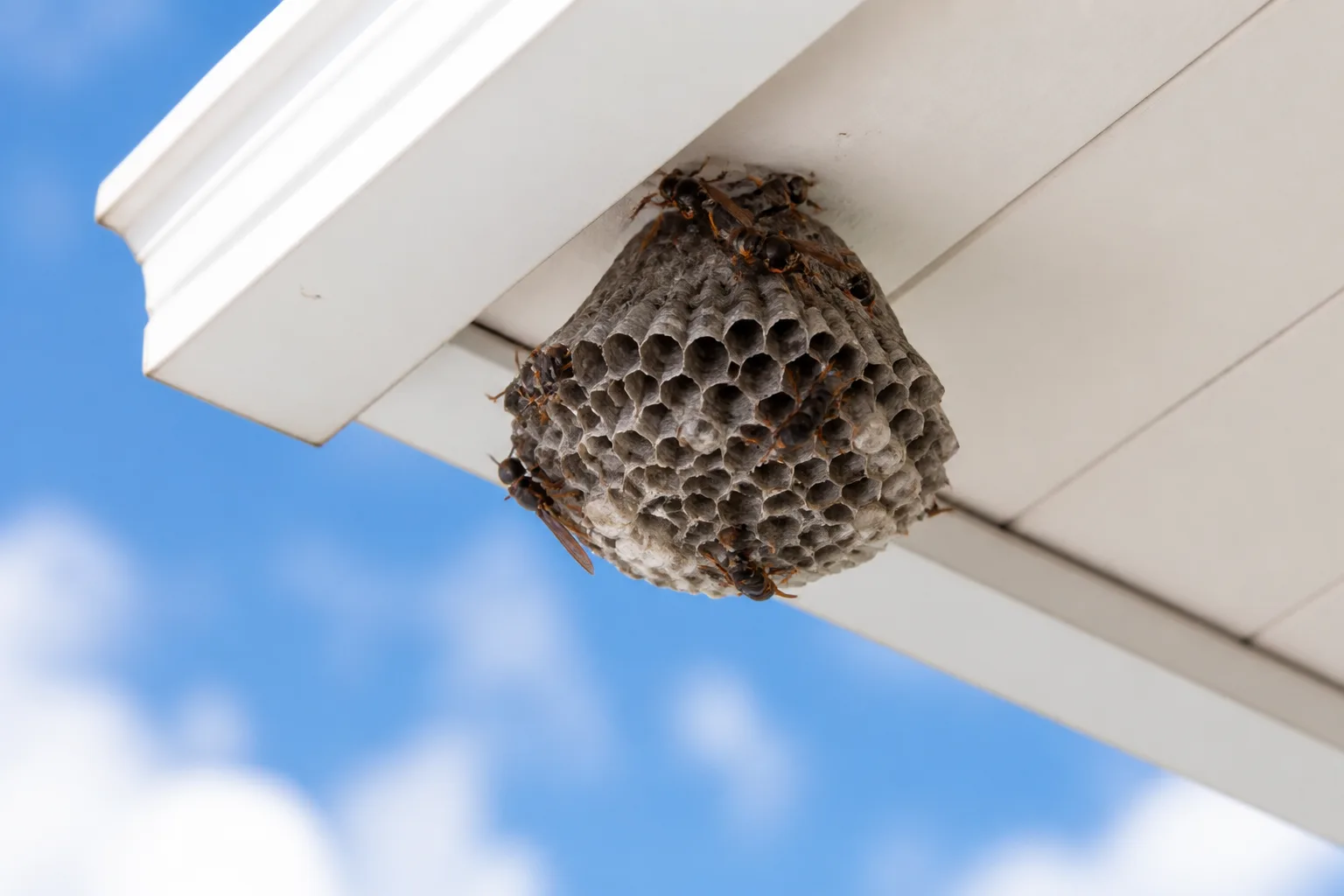
Paper wasps build open, umbrella-shaped combs under eaves, porch ceilings, and grill lids. Colonies stay relatively small—often fewer than 75 adults on a mature nest—and workers hunt caterpillars in the garden. They sting when you bump the nest, but they are usually less explosive than yellowjackets.
Yellowjackets are the black-and-yellow ground-nesters and wall-void invaders responsible for most picnic stings. Colonies can hold thousands of workers by late summer. Disturb a ground nest and insects stream out of a single hole. German yellowjackets also nest in attics and crawlspaces.
Bald-faced hornets (actually large yellowjackets) build enclosed gray footballs in trees and on structures. European hornets are bigger, reddish-brown, and nest in hollow trees or wall voids near woods.
Mud daubers and cicada killers look intimidating but are mostly solitary. A mud dauber nest is a short mud tube; knocking it off often solves the problem without drama.
Wasps vs Bees (Don’t Spray the Wrong Insect)
Before you unload anything, confirm you are not aiming at a bee. Bees and wasps are related but different insects. Wasps have a pinched waist; most bees look fuzzier and stockier. Honey bees nest in wax combs—often inside walls or tree cavities—and are critical pollinators. Bumble bees nest in small ground cavities or compost piles.
Yellowjackets are commonly mistaken for bees because of their yellow stripes. If the insect is smooth, shiny, and aggressively circling your soda can, it is probably a wasp or yellowjacket—not a honey bee. When in doubt, call a local beekeeper for bee swarms; do not hose a pollinator colony with soap.
7 Fast-Acting Ways to Kill Wasps on Contact
Ranked roughly from safest and most practical to last-resort hacks. All can kill an individual wasp quickly when applied directly. None replaces good timing, protective clothing, and a clear escape route.
Soap and Water (Best First Option for Small Nests)
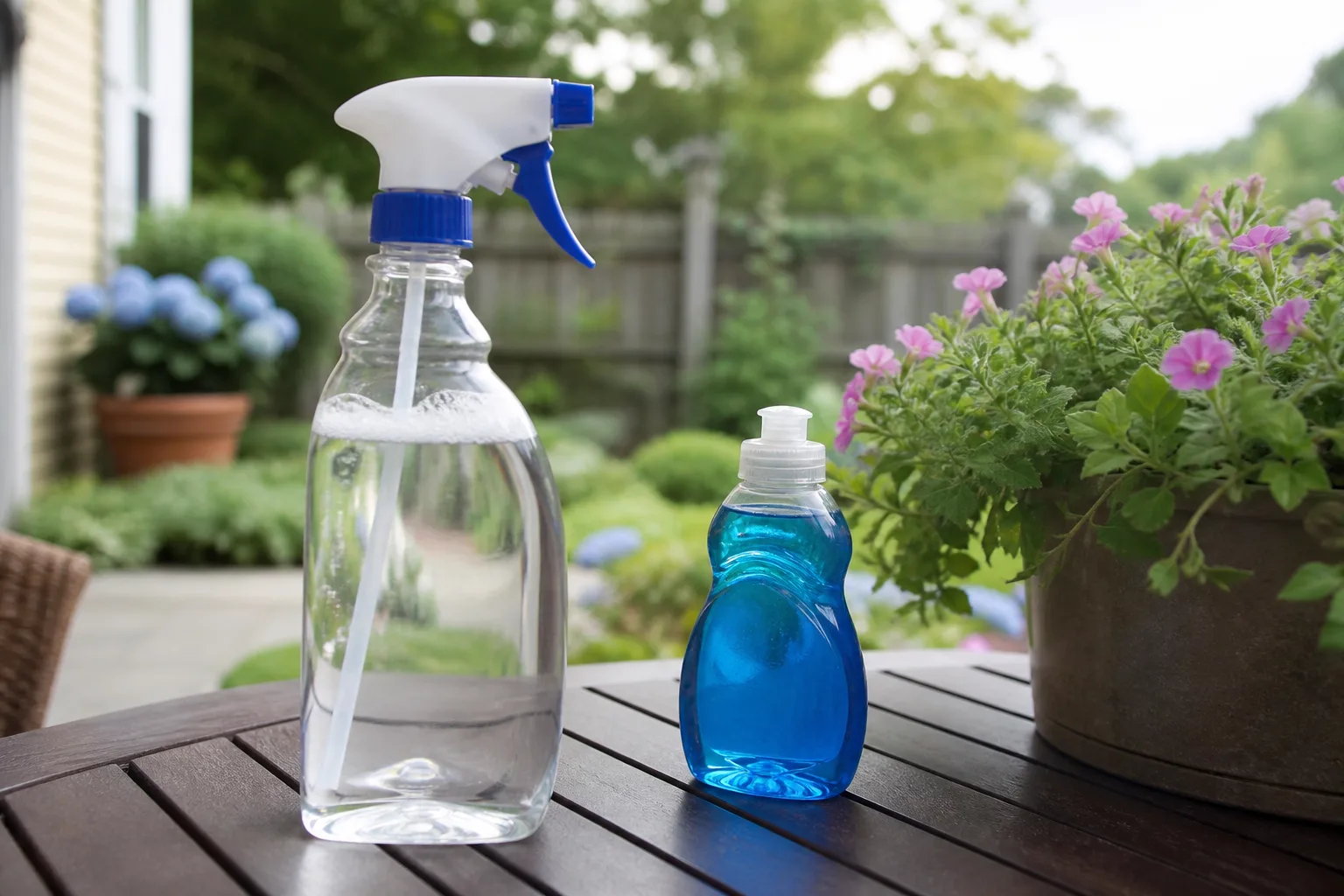
Dish soap mixed with water is the standout home remedy for exposed nests you can reach safely. Soap breaks surface tension and blocks the spiracles—tiny breathing pores along the abdomen—so the wasp suffocates within seconds of a direct hit. Garden retailers and pest educators describe this as suffocation, not poisoning, which is why it works without a pesticide label (Bath Garden Center).
Reliable mix for a hand sprayer:
- 2 tablespoons liquid dish soap per 1 quart (4 cups) water, shaken until blended.
- For a larger hose-end sprayer, scale up proportionally (about 2 ounces soap per 10 ounces water is a common handyman ratio (Family Handyman)).
Set the nozzle to a tight stream, not mist. You need direct contact on each wasp and full saturation of the comb. Mist drifts and angers insects without killing them.
Best for: small hanging paper-wasp nests, lone wasps indoors, first treatment on nests you can reach from a safe distance.
Limits: large yellowjacket colonies, nests inside walls, and windy afternoons. Soap does not leave a long residual; foragers that were out hunting may return unless you retreat the nest the next evening.
Commercial Wasp and Hornet Spray
Labeled wasp and hornet aerosols are what professionals reach for when nests are big, high, or defensive. Products typically combine fast knockdown pyrethroids or pyrethrins with a jet stream that reaches 15–20 feet, letting you stand off to the side instead of under the entry hole.
How to use them well:
- Read the label first—application distance, re-treatment interval, and protective gear are legal requirements, not suggestions (EPA safe pest control guidance).
- Spray at dusk or dawn when most workers are inside and sluggish.
- Soak the nest opening and entire comb until product drips. One quick pass rarely kills a large colony.
- Stand upwind. Wear eye protection, long sleeves, long pants, and gloves.
Best for: enclosed hornet nests, elevated eaves, aggressive yellowjacket colonies you cannot reach with soap alone.
Limits: indoor use restrictions on most labels; void nests may need dust formulations injected by a pro, not foam from a patio door.
Lemon Extract and Water
Lemon extract (alcohol-based baking extract, not lemonade) mixed with water can kill wasps on contact because of the high alcohol content and solvent action. A workable ratio is 3 tablespoons lemon extract per 1 cup water in a spray bottle.
It behaves like a weak contact knockdown—not a residual insecticide. It can work on a single wasp or a very small nest you can saturate completely.
Best for: kitchen-pantry emergencies when you lack dish soap and need one or two wasps gone indoors.
Limits: expensive at scale; flammable vapor near grills and fire pits; not practical for large outdoor nests.
Hairspray
Aerosol hairspray stiffens wings on contact and can kill or immobilize a wasp long enough for you to step on it or slide it out a door. Some formulas include alcohol that adds knockdown power.
Treat hairspray as a single-insect tool, not a nest treatment. You cannot coat a colony before defenders erupt, and inhaling a cloud of hairspray is worse for your lungs than dish soap.
Best for: one wasp trapped in the bathroom, car, or kitchen.
Limits: nest elimination, windy outdoors, anyone with asthma or chemical sensitivity.
WD-40
WD-40 and similar penetrating oils coat a wasp’s body, clogging spiracles much like soap. Enthusiasts report instant knockdown when the spray hits directly.
It is a shop-shed hack, not a pest-control recommendation. Oily residue stains siding and decking, smells harsh, and is not labeled for insects. Use only when nothing else is available and you accept surface cleanup afterward.
Best for: immobilizing a single wasp in the garage when you already have the can open.
Limits: nests, pollinator-adjacent areas, food-prep zones, fire pits—WD-40 is flammable.
Bleach Solution for Ground Nests
Bleach alone does not reliably kill wasps and is too harsh to spray into the air—splash risks eyes, skin, and lungs. Where bleach sometimes enters the conversation is ground-nesting yellowjackets: a soap-and-water drench poured into the entrance after the hole is covered with fine screening or hardware cloth so wasps cannot boil out before they drown.
If you add bleach, treat it as a small supplement to a soap drench—not a standalone weapon—and keep it far from plants you care about. Never mix bleach with ammonia or other cleaners.
Best for: solitary ground nests you can cover and flood quickly at dusk, when you understand chemical runoff risk.
Limits: any nest you cannot seal; hanging combs; situations where children or pets use the lawn the next morning.
Bug Zappers
Electric bug zappers kill wasps that fly into the grid—but they attract flying insects with UV light. Placing a zapper near your patio can pull wasps toward seating areas instead of away from them.
Use zappers only where you want to reduce wandering insects in a wide yard perimeter, not as targeted nest elimination. They do nothing to the colony producing new wasps behind the deck.
Best for: background reduction of random foragers far from eating areas.
Limits: primary control for an active nest over a dining table; beneficial insect bycatch.
What to Wear and When to Treat a Nest
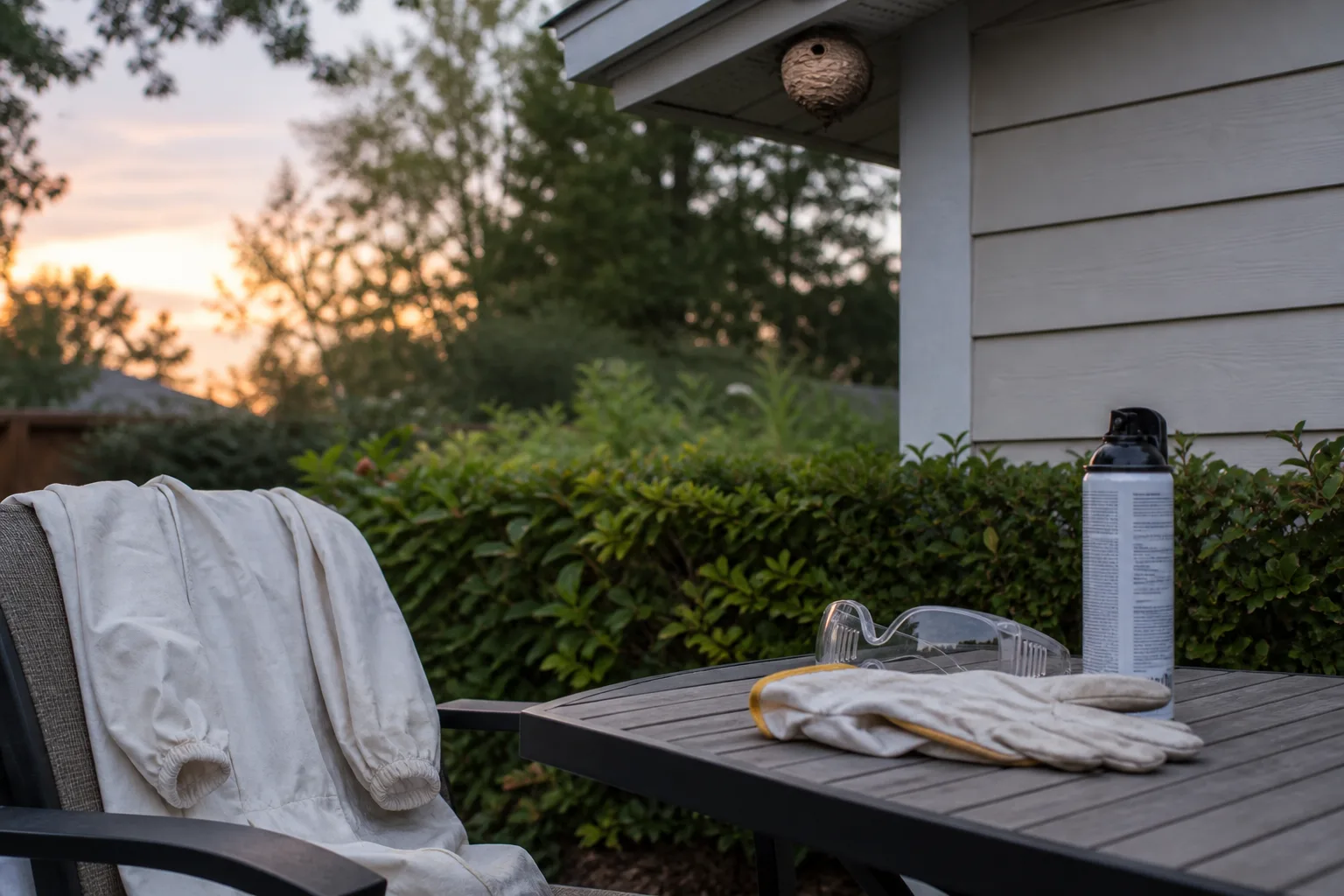
Timing and clothing matter as much as the formula in your bottle. Illinois DPH advises treating social wasp nests at night when most workers are present but reluctant to fly, using a red-filtered light if you need illumination because insects struggle to see red (Illinois DPH). Evening around dusk, after temperatures drop, is the practical sweet spot for most homeowners. Early morning is the backup window.
Gear checklist:
- Long pants and sleeves (smooth, light-colored fabric—CDC notes bright floral prints and dark rough wool can attract stinging insects (CDC NIOSH))
- Closed shoes, not sandals
- Eye protection or a face shield
- Gloves with cuffs tucked
- Hat if working under eaves
Skip perfume, banana-scented lotion, and sugary drinks near the work zone. Have a clear path indoors before you spray. If you are allergic to venom, do not treat the nest yourself—roughly 1 percent of people have systemic reactions, and stings can be fatal without fast epinephrine (Illinois DPH).
If a wasp approaches before you spray: stay calm. CDC guidance warns that swatting increases sting risk. Back away slowly; do not flail. If multiple wasps attack, cover your face and move indoors—not into open water, where some species hover waiting (CDC NIOSH).
What Not to Do When Killing Wasps
Some “instant” fixes create bigger emergencies than the nest itself.
- Do not burn or gasoline-flood nests. Paper combs are highly flammable. Fire and fuel injure people and structures far more often than they solve wasp problems.
- Do not swat or wave arms at flying wasps. Stings release alarm pheromones that recruit defenders.
- Do not treat large nests at midday when foragers are active. You will fight insects that were not even home at dawn.
- Do not pour soap or bleach into an open ground hole without covering it first. Wasps exit faster than you can drown them.
- Do not plug entrance holes in walls or soil. Trapped wasps chew alternate routes—sometimes into living spaces (Illinois DPH).
- Do not assume one pass equals victory. Large colonies need full saturation and a follow-up check the next evening.
Late summer feels worse for a reason: yellowjacket colonies peak just as natural insect prey declines, so wasps crash picnics and trash bins more aggressively (Illinois DPH). Extra caution in August and September is biology, not paranoia.
After the Spray: Removing the Nest and Checking for Survivors
Wait at least 24 hours after a thorough insecticide or soap saturation before knocking down a dead nest. Foragers that were out during treatment may return; you want them to contact residue or a soaked comb.
Paper wasps and hornets do not reuse old nests the following year—new queens start fresh in spring. Still, remove the gray football or umbrella comb for appearance and to spot new construction early. Wear gloves; even dead insects can sting reflexively.
Walk the area the next evening with a flashlight. If you see steady traffic in and out of a hole, retreat. Two incomplete treatments train a colony to defend harder.
Sting first aid if things go wrong: have someone stay with you, wash with soap and water, scrape (do not squeeze) any stinger, ice the swelling, and watch for trouble breathing or widespread hives. Those symptoms need emergency care immediately (CDC NIOSH).
When DIY Is Not Worth the Risk
Call a licensed pest professional when:
- The nest is inside a wall, attic, or crawlspace and you cannot see the full comb.
- You are allergic or unsure of your allergy status.
- The colony is large, high, or over a busy doorway.
- You have been stung multiple times or see wasps indoors without finding the entry.
- Previous DIY attempts left angry, surviving workers.
Pros have dust applicators, extension poles, and vacuums for honey bee colonies that homeowners should not improvise. The cost of one visit usually beats an ER trip.
For long-term relief after the crisis passes, combine quick contact kills with prevention: seal garbage, cover sugary drinks outdoors, patch soffit gaps in late winter, and hang decoy nests before queens scout in spring if wasps return every year to the same eave.
Conclusion
What kills wasps instantly? Direct hits with soapy water, labeled wasp spray, or several household products stop individual wasps within seconds by suffocation or nerve knockdown. Winning the bigger fight means matching the method to the nest, treating at dusk or dawn in full protective gear, saturating the colony—not flicking a mist—and knowing when a wall void or allergy risk is a pro job.
Start with 2 tablespoons dish soap per quart of water on small exposed nests you can reach safely. Step up to commercial jet aerosols for large hanging or enclosed colonies. Keep lemon extract, hairspray, WD-40, bleach drenches, and bug zappers in their lane: emergency singles, ground-nest edge cases, or background traps—not your only plan for a yellowjacket city under the swing set.
Treat calmly, retreat if needed, and remove the nest only after you are sure the workers are gone. Your patio deserves that much patience—even when the wasps do not.