Cucumber Leaves Turning Yellow: 6 Causes and Fixes
Cucumber leaves turning yellow is rarely random. Learn six common causes, how to tell them apart, and what to do first to save healthy fruit.
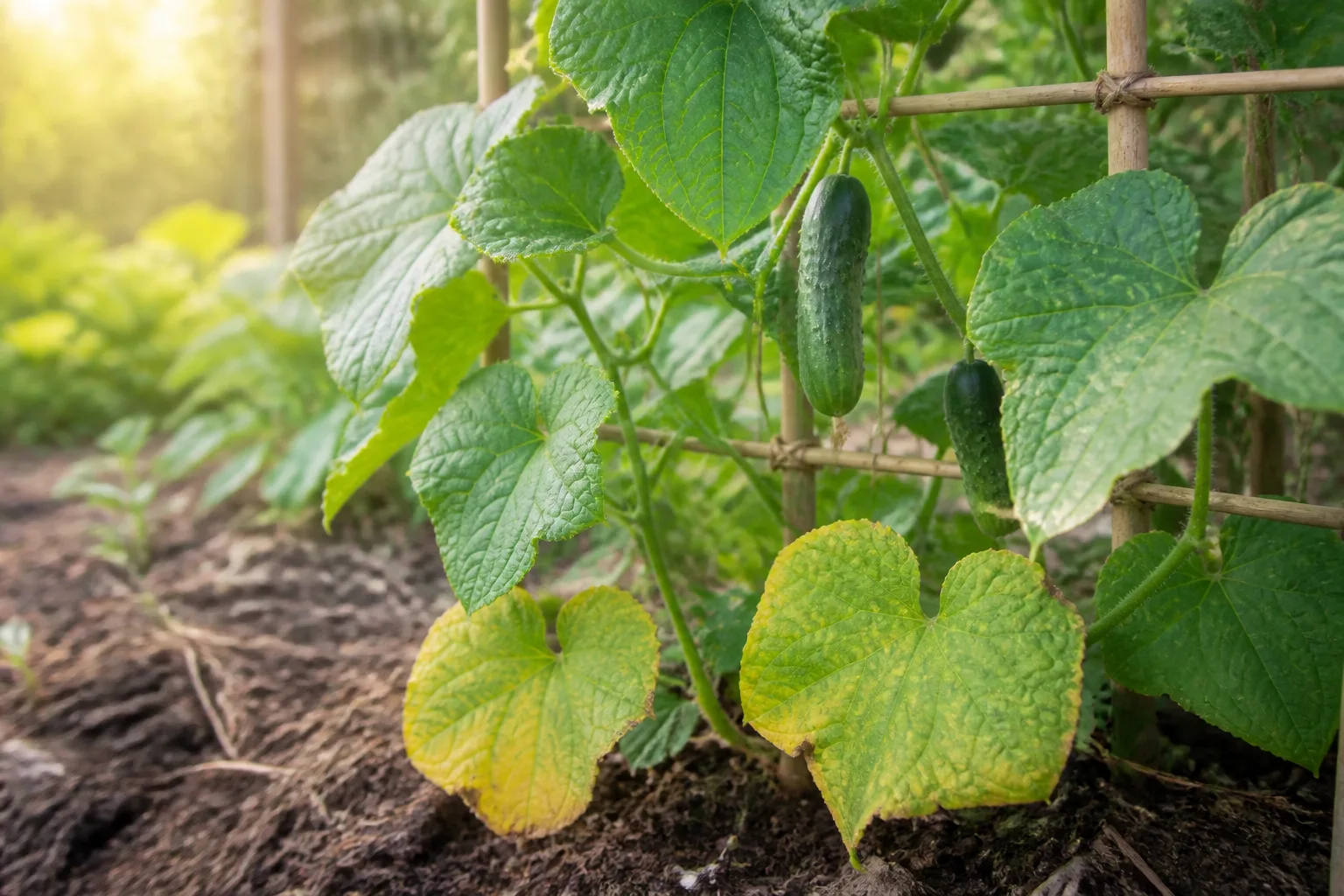
Yellow cucumber leaves are a stress signal, not a single diagnosis. The same color change can mean saturated roots, a nitrogen shortage, aphid feeding, or a virus moving through the row. Treat the wrong cause and you lose time while fruit set suffers.
The fix starts with where the yellowing began, how fast it is spreading, and what else on the plant looks wrong. Match that pattern to one of six common causes below, then take the first low-risk action that fits.
Start With the Symptom Pattern, Not the Panic
Before you fertilize, spray, or strip every yellow leaf, read the plant like a field scout would. Photograph the whole vine and one close view of an affected leaf, top and bottom. Note whether damage started on the lowest leaves or jumped to new growth, whether spots are uniform or mottled, and whether the soil is wet, dry, or crusted on top but damp underneath.
Cucumbers are warm-season crops with large, thin leaves that lose water quickly (UF/IFAS Gardening Solutions). They need steady moisture and balanced fertility, but they also hate waterlogged roots and prolonged wet foliage. That combination is why water and disease both rank high on every yellow-leaf checklist.
Four Questions That Narrow the Cause in Minutes
Ask these four questions in order. The first strong match usually points to your next step.
1. What does the soil feel like 2–3 inches down? If it is wet and the plant still wilts, suspect root stress from overwatering or poor drainage—not thirst. If it is powder-dry and leaves curl before yellowing, suspect underwatering.
2. Where did yellowing start? Bottom-up uniform fading on older leaves often tracks nitrogen or potassium shortage, or normal aging on the lowest leaves. Random mottling on new and old leaves together raises virus concern. Angular yellow patches with a fuzzy underside suggest downy mildew.
3. Is there a pattern on the leaf surface? Even yellowing without spots differs from speckled stippling (mites), sticky residue (aphids), or dark spots with yellow halos (anthracnose). Flip leaves every time.
4. How fast is it moving? A few yellow bottom leaves over two weeks is different from half the vine turning pale in four days. Fast spread during cool, wet weather often means foliar disease; fast mottling with stunted new growth often means virus.
Water Problems: Too Much or Too Little
Water mistakes are the most common reason home gardeners see yellow cucumber leaves, and they push the plant in opposite directions. Overwatering suffocates roots; underwatering shuts down the leaf tissue from the edges inward.
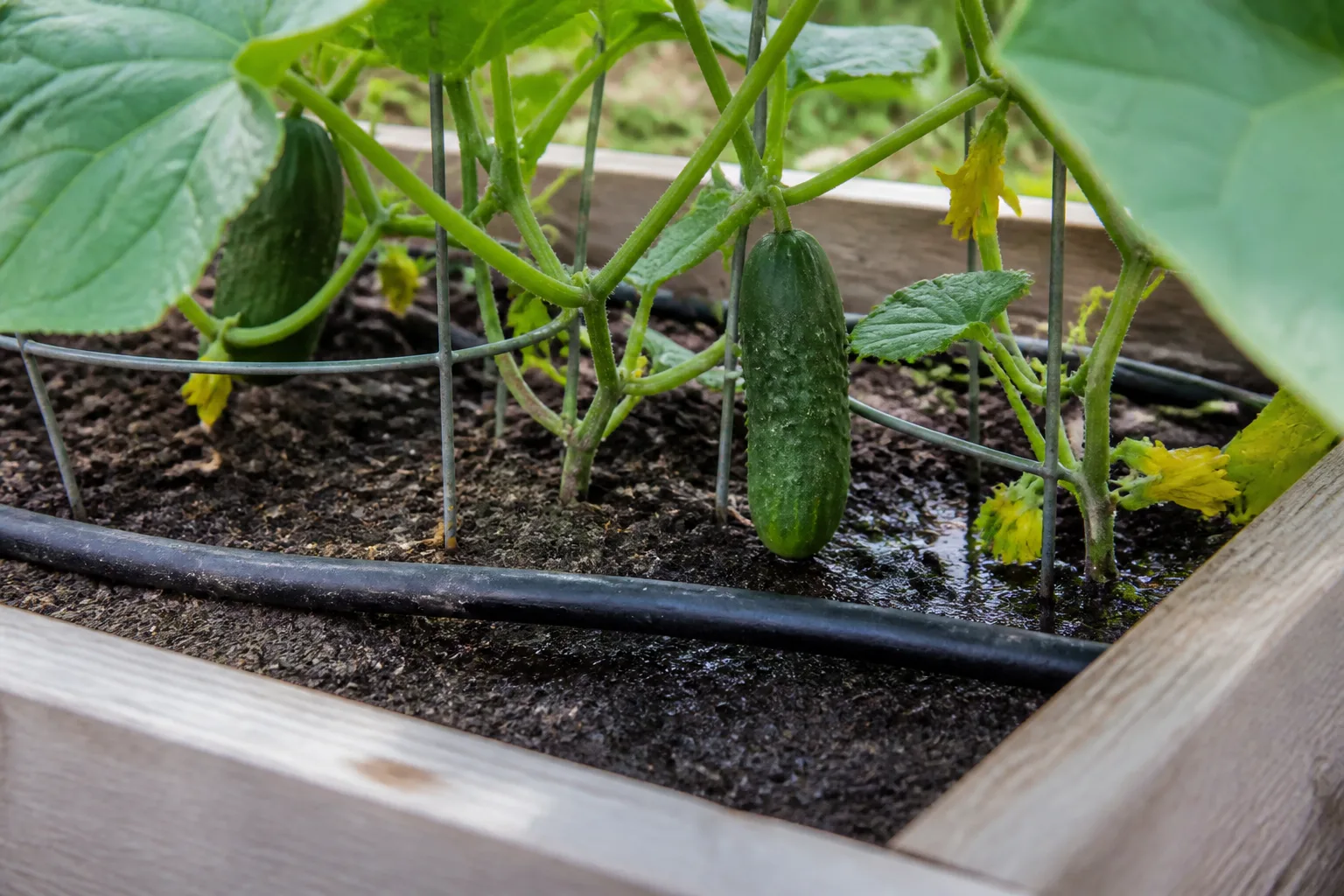
Deep watering at the root zone keeps leaves drier and reduces both drought stress and foliar disease.
Overwatering, Root Stress, and Soggy Soil
Cucumbers need moisture, but their roots also need oxygen. When soil stays saturated—especially in heavy clay, sunken beds, or containers without drainage—roots stop functioning. Leaves may wilt while soil is wet, turn yellow from the bottom up, and eventually drop.
What to look for: Yellow lower leaves, limp vines despite wet soil, slow new growth, and in advanced cases a sour smell or dark, soft roots if you inspect carefully. Oklahoma State Extension notes that cucumbers are sensitive to flooding and benefit from well-drained soil and, where needed, raised beds (Oklahoma State cucumber production guide).
What to do first: Stop watering until the top 2–3 inches of soil dry. Improve drainage with compost in beds, clear blocked container holes, or move pots to a spot that does not collect runoff. Mulch after soil dries to reduce splash—not before you fix saturation. If a container plant has mushy roots, trim damaged roots and repot into fresh mix rather than hoping the old soggy soil will recover.
Underwatering and Heat-Driven Thirst
Underwatered cucumbers tell a different story. Leaves may curl, brown at the margins, then fade from green to yellow and crisp. Because cucumbers are roughly 95% water by weight, they show drought stress quickly during fruit set.
What to look for: Dry soil several inches down, wilt that improves after a deep soak, and yellowing that follows crispy edges rather than soft, soggy tissue.
What to do first: Water deeply at the soil line, not with a light sprinkle. Extension guidance for field cucumbers often cites about 1 to 1.5 inches of water per week during hot periods, delivered in fewer deep sessions rather than daily misting (Oklahoma State cucumber production guide). Morning irrigation lets foliage dry before night, which reduces disease pressure. Drip lines or soaker hoses are ideal because they keep leaves dry while maintaining even root-zone moisture.
Sun, Heat, and Leaf Scorch
Cucumbers want full sun—typically at least six hours of direct light—but extreme heat and intense midday sun can scorch leaf edges. You may see brown, papery margins first, then yellowing and dieback on exposed leaves while shaded fruit-side foliage stays greener.
What to look for: Damage on the sunniest side of the trellis or bed, during heat waves above roughly 90°F, especially when irrigation lagged.
What to do first: Increase water consistency without flooding the roots. Shade cloth over midday sun—or moving container plants to afternoon shade—can protect leaves that shield developing fruit. Trellising improves air flow and can reduce the worst sun exposure on flat ground plantings (UF/IFAS Gardening Solutions). Do not confuse scorch with disease: scorch rarely shows fuzzy undersides, mosaic blotches, or insect webbing.
Nutrient Deficiencies in Heavy-Feeding Cucumbers
Cucumbers are heavy feeders. Yellow leaves from hunger usually follow recognizable patterns if you know which nutrient is limiting. A soil test beats guessing, because excess nitrogen can delay flowering while other shortages mimic disease.
UF/IFAS notes that too much nitrogen can push leafy growth at the expense of flowers and fruit, while phosphorus and potassium support flowering and fruit development (UF/IFAS Gardening Solutions). Oklahoma State recommends basing fertilizer on soil tests, avoiding heavy pre-plant nitrogen, and using timed top-dresses during the season rather than one large dump (Oklahoma State cucumber production guide).
Nitrogen, Potassium, Phosphorus, and Iron Patterns
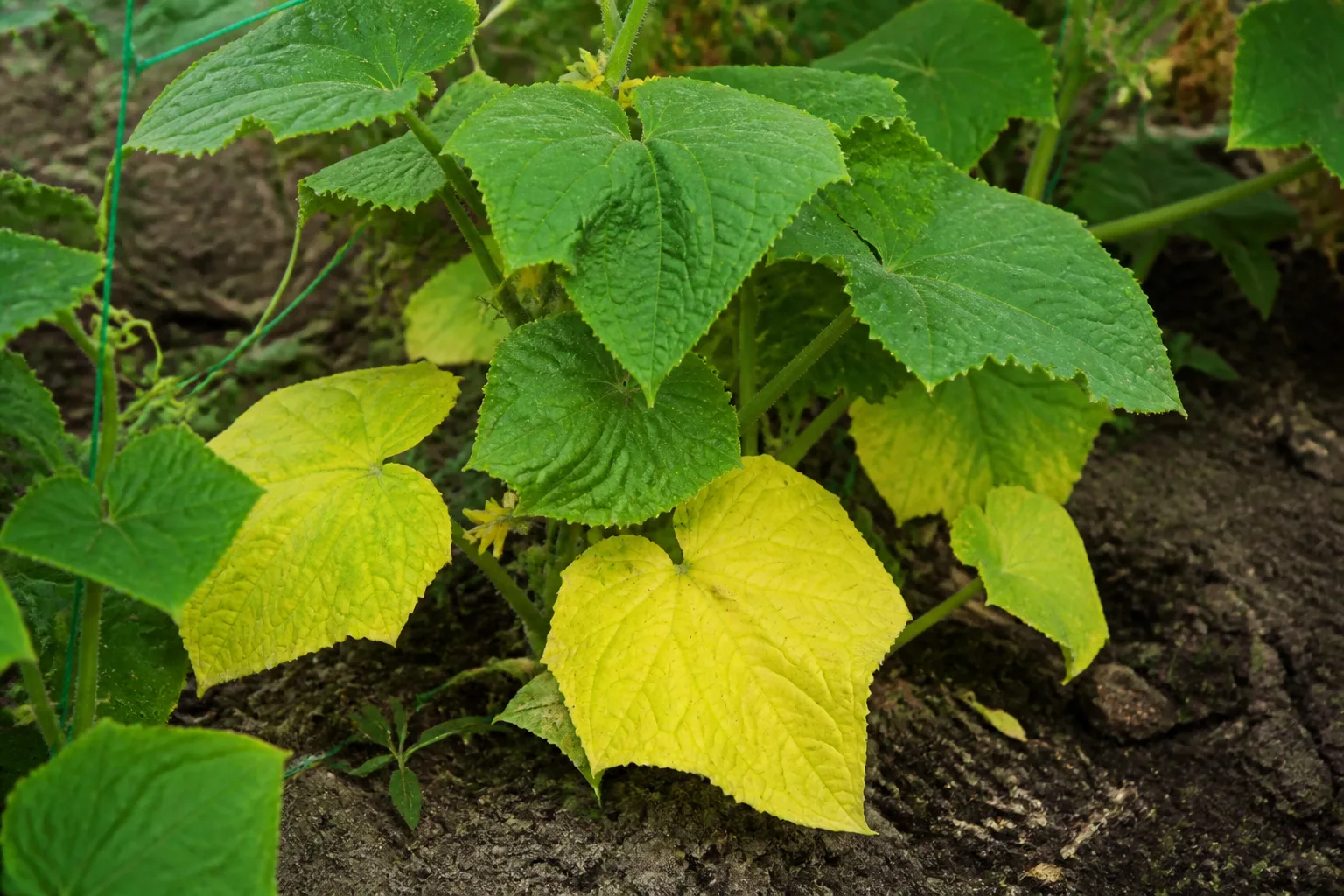
Bottom-up even yellowing on old leaves with green new growth often points to nitrogen or potassium shortage—not mosaic virus.
Nitrogen: Older, lowest leaves turn evenly yellow first while new top growth may stay green. The plant can look pale overall and grow slowly. A modest balanced or slightly nitrogen-forward feed—after confirming soil moisture is stable—often greens the top within one to two weeks. Work compost into the root zone or side-dress according to your soil test rather than double-dosing weekly.
Potassium: Yellowing often appears on older leaves with scorched or brown edges moving inward. Fruit quality can suffer even when vines look partly green. If a test shows low potassium, use a product labeled for vegetables and follow the rate on the label.
Phosphorus: Less common in balanced garden soils, but stunted plants with a gray-green cast and yellowing on the lowest leaf while the leaf above stays greener can signal shortage. Cool soil early in the season can temporarily lock out phosphorus even when nutrients are present.
Iron: New leaves may emerge pale yellow-green with green veins (interveinal chlorosis). Iron issues often track high pH soils. Fix the pH and drainage story with a soil test before reaching for foliar sprays.
Epsom salt (magnesium): Helpful only when a test or clear magnesium-deficiency pattern supports it—not as a default tonic. Random Epsom salt can imbalance other nutrients without fixing yellow leaves.
Sap-Sucking Pests That Bleach Leaves Green
Insects that pierce leaf cells and drain sap leave behind yellow stippling, mottling, or general fading. They also spread disease—most critically, aphids moving cucumber mosaic virus.
Aphids, Spider Mites, and Cucumber Beetles
Aphids: Clusters on undersides, sticky honeydew, ants farming the colony, and curled or yellowing young leaves. Control with strong water blasts for light infestations, then insecticidal soap or horticultural oil on cooler mornings, covering undersides. Repeat weekly until populations crash. Because aphids transmit CMV quickly, inspect neighboring cucurbits when you find them.
Spider mites: Hot, dry weather favors them. Look for fine webbing and sand-like stippling that bleaches leaves yellow or bronze. A hard water rinse every few days helps small outbreaks; serious infestations may need labeled miticides used carefully to protect pollinators.
Cucumber beetles: Striped and spotted adults chew holes, but the bigger threat is bacterial wilt carried on their mouthparts. A vine that was healthy yesterday and collapsed today—with sticky sap when you cut the stem—may be wilt, not water stress. Seedling protection and early beetle control matter more than trimming yellow leaves. Oklahoma State emphasizes controlling beetles early to protect young plants and reduce wilt introduction (Oklahoma State cucumber production guide).
Diseases That Turn Cucumber Leaves Yellow
Fungal and bacterial diseases often yellow leaves in patches or spots with wet weather, overhead irrigation, or crowded vines. Viruses yellow leaves in mosaic patterns and cannot be cured in the plant.
Cucumber Mosaic Virus and Other Viral Yellowing
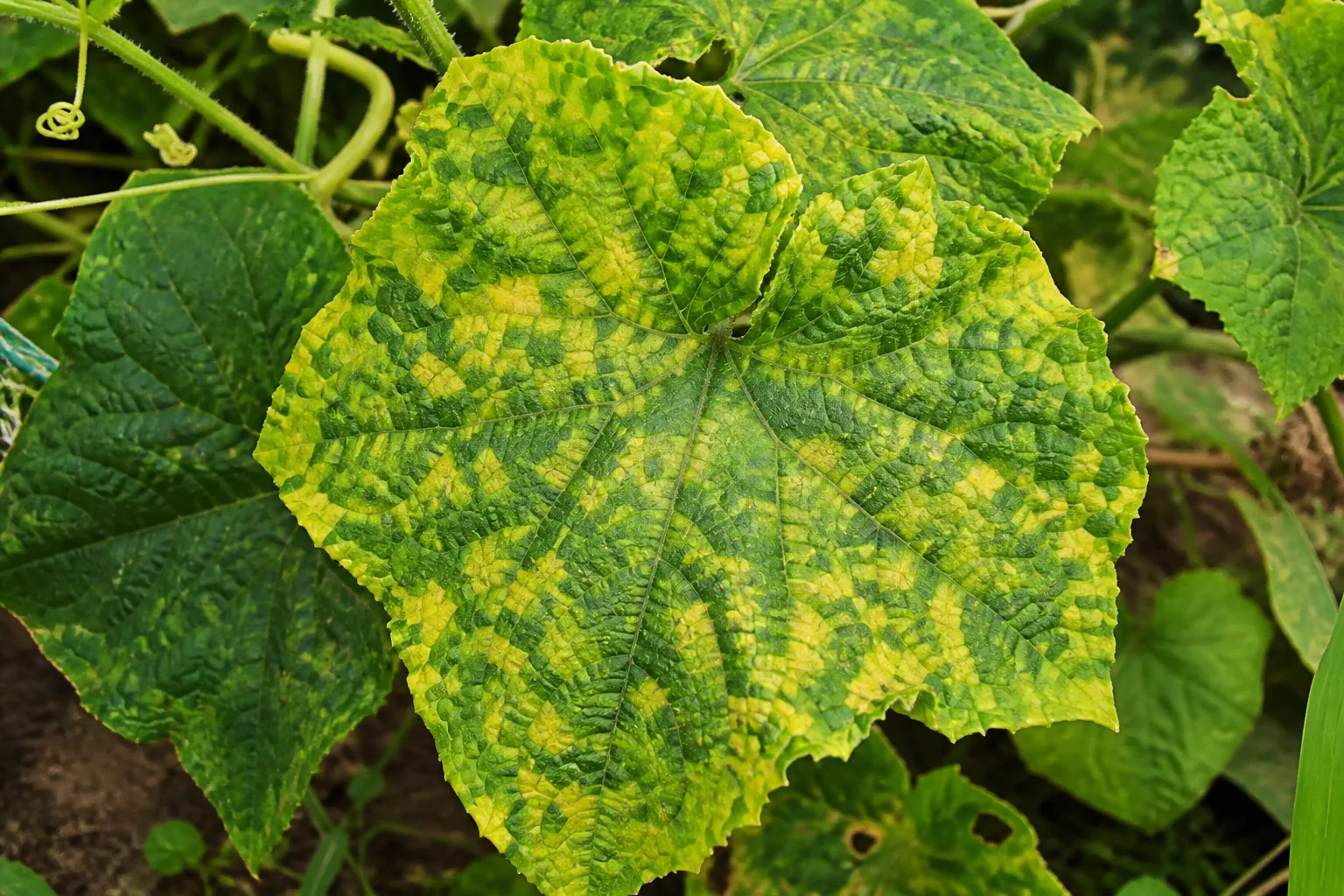
Mottled yellow-green blotches with puckered texture differ from even nutrient yellowing or water-stress fade.
Cucumber mosaic virus (CMV) produces mottled yellow-green blotches, puckered or distorted leaves, stunted growth, and bitter or misshapen fruit. More than 80 aphid species can transmit the virus within minutes of feeding (Wisconsin Horticulture CMV guide). The RHS lists yellow mottling, distortion, and stunting as core symptoms across many hosts—not just cucumbers.
There is no cure. Remove severely infected plants and bag them for disposal—not the compost pile. Control aphids to protect neighbors, but do not assume killing aphids saves an already infected vine. Next season, use resistant varieties where available, start with clean seed, rotate away from cucurbit beds, and consider row covers on young plants until flowers need pollination (Wisconsin Horticulture CMV guide).
Angular Leaf Spot, Anthracnose, and Mildews
Angular leaf spot: Water-soaked spots bounded by leaf veins, often with yellow halos; spots may fall out and leave tattered leaves. Reduce overhead water, rotate cucurbits on a two- to three-year cycle, and use pathogen-free seed. Copper or labeled bactericides may help protect new growth early in the season when extension guides recommend them for your area.
Anthracnose: Dark leaf spots with yellow halos; fruit may show sunken lesions. Wet foliage and splashing spread it. Remove infected leaves during dry weather, mulch, drip-irrigate, and apply labeled fungicides preventively if the disease appeared in that bed before.
Downy mildew: Angular yellow patches on the upper leaf surface with gray-purple fuzzy growth underneath—common in cool, humid spells. Remove affected leaves promptly, open the canopy, and switch to drip irrigation. Resistant varieties and protective fungicides are the main field tools where the disease is recurring.
Powdery mildew: White powdery coating on upper leaf surfaces; underlying tissue yellows and dies. It often appears in late summer when days are hot and nights cool. Increase spacing, remove heavily coated leaves, and use labeled fungicides or extension-approved cultural sprays if outbreaks are annual in your garden.
Oklahoma State lists anthracnose, angular leaf spot, downy mildew, powdery mildew, and viruses among the most common cucumber diseases statewide—cultural rotation and resistant cultivars should come before reactive spraying (Oklahoma State cucumber production guide).
When Yellow Lower Leaves Are Normal
Not every yellow leaf is an emergency. As vines elongate and fruit load increases, the lowest one or two leaves naturally age out. They fade evenly yellow, have no spots or fuzz, and sit beneath vigorous green growth higher on the stem.
If only those bottom leaves are yellow and the rest of the plant is pushing new fruit, snap them off to improve airflow and move on. When yellowing climbs quickly past the bottom tier—or new leaves at the tip turn pale—return to the diagnostic questions above.
What to Remove, What to Treat, and What to Pull
Trim yellow leaves when damage is limited to a few older or spotty leaves and the stem is still strong. Use clean pruners and disinfect between cuts if virus or bacterial disease is suspected. Never remove more than about one-third of the foliage at once; leaves feed developing fruit.
Treat the underlying cause when pattern and soil check point to water stress, a confirmed nutrient shortage, or a manageable pest outbreak. Fertilizer helps deficiency—not virus. Fungicides protect new tissue—they do not resurrect dead yellow areas.
Pull the entire plant when CMV or severe wilt is confirmed, when roots are fully rotted, or when more than half the vine is collapsing despite corrected watering. Destroy the plant away from the compost pile to protect next year’s melons, squash, and zucchini.
Prevent Yellow Leaves Next Season
Prevention is cheaper than mid-season rescue. Build these habits into your cucumber plan:
Test soil and amend before planting. Know pH, nitrogen, phosphorus, and potassium so you feed with purpose.
Plant in warm, drained soil. Wait for soil near 60°F at planting depth; use raised beds where drainage is poor.
Irrigate at the root zone. Drip or soaker hoses keep leaves drier and reduce mildew and leaf-spot spread (Oklahoma State cucumber production guide).
Space and trellis for air flow. Crowded vines hold humidity; trellising improves light penetration and fruit quality.
Rotate cucurbits. Avoid planting cucumbers, melons, squash, or pumpkins in the same spot three years in a row.
Scout weekly. Flip leaves, watch for beetles at seedling stage, and remove diseased tissue early.
Choose resistant varieties. Modern slicers and picklers often carry resistance codes for powdery mildew, angular leaf spot, anthracnose, and some viruses—read the seed catalog carefully.
Conclusion
Cucumber leaves turn yellow when something disrupts roots, nutrients, leaf tissue, or the vascular system—usually water imbalance, fertility gaps, pests, or disease. Your fastest path to a saved harvest is pattern matching: wet soil plus bottom yellowing points to roots; uniform old-leaf fading points to nitrogen; mottling plus distortion points to virus; spots plus wet weather point to foliar disease.
Take one corrective step that fits the pattern, recheck in three to five days, and escalate only if yellowing keeps climbing. Most vines recover when you fix drainage, water deeply on schedule, feed based on a soil test, and remove infected tissue before it spreads. When the diagnosis is virus or bacterial wilt, act decisively—saving one doomed vine is not worth losing the whole row.