Pumpkin Care Guide: Grow Cucurbita pepo (Kaddu)
Cucurbita pepo
Grow pumpkin or kaddu with full sun, fertile soil, deep watering at the root zone, cultivar-aware spacing, and on-vine harvest when rinds harden.
Pumpkin Care Guide: Grow Cucurbita pepo (Kaddu)
Start with wateringThe most common care mistake for PumpkinWatering guide → →Pumpkin care essentials
Light
Water
Keep the root zone evenly moist during active growth, especially while vines run and fruits swell. Water deeply at the base when the top 5–8 cm feels dry, and avoid leaving plants in standing water.
Soil
Fertile, organic-rich loam that holds moisture yet drains freely. Pumpkins are heavy feeders; mature compost and a balanced vegetable fertilizer support steady vine and fruit growth. Aim for pH 6.0–7.0.
Humidity
Temperature
Fertilizer
Pumpkins produce separate male and female blossoms on the same vine; poor fruit set often traces to heat stress, drought, or cramped, shaded growth rather than fertilizer alone.
About Pumpkin
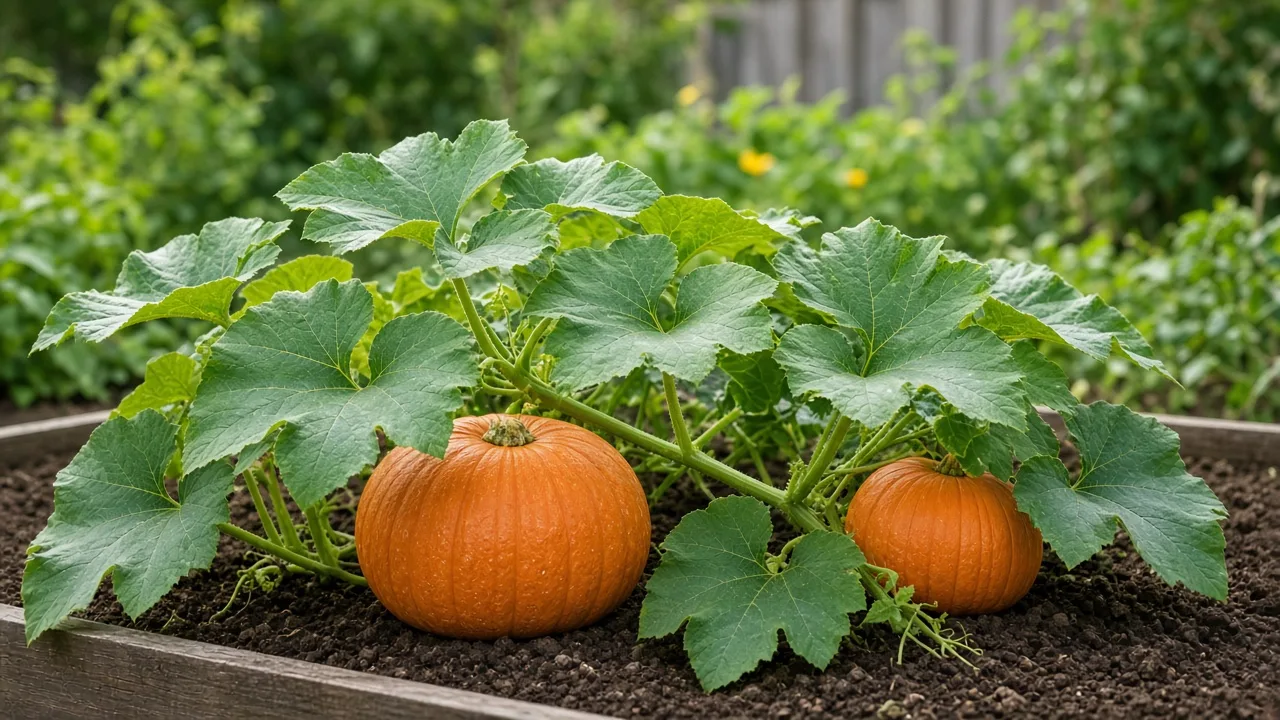
Pumpkin is native to Domesticated in Mesoamerica; many pumpkin and squash types originated across the Americas, typically reaches Vines commonly spread 1.5–3 m with a low crown 30–60 cm tall; fruit size varies widely by cultivar indoors, with moderate to fast — most cultivars need about 90–120 days from seed to mature fruit growth. Pumpkin has a annual vining vegetable growth habit and part of the Cucurbitaceae family. It is also known as Kaddu, Field pumpkin, Pie pumpkin, and Jack-o'-lantern pumpkin.
| Detail | Information |
|---|---|
| Also known as | Kaddu, Field pumpkin, Pie pumpkin, Jack-o'-lantern pumpkin |
| Native region | Domesticated in Mesoamerica; many pumpkin and squash types originated across the Americas |
| Mature size | Vines commonly spread 1.5–3 m with a low crown 30–60 cm tall; fruit size varies widely by cultivar |
| Growth rate | Moderate to fast — most cultivars need about 90–120 days from seed to mature fruit |
| Growth habit | Annual Vining Vegetable |
| Scientific name | Cucurbita pepo |
| Family | Cucurbitaceae |
Pumpkin Care Guide: Grow Cucurbita pepo (Kaddu)
Pumpkin (Cucurbita pepo), widely sold as kaddu in Indian markets, is a frost-tender annual vining vegetable grown for cooking, storage, and decoration—not a compact windowsill herb. Most culinary and carving pumpkins on seed racks belong to this species, along with many summer squashes and gourds that share the same Cucurbitaceae family habits: separate male and female flowers, heavy water use during fruit swell, and sensitivity to cold, wet soil at planting time NC State Extension.
This overview covers identity, season, light and water summaries, soil pH, spacing, pollination, harvest timing, rotation, and mistake avoidance before you open a single-topic guide in the Pumpkin plant hub.
What Pumpkin Is and How It Grows
Scientific identity, kaddu, and cucurbit relatives
The Latin name Cucurbita pepo covers a broad group of domesticated squash types. Packet labels may say field pumpkin, pie pumpkin, or jack-o’-lantern pumpkin, but botanically they are the same species with different cultivar habits. Do not confuse them with giant Cucurbita maxima types or long-storage Cucurbita moschata unless the seed packet says so—days to maturity and vine length change with species.
Because pumpkins sit in the cucumber–melon family, they share pests and soil diseases with zucchini, bottle gourd, ridge gourd, and cucumber. Rotating planting sites or refreshing container mix after a cucurbit-heavy year reduces recurring vine-borer and mildew pressure.
Growth habit, mature size, and annual life cycle
Pumpkins grow as sprawling vines with large lobed leaves and tendrils. A low crown may sit 30–60 cm tall while stems run 1.5–3 m or more, depending on cultivar. Most types need roughly 90–120 days from seed to mature fruit, though miniature or semi-bush selections can finish faster The Royal Horticultural Society.
The plant completes its life in one warm season: germinate after soil warms, run vines, flower, set fruit, ripen, then senesce with frost or age. There is no perennial wood or indoor low-light phase—treat pumpkin like a seasonal crop you replan each year.
Why Pumpkin Needs a Warm Season
Frost tenderness and soil warmth for germination
Pumpkins are tender and must be protected from frost RHS. Cold nights yellow young leaves; a hard freeze kills vines outright. Seeds sown in cold, soggy mix often rot before they sprout—wait until soil is genuinely warm and nights stay mild.
NC State Extension notes that C. pepo is easily grown from seed when soils are warm and is typically transplanted after the last frost. In temperate guides that means late spring; on an Indian terrace the same rule applies in spirit: warm root zone first, not a calendar date copied from another continent.
Sowing windows for Indian plains and hills
On hot lowland plains, many growers sow after monsoon rains ease and nights cool slightly, or during the cool winter window where days stay bright and frost-free—exact month varies by city. In cooler hill districts, a longer mild season may allow earlier sowing, but waterlogged monsoon beds still spell crown rot.
Read the days-to-harvest on your seed packet before committing balcony space. A 120-day carving type started too late may never harden a rind before heat or rain ends the season.
Light Needs in Brief
Pumpkins want full sun—about six or more hours of direct light daily for strong vines and good fruit set NC State Extension. A south- or west-facing terrace rail or open garden row outperforms a shaded courtyard where vines stretch toward light and set fewer female flowers.
Harsh midday heat can stress small containers; afternoon shade may help leaves without replacing the need for bright morning sun. Window orientation, reflectors, and heat-wilt signs are covered in the dedicated Pumpkin light guide—this page only establishes the rule: open sun, not houseplant shade.
Water and Root-Zone Basics
Finger-test moisture while vines run and fruit swells
Pumpkins use the most water while vines run, bloom, and fruits swell. The practical check matches the hub: press a finger 5–8 cm into soil near the root zone; soak deeply at the base when that layer dries while deeper soil still holds slight moisture. Avoid sprinkling leaves on a schedule—morning, soil-level irrigation keeps foliage drier and cuts disease risk compared with evening overhead splashing RHS.
Saturated mix causes yellow crowns, wilting despite wet soil, and fruit rot where pumpkins touch soggy ground. Let excess drain from saucers and grow bags. Seasonal frequency, wilt diagnosis, and container habits live in the Pumpkin watering guide.
Soil, pH, and Container Choice
Fertility, drainage, and minimum pot volume
Pumpkins thrive in fertile, organic-rich loam that holds moisture yet drains freely. Aim for pH roughly 6.0–7.0 and work in mature compost or well-rotted manure before planting RHS. UF/IFAS Gardening Solutions emphasizes choosing varieties suited to your season length—soil prep matters, but a 4-month pumpkin started too late in a short window still fails.
A workable mix mirrors the plant-detail hub: about 50% loam or quality potting mix, 30% mature compost, and 20% coarse sand, perlite, or coco chips for aeration. Pure sand dries too fast for large vines; dense, airless mix invites root disease.
Containers must be exceptionally large—often 40 L or more for one standard plant—with drainage holes. Semi-bush types can live in smaller but still generous pots RHS. Repotting logic for seedlings versus final grow bags is in the Pumpkin repotting guide and Pumpkin soil guide.
Pumpkin Types You Will See on Seed Racks
Large carving types (often bred for size and shelf life) can be watery for cooking UF/IFAS. Pie or sugar pumpkins are smaller, with denser flesh for kaddu sabzi, soups, and halwa. Miniature and ornamental types fit tighter spaces but still need sun and pollination.
Semi-bush cultivars such as some “Funny Face” types suit smaller gardens with shorter runners UF/IFAS. Read vine length and fruit weight on the packet before trellising—a 5 kg fruit on a weak trellis ends in stem snap.
Planting: Seeds, Transplants, and Spacing
You may start indoors in cells and transplant once, or direct-sow into warm prepared soil—pumpkins dislike repeated root disturbance. RHS recommends sowing about 2.5 cm (1 in) deep, hardening seedlings off, and planting out after the last frost with bush types 90 cm (3 ft) apart and trailing types 1.5 m (5 ft) apart.
In grow bags on a terrace, treat spacing as non-negotiable: crowded vines shade each other, produce fewer female blooms, and encourage mildew. Propagation timing, seed depth, and indoor-start schedules are expanded in the Pumpkin propagation guide. Choose stocky seedlings with clean cotyledons—reject yellow mosaic patterns, chewed stems, or waterlogged plugs.
Pollination and Fruit Set
Pumpkins bear separate male and female flowers on the same vine. Male blossoms often appear first; impatient growers sometimes panic before females open. Poor fruit set usually traces to heat stress, drought, cramped shade, or absent pollinators rather than “lack of fertilizer.”
If bees are scarce on an enclosed balcony, hand pollination with a small brush can transfer pollen from a freshly opened male flower to a female blossom (the tiny fruit behind the flower is the giveaway). Steady moisture and full sun still matter more than brushing every bloom—fix culture first, then assist pollination.
Harvesting, Curing, and Storage
Winter-type pumpkins are non-climacteric: they do not ripen properly off the vine the way a tomato might. Let fruits mature until the rind is hard, the stem is firm, and the vine begins to decline RHS. Harvest before hard frost damages skin; frosted fruit stores poorly.
Cut or twist carefully, leaving several centimetres of stem attached. RHS advises curing skins in a warm, dry, airy spot for about a week to ten days before moving fruit to cooler storage. Place a tile or straw under developing pumpkins so they do not sit on wet soil, which invites rot.
Pests, Diseases, and Cucurbit Rotation
Inspect weekly for squash vine borer entry at the crown, aphids on leaf undersides, and powdery mildew on older foliage in humid weather. Mulch conserves moisture but leave a dry gap around the stem base to reduce crown rot RHS.
Do not plant pumpkins where cucumber, melon, or gourd crops struggled last season unless you replace container mix. Penn State’s pumpkin production guides stress that field rotation and sanitation limit recurring disease in commercial plots—a shrunken version for home growers means fresh bag soil and not composting diseased vines back into the bed Penn State Extension.
Common Pumpkin Care Mistakes
Starting too early in cold, wet soil rots seeds and stunts roots. Tiny pots cannot buffer a full-size vine through flowering—daily wilt and blossom drop follow. Overhead evening watering keeps leaves wet and invites mildew. Harvesting green fruit for storage yields soft, bland kaddu that never sweetens or hardens.
Heavy nitrogen late in the season pushes leaves over fruit. Ignoring cultivar days-to-maturity sets up failure on a short balcony season. Skipping pollination help on a sealed terrace leaves you with beautiful male flowers and no fruit.
Pets, Pesticides, and Edible Fruit
Plain cooked pumpkin flesh is familiar human food and is sometimes used in pet diets, but that does not make the whole plant unrestricted forage. Vines and leaves can taste bitter if cucurbitacins build up; the ASPCA Animal Poison Control database did not return a species-specific pumpkin listing in LeafyPixels research for this profile.
Prevent pets from grazing pesticide-treated vines and ask a veterinarian before deliberately feeding pumpkin to animals. Human edibility is not proof of safety for every species or unlimited quantity.
When to Use This Page vs Other Pumpkin Guides
Use this overview when you need the whole picture—identity, warm-season timing, light and water summary, soil pH, spacing, pollination, harvest, and rotation—before diving into one lever. Open the Pumpkin light guide for sun hours, terrace placement, and heat-stress signs. Use Pumpkin watering when wilt, saucer habits, or fruit-set moisture need troubleshooting.
Pumpkin soil and Pumpkin fertilizer cover mix recipes, feeding after fruit set, and nitrogen timing without repeating here. Pumpkin repotting, Pumpkin propagation, and Pumpkin pruning walk through seedling moves, sow dates, and vine training. Start on the Pumpkin hub for grower notes and tool links.
Related Pumpkin Guides
- Pumpkin hub — profile, grower notes, and care index
- Pumpkin light — sun hours, balcony placement, heat stress
- Pumpkin watering — finger-test depth, grow-bag frequency, wilt clues
- Pumpkin soil — mixes, pH, drainage, wrong-soil signs
- Pumpkin fertilizer — potassium timing, compost, overfeeding risks
- Pumpkin propagation — sowing dates, transplants, hand pollination tips
Conclusion
Pumpkin rewards growers who respect its warm-season vine biology: sow or transplant into warm, well-drained soil, give full sun and real spacing, and keep even root-zone moisture from bloom through fruit swell. Let fruits ripen on the vine until rinds harden, then cure and store with stems intact. Match container volume and cultivar days-to-harvest to your terrace season, rotate away from other cucurbits when problems pile up, and use sibling guides when a single variable—light, water, soil, feed, or propagation—needs a deeper fix.
How to care for Pumpkin?
When should you water Pumpkin?
Keep the root zone evenly moist during active growth, especially while vines run and fruits swell. Water deeply at the base when the top 5–8 cm feels dry, and avoid leaving plants in standing water.
- Press a finger 5–8 cm into the soil near the root zone - Keep the root zone evenly moist during active growth, especially while vines run and fruits swell.
- water when that layer is dry while deeper soil still holds slight moisture - Water deeply at the base when the top 5–8 cm feels dry, and avoid leaving plants in standing water.
- Drain excess water - Water deeply at the base when the top 5–8 cm feels dry, and avoid leaving plants in standing water.
What soil works best for Pumpkin?
Fertile, organic-rich loam that holds moisture yet drains freely. Pumpkins are heavy feeders; mature compost and a balanced vegetable fertilizer support steady vine and fruit growth. Aim for pH 6.0–7.0.
- 50% quality loam or potting mix - Fertile, organic-rich loam that holds moisture yet drains freely.
- 30% mature compost or well-rotted manure - Pumpkins are heavy feeders; mature compost and a balanced vegetable fertilizer support steady vine and fruit growth.
- 20% coarse sand, perlite, or coco chips for aeration - Aim for pH 6.0–7.0.
Grower notes for Pumpkin
Treat pumpkin as a warm-season vine crop
Cucurbita pepo pumpkins are frost-tender annuals that need warm soil, full sun, and room to run. They are not compact herbs like basil. In hot lowlands, sow when nights are reliably mild and soil is warm; in cooler districts, a longer cool-season window may work. Read the seed packet for days-to-harvest because pie, carving, and miniature types mature at very different sizes.
Give vines space, support, or a large pot
Even dwarf selections spread several feet. In gardens, allow roughly 90 cm between plants or train vines on a sturdy trellis for smaller-fruited types. Containers need exceptional volume — often 40 L or more for one standard plant — plus drainage holes. Crowded, shaded vines produce fewer female flowers and smaller fruit.
Water and feed through flowering and fruit set
Steady moisture matters most once vines bloom and fruits begin to swell. Soak the root zone rather than sprinkling leaves, and water in the morning when possible so foliage dries by evening. Work compost into the planting area and follow with a balanced vegetable fertilizer according to label rates; too much nitrogen late in the season can favor leaves over fruit.
Harvest only fully mature pumpkins
Winter-type pumpkins and squash are non-climacteric — they do not ripen off the vine the way a tomato does. Let fruits mature on the plant until the rind hardens and resists a fingernail, the stem is firm, and vines begin to decline. Handle fruits with stem attached and cure in a dry, airy spot if you plan to store them.
Inspect seedlings before you buy
Choose stocky seedlings with unblemished cotyledons and no signs of squash vine borer entry at the base. Reject plants with yellow mosaic patterns, chewed stems, or waterlogged mix. Because pumpkins share pests and diseases with other cucurbits, rotate planting sites away from recent zucchini, cucumber, or melon crops when possible.
Keep edible vines pet-aware
Plain cooked pumpkin flesh is a familiar human food and is sometimes used in pet diets, but that does not make the whole plant unrestricted forage. Vines, leaves, and stems can taste bitter if cucurbitacins build up, and the ASPCA database did not return a species-specific pumpkin listing in research for this profile. Prevent grazing on treated plants and ask a veterinarian before feeding pumpkin to pets.
Edible crop — limit pet access
Pumpkin is grown for human food, but the ASPCA plant database did not return a species-specific pumpkin listing during research for this profile. Prevent pets from grazing vines or leaves and consult a veterinarian before using pumpkin as pet food.
Human edibility does not prove that vines, leaves, or large amounts of fruit are appropriate for every pet. Any plant material may cause gastrointestinal upset in dogs and cats. Bitter fruit or foliage can signal elevated cucurbitacins — discard those parts and seek veterinary advice if a pet eats a large amount.
Watering Pumpkin
For Pumpkin, press a finger 5–8 cm into the soil near the root zone; water when that layer is dry while deeper soil still holds slight moisture and water often every 2–3 days in warm, dry weather; check daily in small containers or during flowering and fruit set. Increase watering during hot, windy spells and heavy fruit load; reduce if cool weather slows growth, but do not let vines wilt repeatedly during bloom.
| Detail | Information |
|---|---|
| How often | Often every 2–3 days in warm, dry weather; check daily in small containers or during flowering and fruit set |
| How to check | Press a finger 5–8 cm into the soil near the root zone; water when that layer is dry while deeper soil still holds slight moisture |
| Seasonal changes | Increase watering during hot, windy spells and heavy fruit load; reduce if cool weather slows growth, but do not let vines wilt repeatedly during bloom |
Signs of overwatering
- yellowing leaves and soft stems at the crown
- wilting while soil stays wet
- fruit rot where pumpkins touch soggy ground
- increased powdery mildew on damp foliage
Signs of underwatering
- midday wilting that recovers slowly
- blossom drop with few fruits set
- small or stalled pumpkins
- dry, cracked soil pulling from pot edges
Soil & potting for Pumpkin
Use a mix of 50% quality loam or potting mix, 30% mature compost or well-rotted manure, 20% coarse sand, perlite, or coco chips for aeration for Pumpkin. Must drain well — saturated soil invites root disease, yet an extremely sandy mix can dry too fast for large vines. Target soil pH around 6.0–7.0. Repot sow in cells or small pots, then transplant once into a large container, raised bed, or garden row — not a plant for repeated repotting, ideally in warm soil after the coolest weather has passed; in many Indian regions this means post-monsoon or cool-season windows depending on local heat and rainfall.
| Detail | Information |
|---|---|
| Recommended mix | 50% quality loam or potting mix, 30% mature compost or well-rotted manure, 20% coarse sand, perlite, or coco chips for aeration |
| Drainage | Must drain well — saturated soil invites root disease, yet an extremely sandy mix can dry too fast for large vines |
| Soil pH | 6.0–7.0 |
| Repotting frequency | Sow in cells or small pots, then transplant once into a large container, raised bed, or garden row — not a plant for repeated repotting |
| Best season to repot | Warm soil after the coolest weather has passed; in many Indian regions this means post-monsoon or cool-season windows depending on local heat and rainfall |
Signs it needs repotting
- seedlings have two to three true leaves and have outgrown nursery cells
- roots circle densely in a starter pot
- the final container or bed cannot hold moisture through a warm day
Humidity & temperature for Pumpkin
Fertilizer & pruning for Pumpkin
Use pumpkins produce separate male and female blossoms on the same vine; poor fruit set often traces to heat stress, drought, or cramped, shaded growth rather than fertilizer alone. for Pumpkin.
| Detail | Information |
|---|---|
| Fertilizer type | Pumpkins produce separate male and female blossoms on the same vine; poor fruit set often traces to heat stress, drought, or cramped, shaded growth rather than fertilizer alone. |