Pumpkin Propagation: Sow Cucurbita pepo from Seed
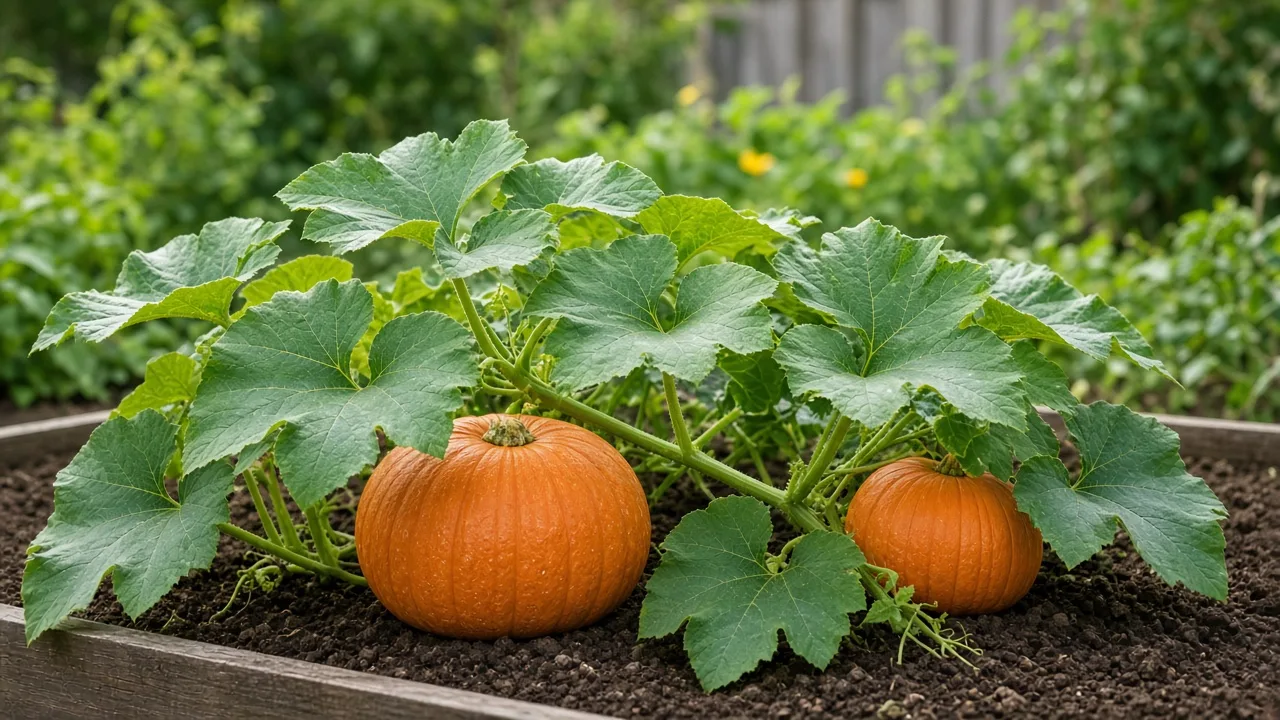
Pumpkin Propagation: Sow Cucurbita pepo from Seed
Pumpkin Propagation: Sow Cucurbita pepo from Seed
Pumpkin propagation for Cucurbita pepo—the species behind most culinary kaddu, pie types, and many carving pumpkins—means growing from seed. NC State Extension lists seed as the recommended propagation strategy and notes that plants are easily sown when soils are warm, then moved into the garden after cold weather has passed. Unlike perennial kales or tree crops, this frost-tender annual vine does not give you a practical home path from leaf or stem cuttings. Your job is to choose indoor starts versus direct sowing, hit warm germination temperatures, and transplant or thin without mangling cucurbit roots.
If you only need one strong plant for a large grow bag, you may buy a nursery seedling—but the same biology applies. Inspect stocky plants with clean cotyledons and reject waterlogged plugs, chewed stems, or mosaic-yellow leaves before you propagate failure into your terrace.
How pumpkin propagates in the garden
Seed versus vegetative methods
Pumpkins complete their life in a single warm season: germinate, run vines, flower, set fruit, ripen, senesce. The Royal Horticultural Society describes them as tender plants usually grown from seed sown indoors in spring, with outdoor sowing a few weeks later where summers are long enough. Vegetative cloning is not part of standard kaddu culture because stems do not root reliably the way a tomato side shoot might, and even if a vine fragment briefly roots, you gain no time on a 90–120-day crop.
Buying a young plant is simply someone else’s seed start. It can save indoor space when you want one or two vines, but you lose cultivar choice and inherit whatever pests rode along in the nursery tray. For named pie, semi-bush, or storage types, seed remains the flexible default.
Pumpkin propagation at a glance
Most home growers either start seeds indoors four to six weeks before outdoor planting, or direct-sow once soil is genuinely warm. RHS advises sowing flat seeds on their side, about 1 cm (½ in) deep, one seed per pot or module to limit root disturbance at transplant. Keep pots at 18–21°C (65–70°F) in a heated propagator or bright windowsill until seedlings emerge, then grow them in strong light until outdoor conditions are settled.
Outdoor sowing happens later: prepare a rich planting pocket, sow two or three seeds about 2.5 cm (1 in) deep, protect with fleece or a cloche if nights are cool, and thin to the strongest seedling. Space bush types about 90 cm (3 ft) apart and trailing vines about 1.5 m (5 ft) apart—the same distances used at transplant time. On a crowded balcony, treating spacing as optional is how you end up with shade, mildew, and male flowers but no fruit.
Indoor seed starting step by step
Sowing depth, warmth, and one seed per pot
Fill 7.5 cm (3 in) pots or modular trays with peat-free seed or multi-purpose compost. Sow one pumpkin seed per cell on its edge, cover lightly, and water with tepid water so the mix is moist but not saturated. Cover with a clear lid or bag until germination, then remove cover immediately so stems do not stretch in humid darkness.
Temperature drives speed more than calendar hype. Gardening Know How notes that pumpkin seeds will not germinate in cold soil and recommends waiting until soil reaches about 65°F (18°C) before outdoor sowing—the same warmth band RHS uses for indoor propagation. In a warm Indian flat, a sunny sill often hits that range; in an air-conditioned room, a propagator mat prevents week-long stalls.
Light, watering, and potting on before move-out
As soon as cotyledons open, move seedlings to the brightest location you have—weak light produces pale, leggy stems that snap at transplant. Water when the top of the mix dries slightly; never leave trays sitting in drained-off water. NC State Extension guidance on damping off links seedling collapse at the soil line to overwatering, poor drainage, and stagnant air—common in covered trays on a kitchen counter.
When roots fill the module, pot into a slightly larger container once, using the mix philosophy in the Pumpkin soil guide. Pumpkins dislike repeated root disturbance; bouncing a vine through three undersized pots before a grow bag often shows up later as wilt and blossom drop. Aim to plant out when seedlings have two or three true leaves and a firm root ball, still before they become root-bound giants.
Direct sowing into warm soil
Mounds, spacing, and thinning
Direct sowing suits growers with open beds, large grow bags, or compost-enriched mounds and a long frost-free window. RHS recommends outdoor sowing in late May or early June in cool-temperate climates—translate that spirit to your locality: warm nights and warm soil, not a copied foreign frost date.
Prepare a pocket about 30 cm wide and deep, blended with mature compost as described in the Pumpkin overview. Optionally warm the spot with fleece for a fortnight. Gardening Know How suggests mounding soil slightly so sun heats the sowing zone faster. Plant three to five seeds about 2.5 cm (1 in) deep, water gently, and thin to one or two strongest plants after true leaves appear.
In 40 L or larger grow bags on a terrace, direct sowing can work if you commit to one vine per bag and full sun. Crowding two trailing cultivars in one bag guarantees mutual shade and poor female flower production.
When to sow pumpkin in India and similar climates
Indian growers should anchor timing to soil warmth and your cultivar’s days-to-harvest, not to Halloween calendars from another hemisphere. On hot lowland plains, many sow after heavy monsoon rain eases and nights stay mild, or during a bright, frost-free cool season where days still reach six or more hours of sun. In cooler hills, the mild window may arrive earlier, but waterlogged monsoon beds still rot seed.
UF/IFAS Gardening Solutions reminds growers that pumpkins need roughly four months from planting to maturity and that semi-bush types such as ‘Funny Face’ suit smaller gardens—useful when a terrace cannot host a 3 m runner. Match the packet to your season length; starting a 120-day carving type too late on a short balcony season produces soft, immature fruit that never stores like mature kaddu.
Reading days-to-harvest on the packet
Before you sow, read days to maturity, vine length, and fruit weight. A miniature pie type may finish faster and tolerate slightly tighter spacing than a field pumpkin bred for size. Propagation success is not just germination—it is germinating early enough that vines still have warm weeks for female flowers and fruit swell. If your season is borderline, indoor starts buy two to three weeks, which RHS notes can put harvest ahead of direct-sown vines—at the cost of transplant care.
Hardening off and transplanting seedlings
Indoor-raised pumpkins must harden off before they face wind, strong sun, and cooler nights. Move trays outside in a sheltered spot for increasing hours over seven to ten days, bringing them in if weather turns stormy. Plant out only when frost risk is gone and soil is warm—NC State Extension describes transplanting C. pepo in late spring or after the last frost in temperate zones; on your terrace, interpret that as stable warmth, not a single lucky afternoon.
Dig a hole slightly wider than the root ball, set the seedling at the same depth it grew in the pot, and firm gently without tearing roots. Water in well and mulch later, leaving a dry gap at the crown to reduce rot. Space bush plants 90 cm apart and trailing vines 1.5 m apart RHS. If slugs attack freshly planted cucurbits, direct-sown beds suffer first; indoor-started stocky seedlings often cope better—another trade-off when choosing a method.
Post-move stress shows up as wilting, yellowing, or stalled growth for several days. Shade harsh midday sun for the first week, keep soil evenly moist but not flooded, and avoid high-nitrogen feeds until new leaves expand. Detailed final-container moves live in the Pumpkin repotting guide.
Young plant aftercare and first flowers
Propagation does not end at transplant. Young vines need full sun, even root-zone moisture, and fertile, well-drained mix—summarised on the Pumpkin hub and expanded in Pumpkin watering and Pumpkin fertilizer. Male flowers often appear before females; impatient growers sometimes assume pollination failure when the vine is simply maturing.
Rotate mentally away from last year’s cucumber, melon, or gourd site when disease was severe, or refresh grow-bag mix entirely. Shared cucurbit pests make “same corner, new seed” a weak propagation strategy.
Hand pollination on bee-scarce balconies
If enclosed glass blocks pollinators, transfer pollen from a freshly opened male flower to a female blossom—the one with a tiny fruit behind the petals—using a small brush. Hand pollination helps only when light and moisture are already adequate; it cannot compensate for shade or drought. Once fruits set, keep steady watering through swell—propagation’s reward phase.
Saving pumpkin seed at home
You can save seed from a ripe pumpkin you grew, but cultivar identity matters. Seed from a stable open-pollinated pie type may produce similar plants if you prevent accidental crossing with nearby zucchini or other C. pepo neighbours. Seed from F1 hybrid packets may still germinate next year, yet offspring often vary in vine vigour, fruit size, and flesh quality—fine for experimentation, unreliable for a planned kaddu crop.
Dry seed thoroughly, label cultivar and year, and store cool and dry. For predictable harvests, buying fresh labelled seed each season is simpler than gambling on last year’s Halloween carving.
Troubleshoot rotted seeds, damping off, and transplant shock
Seeds never appear: the mix was likely too cold, too wet, too deep, or too old. Check warmth near 18°C, drainage holes, and packet date before resowing. Outdoor seed that rots in a monsoon-soaked bed needs a raised mound or a later sowing—not another inch of water.
Seedlings collapse at the soil line: suspect damping off. Discard affected plants and soggy surface compost, sanitise trays, and restart with fresh mix, less crowding, and more air movement NC State Extension. Do not “rescue” a tray by watering more.
Leggy, pale stems: increase light immediately and reduce excess heat after emergence. A stretched seedling may survive if planted deeper at transplant, but fix the light source or new growth will stretch again—see Pumpkin light.
Wilting after transplant: roots were disturbed, sun was too strong, or soil alternated between bone dry and waterlogged. Shade lightly, maintain even moisture at the root zone, and hold nitrogen until new leaves unfold.
When to use this page vs other Pumpkin guides
Use this propagation page when you are choosing seed versus bought seedlings, setting sow dates, or fixing germination and transplant problems. Open the Pumpkin overview for the full seasonal picture—spacing, harvest, and rotation—before you commit balcony space.
Once vines are established, shift to Pumpkin watering, Pumpkin soil, Pumpkin fertilizer, and Pumpkin light rather than re-reading sowing depth. Pumpkin repotting covers the single move from nursery cell to final grow bag; Pumpkin pruning handles vine training after propagation succeeds.
Related Pumpkin guides
- Pumpkin hub — profile, grower notes, and care index
- Pumpkin overview — identity, season, spacing, and harvest basics
- Pumpkin watering — moisture through flowering and fruit swell
- Pumpkin soil — mixes, pH, and drainage for heavy-feeding vines
- Pumpkin light — sun hours and heat stress on terraces
- Pumpkin repotting — moving seedlings into final containers
Conclusion
Propagate pumpkin by seed in warm, well-drained compost, either indoors for a head start or directly into prepared mounds and grow bags once soil stays near 18°C or warmer. Sow one seed per pot for transplants, thin direct sowings to the strongest vine, and harden off indoor seedlings before they face full terrace sun. Match packet days-to-harvest to your local warm window, help pollination on enclosed balconies if needed, and treat saved hybrid seed as a gamble—not a clone of this year’s fruit. When germination fails, fix temperature, drainage, and light before you blame the cultivar.