Pumpkin Watering Guide: Schedule, Depth & Signs
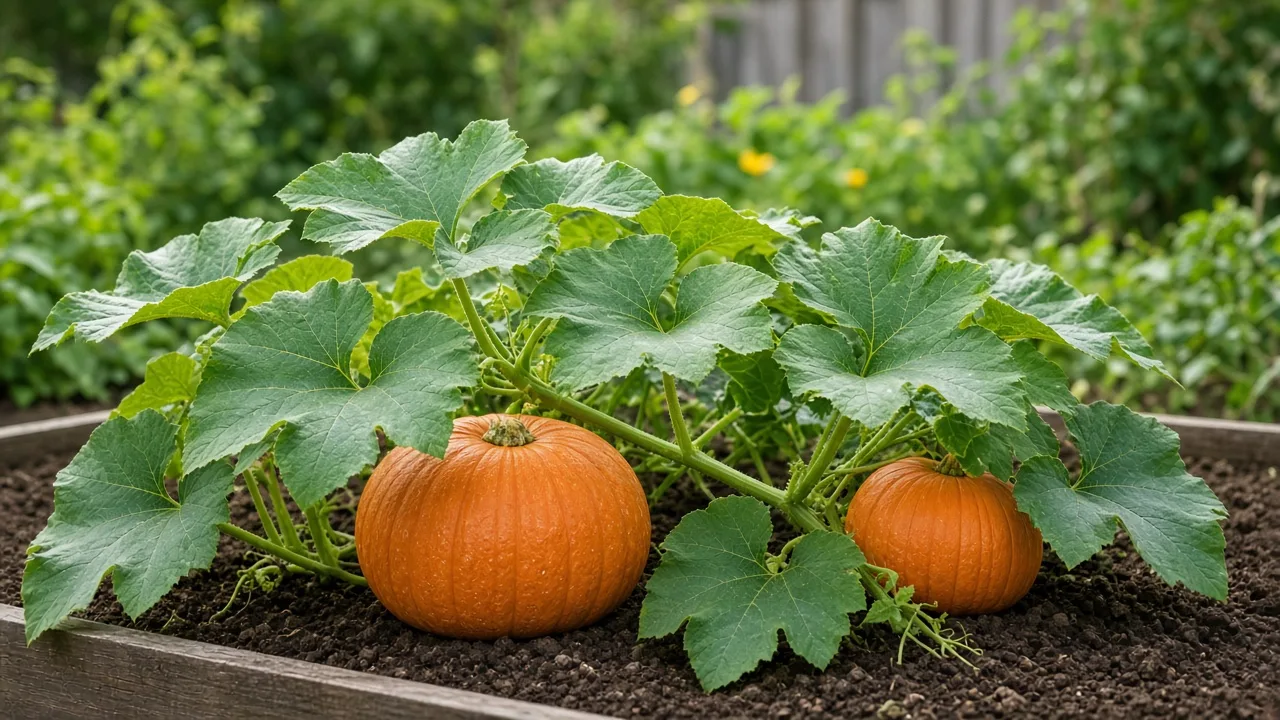
Pumpkin Watering Guide: Schedule, Depth & Signs
Pumpkin Watering Guide: Schedule, Depth & Signs
Pumpkin watering for Cucurbita pepo — the vining annual behind carving types, pie pumpkins, and kitchen kaddu — is not a houseplant “let it dry out” routine. Pumpkins are warm-season cucurbits with large leaves and fast summer growth. They need a steady supply of available moisture through the season, and they are especially sensitive to drought during bloom and fruit set Penn State Extension. At the same time, they resent saturated soil and “wet feet,” which invite crown issues, fruit rot on wet ground, and foliar disease when leaves stay wet RHS.
The practical rule for most home growers: water the root zone deeply, then let only the top 5–8 cm approach dryness before the next soak — matching the hub check for pumpkin — rather than sprinkling every evening on a fixed calendar. In warm, dry weather that often means every two to three days in open beds and daily checks in small pots or grow bags. Read the soil, watch the growth stage, and pair watering with /plants/pumpkin/soil/ that holds moisture yet drains freely.
Why Pumpkins Need Steady Water at the Root Zone
Pumpkins are not drought-tolerant ornamentals. Penn State notes that pumpkins require a constant supply of available moisture during the growing season, and that water stress during blossom and fruit set can cause flowers and young fruits to drop, shrinking yields and fruit size Penn State Extension. That biology explains why a vine that looked fine in June can fail to set fruit in July after a hot, dry week — even if you fed heavily.
Large vines, shallow feeder roots, and fruit load
A single vine can spread 1.5–3 m or more, yet much of the water uptake happens in the upper root zone near the crown and along running stems. NC State describes Cucurbita pepo as preferring moderately moist soil with full sun and benefiting from mulch to retain moisture NC State Extension. As fruits swell, each pumpkin acts like a water reservoir on the plant; the vine cannot “coast” on one deep soak per month. Trailing types also root where stems touch soil, which helps in mulched beds but still does not replace consistent deep irrigation in sand or on a windy terrace.
The Quick Answer: How Much and How Often
There is no honest universal schedule. Epic Gardening recommends a deep watering about once a week, adjusted for rain — with more frequent checks in heat Epic Gardening. RHS goes further for fruiting plants: pumpkins need plenty of water, especially when fruiting, and insufficient water can hinder fruiting and encourage powdery mildew stress RHS. For LeafyPixels hub defaults, think every 2–3 days in warm dry weather, with daily monitoring during flowering and fruit swell in containers.
Use depth, not guilt, as your trigger: when the top 5–8 cm feels dry but deeper soil still holds slight moisture, soak until water penetrates the full root zone (and drains from container holes). In beds, that may mean several litres per plant per event; in a 40 L grow bag, water until a little runs out the bottom, then empty saucers. Count monsoon rain toward your total — reduce hand watering when soil stays cool and damp for days, but do not assume a passing shower rewet a deep bed.
How to Check Soil Moisture Before You Water
Surface colour lies. Cracked, pale soil can hide damp layers near roots; dark soil can be dry an inch down in peat-heavy mix.
Finger test at 5–8 cm
Press a finger or knuckle 5–8 cm into soil beside the main stem (not the fruit). If the layer feels cool and clings, wait. If it is dry at that depth while deeper soil still feels slightly cool, it is time to soak. This matches the /plants/pumpkin/overview/ hub method and beats watering because the calendar said Tuesday.
Pot weight and buried watering pots
Lift grow bags and pots after a full drain; when weight drops noticeably and the top 5–8 cm is dry, water again. In open ground, RHS suggests sinking a 15 cm (6 in) pot beside each plant and pouring water into the pot so it runs straight to roots instead of running off the surface RHS. Mark the stem with a short cane before leaves engulf the crown so you always know where to check and pour.
Watering Pumpkin Through the Growth Stages
Moisture priorities shift as the vine moves from juvenile growth to harvest.
Seedlings and early vine run
Keep seed and seedling mix evenly moist until true leaves expand — drying out at germination kills the stand quickly The Garden Helper. After transplant, water in well and maintain even moisture while roots establish; avoid alternating flood and drought, which stresses young cucurbits. Once vines begin to run, shift toward deeper, less frequent soaks that match your soil’s dry-down speed.
Flowering, pollination, and fruit set
This is the critical window. Penn State emphasizes that deficiency during blossom and fruit set reduces yield Penn State Extension. If female flowers open during a heat spike and the bed is dry, you may see blossom drop and few fruits even with pollinators present. Increase attention (not necessarily volume) — morning soil-level soak, mulch in place, and shade cloth only if extreme heat; light and pollination details live on /plants/pumpkin/light/.
Fruit swell and ripening
While fruits size up, steady moisture supports even growth and reduces stress cracks. As vines senesce near harvest, needs taper — but do not let large fruits sit on bone-dry soil for weeks; shallow roots still feed the rind. Pumpkins are non-climacteric and should mature on the vine; drought during late swell can stall sizing even if the rind later hardens.
Growing Pumpkin (Kaddu) in India and Similar Climates
Kaddu is grown across varied Indian climates, so timing matters as much as volume. Sow when nights are reliably mild and soil is warm enough for quick germination — often post-monsoon in heavy-rain regions or cooler winter windows in hot lowlands, per local heat hub overview. During monsoon, cut supplemental watering when beds stay waterlogged; improve drainage and mounding before the season, not after crown rot appears. In dry winter sun on terraces, grow bags dry faster than in-ground rows — expect daily checks when vines fruit.
Hot, windy spells after monsoon can wilt leaves at midday even when soil is moist; Epic Gardening notes that afternoon flagging with moist soil is normal if plants recover by evening Epic Gardening. If wilt persists into cool morning or soil is dry at 5–8 cm, soak immediately.
Beds, Raised Rows, and Large Containers
In-ground beds: Prefer fertile loam with infiltration and water-holding capacity; Penn State recommends soils that do not compact and notes sandy sites need irrigation for uniform fruit Penn State Extension. Mound or ridge planting helps in clay that holds puddles.
Containers: Standard carving types need roughly 40 L or more per plant with drainage holes — far beyond herb-pot scale. Small volumes dry in hours on a sunny railing; there is no cheat code except more frequent deep soaks and excellent /plants/pumpkin/repotting/ planning so you are not root-bound mid-season.
Spacing: Crowded vines compete for the same soil moisture and shade each other; follow seed-packet spacing and prune only per /plants/pumpkin/pruning/ guidance, not as a substitute for water.
Best Watering Methods: Drip, Soaker Hoses, and What to Avoid
Best: Drip or soaker hoses at soil level, morning when possible so foliage dries by evening RHS Epic Gardening. Buried pot trick (above) works well for hand watering.
Avoid: Overhead sprinklers on a daily timer — leaves stay wet, and cucurbits are prone to powdery mildew in humid air The Garden Helper NC State Extension. If you must overhead-water, do it early and only until drip is installed.
Never: Leave plants in standing water or saucers full of runoff. Pumpkins need moisture in the root zone, not a swamp at the crown.
Signs of Overwatering and Underwatering
Underwatering shows as midday wilt that lingers, blossom drop, small or stalled fruit, and soil pulling away from pot edges — hub signs on the pumpkin profile. Recovery starts with a deep morning soak and mulch; do not repeat shallow sprinkles.
Overwatering shows as yellowing leaves, soft stems at the crown, wilting while soil stays wet, and fruit rot where pumpkins touch soggy ground hub overview. Stop watering, improve drainage, and let the top 5–8 cm dry before the next soak. Chronic wet soil during cool weather fuels powdery mildew and root stress RHS.
First action when unsure: Push a finger 5–8 cm down. Dry → deep soak at soil level. Wet → wait and check drainage/mulch before adding more.
Mulch, Rain, and When to Adjust
After planting, RHS advises a thick organic mulch to hold moisture and reduce watering need — but leave a gap at the stem so damp mulch does not rot the crown RHS. Straw, compost, or dry leaves also keep fruit off wet soil, reducing bottom rot.
Rain: Pause irrigation when soil stays moist at depth for several days. Heat waves: Shorten the interval between checks, not necessarily the volume per soak. Fertilizer: Extra nitrogen without matching water can push leaves over fruit; pair feeding on /plants/pumpkin/fertilizer/ with steady moisture during fruit load.
When to Use This Page vs Other Pumpkin Guides
Use this watering guide for schedules, soil checks, methods, and wilt diagnosis. Use /plants/pumpkin/light/ for sun exposure and heat stress, /plants/pumpkin/soil/ for mix and pH, /plants/pumpkin/fertilizer/ for feed timing, /plants/pumpkin/repotting/ for transplant and container sizing, /plants/pumpkin/propagation/ for sowing moisture at germination, and /plants/pumpkin/pruning/ for vine management — not as a substitute for fixing dry or soggy root zones.
Related Pumpkin Guides
- /plants/pumpkin/overview/ — season, spacing, and kaddu growing context
- /plants/pumpkin/soil/ — drainage, compost, and pH for moisture retention
- /plants/pumpkin/light/ — full sun needs and heat interaction with wilt
- /plants/pumpkin/fertilizer/ — feeding without pushing leaves over fruit
- /plants/pumpkin/propagation/ — germination moisture and transplant timing
Conclusion
Pumpkin watering succeeds when you treat Cucurbita pepo as a high-moisture vine crop, not a succulent: deep soaks at the root zone, 5–8 cm dryness checks, and extra vigilance during bloom and fruit set Penn State Extension RHS. Favour drip or soil-level morning irrigation, mulch with a dry stem gap, and learn to separate normal midday flagging from true drought Epic Gardening. On Indian terraces and in monsoon belts, adjust for rain and grow-bag dry-down, not a single global calendar.
Try the Plant Watering Calculator with your container size and local conditions as a planning aid — then confirm with your finger at 5–8 cm before every soak.