Pumpkin Pruning Guide: Vines, Runners & Fruit Thinning
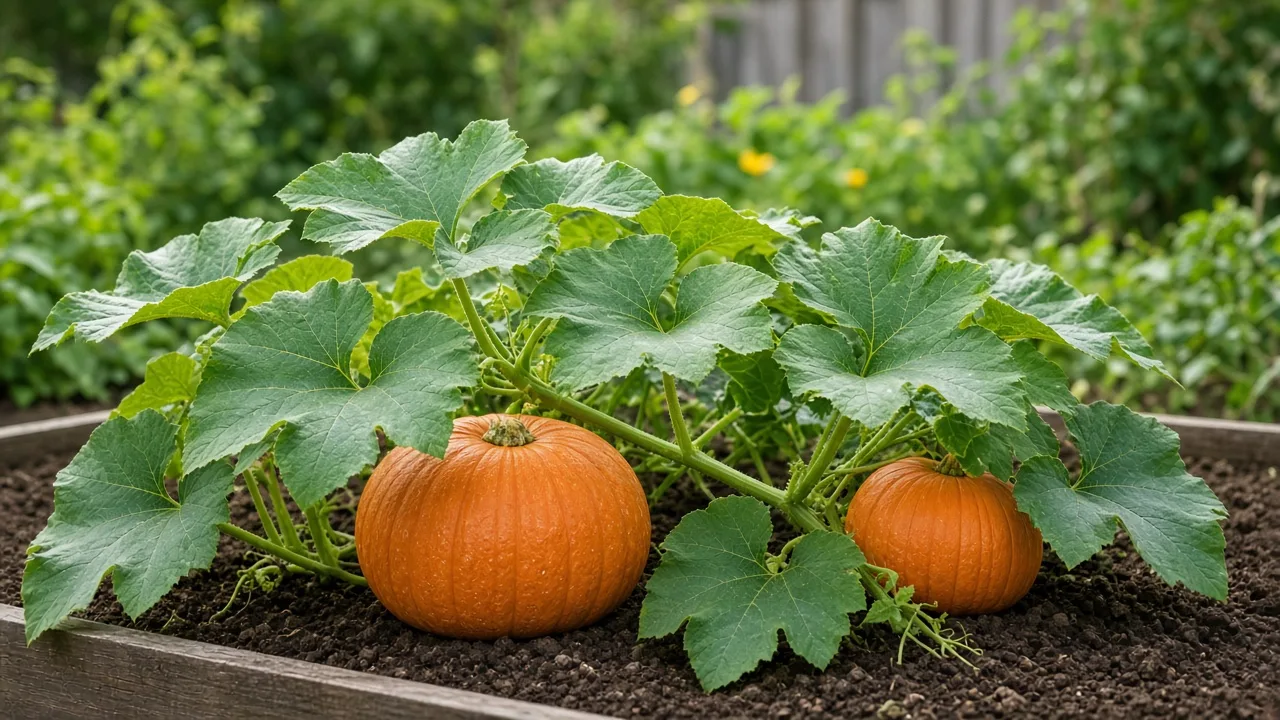
Pumpkin Pruning Guide: Vines, Runners & Fruit Thinning
Pumpkin Pruning Guide: Vines, Runners & Fruit Thinning
First, snip only yellow, mildew-streaked, or clearly damaged leaves and stems with clean scissors or pruners. Do not shorten healthy main vines or secondary runners until the plant has four to six true leaves, looks settled after sowing or transplant, and you can tell which stem is the main leader. For whole-plant context—spacing, kaddu timing, and harvest—see the Pumpkin overview.
Quick answer
Pumpkin (Cucurbita pepo) is pruned by training and thinning a sprawling annual vine, not by cutting back woody branches. After a quick cleanup of damaged tissue, your next decisions depend on cultivar habit and fruit goal: long-vined carving or storage types often benefit from runner limits and fruit thinning, while compact semi-bush pie pumpkins may need only diseased-leaf removal and trellis tying. NC State Extension describes Cucurbita pepo as a frost-tender annual cucurbit with separate male and female flowers on the same plant. Gardener’s Path notes that trimming tertiary shoots early keeps energy on the main and secondary vines that actually carry fruit. Match cut intensity to your seed packet, keep watering even after foliage loss, and rely on full sun so regrowth stays strong.
What pumpkin pruning actually does
A pumpkin plant is an annual vine with a thick main stem from the crown, secondary runners that branch off it, and sometimes tertiary shoots emerging from leaf axils on those runners. Leaves, tendrils, and bright yellow flowers appear at nodes along all three levels; a pollinated female bloom carries a tiny round ovary behind the petals, while male flowers sit on slender stalks. RHS explains that trailing types need generous space yet can be trained up sturdy supports when fruits are small enough to net individually.
Pruning and training on home vines usually serve four jobs:
Cleanup removes powdery-mildewed, broken, or sun-scorched foliage whenever you see it. Basal thinning lifts leaves off wet soil or pot rims to improve airflow. Runner management shortens the main vine and secondary runners and deletes tertiary growth that steals vigor. Fruit thinning removes excess young pumpkins so remaining fruit swell faster—especially important when you want one or two large kaddu on a terrace.
Pruning improves scouting and air movement, but it cannot compensate for six hours of weak light, flooded roots, or missing pollinators on open terraces. If vines look pale and stretched, fix light before you chase size with aggressive cuts.
Vining types vs semi-bush cultivars
Read the seed packet before you copy giant-pumpkin pruning videos:
| Habit | Typical use | Pruning approach |
|---|---|---|
| Long-vined field or carving | Beds, large grow bags | Runner limits, tertiary removal, optional fruit thinning to two to five pumpkins |
| Pie or sugar types | Kitchen gardens | Moderate: cleanup plus shortening runaway secondaries in tight spaces |
| Semi-bush (e.g. some Florida-friendly types) | Smaller plots | Minimal: damaged leaves, light fruit thinning only |
UF/IFAS Gardening Solutions notes that semi-bush varieties such as ‘Funny Face’ suit smaller gardens because plants spread less than full runners—heavy runner pruning on those types is often unnecessary.
When to prune or train pumpkins
Establishment window
Delay structural shortening until seedlings have four to six true leaves and new growth has resumed after transplant or final potting. Pumpkins are sensitive to root disturbance; stripping foliage while they are still recovering from a move adds stress without improving airflow.
Active warm-season growth
Pumpkins are a warm-season crop. On Indian terraces after soil has warmed, main vines can add length quickly once soil fertility and moisture are steady. That is when runner tips heal fastest and buried nodes are most likely to root.
Check sprawling vines every five to seven days in peak summer. A tertiary shoot left alone can become a tangled branch within a week.
Fruit-set timing for structural cuts
Gardener’s Path recommends holding off on major trimming until vines are about 10–15 feet (3–4.5 m) long and you have two to five established fruits on large varieties—or roughly 10–12 developing fruit on smaller types. Cutting too early steals leaf area the plant needs to feed young pumpkins.
Disease-driven cleanup (any growth stage)
Cucurbit powdery mildew often starts on older, shaded leaves in humid weather. When you see white powdery patches, remove affected leaves promptly and open the lower canopy—even if the vine is still short. That emergency cleanup is different from optional runner shortening for size control.
When to stop pruning
Ease off live-tissue cuts in the last three weeks before you expect to harvest mature fruit, especially if nights are cooling. Pumpkins are non-climacteric and should harden on the vine; late heavy pruning can slow rind maturation without improving storage quality.
What to check before cutting
Walk the vine in morning light and identify:
- Main vine — thickest stem emerging from the crown.
- Secondary runners — branches leaving the main vine; they may root where they touch soil.
- Tertiary shoots — new growth from leaf axils on secondaries; they rarely carry the fruit you want.
- Female flowers — swollen ovary behind the bloom; mark fruit you intend to keep before you shorten past them.
- Male flowers — needed for pollen on monoecious types; leave several open males when bees are scarce.
- Soil moisture — wilted vines with dry root zones should be watered before you remove healthy leaves.
Sterilize blades with rubbing alcohol between plants if mildew or virus symptoms are present in the patch.
The first cut to make
Remove only damaged, diseased, or clearly yellow leaves and broken stems. Make each cut just above a healthy node with sharp bypass pruners so you do not tear the hollow cucurbit stem.
If lower leaves rest on soggy monsoon soil or wet terrace tiles, snip those next—still before you touch the growing tips of main or secondary vines.
How to prune pumpkin vines step by step
Step 1: Clear the base for airflow
Strip the lowest one or two nodes of leaves if they crowd the soil line or block air from reaching the crown. On grow bags, keep fruiting stems trained so leaves do not form a damp skirt around the pot. This mirrors the basal cleanup many growers use on cucumber trellises to limit splash-borne fungus.
Step 2: Delete tertiary shoots early
As soon as you see a tertiary runner emerging from a secondary vine’s leaf axil, pinch or snip it off. Gardener’s Path and experienced growers treat tertiaries as nutrient sinks that do not justify the foliage they add.
Step 3: Shorten secondary runners
Measure about 8–10 feet (2.4–3 m) from where each secondary runner leaves the main vine and cut the tip just beyond a healthy leaf node. Redirect runaway secondaries so they do not cross and shade one another.
Step 4: Trim the main vine past your last keeper fruit
On long-vined types, many gardeners cut the main growing tip 10–15 feet (3–4.5 m) beyond the last pumpkin they plan to mature—measuring from the crown, not from the first leaf. If a keeper fruit sits exactly at that mark, move the cut another few feet past it so you do not remove the stem supporting a swelling kaddu.
Step 5: Bury or mulch severed tips
After shortening a runner, bury the cut end 1–2 inches (2.5–5 cm) in moist soil and mulch lightly. Covering fresh cuts limits drying and can encourage auxiliary roots that stabilize long vines on loose terrace mix.
Step 6: Thin fruit if size matters
RHS advises limiting large-fruited plants to two or three pumpkins each, or one for giant types, by removing extra flowers or young fruit as they form. On pie pumpkins you may keep more fruit but still pinch off misshapen or pest-damaged young gourds so the rest swell evenly.
How much you can safely remove
Pumpkin vines tolerate selective thinning better than a single hard shave. A practical ceiling for one session on an established plant in warm weather:
- Basal leaves: lowest one to two nodes, plus any mildewed foliage.
- Tertiaries: all you find that week.
- Secondaries: one tip per runner per session, not every branch at once.
- Main tip: one cut per plant per week once fruit is set.
If the vine wilts for more than a day after pruning despite moist soil, or new leaves stay pale for a week, you removed too much live tissue or pruned during heat stress. Pause structural cuts and stabilize watering and light first.
What not to cut
- All male flowers on outdoor monoecious vines—you need pollen for fruit set unless you hand-pollinate from saved males.
- The only leaf shading a green pumpkin during harsh afternoon sun on terraces; remove a different leaf or rotate fruit onto a tile instead.
- Healthy growing tips before the vine has enough leaf area to support fruit.
- The stem attachment at harvest—always leave several centimetres of stem on the fruit when you finally cut pumpkins for storage.
Do not compost visibly virus-infected vines in the same bed next season; bag and discard if mosaic mottling is severe.
Pruning for shape, trellises, and small spaces
On sturdy trellises, train the main vine vertically and treat side runners as secondary vines to shorten. RHS recommends netting individual fruits on supports so weight does not tear stems. Large carving types are usually grown on the ground with fruit resting on boards or tiles—not hung.
For balcony grow bags, runner shortening is often required so vines do not overrun neighbors’ space. Semi-bush cultivars may only need directional tucking and fruit thinning.
Aftercare after pruning
Water at the root zone the morning after a heavy trim so hollow stems do not sit drought-stressed in afternoon heat. Hold off on high-nitrogen fertilizer for a few days; a light balanced feed is reasonable once new leaves unfold.
Watch for wilting, blossom drop, or new mildew on the inner canopy. Renew basal cleanup weekly during humid monsoon spells.
Recovery timeline and signs pruning worked
On warm, actively growing vines with even moisture, expect new tendrils and leaves within three to seven days after moderate runner tips are removed. Fruit you kept should resume swelling within a week if pollination already succeeded.
Signs your pruning plan is working:
- Inner leaves dry faster after morning watering.
- Remaining pumpkins grow steadily in girth.
- Fewer new tertiary shoots appear after you stay on a weekly walk-through.
- Powdery mildew spreads more slowly after infected leaves are gone.
Signs you pruned too hard or too early: stalled vine length, yellowing of the entire plant, aborted young fruit, or sun scald on exposed pumpkins.
Mistakes to avoid
- Stripping leaves from a foot-tall seedling because of a few leaf spots—wait for diagnosis and keep photosynthetic area.
- Letting secondaries cross into a dense mat that holds dew all night.
- Ignoring pollinators after removing male blooms near females.
- Pruning for size while the plant is drought-stressed or root-bound.
- Assuming every pumpkin type needs giant-pumpkin single-fruit culture—pie and semi-bush types need a lighter touch.
When not to prune
Skip structural runner cuts when plants are wilting from underwatering, recently transplanted, or sitting in cold, waterlogged soil. Delay optional thinning during a heat wave if the only leaves left would expose fruit to scorch.
If you need only one or two fruit on a short season, it is often simpler to sow a compact cultivar on time than to rescue an overgrown vine late in the year.
Can you use pruned material?
Soft vine tips do not root as reliably as seed-started plants for pumpkins. Compost healthy trimmings unless you are experimenting; most growers restart from seed each warm season. Save male flowers for hand pollination the same morning you cut them.
Conclusion
Pumpkin pruning is cleanup first, then vine architecture: remove diseased tissue, open the base for airflow, delete tertiaries, shorten secondaries and the main vine according to your fruit goal, and thin extras if you want fewer, larger kaddu. The wrong cut timing costs leaf power; the right sequence pairs with steady moisture, strong sun, and pollinator access. Read the seed label once, then prune with that vine length in mind—not every field-pumpkin tutorial fits a terrace pie cultivar.