When to Harvest Pumpkins for the Best Flavor and Storage
Learn when to harvest pumpkins by variety, rind, stem, vine, and frost risk, then cut, cure, and store them so sound fruit lasts longer.
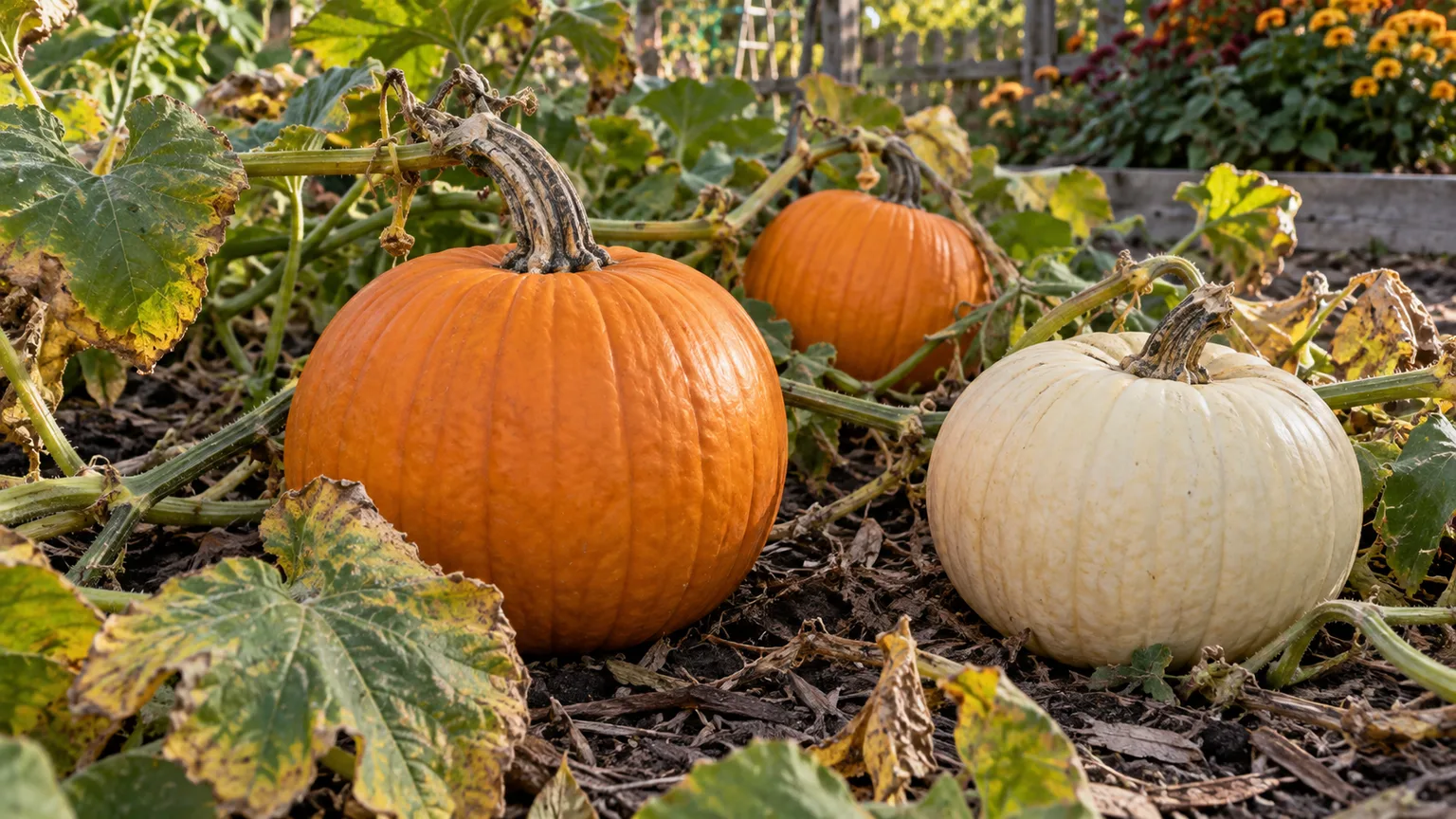
A pumpkin is ready when its rind is hard, its color matches the mature form of its variety, and its stem is firm and beginning to dry. Those signs matter more than a date on the calendar. Most varieties need roughly 90 to 120 days from planting, while large or unusual cultivars may take longer, so use the seed packet to decide when to start checking rather than when to cut.
Weather sets the final deadline. Leave a sound, still-growing pumpkin on the vine while the season is mild enough for it to finish, but harvest mature fruit before a hard freeze or prolonged cold, wet weather. An immature pumpkin may continue to change color indoors, but it will not finish developing the sweetness and storage quality it gains on the vine. The practical target is the latest safe harvest date before damaging cold, not the first crisp morning of fall.
Use the Calendar to Start Checking, Not to Pick
Read the cultivar’s days to maturity
Pumpkin varieties differ in size, color, and time to maturity. Many are ready about 90 to 120 days after planting, but a compact mini pumpkin may mature on a different schedule from a large carving type, and a giant pumpkin can need substantially longer. Treat the seed packet’s estimate as a window, not a promise: it may count from sowing or transplanting, and cool weather, heat stress, uneven water, or a late start can shift the pace.
Count from the date specified on the packet, then begin inspecting fruit as that window approaches. Check the label for the variety’s expected size and mature color too. A pumpkin that is still growing steadily and has a green, soft rind is not made ripe by reaching a particular day number. Conversely, a fruit with a hard rind, a firm corking stem, and full cultivar color can be ready before a calendar estimate if the plant grew quickly. Epic Gardening’s harvest guide recommends using the variety’s size, color, and days to harvest together rather than relying on one measure.
If you grow more than one variety, mark their names or keep the seed packets near your garden notes. A mixed patch can hold a pale ornamental pumpkin, a small pie type, and a large carving pumpkin at different stages on the same day. Write down the planting date and the first day each fruit reaches full color. That simple record helps you interpret next year’s packet estimate and makes it easier to spot a genuinely late fruit before the forecast turns cold.
Let the local forecast set the deadline
The ideal harvest window is after the fruit has matured but before freezing weather damages it. Check your own forecast and garden conditions; a regional average first-frost date is only a planning aid. If the vine is still green and the pumpkins are not mature, a mild forecast gives them more time. If freezing temperatures are approaching, prioritize mature fruit and do not gamble with a storage crop just to wait for every leaf to die.
Pumpkin vines and leaves are more vulnerable to frost than the thick fruit, but cold injury, wetness, and bruising can shorten a pumpkin’s life in storage. Pick mature pumpkins before a hard freeze. A light frost or cold, rainy spell can make an earlier harvest sensible when the fruit is nearly mature, but leaf browning alone is not proof that every pumpkin is ready. Epic Gardening advises harvesting before a hard frost and handling fruit carefully (Epic Gardening); Gardening Know How also recommends an earlier harvest when frost or cold rain threatens (Gardening Know How). A damaged pumpkin is best used promptly rather than placed in long-term storage.
A forecast low is not the same as the temperature at every leaf in the garden. Cold air settles in low spots, while a wall or sheltered bed may stay warmer; exposed leaves can also frost before the air thermometer reads freezing. Use the forecast as a warning to check the patch, not as a guarantee that every vine has the same protection. Row cover can buffer a brief light frost when it is installed before sunset and secured to the ground, but it is a short bridge, not a way to carry a pumpkin crop through repeated freezes. If a freeze is coming and the fruit is already mature, harvest rather than trying to preserve a fading vine.
Six Signs a Pumpkin Is Ready
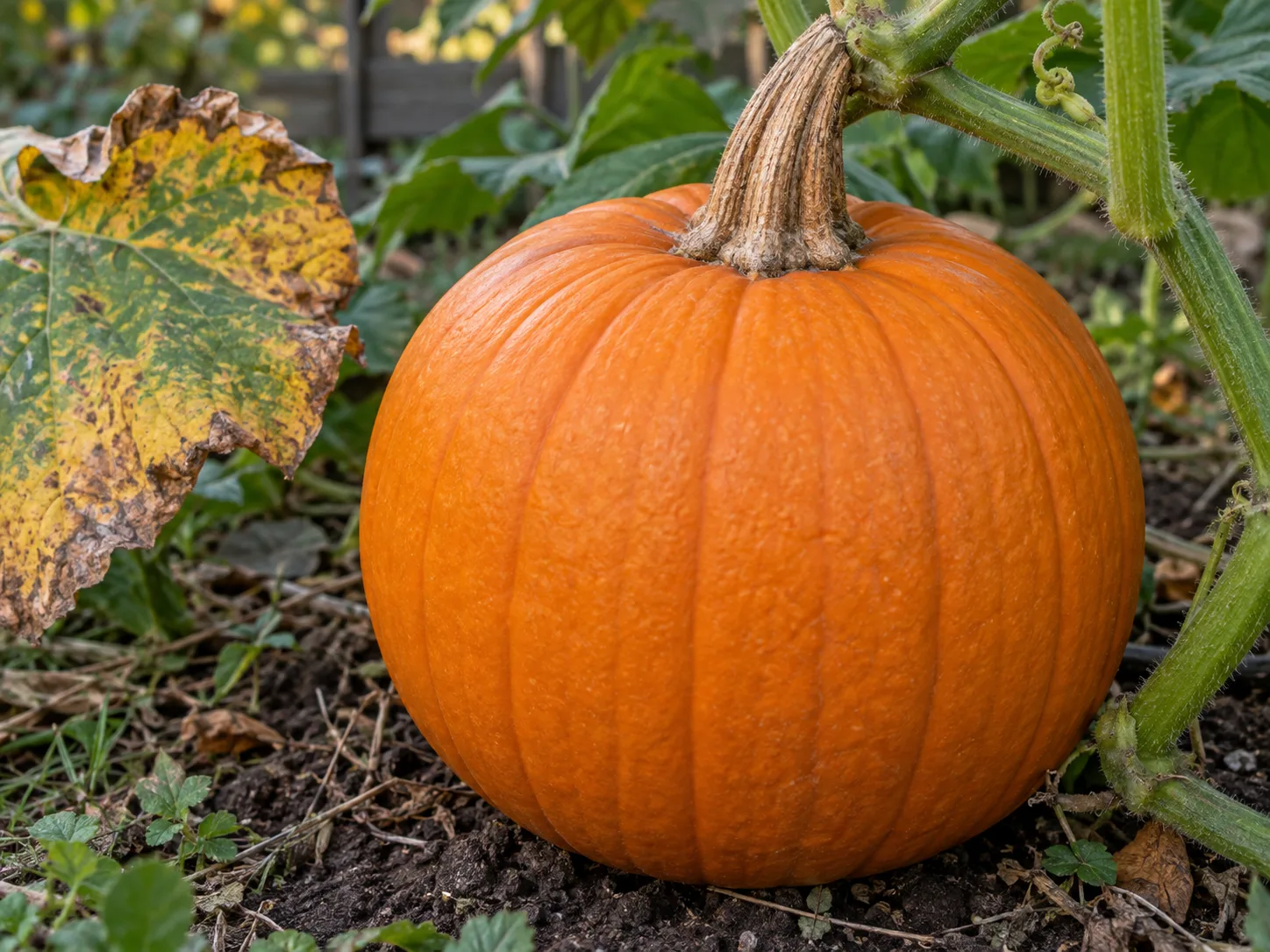
Use several clues together. The strongest combination is the expected mature color, a hard rind, and a firm stem. Vine condition and days to maturity help you decide when to inspect; they cannot override a soft rind or a fruit that is still clearly immature.
Its color matches the variety
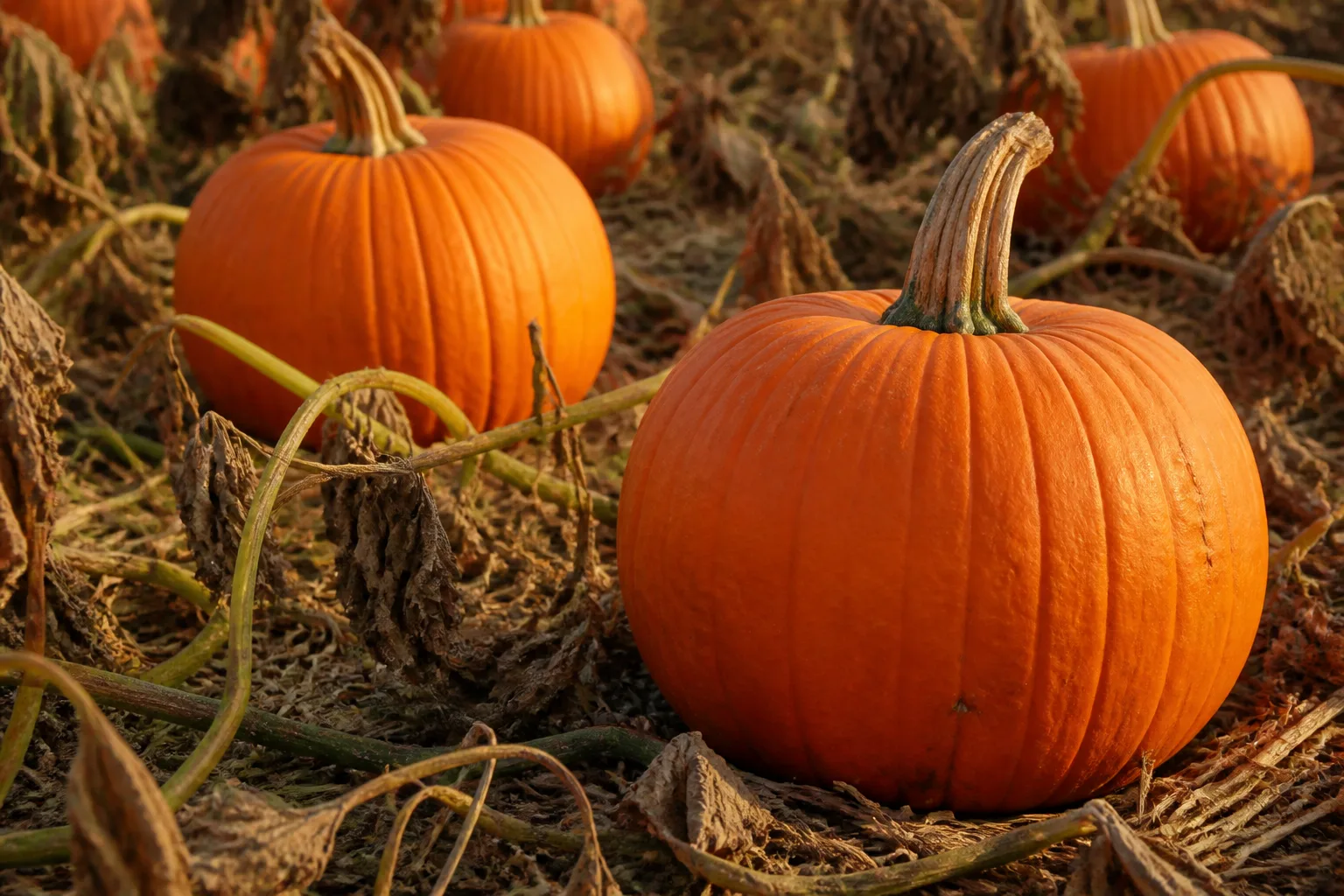
A ripe pumpkin does not have to be orange. Depending on the cultivar, mature fruit may be cream, white, red, pink, blue-gray, striped, or green. Compare the pumpkin with the seed packet or a reliable variety description, and look for it to reach its full characteristic color. If the cultivar is supposed to be orange but still has broad green patches, it is likely still finishing, even if the calendar says fall.
Color is useful only when you know what to expect. Some varieties keep green markings when ripe, while others have a deep, dull orange skin. A pumpkin that changes from green toward its mature shade after picking may look more finished, but this visual change does not mean the fruit has completed its internal maturation. University of Minnesota Extension classifies pumpkins and winter squash as non-climacteric: after harvest, their sugar content does not continue to rise as it would in fruit that ripens fully off the vine (University of Minnesota Extension).
The rind resists a gentle thumbnail test
The rind hardens as a pumpkin matures. Press a thumbnail gently against an inconspicuous spot; a ready fruit should resist a light press instead of denting or puncturing easily. Do not stab the pumpkin or repeat the test in several places. A puncture creates an entry point for decay, and one small test is enough to tell whether the surface is still noticeably soft.
Rind firmness is a more useful storage cue than a glossy appearance. A soft, easily scratched pumpkin may be fine to cook soon, but it is a poor candidate for keeping intact for months. A hard rind protects the fleshy interior from handling and slows moisture loss. Penn State Extension advises choosing pumpkins with a firm rind when selecting them for cooking and preservation; the same quality check helps a home gardener decide which fruits are likely to keep (Penn State Extension).
Use light pressure, not a sharp tool. If your nail leaves a shallow mark, the fruit may still be hardening; check another maturity cue and give it more time if weather permits. Do not scratch the pumpkin repeatedly to compare spots. The tiny test mark will not make a mature fruit unsafe, but larger scrapes and punctures are exactly the kind of wound you are trying to avoid on a pumpkin you hope to store.
The stem firms and begins to cork
Look at the stem where it joins the pumpkin. A mature stem is firm and often turns from green and succulent to tan or brown, dry, and corky. It should not feel soft or look freshly green at the base. This change is a valuable supporting sign because the stem and fruit mature together, but it is not a guarantee by itself: disease, drought, or vine damage can make a plant dry early.
Keep the stem attached after harvest. It helps protect the scar at the top of the fruit and gives the pumpkin its familiar handle, though that handle is never strong enough to carry the fruit by. Leave several inches when cutting; a broken or torn stem exposes tissue and can invite rot. Gardening Know How’s pumpkin harvest guidance also recommends judging the woody stem along with mature color and hard skin, rather than treating a single clue as decisive.
The vine is declining, but not necessarily dead
Late in the season, the vine often yellows and declines as fruit mature. If the section closest to a pumpkin is fading while its rind and stem are also firming, harvest is likely near. But do not wait for every vine to turn brown. A healthy green vine can still feed an immature pumpkin, and a dead vine can result from disease, insects, drought, or frost rather than normal maturity.
Inspect the fruit itself before making a decision. A mature pumpkin on a declining vine should be harvested, especially if cold rain or frost is forecast. An immature fruit on a suddenly collapsed vine may be at risk, but cutting it will not make it mature; use it soon if its condition is sound, and do not expect it to store like a ripe pumpkin. Extension guidance notes that vines usually begin to decline as winter squash mature, while the rind and stem provide direct fruit-level checks (University of Minnesota Extension).
If a vine is yellowing from powdery mildew or insect damage, nearby fruit can still be at different stages. Do not assume every pumpkin on that plant is ready at once. Cut the fruit that has reached full color and a hard rind, then leave smaller green fruit attached if leaves remain healthy and the forecast allows. If the whole plant has died, sort the fruit individually: firm, mature ones can be cured and stored; soft or markedly immature ones need to be cooked or discarded sooner.
Mature size supports the other clues
Compare each pumpkin with the expected mature size for its variety. A small pie pumpkin may be fully mature at a size that would look undersized for a carving type, and a miniature cultivar can be harvest-ready while it still fits in one hand. The opposite is also true: a large fruit is not automatically ripe simply because it looks impressive.
Size is most useful as context. If a pumpkin has stopped enlarging, has its characteristic color, and has a firm rind and stem, it is probably close. If it is still expanding quickly or well short of the cultivar’s normal size, give it more vine time when weather allows. Giant varieties are a good reason not to use the common 90-day estimate as a universal rule; read the specific variety information and begin checking based on that schedule.
Surface sheen and sound are secondary hints
A mature pumpkin may look more matte than a young, shiny fruit, and a light tap may sound somewhat hollow. These cues are subjective and vary with size, wall thickness, and cultivar. Do not use them instead of the rind test. A pumpkin can lose its shine because of weather or abrasion, and two ripe varieties can sound different when tapped.
Likewise, a dry tendril near the fruit may support the impression that growth is winding down, but tendrils can dry for reasons unrelated to maturity. Think of sheen, sound, and nearby tendrils as tie-breakers only when color, firmness, stem condition, and expected timing already point in the same direction. If the evidence conflicts, the safest choice depends on the forecast and intended use: wait during mild weather, or pick a nearly mature fruit before a freeze and use it soon.
Harvest Without Damaging the Rind or Stem
Cut a generous handle with a clean tool
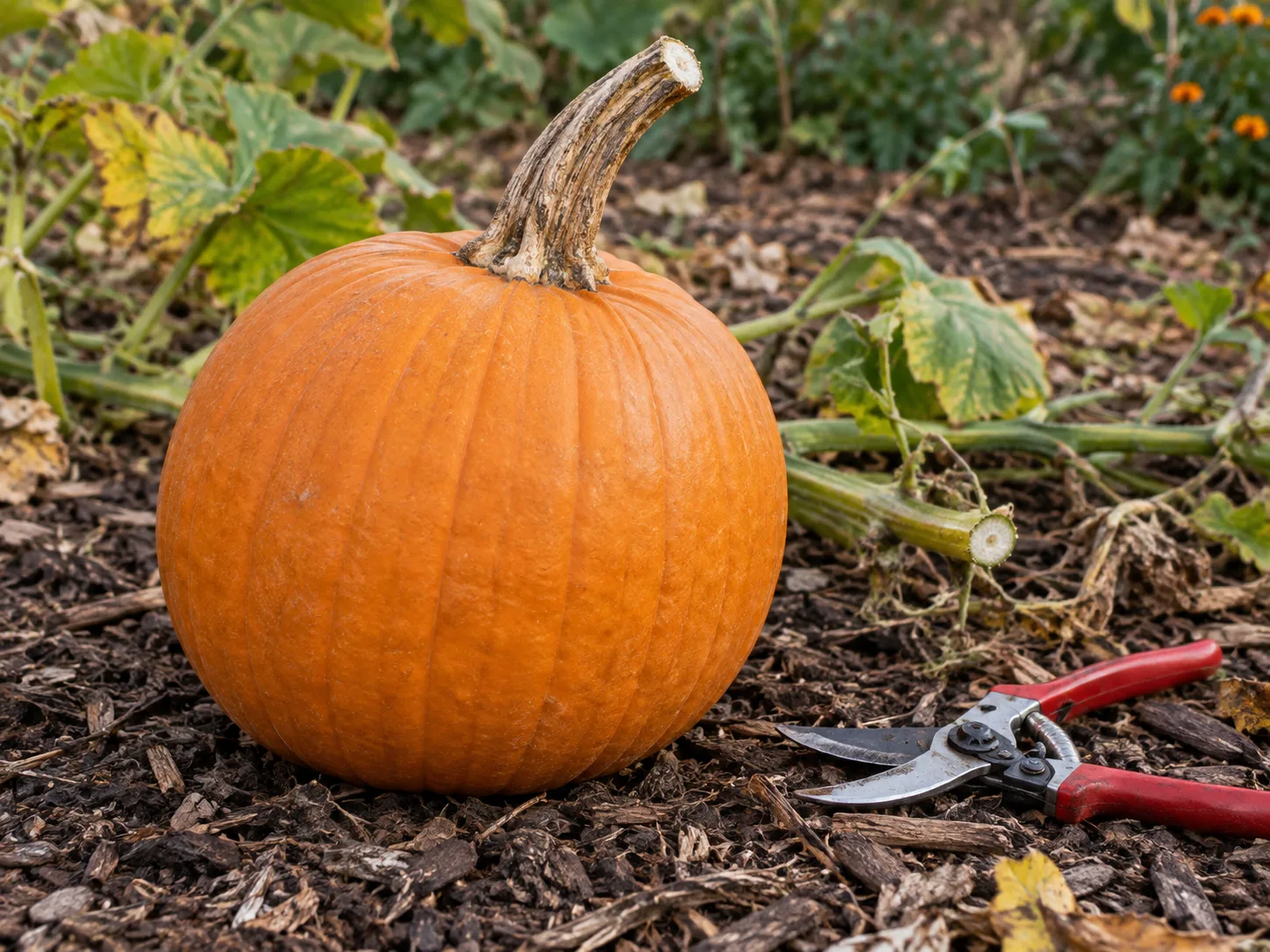
Harvest on a dry day when possible, after surface moisture has evaporated. Wear gloves if the vines or leaf stalks feel prickly. Use sharp pruners, loppers, or a clean knife to sever the stem rather than twisting, snapping, or pulling the pumpkin from the vine. Cut several inches above the fruit—about 3 to 4 inches is a useful minimum for many pumpkins, and larger fruit benefit from a longer stem if there is room. Avoid cutting so close that the stem breaks away from the crown.
A clean cut limits needless damage to both the fruit and the remaining vine, which may still be supporting smaller pumpkins. Set the tool down before lifting the fruit. The stem is not a handle: it can snap under the pumpkin’s weight, leaving an open wound and a fruit that spoils sooner. The practical sequence is simple: cut, support the base with both hands, and place the pumpkin gently into a basket, cart, or padded crate. Epic Gardening likewise advises cutting the stem instead of pulling and carrying pumpkins from the base.
If the vine is still healthy and has another fruit that is not ready, cut only the ripe pumpkin and leave the rest attached. A broad cut several inches above the crown avoids tearing the short section of stem away from the fruit. On a very large pumpkin, a second person can steady the fruit while you cut, but neither person should use the stem as a lifting point. Keeping the tool sharp also reduces the temptation to twist or tug when a stem resists.
Carry and sort fruit carefully
Pumpkin skin may look tough, but bruises and cuts can shorten storage life. Lift each fruit from underneath, keep it upright, and avoid dropping or rolling it across rough ground. Do not stack pumpkins where their weight can press on the lower fruit or snap stems. If you have a large harvest, pad a wheelbarrow or crate with clean straw or a towel and make a single layer rather than piling fruit together.
Before curing, sort the harvest. Keep only mature, dry, unblemished pumpkins for long storage. Use any fruit with a puncture, split, soft spot, or broken stem soon, and discard fruit that is leaking, moldy, or foul-smelling. A pumpkin with superficial dirt can be brushed off when dry; wash it before cutting or cooking, then dry the rind fully before putting the whole fruit away. Avoid unnecessary wet washing right before storage, because lingering moisture encourages rot.
Cure and Store Pumpkins for Their Intended Use
Cure only mature, sound pumpkins
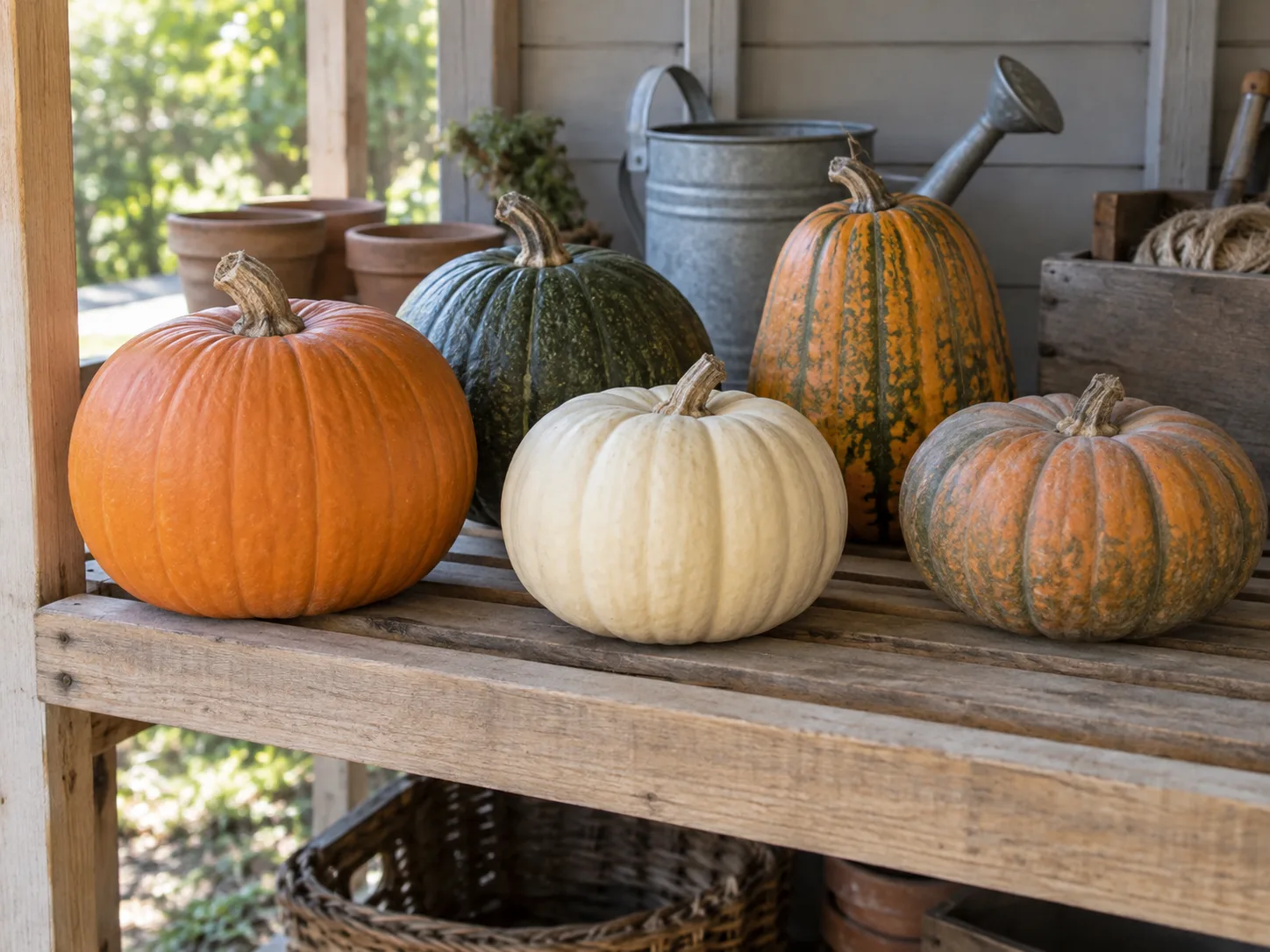
Curing is a postharvest conditioning step, not a second chance for an immature pumpkin to ripen. A mature fruit may develop a tougher, drier surface during curing, which can help it keep; an under-ripe fruit will not gain the same flavor or storage life off the vine. For sound, mature pumpkins you plan to store or display, place them in a warm, dry, sheltered spot with airflow for about 7 to 14 days. Keep them in a single layer and turn or inspect them gently if the underside stays damp. Epic Gardening’s practical guidance describes a 7-to-14-day curing period; Gardening Know How recommends a warm, dry curing area before storage (Gardening Know How).
Home conditions vary, so do not chase a precise humidity reading in a damp basement or overheat fruit in direct afternoon sun. The goal is steady warmth, dryness, and air movement without scorching. Skip curing for a fruit you plan to cook immediately. Keep cracked, bruised, or frost-damaged pumpkins out of the curing batch and use them first if they remain sound. Do not apply bleach or another sanitizer to edible pumpkins unless a trusted food-safety source specifically directs you to a product and method; washing the outside immediately before preparing the fruit is the simpler, safer routine.
Curing instructions sometimes call for a notably warm room, while storage instructions call for a much cooler space. These are separate stages: a short warm period conditions mature rind, then the pumpkin moves to a steady cool place. A home that cannot maintain those conditions can still store a clean, mature pumpkin for a shorter time in the coolest dry room available; expect less keeping time and inspect it more often. Curing is most worthwhile when you have several mature fruit and a place with airflow, rather than a pile of pumpkins in a sealed plastic bin.
Choose a cool, dry, ventilated storage spot
After curing, store whole pumpkins in a cool, dry place with steady temperatures and good air circulation. University of Minnesota Extension gives about 50–55°F and roughly 50% relative humidity as a useful storage range for pumpkins and winter squash, with storage life varying by variety from about one to six months (University of Minnesota Extension). A cool pantry, dry basement shelf, or ventilated outbuilding may work if it does not freeze, sweat with condensation, or swing sharply in temperature. Place pumpkins on a shelf or dry board rather than damp concrete, and leave space between them so air can circulate.
Check stored fruit about once a week. Remove any pumpkin that develops a soft patch, leak, or mold before it affects neighboring fruit. Small varieties and fruit with minor surface flaws often keep for less time, so use those first. Carved pumpkins should not be stored as whole fruit: cutting opens the flesh, so keep carved decorations cool and discard them when they soften, smell unpleasant, or become moldy. For eating, cut pumpkin into sections, refrigerate promptly, or freeze cooked purée; Penn State Extension recommends mature pumpkins with firm rinds for food preservation (Penn State Extension).
Conclusion
Harvest pumpkins when their expected color, firm rind, and corky stem agree—not simply when fall arrives or a vine turns brown. Use the seed packet to know when to start checking, then let the fruit and your local forecast guide the final cut. Pick mature pumpkins before a hard freeze, cut a long section of stem, and carry each fruit from underneath. Curing and cool, dry storage can extend the life of sound, mature pumpkins, but they cannot make an immature fruit fully ripen after it leaves the vine.