When to Plant Grass Seed: Find Your Best Window
Cool-season and warm-season lawns need different seeding windows. Use this guide to choose a date, avoid weather risks, and help new grass establish.
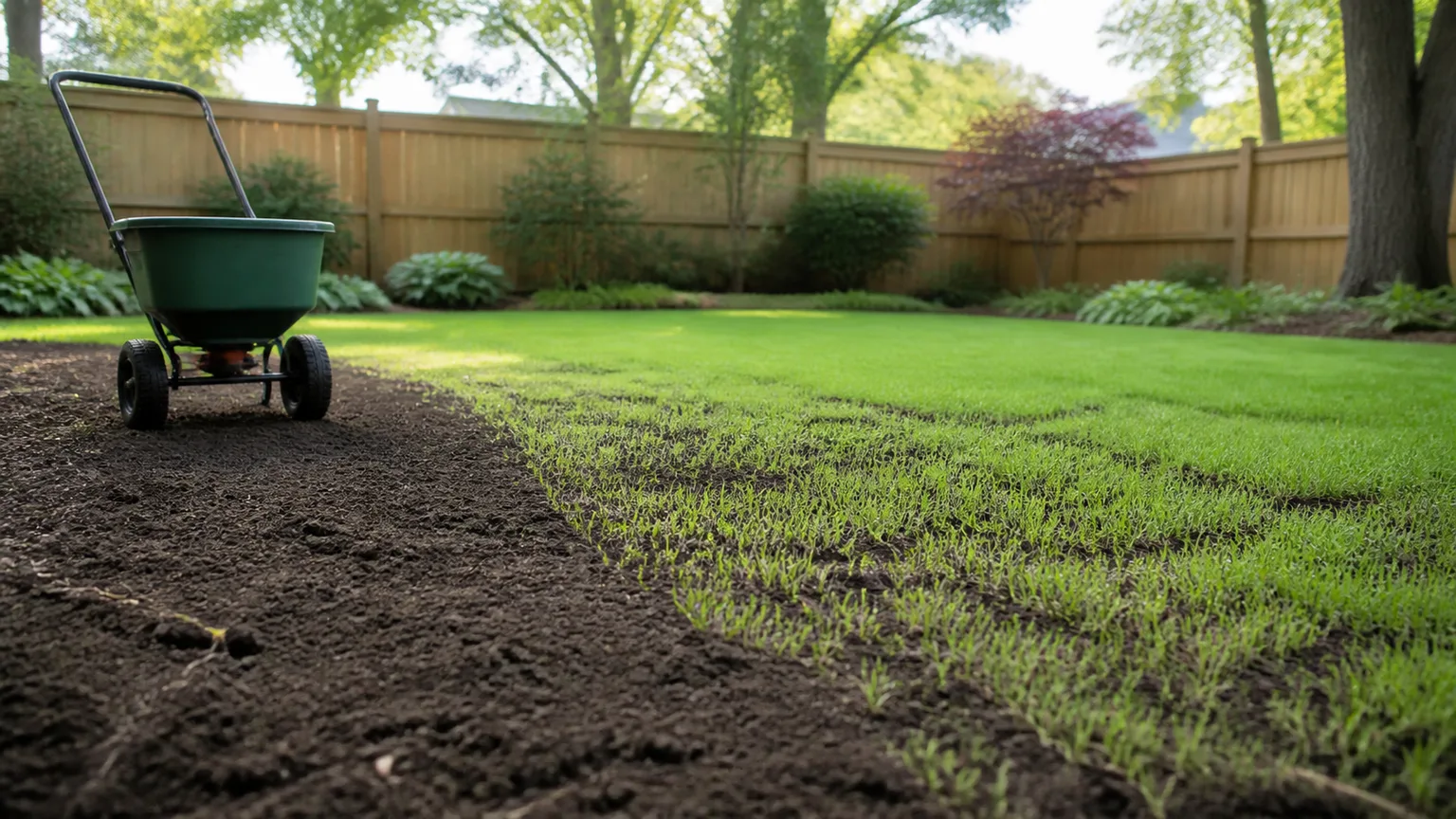
The best time to plant grass seed depends first on whether your lawn is made of cool-season or warm-season grass. For most cool-season lawns, early fall is the best all-around window; spring is the next choice when the seed can germinate and establish before summer heat. Seeded warm-season grasses do best in late spring or early summer, after the soil has warmed and active growth is beginning.
Those are starting points, not dates to apply everywhere. A homeowner in Pennsylvania, coastal California, and central Texas should not follow the same calendar. Your grass species, local climate, soil temperature, rainfall, and ability to keep the seedbed moist all change the answer. Identify the grass you plan to grow, then look for a stretch of mild weather that gives seedlings time to root before their next major stress: summer heat for cool-season grass or cold weather for warm-season grass.
Quick answer: match seeding window to grass type
Use this as the short version:
| Grass group | Usual best window | Second-choice window or caution |
|---|---|---|
| Cool-season grasses such as Kentucky bluegrass, fescues, and perennial ryegrass | Late summer to early fall | Spring can work if seedlings have time to establish before summer heat |
| Warm-season grasses such as Bermudagrass and buffalograss | Late spring to early summer, after soil warms | Avoid cool soil and late-season sowing that leaves little active growth time |
| Grasses commonly installed by sod, plugs, or sprigs | Follow the species and local extension recommendation | Some warm-season grasses are not normally established from seed |
For a regional example, Penn State Extension describes mid-to-late spring and late summer to early fall as Pennsylvania seeding windows, with late summer usually best for cool-season turf. Its explanation is useful well beyond one state: fall-seeded grass has cooler growing weather ahead, while spring seedlings face summer heat and drought soon after they emerge. In California, UC IPM gives September and October as the best months for cool-season seed and March and April as the next-best period, while seedable warm-season grasses are timed for spring into early summer. Those dates illustrate regional variation; they are not a national calendar. Penn State Extension’s lawn-establishment guide and UC IPM’s planting-time chart offer useful local examples.
Why early fall is the strongest window for cool-season seed
Cool-season grasses grow most actively during cooler parts of the year. Kentucky bluegrass, perennial ryegrass, tall fescue, and fine fescues are common examples. In many northern and transition-zone lawns, late summer into early fall gives seed a combination that is hard to get in another season: soil retains warmth from summer, air temperatures ease, and seedlings have a period of active growth before winter.
The most useful target is not a particular date on a national chart. Aim for the point when the lingering summer heat has eased but there is still enough time for germination and early rooting before the ground freezes. If local extension guidance gives a specific cutoff for your county or region, use that instead of a date from a different climate. A sudden heat wave, drought, or unusually early freeze can shift the practical window by weeks.
Use the regional calendar as a starting point
Extension calendars can look different because they describe different climates, grass mixes, and elevations. Penn State’s late-summer-to-early-fall recommendation is framed for Pennsylvania. UC IPM’s September–October guidance is for California conditions. A local cooperative extension may recommend earlier sowing in a colder northern area and later sowing in a mild coastal one.
The grass in your seed bag matters, too. A blend may contain several cool-season species with different germination speeds and establishment habits. Read the label for the species and any temperature or seasonal guidance. If you are repairing an established lawn, choose seed that matches its texture, color, sun tolerance, and growth pattern rather than buying a generic “fast green” mix. A mismatch may germinate but still leave a patch that looks different or needs different mowing and care.
What makes fall easier on seedlings
Fall timing reduces two common obstacles at once. First, temperatures are less likely to push cool-season seedlings into heat stress just as their roots are shallow. Second, many summer weeds slow as the season cools, so they are less likely to crowd new grass than during spring. Penn State notes that seedlings started in late summer can use fall and the following spring as cool growing periods to establish, whereas spring seedlings soon encounter summer heat and drought.
Fall also gives you room to prepare the site without rushing between rain, muddy soil, and rapidly rising temperatures. That does not make fall seed self-sufficient: germinating seed still needs consistent moisture, and heavy rain can move seed on slopes. Plan irrigation before you sow, and do not plant a large area just before travel or during a dry spell if you cannot keep the surface from drying.
Spring works when the timing is early enough
Spring is a reasonable second window for cool-season grass, especially if you missed fall or need to repair winter damage. It is often easier to wait until the soil is workable and cold snaps are less frequent, then sow as soon as conditions allow. The risk is waiting too long: warm weather arrives while seedlings are still shallow-rooted, and summer heat can make the new grass harder to keep alive.
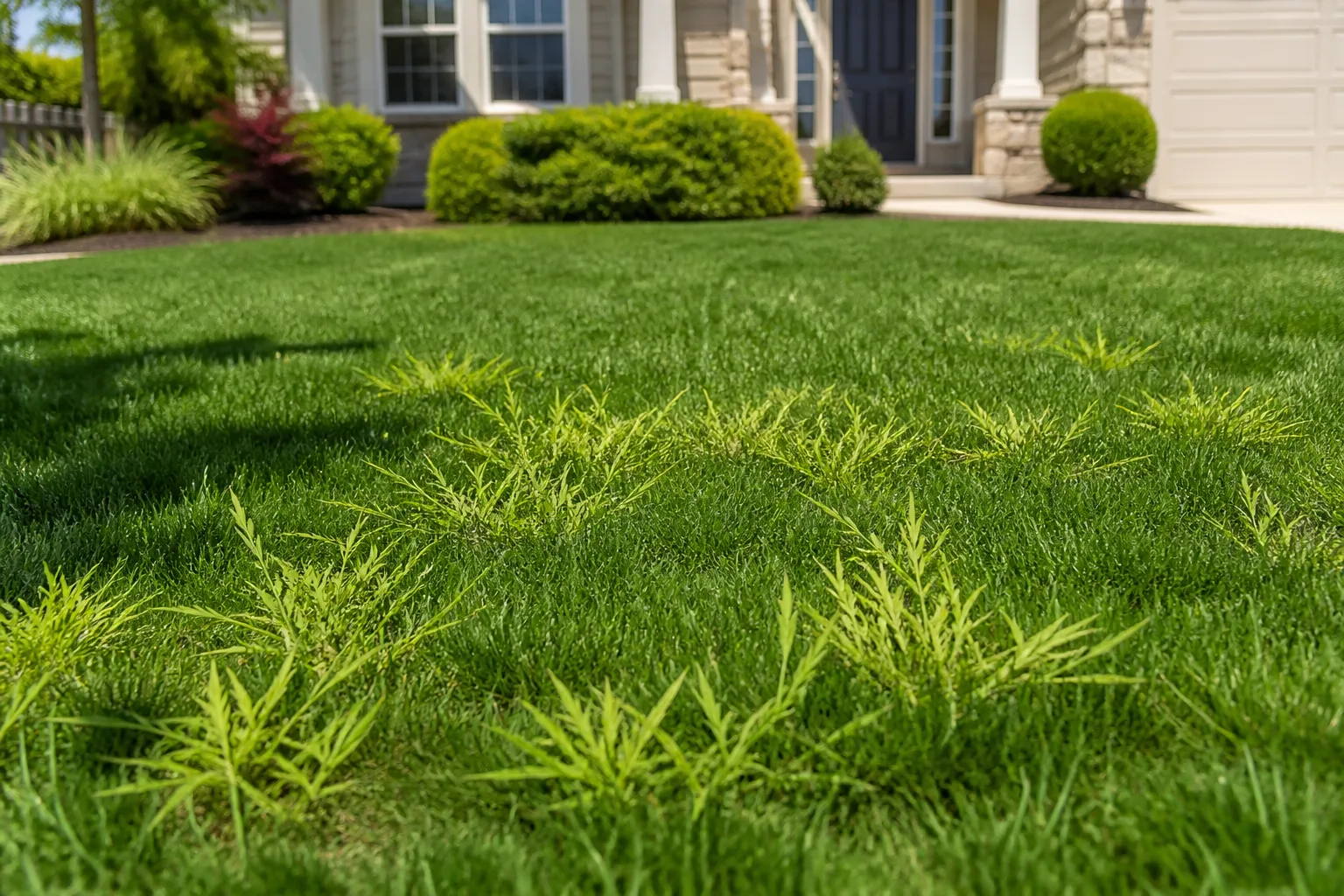
Spring also brings more weed competition. Weeds and grass seedlings may emerge at the same time, and a pre-emergent herbicide intended to stop crabgrass can also interfere with the germination of desirable grass seed. Check product labels and local recommendations before combining seeding with weed prevention; if a treatment conflicts with seeding, choose which job has priority rather than assuming both can happen together.
If you missed fall, seed cool-season grass in spring
A good spring seeding plan starts with the calendar and ends with a forecast check. Pick a period when the soil has thawed, drains well, and is warm enough for the species in your mix. Leave enough growing time before the local pattern turns hot and dry. For spring sowing, the ability to irrigate is especially important because rainfall can become less dependable as temperatures rise.
Spring can be the better practical choice for a small repair if the damaged patch is exposed, eroding, or unsafe to leave bare until autumn. For a full lawn renovation, however, do not mistake “grass can be seeded in spring” for “spring is equally forgiving.” If the seed would have only a brief establishment period before heat, improve the site and wait for the next local fall window unless there is a compelling reason to seed now.
Warm-season grasses need a warmer window
Warm-season grasses put on their strongest growth in warm weather. If your chosen variety can be established from seed, sow in late spring or early summer after the soil has warmed and the grass is entering active growth. UC IPM’s California chart places seedable warm-season grasses from mid-April to mid-May, and its species table gives late spring or early summer for seeded Bermudagrass and buffalograss. Use those as regional examples, then check a local extension source for your own location.
A key detail gets lost in many general lawn calendars: not every warm-season grass is normally planted from seed. St. Augustinegrass is generally established by sod, plugs, or stolons, and zoysiagrass is commonly installed vegetatively; availability and recommended method vary by cultivar and region. UC IPM’s planting-method guide distinguishes species that can be seeded from those usually established another way. Before buying, confirm that the species is sold as seed for your climate and that it will grow in the amount of sun, soil, and traffic your yard receives. UC IPM’s method comparison is a useful species-level reference.
Do not put warm-season seed into cold spring soil simply because the days feel pleasant. Seed may sit without germinating, leaving it exposed to washout or hungry birds. Conversely, sowing too late can leave seedlings with too little active growing time before cool weather slows them. A mild spell is not enough by itself; check the soil and the next several weeks of forecast, and make sure you can water the seedbed during dry weather.

Check growing conditions before choosing a date
A date range tells you when to start paying attention. The final go-or-wait decision should use the conditions the seed will experience at the site. A sunny south-facing slope warms and dries faster than shaded, low ground. Clay soil may remain wet and cold after a rainy spell, while sandy soil can warm quickly but lose moisture just as quickly. Hillside runoff, tree shade, and irrigation limits can matter as much as the average regional temperature.
Before sowing, ask four questions: Is this the right grass for the region and site? Is the soil within the range recommended for that species? Is the forecast mild enough for establishment? Can I keep the seed zone evenly moist? If two answers are no, a short delay can save seed and avoid repeating the job.
Measure soil temperature at seed depth
Grass seed responds to the temperature and moisture around it, not the air temperature reported on your phone. A soil thermometer can help when the season is changing quickly. Take readings at the depth recommended on the seed label, at several points in the area, and over more than one morning. Use the label or local extension guidance to interpret the numbers; the suitable range depends on the grass species, and one threshold is not a reliable rule for every blend.
Temperature is only one part of the decision. Seed cannot germinate normally if it stays dry, and waterlogged or compacted soil can limit oxygen and seed-to-soil contact. UC IPM summarizes germination as depending on temperature, moisture, and day length. That is why a few mild afternoons do not automatically make a site ready. Check that soil is workable, drains after rain, and can stay moist after you sow.
Count backward from heat or freezing weather
For cool-season seed, estimate how much mild growing weather remains before prolonged heat is expected in spring or before hard freezes in fall. For warm-season seed, look for enough warm-season growth ahead before autumn cooling. There is no single safe number of days for every species and region, so follow a local seeding cutoff if one is available. The practical question is whether seedlings will have time to emerge and develop roots before the next stressful period.
Use the forecast to avoid sowing into a run of hard rain, strong winds, or extreme temperatures. A gentle rain can settle seed into soil; a downpour can wash it into low spots or off a slope. A dry, hot stretch may mean several light waterings each day, which may be unrealistic for a large new lawn. If you cannot protect the seedbed from drying or erosion, wait for a more manageable forecast.
Choose timing for the job you are doing
“Plant grass seed” can mean starting an entire lawn, thickening a tired one, or filling a few bare spots. Those jobs do not always deserve the same schedule. The more soil you disturb, the more important it is to prepare the area early, test and correct soil as needed, and reserve enough time to water and protect the seed.
A new lawn and an overseeded lawn have different needs
A new lawn gives you a chance to choose the species, correct grading, deal with compaction, and make a uniform seedbed. Because so much area is exposed, seed-to-soil contact and irrigation are essential. Penn State Extension recommends planning around soil conditions, site preparation, and species selection, and describes seeding time as critical to establishment. Start preparation weeks ahead when possible; the day you scatter seed should not be the first day you discover poor drainage or hardpan.
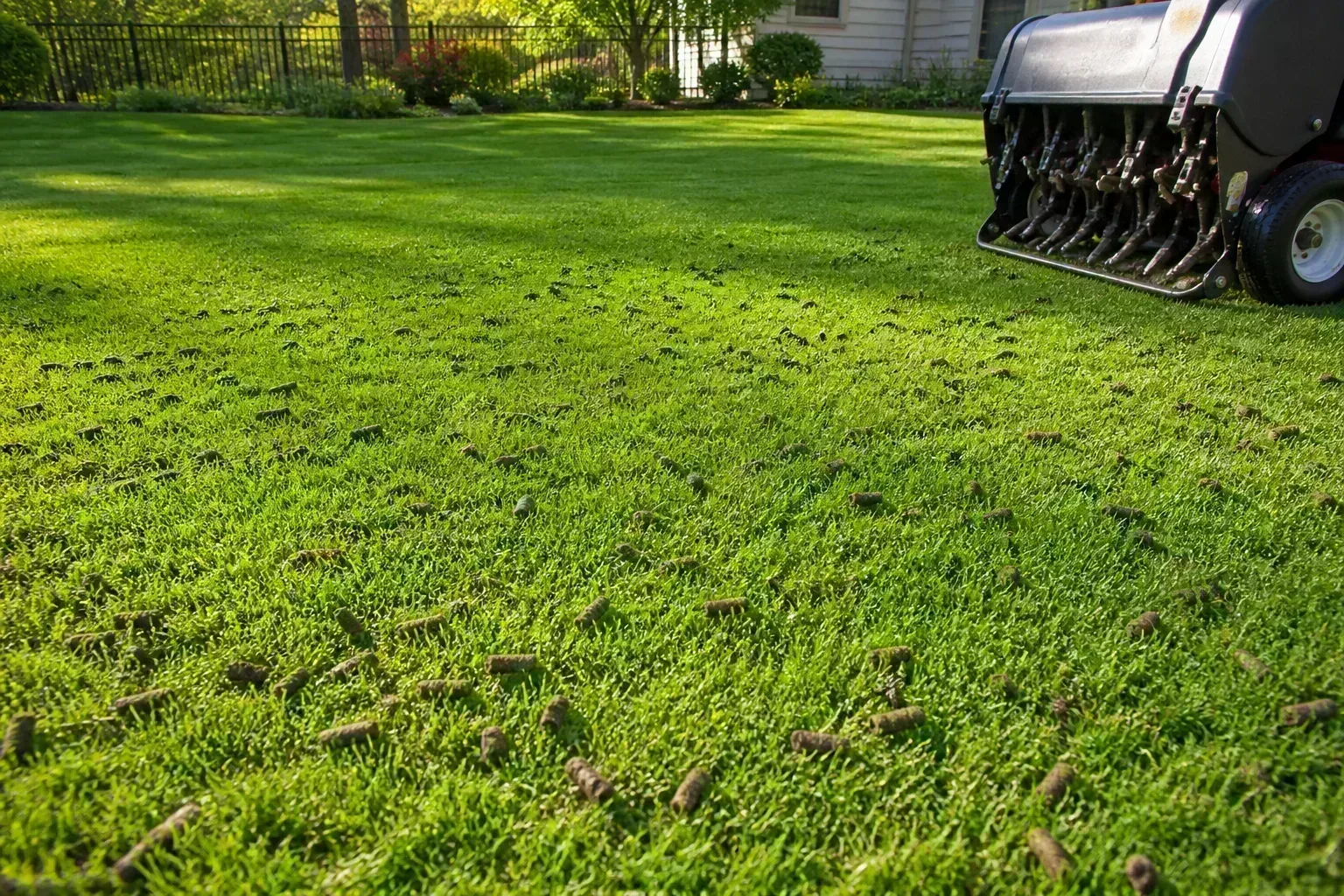
Overseeding adds seed to an existing lawn, often after mowing, raking, aerating, or using a slit seeder. The existing grass can help shelter the seed and hold moisture, but a dense canopy or thick thatch may prevent seed from reaching soil. Choose the same species or a compatible blend, and do not expect seed to fix a lawn whose underlying problem is deep shade, standing water, severe compaction, or an unsuitable grass type. Fix the cause first, or the new seedlings are likely to struggle in the same place.
Fall often suits cool-season overseeding because new seedlings face less weed pressure and have a cooler season ahead. Spring works when you can water and the seed will have time to establish before heat. For warm-season turf, follow the active-growth season for the particular species. If you are not sure what grows in the lawn, identify it before choosing a seed mix; overseeding a warm-season yard with cool-season grass may produce a temporary green cover rather than a lasting match.
Patch repair and dormant seeding are special cases
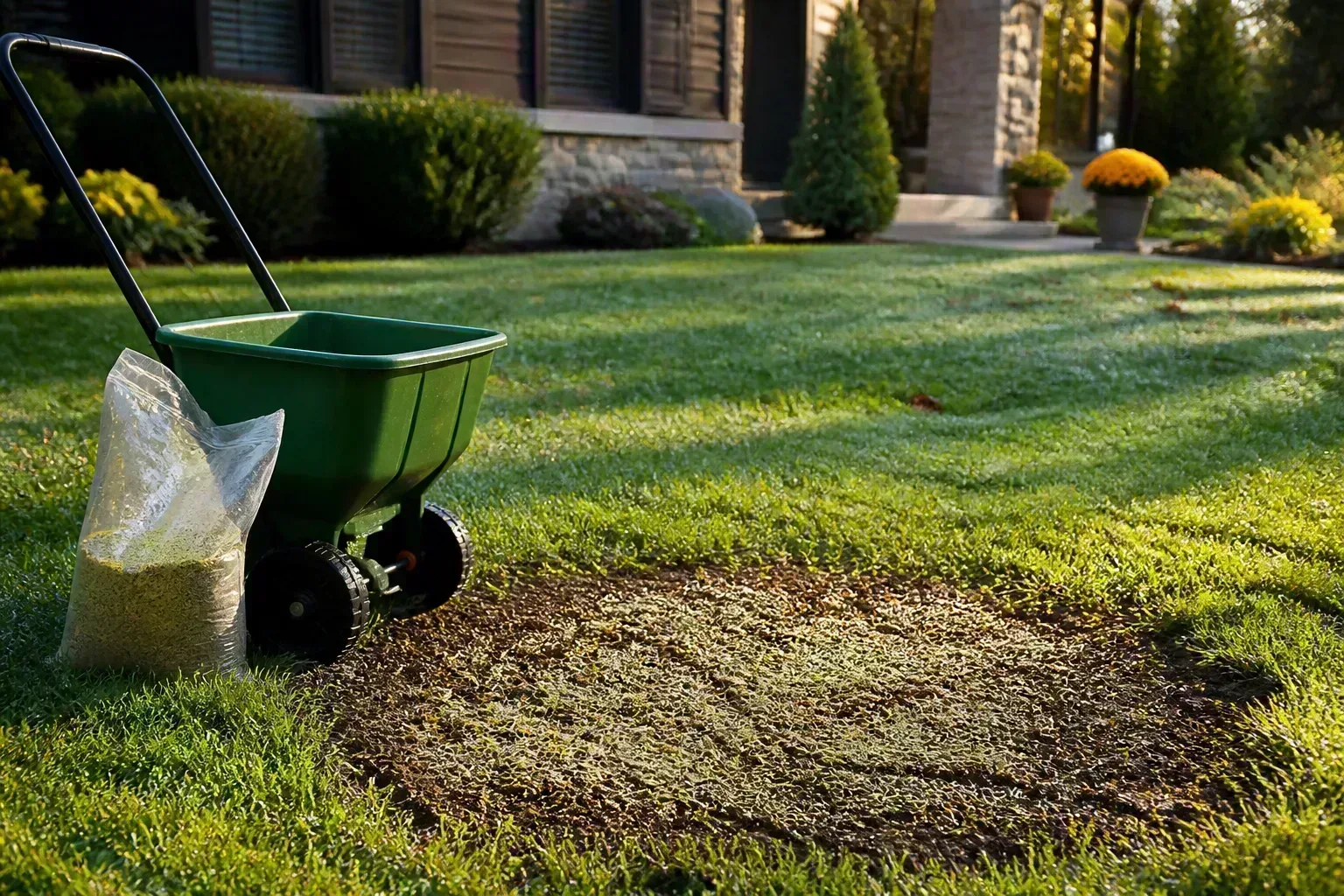
A bare patch can be repaired during the next suitable window for the grass already growing around it. Rake away dead material, loosen the soil surface, spread the recommended amount of seed, and press or lightly rake it into contact with soil. Use a small amount of clean mulch only if the site needs help retaining moisture or resisting runoff; a thick cover can bury seed or smother seedlings. Water gently so the seed stays in place.
Dormant seeding is a planned option in some cold-winter regions, not simply ordinary seeding done late. The idea is to sow cool-season seed after soil conditions are too cold for germination, so it stays dormant until spring warming and the freeze-thaw cycle helps move it into contact with soil. University of Minnesota Extension describes dormant seeding as a way to establish or improve a lawn in Minnesota. It can extend the work window when fall preparation was missed, but results depend on the site, seed staying in place, and a spring moisture supply. Do not use this strategy where a mild spell might trigger premature germination followed by a freeze, or where runoff will carry seed away. Follow local extension guidance for timing and technique. UMN Extension’s dormant-seeding guidance explains the regional approach.
Prepare for a successful first month
The right season improves your odds, but timing cannot make poor seed or poor preparation succeed. Buy a seed mix labeled for the climate and growing conditions, then check its species and the recommended seeding rate. A bag that promises quick coverage is not automatically a match for shade, foot traffic, drought, or your existing lawn.
Build a seedbed that gives roots a start
For a new lawn, clear perennial weeds and debris, correct drainage and grading, and loosen compacted soil before sowing. A soil test is a better basis for lime or fertilizer than guessing from the lawn’s appearance. Penn State’s establishment guidance recommends assessing soil and site conditions, and collecting samples early enough to receive results before preparation. Use the report and product label; adding amendments that the soil does not need can waste money and create other problems.
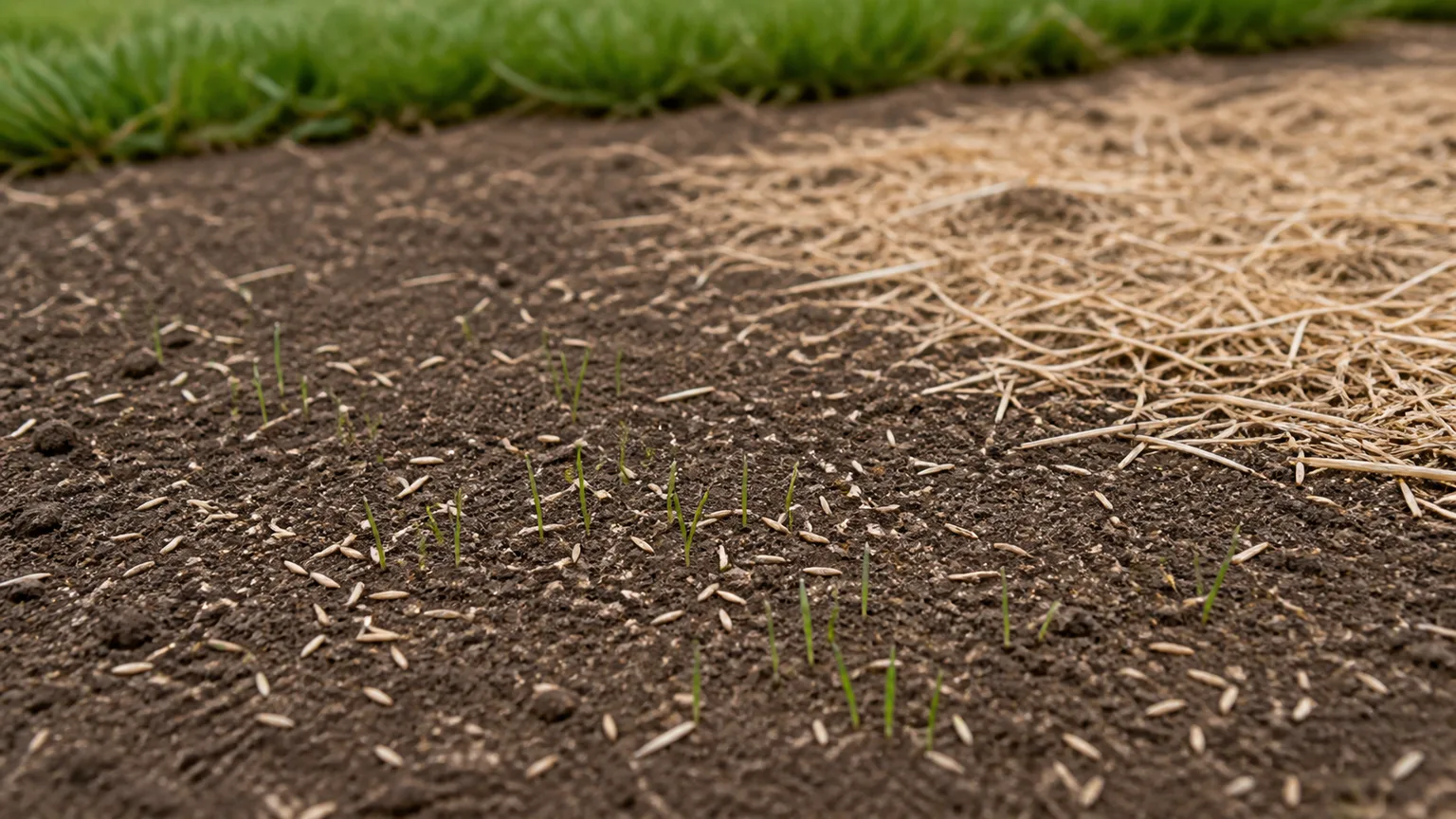
Rake the final surface until it is even and crumbly, not powdery. Spread seed at the label rate, often in two passes at right angles for more even coverage. Lightly rake or press it so seed contacts soil, but do not bury it deeply. Cover exposed slopes only with a suitable light mulch that will not wash away, introduce weed seed, or block light. Good contact gives seed access to moisture while keeping most of it from blowing or washing out.
Keep the seed zone moist while it germinates
After sowing, water gently enough to settle the seed without moving it. Keep the upper soil consistently moist until seedlings emerge and begin rooting. This often means short, frequent watering rather than one deep soak, especially in warm or windy weather. Adjust to rainfall and soil texture: clay may stay wet longer, while sandy or sunny ground can dry quickly. The target is moist soil, not puddles or a saturated surface.
As seedlings grow, gradually lengthen the time between watering and water more deeply so roots follow moisture into the soil. Reduce foot traffic while the lawn is vulnerable. Mow only when the new grass has rooted enough to stay in place and reaches the height recommended for its species; avoid mowing wet soil or pulling seedlings from the ground. The Royal Horticultural Society’s lawn-from-seed guide likewise emphasizes timing, a fine seedbed, gentle watering, and protection while the new lawn establishes. RHS guidance for starting a lawn from seed provides a practical sequence; its month names reflect the UK climate, so use local timing for North America.
When to wait for a better seeding window
Wait if the soil is frozen, waterlogged, or too hot for your grass type; if a heat wave or hard freeze is imminent; or if you cannot keep the seedbed moist. Delay a large renovation if you have not identified the right species, corrected major drainage or compaction problems, or arranged irrigation. Rushing the sowing step does not save time when the seed then needs to be replaced.
Summer is the clearest example of why grass type matters. Warm-season seed may be appropriate in late spring or early summer, but summer heat is a difficult time to establish cool-season grass, particularly in full sun without reliable water. Gardening Know How notes that cool-season grass does not establish well in summer heat and points northern gardeners toward late summer instead; the exact cutoff still depends on local climate and seed variety. If you missed a cool-season fall window, either use a suitable spring window or plan for the next fall rather than gambling on a hot, dry period. Gardening Know How’s seasonal seeding guide offers additional practical context.
A small emergency repair may justify a compromise, but be clear about the trade-off: off-season seed can germinate unevenly, need extra irrigation, and remain vulnerable longer. For a large area, waiting for the next favorable period is usually the lower-effort option. In the meantime, address the reason the lawn is thin—shade, traffic, drainage, pests, or mowing—so the next seeding attempt has a better chance.
Conclusion
For most cool-season lawns, plant grass seed in late summer or early fall, when the weather is easing and seedlings have time to establish before winter. Spring is a useful second choice if you seed early enough to get ahead of summer stress. Seeded warm-season grasses need late-spring or early-summer warmth, and some popular warm-season lawns are better planted from sod, plugs, or sprigs than seed.
Before choosing a day, identify the grass, check the local extension calendar and seed label, measure soil conditions if the weather is borderline, and make sure water will be available after sowing. If the next stretch of weather is too hot, too cold, too wet, or too dry for reliable establishment, wait. A well-timed seedbed is more valuable than an early start.