When to Aerate Your Lawn by Grass Type and Season
Learn when to aerate your lawn by grass type, how to spot compaction, and when spring or fall work should wait for better soil and recovery conditions.
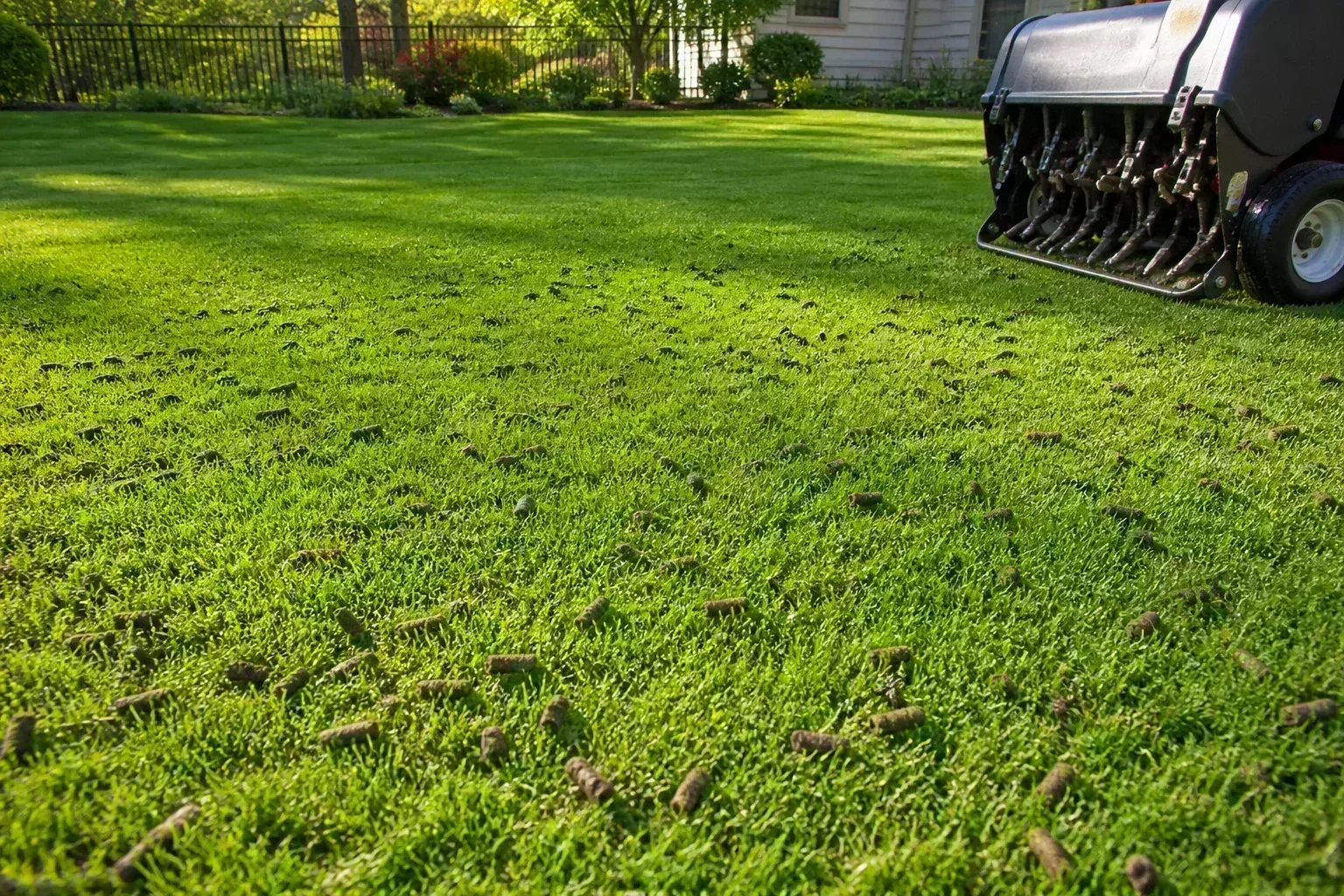
For most cool-season lawns, early fall is the best time to aerate; for most warm-season lawns, wait until late spring or early summer, after the grass has fully greened up. In either case, the lawn should be actively growing, the soil should be moist enough for clean plugs, and the grass should have a reasonable recovery window before heat, drought, or dormancy. If your lawn is healthy and the soil is not compacted, you may not need to aerate this year at all.
That last point matters. Aeration is a response to a soil problem, not a yearly ritual that automatically makes grass thicker. The right decision depends on what is happening under the turf, what kind of grass you have, and whether the work can be followed by the care your lawn needs.
The quick answer: aerate during active growth
The best time to aerate is the part of your local growing season when your grass can repair around the openings before it faces its next major stress. For cool-season grasses such as Kentucky bluegrass, tall fescue, fine fescues, and perennial ryegrass, that usually means late summer to early fall, with spring as a possible second choice when compaction is severe and conditions are favorable. For warm-season grasses such as bermudagrass, zoysiagrass, St. Augustinegrass, and centipedegrass, it usually means late spring or early summer after full green-up.
A date on the calendar is only a starting point. Grass type, regional climate, shade, elevation, rainfall, and the purpose of the job all shift the window. The University of Wisconsin–Madison Division of Extension, for example, points Wisconsin homeowners toward early fall for aerating and overseeding, while the University of California Statewide IPM Program describes spring as its general window when grass is actively growing and warns against summer heat. Those recommendations are not interchangeable national rules; they reflect different climates and lawn calendars.
Before booking a service, use a simple sequence: confirm likely compaction, identify the dominant grass type, choose its active-growth window, then check soil moisture and any planned seeding or weed-control treatments. If one of those checks fails, reschedule rather than force the job.
What aeration does—and what it cannot fix
Core aeration uses hollow tines to remove small cylinders of soil and turf. Those holes temporarily open pathways in the compacted surface layer, while removing plugs reduces some of the pressure that has restricted water movement and root growth. The University of California’s Healthy Lawns guidance notes that heavy clay and repeated foot or equipment traffic can compress soil particles and restrict the movement of water, oxygen, and nutrients.
The holes do not permanently loosen the entire soil profile. They gradually close as the soil settles and grass grows, so aeration can relieve a recurring surface-layer problem but cannot fix deep drainage issues, a hardpan below the tine depth, a high water table, a steep runoff path, or a sprinkler system that delivers too little water. It also does not correct poor pH, missing nutrients, disease, unsuitable grass, or heavy shade by itself.
Aeration is also different from dethatching. Thatch is a layer of stems and roots above the mineral soil; compaction is dense soil beneath it. Hollow-tine aeration may help with certain soil problems and can be part of a renovation plan, but it will not remove a thick thatch mat. If the lawn is spongy and you can barely see soil between the blades, inspect the thatch layer before choosing a tool.
How to tell whether compaction is actually the problem
A lawn can look thin, dry, or uneven for many reasons. Aeration is most promising when several clues point to compressed soil in the same area: the soil is hard even when moist, rain runs off or puddles instead of soaking in, roots stay shallow, and grass struggles where people, pets, mowers, or vehicles repeatedly cross it. Heavy clay increases the chance of compaction, but clay alone does not mean every part of the lawn needs treatment.
The University of California IPM timing guidance flags damage from heavy traffic and water that puddles or runs off as reasons to investigate compaction. Those clues are useful, but not conclusive. A poorly graded low spot, compacted construction fill, a leaking irrigation head, or a buried layer of debris can produce similar symptoms and may need a different repair.
Use three checks, not one symptom
Start by comparing a problem patch with a nearby area of healthy turf. When the soil is moderately moist—not bone dry and not saturated—push a long screwdriver or soil probe into both locations. If the tool repeatedly stops much sooner in the damaged patch, compaction may be contributing; if it stops at one isolated point, a stone or buried obstacle may be the explanation. For a more complete picture, cut a narrow wedge of sod and look at root depth, soil texture, and any thick brown thatch layer.
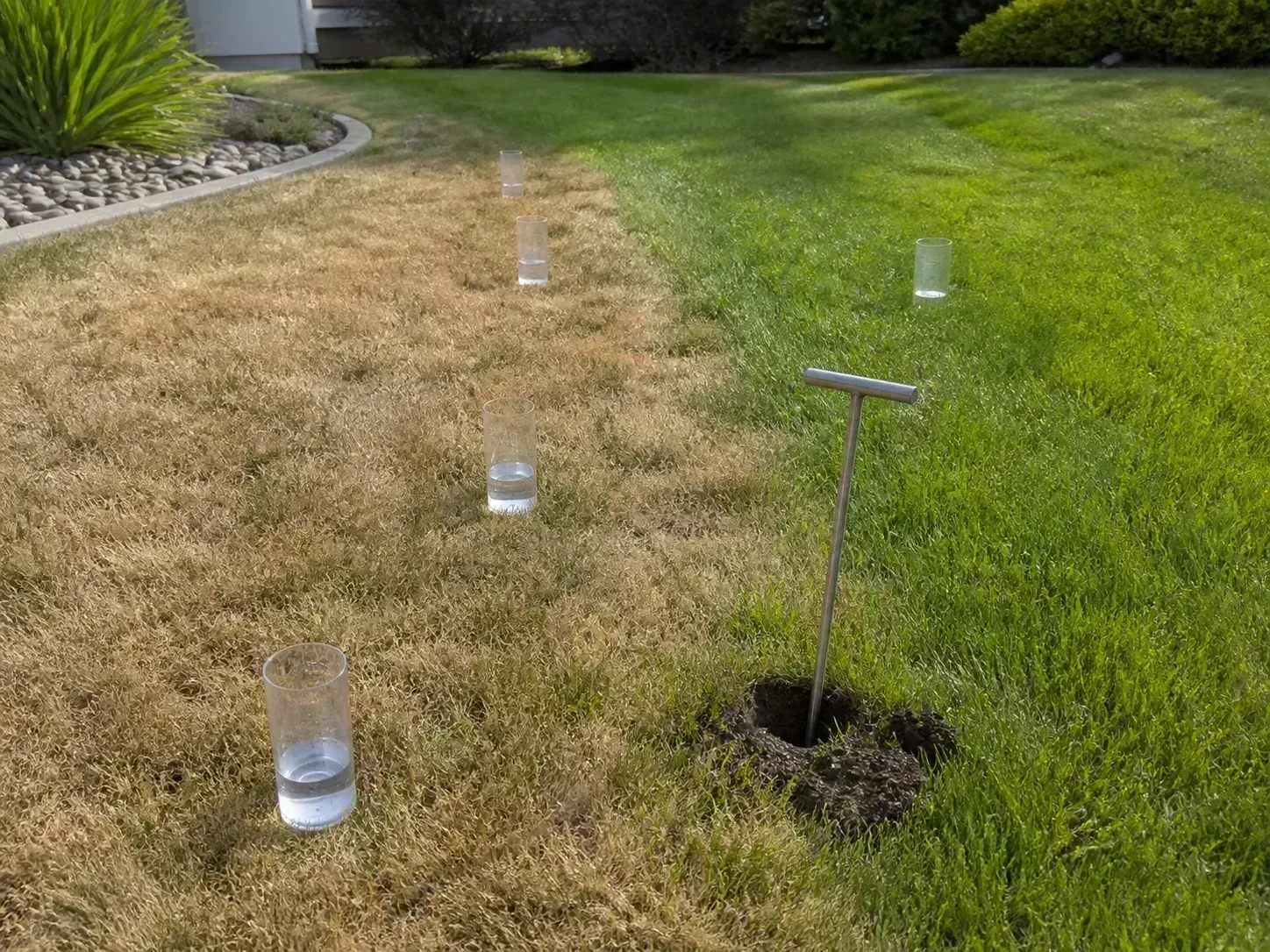
Next, observe water after ordinary rain or irrigation. Brief puddling on a sloped or low area is not enough to diagnose compaction, but repeated runoff across a high-traffic section, combined with hard moist soil and shallow roots, makes the case stronger. If water remains standing across the whole yard, investigate drainage and grading before assuming that aeration will solve it.
Finally, ask whether the condition is localized. A worn dog path, play zone, or place where construction equipment crossed the lawn may benefit from spot aeration, while healthy ground elsewhere may not. Our lawn aeration signs and tests guide walks through these checks in more detail.
Best timing by grass type
| Lawn type | Usual starting window | What must be true before you aerate |
|---|---|---|
| Cool-season grass | Late summer to early fall | Turf is actively growing, soil is workable, and there is time for recovery or seeding |
| Warm-season grass | Late spring to early summer | The lawn has fully greened up and is growing vigorously |
| Mixed or unknown grass | Identify the dominant turf and local extension calendar first | Do not choose a date based only on a neighbor’s lawn or a national month chart |
These are starting windows, not guarantees. Regional calendars differ, so follow local extension guidance when it conflicts with a generic schedule; a local lawn may enter active growth weeks earlier or later than the same species in another climate.
Cool-season lawns: use the fall recovery window
Kentucky bluegrass, perennial ryegrass, tall fescue, and fine fescues grow most actively in cool weather. In many parts of the United States, late summer into early fall gives them time to fill around aeration holes before winter, and it often aligns with the best window for repairing or overseeding a thin lawn. The Wisconsin Extension guide to aerating and overseeding recommends early fall for Wisconsin lawns, emphasizing sufficient soil moisture and completing overseeding early enough for seedlings to establish before hard freezes.
Do not translate “early fall” into a single national date. In a northern state, the useful seeding window may close sooner than it does in a mild coastal climate; at elevation, cooler nights can arrive early; in a warm region, the grass may still face hot, dry weather. Work backward from the expected first hard freeze and your local seed-establishment window, not from a calendar reminder.
Spring can be a fallback for a cool-season lawn when compaction is severe and the grass is growing, especially if you missed fall or need to correct a localized problem. It is less attractive if summer stress is close, you intend to apply a pre-emergent herbicide, or the soil is wet enough that equipment would rut it. If the lawn is only mildly compacted, wait for its stronger recovery season instead of aerating merely because spring cleanup is underway.
Warm-season lawns: wait for full green-up
Bermudagrass, zoysiagrass, St. Augustinegrass, and centipedegrass need warm conditions to grow. Their usual window is late spring or early summer, once the lawn has greened up across the area and is actively producing new growth. A warm afternoon in early spring is not enough: if the turf is still partly dormant, core aeration can leave it with less time to heal before the next stress period.
In hot climates, “early summer” may already bring dangerous heat or water restrictions, so do not push the schedule simply to match a generic recommendation. The Royal Horticultural Society’s lawn-care guidance is written for UK conditions and treats early autumn as a useful time for selected lawn maintenance; its advice illustrates why the local season matters rather than establishing a date for warm-season U.S. turf. Check with your county extension or a local turf specialist for the growth window of your species and region.
If you missed the spring-to-early-summer window, waiting is usually safer than aerating warm-season turf as it slows toward dormancy. A professional may still recommend a limited, site-specific treatment, but repeated calendar-driven passes late in the season can leave openings that the lawn cannot close quickly.
Mixed lawns and the transition zone
Some lawns contain more than one grass type, especially in the transition zone or in yards that have been patched with different seed blends. In that case, schedule around the grass that covers most of the area you plan to treat, but check whether the minority grass is especially vulnerable to the same timing. If a whole-lawn pass would stress one portion, spot-aerate the compacted areas when that section is growing well.
When you cannot identify the grass, take clear photos of blades and growth habit and ask a local extension office, garden center with turf expertise, or lawn professional to identify it before arranging a major renovation. Lawn labels and old seed bags can help, but an established lawn may no longer match the original mix. For unknown turf, soil readiness and local expert advice are more useful than guessing from the month.
Why “fall is best” depends on location
Fall is an excellent aeration window for many cool-season lawns because the grass is growing and can recover, and because fall renovation often pairs aeration with overseeding. It is not a universal rule for every species or climate. The UC IPM program’s California timing advice recommends spring aeration when grasses are actively growing and cautions against summer heat; that differs from the Wisconsin early-fall recommendation because lawns experience different seasonal growth patterns.
The RHS advises that mild, damp early-autumn conditions suit some lawn maintenance in the UK and says many established lawns do not need every task every year. A regional practitioner writing for New England homeowners similarly places cool-season aeration and overseeding in late summer or early fall, while treating early spring as a secondary option (Lawn Phix). The shared principle is not “always fall”; it is “aerate when the grass can recover and the soil can be worked without damage.”
This is also why hardiness zones are not enough to set the date. Zones describe winter minimum temperatures, not the lawn’s current growth, soil moisture, irrigation restrictions, or the timing of its seed window. Use local extension guidance as the calendar, then use the grass and soil in your own yard as the final check.
Choose a date by working backward from your goal
If your goal is simply to relieve traffic compaction, find the next active-growth window for the grass and avoid periods when heat, drought, heavy rain, or dormancy would slow recovery. If only one area is affected, choose that window for the affected area rather than automatically treating the whole lawn. If compaction is minor and the lawn is otherwise healthy, it may be reasonable to change the traffic pattern and reassess before renting equipment.
If you are renovating a thin lawn, let the seed plan determine the date. Choose seed that matches your grass type and site, verify the locally recommended sowing period, and schedule aeration close enough to seeding that you can complete the work in one suitable recovery window. The Lawn Love timing guide also ties aeration to grass growth and distinguishes cool-season fall timing from warm-season late-spring or early-summer timing; use that as a practical overview, then confirm local dates with extension guidance.
If you plan to overseed, let seeding season set the date
For overseeding, core aeration is often done immediately before seed is spread, so seed can settle into openings and make contact with soil. That sequence is useful only when the seed itself is being sown at a suitable time. Aerating in spring and then scattering cool-season seed just before a hot summer does not create a good establishment window; aeration cannot compensate for the wrong season, unsuitable seed, or poor aftercare.
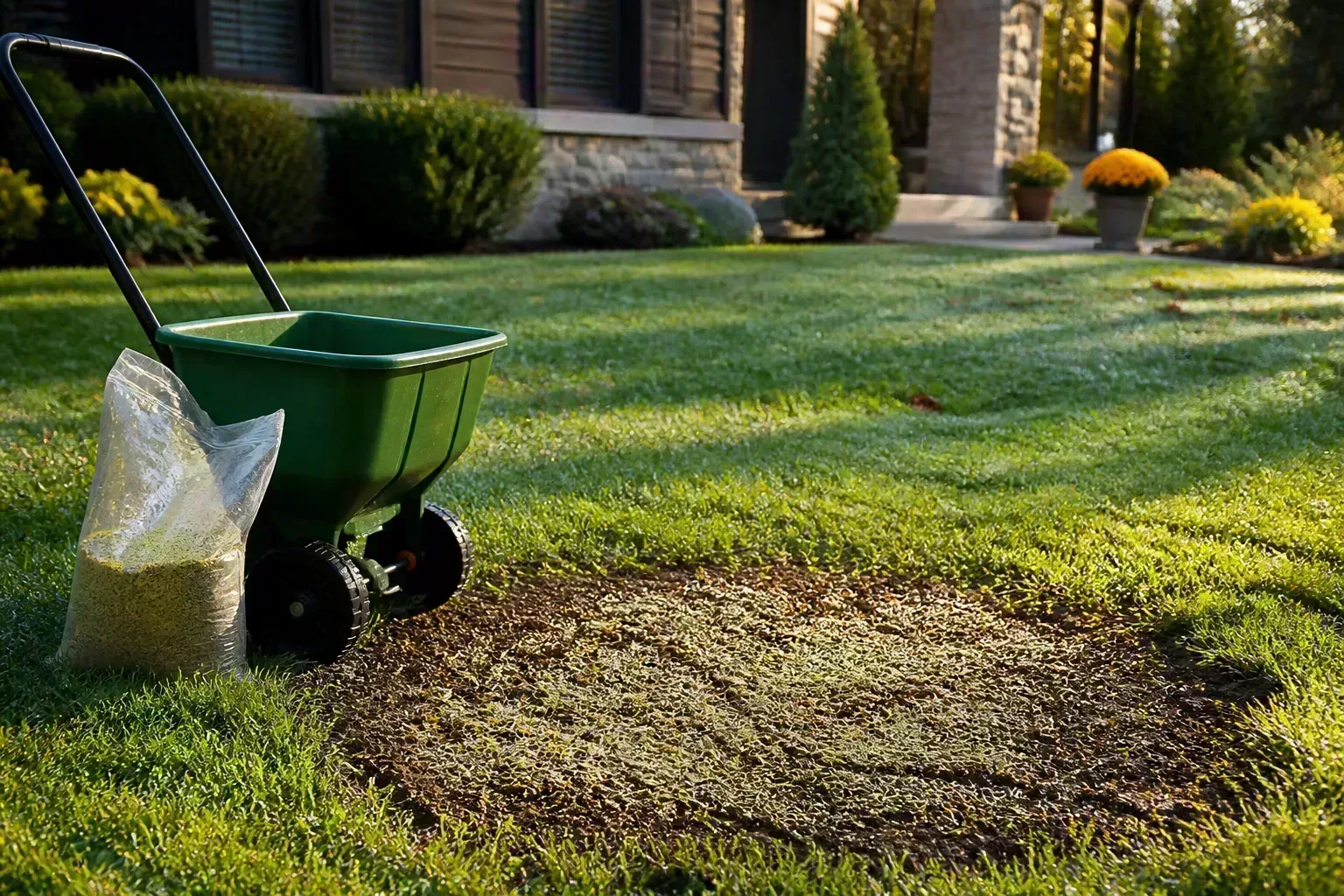
The Wisconsin Extension sequence for its regional conditions is aerate, topdress if appropriate, then overseed, with seeding completed early enough for seedlings to establish before hard freezes. In New England, Lawn Phix similarly recommends late-summer or early-fall aeration and overseeding for cool-season lawns. Treat those dates as regional examples rather than a one-size calendar: local climate and the seed label’s instructions determine whether seedlings have time to root before the next stress period.
If you only want to improve compacted soil and do not plan to seed, you do not need to time the job around an overseeding calendar. Still choose a growth window and moist, workable soil, then leave the holes undisturbed or follow a soil-test-based topdressing plan. For the full setup and plug-management steps, see our core aeration guide.
When spring aeration makes sense
Spring is not automatically wrong. It can be a practical choice when compaction is severe, the turf is actively growing, soil conditions are suitable, and waiting until fall would leave the lawn struggling for months. It can also make sense in regions where local extension guidance identifies spring as the appropriate window for that grass and climate. The UC IPM timing page, for instance, recommends spring when grass is actively growing in its California guidance and advises against summer heat.
Before a spring pass, decide what happens next. If you plan to overseed, make sure that the chosen grass seed can establish before summer stress and that your irrigation can maintain the required moisture. If you are relying on a pre-emergent barrier to prevent annual weeds, aeration may disrupt the treated surface; do not assume the barrier remains intact after coring. Check the product label and local extension guidance before sequencing aeration, herbicide, and seed.
A thin lawn does not always need spring aeration. If the real issue is poor drainage, shade, wrong mowing height, disease, or low fertility, a core aerator will not correct it. Diagnose first, and use spring aeration as a targeted exception rather than a default date.
When to postpone or skip aeration
Postpone the work if the lawn is dormant or visibly stressed by drought, heat, or disease. Grass needs active growth to recover; a date that works for a healthy neighboring lawn may be too late for a yard already drying out. If watering restrictions mean you cannot keep newly sown seed moist, do not pair aeration with overseeding until you can support establishment.
Skip or delay aeration when the soil is saturated, muddy, frozen, or so dry and hard that the tines cannot pull clean cores. A heavy machine can smear wet soil, rut turf, and worsen compaction; bone-dry soil may produce shallow or ragged holes and make the machine difficult to control. Wait until the ground is workable, not simply until rain appears in the forecast.
Do not aerate automatically if a lawn has no likely compaction problem. Sandy soil with little traffic may not benefit from a frequent whole-lawn pass, and small compacted patches can often be treated selectively. The RHS suggests that aerating every two to three years is adequate for many lawns in its guidance, with less frequent hollow-tine work for clay or waterlogged soil; that interval is a regional rule of thumb, not a reason to aerate on schedule when the turf does not need it.
Newly seeded or freshly sodded grass also needs time to establish before a heavy machine crosses it. If the lawn was recently treated with an herbicide, insecticide, or fertilizer, read that product’s label before aerating; timing restrictions and re-entry directions vary by product, and there is no safe universal waiting period to substitute for the label.
Soil moisture and weather: the day-of checklist
The ideal soil is moist enough for tines to penetrate but not wet enough to smear or rut. If it has been dry, water in advance and allow the moisture to soak below the surface; do not saturate the lawn just before a machine arrives. If it rained heavily, wait until footprints no longer stay pressed into the ground and a hand sample below the grass crumbles rather than turning into a slick smear.
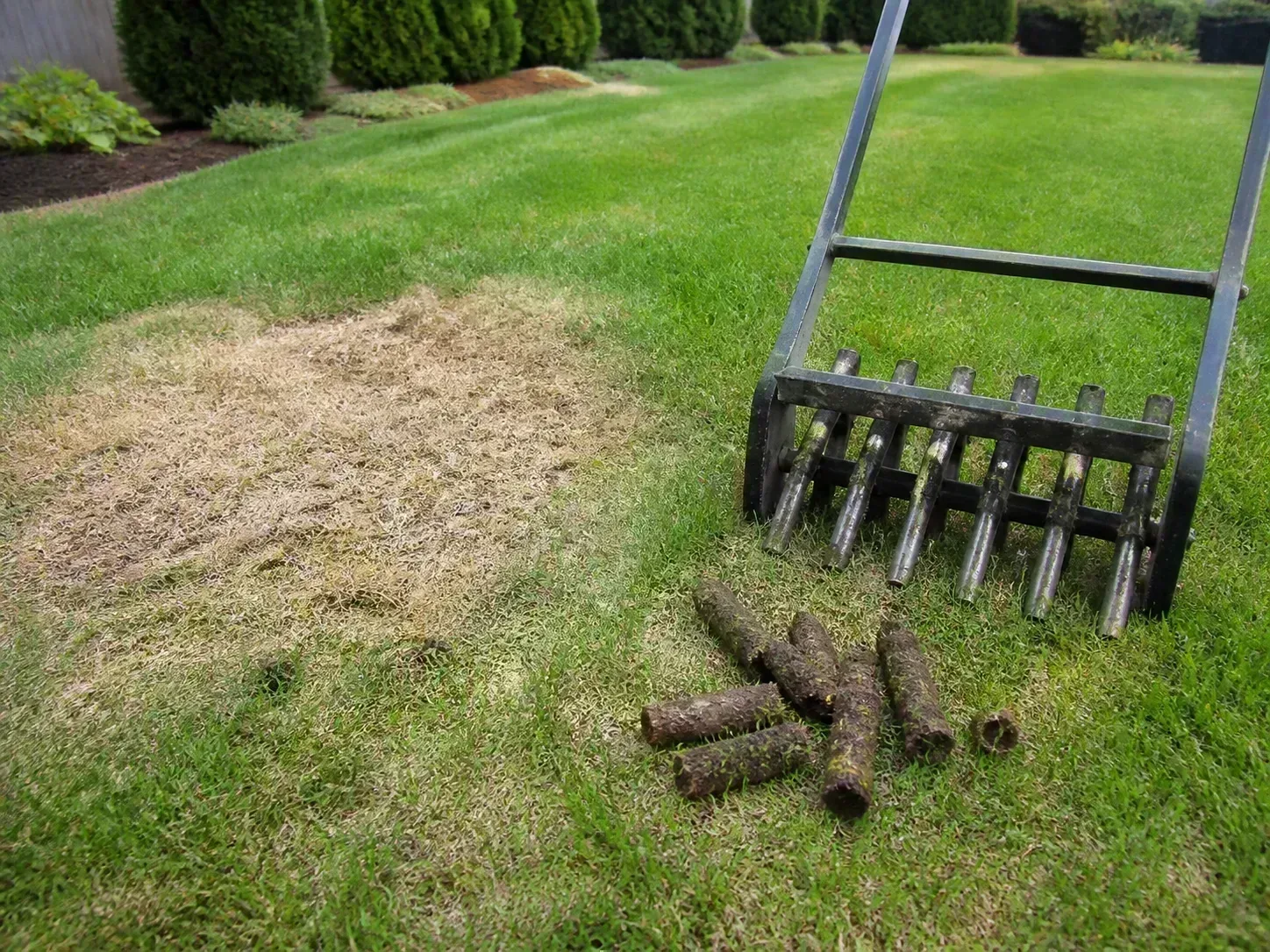
Use a screwdriver or probe in several places, not just at the lawn edge. If it enters moist soil reasonably easily but the aerator still cannot pull plugs, stop and check equipment settings, tine condition, and the compacted layer rather than making repeated passes blindly. A soil probe is a practical readiness test, not a substitute for identifying rocks, buried lines, or subsurface drainage problems.
Check the forecast for the recovery period, not only the hour of the job. Avoid working immediately before a downpour that could wash seed or topdressing away, and avoid opening a lawn just before a heat wave when it is already short on water. A mild stretch with ordinary rainfall or manageable irrigation gives turf a better chance to recover than a perfect-looking day followed by extreme conditions.
Plan around pre-emergent herbicides, seeding, and other lawn work
Aeration can disrupt the thin treated layer left by some pre-emergent herbicides. UC IPM notes that the product should be applied after aeration in its lawn guidance because soil cores can remove some of the surface barrier; the exact timing depends on the product, target weeds, and label directions. If a pre-emergent has already been applied, ask the manufacturer or local extension office whether coring will compromise its performance before proceeding.
Pre-emergent herbicides can also prevent grass seed from germinating, which creates a conflict when the goal is to aerate and overseed. Do not apply seed and a product simply because they are often paired with aeration on a lawn-care calendar. Verify that the specific label permits the combination and timing, or use a different weed-control and renovation plan.
Avoid stacking stressful work just because the aerator is already rented. Dethatching, aggressive mowing, seeding, fertilizing, and chemical treatments each have their own timing and recovery requirements. A coordinated renovation may be appropriate when the grass is healthy and the local window supports it, but in a heat-stressed lawn, it is usually better to correct one cause at a time and preserve the recovery capacity you still have.
How to make timing pay off after the pass
After core aeration, leave small plugs to dry and crumble if they are not obstructing mowing; clear large clods that would smother grass or create a trip hazard. If you are overseeding, spread the right seed soon after coring and follow its package directions for watering, mowing, and traffic. Do not apply fertilizer automatically just because holes are open—use a soil test and your grass’s seasonal needs to decide.
Keep traffic light while the soil is soft, and do not mow if the surface would rut or tear. Then record what you treated and why. If the lawn improves and compaction does not return, you may not need another pass for several seasons; if the same strip compacts again, reduce the repeated pressure or address the drainage or soil condition that is recreating the problem.
The goal is not to make aeration look dramatic. It is to improve a specific root-zone limitation at a time when the grass can use the benefit. For a full equipment and aftercare walkthrough, use the core aeration guide alongside this timing plan.
Conclusion
Aerate when your grass is actively growing, your soil is moist but workable, and the lawn has time to recover. That usually means late summer or early fall for cool-season turf and late spring or early summer after full green-up for warm-season turf, but local extension calendars can shift those windows substantially.
Before you schedule, confirm that compaction is likely, identify the grass, and coordinate the work with overseeding and any herbicide plan. If the lawn is dormant, drought-stressed, heat-stressed, saturated, or not actually compacted, wait or choose another fix. A well-timed, targeted pass is more useful than aerating simply because a certain month has arrived.