Core Aeration for Lawns: Benefits, Timing, and How-To
Learn what core aeration does, how to tell if your lawn needs it, when to aerate by grass type, and what to do with soil plugs afterward—and when to wait.
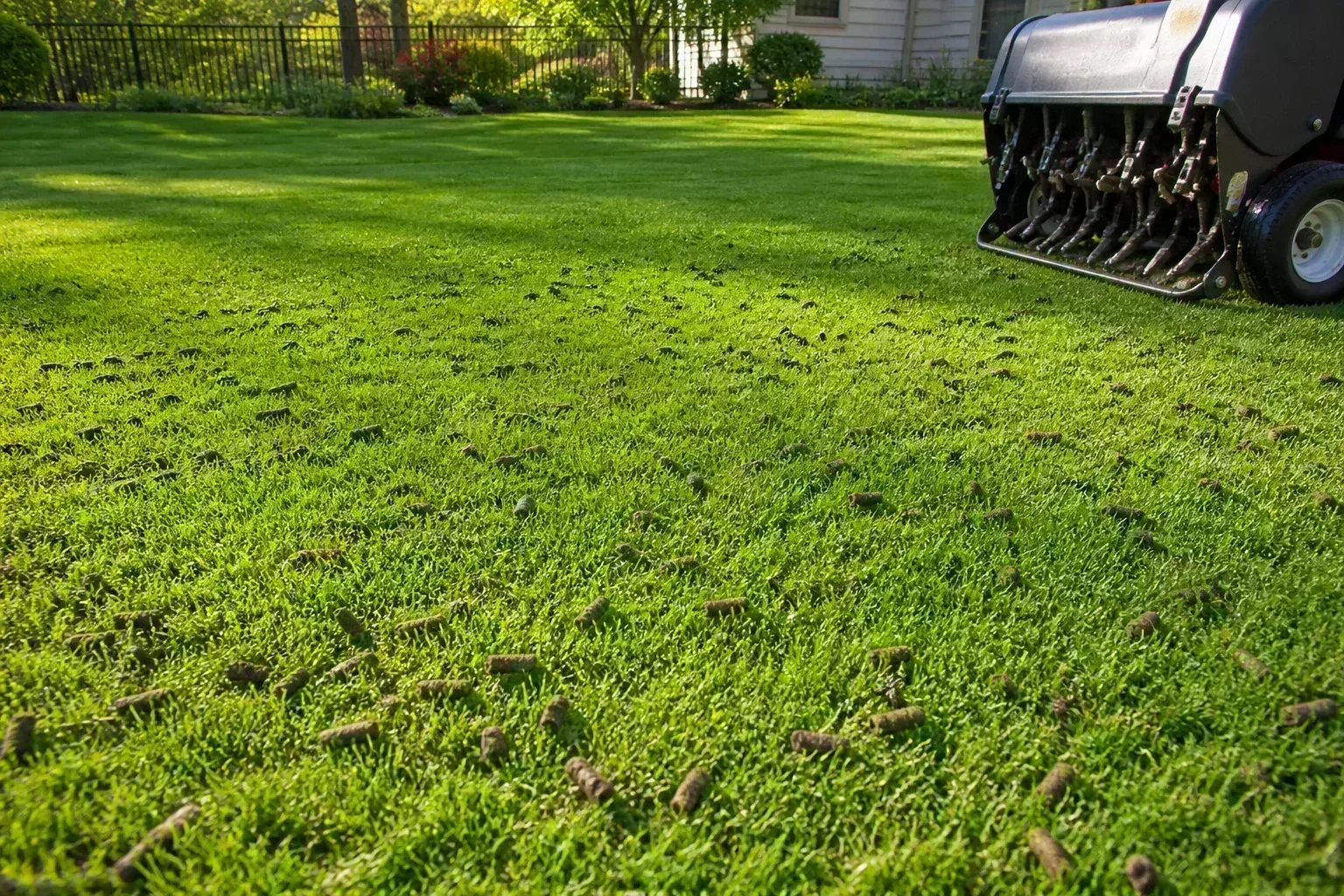
Core aeration is a lawn-care method that removes small cylinders of soil from the turf. It is most useful when compaction is restricting roots, water movement, or normal grass growth—not as an automatic annual chore for every yard. A quick soil check can tell you whether to rent a machine, aerate only a worn area, or investigate another cause first.
What core aeration removes—and what changes underground
A core aerator uses hollow tines to lift short plugs of turf and soil out of the ground. Those openings create temporary channels through a compacted surface layer, while the removed soil reduces some of the pressure that made it difficult for roots, air, and water to move through the soil in the first place. Iowa State University Extension and Outreach describes core aeration as a way to relieve compaction and improve water and nutrient movement in lawns.
The benefit is not that grass suddenly receives a dose of oxygen from the open air. Roots need a soil structure with pores that can hold both air and water; when soil particles are squeezed together, those pathways shrink. Aeration can improve the root zone’s physical conditions, but the holes gradually close as soil settles and roots grow, so it does not permanently change a compacted site.
Core aeration also brings small amounts of soil and thatch into contact. Soil microorganisms can help break down some organic matter, but aerating is not a substitute for dethatching when a thick mat is the main obstruction. Think of core aeration as a targeted response to compacted soil, not a universal fix for a tired-looking lawn.
Core aeration vs. spike aeration
The difference is what the tines do with soil. Hollow tines remove plugs; solid tines, including many lawn-spike tools, push into the ground and displace soil sideways. For a lawn with substantial compaction—especially a heavily used or clay-rich area—removing plugs is generally the more direct way to relieve pressure. Montgomery County’s lawn guidance recommends a core aerator and cautions that spikes can increase compaction; Lawn Love’s comparison also favors core aeration for lasting relief while noting that a solid tine can still open a small area for light work.
That does not mean a fork or spike tool is useless in every situation. A hand fork can loosen a small, lightly compacted patch or a narrow spot that a machine cannot reach, but repeated passes across a severely compacted clay lawn are unlikely to replace proper coring. Shoes with spikes are particularly poor substitutes for a core machine: walking over the lawn does not reliably remove soil or create a consistent pattern of open channels.
Signs your lawn may need core aeration
Compaction is more plausible when several clues appear together: water runs off or puddles after ordinary rain, the ground feels hard underfoot, roots remain shallow, and grass thins in places that receive regular traffic. Driveways, play areas, dog paths, and construction-disturbed parts of a yard are common locations to check. A lawn with heavy clay soil may also compact more readily than one with a loose, sandy profile, but soil type alone does not prove that aeration is needed.
Look at the pattern before treating the whole lawn. If only a narrow path is thin, spot aeration may be enough; if low areas stay wet after storms, grading, a perched water table, or a blocked outlet may be involved. Moss can thrive in damp, shaded, poorly drained areas, but it is a symptom of site conditions rather than a diagnosis of compaction by itself; the RHS notes its association with damp, poorly drained lawns. Aeration will not fix shade, a leaking irrigation head, nutrient imbalance, or water flowing downhill from another part of the property.
Check compaction before renting a machine
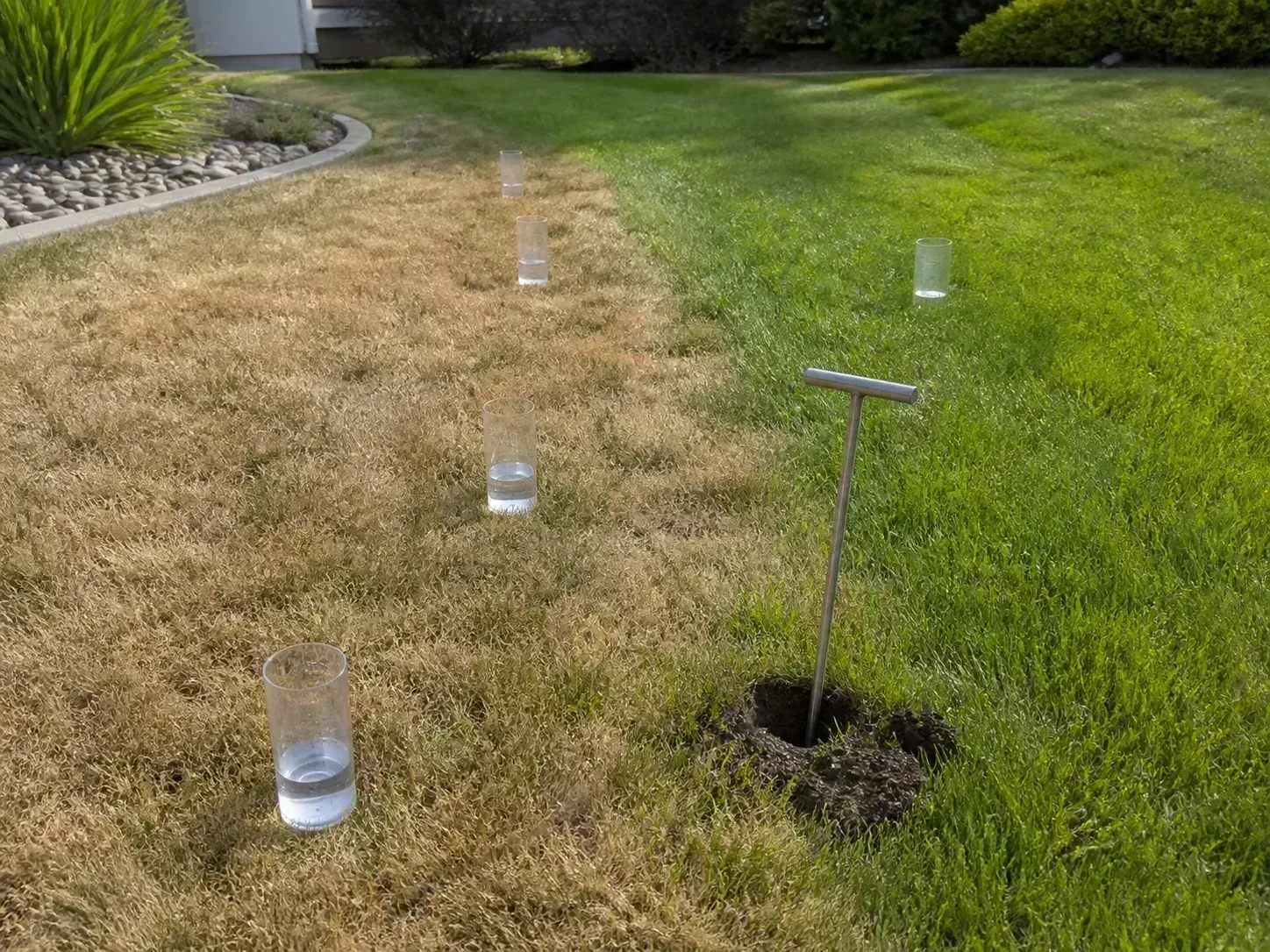
Try the simple screwdriver check recommended by Montgomery County: a few days after rain or irrigation, push a long screwdriver into a representative part of the lawn. If it is difficult to penetrate moist soil, compaction may be contributing to the problem. Test more than one spot, because compacted play areas and paths can sit beside soil that is already open and healthy.
Use the test as a clue, not a laboratory diagnosis. Soil that is bone dry will resist a screwdriver even when compaction is not the main issue, and rocks or buried construction debris can stop the tool. For a clearer look, cut a small wedge of turf and inspect root depth, soil texture, and any thick brown thatch layer between the green blades and mineral soil. If grass is declining broadly despite reasonable care, a soil test and a closer look at irrigation, drainage, sunlight, and disease may be more useful than aeration alone.
What core aeration can and cannot fix
Core aeration can improve conditions in a compacted upper root zone by creating openings and reducing soil density in the treated layer. Better infiltration can help rain or irrigation enter soil that previously shed water, and the loosened surface can give roots more room to grow. Iowa State Extension notes that aeration can improve turf growing conditions and result in more vigorous grass when compaction is the problem being addressed.
The machine cannot correct a drainage design problem, a high water table, a steep slope, an impermeable layer deep below the tines, or the wrong grass for the site. Nor does it add missing nutrients or correct pH. Montgomery County advises considering a soil test because soil chemistry can contribute to poor performance; it specifically notes that aeration alone will not solve every problem associated with soil imbalance.
Separate thatch from compaction before choosing a tool. Thatch is a layer of interwoven stems and roots above the soil surface; compaction is dense soil beneath it. A light thatch layer is normal, while a thick mat may call for a dethatching method. Aeration may assist decomposition of some thatch, but it will not lift a heavy mat out of the lawn. If both problems exist, identify the right treatment for each and avoid combining stressful jobs during hot or dry weather.
When to core aerate by grass type
Aerate when the grass is actively growing and can recover around the holes. For cool-season turf such as tall fescue, Kentucky bluegrass, perennial ryegrass, and fine fescue, early fall is often the most useful window: roots are growing, temperatures are easing, and overseeding may fit the same renovation plan. A suitable spring window can work when needed, but the lawn should be growing rather than stressed or dormant.
For warm-season grasses such as bermudagrass, zoysiagrass, St. Augustinegrass, and centipedegrass, wait until the lawn has greened up and is growing strongly in late spring or early summer. Do not use the first warm day as the signal; a warm-season lawn that is still brown or slow to recover is not ready for a disruptive pass. Lawn Love’s timing guide likewise ties the window to the grass’s growth cycle, while the Royal Horticultural Society’s autumn guidance describes autumn as a useful lawn-care period in its climate and emphasizes that lawn tasks do not all need to happen every year.
Use active growth, not a calendar date, as your cue
Calendar advice varies by region because grass species, elevation, rainfall, and the length of the growing season vary. A homeowner in a cool coastal climate should not copy a date meant for a hot inland region, and neither should assume that “spring” means the same thing for warm-season and cool-season turf. Start with the grass type, then choose a mild period when the lawn is growing and soil can be kept moderately moist.
If you plan to overseed, coordinate aeration with the locally recommended seeding window for your grass. In cool-season lawns, that commonly means late summer or early fall; in warm-season lawns, seed timing depends on species and local climate. Lawn Phix’s New England-focused advice illustrates why regional detail matters: its late-summer-to-early-fall recommendation is specifically about cool-season grass in that region, not a universal date for every lawn.
When to postpone or skip aeration
Hold off when soil is saturated, muddy, frozen, or too dry and hard for tines to penetrate. A heavy machine on saturated ground can rut the turf, while dry soil may cause short, uneven cores or make equipment bounce. Montgomery County advises aerating after deep watering or heavy rain because dry soil is difficult to work; the goal is moist soil, not a muddy surface.
Do not aerate a lawn during severe heat, drought stress, or dormancy. The grass needs active growth to recover, and opening the surface when the lawn is already under stress adds disruption without solving the immediate problem. If the forecast is hot and dry or you cannot irrigate seed afterward, postpone the job until a suitable recovery period.
Pause if you recently applied a pre-emergent herbicide or plan to seed. Aeration can disrupt a surface barrier, while a pre-emergent can also interfere with germinating grass seed. Check the product label and the locally appropriate seeding schedule before combining treatments. Newly installed sod or newly seeded turf should also be allowed to establish before a machine crosses it; when in doubt, check establishment and rooting rather than relying on a fixed number of weeks.
Choose the right core aerator for your lawn
For a few small, compacted patches, a manual hollow-tine step aerator is usually more practical than moving a large machine. It is slower and physically demanding, but you can work around beds, roots, and narrow access points with control. Clean soil from its tines as needed so they continue to extract plugs rather than simply punching and clogging.
For a typical medium lawn, a rented walk-behind core aerator covers ground faster and makes a more consistent pattern. These machines are heavy; arrange transport, help loading, and a safe route between the rental vehicle and lawn before pickup. If the property is very large and you already own a suitable riding mower or tractor, a tow-behind unit may make sense, but its actual penetration depends on soil moisture, machine design, and any weight restrictions in the manual.
Hire a lawn professional when the yard is steep, access is difficult, the soil is extremely hard, or you are unsure where irrigation lines run. Ask what type of aerator they will use, whether they will make one or more passes, and how they handle sprinkler heads and utilities. The useful question is not simply “How many times will you aerate?” but whether their method fits the compacted area and the lawn’s recovery window.
Prepare the lawn and check soil moisture
First, mow to the lawn’s normal maintenance height and remove loose debris that could tangle in the machine. Do not scalp the turf to make the equipment easier to operate; short grass can make the work visible, but cutting too low adds stress and does not correct compacted soil. If the lawn is exceptionally tall, mow beforehand so the machine can move steadily and you can see the surface clearly.
Check the ground a few inches down, not only the grass blades. If the soil is hard and dry, water in advance and give it time to soak in; if it is wet enough to smear or leave footprints, wait. A handful of soil from below the surface should feel damp and hold together briefly, then crumble with pressure. This practical check is more useful than watering for a fixed number of minutes, since soil texture and sprinkler output vary.
Mark sprinkler heads, valve boxes, shallow irrigation lines, landscape lighting, and other known buried features. The public utility marking service in your area may not locate private irrigation or lighting wires, so identify those separately and keep the machine away from anything you cannot confidently map. Read the aerator manual, wear sturdy footwear and eye protection, and avoid steep slopes or sharp turns beyond the equipment’s instructions.
Mark sprinkler heads and shallow lines
Aerator tines can damage a sprinkler head or a shallow line even if the machine is moving at walking speed. Flag heads and valve boxes so they are visible from the operator’s position; do not assume every head is flush with the lawn. If your irrigation system’s route is unknown, locate it before aerating or have a professional identify it.
Plan the pass pattern before starting. Map beds, trees, edging, roots, and hardscape so you can lift or turn the unit safely instead of pivoting on the turf. Marking these hazards takes only a few minutes and is far less disruptive than discovering a broken irrigation line after the soil has been cored.
How to core aerate a lawn step by step
Begin with a small test pass in an inconspicuous area. Check that the tines penetrate to a useful depth and pull intact plugs; if they only make shallow dents, adjust the soil moisture, machine settings, or weight according to the manufacturer’s instructions. Stop if the machine is tearing the turf, clogging, or leaving ruts.
Move at a steady pace across the target lawn, overlapping passes enough to avoid untreated strips. The exact hole spacing depends on the aerator and soil, so follow its manual rather than forcing a universal setting. On the most compacted traffic lanes, a second pass at a cross angle may increase coverage, but blanket repeated passes over healthy turf create unnecessary disturbance.
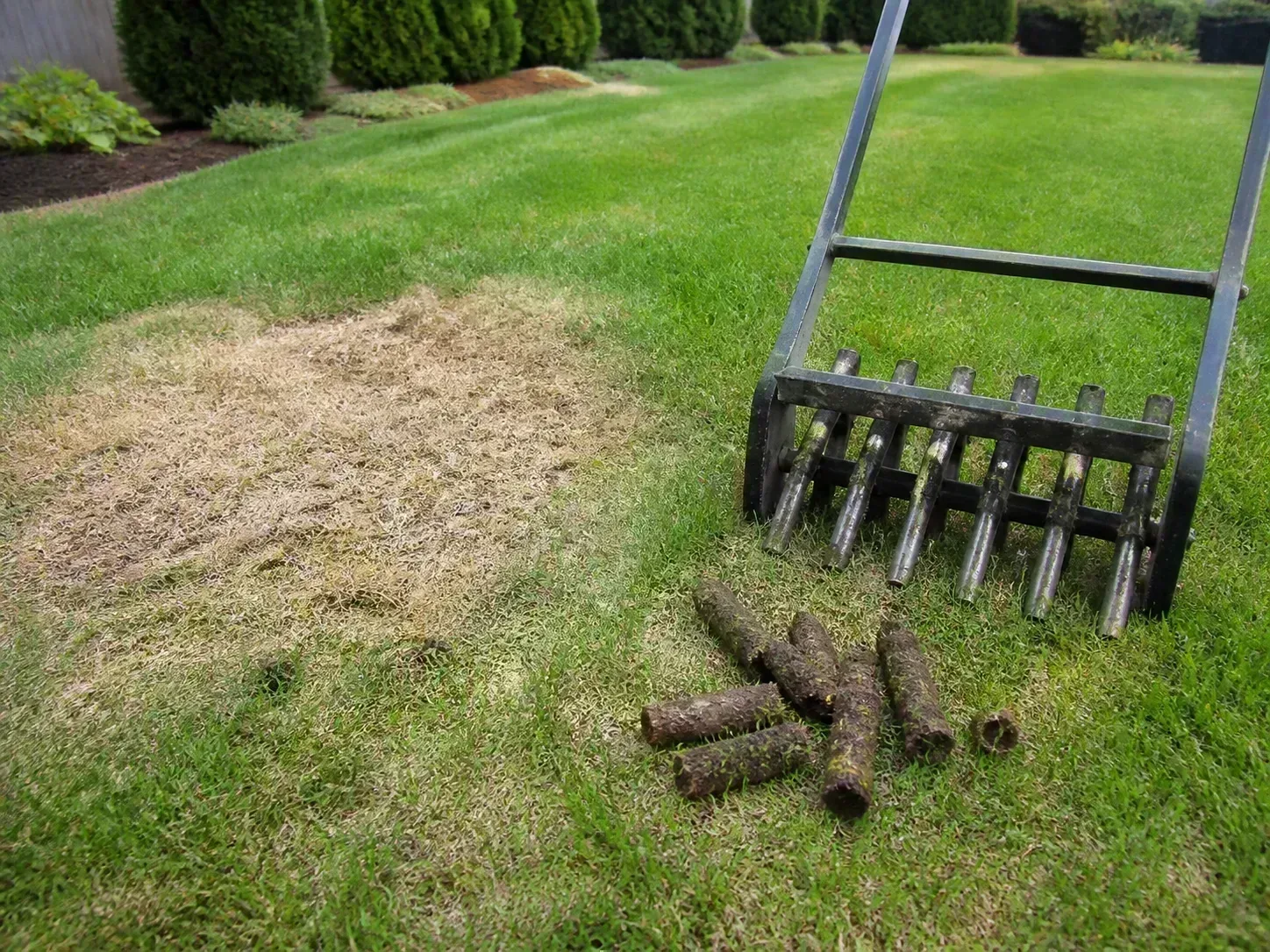
If you are treating a whole lawn, divide it into sections and keep track of the area already covered. Avoid turning sharply while tines are engaged, because dragging the machine can tear the surface. Around irrigation features, tree roots, and tight edges, lift the unit as directed or finish by hand with a manual core tool rather than forcing the machine into a hazard.
When you finish, inspect the pattern. Cores should be reasonably consistent, not just scattered shallow marks; uneven depth usually points to soil that is too dry, a machine setting problem, or equipment that is not suited to the site. Aeration is complete when the target area has a useful, even distribution of holes—not when every inch has been crossed as many times as possible.
What to do with plugs and how to care for the lawn afterward
The plugs can look untidy for a few days, but they are not necessarily debris that must be removed. Let them dry and crumble, then use the back of a rake or a mower with the blade raised if the pieces are still prominent. Lawn Love recommends leaving cores to break down; RHS guidance for heavy soil describes sweeping plugs aside before working topdressing into the holes. These approaches can both make sense: leave small, crumbly cores where they will disperse, and clear large clods that would smother the grass or interfere with mowing.
Water normally after aeration if the lawn needs it, taking care not to create runoff or leave saturated ground. If you seeded, follow the grass-seed package and local extension advice for keeping the seedbed evenly moist; the watering routine for germination is different from ordinary established-turf irrigation. Avoid applying extra fertilizer just because holes are open. Use a soil test and the grass’s needs to decide whether a nutrient application is appropriate.
Keep foot traffic light while the lawn recovers, especially around wet soil and new seed. Do not mow until the turf and surface conditions are firm enough to avoid tearing or ruts. You should expect visible holes and scattered soil after the work; that appearance is temporary, and it is not evidence that the lawn has been harmed if the grass was actively growing and the machine operated correctly.
Should you overseed, topdress, or fertilize?
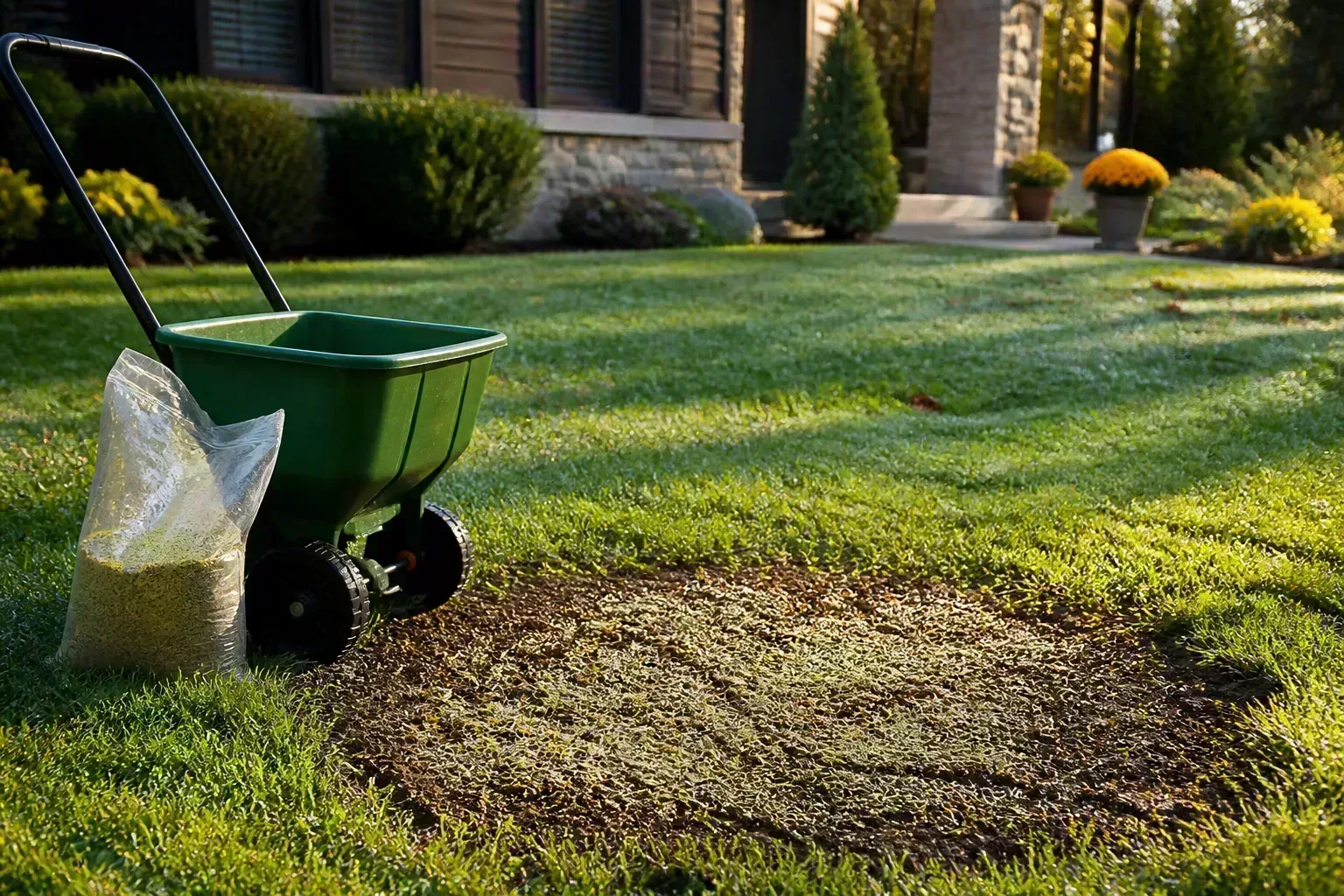
Aeration creates useful openings for seed to contact soil, so it can pair well with overseeding when the grass type and season make seeding appropriate. Seed immediately after the passes and follow the recommended rate for your species; do not scatter seed blindly if you do not know what grass is already growing. Mixing incompatible grass types can create uneven color, growth, and maintenance needs.
Topdressing can help when the goal is to improve the upper soil structure, fill low spots gradually, or work a suitable amendment into holes. RHS recommends topdressing after hollow-tine aeration on heavy soils, while Montgomery County describes aeration as a good time to add compost or other amendments. Use a material compatible with the existing soil and spread only a thin layer that will reach the openings without burying grass crowns.
Fertilizer is not automatic after core aeration. If a soil test or your lawn’s seasonal program calls for it, follow the product label and avoid applying products that conflict with seed germination or local restrictions. Aeration can create access to the root zone, but it does not mean the lawn needs more nutrients; adding fertilizer without a diagnosis can waste money and increase runoff risk.
How often should you core aerate?
There is no single interval for every yard. Sandy soil with little foot traffic may rarely need coring, while clay soil, construction-disturbed ground, play areas, and heavily used paths can compact again sooner. RHS suggests most lawns may need aeration every two to three years, with hollow-tine aeration on clay or waterlogged soil less often in its advice; Montgomery County recommends checking conditions yearly rather than repeating aeration on a fixed schedule.
Use the lawn’s condition to set the next check. If water infiltration, rooting, and turf density improve and stay improved, do not aerate simply because a calendar reminder says it is time. If the same area compacts again, look for the cause—repeated vehicle parking, wet-soil traffic, construction fill, or poor drainage—and address that pressure along with any needed aeration.
Common mistakes that reduce the benefit
The most common mistake is treating every symptom as proof of compacted soil. Moss, brown patches, shallow roots, poor growth, and puddles can have several causes; core aeration helps only when restricted soil structure is part of the problem. Test, inspect, and compare healthy and damaged areas before choosing a machine.
Another mistake is aerating when the lawn cannot recover. Dry, frozen, saturated, dormant, or heat-stressed turf makes poor timing, even if the calendar says fall or spring. Too many passes, using spikes where deep compaction needs coring, or running a heavy machine over soft ground can cause extra stress and surface damage.
Finally, do not remove every plug automatically, overtop the lawn with a thick dressing, or apply fertilizer and herbicide without checking the goal and product instructions. Core aeration is one step in lawn care, not a substitute for correcting traffic, drainage, soil chemistry, shade, or irrigation. If symptoms persist after a well-timed pass, reassess the cause instead of repeating the treatment more often.
Conclusion
Core aeration is most valuable when compacted soil is limiting the lawn’s root zone. Confirm the problem with a screwdriver check and a look at the soil profile, then choose a time when the grass is actively growing and the ground is moist but workable. Use a hollow-tine tool for real compaction, protect sprinkler heads and shallow lines, and make only the passes the lawn needs.
Afterward, let small cores break down or clear clods that interfere with the turf, then decide whether overseeding or a light topdressing fits your grass and soil. If the lawn still struggles, test for another cause—drainage, nutrient imbalance, shade, or site damage—before scheduling another pass. A targeted treatment and less recurring traffic will usually do more than aerating by habit.