How to Use Milk Spray for Powdery Mildew on Plants
Find out how milk spray may help powdery mildew, what research can and cannot confirm, and how to test it safely without risking an entire planting at home.
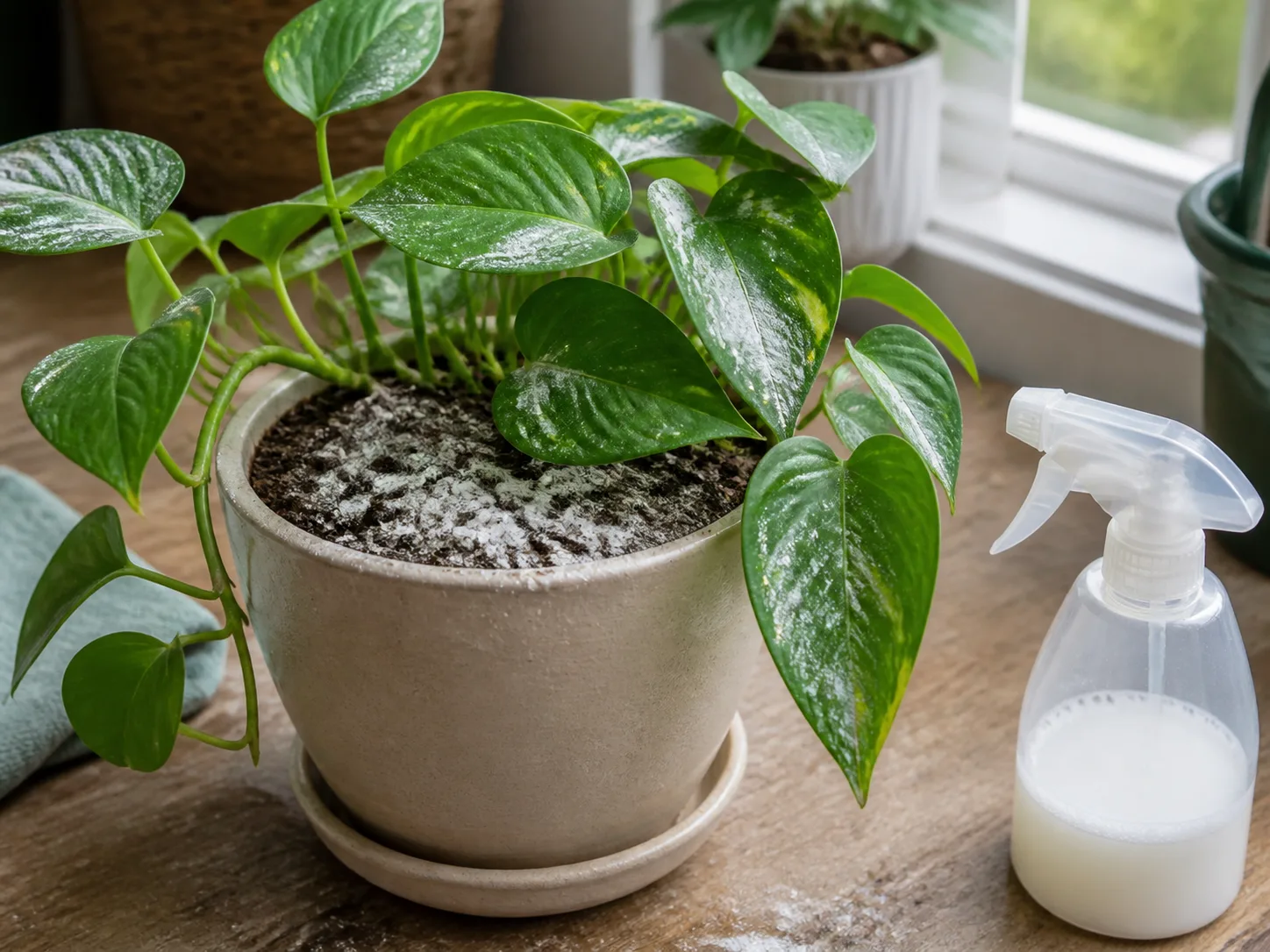
Milk spray can help suppress powdery mildew on some plants, but the evidence is narrower than many recipes suggest. Research has tested milk on particular crops under controlled conditions; it has not established one concentration or schedule that works reliably on every ornamental, vegetable, or climate.
If you want to try it, treat it as a small, measured experiment on a plant with confirmed, early powdery mildew. Start with a dilute mix, test a few leaves, and pair the spray with airflow, sanitation, and resistant varieties where possible. Do not rely on milk to reverse a severe infection or to treat a different disease that only looks like powdery mildew.
Quick answer: when milk spray is worth trying
Milk spray is most reasonable as a low-cost trial on a susceptible outdoor plant when the white growth is actually powdery mildew and the infection is just beginning. The clearest household evidence centers on zucchini and related crops, while results on other plants are less predictable. Even on squash, success depends on the pathogen, weather, timing, coverage, and how often treatment is repeated.
For a cautious first test, mix one part plain dairy milk with nine parts water. That makes a 10 percent solution: for example, 100 milliliters of milk plus 900 milliliters of water produces one liter. This is a starting point for a small trial, not a guaranteed universal recipe or a substitute for a product label.
Spray a couple of leaves first and wait 24 to 48 hours. If they show no new spots, edge burn, sticky film, or other damage, lightly coat the affected plant and check it again over the next week. If the fungus continues to spread after two or three careful applications, stop increasing the milk concentration and move to a better-supported control plan.
Confirm powdery mildew before you spray
Powdery mildew is a group of plant diseases caused by related fungi. On many garden plants it starts as small, pale patches that become a white or gray, powder-like growth on leaf surfaces, stems, or flower parts. The fungi are often host-specific, so the mildew on one plant is not necessarily the same species as the mildew on its neighbor; favorable conditions can still support outbreaks on several kinds of plants at once.
Before spraying, inspect both sides of several leaves and the newest growth. Powdery mildew commonly appears as surface growth, but a white patch alone is not a diagnosis. Dust, spray residue, natural leaf patterns, and other pests can mislead you; treatment will not help if the problem is something else.

Powdery mildew versus natural leaf markings
Some squash varieties have silvery or white markings that are part of the leaf, often arranged in a fairly consistent pattern around the veins. Powdery mildew usually forms irregular, dusty patches that expand over time. Compare several leaves, including new leaves, rather than judging one naturally patterned leaf in isolation.
A light fingertip rub can help, but it is not a complete test: a coating may smear or lift, while some natural markings may feel smooth. Take a photo and compare it a few days later. If the pattern stays fixed and follows the cultivar’s normal markings, do not spray it as fungus; if loose-looking patches enlarge and appear on new tissue, disease becomes more likely.
Powdery mildew versus downy mildew
Downy mildew is a different disease caused by oomycetes, not the fungi responsible for powdery mildew, and milk-spray advice for powdery mildew should not be applied to it. Downy mildew often begins as angular yellow or pale areas bounded by leaf veins, with gray, purple, or downy growth on the underside when conditions favor sporulation. Powdery mildew more often presents as white surface patches that can appear on the upper leaf surface.
Symptoms vary by host and infection stage, so a photo-based extension diagnosis can be useful if the plant is valuable or the pattern is spreading quickly. Penn State Extension’s vegetable-garden diagnostic guide describes powdery mildew as white, powdery growth and notes that cucurbits such as squash, melon, and cucumber are frequent hosts. (Penn State Extension’s vegetable garden problem guide)
What research says about milk spray
Milk is not just an internet rumor, but neither is it a universal cure. The useful distinction is between evidence that a particular milk preparation reduced disease on a particular host and proof that a kitchen mixture will work on any plant. Gardeners should keep the first claim and reject the second.
Garden writers have proposed that milk proteins or other compounds may interfere with fungal growth, potentially with light involved. (GrowVeg’s guide to milk and powdery mildew) The exact mechanism and practical value of each ingredient are not settled well enough to promise that a sunny day, a high-fat carton, or a stronger mixture will make the spray work. A sound recommendation should rest on measured plant response, not a confident-sounding explanation.
What the crop-specific trials show
Bettiol’s 1999 paper in Crop Protection tested cow’s milk against powdery mildew on zucchini squash under greenhouse conditions. That makes it relevant to gardeners dealing with squash, but it is a crop-specific experiment, not evidence for all powdery mildew species or every garden setting. The article is a good reason to consider a small trial on squash, not a basis for treating unrelated plants with the same confidence. (Bettiol’s greenhouse study)
A later field study in New Zealand vineyards evaluated an emulsified concentrate based on anhydrous milk fat, alongside other disease-management measures, on winegrapes. That research supports the possibility that carefully formulated milk-derived products can contribute to powdery mildew management in a commercial program. It does not validate spraying ordinary milk at the same rate: a formulated fat concentrate is not the same material as diluted milk from a carton. (The field study on milk-fat products and winegrape diseases)
Horticulture writers also report using diluted milk on squash, grapes, and ornamentals, but their recommended concentrations and schedules vary. GrowVeg, for example, describes gardener experience with different dilutions and stresses preventive timing; Savvy Gardening treats milk as a limited option among broader squash-disease practices. Those practical accounts are useful context, but they are not proof that a single home recipe will work equally well on all hosts. (GrowVeg’s guide to milk and powdery mildew; Savvy Gardening’s squash mildew guidance)
What those results do not prove
Powdery mildew fungi are diverse and adapted to particular hosts. A review indexed by PubMed describes their broad host range and ability to evolve; that diversity is one reason a treatment demonstrated on zucchini cannot automatically be generalized to roses, grapes, tomatoes, or houseplants. (Review of powdery mildew diversity and evolution)
The evidence also does not establish that milk eradicates established colonies, protects new growth for a fixed number of days, or works better at a higher concentration. Nor does a successful greenhouse or vineyard protocol tell you how a home-grown plant will respond in hot sun, humid weather, or a crowded bed. Those gaps are why a patch test and a short monitoring window matter.
Choose a milk-to-water ratio
Online recipes range from very dilute to a mixture containing a large fraction of milk. A stronger mix is not automatically a better choice: a larger amount of milk may mean more visible residue or odor without a demonstrated advantage for every plant.
Start with the least concentrated practical trial rather than immediately soaking the whole planting. Keep one untreated plant or a few comparable untreated leaves if you can; this gives you a simple reference for whether the treated leaves actually fare better. If you treat every plant at once, normal weather changes can make it hard to judge whether milk helped.
A cautious small-batch starting mix
Use a volume measure so your ratio is repeatable. For a 10 percent mix, combine one measure of milk with nine equal measures of clean water. In a 500-milliliter bottle, that is 50 milliliters of milk and 450 milliliters of water; in a one-liter batch, use 100 milliliters and 900 milliliters.
Mix only enough for the application you plan to make. Shake gently, spray the same day, and rinse the bottle and nozzle afterward. Do not add dish soap, baking soda, oil, vinegar, or another home remedy to the milk mix; combining recipes makes it harder to understand what caused improvement or leaf injury.
If the dilute trial produces no visible benefit, do not assume that doubling the milk will solve the problem. Recheck the diagnosis, spray coverage, and disease pressure first. If the infection is confirmed and continues to advance, choose a control with crop-specific extension guidance or follow a labeled fungicide product instead of escalating an improvised mixture.
Which kind of milk to use
Use plain, unsweetened dairy milk if you choose to test this method. Research on cow’s milk does not establish equivalent results for oat, almond, soy, or other plant-based drinks; those products contain different ingredients and should not be treated as interchangeable. Avoid flavored or sweetened milk because added ingredients do not improve the disease-control evidence and may leave a sticky residue.
There is no clear home-garden rule that whole milk is always better than skim milk. Practical garden sources describe different experiences, while the stronger commercial vineyard research used formulated milk fat rather than a carton beverage. If residue is a concern, begin with the lower-concentration test and record which milk you used rather than assuming fat content predicts the result.
How to apply milk spray step by step
The goal is an even, light coating on the plant surfaces where mildew is present, not a dripping wet plant. Use a clean hand mister for a few plants or a garden sprayer for a larger bed, and reserve that equipment for garden use. Label the bottle so nobody mistakes it for drinking water or another household spray.
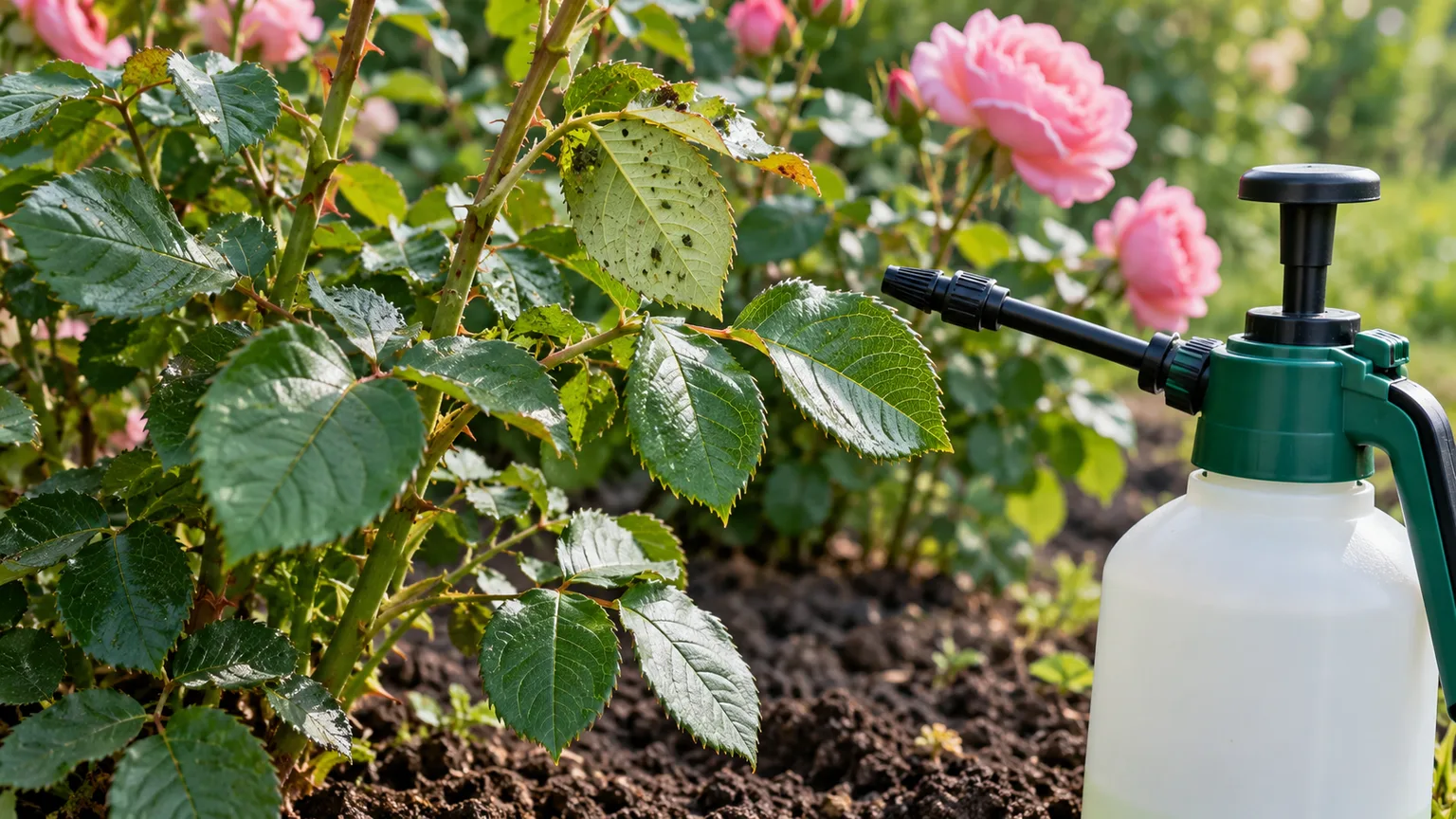
Work on a dry day when foliage can dry soon after treatment. A cool morning is a practical window: it leaves time for the leaves to dry and avoids the hottest part of the day. Sources often recommend sunlight for milk sprays, but because the mechanism is not settled, do not interpret that advice as a need to spray leaves in scorching midday heat.
Coat the leaves without drenching them
First patch-test one or two leaves and wait 24 to 48 hours. If those leaves look unchanged, begin with the visibly affected part of the plant and the nearest susceptible leaves. Mist the upper surface and, where accessible, the underside; stop when the leaf is evenly damp rather than dripping.
Keep spray off flowers and ripe fruit when practical, especially if residue or odor would be a problem. If you spray an edible crop, rinse produce under clean running water before eating it as you normally would. Do not spray plants that are wilted from heat or drought; correct the stress and wait until they have recovered before testing any foliar treatment.
Afterward, clean the sprayer and note the date, dilution, weather, and which plants received treatment. A short note helps you compare treated and untreated leaves and avoid accidentally applying a stronger solution more often than intended. This is especially useful when mildew tends to appear every summer and you want a repeatable plan for the next season.
Timing and how often to repeat
Preventive timing is more plausible than waiting until most of a leaf is coated. If powdery mildew returns to the same crop each year, inspect susceptible plants regularly and begin any trial at the first confirmed spots or before the usual outbreak period. Do not automatically spray every plant in the garden just because one species has mildew; related conditions may be present, but milk is not proven as a universal preventative.
Practical sources commonly suggest repeating a milk spray about weekly to every 10 days, but research methods and garden recommendations are not uniform. For a small home trial, use a consistent interval around seven to ten days and inspect sooner for injury or rapid spread; do not increase both the concentration and frequency at the same time. If a heavy rain washes the spray off soon after application, wait until the foliage is dry and reassess instead of adding an extra concentrated dose.
Judge success by the next new growth and whether the powdery patches are expanding, not by expecting old white marks to disappear overnight. Existing leaves may remain marked even if the disease slows. If fresh leaves develop new patches or affected areas continue to enlarge through two or three applications, consider the trial unsuccessful and move to another approach.
What to do if mildew keeps spreading
Do not respond to a failing milk spray by increasing the concentration on the whole plant. First confirm that the white growth is powdery mildew, check whether the spray reached both leaf surfaces, and look for crowded foliage or repeated humid nights. If the diagnosis is uncertain, take clear photographs of the top and underside of leaves and ask a local extension service for help.
Remove badly infected leaves only when doing so will not strip the plant of too much healthy foliage. Use clean pruners, avoid handling healthy plants immediately afterward, and dispose of diseased material rather than leaving it beneath the plant. On vigorous squash vines, removing a few older infected leaves can improve access and airflow; severe defoliation can expose fruit and remaining leaves to sun injury and reduce the plant’s ability to produce.
If the crop is still valuable and disease pressure is high, use an appropriately labeled product for that plant and disease, following its directions for mixing, protective equipment, harvest intervals, and repeat applications. Organic or naturally derived products still need correct use and can injure plants. Extension guidance may recommend different choices for ornamentals and food crops, so do not borrow a rate from a product intended for another plant.
Risks, residue, and situations to avoid
Milk is organic material, and a leaf coating can leave visible residue or an unpleasant sour smell as it dries or breaks down. This can be more noticeable in a greenhouse, crowded bed, or indoor room where air movement is limited. If odor is unacceptable, if the plant sits near a dining area, or if you are treating an indoor houseplant, sanitation and airflow may be more sensible than a dairy spray.
Any foliar mixture can stress a sensitive plant, especially when applied at high concentration, during hot weather, or to foliage already damaged by drought or disease. That is why a small test matters. Stop if leaves develop translucent patches, browning, sticky buildup, or a persistent odor; rinse the affected foliage gently with clean water if residue is obvious and the plant can tolerate it.
A milk spray is not a fertilizer plan and should not be poured into the potting mix to treat mildew. Powdery mildew grows on aerial plant surfaces, so a soil drench misses the target while introducing dairy into soil where it can sour or attract pests. For disease, use a foliar approach only if you deliberately choose to test it; for nutrition, use a soil test and appropriate fertilizer.
For a broader look at milk as a garden remedy, including why it is not routine plant food, see our guide to using milk for plant care.
Preventing powdery mildew beyond milk
Prevention does more than any one homemade spray because it reduces the conditions that let disease build. Penn State Extension recommends resistant varieties, appropriate spacing for airflow, and removal of infected plant debris; it also notes that powdery mildew is often cosmetic, though cucurbits can be more vulnerable to leaf loss. These measures are useful whether you use milk, another treatment, or no spray at all. (Penn State Extension’s vegetable garden problem guide)
Powdery mildew does not behave exactly like diseases that require a film of water on leaves. Warm days, high humidity, shade, and stagnant air can create favorable conditions even when the foliage looks dry. Therefore, keeping leaves dry is not a complete powdery mildew strategy; it is one piece of general disease management that can reduce other leaf problems too.
Adjust airflow, variety, and watering
Choose cultivars with documented resistance when buying seed or transplants, especially for squash, cucumbers, and melons in places where mildew appears every year. Resistance is not immunity, but it can delay or reduce disease enough to protect productive foliage. Give plants the spacing recommended for the variety and train or prune only as needed to keep the canopy from becoming a dense, shaded mass.
Water at the root zone when practical, and water in the morning so foliage that becomes wet can dry during the day. Avoid overfeeding with nitrogen, which can push soft, dense growth that is harder to keep ventilated. At season’s end, remove infected annual vines and leaves; do not count on a milk spray to clean up garden debris or prevent every spore from returning.
When to choose another control
Skip the milk experiment when the disease is severe, the plant is already declining, or the crop has a high value that makes a low-confidence remedy a poor bet. Also skip it when you cannot confirm powdery mildew, when leaf residue is unacceptable, or when the plant is indoors with limited ventilation. A clear diagnosis and a control matched to the host are more valuable than using a household ingredient simply because it is available.
For a minor outbreak, start with monitoring, sanitation, resistant varieties, and better airflow. For a persistent problem, consult a local extension guide or use a product labeled for the specific plant and disease; follow the directions exactly and do not combine products unless the label permits it. The best response is the one that protects useful foliage without adding unnecessary spray or making a larger problem harder to diagnose.
Conclusion
Milk spray is worth considering as a small, early-stage trial on a confirmed powdery mildew problem, especially on squash where crop-specific research exists. Mix a dilute batch, test a few leaves, apply an even coating in mild conditions, and keep notes so you can tell whether the plant actually improves.
The evidence does not support treating every white leaf, every plant species, or every severe outbreak with the same recipe. If the trial fails, do not make it stronger by default: correct the growing conditions, remove badly affected tissue when appropriate, and turn to host-specific extension advice or a labeled control.