What Is Peat Moss? Garden Uses, Pros, and Alternatives
Learn what peat moss does in potting mixes and garden soil, when it helps, how to pre-wet it, and how to choose alternatives such as coir, compost, or bark.
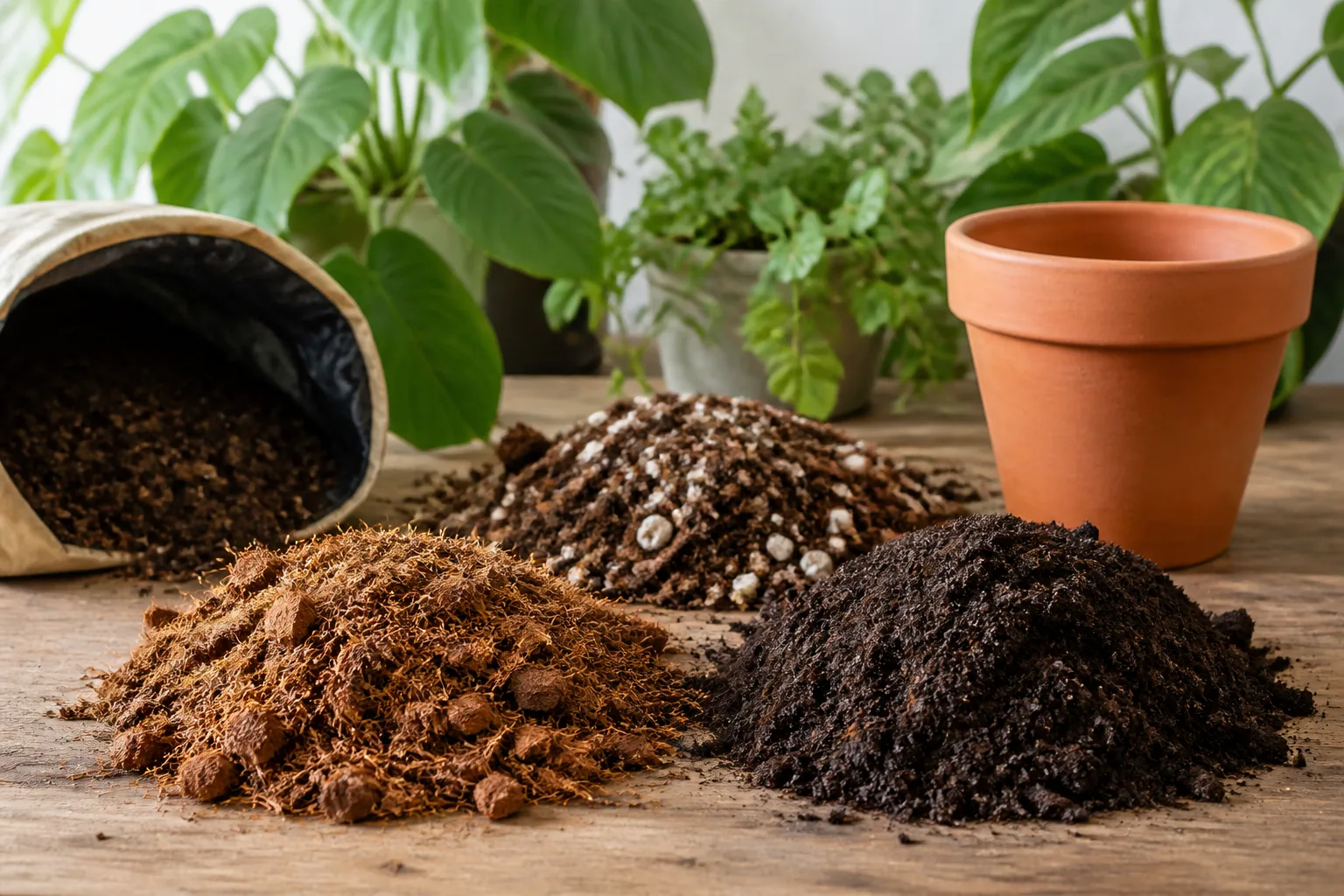
Peat moss is a light, fibrous material harvested from peat-forming wetlands and used mainly to manage moisture and texture in growing media. It can help a potting mix hold water without becoming dense, but it has little fertilizer value, is naturally acidic, and can become difficult to wet again if it dries completely. Those qualities make it useful in some mixes and the wrong choice in others.
The best question is not “Is peat moss good or bad?” It is “What does this soil or potting mix need?” If you need a moisture-holding ingredient for a container recipe, peat may fit. If you want to feed a garden bed, correct drainage, or raise organic matter, finished compost or another material may do that job more directly.
What peat moss is and how it forms
Horticultural peat moss is accumulated, partially decomposed plant material from waterlogged places such as bogs. The low-oxygen conditions in these wetlands slow decomposition, allowing dead vegetation to build up over long periods; the material sold for gardening is commonly formed largely from sphagnum moss, though other plants can contribute to peat. North Dakota State University Extension describes the process as an accumulation that can take hundreds or even thousands of years, not a quick-turning garden resource (NDSU Extension).
In a bag, peat usually looks dark brown, stringy, and lightweight. It is an ingredient or soil amendment, not a complete soil, compost, or fertilizer. A plant still needs a growing medium with suitable air space, water movement, physical support, and nutrients; a pot filled with peat alone does not meet all of those needs for most plants.
Gardeners encounter peat in seed-starting mixes, soilless potting mixes, and some soil amendments. The label matters: commercial mixes may combine peat with perlite, vermiculite, bark, lime, and a starter fertilizer, while a plain bale may contain only peat. Those products will not behave or feed plants in the same way (University of Connecticut Extension on potting media; UF/IFAS Extension on homemade potting mix).
Peat moss and sphagnum moss are not the same
Sphagnum moss is the moss itself, which can grow at the surface of a bog. It is sold living or dried, often in long strands used for liners, propagation, or special growing setups. Peat moss is the older, decomposed material accumulated below the surface; horticultural peat is often called sphagnum peat because sphagnum species contributed to it, but it is not simply a bag of living moss.
This distinction helps when reading a product label. A pack of dried sphagnum strands and a bale of brown peat are different materials with different textures and uses. UConn Extension also distinguishes peat—a mined organic product—from sphagnum moss, which may be sold green and living or brown and dried (UConn Extension).
What peat moss changes in a growing mix
Peat is useful because its fibrous structure changes how a mix stores and releases water. It is also light and can contribute fine organic matter, which is why growers use it as one part of container media rather than as a universal garden fix. Its effects depend on particle size, how much is in the mix, the other ingredients, the plant, and the container.
Water holding, aeration, and rewetting
Peat can hold a substantial amount of water while the loose fibers leave spaces for air. In a well-designed potting mix, that can buffer the roots between waterings. But water retention is not the same as drainage: a peat-heavy mix can stay wet for too long in a large plastic pot, in a cool room, or around a plant that prefers a drier root zone.
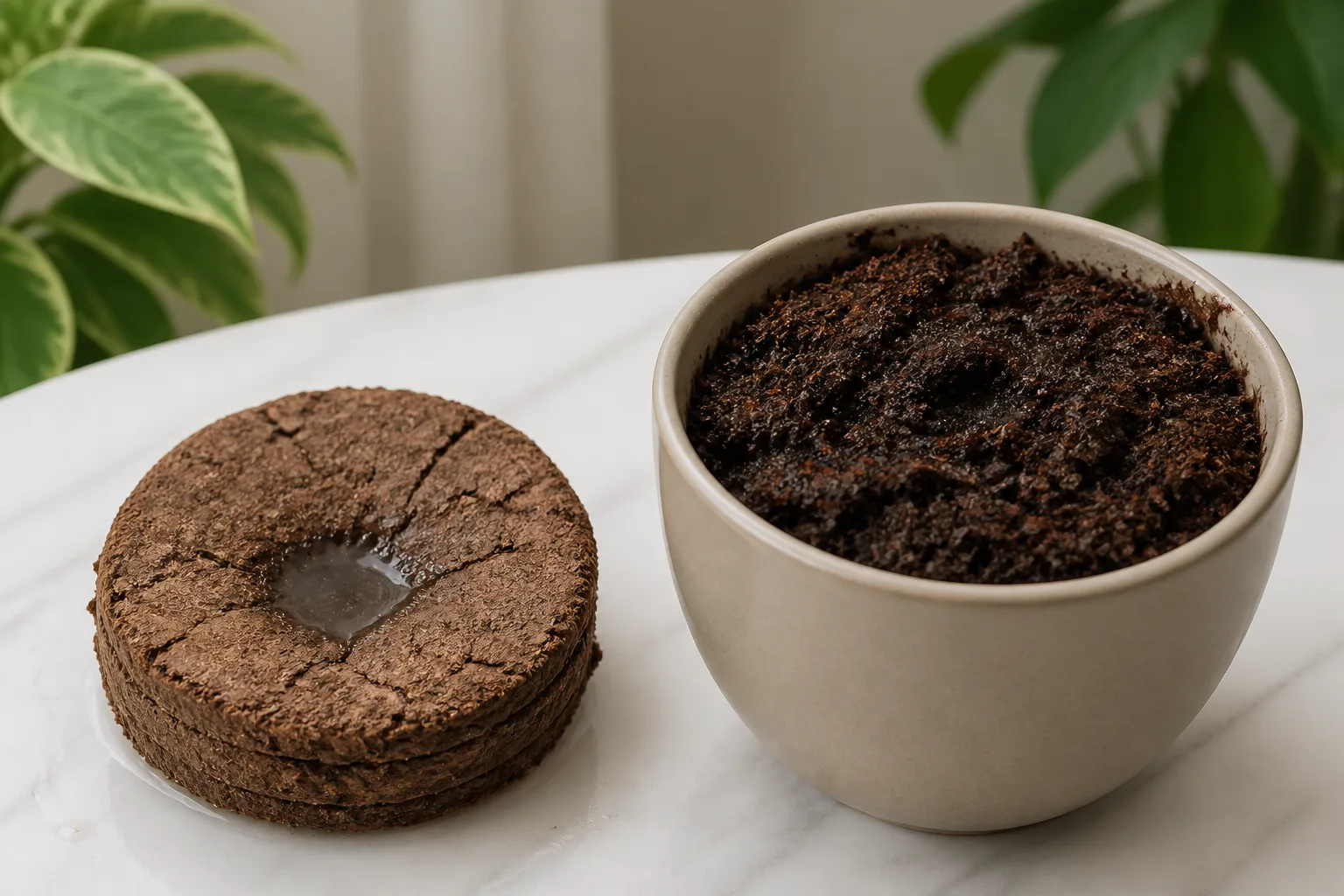
Dry peat has the opposite problem. Once the fibers become bone-dry, they can repel water, so a quick pour may run down the pot wall and exit through drainage holes while the center of the root ball remains dry. UConn Extension advises moistening organic potting media with warm water before use because dry organic materials can become hydrophobic and leave roots with uneven moisture (UConn Extension).
That behavior is a reason to pre-wet it, not a reason to keep adding water blindly. If a planted pot has dried into a puck, use several gentle passes or let the pot wick water from below, then check the root ball itself. A pot that drains in seconds but remains light and dry may need rewetting; a pot that stays heavy for days needs more air space or less frequent watering, not more peat.
Acidity, nutrients, and lime
Peat is naturally acidic and contributes little available plant nutrition. That acidity can be useful in a mix designed for acid-loving plants, but it is not a substitute for checking the pH of the actual root zone. A bagged peat-based potting mix may already be adjusted with lime and may include a starter nutrient charge; a plain bale will not have the same preparation.
Do not add lime to every peat-containing recipe by habit. The amount needed depends on the peat, the other ingredients, the crop, and the current pH; too much can raise pH enough to make nutrients less available. Use a soil or media test and follow the mix recipe or product label before adjusting pH, since UConn Extension notes that soilless and soil-containing media have different general pH ranges (UConn Extension).
Likewise, do not treat peat as fertilizer. A peat-based seed mix or potting medium may come with a limited starter charge, but the nutrients are supplied by that formulation, not by peat itself. For containers, plan to use a suitable fertilizer once the product’s starter feed is depleted and the plant is actively growing; for garden soil, base feeding decisions on the crop and soil test.
Where peat moss makes sense—and where it does not
Peat is most at home in formulated growing media, where a measured amount can help with moisture retention and a partner ingredient provides air space or other properties. It is less useful when the gardener expects one amendment to fertilize, loosen, drain, and correct the pH of an entire bed. Start with the goal and the existing soil or mix, then choose an ingredient that addresses that need.
Container mixes and seed starting
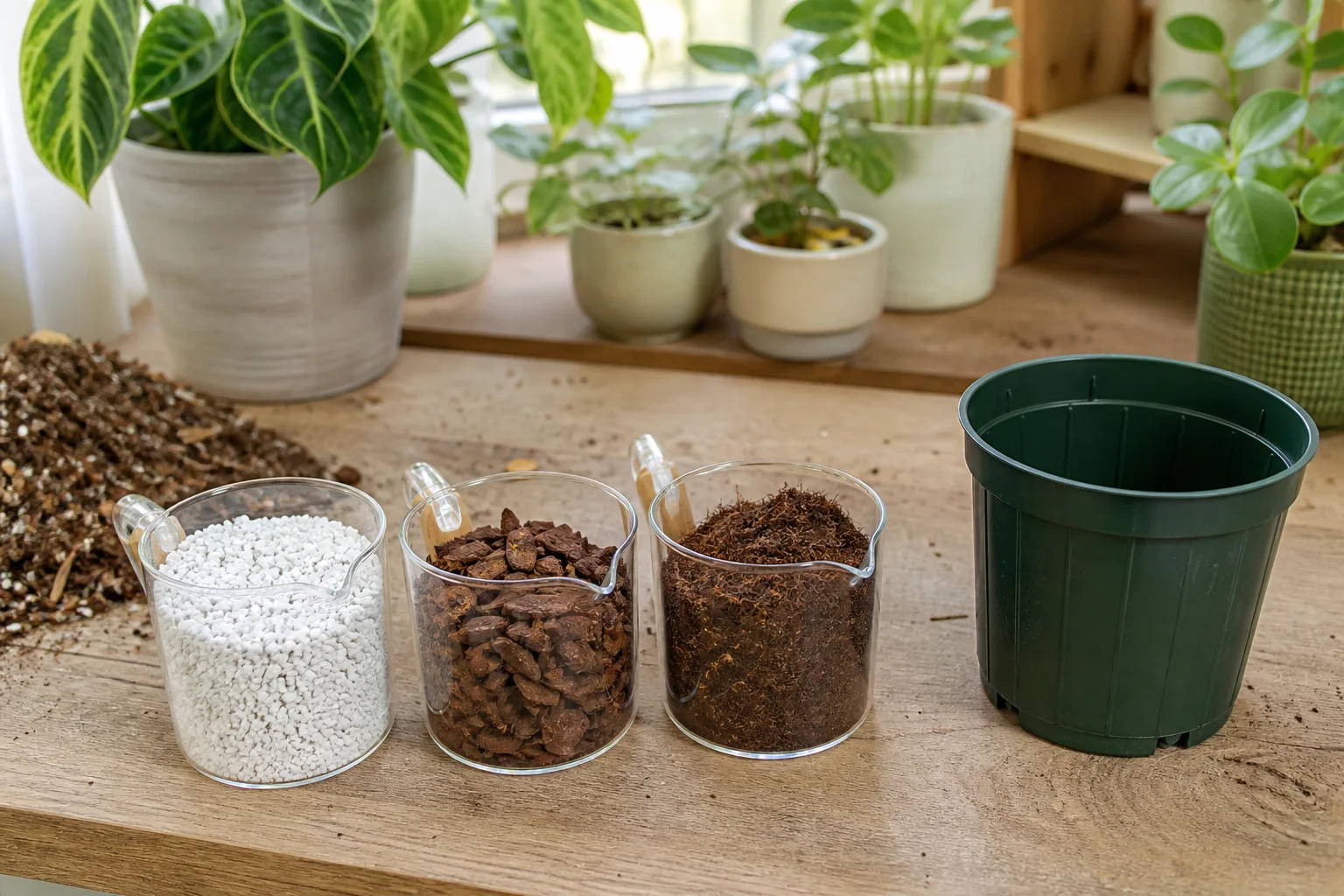
In containers, peat often appears as one component of a soilless mix. The other materials matter: perlite or coarse mineral particles add larger air spaces, while bark changes texture and compost can add nutrients and biological activity. A seed-starting mix is similarly a formulation, not necessarily pure peat; its fine texture and water behavior are designed for small roots and consistent moisture.
For a new pot, check the bag before you amend it: if it already lists peat, perlite, lime, and fertilizer, adding another large amount of peat can make the mix too moisture-retentive or acidic. If you are mixing components yourself, moisten them before use and tune the texture to the plant rather than using one peat ratio for every species; UF/IFAS Extension provides different recipes because seedling, foliage, and outdoor mixes need different ingredient balances (UF/IFAS Extension).
Peat alone is a poor default for a houseplant pot. It may lack nutrients, compact or remain wet in the wrong container, and becomes a challenge if it dries completely. The same is true for succulents and other plants that need a fast-drying medium: a high peat percentage works against the root-zone conditions they need.
Garden beds and lawns
In a garden bed, peat can contribute organic matter and water-holding capacity, but it is not automatically the best amendment for compacted clay or fast-drying sand. For improving water and nutrient holding, Colorado State University Extension recommends well-decomposed materials such as finished compost; for aeration and infiltration in clayey soil, it points gardeners toward fibrous, composted materials. The right amendment depends on the intended result and the soil texture, not on whether peat is available (Colorado State University Extension, Soil Amendments).
If you do use peat outdoors, mix it evenly into the soil rather than leaving a loose layer on the surface. A dry layer can be displaced by wind or may wet unevenly, and a concentrated pocket can have a different pH and moisture behavior from the surrounding soil. Avoid large, repeated applications without checking the soil; a soil test can show whether you need organic matter, a pH adjustment, or a different intervention.
Peat is not a routine lawn topdressing. It does not replace core aeration where compaction is severe, and a fluffy, dry material can be difficult to keep in place. For routine lawn or bed improvement, use locally appropriate compost or another tested amendment in a modest, even layer, and avoid changing pH unless testing indicates it is needed.
How to use peat moss without creating new problems
Good use starts before the peat touches a root. Check the label and the growing situation, then decide whether peat solves a specific problem such as an overly fast-drying mix. If the mix already holds water well, if the plant needs fast drainage, or if the soil is already acidic, adding peat may move conditions in the wrong direction.
Pre-moisten dry peat before mixing
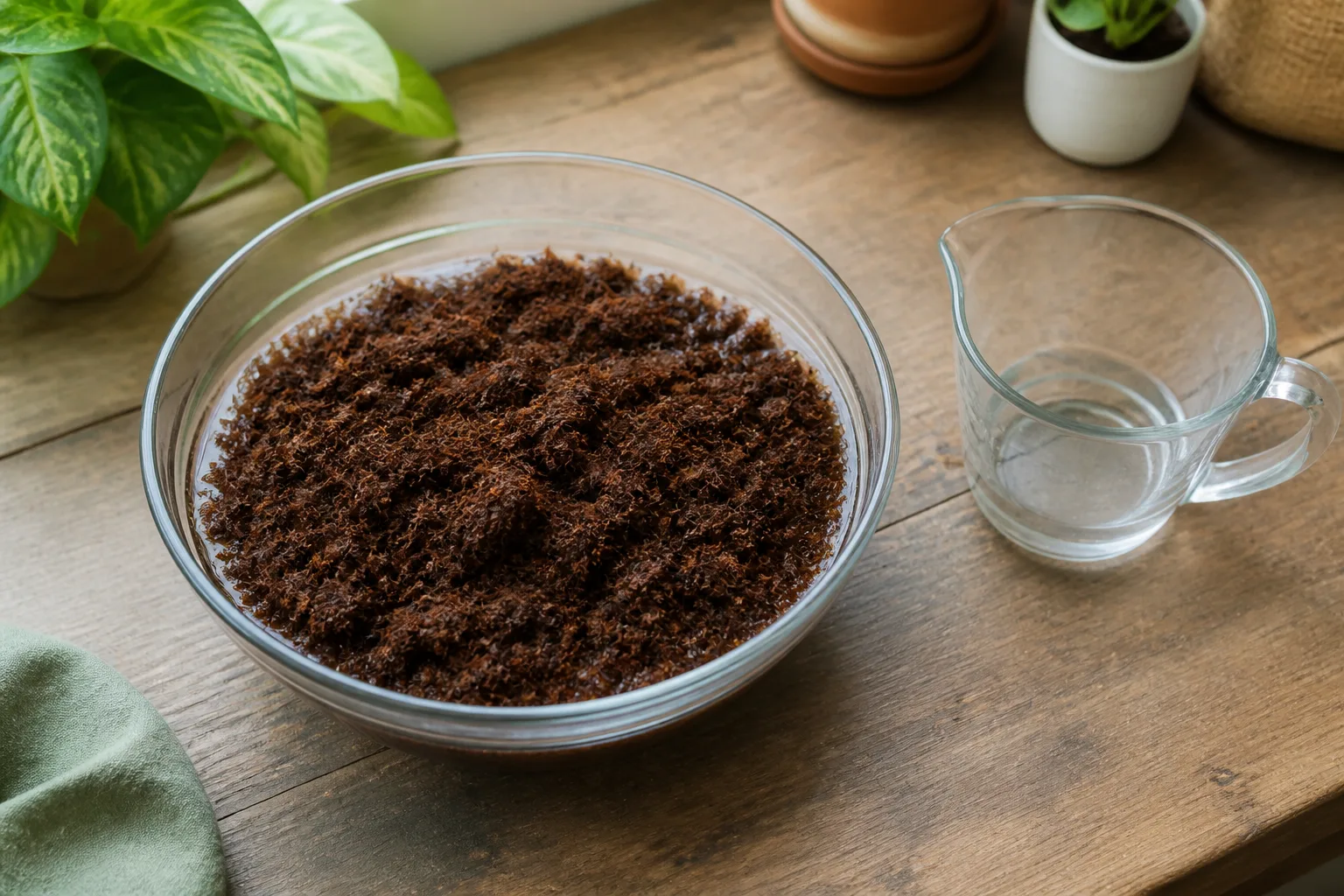
Break apart compressed clumps in a tub or wheelbarrow, then add water gradually while turning the material by hand or with a garden fork. Warm water can help dry fibers wet more evenly, but there is no magic volume to apply because dry bales and particle sizes vary. Stop when the peat is evenly damp and crumbles when squeezed, rather than dripping or forming a muddy mass.
If you are making a larger batch, mix the damp peat with the other ingredients before it dries again. This distributes water and texture throughout the media instead of leaving dense pockets. Wear a dust mask when handling very dry, dusty material, work outdoors or in a ventilated place, and wash your hands after mixing any potting substrate.
For an established pot that repels a top watering, do not force a large volume of water through the surface. Apply water slowly in two or three rounds, allowing it to absorb between passes, or sit the pot in a shallow tray briefly so the mix can wick upward. Remove the pot once the root ball is evenly damp and let excess water drain; do not leave it standing in water as a regular routine.
Test soil before changing pH
Peat’s acidity makes it tempting to pair it with lime, but test first. In a garden, use a representative soil test from the bed; for a container mix, use a method intended for growing media or follow the manufacturer’s formulation rather than borrowing a field-soil lime rate. The test tells you whether the issue is actually pH, and the product directions help prevent overcorrection.
If a plant is struggling, do not assume that peat is the cause or that lime is the cure. Yellow leaves, weak growth, and slow drying can also come from too much water, poor aeration, exhausted nutrients, root damage, or low light. Check the moisture and the container’s drainage first, then test pH if the growing situation points to a pH problem.
Peat moss alternatives matched to the job
There is no single material that replaces every property of peat. Choose the ingredient for the job—water retention, nutrient contribution, structure, or a peat-free preference—then adjust the mix’s other components. University of Maryland Extension describes peat-free potting mixes built from different combinations of materials, a reminder that a good substitute is usually a recipe rather than a one-for-one product swap (Maryland Grows, University of Maryland Extension).
Coconut coir
Coconut coir is made from coconut husk and is commonly used in peat-free mixes. It can retain moisture and usually rewets more readily than peat, although product quality and processing vary; if the label does not confirm that salts were controlled, rinse it before mixing, especially for seedlings or salt-sensitive plants. UF/IFAS explains that coir can carry processing salts and that washing can minimize the risk (UF/IFAS Extension).
Coir is a good choice when you want a fibrous moisture-holding component without adding peat, but it still is not a complete potting mix or fertilizer. Pair it with an aeration ingredient such as perlite, pumice, or bark as the plant requires, and adjust watering after the switch. A plant in a coir-heavy mix may dry differently than it did in the peat mix you replaced.
Compost and leaf mold
Finished compost contributes organic matter and can improve water and nutrient holding in garden soil. It also contributes nutrients, unlike plain peat, but the amount and salt content vary with the materials used and how they were composted. Colorado State University Extension advises choosing amendments by the result you want and warns that some composts, especially manure-based products, can carry high soluble salts if overapplied (Colorado State University Extension).
Use compost in beds when the goal is soil improvement, not as a universal replacement for every potting-mix ingredient. In containers, too much fine compost can make a mix dense or overly rich, so use a recipe appropriate for the crop. Leaf mold—well-rotted leaves—can be useful when you want a light organic amendment and moisture buffering, but it supplies less predictable nutrition than a formulated potting mix.
Aged bark, wood fiber, and mineral aerators
Composted or aged bark and wood fiber can add coarse structure and air space, especially in containers or heavy soil. Fresh wood material can temporarily tie up nitrogen as microbes break it down, so use products intended for growing media or material that has been composted. These materials usually hold less water than fine peat, which can be an advantage for roots that need faster air exchange but means you may need to water more often.
Perlite, pumice, and vermiculite address different physical needs. Perlite and pumice create larger air spaces and help a dense mix drain, while vermiculite holds more water and nutrients. These materials do not add compost’s organic matter or nutrition, and practical comparisons plus extension guidance emphasize matching each ingredient to its job rather than treating them as interchangeable (Gardener’s Path; UConn Extension).
The environmental trade-off behind peat
Peatlands are wetland ecosystems, not simply a pile of gardening material waiting to be used. They provide habitat and store carbon in accumulated plant matter; draining and harvesting a bog changes that system. North Dakota State University Extension describes peat wetlands as habitat and part of natural carbon removal, while the Royal Horticultural Society links peat-free growing with protecting peatland carbon stores and wildlife (NDSU Extension; RHS).
The environmental impact is not captured by a single slogan: peat forms slowly, restoration outcomes depend on the site, and substitutes have their own production and transport costs. Coir is a coconut-industry byproduct but may travel long distances, while compost can be local and varies in quality. If you prefer to reduce demand for newly harvested peat, choose a clearly labeled peat-free mix and judge its performance for your plant rather than assuming any substitute is impact-free.
For a gardener, a sensible approach is to reserve peat for a clear use instead of applying it by default. If a peat-free product works for your crops, that choice can avoid needing peat while still meeting the plant’s needs. If you already have peat-based mix, use it appropriately rather than wasting it; improve future purchases by looking at the ingredients and sourcing information on the bag.
A quick decision guide for peat moss
| Your goal | Peat moss fit | Better first check |
|---|---|---|
| Build a container mix that holds moisture | Can fit as one ingredient | Check the full recipe, drainage holes, and plant’s dry-down needs |
| Start seeds | Use a formulated seed mix; peat may be one ingredient | Look for fine texture, even moisture, and a product labeled for seed starting |
| Feed or enrich a garden bed | Poor fit on its own | Use soil-test information and finished compost when organic matter is needed |
| Improve compacted clay | Not an automatic fix | Diagnose drainage and compaction; consider composted, fibrous amendments |
| Make soil more acidic | May contribute acidity, but do not dose blindly | Test pH and use a crop-specific amendment recommendation |
| Keep a succulent mix fast draining | Usually use little or none | Prioritize mineral aeration and a pot with drainage |
| Avoid newly harvested peat | Choose a peat-free product | Compare coir, composted bark, wood fiber, and compost by function and label |
The practical shortcut is to look at the material that is already in the root zone. If it stays wet too long, add structure or choose a faster-draining mix; do not add another moisture-retaining ingredient. If it dries too quickly, improve water holding in a balanced recipe and verify that the pot, light, and watering pattern are not the real cause.
Common peat moss mistakes to avoid
- Using it straight from a dry bale: Dusty, dry peat can be slow to absorb water. Pre-moisten it before blending and distribute it while damp.
- Treating it as fertilizer: Peat contributes texture and moisture behavior, not a full nutrient supply. Follow the mix label and feed appropriately after any starter charge runs out.
- Assuming every bag is already pH adjusted: A commercial mix may be limed; a plain bale may not be. Read the ingredient list and test before adding lime.
- Adding it to every bed: The right amendment depends on soil texture and the desired result. A bed that needs nutrients may respond better to compost; a dense, wet bed may need drainage and structural work.
- Using more to solve a watering problem: Peat can hold more water, which may worsen a pot that already dries slowly. Check the moisture of the root ball and airflow around roots before changing the recipe.
- Calling every peat-free product sustainable and identical: Peat-free mixes use different ingredients and can vary in water behavior, salt content, pH, and nutrients. Check the label, then monitor how the mix performs.
Conclusion
Peat moss is a moisture-holding, lightweight ingredient made from slowly accumulated wetland vegetation. It can help in carefully formulated container and seed-starting mixes, but it is acidic, low in nutrients, and hard to rewet when completely dry; it should not be treated as a complete growing medium or an automatic fix for garden soil.
Choose it only when its specific properties fit the job, pre-moisten it before use, and test before trying to change pH. When you want to avoid peat, select coir, compost, leaf mold, bark, or mineral aerators according to the function you need—and remember that the full mix matters more than any one ingredient.