11 Best Topiary Plants to Grow for Neat, Easy Shapes
Find topiary plants for globes, cones, standards, and frames, with practical notes on light, pruning, toxicity, invasive risks, and container care in your area.
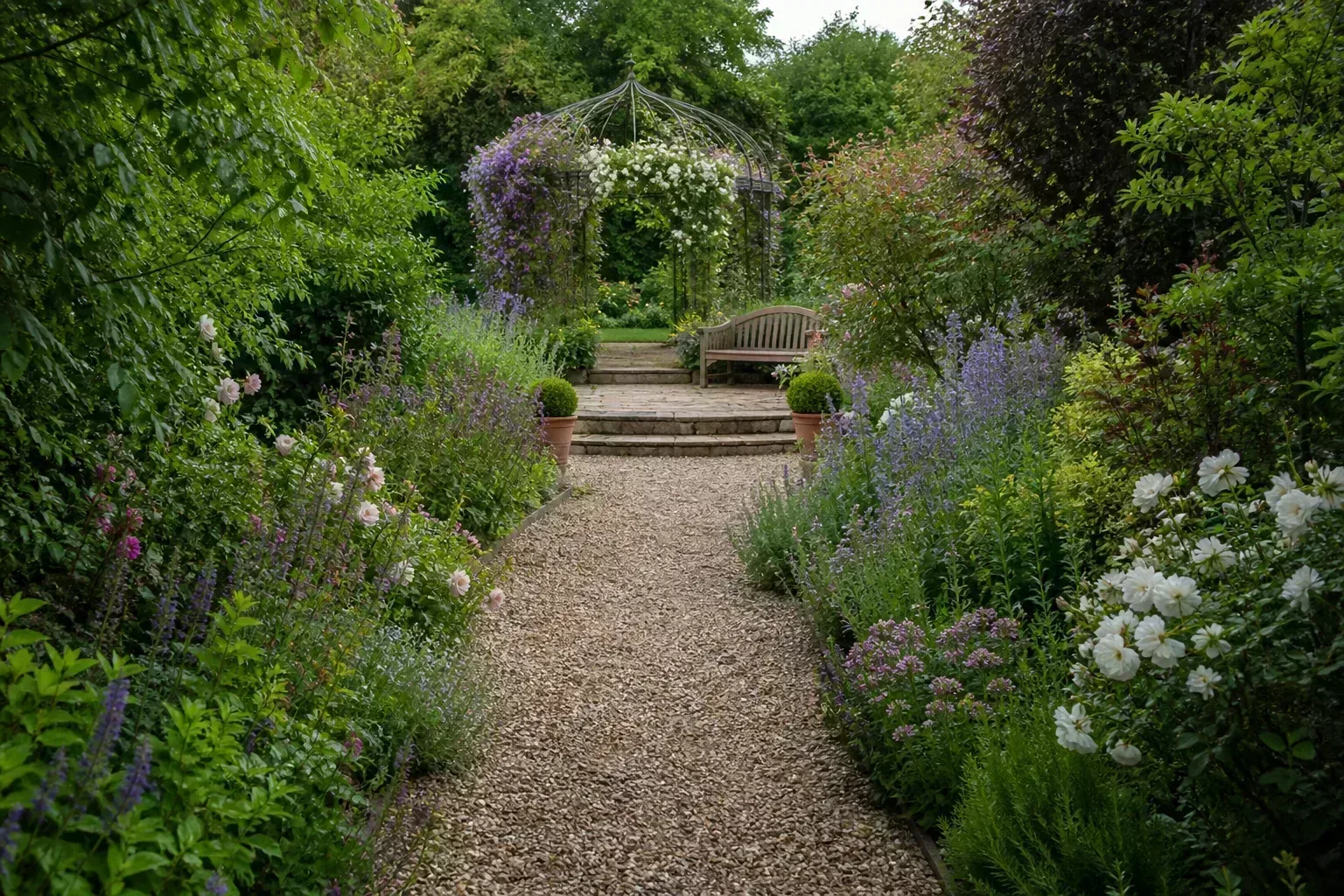
The best topiary plant is the one that can hold your chosen outline in your climate without demanding more clipping than you want to do. Small leaves and dense branching make a clean surface, but growth rate, mature size, sunlight, winter hardiness, and the plant’s ability to push new growth after pruning matter just as much.
For traditional spheres, cones, and formal figures, start with boxwood, yew, or Japanese holly. For a naturally upright cone, choose a compact arborvitae or dwarf Alberta spruce and preserve its natural form. Rosemary, lavender, and shrubby germander give you looser, fragrant shapes; English ivy can cover a frame, but it is a vine and can become invasive outdoors in some regions. The 11 options below explain where each one earns its place—and where it does not.
How to choose topiary plants before buying
Topiary is the practice of training a living plant into a defined form. A clipped-shrub topiary gets its structure from the plant’s own branching system; a frame-grown topiary uses a wire shape that a vine gradually covers. Those approaches need different plants. A shrub must have enough fine growth to hide cuts and fill the outline, while a frame plant must produce long, flexible stems that can be guided and secured.
Before you buy, decide what the plant must look like at maturity. A one-foot ball beside a path needs a compact cultivar; a tall column beside a doorway needs a naturally upright habit or several years of training. “Dwarf” on a label does not mean miniature forever, so check the mature height and width of the named cultivar—not just the size of the nursery pot.
Match the plant to the silhouette
Small leaves make a smoother, more detailed surface. Boxwood and Japanese holly are useful for tight curves and repeated small shapes; yew has fine needles and can form substantial figures. A conifer such as arborvitae or dwarf Alberta spruce already grows in a cone or column, so it is usually better to refine that natural outline than to force it into a sphere or animal.
The lower part of a vertical shape needs light. Keep a cone or standard slightly wider at the base than at the top; a top that flares outward shades the lower branches, which can thin and leave visible gaps. Fine Gardening’s topiary design guidance also emphasizes this light-and-shape relationship and regular clipping for a full outline.
Balance growth speed with clipping time
A slow-growing plant takes longer to build into a large sculpture, but it usually needs fewer corrective cuts. A fast grower fills space quickly and can recover from light shaping, yet it may need several touch-ups in one growing season. Don’t choose a vigorous privet because it is “easy” if you do not want to spend time clipping it.
Check the plant’s hardiness and exposure for your exact site, and include container conditions in that calculation. Roots in a pot experience colder winter temperatures and dry out faster than roots in the ground. If you want a potted topiary, choose a naturally compact plant, use a container with drainage, and plan for both summer watering and winter protection.
11 topiary plants and what each does best
| Plant | Best use | Main limitation |
|---|---|---|
| Boxwood | Small globes, cones, and formal forms | Disease and winter-burn risks vary by cultivar and site |
| Yew | Detailed, substantial shapes and partial shade | Highly poisonous if eaten |
| Japanese holly | Fine-textured substitute for boxwood | Can struggle in hot, humid areas and alkaline soil |
| Arborvitae | Upright columns and cones | Avoid cutting back into bare old wood |
| Dwarf Alberta spruce | Slow, naturally conical accent | Can be stressed by heat, drought, or indoor warmth |
| Cherry laurel | Larger, loose forms in mild climates | Broad leaves and eventual size make fine detail difficult |
| Privet | Fast-filling hedge or simple form | Some species are invasive; verify local status first |
| Lavender | Fragrant, rounded mound | Not suited to hard clipping into old wood |
| Shrubby germander | Informal, silvery evergreen shapes in warm regions | Cold limits where it can overwinter outdoors |
| Rosemary | Fragrant standard or loose globe | Needs sun and drainage; woody stems do not refill quickly |
| English ivy | Frame-covered shapes | Invasive outdoors in some regions; contain it carefully |
Boxwood for crisp, compact shapes
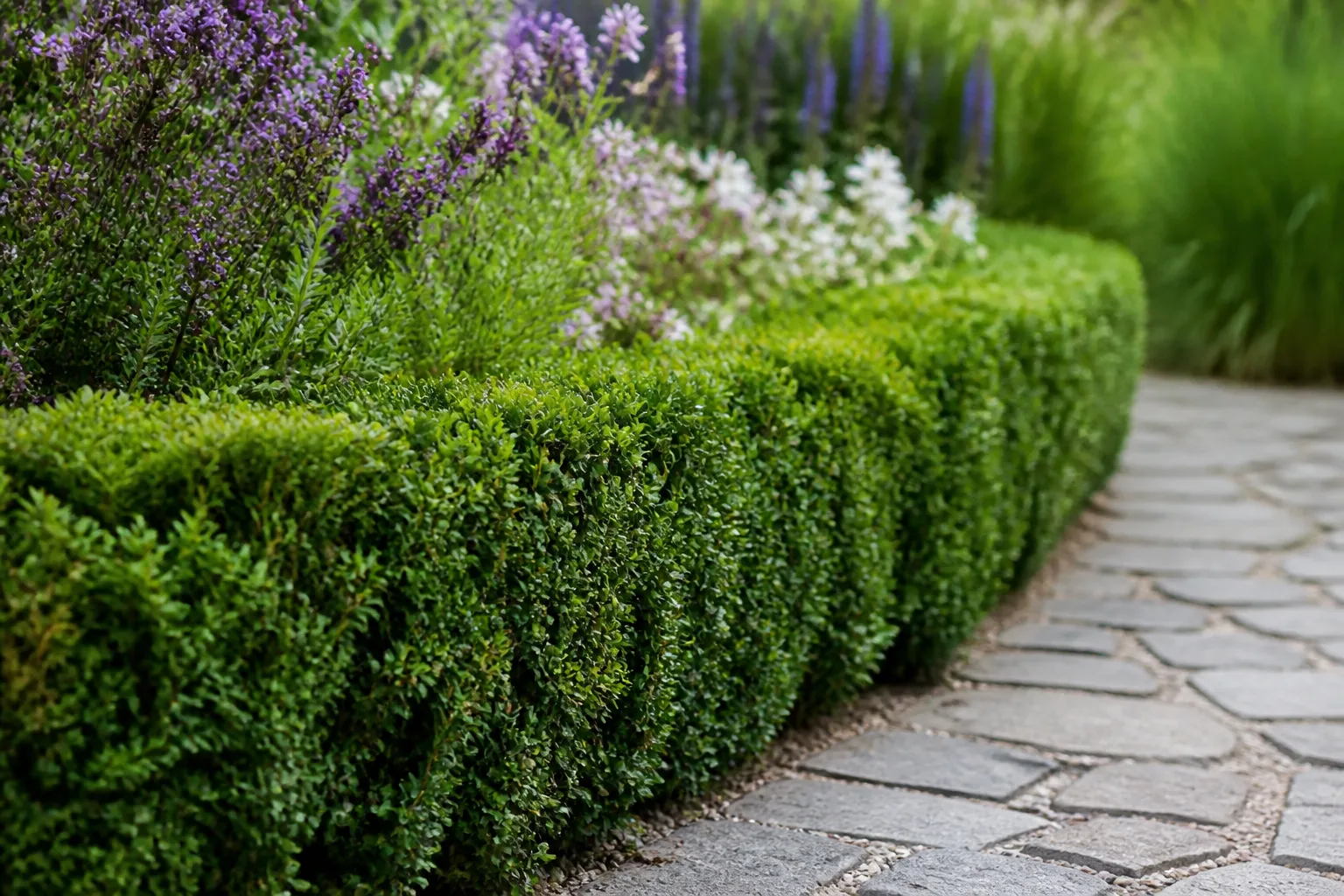
Boxwood (Buxus spp.) is a classic choice because its small evergreen leaves and dense branching create a fine, even surface. It suits balls, low cones, short standards, and simple animal forms. Select a cultivar whose natural size is close to the finished size you want; a naturally compact form needs less corrective pruning and is easier to keep proportional.
Give boxwood well-drained soil and protect it from conditions that stress the foliage, including drying winter winds and harsh exposure. It tolerates partial shade, but dense clipping should not turn a shrub into an airless shell. Boxwood can be susceptible to blight, leaf spot, pests, and root problems in poorly drained soil, so inspect plants before purchase and avoid routinely clipping wet foliage. NC State Extension’s boxwood profile describes its topiary use and notes disease and drainage concerns.
Yew for formal forms and shade
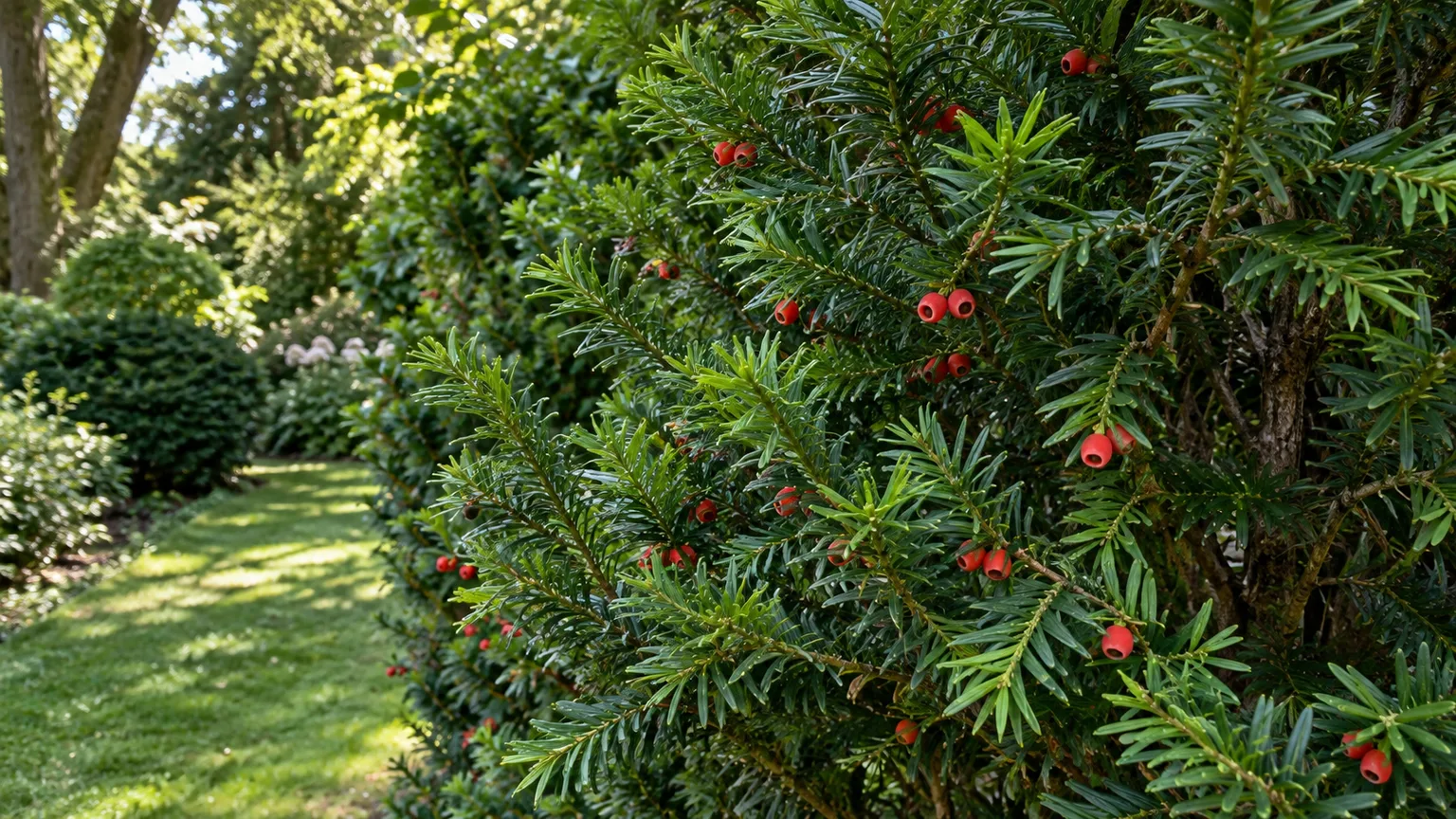
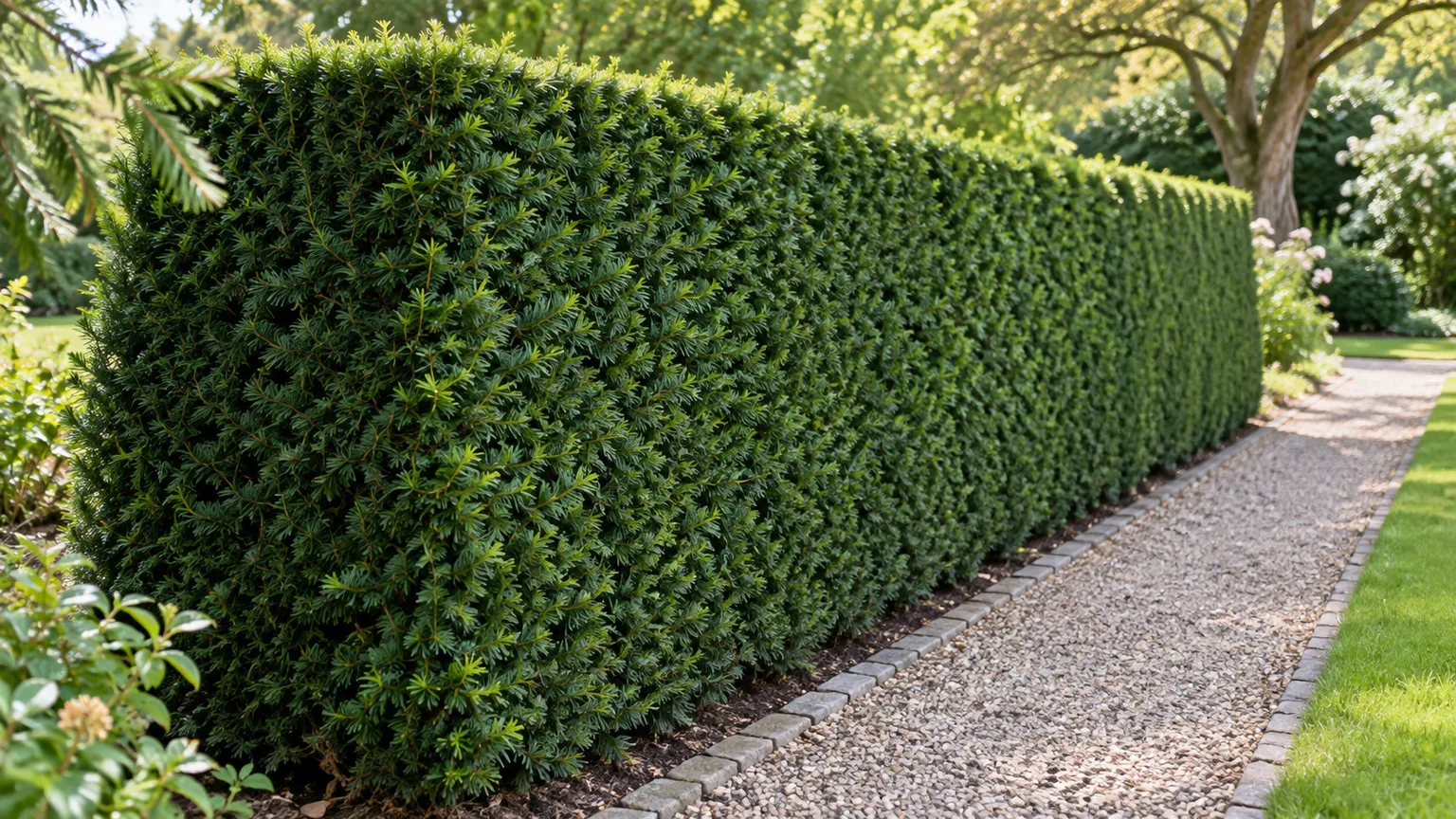
Yew (Taxus spp.) is a strong option when you want a larger, more architectural shape or need a plant that tolerates partial shade. It responds well to shearing and, compared with many needled evergreens, can regenerate after harder pruning. It is still a slow grower, so buy a plant already close to your planned dimensions if you do not want to wait years for a tall figure.
The safety trade-off is serious: NC State lists yew as highly poisonous. Do not plant it where children, pets, or livestock can chew the foliage or seeds, and do not leave clippings where animals can reach them. If that cannot be managed reliably, choose boxwood or a locally appropriate holly instead. Yew’s slow growth and tolerance of regular pruning are documented in NC State Extension’s yew profile.
Japanese holly for a boxwood alternative
Japanese holly (Ilex crenata) has small leaves and takes shaping well, so it can stand in for boxwood where the site suits it. Rounded cultivars make compact forms; narrow cultivars such as ‘Sky Pencil’ naturally hold a column and need less reshaping. Its dark foliage gives a similar formal effect without using boxwood.
The match is not universal. NC State Extension notes that Japanese holly can be intolerant of high heat and humidity and may yellow in alkaline soils. Choose a cultivar for your region and soil, and do not assume the entire species tolerates the same conditions. Where it is a poor climate fit, a native holly such as yaupon may be a better starting point, though it has a broader, coarser look.
Arborvitae for upright cones and columns
American arborvitae (Thuja occidentalis) includes cultivars with naturally columnar or conical forms. Those habits make it useful for an entry accent, a pair of upright specimens, or a simple tiered shape. If you want a narrow plant, buy a columnar cultivar rather than repeatedly shearing a broad one into a skinny outline.
Arborvitae needs moisture and good light to keep its foliage full. Full shade can thin the crown, while dry or exposed sites can cause winter browning; heavy snow and ice can also split stems. Keep cuts in green growth and refine its natural shape rather than cutting deep into leafless interior wood. The NC State Plant Toolbox profile covers its site preferences and cultivar forms, and University of Delaware Cooperative Extension’s evergreen-pruning guide explains why species-specific cuts matter.
Dwarf Alberta spruce for a natural cone
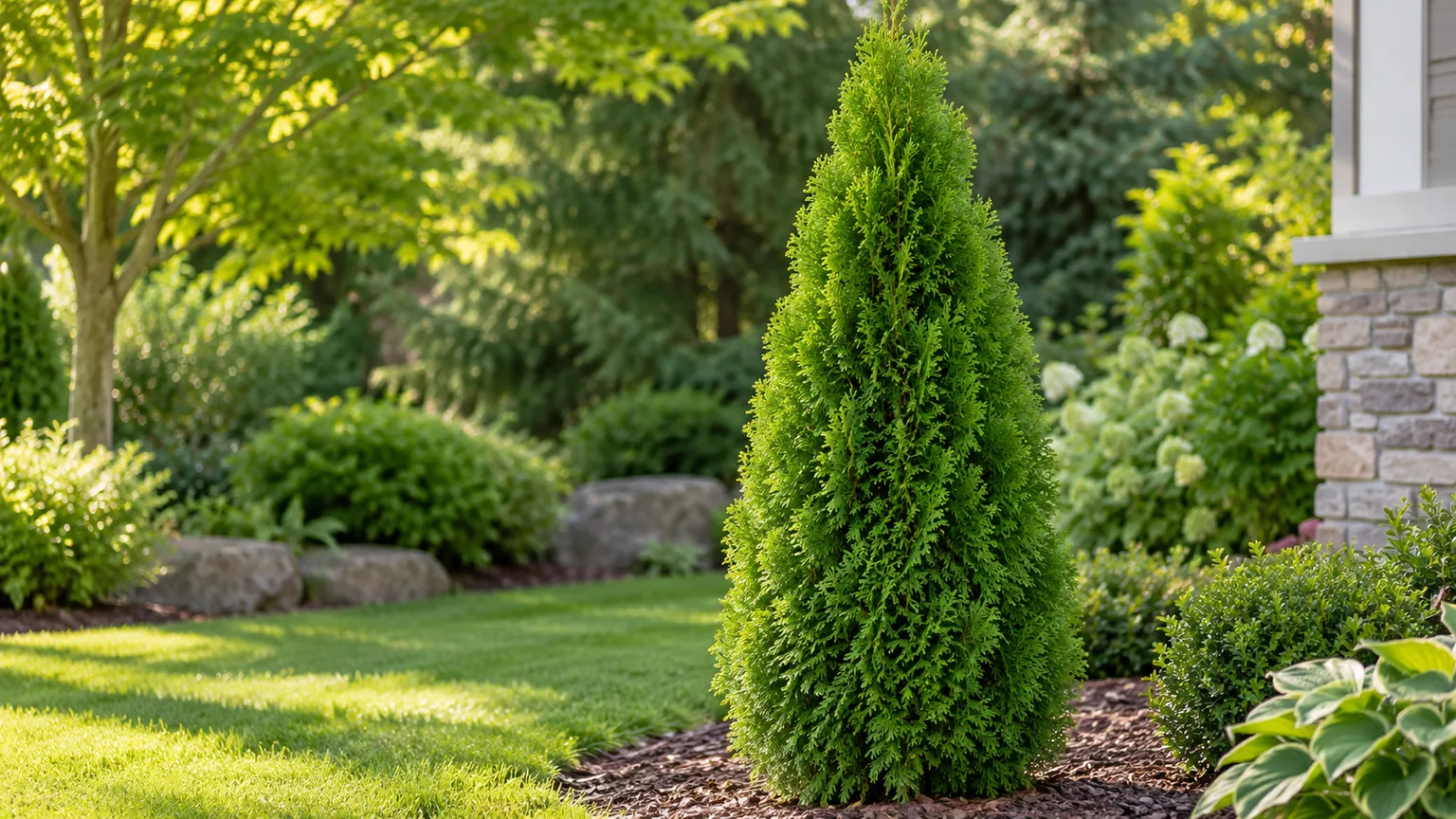
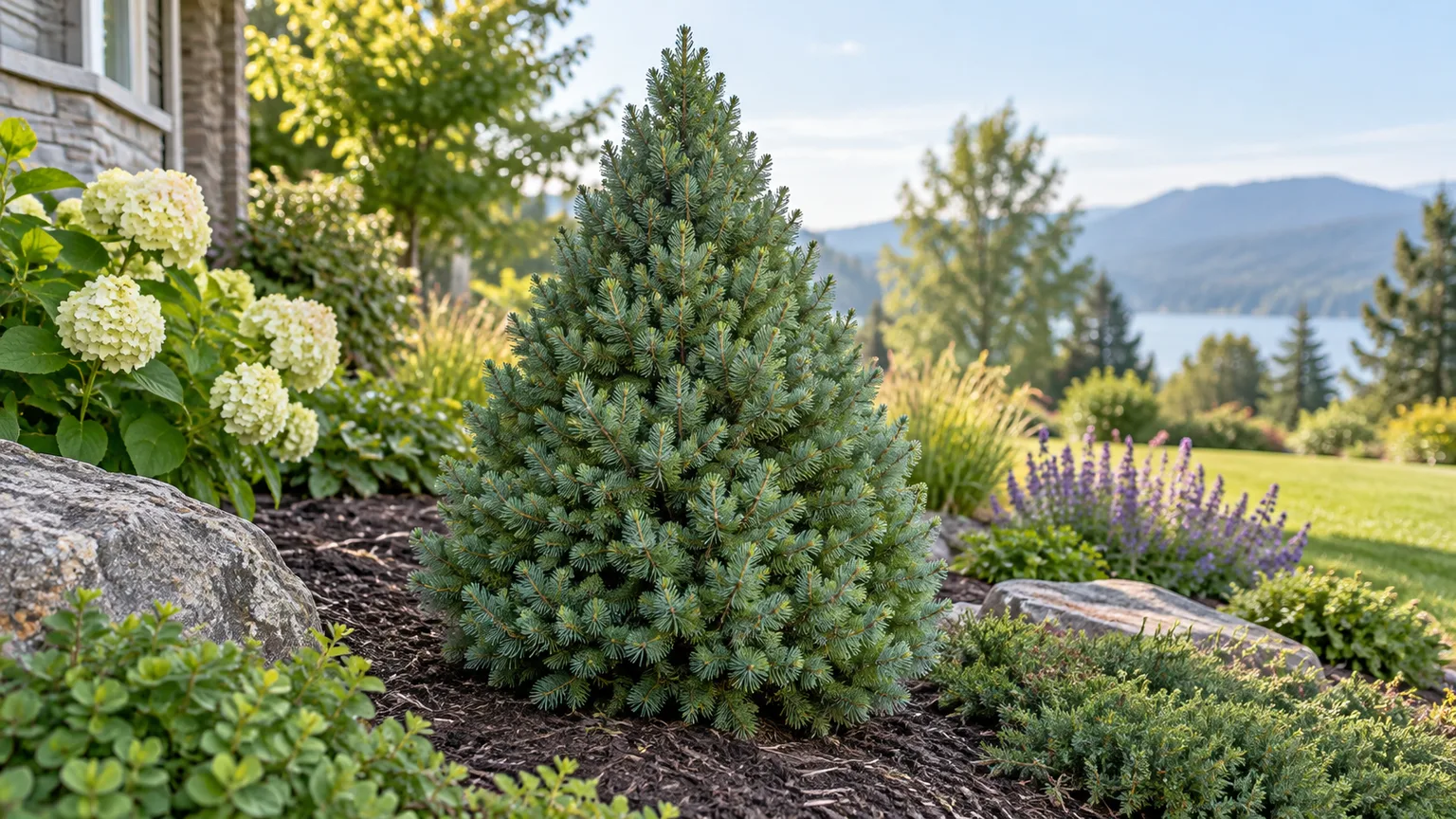
Dwarf Alberta spruce (Picea glauca ‘Conica’) already forms a dense, narrow cone, which is often the shape gardeners want. Use it as a symmetrical accent in a bed or a large container, and keep its outline mostly natural. Severe shearing can expose bare branches and leave a shape the plant cannot quickly fill.
This spruce is slow-growing, so it rewards patience rather than frequent hard cuts. Choose a cool, sunny site with soil that drains well, and watch for stress during hot, dry weather. It is a poor choice for a warm indoor room through winter: it is an outdoor conifer, not a houseplant. NC State Extension’s cultivar profile is a useful check on its form and growing conditions.
Cherry laurel for larger shapes in mild climates
Cherry laurel (Prunus laurocerasus) is better suited to a substantial rounded shrub or broad clipped mass than to a small, finely detailed topiary. Its leaves are larger than boxwood’s, so each cut is more visible and the surface looks coarser. A compact cultivar such as ‘Otto Luyken’ can make a contained accent in a mild climate, but the mature width still needs room.
Do not plant it simply because a small nursery specimen looks manageable. The species can become a large shrub, and its response to winter, heat, and disease depends on cultivar and region. Check local extension guidance before choosing it, especially in areas where it may spread beyond gardens. NC State’s profile of cherry laurel describes its habit and cultivars; use a more finely textured species when your goal is a crisp small figure.
Privet for fast growth where it is not invasive
Privet (Ligustrum spp.) grows quickly and responds to shearing, which can make it tempting when you want a hedge or a simple shape filled in fast. But “privet” covers multiple species, and their ecological status differs by location. Chinese privet, for example, is listed as invasive in North Carolina; it produces many seeds and can form dense thickets. NC State Extension specifically advises against planting Chinese privet.
Before buying any privet, check your state or regional invasive-plant list by botanical name. If the species is invasive or discouraged where you live, skip it and ask a local extension office for a native evergreen with a similar mature size. A plant that needs frequent clipping is not a good low-maintenance choice, and clipping does not erase the risk of fruit or seed spread.
Lavender for a fragrant, informal mound
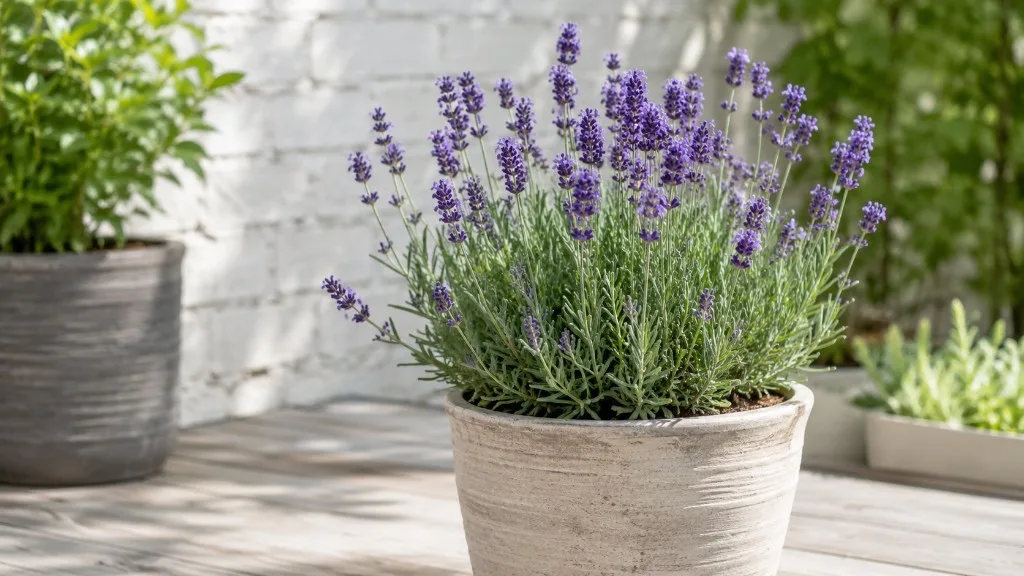
English lavender (Lavandula angustifolia) can be shaped into a tidy, rounded mound, but it is not a substitute for the crisp surfaces of boxwood or holly. Its value is fragrance, flowers, and a softer outline. It works best as a low accent in full sun and sharply drained soil, where air can move through the foliage.
Keep cuts within leafy growth. Lavender often fails after a gardener shears into old, bare stems, because those sections may not produce replacement shoots. Avoid shaping it during wet weather or crowding it into an overwatered pot. NC State’s English lavender profile gives its size, hardiness, and site requirements; choose a cultivar suited to your winter climate rather than relying on the common name alone.
Shrubby germander for warm, dry gardens
Shrubby germander (Teucrium fruticans) is an evergreen Mediterranean shrub with gray-green foliage and a loose, rounded habit. In a warm, sunny, well-drained garden, light clipping can keep it compact or make a relaxed ball. Its silvery foliage offers a different effect from the dark green of boxwood, and it fits naturally into dry-climate planting. NC State Extension’s profile is a useful regional check before planting.
This is a regional specialist, not a cold-climate universal. If winters are colder than the plant can tolerate, use it in a container only if you can overwinter it in suitable conditions, or choose a hardy alternative. Do not shear it into a dense geometric shell that traps moisture or removes too much leafy growth at once. In humid or persistently wet sites, a better-adapted evergreen will be easier to maintain.
Rosemary for edible standards and small globes
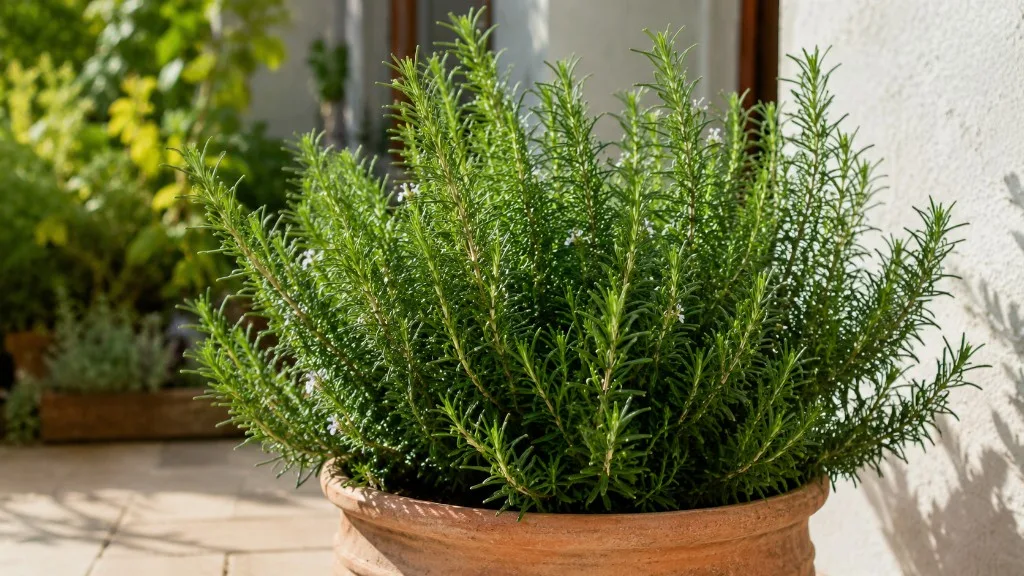
Rosemary (Salvia rosmarinus, formerly Rosmarinus officinalis) brings aromatic evergreen foliage and culinary harvests to a small standard or loose globe. It needs full sun, drainage, and enough room for its woody stems. A nursery-grown standard is often a better starting point than trying to convert a sprawling shrub into a tree form.
Trim new, flexible growth in small amounts after flowering or during active growth, depending on local timing. Avoid cutting back to bare, woody stems and avoid soggy winter soil. In cold regions, grow rosemary in a pot that can move to a bright, cool sheltered location, or choose a reliably hardy local cultivar. NC State Extension’s rosemary profile lists its hardiness and preferred conditions.
English ivy for a frame-grown topiary
English ivy (Hedera helix) is a different kind of topiary plant: flexible stems grow over a wire frame, gradually covering an animal or geometric shape. Buy a frame and an ivy cultivar sized to it, attach young stems loosely, and guide new growth around the outline. This frame-grown method is a distinct alternative to clipping a shrub’s own branches, as described in Fine Gardening’s overview of topiary forms. Trim runners that escape the frame so the form stays readable.
Containment is essential. NC State Extension identifies English ivy as invasive in North Carolina and describes its ability to spread into forests and climb structures. In regions where outdoor planting is discouraged, keep it indoors or use it only in a secure patio container, and do not empty clippings into natural areas. A frame-grown topiary can also be made with a noninvasive vine suited to your region.
Choose by shape, climate, and placement
Use the silhouette as a filter, then confirm the local growing fit. For small spheres or repeated formal shapes, shortlist boxwood and Japanese holly; consider yew only if its toxicity is manageable. For an upright cone or column, start with dwarf Alberta spruce or a columnar arborvitae cultivar. For a fragrant, informal accent, choose rosemary in a sunny, dry spot or lavender where winter hardiness and drainage are suitable.
For shade, yew and some boxwoods are more plausible than lavender or rosemary, but “shade tolerant” does not mean every cultivar will stay dense in deep shade. For containers, prioritize naturally compact roots and crowns, drainage, and a realistic winter plan. A patio pot is not a way to bypass a plant’s climate needs; roots in containers are more exposed to temperature swings, and the smaller soil volume dries faster.
If native planting is a priority, ask a local extension office about native hollies and other evergreen shrubs that tolerate pruning. NC State lists yaupon holly as a native shrub that can take heavy pruning and be used for topiary in suitable regions (NC State Extension Plant Toolbox). Its broader leaves and natural size make it a different design choice from boxwood, but it can be a better ecological fit than an invasive privet or ivy.
Keep a topiary dense without damaging it
Start with a healthy, established plant. During the first growing season, remove only obvious crossing or damaged growth and make small formative cuts that encourage branching. Once the plant is growing strongly, use light, regular trims to maintain the outline instead of waiting until it has grown far beyond the shape and removing a large amount at once.
Use sharp, clean hand shears for small plants and detailed curves; powered hedge shears are faster on broad, simple surfaces but can slice leaves and make a coarse brown edge on large-leaved species. Step back often, rotate around the plant, and check the silhouette from eye level. A simple frame or a few temporary guide lines can help with symmetry, but do not let a metal frame constrict stems as they thicken.
Time pruning to the plant. University of Delaware Cooperative Extension recommends late winter or early spring for general evergreen pruning, with additional light trims for some faster growers; plants grown for flowers may need pruning just after bloom to preserve next year’s flowering wood. Avoid late heavy pruning that leaves tender growth exposed to cold, and do not apply one calendar rule to every species.
Keep the surface slightly porous. A perfectly sealed outer layer can shade the interior, trap humidity, and leave dead wood hidden underneath. Thin a few congested shoots by hand where the species permits, and angle the sides so lower foliage receives light. Fine Gardening’s practical topiary overview emphasizes both recurring clipping and a base that does not sit in the shade of an oversized top.
After planting, water deeply enough to wet the root zone, then let the soil’s drainage and the plant’s needs guide the next watering. Mulch around—but not against—the stem base to moderate moisture and temperature. Do not fertilize to force rapid growth; extra soft shoots create more clipping and may be less resilient. In containers, check moisture more often, confirm drainage holes stay open, and protect pots from severe winter exposure when the plant is near its hardiness limit.
Common topiary problems and how to correct them
The shape is lopsided. Check the light first: a one-sided plant may be reaching toward a brighter opening. Rotate a container periodically, or improve light around a garden plant before cutting the fullest side back. Use small corrective cuts over time; severe balancing cuts can expose old wood and make the weak side slower to recover.
The outside is green but the center is bare. Repeated shearing can create a dense shell that shades the interior. Stop shortening only the outer surface; selectively thin a few shoots where the species can regrow, improve light and airflow, and let the plant produce new growth before attempting a tighter outline. If a conifer has bare, old interior wood, it may not refill.
The plant has brown patches after trimming. On broad-leaved plants, clipped leaf edges can brown when shears cut across large leaves, especially in heat or drought. Water the root zone during dry spells, avoid shearing during heat stress, and use hand pruners for visible leaves. On lavender and rosemary, bare brown stems may mean the cut went too far into old wood; wait for regrowth rather than repeating the cut.
The topiary declines in a pot. Check drainage, root crowding, and water before adding fertilizer. A container that stays wet can suffocate roots; one that dries completely can stress foliage quickly. Move the pot only to a location that still meets the plant’s light needs, and insulate or shelter it if winter root temperatures are the problem.
Conclusion
For the cleanest small shapes, begin with boxwood or a climate-suitable Japanese holly; for shade and larger formal figures, consider yew only when its toxicity is not a household risk. Choose arborvitae or dwarf Alberta spruce when their natural upright forms already match the design, and use rosemary, lavender, or germander for softer, fragrant accents rather than crisp sculpture.
Before planting, verify the cultivar’s mature size, local hardiness, and invasive status, then decide how often you are willing to clip. A well-matched plant needs shaping, but it should not need to be rescued from an unsuitable climate, oversized outline, or unsafe location.