Landscaping Ideas for Pool Areas: 13 Practical Ways to Make the Space Feel Finished
Explore 13 pool landscaping ideas for privacy, shade, low-litter planting, containers, and paths, with practical tips for drainage, access, and maintenance.
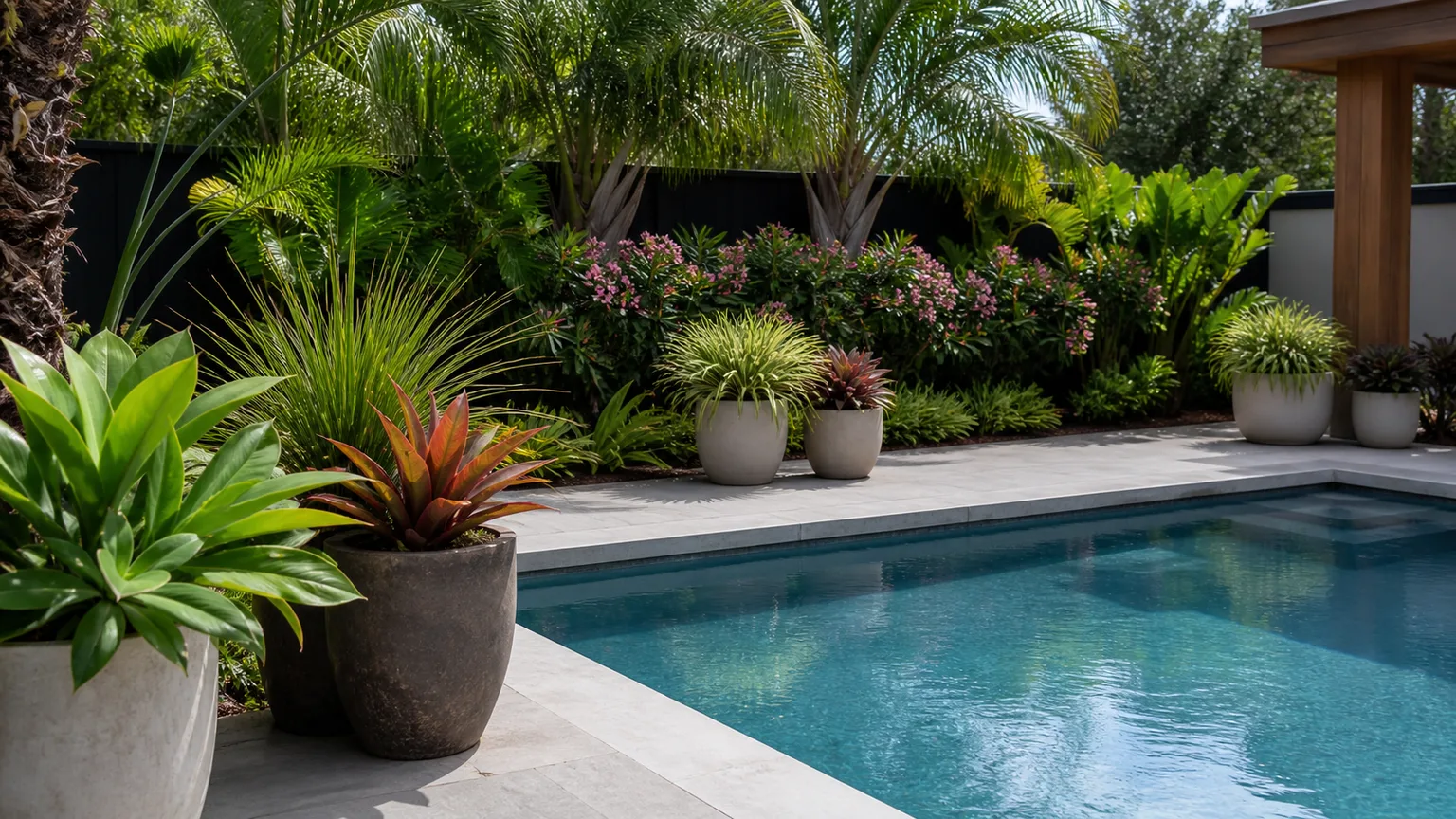
The best pool landscaping makes the water feel connected to the yard without sending leaves into the filter, crowding the walking surface, or blocking access to safety equipment. Start with the clear deck, routes, drainage, and service area; then add planting and shade in layers based on your climate, pool type, and maintenance tolerance. A few well-placed features usually work better than trying to surround the entire pool with a dense garden.
Plan the Site and Keep the Pool Edge Safe
Before picking a style, decide what the landscape needs to do. If the pool is overlooked, privacy may matter most. If the yard is hot and exposed, shade and comfortable hardscape may come first. If the pool looks like it was dropped into a lawn, a curved border or repeated planters may be enough to connect it visually to the rest of the garden.
Walk the yard during the hours the pool is used. Mark where people enter, where wet feet travel, where chairs and towels land, and where the pump, filter, skimmer, gate, and other equipment must remain accessible. Notice where direct sun and reflected heat fall, what direction wind carries leaves, and where rain runs during a storm. A pool landscape designer describes planning walking clearances, splash drainage, planting, shade, privacy, and equipment access as parts of the same project; that order prevents a beautiful bed from occupying the one place a technician needs to stand (Peabody Landscape’s poolside planning).
Treat the immediate pool edge as a working surface, not the place for tall plants, loose gravel, or decorative objects. Leave a clear route to ladders, steps, gates, and seating. Keep equipment doors, valves, drains, and filters reachable without moving pots or cutting through a hedge. For an inground pool, the deck and coping need to remain cleanable and stable; for an above-ground pool, check the manufacturer’s instructions before adding a deck, piling material against the wall, or changing grade near supports.
Required fencing, gates, alarms, and other barriers depend on current local rules. Landscaping, a hedge, or a trellis is not a substitute for a pool safety barrier, and plants should not hide the entry from supervising adults. The U.S. Consumer Product Safety Commission’s Pool Safely guidance emphasizes barriers and active supervision as distinct parts of pool safety (CPSC Pool Safely safety tips). Keep sharp edging, thorny foliage, unstable pots, and loose stones away from steps and other wet-foot routes.
Poolside-ready does not automatically mean pet-safe. If a dog or cat chews plants, verify the exact botanical name in the ASPCA’s toxic and non-toxic plant database; ASPCA notes that its list is not all-inclusive and recommends contacting a veterinarian or poison-control service if an animal may have ingested a plant.
Idea 1: Make a Quiet, Low-Litter Border
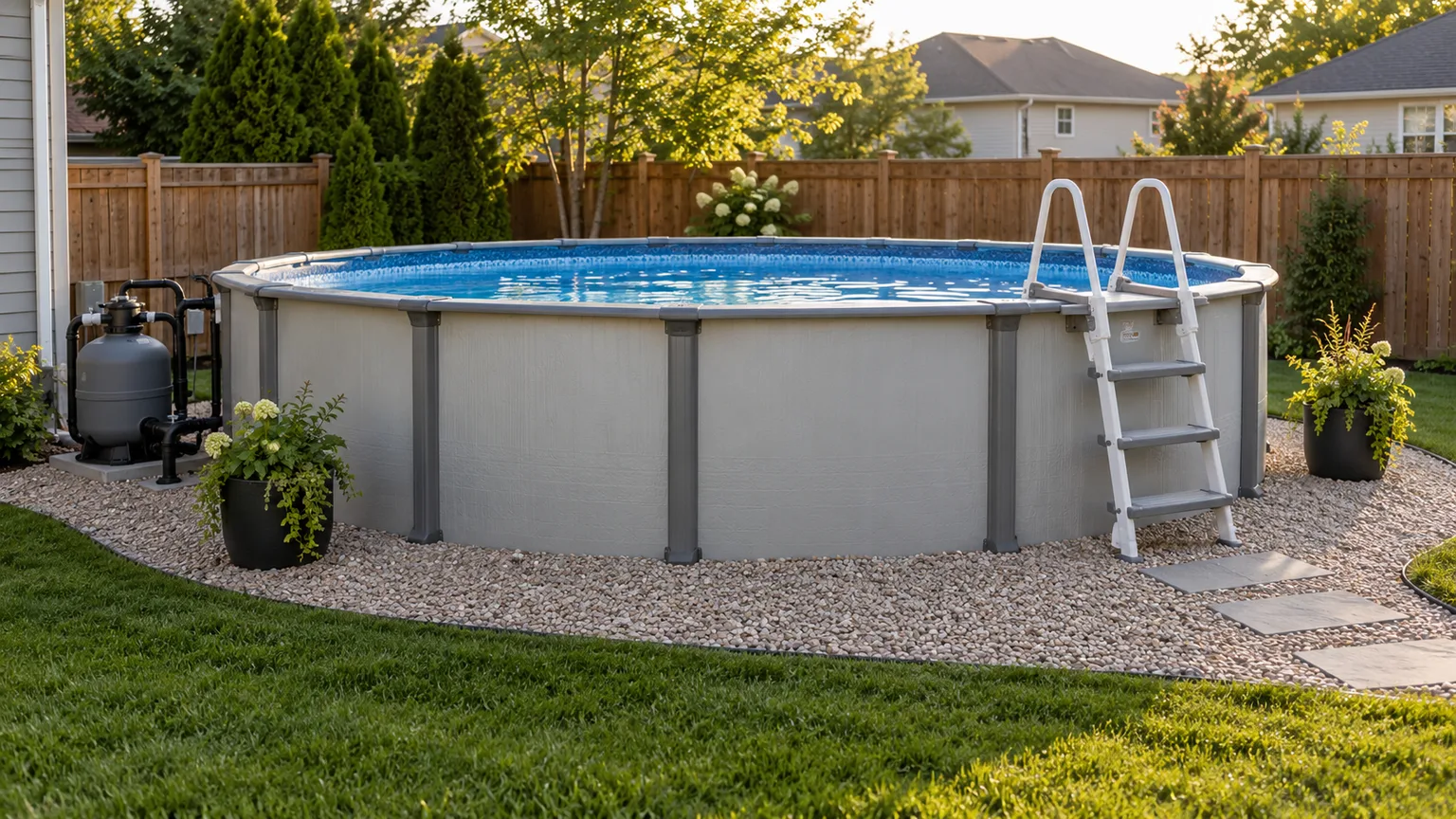
A narrow planting strip can soften a hard deck without turning the edge into a maintenance trap. Use a small number of repeat plants with compact, predictable habits, and keep their mature foliage from reaching the coping or walkway. In bright, hot positions, low-growing succulents or heat-tolerant perennials can provide form with less pruning than a mixed bed of vigorous shrubs. Select non-spiny forms near paths and seating; reserve agaves, cacti, and plants with sharp tips for a distant bed where swimmers will not brush against them.
Avoid bare soil that washes onto the deck. A low edging strip, properly contained mulch, or a gravel bed can keep the border distinct, but the material needs to stay out of drains and the pool. Gravel is easy to sweep and usually handles dry conditions well, yet small stones migrate and can be uncomfortable under bare feet. Use it in a bed or outer service strip rather than the main route to the water.
Idea 2: Use Containers as Seasonal Color
Containers let you try a plant palette without committing to a permanent bed. Put two or three sturdy pots near a seating corner or at the end of a path, where they frame the view without narrowing the route. Repeat pot shapes or colors so the arrangement looks intentional. Combine plants with similar needs for sun and watering, and choose plants by their mature size so they do not flop over the coping or hide a gate.
The pool deck can be windy, hot, and brighter than the surrounding garden, so lightweight pots may tip and small containers may dry quickly. Choose stable, weather-resistant vessels, use drainage holes, and empty saucers so water does not sit under the pot. Keep containers movable enough to reach equipment, and do not place them where a fall or a tipped pot could block steps. If wind or reflected heat proves harsher than expected, moving a pot is much easier than replacing an entire bed.
Idea 3: Screen a Neighbor’s View With a Living Layer
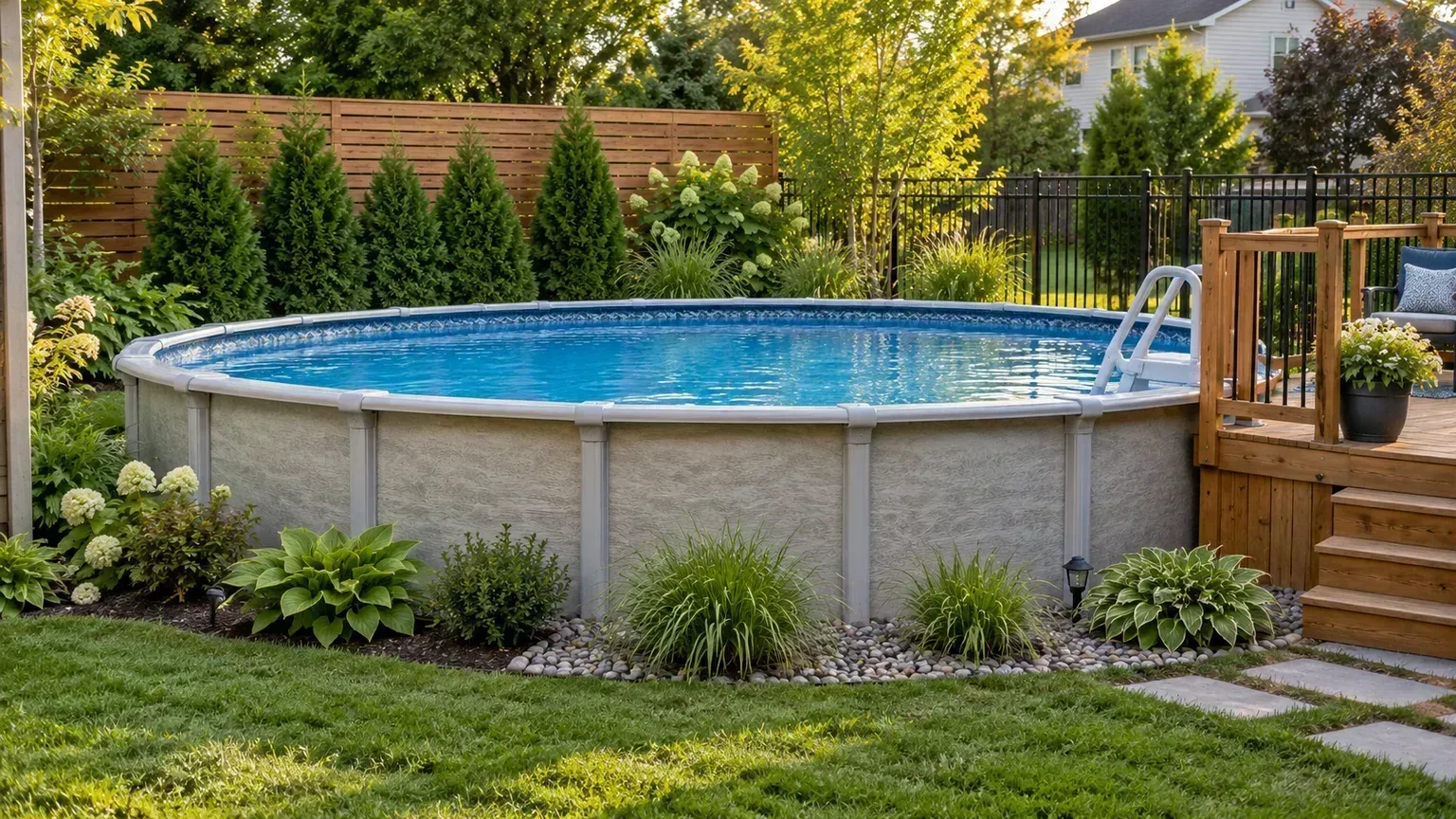
For privacy, screen the view that matters instead of enclosing every side of the pool. A staggered row of evergreen shrubs, a freestanding slatted screen, or a trellis with a manageable vine can shield a lounge area while keeping the pool entry and sightlines open. Layering one taller screen with lower grasses or perennials often feels less boxed in than a solid hedge planted tight against the deck.
Check mature height and width, not just the nursery-pot size. Give shrubs space for airflow and pruning, and consider how far a screen will spread when it is fully grown. Choose regionally appropriate, non-invasive plants; a vigorous runner can become a recurring removal job or escape into neighboring habitat. If you use a trellis, anchor it securely and place it so it does not become a climbable object beside required pool fencing. For a small yard, a movable screen or a few containers can test the best location before you plant.
Idea 4: Add Shade Outside the Cleanup Zone
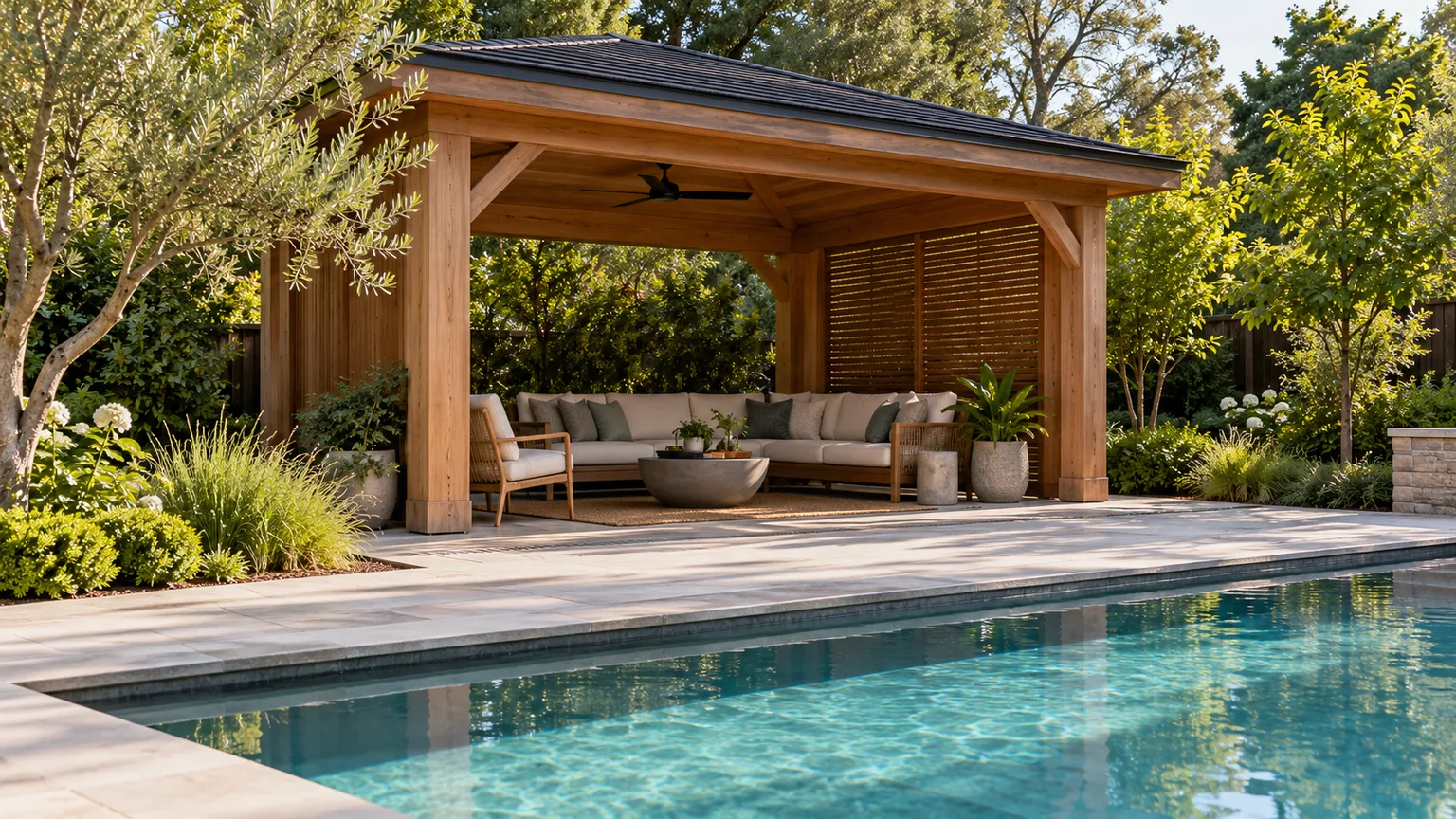
Shade can make a pool area more comfortable, but an overhead canopy directly above the water may add leaves, seed pods, flowers, fruit, sap, or bird activity to the cleaning routine. A better compromise is often a shade tree beyond the deck, positioned to cast afternoon shade on loungers while keeping most branches outside the water’s vertical footprint. A pergola, shade sail, or freestanding umbrella can provide more precise shade without a tree’s seasonal litter, although each needs secure installation and clear walking space.
Watch the sun at different times before placing the feature. A shade spot that works at noon may miss late-afternoon heat. Tree choice and spacing should reflect the species’ mature canopy, local conditions, and nearby paving, structures, and utilities. No tree is truly litter-free. If frequent skimming is a problem, keep deciduous and fruiting trees farther away and favor smaller, more manageable canopies only where their growing requirements fit.
Idea 5: Create a Tropical Look Where the Climate Allows
Broad leaves and upright forms can make a pool feel lush, especially in frost-free or warm-summer regions. In suitable climates, gardeners may use palms, cannas, hardy bananas, or other architectural foliage plants in a protected bed or large containers. In cold regions, treat tender tropicals as seasonal container plants that can be moved or protected, rather than assuming they will survive winter outdoors.
Use the visual language of a tropical garden even if the plants must be hardy: repeat bold-leaved perennials, layer a few heights, and mix leaf shapes rather than crowding the pool with unrelated specimens. Pay attention to wind. Large leaves can tear or shed, and tall plants in pots can become unstable in gusts. Choose varieties suited to local conditions, allow their mature spread, and keep fallen leaves from collecting in drains or on steps. A warm-climate look is an aesthetic goal, not proof that a species will tolerate every winter or poolside exposure.
Idea 6: Make a Dry-Climate Gravel Garden
In a hot, low-rainfall region, a gravel garden can use less routine irrigation than a thirsty lawn or lush mixed border once plants are established. Combine locally adapted drought-tolerant plants with stone, open ground, and a few repeated forms. Use smaller, non-spiny succulents near the activity area and put large cacti or sharp plants well outside the route swimmers take barefoot. Test rock color and texture in the sun: dark stone can become very hot, and pale stone can create glare.
“Drought tolerant” does not mean “never water.” New plantings need establishment care, and prolonged heat can stress plants that are otherwise adapted to dry conditions. Also distinguish a dry garden from drainage that sends water to the wrong place. The soil should not wash gravel into the pool, onto the deck, or into a storm drain. Where rainfall moves across a slope, EPA’s native-landscaping resource describes how established root systems can help stabilize soil and how planted drainage areas can support infiltration; the design still has to direct water safely for the site (EPA Greenacres native landscaping chapter).
Idea 7: Use Clumping Ornamental Grasses for Movement
Clumping ornamental grasses add height and motion without the dense visual weight of a hedge. Place them in a bed beyond the main splash zone and select a variety that forms a defined clump rather than spreading aggressively by runners or seed. Consider the mature width and the timing of its seed heads: a plant that looks tidy in spring may shed foliage or seeds later in the season.
Grasses can soften stone and fence lines, but they are not automatically low litter. Cut back dead foliage at the right season for the species, keep the planting away from filters and drains, and avoid a tall mass that blocks supervision. If the pool is near a dry or fire-prone landscape, check local fire-wise planting guidance before installing dense, dry ornamental grasses. Grouping the same grass in a few drifts usually looks calmer and is easier to maintain than planting one of everything around the pool.
Idea 8: Grow Vines on a Freestanding Pergola or Screen
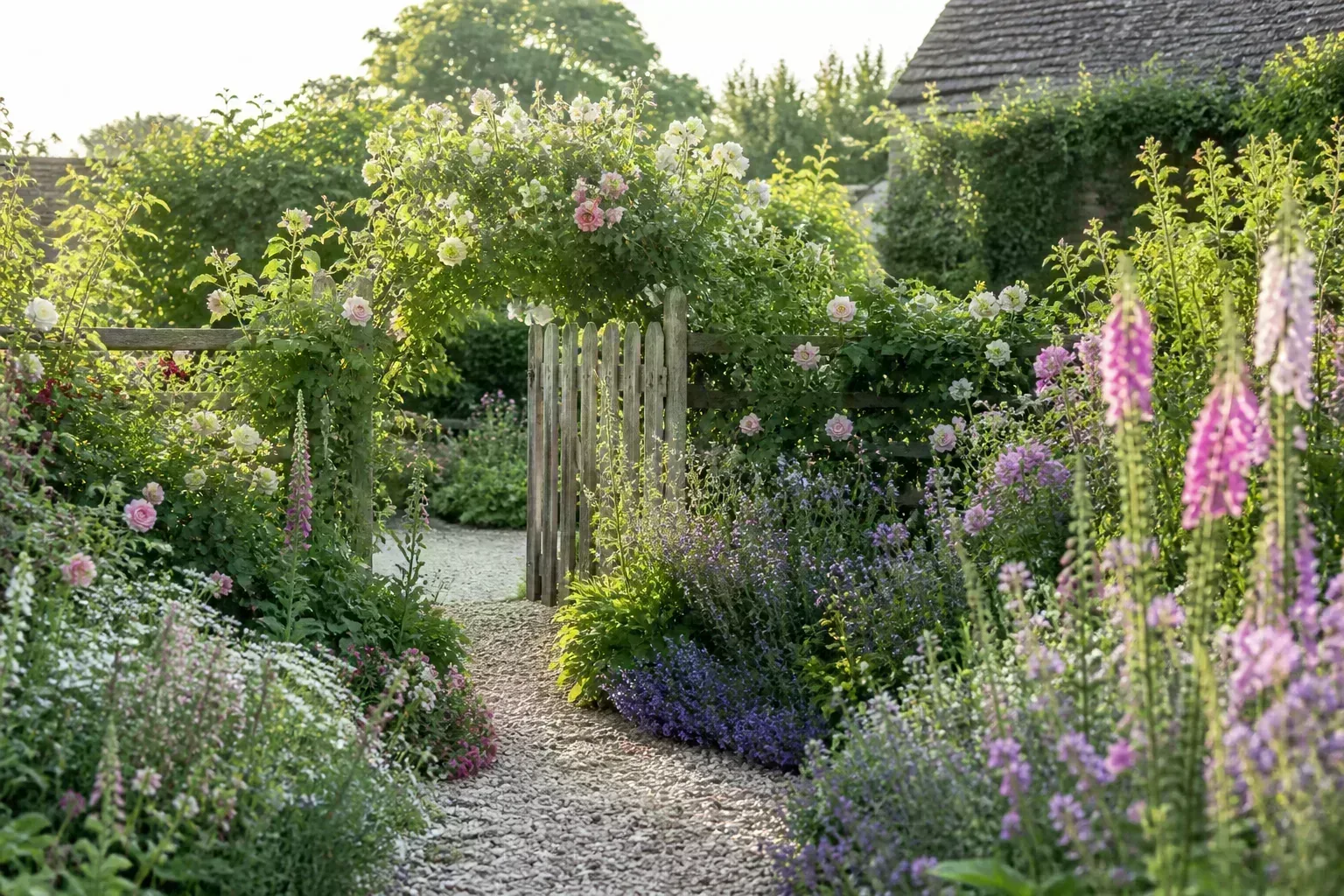
A pergola with a restrained climber can create a defined sitting area and partial shade, especially when the house or fence offers little privacy. Use a structure designed to carry the mature vine’s weight, and leave enough room for pruning, airflow, and safe access. A freestanding support is easier to manage than letting a vigorous vine scramble over a pool fence, equipment enclosure, or house siding.
Choose the vine for your climate and maintenance tolerance. A fast-growing species may screen quickly but can require regular trimming and may send stems into gutters or neighboring plants. Flowering vines can attract pollinators, so place them over a quiet lounge or along the far boundary rather than directly beside a frequently used ladder. HGTV’s pool landscape gallery shows how pergolas, paths, layered planting, and hardscape can separate a pool from its dining and lounge areas; adapt the concept to your yard’s actual routes and maintenance needs (HGTV’s pool landscaping ideas).
Idea 9: Soften Stone With Groundcovers
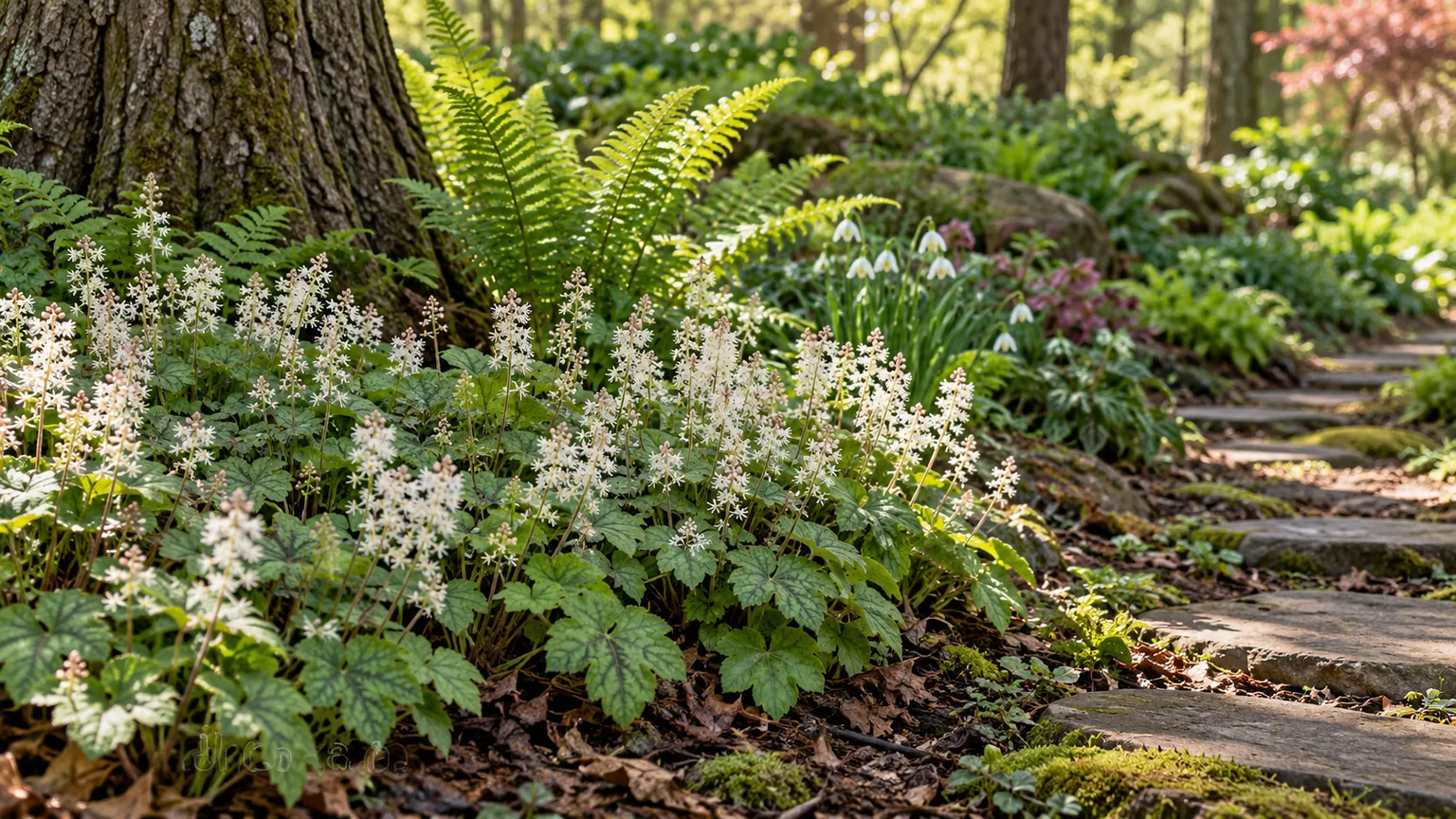
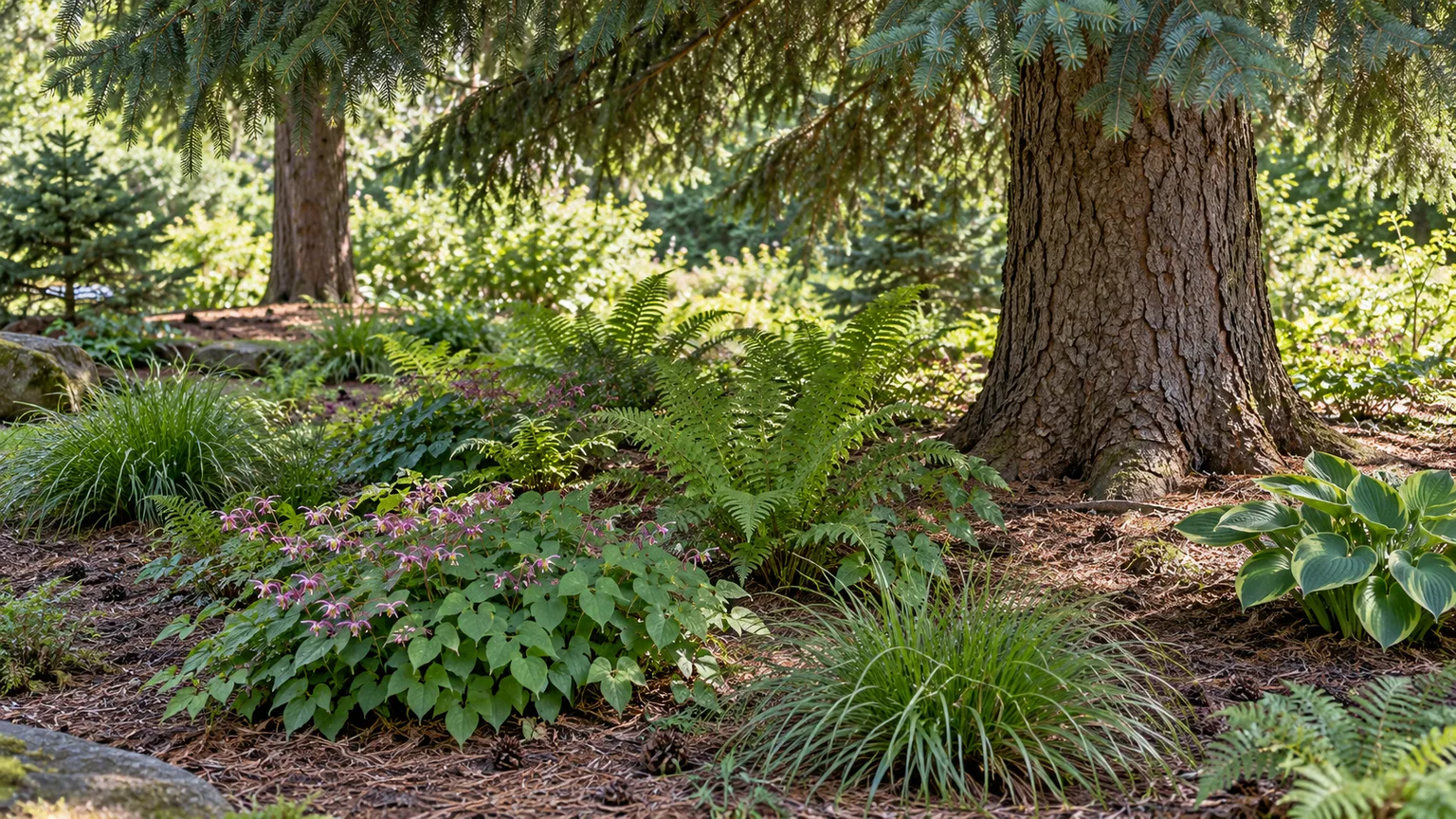
Low groundcovers can soften the edge of a stone terrace, retaining wall, or rock garden without covering every surface in foliage. Use them in joints and planting pockets where they will not lift pavers, obscure steps, or creep into drains. In sunny, dry beds, select heat-adapted plants; for shaded areas, choose species that tolerate the actual soil moisture rather than assuming shade means damp soil.
Small flowering plants can add color and attract pollinators, but place the densest bloom away from the pool entry and loungers if bees make swimmers uncomfortable. Groundcovers also differ in how well they handle foot traffic. Do not describe a plant as walkable unless its own requirements and the route’s frequency support that use. A few planted pockets with visible stone between them are easier to weed and inspect than a continuous mat that hides the condition of the hardscape. Better Homes & Gardens likewise uses paths, groundcovers, and contrasting shapes to give a garden structure; these techniques can help a shaded pool corner feel planted without crowding the deck (BHG shade garden design ideas).
Idea 10: Keep Lawn as a Cool, Open Transition
A short lawn strip can be a comfortable place for bare feet and an open visual break between a pool deck and the rest of the garden. It can also make access straightforward for children, guests, or someone pushing a cart of supplies. Keep the lawn edge crisp and give clippings a clear place to go so mowing does not blow debris into the water.
Lawn needs mowing, water, and sometimes fertilizer, so it is not automatically the lowest-maintenance option. Avoid directing irrigation or fertilizer runoff toward the pool. If a lawn struggles in reflected heat, replace the failing strip with a stable path, contained gravel, or a planting bed suited to the exposure rather than increasing inputs indefinitely. A small, healthy patch can look more intentional and be easier to care for than a large, thin lawn surrounding every side of the pool.
Idea 11: Use Fragrant Plants Thoughtfully
Fragrant plants can make a poolside patio more inviting, especially near an outdoor dining space or a path used in the evening. Lavender, rosemary, and other aromatic herbs may suit a sunny, well-drained border in regions where they are hardy; in colder climates, choose species and cultivars that match local winters or grow them in movable pots. Plant herbs where their eventual size and pruning needs will not invade the deck.
Do not count on herbs or scented plants to keep mosquitoes away. The CDC says the effectiveness of non-EPA-registered natural repellents is unknown; it recommends EPA-registered repellents and advises emptying and scrubbing, covering, or removing outdoor items that hold water weekly. Simply planting fragrant herbs is not a dependable mosquito-control plan (CDC mosquito-bite prevention guidance). Strongly scented flowers can also be too much near a small dining table. Start with one small group away from the busiest pool entry, then see whether the fragrance and pollinator activity suit your household.
Idea 12: Make a Moon Garden for Evening Use
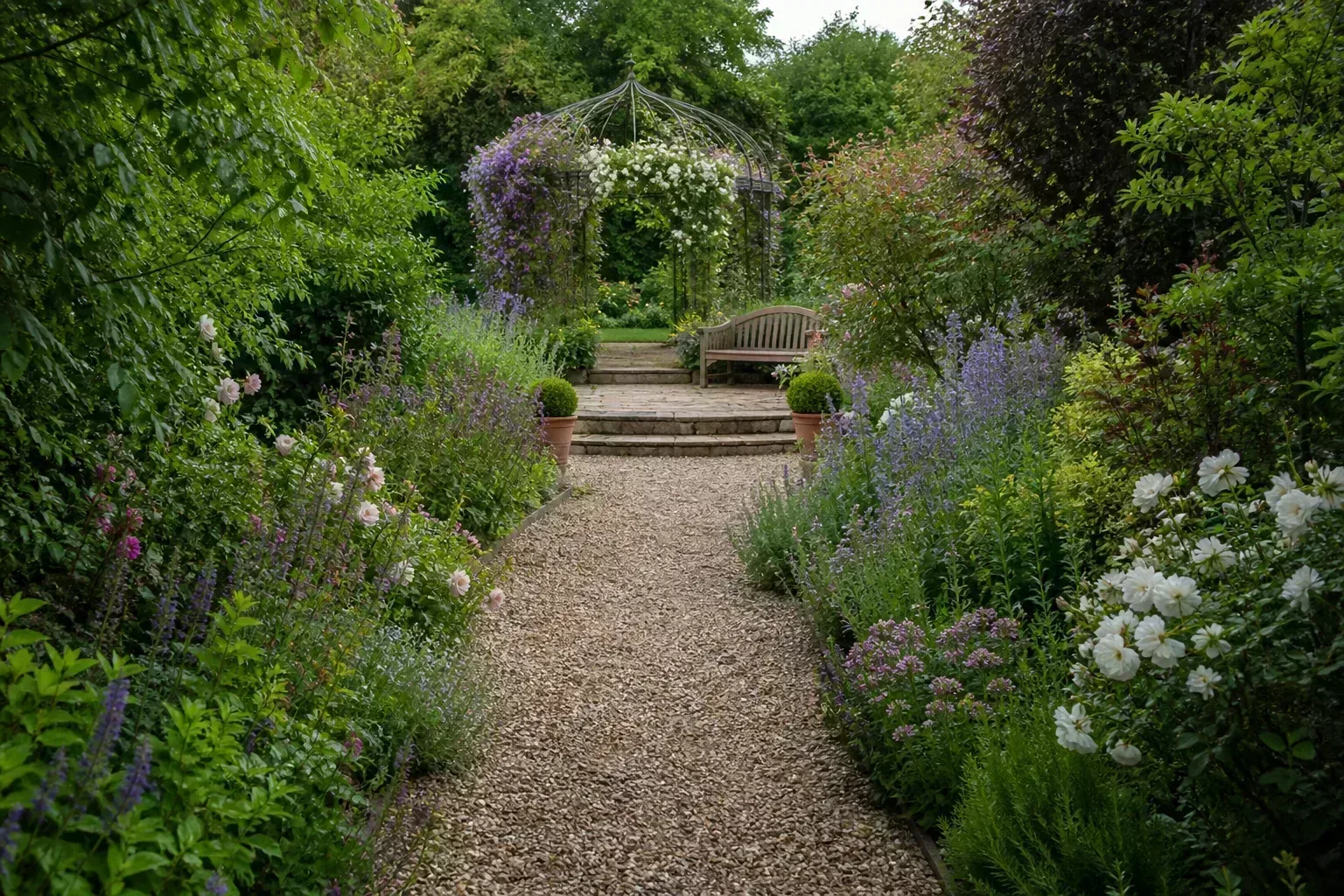
For evening swims or outdoor gatherings, pale flowers and silvery foliage can be easier to notice after sunset than dark leaves and saturated colors. Place white or cream blooms, light-colored containers, and low path lighting in the seating garden rather than at the water’s edge. Use lighting to reveal steps and route changes, not to glare into swimmers’ eyes or neighboring windows.
Choose plants based on the light and temperatures where they will grow; moon gardens still need daytime conditions that suit the species. Some night-scented plants attract moths or other insects, so keep the strongest fragrances away from the most active seating or eating areas. If any electrical work is planned near the pool, hire a qualified professional and follow applicable local electrical codes. A simple repeated palette is often more restful than a bed with many competing blooms.
Idea 13: Put Pollinator Planting at the Far Edge
Flower-rich borders can make a pool landscape lively and support pollinators, but a dense flowering bed is not the best choice next to a ladder, a shallow step, or a place where swimmers cluster. Put the busiest bloom farther out, beyond the main route, and use a clear path or lawn strip to separate it from loungers. Choose plants that bloom at different times if you want a longer season of color, and remove spent flowers when their seed or petal litter becomes a nuisance.
The goal is thoughtful placement, not eliminating every bee from the yard. Pollinators visit flowers because the plants provide nectar or pollen, and their activity can vary with bloom and weather. If someone in the household has a serious insect-sting allergy, plan the pool area with that person’s clinician and local emergency plan in mind rather than relying on a plant list. A smaller pollinator bed at the garden’s edge can give both the flowers and swimmers room.
Choose Trees and Large Shrubs by Mature Size
Trees offer shade, screening, and a strong backdrop, but their canopy and seasonal litter can become more important than their nursery appearance. Check the mature height, width, leaf habit, flowers, fruit, seed pods, and pruning needs before planting. Consider where rain and wind carry the debris, not only whether the tree looks attractive beside a pool. No species is universally the “best pool tree”; local climate, soil, pool construction, and the distance to paving and utilities all matter.
Roots generally grow where conditions allow, and they can affect nearby paving or buried infrastructure over time. That does not mean every tree root will puncture a pool shell. Do not rely on generic distance rules or cut a large root on your own to solve a pool problem. If a new pool, mature tree, retaining wall, or buried line is involved, ask a qualified pool contractor or arborist to assess the actual layout. The EPA notes that established native planting can develop dense, deep roots that stabilize soil; that benefit is useful in suitable areas, but it is also a reason to keep large planting masses out of places where excavation, access, or structure support must remain clear (EPA Greenacres native landscaping chapter).
Plan Hardscape, Irrigation, and Drainage Together
Hardscape is part of the landscape, not a backdrop to add after the plants. Pavers, stone, gravel, lawn, and decking each behave differently under wet feet, hot sun, and rain. Keep the main route stable and easy to clean. Make sure edges do not rock, settle, or create trip points, and avoid placing loose stones where people walk from the ladder. A professional poolside design practice plans deck slope, splash drainage, furniture zones, lighting, and planting before construction because later corrections may mean cutting or removing finished surfaces (Peabody Landscape’s poolside planning).
Rain should not be directed toward the house, a neighbor’s property, pool equipment, or a place where it erodes the garden. Planting can help slow and intercept some runoff, but it cannot fix a badly graded deck or solve a concentrated drainage flow on its own. The Royal Horticultural Society explains that established leaves, stems, and roots can catch, slow, and help infiltrate rainwater, while also noting that flood-resilient planting does not necessarily tolerate waterlogged soil. Use planting as one layer in a drainage plan, not as a replacement for one (RHS guidance on plants for flood resilience).
Use drip irrigation or careful hand watering where practical so foliage and pool surfaces are not continually sprayed. Keep fertilizers, loose mulch, soil, and clippings out of drains and water. EPA’s Greenacres resource describes how locally adapted landscaping may reduce routine watering and chemical inputs compared with conventional turf in its original context; apply that as a design principle rather than a guaranteed outcome for every homeowner (EPA Greenacres native landscaping chapter). The RHS also recommends matching each plant to local light, soil, and drainage conditions and allowing established planting to do its work over time (RHS flood-resilience planting advice).
Install in Phases and Maintain With a Light Routine
Plan a new landscape in stages. First, resolve the route from the house to the pool, safe entry, equipment access, and drainage. Next, install or adjust the hardscape and any required barrier. Then test the scale of privacy and shade features with movable pots or a temporary screen. Once you have used the pool through a few weeks of typical weather, plant the permanent beds. A site that looks calm in an empty photo may feel crowded when there are chairs, towels, toys, and people moving through it.
During the first growing season, water new plants according to their needs and check whether reflected heat, wind, or splash is more intense than expected. Prune before branches reach the deck or obscure a gate; remove debris from drains and filters; and thin plants that make service access difficult. Established plants may need less water than new ones, but that depends on species, soil, and weather. The EPA and RHS both describe natural or established planting as a way to help manage water and reduce some inputs, not a maintenance-free solution (EPA Greenacres; RHS flood-resilience guidance).
Common Pool Landscaping Mistakes to Avoid
- Planting by the small size of a nursery plant instead of its mature width and height.
- Putting tall, prickly, or bee-heavy planting at ladders, steps, gates, or busy seating areas.
- Assuming an evergreen never sheds leaves, needles, flowers, or seed.
- Surrounding the entire pool with a hedge and leaving no room to clean, supervise, or reach equipment.
- Treating mulch or loose gravel as a safe barefoot surface without testing it on the actual route.
- Assuming a plant will tolerate all chlorine, salt, reflected heat, or splash simply because a photo shows it beside water.
- Using fragrant herbs as mosquito control instead of managing standing water and using appropriate proven controls.
- Adding trees without considering mature canopy, debris, roots near paving, or buried utilities.
- Letting irrigation, soil, fertilizer, and clippings wash toward the pool or storm drains.
- Using landscaping as a substitute for a fence, gate, alarm, supervision, or other required safety measure.
Conclusion
Good pool landscaping gives you a clear, comfortable way to reach the water and adds the features your yard actually needs: privacy, shade, color, a softer edge, or less lawn. Start with the routes, equipment, drainage, pool rules, and mature plant sizes. Then choose a few ideas that fit your climate and cleanup tolerance, place the messier or more pollinator-friendly planting farther from the deck, and build the garden in phases. A pool area feels finished when its plants and surfaces are attractive, safe to move through, and still easy to service.