How to Grow Lettuce in Fall and Early Winter
Plant fall lettuce by counting back from your harvest window. Compare varieties, sowing methods, watering, and row covers for crisp greens in cool weather.
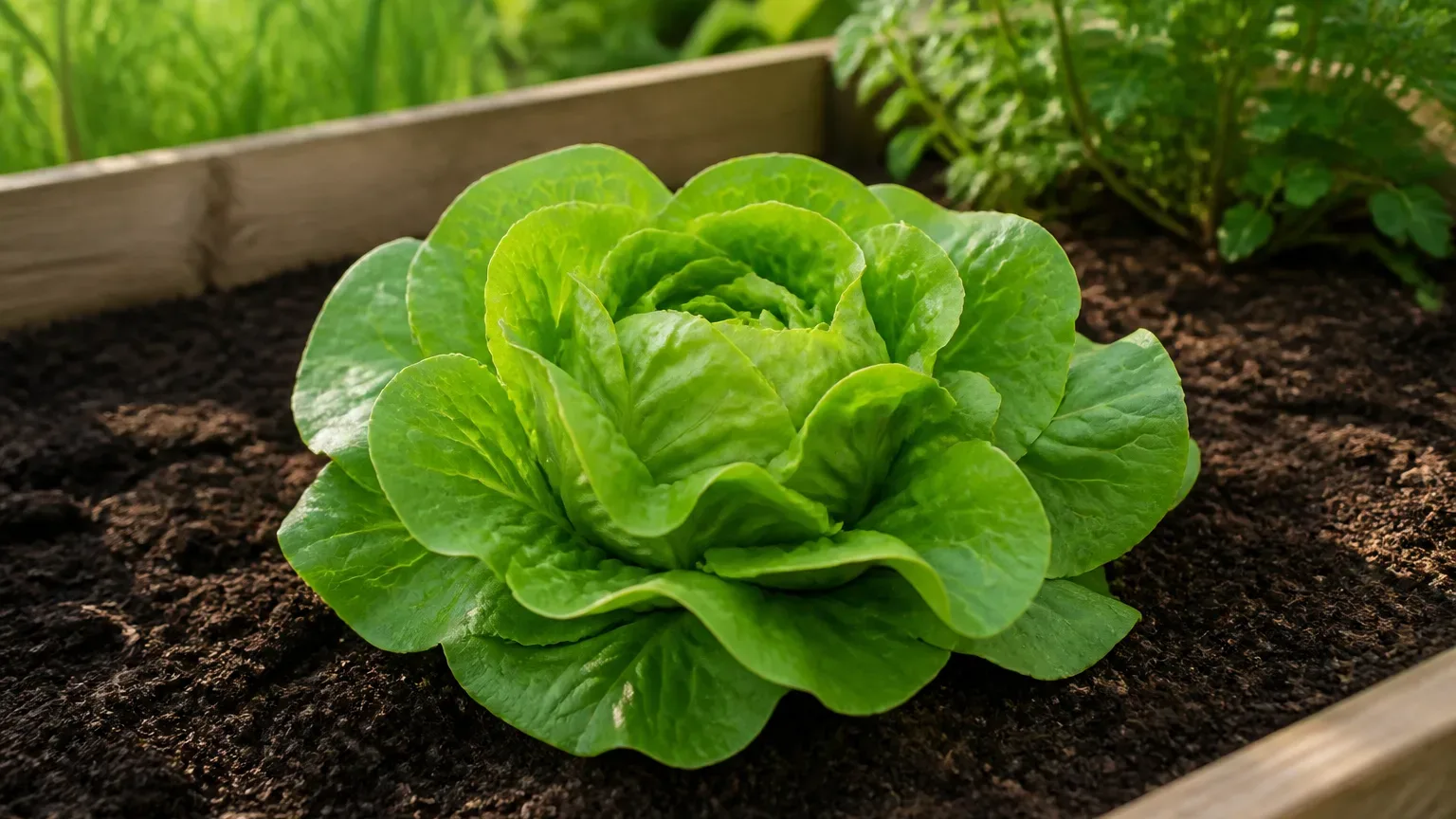
Fall lettuce is planned backward. Start with the kind of harvest you want, then count back from the date you hope to pick it, allowing for the variety’s maturity time and the slower growth that comes as days shorten. A first frost date helps, but it is not the whole calendar: lettuce can handle some cool weather, while seedlings planted too late may simply sit small through winter.
The most reliable approach is to sow a quick looseleaf variety for baby greens and start a separate batch of heading lettuce as transplants. If late-summer soil is hot, seedlings started in a cooler place can bypass erratic germination. Later, a breathable cover or cold frame can shelter established plants through light frosts, but no cover can make a cold, dark bed grow at summer speed.
Start With the Harvest You Want
Decide whether you want baby leaves for salads in a few weeks, full heads before hard freezes, or established plants that can be picked periodically through the coldest part of the season. These are different targets. Baby leaf lettuce can be sown close together and harvested young; a full head needs more space and time; a plant held over winter may stay alive under protection while producing very little new growth until daylight increases.
If you are new to fall growing, put most of the bed into baby leaf or looseleaf lettuce and reserve a short row for a few full-size plants. That gives you an earlier harvest without betting the whole crop on long-season heads. Gardeners in mild-winter areas can make additional sowings later into autumn, while gardeners facing a long freeze should focus on getting plants established before growth slows.
Fall lettuce is a timing problem, not just a frost-date crop
The first frost is an easy date to find, but it can be a misleading deadline. A light frost may only nip exposed leaves, especially on a sheltered bed, while a hard freeze can damage the crop; at the same time, shrinking daylight slows leaf production before the ground freezes. A plant may therefore remain harvestable after it stops making much new growth.
Think in three windows: the warm period when seeds may struggle to germinate, the cool stretch when lettuce grows quickly, and the short-day stretch when plants slow down. In a Zone 6 garden, a practical fall-growing guide notes a marked slowdown as daylight approaches roughly 10 hours, but the timing shifts with latitude and local weather. Use your own light conditions and a local frost calendar, not someone else’s month name, to set the plan. Savvy Gardening’s fall lettuce guide describes that short-day slowdown and adds extra time to fall maturity estimates.
Count Back From a Realistic Harvest Date
Use the seed packet’s days-to-maturity estimate as a starting point, not a guarantee. First choose a target harvest date that occurs before the period when your garden is usually locked into repeated freezes or very short days. Then subtract the variety’s maturity estimate and add roughly one to two weeks as a fall cushion for slower growth, cloudy weather, and transplant recovery. If the packet’s estimate is for a transplant rather than a direct sowing, do not count the indoor seedling period twice; check the label or variety listing carefully.
For example, if a looseleaf variety lists 45 days and you want leaves around October 20, start with a target about 55 days ahead, then adjust for your local season and whether you will sow seed directly or set out a transplant. That is a planning estimate, not a regional planting date. A northern gardener may need to sow in midsummer; in a mild coastal climate, the same harvest goal could allow a later sowing.
| Harvest goal | What to count backward from | Practical choice |
|---|---|---|
| Baby greens before frost | First planned picking, often 25–40 days after sowing depending on variety and leaf size | Direct sow in a narrow band; thin or clip young leaves |
| Full heads in autumn | Desired head harvest, using packet maturity plus a fall buffer | Choose a faster variety or transplant seedlings for a head start |
| Winter picking | The point when daylight and cold sharply slow growth | Establish plants earlier, then protect them; expect holding and slow picking rather than fast winter growth |
The University of Maryland Extension fall-vegetable guide recommends planning fall crops around a local frost date and the crop’s time to maturity. For additional season planning, Harvest to Table’s lettuce calendar lays out why timing shifts by season and region. If your area has an unusually warm autumn, do not assume the frost calendar alone will solve the seed-germination problem; hot soil can delay the crop before cold weather becomes a concern.
Succession sowing spreads risk. Sow a small amount every 10 to 14 days while your calendar still leaves enough time to reach the desired stage. The last sowing should be earlier than your intuition may suggest: late seedlings can remain alive but too small to yield much before winter. Avoid seeding the whole packet at once unless you want a large flush of leaves together.
Which Lettuce Types Perform Best in Fall?
Choose by harvest speed and the seed company’s description of cold tolerance, not by type name alone. Varieties within the same lettuce group can differ, and a cold-tolerant cultivar does not remove the need for enough time to grow. For fall, look for quick maturity, reliable germination, and a note about cool-season or fall performance.
Looseleaf and baby leaf
Looseleaf lettuce is the easiest choice for a quick autumn harvest because you can pick individual leaves before the plant forms a large head. For baby greens, sow a band and thin crowded seedlings; for repeated leaf harvest, leave the central growing point intact and take the outside leaves. This is a forgiving option if you are planting later than ideal or have only a small bed.
Looseleaf is also useful for containers, but it needs regular moisture because the root zone is small. Avoid sowing a dense carpet that traps dampness and blocks airflow. A slightly wider, evenly spaced row is easier to weed and harvest than a thick patch of seedlings.
Butterhead and romaine
Butterhead forms loose, tender heads and is often a good compromise between speed and a full-head harvest. Romaine develops a taller, firmer head and can be a dependable fall choice when started early enough. Some gardeners favor compact winter types for protected beds, but the variety description matters more than the marketing word “winter.”
When choosing a named cultivar, compare the listed maturity time and whether the seller identifies it as cold-tolerant or suitable for fall sowing. If you have not grown it before, plant a small trial row beside a familiar looseleaf type. That makes it easier to see whether the new variety is truly better adapted to your garden rather than relying on a regional claim that may not fit your microclimate.
Crisphead and long-season varieties
Crisphead lettuce takes longer to develop a tight head and needs steadier spacing and moisture. In a short season, it is the riskiest fall choice because the plant may be healthy but still not reach full size before low light and persistent cold slow it down. Use transplants, select a quick-maturing cultivar, and reserve crisphead for a bed you can protect.
The broad categories are not a frost-hardiness ranking. A compact romaine may hold better than a particular butterhead, but another cultivar may reverse that result. Seed descriptions and local trials are more useful than assuming every romaine or crisphead will tolerate a freeze.
Direct Sow or Transplant?
Direct sowing is simplest when the bed is ready and soil conditions are favorable. It avoids transplant shock and works especially well for baby leaves, which do not need carefully spaced individual plants. Sow a small amount, keep the top layer from drying out, and thin once seedlings are easy to handle.
Transplants are the better tool when late-summer soil is too hot for dependable germination or when you need to save time before the cold window. Start seed in cell trays with a clean, fine-textured mix, then set seedlings out while they are young and stocky. Starting them indoors for about three to four weeks can create a useful head start; avoid holding them in a tiny cell until roots circle and growth stalls. Savvy Gardening uses indoor sowing to get around late-summer heat and recommends transplanting seedlings while they are still small.
| Method | Best for | Main advantage | Main drawback |
|---|---|---|---|
| Direct sow | Baby leaf or a cool, prepared bed | Fast setup; roots are never disturbed | Germination can be uneven in hot or drying soil |
| Transplant | Full heads or a hot late-summer seedbed | Better control of spacing and a head start | Requires indoor space, light, and careful hardening off |
If using transplants, acclimate them gradually to outdoor sun and wind over several days. Water the plugs before setting them out, handle seedlings by the root ball rather than pinching the stem, and plant them at the same depth they grew in the tray. A transplant that wilts at midday may recover by evening; repeated wilt means the root ball is drying or the site is too exposed.
Get Germination Through Late-Summer Heat
Heat is often the first fall-planting obstacle. Lettuce seed generally germinates most reliably in cool-to-mild soil; at soil temperatures around the mid-70s Fahrenheit and above, germination can become slow or erratic, and very hot conditions may inhibit some varieties. The response differs by cultivar, so an empty row after a week does not necessarily mean the seed is dead.
For a direct-sown bed, prepare the soil, water it deeply, and shade the seed zone during the hottest part of the day. Use a breathable shade cloth held above the soil rather than a dark cover that traps heat. Sow shallowly, mist or water gently once or twice a day as needed, and remove the shade once seedlings emerge if the bed then needs more light. In very hot conditions, starting seed in a cooler indoor room is usually more dependable than repeatedly reseeding a hot, dry bed.
Do not keep the seedbed waterlogged in an attempt to cool it. Saturated soil has little air space and can rot seed; the surface should stay evenly moist, not glossy with standing water. If you can measure soil temperature, check at seed depth in the afternoon, when the hottest conditions are likely. If the bed stays hot, wait for a cooler spell or use transplants.
Prepare the Bed or Container
Choose a site with several hours of sun and soil that drains after watering. In cooler autumn weather, a sunny location supports faster growth; in warm climates, temporary afternoon shade can protect seedlings until the heat breaks. Avoid a low, soggy corner where cold air and water collect, and avoid putting the new crop immediately after another lettuce planting if disease or soilborne pest problems were present.
Loosen the top several inches without pulverizing the soil. Remove weeds before sowing because lettuce seedlings are small and lose quickly to competition. Mix in mature compost if the bed needs organic matter, but do not add heavy fertilizer by habit. A soil test is the better basis for correcting pH or nutrients. High-nitrogen feeding can produce soft, lush leaves that are more vulnerable to weather and pests, while unfed plants in poor soil may stay undersized.
Containers work well for baby leaves and compact heads if they have drainage holes and enough depth for a steady root zone. Use fresh potting mix, not garden soil packed into a pot. A wide planter is easier to water evenly than a narrow pot, and it can be moved under a covered porch or cold frame when weather turns rough. Remember that containers cool and dry faster than in-ground beds, so winter protection and frequent moisture checks matter more.
Sow Seeds at the Right Depth and Spacing
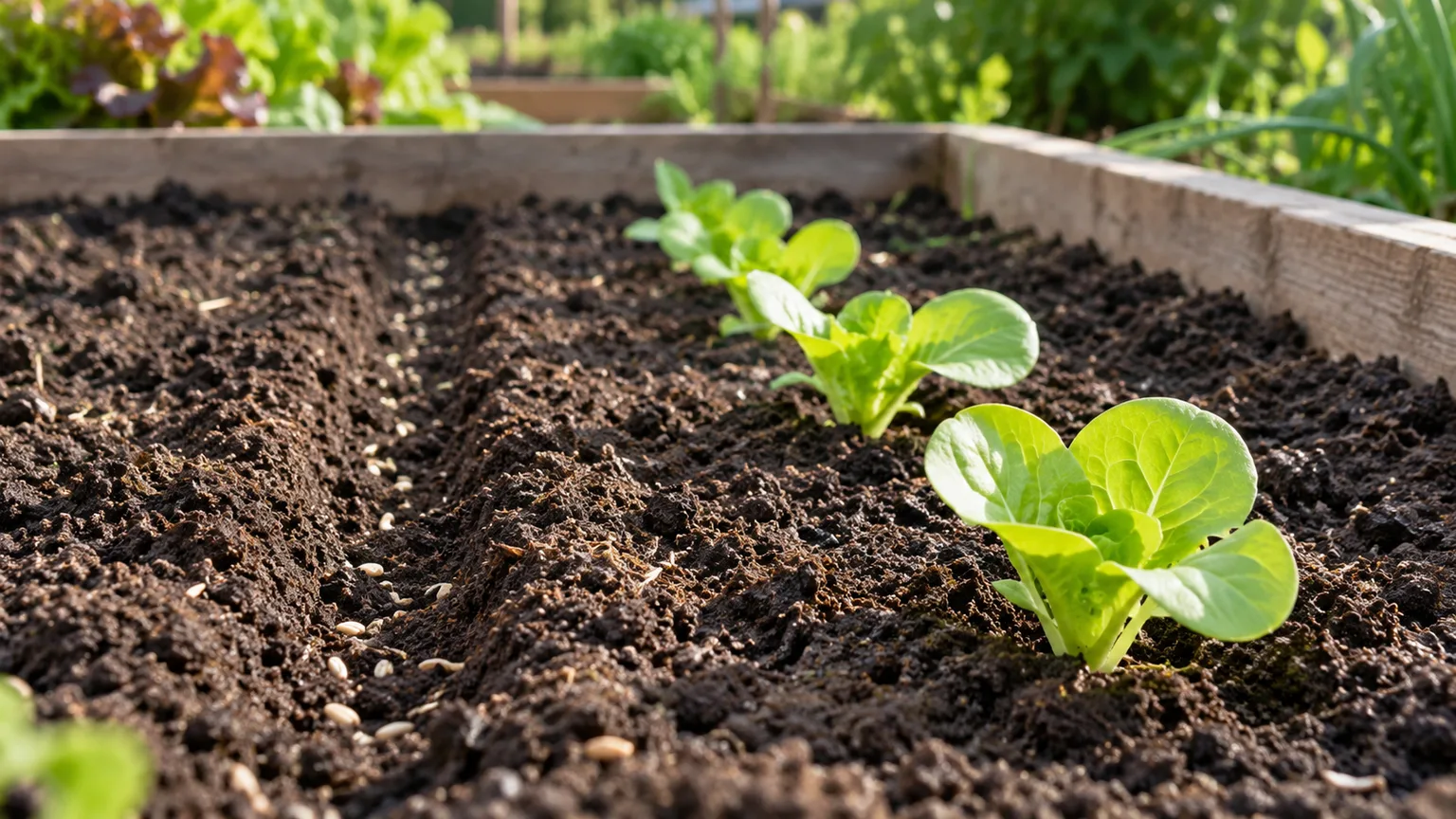
Lettuce seed is small, so sow it close to the surface. Rake a shallow groove, scatter or place seed, and cover with only a thin layer of fine soil or mix. Many lettuce seeds germinate better when they receive some light, so burying them deeply is a common reason for a weak stand. Water with a gentle spray so seed does not wash into clumps or out of the row.
For baby leaves, start with seed roughly an inch apart and thin as needed so leaves can size up and air can move through the row. For mature looseleaf or butterhead plants, allow about 6 to 8 inches between plants; larger romaine and crisphead cultivars may need 8 to 12 inches. Check the variety packet because compact cultivars need less room than large heads.
Make two or three short rows rather than one long, dense sowing. Mark the date and cultivar at the row end, then cover the bed with a light fabric only if it helps with shade, wind, or pests. If the cover is for insect exclusion, install it at planting and secure the edges so pests cannot crawl underneath. Remove it periodically to weed and inspect for slugs, which can remain active in cool, damp beds.
Water and Feed for Steady Growth
Lettuce roots are shallow, so the goal is an evenly moist root zone rather than a cycle of drying and soaking. Check the soil with a finger instead of watering by calendar alone. If the top inch is dry and the next layer is only slightly damp, water slowly enough to wet the root zone; if the soil is still cool and moist, wait. A short shower may wet leaves without reaching the roots, so check after rain.
Water early in the day when possible. Morning irrigation gives foliage time to dry and helps plants enter a sunny day without stress. Mulch lightly around established plants to slow evaporation, but keep mulch away from the crown and avoid a thick layer over newly sown seed. Fine mulch can bury seed or prevent light from reaching it.
If the bed has been amended and the plants are growing steadily, extra fertilizer may not be needed before harvest. If leaves are pale and growth is slow, first rule out cold, waterlogging, crowding, or a too-late sowing date; fertilizer cannot fix poor timing or waterlogged roots. When the soil actually needs nutrients, use a product labeled for vegetables at its label rate, and water it in. Do not place concentrated fertilizer against tender seedlings.
Protect Fall Lettuce From Frost
Lettuce can tolerate cool conditions and some varieties withstand a brief light frost, but leaves can be damaged by a hard freeze. A cover extends the season by buffering the air around plants; it does not turn an exposed bed into a heated greenhouse. Decide how much protection you need from your typical low temperature, how exposed the bed is to wind, and whether you can open the cover on sunny days.
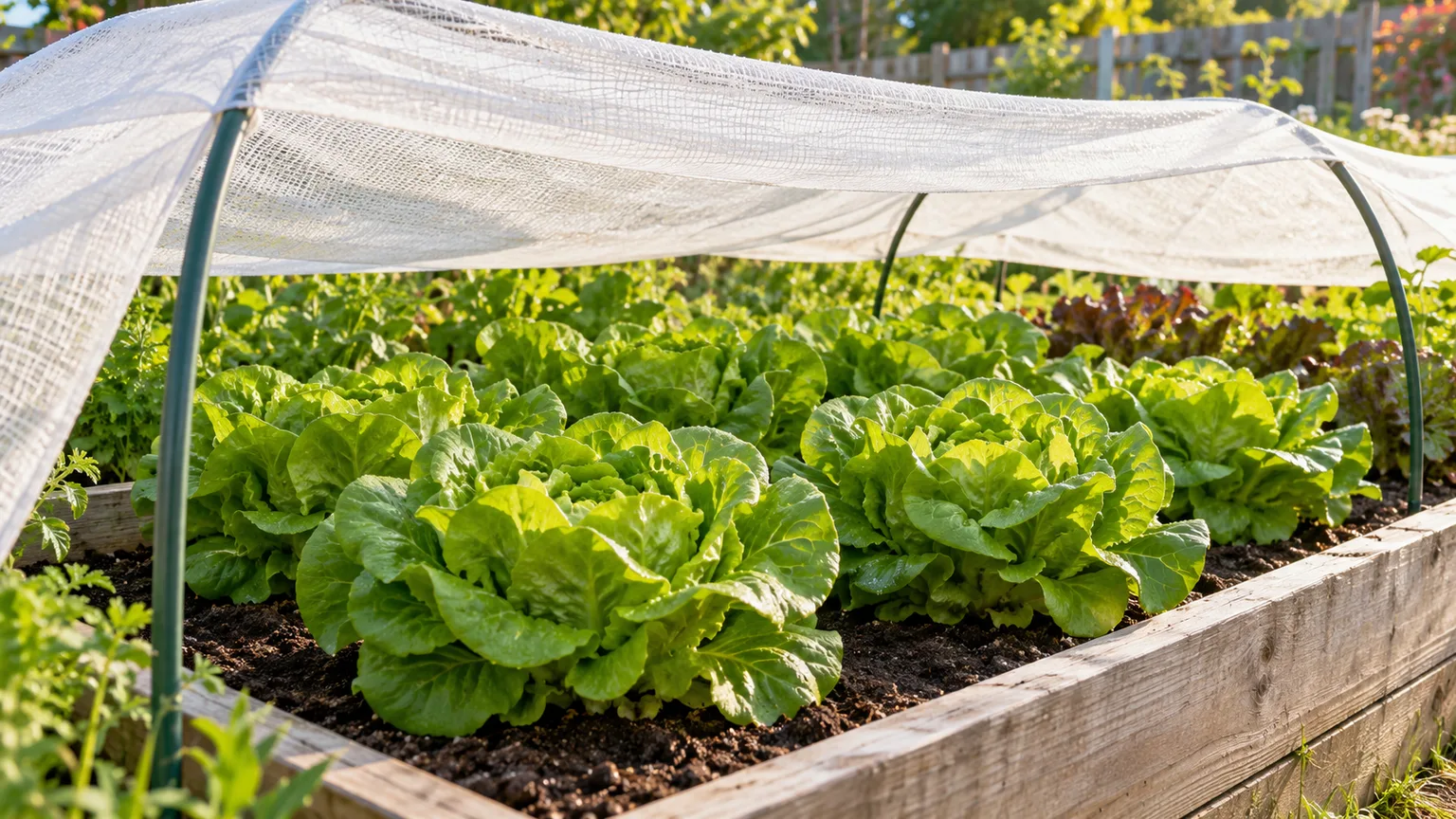
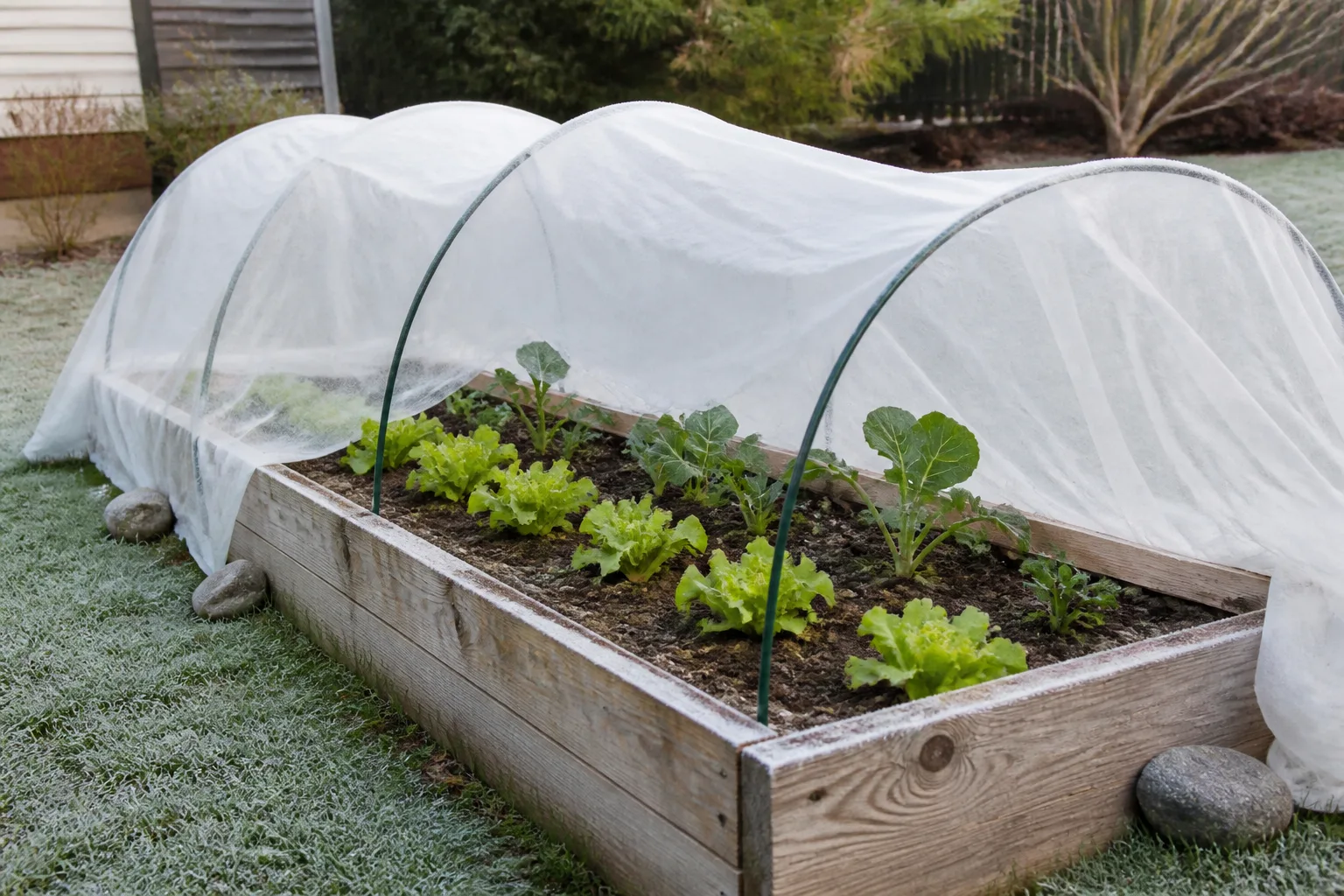
For a short cold snap, a breathable frost blanket supported above the leaves is usually the simplest option. For repeated cool nights, low hoops with row cover give the plants space and allow easier access. A cold frame or greenhouse provides stronger shelter but needs daily attention to avoid overheating. Penn State Extension describes low tunnels and cold frames as season extenders for cool-season crops, while noting that they require planning for materials and routine use; the season-extension guide is useful when choosing a setup.
Match the cover to the cold
Lightweight floating row cover can reduce wind and offer modest protection, while heavier fabric provides more frost buffering but passes less light and water. The University of Wisconsin–Madison Extension row-cover guide explains that protection varies by fabric weight and can range by several degrees. Treat that as a margin, not a promise: wind, cloud cover, soil warmth, cover fit, and duration of the freeze all affect the result.
Place hoops so fabric does not press hard on the growing point, especially when wet or frozen. Leave enough slack for plants to grow, anchor the edges against wind, and remove or lift covers to harvest and inspect. If you use plastic, keep it from touching foliage and ventilate promptly in sunshine; plastic heats faster than breathable cloth and can cook a crop even in cool weather.
Vent covers and keep foliage dry
Closed covers can trap daytime heat and humidity. A cold frame may become warm enough to stress lettuce on a bright day even when the morning began near freezing. Open its lid or roll back a tunnel when temperatures rise, then close it before evening cooling; use a simple min-max thermometer inside if you are unsure how much it warms.
Keep leaves from resting against damp plastic, and water before a cold night only if the root zone actually needs it. A dry, windy bed can need irrigation even in late fall, but constant wetness encourages decay and can freeze into a crust. If a row-cover area stays damp and crowded, increase airflow, thin plants, and remove damaged leaves rather than sealing it tighter.
Harvest Without Ending the Crop Too Soon
Baby leaves are ready when they reach the size and tenderness you like, often a few inches long. Cut a small amount with clean scissors or pick the outer leaves, leaving the center intact. A plant may regrow for another harvest if roots remain healthy and daylight is adequate; regrowth slows sharply as temperatures and day length drop.
For a full head, harvest when it has reached the size described for the variety and feels firm enough for its type. Cut just above the crown with a clean knife. Some plants will send out smaller leaves after a head cut, but do not count on that as a second full crop in cold weather. For winter picking, harvest during a mild part of the day after frost has lifted and leaves are no longer frozen; frozen foliage is brittle and bruises easily.
Pick only what you can use soon. Lettuce stays crisp longer when it is cooled quickly, gently rinsed if dirty, and stored dry in a breathable container. Keep the remaining plants watered and covered as needed, but remove the cover for harvest and to check for slugs or leaf decay.
Fix Slow, Patchy, Bitter, or Damaged Lettuce
Seeds have not emerged: check whether the soil is hot, dry, crusted, or waterlogged. If surface temperatures are high, add shade or switch the next sowing to indoor cells; if the surface has dried, resow and keep it consistently damp. Do not bury replacement seed deeper as a first fix.
Seedlings emerge in clumps: thin them early, while roots are small. Crowding reduces airflow and makes baby leaves harder to harvest cleanly. Use the thinnings as microgreens or tender salad leaves if they are clean and healthy.
Plants stretch or stay tiny: tall, pale seedlings usually need more light, while compact seedlings that barely grow in late autumn may be facing cold soil or short days. Check planting date and temperature before adding fertilizer. If the crop is too late for full heads, harvest young leaves rather than waiting for a size the plant may not reach.
Leaves taste bitter or plants bolt: heat, stress, age, and cultivar all play a role. Harvest promptly when a flower stalk begins to rise, and use a heat-tolerant or bolt-resistant variety for the next warm sowing. Shade and steady water can reduce stress, but they cannot reverse a plant that has already started flowering.
Leaves are limp after a freeze: wait for the plant to thaw and assess it before cutting. Tissue that turns translucent, mushy, or water-soaked has been injured and will not become crisp again; remove it to limit rot. A cover may protect the next cold night, but if the forecast is far below the cover’s rated protection, harvest what is usable first.
Plants are slimy or chewed: inspect beneath leaves and along the soil surface for slugs, and check the bed at dusk when damage is active. Thin dense growth and remove decaying foliage. A row cover can block some insects, but it will not solve a pest already enclosed under it, so inspect before closing the bed.
Conclusion
For a dependable fall crop, choose the harvest first, count backward from that date, and add time for shorter days. Use direct sowing for quick baby leaves when the soil is cool enough; use transplants to get around late-summer heat or to grow full heads on a tighter schedule. Keep the shallow root zone evenly moist, select varieties for your local season, and use covers as a measured buffer against frost rather than a guarantee of winter growth. With a few small sowings and a realistic cold-weather cutoff, you can keep harvesting crisp lettuce well after the summer garden has faded.