The Best Time of Day to Water Grass for Healthy Lawns
Morning is a useful lawn-watering default, but every yard differs. Learn when to water grass, how to measure sprinkler output, and when evening irrigation can work.
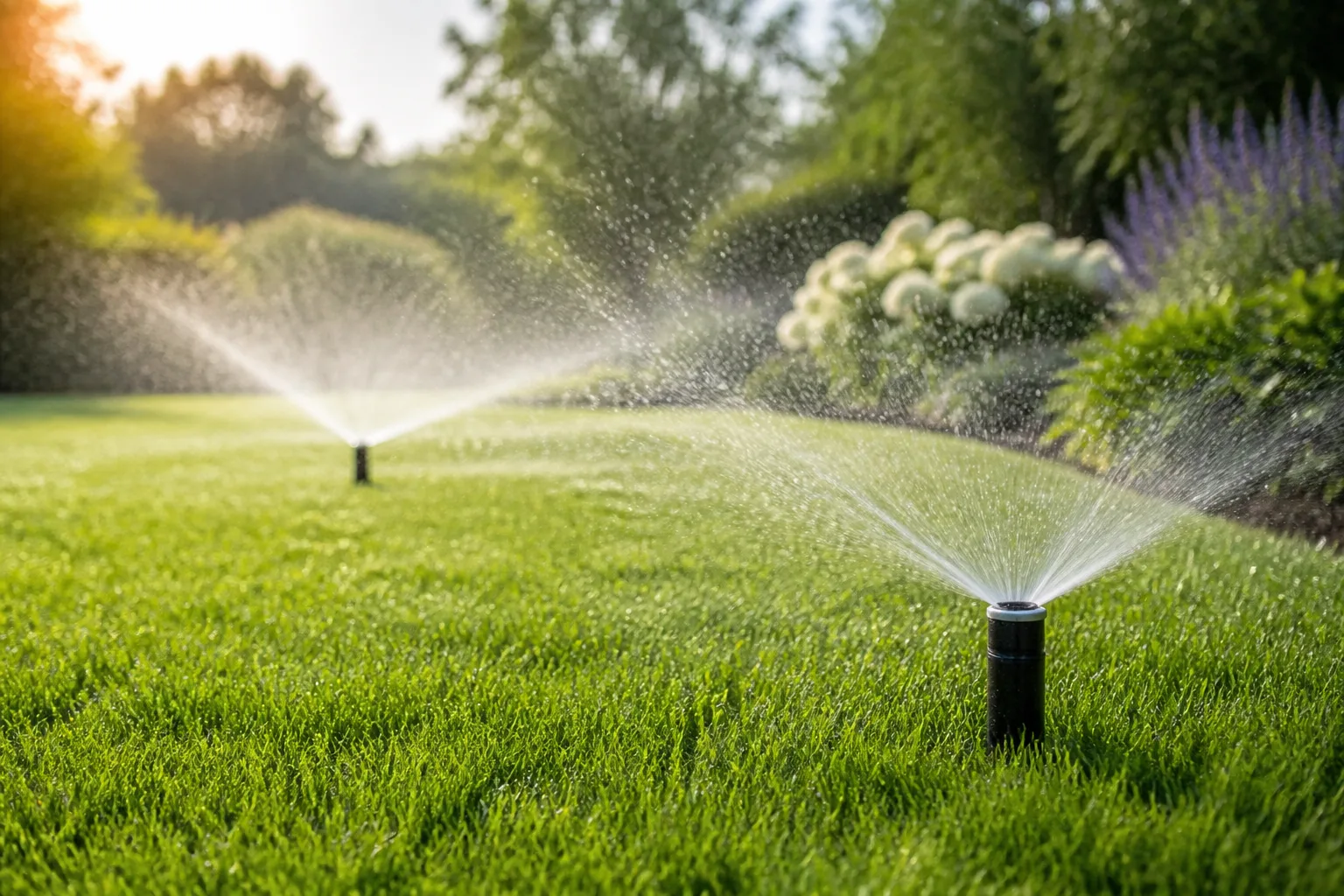
For most established lawns, the best time to water is early in the morning, before the day turns hot and windy. A useful starting window is around sunrise through midmorning, often before 9 or 10 a.m. That gives water time to soak into the root zone while temperatures and wind are usually lower, and it lets grass blades dry during the day.
The clock is only a starting point. A cool, dry region may handle late-evening or overnight irrigation well, while a humid yard with a history of turf disease benefits more from morning watering. Soil that sheds water, newly seeded ground, hot weather, rainfall, and local watering rules can change the schedule too. Instead of copying a fixed timer setting, match the watering window to the conditions in your yard.
The Short Answer: Choose the Cool Part of the Day
Start with early morning if you can. The best time of day to water grass is generally before sunlight, heat, and wind increase evaporation and carry spray away from its target. If you use an automatic system, set it to finish early enough that the grass is not wet well into the evening; if you water by hand, morning is also easier to fit around outdoor activity and mowing.
There is no magic minute that applies everywhere. A sprinkler starting at 5 a.m. is not inherently better than one starting at 7 a.m. if both deliver water evenly, the soil absorbs it, and the lawn has time to dry before night. Conversely, a programmed 4 a.m. cycle can waste water if a storm has already soaked the root zone or if the sprinklers overspray pavement.
Use the morning recommendation as a default for established turf, then refine the time using soil moisture, weather, sprinkler performance, grass type, and any municipal restrictions. The goal is not simply to wet the lawn before sunrise; it is to get useful moisture into the roots without runoff or unnecessary loss.
Why Early Morning Is the Best Default
Early morning usually combines cooler air, calmer wind, and a full day of light afterward. Water has a better chance to enter the soil before strong sun and wind increase evaporation or drift. The soil is often cooler than it will be later, and the turf can dry during the day rather than remain damp overnight.
That last point matters most where nights are humid, the lawn stays shaded, or a fungal disease is already active. Long periods of wet foliage can add to disease pressure in susceptible turf, especially when warmth and humidity also favor the pathogen. Morning watering does not guarantee a disease-free lawn, but it gives leaf surfaces more time to dry than watering near dusk.
The broad timing pattern appears in lawn-specific advice from Colorado State University Extension’s PlantTalk Colorado, which recommends watering early in the morning or evening and avoiding the heat of the day. In its dry climate, night watering may also work unless it is excessive. For a general lawn in a more humid climate, early morning is the safer default because it balances water delivery with daytime drying.
Do not confuse the best watering time with the best watering frequency. Watering at sunrise every day can still encourage shallow roots and waste water if the lawn does not need it. For established turf, let rainfall and a moisture check determine whether to irrigate; the clock determines the most efficient window once watering is warranted.
When Late Evening or Overnight Watering Can Work
Evening watering is a reasonable backup when mornings are unavailable, local rules restrict daytime irrigation, or the climate is dry enough that water loss from foliage is low. Colorado State’s lawn-care guidance notes that cool, calm late evening and early morning periods can both be efficient in its region, and PlantTalk says nighttime irrigation can work in Colorado’s dry conditions when it is not overdone. That regional exception is useful: “never water at night” is too absolute.
The tradeoff is that leaves may remain wet for much longer after sunset. In a humid region, a lawn shaded by trees, or turf already showing disease, choose a window that lets blades dry as quickly as possible. If evening is the only practical option, water earlier in the evening rather than just before bed, keep the application focused on the soil, and avoid repeating the cycle when the root zone is already moist.
The irrigation method also changes the risk. Sprinklers wet both soil and foliage, while a drip line or low-level system may deliver water near the ground. Grass is usually watered with sprinklers, but a well-adjusted system sends most of its water onto the lawn rather than walls, sidewalks, or dense shrubs. Avoid treating a wet blade as proof of disease: pathogens, susceptible grass, temperature, humidity, and duration all matter.
Follow local water-use rules before choosing a timer. Some communities limit watering by day, time, or system type during drought. A legally permitted evening schedule that waters the root zone efficiently is better than ignoring restrictions to follow a generic clock range.
Why Midday Is Usually the Least Efficient Window
Late morning and afternoon are often the least efficient times to run a lawn sprinkler during hot, sunny, or windy weather. More water can evaporate before it reaches the soil, and gusts may move spray onto hard surfaces or leave some zones dry. If the sprinkler is operating during peak heat, the same runtime may produce less useful moisture than it would in a calmer, cooler period.
Midday watering is not automatically harmful, and water droplets on grass do not ordinarily act like magnifying glasses that burn the lawn. The practical concern is water loss and uneven application, not a guaranteed “scorching” effect. Epic Gardening’s watering guide makes the same distinction for garden watering: a daytime session is not a reason to panic, but morning tends to reduce losses and late-day watering can be a workable second choice.
If the lawn is showing real drought stress and the next morning is many hours away, do not withhold all water solely to obey a timing rule. A modest irrigation during the day can help a severely stressed or newly laid section; use enough to reach the root zone and avoid runoff. For established turf, adjust the following schedule after checking soil moisture instead of adding extra cycles automatically.
Adjust the Window to Your Lawn
Two lawns on the same street can need different watering schedules. Grass species, soil, root depth, shade, wind exposure, recent rainfall, and the sprinkler’s coverage all affect how much water is useful. Colorado State University Extension’s lawn-care guide emphasizes that species, turf condition, soil, and weather should guide irrigation rather than a fixed number of days between waterings.
Grass type and growing season
Cool-season grasses such as Kentucky bluegrass, perennial ryegrass, and many fescues grow most actively in cool spring and fall weather. They may need more irrigation during a hot, dry spell, especially when the lawn is exposed to sun and wind. Warm-season grasses such as bermudagrass and zoysia grow most actively in warm weather, while drought-adapted buffalo grass and blue grama may stay green with substantially less supplemental water in suitable climates.
These differences affect how often and how much to water more than they change the basic time-of-day rule. If a grass type is actively growing and the root zone is dry, water during the coolest practical window. If turf is dormant during drought, extra water will not necessarily make it green immediately; follow regional guidance on whether to keep it alive with occasional water or allow dormancy.
A regional schedule can help interpret those differences. CSU Extension says a high-quality bluegrass or ryegrass lawn may need as much as 2.25 inches per week in hot, dry, windy Colorado conditions, while buffalograss and blue grama can remain green for weeks without irrigation in the same region. Those figures are not a national prescription; they show why a universal weekly target can mislead.
Soil texture, slope, and thatch
Sandy soil drains quickly and holds less plant-available moisture, so lawns on sand may need smaller applications more often. Heavy clay holds water longer but accepts it slowly. If a sprinkler lays down water faster than clay can absorb it, the water may run across the surface before it reaches grass roots. Compacted soil, a thick thatch layer, and a slope can create the same problem even when the soil is not clay.
For slow-draining areas, divide the total irrigation into shorter cycles with pauses between them. This practice is called cycle-and-soak: apply part of the water, allow it to infiltrate, then run the zone again. It can make a longer early-morning window useful without letting water escape down a driveway or collect at the foot of a slope.
If the lawn has mixed soils or uneven terrain, one timer setting may not work across every zone. A sunny sandy strip may dry sooner than a shaded clay section. Group similar areas on separate sprinkler zones when possible, and check each area rather than increasing the runtime for the entire yard because one patch looks dry.
Weather, shade, and local rules
Rainfall should subtract from irrigation, but its usefulness depends on how much fell and how quickly it came down. A slow soaking rain can moisten more of the root zone than a brief downpour that runs off compacted ground. A rain gauge or several catch containers help distinguish “it rained” from “the lawn received enough water.”
Sun and wind exposure matter too. A lawn under trees or on the sheltered side of a house may dry at a different rate from a full-sun slope. Tree roots also compete with turf for moisture, so a shaded lawn can still be dry beneath the surface. Check the soil instead of assuming shade means the grass never needs water.
Before setting an automatic schedule, check current restrictions and system requirements with your water provider or local government. Rules may change during drought, and some places discourage potable-water irrigation at particular times or prohibit sprinklers during a hosepipe ban. A smart controller can use weather data, but it cannot always account for a broken head, uneven coverage, or runoff in a compacted patch.
Check Whether the Lawn Actually Needs Water
Look for several signs rather than reacting to one brown spot. Turf that needs water may take longer to spring back after a footstep, appear dull or slightly blue-gray instead of bright green, or begin to curl its blades. Those signs are prompts to investigate, not a diagnosis: heat, disease, mowing stress, pests, and poor soil can also change color or texture.
Check below the surface with a screwdriver, soil probe, or narrow trowel. Colorado State’s PlantTalk guidance recommends checking around three inches below the surface; if the soil there is still damp, additional irrigation may not be necessary even when the top looks dry. Probe a few locations, including the driest-looking area and a typical patch, because sprinkler coverage and soil conditions can vary across one lawn.
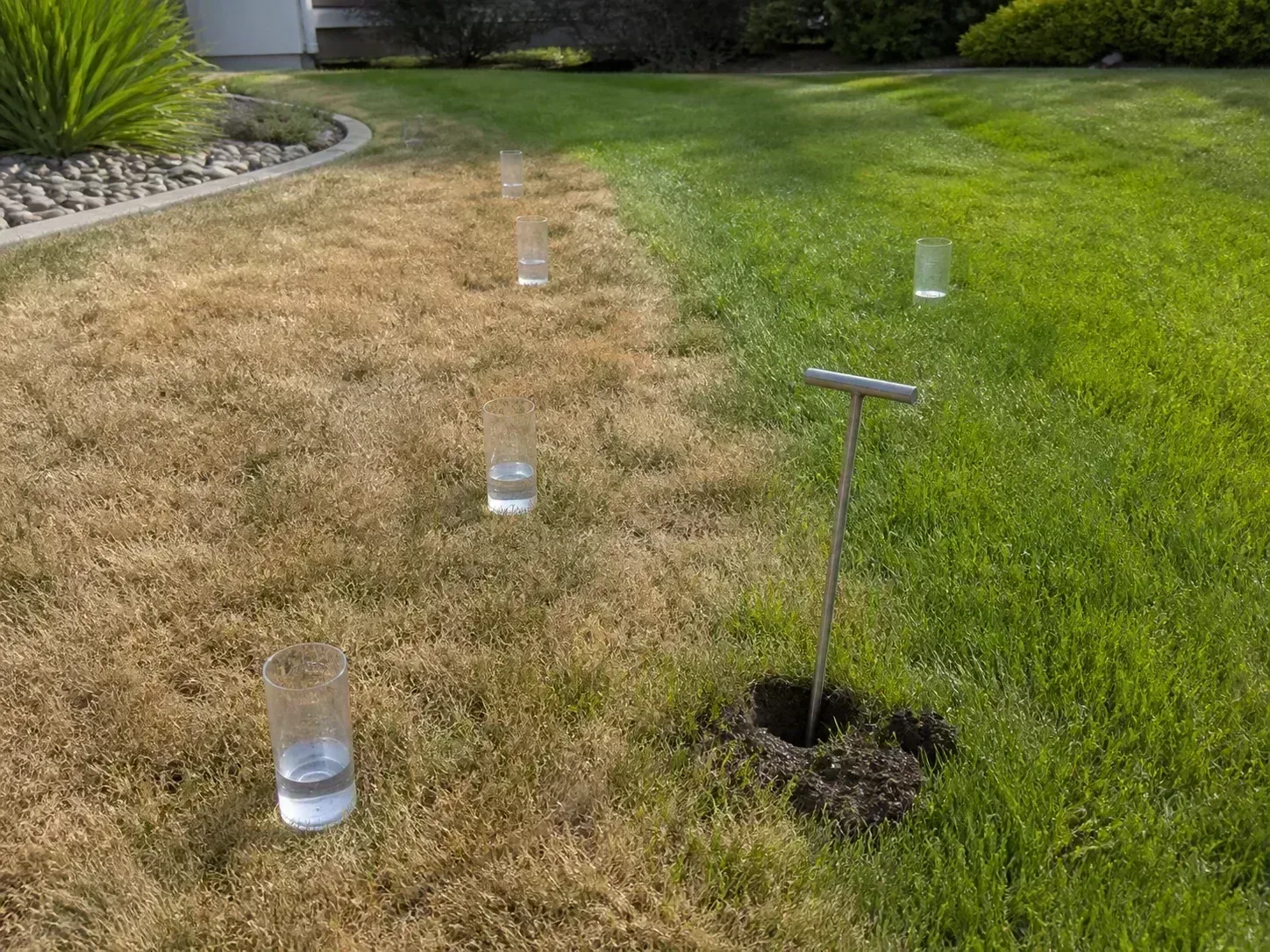
The ideal depth depends on the grass’s actual roots and the soil. A newly established lawn may have shallow roots; mature turf can root deeper if soil, mowing, and watering have supported that growth. Use a shovel to inspect a small plug occasionally, then water to moisten the root zone rather than aiming for an arbitrary depth in every yard.
A lawn does not need to stay vividly green through every hot spell to be healthy. Some established grasses slow growth or go dormant under drought and recover when cooler, wetter conditions return. Before increasing irrigation to chase color, identify the grass type and check whether local extension guidance recommends watering dormant turf.
Measure Sprinkler Output Before Setting a Timer
Runtime is not a reliable measure of water depth. Sprinkler models, water pressure, nozzle size, overlap, and wind all change how much reaches the ground. Instead of assuming that a 30-minute cycle equals a certain amount, test the system in the lawn.
Place several straight-sided containers or catch cans around the sprinkler zone, including the center, edges, and any areas that usually look dry. Run the sprinkler for 15 minutes, then measure the water depth in each can. Colorado State’s PlantTalk recommends this approach to estimate delivery and compare wet and dry areas. A rain gauge can work too, as long as it sits at grass level where it is not blocked by plants or structures.
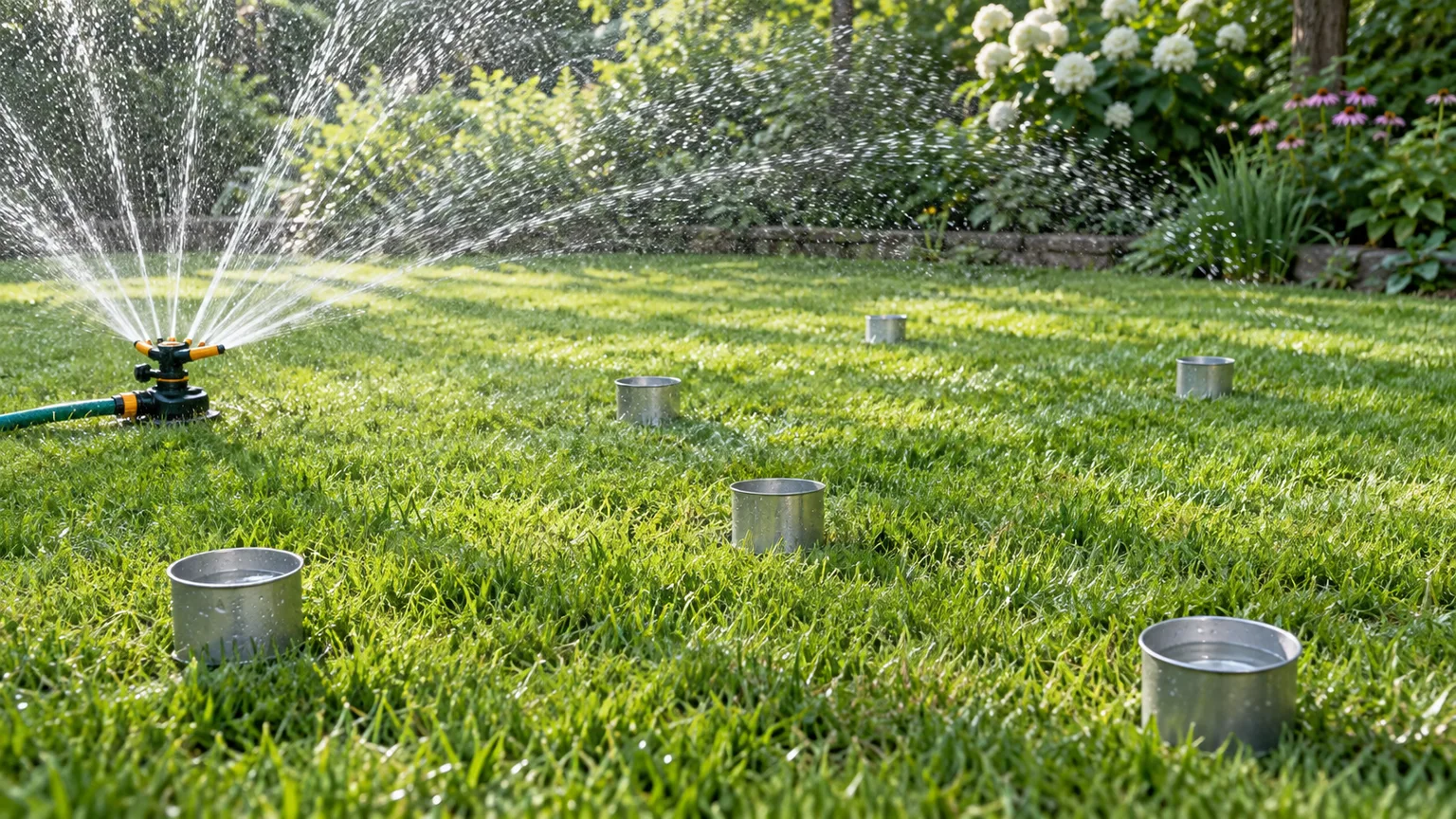
Use the results to estimate your system’s rate. For example, if the average container collects one-quarter inch in 15 minutes, the measured rate is about one inch per hour under those conditions. That does not mean you must run the sprinkler for an hour; first decide how much moisture the lawn needs, whether water is soaking in, and whether local restrictions allow the cycle.
Compare the containers as well as their average. A zone can deliver the right total near the sprinkler but miss the edges, which may call for adjusting spray heads or improving overlap instead of lengthening every run. If wind pushes spray sideways, retest in the calmer window you plan to use. Test again after replacing nozzles, changing system pressure, or moving sprinklers.
Match Each Watering Run to Soil Infiltration
The goal is to moisten the active root zone without leaving puddles or sending water down the street. If the surface begins to shine, water flows onto paving, or a slope starts to channel runoff, stop the zone and let the soil absorb what it has received. Resume later if the lawn still needs water.
Clay soils may absorb only a small amount per hour. PlantTalk Colorado gives about one-quarter inch per hour as an example for heavy clay, which is why short, separated applications can work better than one long cycle. Your own soil and sprinkler rate may differ, so watch what happens during a test rather than copying that number blindly.
Sandy soil has the opposite challenge: water infiltrates readily but can pass below shallow roots, while the soil itself stores less moisture between sessions. Smaller amounts applied more frequently may be more useful than one large, widely spaced watering. If the grass has deeper roots, adjust based on a probe test; do not water more often by habit.
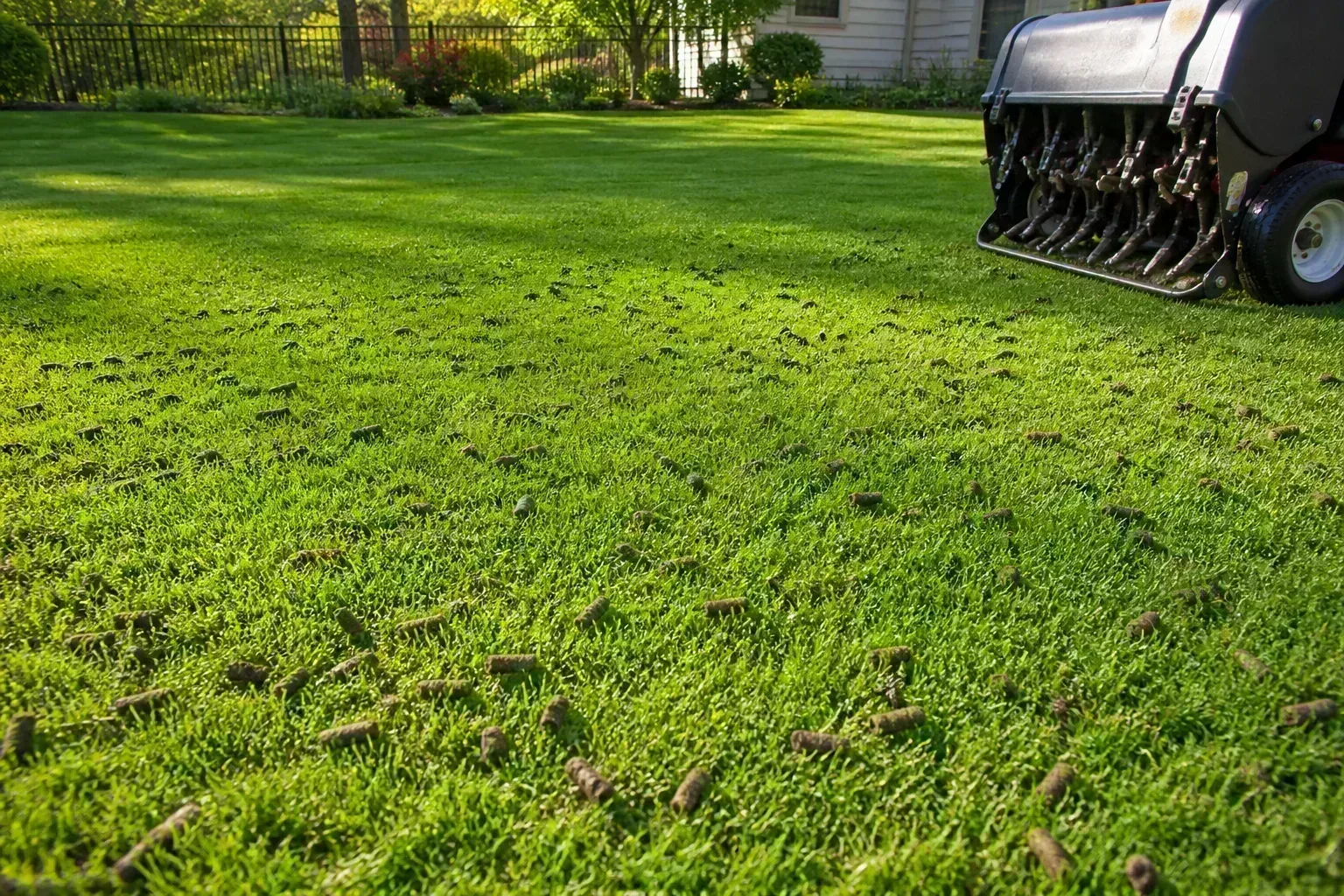
If runoff happens even with short cycles, inspect the system and the lawn. A clogged head, excessive pressure, compacted traffic lane, heavy thatch, or a grade change may be the real issue. Aeration can help some compacted lawns, but it is a separate maintenance decision, not a quick substitute for correcting a broken or poorly aimed sprinkler.
How Much Water Is Enough?
There is no single weekly amount for every lawn. Climate, grass, rooting depth, soil, shade, rainfall, and the desired lawn quality all affect demand. CSU Extension describes one inch per week as a typical minimum in its efficient-watering guidance, but its broader lawn-care page shows that a thirsty bluegrass lawn in hot, dry, windy conditions can need more, while drought-adapted grasses may need far less.
Use local extension recommendations as a starting range, then subtract useful rainfall and measure what your system applies. If your region recommends a weekly target for established turf, count both irrigation and rain toward it. Do not add an inch on top of a soaking rain just because the timer’s weekly program is due.
The most useful target is often the amount needed to wet the roots that are actually present. Dig or probe after irrigation to see how far the moisture moved. If only the top inch is wet and the roots extend several inches, the cycle may be too short, the soil may be repelling water, or the sprinkler may not be applying evenly. If water drains below shallow roots or pools on the surface, reduce the amount per cycle and adjust frequency.
Watering deeply and less often can encourage deeper roots in established turf, but it is not a rigid rule for every soil. Sandy lawns may need more frequent watering; new seed needs moisture near the surface; clay may need split cycles. Think “water enough to moisten the root zone, at the rate the soil can absorb” rather than “run the sprinkler for one hour every Sunday.”
New Seed and Sod Need a Different Routine
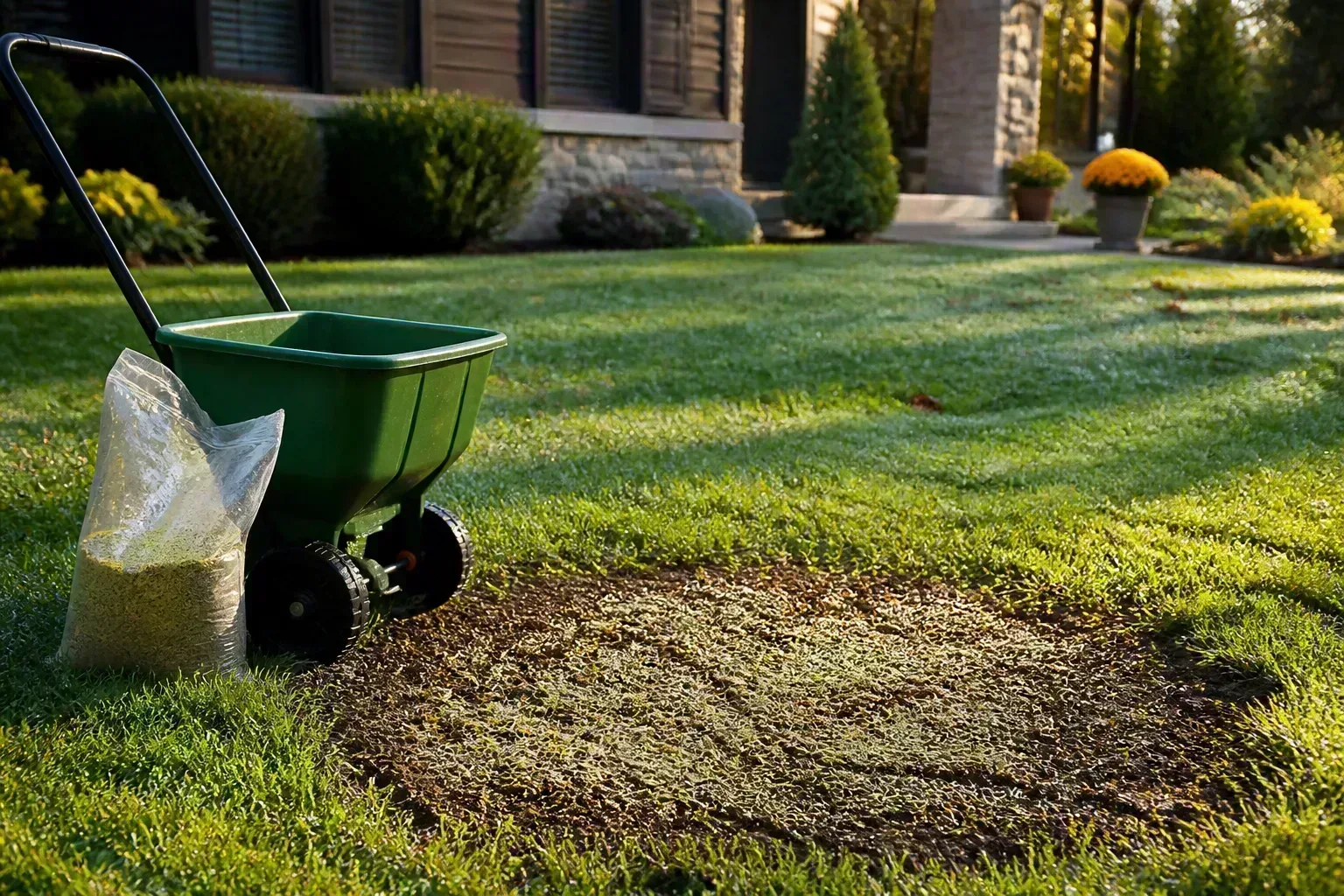
Fresh grass seed and newly laid sod do not behave like an established lawn. Seed needs moisture near the surface to germinate, and that thin layer can dry quickly in sun or wind. New sod also needs regular moisture while its roots grow into the soil beneath it. A single deep weekly cycle may leave either one too dry during establishment.
Follow the seed label, sod supplier’s instructions, or local extension guidance for the first weeks. The exact routine depends on temperature, wind, soil, and how much the seedbed or sod dries between checks. Apply gentle water that moistens the surface without washing seed downhill, flooding low spots, or breaking apart the soil.
Morning remains a convenient default, but the priority during establishment is to prevent the new material from drying out. If a hot, windy afternoon dries the seedbed, a brief supplemental watering may be needed; avoid turning that exception into frequent shallow watering after roots establish. Gradually lengthen intervals and apply enough water to encourage roots to move deeper, using the new lawn’s instructions as the guide.
Gardeners’ World’s lawn-care guidance notes that young lawns need watering in dry weather and cautions against overwatering because it can lead to shallow rooting and poor establishment. The Royal Horticultural Society’s lawn guidance also distinguishes new lawns, which need regular water until established, from established lawns that often recover when rain returns. This is why the right time of day depends partly on the lawn’s stage of growth.
Timing Mistakes That Waste Water or Stress Turf
- Running the same timer every week: Rain, temperature, and wind change demand. Skip or shorten a cycle when the root zone is already moist.
- Trusting the clock instead of testing output: An hour on one sprinkler may deliver more or less than an hour on another. Measure catch cans and inspect the soil.
- Watering longer when coverage is uneven: A dry strip may signal a blocked nozzle or poor overlap. Fix the coverage instead of saturating the rest of the lawn.
- Using one setting across different soils: Clay, sand, slope, shade, and sun do not absorb or lose water at the same rate. Separate zones or use cycle-and-soak where needed.
- Treating every evening cycle as dangerous: Night irrigation can work in some dry climates and under local rules. In humid settings or disease-prone turf, morning gives leaves more drying time.
- Keeping seedbed advice after establishment: New seed needs surface moisture; mature turf generally benefits from deeper, less frequent applications adjusted to soil and weather.
- Watering only to keep the lawn green: Some grasses can enter dormancy during drought. Check local recommendations before using scarce water to preserve color.
A Simple Routine for Setting Your Lawn-Watering Time
- Check the rules and forecast. Review local irrigation restrictions and recent rainfall before turning on an automatic program.
- Check the root zone. Probe several spots about three inches down. If the soil is still damp, wait and check again later rather than watering by weekday habit.
- Choose a cool, calm window. Use early morning as the default. Consider evening only when climate, irrigation method, and local guidance make it suitable.
- Test the sprinkler. Use catch cans to learn how quickly the zone applies water and whether it covers the lawn evenly.
- Apply in cycles if water runs off. Split the run and let water soak between cycles on clay, slopes, compacted turf, or thatchy areas.
- Check the result. After watering, inspect how deep moisture reached and whether any areas stayed dry or became soggy. Adjust the next cycle rather than adding water automatically.
Keep notes for a few weeks, especially during a change in season. A record of rainfall, irrigation time, catch-can depth, and soil moisture makes it easier to tell whether the lawn needs a different schedule or whether a sprinkler zone needs repair. Recheck after a heat wave, a stretch of windy weather, new sod, or a change in local restrictions.
Conclusion
For most established lawns, water during the early morning, when cooler air and calmer conditions help more water reach the soil and daylight gives grass blades time to dry. Late evening or overnight can work in dry regions and under some local recommendations, while humid, disease-prone lawns usually benefit from an earlier window.
The best schedule is the one supported by your soil and your sprinkler, not a universal timer setting. Check moisture, measure output, account for rain, and use shorter cycles where water runs off. With those checks, you can choose a practical watering time that supports the roots and avoids needless irrigation.