When Is the Best Time to Plant a Tree? A Seasonal Guide
Fall or spring? Choose the best time to plant a tree based on your climate, species, nursery stock, soil conditions, and first-year watering plan.
The short answer: choose a mild, root-friendly window
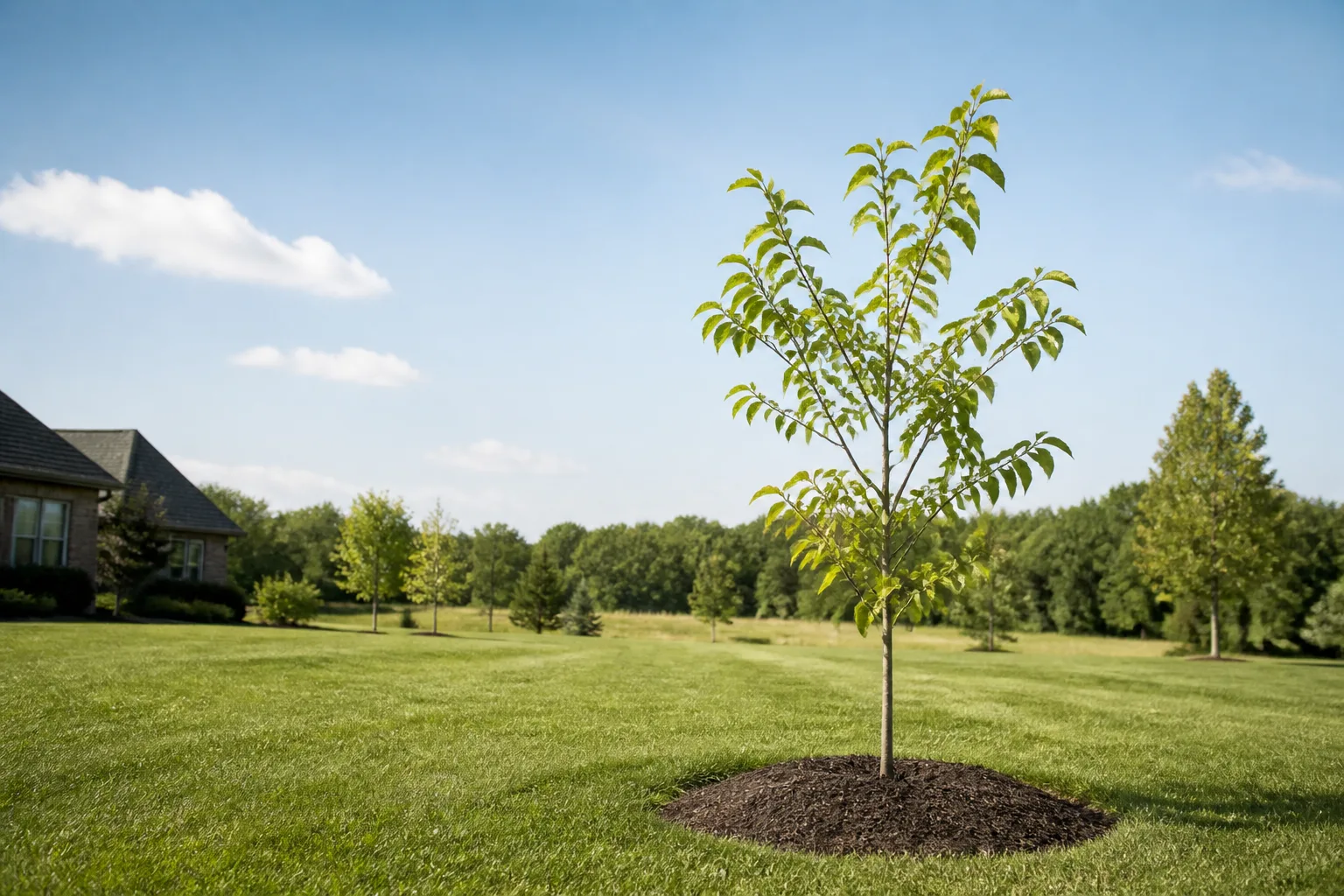
For most landscape trees in temperate climates, early fall or early spring is the best time to plant. Both seasons give a tree a chance to develop roots when temperatures are mild and the soil is usually easier to keep moist. Fall can be especially favorable where the ground stays warm for several weeks after leaves drop; spring is often the safer choice where winter arrives early or fall planting would leave little time before the ground freezes.
The date on the calendar is only a starting point. Choose a window that matches your local weather, the kind of tree you are planting, the way the nursery sold it, and your ability to water it afterward. A healthy container tree planted on a cool, cloudy day with dependable irrigation may establish well outside the ideal seasonal window, while a bare-root tree planted in a heat wave or just before hard freeze can struggle even if the month sounds right.
A useful rule is to plant while the tree is dormant or under low stress, the soil is workable rather than frozen or waterlogged, and several weeks of moderate weather remain. If those conditions are not present, wait. Planting a few weeks later in a suitable window is usually better than forcing the job into a bad one.
Why spring and fall both work
Trees lose roots when they are dug, moved, or taken out of a pot. After planting, they must rebuild fine feeder roots that absorb water and nutrients while the crown continues to lose moisture. A season with cooler air, moderate soil moisture, and less evaporative demand reduces that mismatch and gives the root system time to catch up.
A West Virginia University Extension comparison of fall and spring planting notes that both can be successful, with the best choice depending on the region and the tree. The tradeoff is straightforward: fall planting often lets roots grow before spring leaves demand water, while spring planting avoids exposing a fresh transplant to a full winter before it has settled in.
Fall gives roots time before summer heat
In many four-season climates, fall brings cooler air, lower sun intensity, and more regular rainfall. A deciduous tree that has finished growing for the year can put energy into roots as long as the soil remains warm enough and unfrozen. The tree is not spending as much energy supporting a canopy of new leaves, so there can be a useful period for root recovery before the next summer arrives.
That window is not unlimited. A fall-planted tree needs enough time for roots to grow before the soil freezes, and it still needs water if autumn is dry. Pennsylvania State University Extension recommends planting container-grown woody plants in early to mid-fall in its region, with at least six weeks before the first frost, and checking moisture before winter (Penn State Extension). Treat that as a regional guide, not a universal six-week guarantee: frost dates vary, and soil freezes at different times depending on local conditions.
Fall can also be a poor choice in places where the first hard freeze comes quickly, the site is exposed to winter wind, or the ground stays saturated. In those settings, a tree may enter winter before it has enough roots to anchor and supply water. If your local fall is short or unpredictable, plant in spring instead.
Spring gives a new tree a full growing season
Spring planting is a reliable choice after the ground has thawed and dried enough to work, but before hot weather puts strong demand on a small root system. The tree has the whole growing season to establish before winter, and a gardener can watch it closely while it leafs out. Spring is also the usual planting season for many bare-root trees, which are shipped dormant and should go into the ground before buds open.
The downside is that the tree may leaf out before it has rebuilt enough roots to supply those leaves. A sudden warm spell, wind, or missed watering can dry a new transplant quickly. Spring is still a good window, but it is not a license to plant and forget; consistent moisture through the first warm stretch is part of the plan.
A Gardening Know How guide to transplanting trees and shrubs describes fall and spring as useful windows with different risks: fall generally reduces immediate heat stress, while spring gives plants time to grow before winter. That summary is more helpful than declaring one season best everywhere. Use it as a comparison, then let your region and the specific plant decide.
Use your local climate, not a national calendar
“Plant in October” is not useful advice if one gardener lives where the ground freezes in November and another lives where autumn is still hot and dry. Use your local average first-frost and soil-freeze patterns as rough boundaries, then check the actual forecast and soil conditions. USDA hardiness zones describe average annual extreme winter temperatures; they do not tell you whether your soil is workable this week or how long roots will grow before freezing.
In many regions with distinct winters, a broad target is early spring after thaw or early fall before persistent freezing weather. In warmer climates, planting may be possible across a longer period, but summer heat and drought can make establishment harder. In cool coastal or maritime climates, mild, wet winters may create a different window from inland areas at the same latitude. Ask your county extension office or a local arborist for guidance when the site has unusual soil, drainage, wind exposure, or seasonal weather.
In cold-winter regions, leave a longer fall runway
Where winter arrives early, spring is usually the more forgiving choice for trees that are not specifically suited to late-fall planting. If you want to plant in fall, do it soon after the tree has completed active growth, not at the end of the season because the calendar says autumn. Aim for a span of several weeks with cool air, workable soil, and no immediate forecast of hard freeze; local extension recommendations are more useful than a generic date.
Bare-root trees need separate treatment. Wisconsin Extension says spring, before bud break, is the standard window for bare-root trees in its region, while fall planting can also work for some hardwoods after leaf fall and some conifers earlier in autumn (University of Wisconsin–Madison Division of Extension). That distinction matters because bare roots are exposed and can dry quickly, and the tree has little soil around them to buffer temperature and moisture swings.
If the fall window has already narrowed to a few days before frozen ground, do not gamble with a tree that needs time to establish. Hold a container tree in a protected spot and keep its root ball moist until spring, following nursery or extension advice for your region. Do not leave a pot exposed to severe freezing or let it dry out while waiting.
In hot-summer or mild-winter regions, shift the window
In a region with intense summer heat, the best window may be the coolest season that still gives roots a chance to grow. Early fall often works after the worst heat has passed, provided the soil remains warm and winter freezes are not imminent. In places with long mild winters, fall and winter planting may be practical for many trees, but local rainfall, soil drainage, and the species’ cold tolerance still matter.
The Florida-friendly guidance from UF/IFAS Extension in St. Lucie County illustrates why regions need their own thresholds: it describes fall planting when temperatures ease and rainfall returns, while advising gardeners to keep soil conditions and the tree’s water needs in view. The article uses soil temperature above 55°F at a six-inch depth as a local establishment cue. That number is not a universal cutoff for every tree or climate; it is an example of using local soil conditions instead of importing a date from a colder state.
In hot or dry climates, spring can be the better choice if it comes before the heat arrives and you can irrigate consistently. A recently planted tree may need supplemental water even if the season is normally rainy, because rainfall does not always soak the root ball evenly. Choose a window when you can check the soil regularly for the first several weeks.
Match the season to the tree and nursery stock
A tree’s name and sales form can change the answer. Dormant bare-root stock, a leafy container-grown tree, and a balled-and-burlapped tree do not begin with the same amount of root disturbance or the same moisture buffer. Nursery tags often list a preferred planting season for the species or cultivar; follow that guidance if it differs from a broad rule of thumb.
Before you buy, check more than the label’s hardiness range. Make sure the tree fits the light, drainage, soil type, and mature space at your site, including clearance from buildings, utilities, and overhead wires. A tree that is well matched to its site has a better chance of establishing than one planted in the “right” season but the wrong place.
Deciduous shade trees
Deciduous trees shed their leaves and enter dormancy, which often makes fall planting attractive in regions with a long, mild autumn. With the canopy no longer supporting active leaf growth, roots may continue to develop while the soil is still warm. Early spring is another good choice, especially in colder climates where fall leaves too little time before freezing.
Do not wait for a tree to look completely bare if the nursery or local extension recommends planting earlier. Leaf drop can be a useful sign that growth is slowing, but the right timing depends on the species and local conditions. Newly planted maples, oaks, birches, and other shade trees still need watering through dry periods, even when their leaves are gone; dormancy reduces demand but does not eliminate it.
For a tree with a known local planting recommendation, use it. Oaks and other trees with specific root or transplant sensitivities can respond differently from fast-growing, commonly transplanted species. If you are choosing a less common tree, ask a nursery professional or extension educator whether it should go in during spring or fall in your area.
Evergreens and conifers
Evergreens keep needles or leaves through winter, so they continue losing some water even when growth slows. Planting them early enough for roots to settle before winter is particularly important in cold, windy regions. Spring is often a safer choice there; in climates with long autumns, an earlier fall planting can work if the root ball stays moist and the ground will not freeze soon.
“Evergreen” includes many kinds of trees with different tolerances, from pines and spruces to broadleaf evergreens. Do not assume every conifer has the same timing or moisture needs. Check the species’ hardiness, local nursery instructions, and whether the site drains well; waterlogged roots can suffer even when temperatures are cool.
In colder climates, protect a newly planted evergreen from drying winter wind by keeping the soil evenly moist until it freezes and applying mulch over the root zone. Avoid piling mulch against the trunk, and do not wrap or prune the tree automatically unless a local expert recommends a specific protection method for that species and exposure.
Bare-root, container-grown, and balled-and-burlapped trees
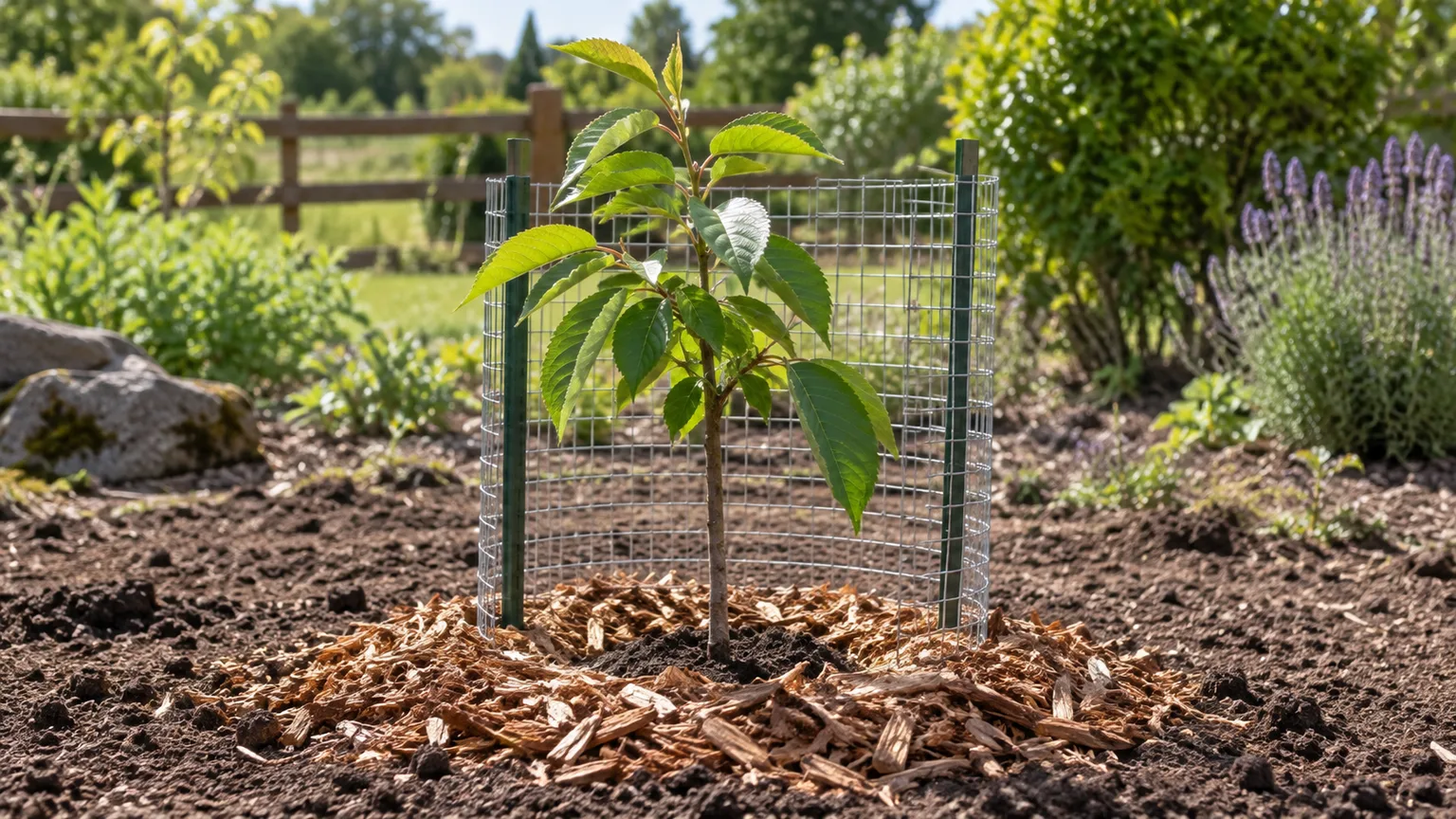
Bare-root trees are sold without soil around their roots and are generally planted while dormant, often in early spring before buds open. Some species and regions support fall planting, but the roots must never dry during storage or planting. Keep them shaded and moist, spread them naturally in a wide hole, remove broken or circling roots, and plant promptly; Wisconsin Extension recommends a cool, overcast, low-wind planting day and explains how to handle roots and set the tree at the root collar (UW–Madison Extension’s bare-root tree guide).
Container-grown trees have a root ball protected by potting medium and can usually be planted over a broader season, but a hot, dry spell still increases stress. Check whether the roots circle densely around the pot; loosen circling roots so they can grow outward, and do not pull the tree out by its trunk. If the root ball is dry, water it before planting so it can absorb moisture evenly.
Balled-and-burlapped trees carry a heavier soil root ball that can dry out or break apart if handled carelessly. Plant them when the soil is workable and weather is mild, support the root ball rather than lifting by the trunk, and follow reputable local guidance on removing twine, wire, and burlap. Whether the wrapping material is synthetic or natural matters; do not assume all burlap decomposes at the same rate or can be left in place.
The sales form changes convenience, not the need to find the root flare and keep the root ball hydrated. If a tree arrives with damaged roots, a cracked root ball, or a trunk that is loose in its container, ask the nursery about it before planting. A discounted tree that is already stressed can be a poor bargain if its roots cannot recover.
Fruit trees and flowering trees need a little more planning
Fruit trees are often planted in early spring or fall, depending on the local climate, species, and nursery stock. The key is to give roots time to establish before the tree faces summer drought or winter freeze, while also avoiding a warm spell that encourages tender growth just before a hard frost. For bare-root fruit trees, spring planting while dormant is common; container-grown fruit trees may offer more flexibility, but avoid planting during extreme heat.
A cool autumn can be useful for fruit trees in regions where the ground remains workable and roots can grow before winter. A practical guide from Old World Garden Farms explains why fall can reduce the heat and watering pressure that a newly planted fruit tree faces in spring. Treat it as general gardening context rather than a universal prescription: its planting date and soil conditions are regional, and local extension recommendations should lead.
Flowering trees follow the same basic root-establishment rules, but consider whether the tree blooms on old or new wood if pruning is part of the planting plan. Do not prune a newly planted tree heavily just to “balance” its roots; preserve healthy branches unless there is damage or a specific structural reason to make a careful cut. If the tree is in bloom or leafing out when you buy it, that visible growth may increase watering demands and make a cool, stable planting period more important.
Conditions that should make you wait
Postpone planting when the soil is frozen, saturated, or so dry and compacted that you cannot dig a proper hole. Working wet soil can compact it and leave the tree in a poorly aerated pocket; planting into frozen ground prevents roots from making contact with surrounding soil. Wait until the ground crumbles rather than smears when squeezed, and confirm water can drain away from the planting site.
Avoid planting right before a heat wave, extended drought, severe wind, or a forecast hard freeze. A cloudy day with light wind is easier on exposed roots and foliage than a hot, bright afternoon. If the tree is bare-root, avoid any delay that could let roots dry in transit or while you prepare the site; keep roots shaded and moist, then plant as soon as practical.
A badly chosen site can be a reason to stop, too. If water stands for hours after rain, the tree may need a different spot or species; adding gravel to the bottom of a hole does not fix poor drainage. If overhead or underground utilities cross the site, check local utility marking services before digging and choose a tree whose mature height and root space fit the location.
Plant at the right depth before you think about the date
Correct planting depth matters in every season. Find the root flare, where the trunk widens and the main roots begin, before you dig. Nurseries sometimes bury the flare under excess potting mix or soil, so gently remove material at the top of the root ball until you can identify the first major roots.
Dig a broad hole but no deeper than the root ball’s height, so the tree sits on firm ground rather than settling below grade. Set the root flare at or slightly above the surrounding soil level, backfill with the soil you removed unless a soil test or local recommendation says otherwise, and water as you backfill to settle soil around roots. The Davey Tree guidance on avoiding trees planted too deeply explains why the trunk flare needs to remain visible: buried trunks and roots have less access to oxygen and can develop long-term problems.
Do not amend only the planting hole with a rich compost blend unless a soil test or local expert specifically recommends it. A sharply different pocket of soil can hold water differently from the surrounding ground and may encourage roots to stay in the hole instead of growing outward. For poor or compacted soil, improve a wider area, choose a more suitable species, or reconsider the location rather than trying to disguise a bad site with a small dose of compost.
For a bare-root tree, spread roots outward and downward without bending them into a tight circle. Prune only broken, dead, or clearly damaged roots with clean tools; do not shorten healthy roots just to fit a narrow hole. When you finish, the tree should stand straight, the root flare should show, and the trunk should not wobble in loose fill.
Water and mulch to protect the planting window
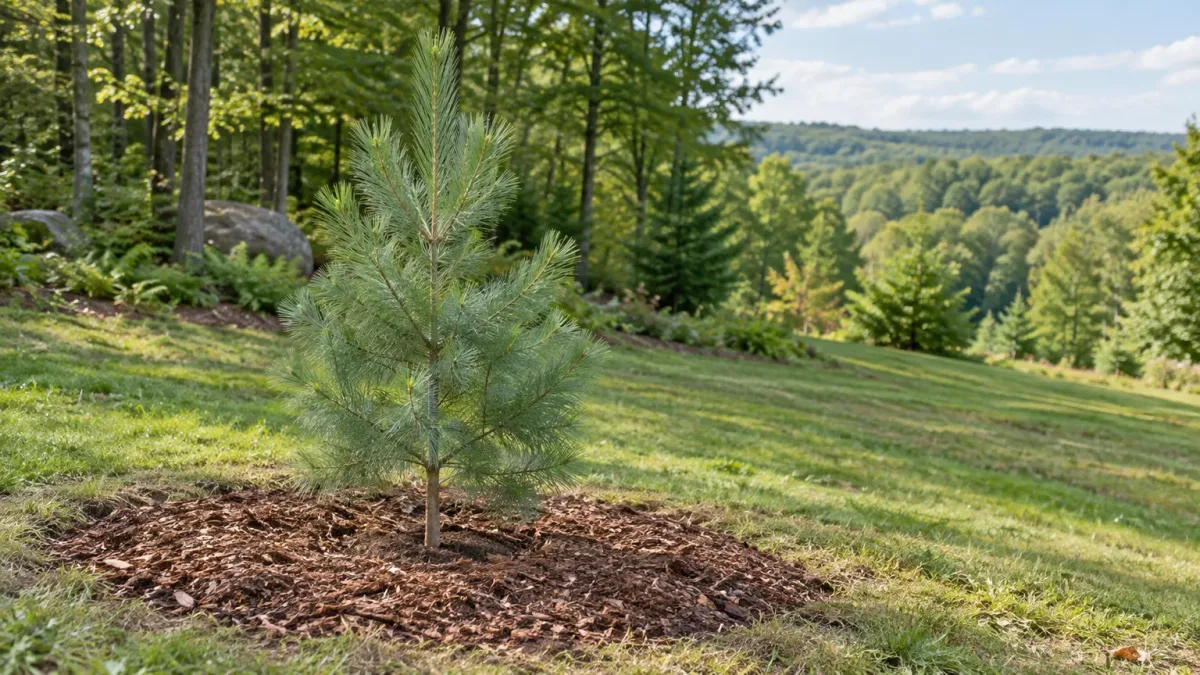
Water the root ball thoroughly at planting, even if the soil is damp. That helps settle soil around roots and removes large air gaps. Afterward, keep the root zone evenly moist rather than following a rigid daily schedule; the right amount depends on soil texture, rainfall, tree size, and whether the root ball is drying faster than the surrounding ground.
Check soil moisture several inches below the surface near the root ball. If it feels dry, water slowly and deeply so moisture reaches the root zone; if it is wet and sticky, wait and check drainage rather than adding more. A recently planted tree may need attention more often than an established tree, especially during the first hot spell, but constant saturation can deprive roots of oxygen and cause decline.
Apply a broad layer of organic mulch over the root zone to conserve moisture and moderate soil temperatures. A depth of roughly two to three inches is generally enough; keep mulch a few inches away from the trunk and flare to avoid holding moisture against the bark. Avoid volcano-shaped mulch piles and turf right up to the trunk, both of which compete with roots or keep the trunk too damp.
Care for a new tree through its first year
A tree is not established just because it survived planting day. Monitor moisture through the first growing season and during dry periods afterward; rain at the weather station may not have soaked the tree’s root ball. Water slowly at the base so the soil is moist through the root zone, then let the surface begin to dry before watering again. If you have sandy soil, containers, strong winds, or unusually hot weather, check more often.
Fall-planted trees also need water before winter if autumn is dry. Continue watering while the soil is workable and unfrozen, then resume in winter during prolonged warm, dry periods if the ground is not frozen and local conditions allow. Evergreens may lose water in winter sun and wind, so do not assume that a leafless landscape means every newly planted tree can be ignored.
Skip fertilizer at planting unless soil testing or local extension guidance calls for a specific amendment. A tree needs sound roots and suitable moisture more than a quick burst of leafy growth. Do not stake by default: if a tree can stand upright without its root ball shifting, it is usually better to let it move naturally; if staking is needed for wind or stability, use flexible ties and remove them after the first growing season.
Keep weeds and lawn away from the mulched root zone, protect the trunk from mower and string-trimmer damage, and watch for wilting, leaf scorch, or persistent yellowing. Some transplant shock is possible, especially after moving an actively growing tree, but worsening symptoms can also mean watering, depth, drainage, or root damage needs attention. Recheck the original planting depth if soil settles and expose the root flare if it becomes buried.
Common timing mistakes that can set a tree back
The first mistake is treating “fall” or “spring” as a complete answer. The season only helps when a suitable stretch of weather remains, the ground is workable, the species and stock type fit the timing, and you can provide water afterward. An exact date copied from another state cannot account for local frost patterns, soil drainage, or heat.
The second is planting too late in fall. If leaves have dropped but the ground will freeze soon, a bare-root tree or a cold-sensitive evergreen may have too little time to establish. Choose an earlier window or wait for spring rather than letting an appealing seasonal sale dictate the planting day.
The third is planting too deep or backfilling with a different soil mixture. A buried root flare can be hard to notice at first, but the resulting trunk and root problems develop slowly. Find the first major roots, keep them near grade, and use the native soil you removed unless a soil test says to do something else.
The fourth is assuming a new tree needs daily watering—or that rain means it needs none. Check the root ball itself and adjust to weather and soil. Finally, avoid overpruning, heavy fertilizer, mulch against bark, and unnecessary staking as attempts to “help” a transplant; these can create new stress instead of solving the conditions that matter.
Conclusion
For most trees in temperate regions, plant in early fall or early spring when the weather is mild, the soil is workable, and the tree has time to build roots before heat or hard freeze. Favor spring in places with short, harsh autumns and for many bare-root trees; consider fall where autumn is long enough for root growth and winter is not around the corner. Local extension advice and the nursery tag should settle species-specific questions.
The best planting time is also the time you can plant correctly and care for the tree afterward. Match the species to the site, keep roots moist, expose the root flare, water through establishment, and mulch without piling material against the trunk. Those steps make a good seasonal window count.



