When and How to Prune Burning Bush for Better Shape
Learn when to prune burning bush, how to thin crowded stems, and when a gradual or full renewal cut is safer than routine shaping.
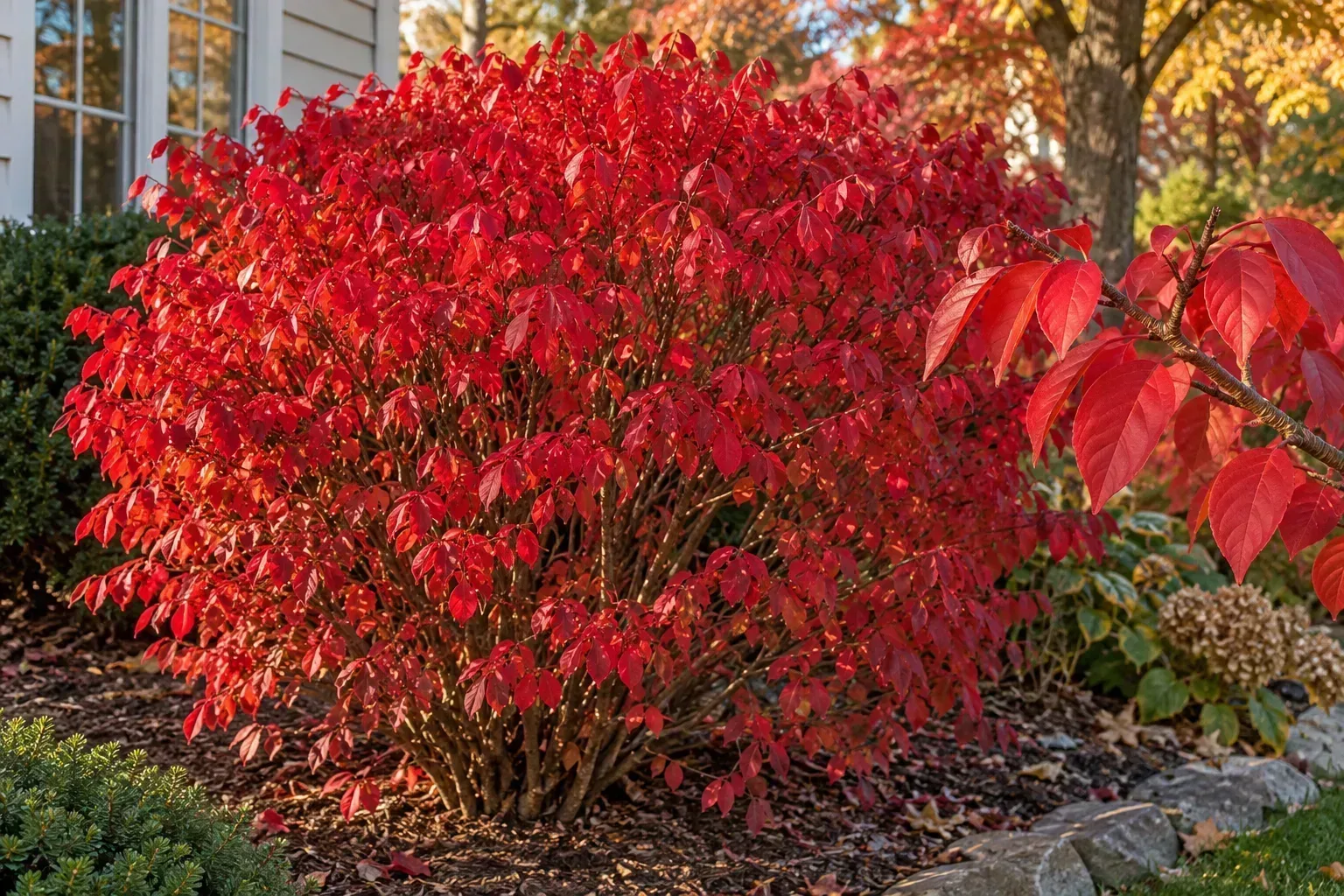
The best time to prune a burning bush (Euonymus alatus) for size or shape is usually late winter to early spring, while the shrub is dormant and before buds begin to expand. That window lets you see the branching structure and make major cuts before the plant spends energy on new growth. If you only need to remove a broken limb or a clearly dead stem, you can do that when you notice it, provided the work is safe and the wood is easy to identify.
Before you pick up the pruners, decide whether keeping the shrub makes sense. Burning bush can become large, lose its natural outline when repeatedly sheared, and spread by seed in some regions. If it is healthy and appropriate for your site, selective thinning or staged renewal usually keeps it looking better than cutting every branch to the same height. For an old, vigorous shrub that needs a dramatic reset, full rejuvenation is an option—but it sacrifices the plant’s shape for a season and is not the right treatment for every specimen.
Is pruning the right answer?
Pruning solves a particular problem: a dead branch, a crowded center, a branch reaching into a path, or a shrub that has outgrown its space. It does not solve a mismatch between the mature plant and the site. A mature burning bush can reach roughly 15 to 20 feet tall and wide, depending on conditions and cultivar, so a plant repeatedly cut back from a narrow foundation bed may need constant maintenance rather than one corrective trim.
Look at the shrub from several sides before deciding what to remove. Is the issue a few damaged branches, a dense interior, or overall size? If the plant is badly overgrown but healthy, gradual renewal can restore its structure over several seasons. If it is diseased, declining, crowding a utility area, or simply too large for its location, replacing it may be the more practical long-term choice.
Check regional invasive status first
Burning bush is the common name for Euonymus alatus, also called winged euonymus. It is considered invasive in parts of the United States because it can produce many seeds that birds disperse. NC State Extension’s Plant Toolbox documents its invasive behavior in North Carolina and other states, while Concord, Massachusetts’ burning-bush guidance explains how escaped seedlings can establish dense thickets that crowd native vegetation. Those examples do not establish the legal status in every county; local rules and ecological conditions differ.
If the shrub is invasive where you live, pruning it into a prettier shape will not stop seed spread. Ask your county extension office, state invasive-species program, or municipal conservation office about removal and disposal guidance, especially if it has fruit or stands near natural areas. Avoid carrying seed-bearing branches through a site or placing them where birds can move fruit. If you replace the plant, choose a shrub recommended for your region. NC State lists alternatives such as red chokeberry and fragrant sumac for some landscapes; use local native-plant guidance to make the final selection.
Best time to prune burning bush
For substantial pruning, aim for the dormant period near the end of winter or the start of spring. The precise month shifts with climate: use local plant cues rather than a date on a calendar. In a cold region, that may mean after the worst winter weather but before buds swell. In a mild region, the safe window may arrive earlier. Penn State Extension’s guide to pruning deciduous shrubs describes late winter or early spring as a useful time for many deciduous shrubs because their structure is visible before leaf-out.
The task also affects timing. Removing a storm-broken branch is different from reducing the canopy by a third. A clean-up cut on a dangerous limb may be needed promptly, while elective shaping can wait for the dormant window. If you are uncertain whether a branch is dead, wait until bud break where practical: living stems begin to leaf, while dead sections remain bare. Do not delay removal of a limb that is an immediate hazard.
Late winter or early spring for major work
Late-dormant pruning is a practical time for thinning, height reduction, or renewal because the shrub has not yet invested in the coming flush of leaves. With foliage gone, you can trace each cane to its origin and see which branches cross or compete. Make the cuts before active growth is well underway, but avoid working on frozen or brittle wood that could split.
There is no universal “March rule.” A gardener in a warm coastal climate and one in a cold inland climate may reach the same growth stage weeks apart. Check your local extension calendar and watch the plant: major pruning is easiest when winter dormancy is ending and buds are still tight. If buds have already opened, light shaping is still possible, but a hard cut at that point removes new growth and can set the shrub back.
When light cleanup makes sense
Dead, broken, or clearly damaged stems can be removed as needed during the growing season. For routine shaping, a small correction after spring growth is visible can help you avoid cutting healthy branches by mistake. Use restraint in summer: heavy pruning can expose interior branches to stronger sun, remove much of the season’s growth, and encourage tender shoots that may not have time to mature before cold weather.
Avoid elective pruning in fall if you want the characteristic red autumn display. Late cuts can remove the leaves and fruit that provide seasonal interest, and new growth stimulated by warm spells may be vulnerable when temperatures drop. If a branch is hazardous, safety takes priority; otherwise, mark the cut and wait for the next dormant-season window.
Pick a pruning method
Choose the method that matches the shrub’s condition and your goal. Penn State Extension distinguishes thinning cuts, which remove a branch back to its point of origin, from heading cuts that shorten a branch partway along its length. Repeated heading and shearing create a dense outer shell while leaving shade and congestion inside. For most landscape burning bushes, thinning is the better foundation.
For routine care, avoid removing more than about one-third of the live canopy in a season. That is a general pruning guideline, not a guarantee that every plant will tolerate exactly that amount. A weak shrub may need less; a planned rejuvenation is a separate intervention and can remove far more. If the plant is already stressed by drought, root damage, disease, or recent transplanting, address those conditions before elective hard pruning.
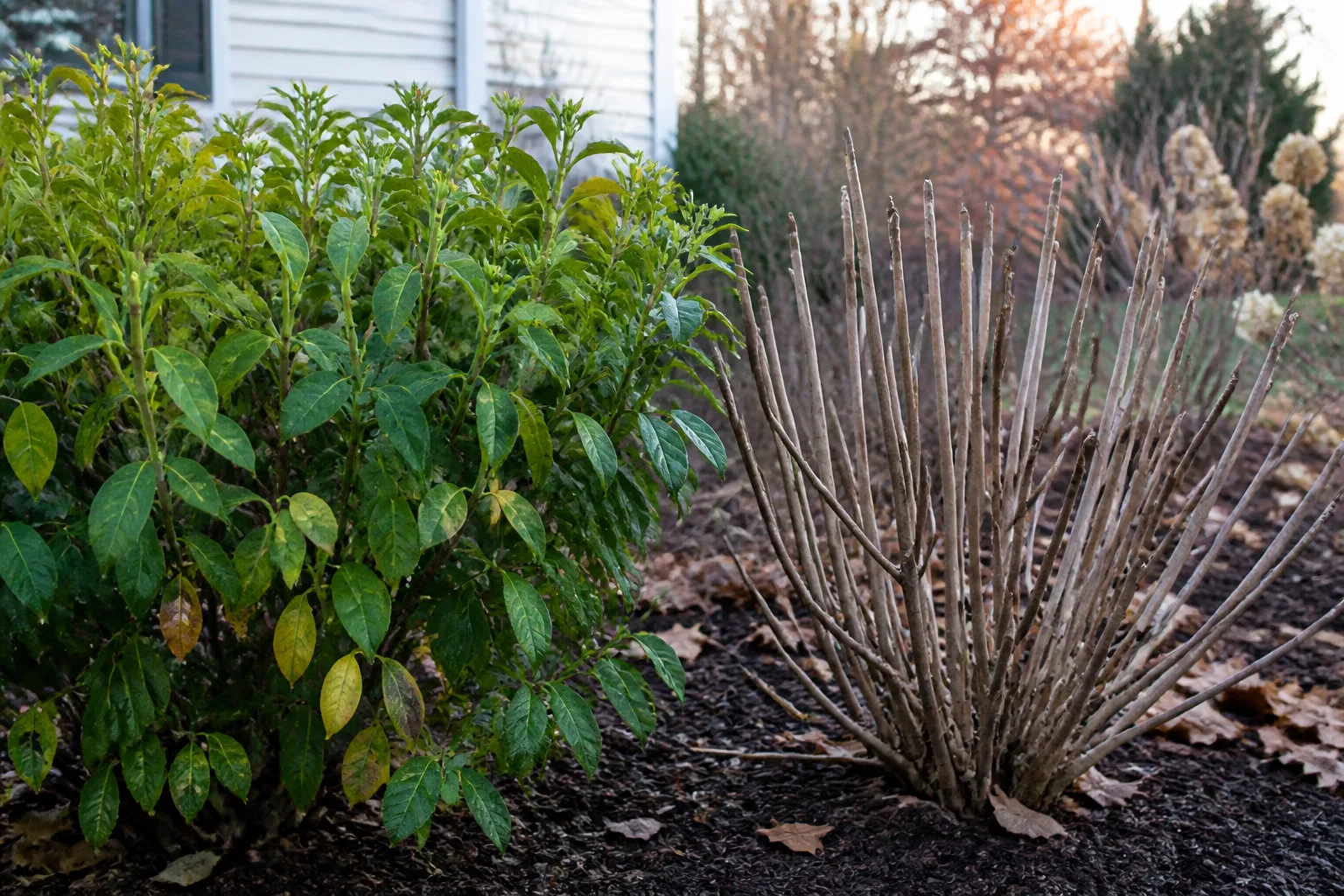
Selective thinning for natural shape
Selective thinning removes individual canes at the base or at a healthy branch junction. Start with dead, broken, diseased, rubbing, or inward-growing stems. Then step back and look at the outline. If the shrub still looks crowded, remove one or two of the oldest or most poorly placed canes rather than clipping every tip across the top.
The goal is an open but balanced framework, not a see-through skeleton. Preserve healthy outward-facing branches and the plant’s naturally arching outline. When a long stem needs shortening, cut it back to a side branch that points in the direction you want growth to continue. This keeps the shrub from developing a row of blunt ends and reduces the dense, broom-like regrowth that follows indiscriminate topping.
Gradual renewal for an overgrown shrub
If the bush is too large but you want to retain its natural form, renew it over about three seasons. Each dormant season, remove roughly one-third of the oldest or least productive canes close to the ground, selecting stems across the shrub so the remaining framework stays balanced. New basal shoots can fill gaps as older wood is removed. The pace can be slower if the plant is stressed or if you want to preserve more of its existing screen.
This staged method is less abrupt than cutting the entire shrub low in one year. It allows you to assess the response after each round and adjust the next one. During the growing season, keep an eye out for healthy new canes and protect them from mower or string-trimmer damage. If the center stays crowded, prioritize the oldest, inward-facing growth next winter rather than shearing the outside to hide the problem.
Full rejuvenation only for a vigorous shrub
Some established, multi-stem deciduous shrubs can recover after severe rejuvenation pruning. General renovation guidance varies on cut height: the Royal Horticultural Society’s guide describes cutting suitable shrubs to about 4 to 8 inches, while Gardening Know How’s burning-bush-specific advice recommends a lower cut of about 1 to 3 inches. Those are different recommendations, not a universal measurement. Check local extension guidance and the shrub’s condition before deciding whether this drastic option is appropriate.
Expect a full reset: the shrub may look bare for months, may not regain its old size for a year or more, and may produce a thicket of vigorous shoots that needs selective thinning later. It can also lose that season’s fall color and fruit display. Do not use a hard cutback on a weak plant, on a shrub with significant root or trunk damage, or simply because the top has been clipped too tall. Where invasive status is a concern, discuss removal or replacement before encouraging vigorous regrowth.
Tools and cut placement
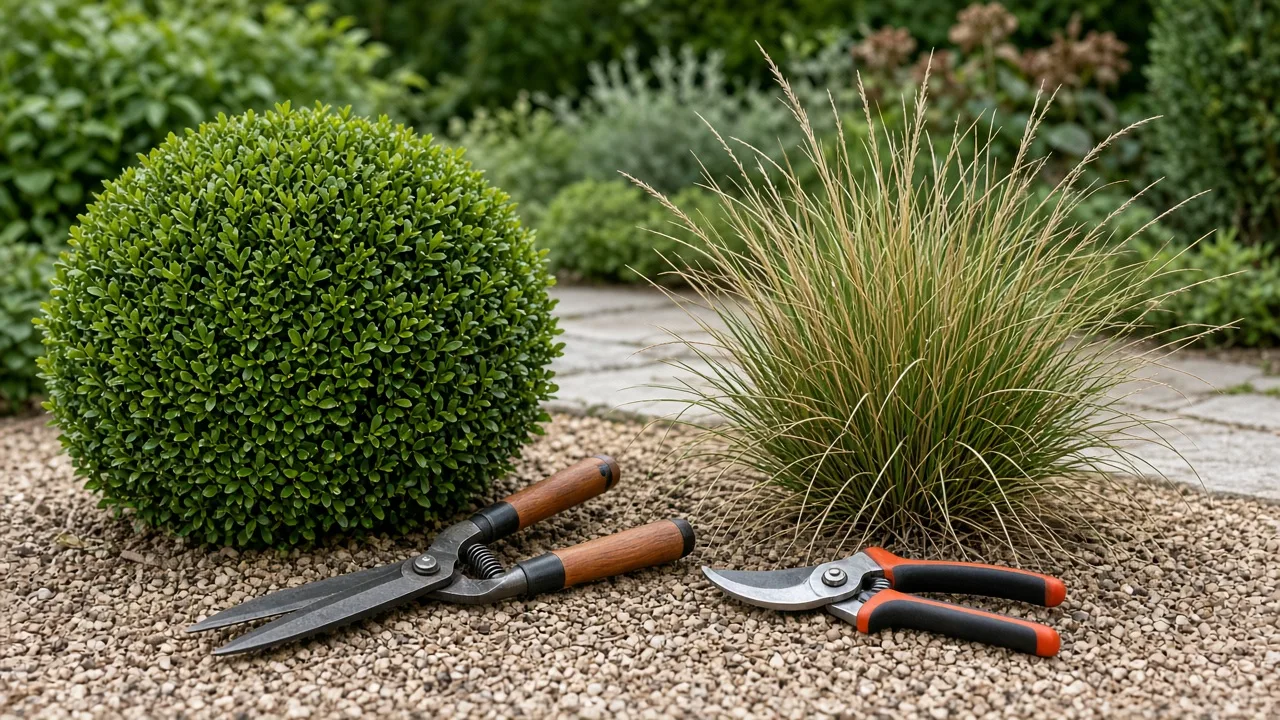
Use clean, sharp tools sized to the branch. Bypass hand pruners are useful for small live stems; loppers provide leverage on thicker canes; a pruning saw handles wood too large for loppers. Tool charts often give maximum cutting diameters, but use the manufacturer’s rating and your own control as the limit. If a cut requires twisting, crushing, or two-handed strain, switch to a larger tool or get help.
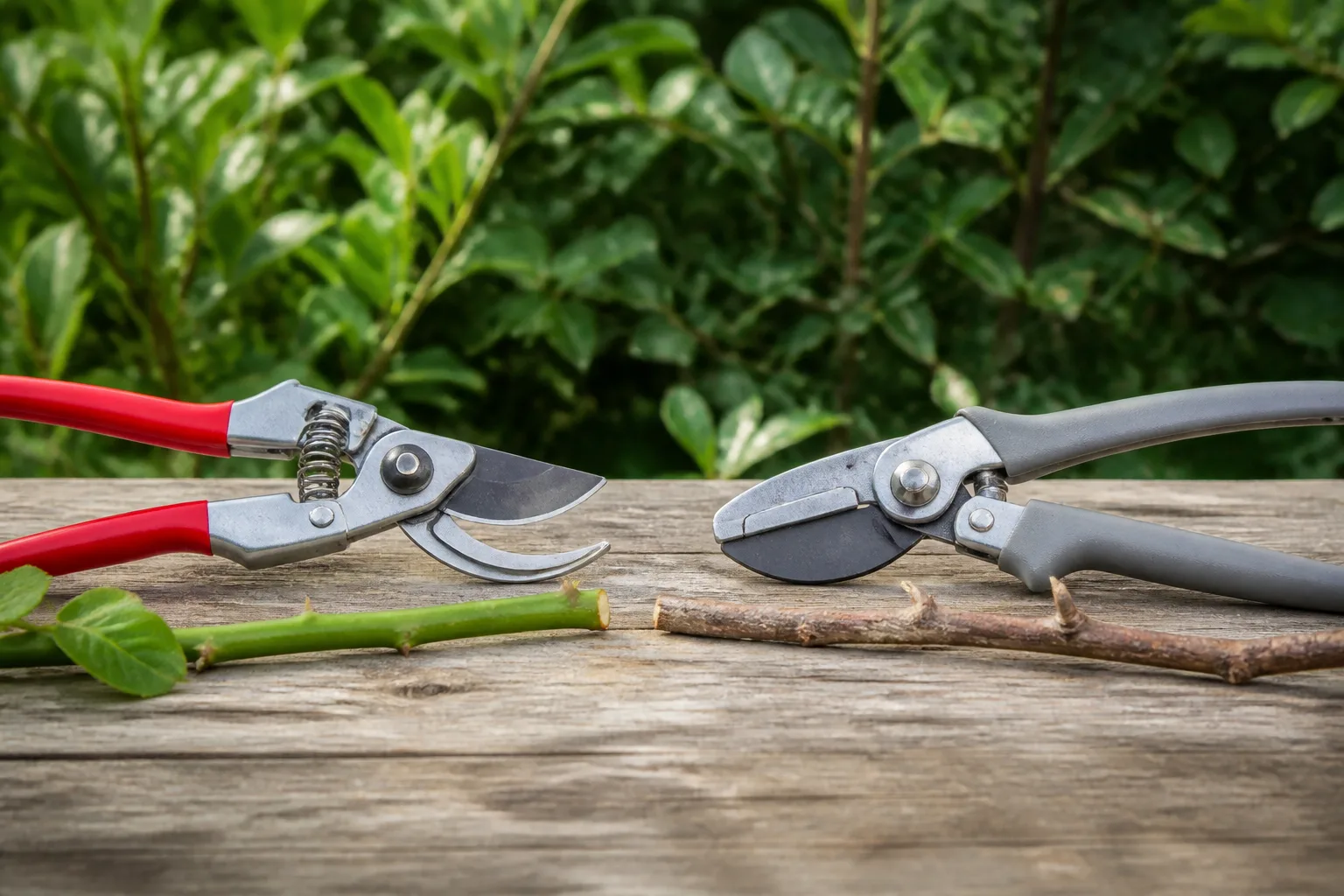
Wear sturdy gloves, eye protection, and long sleeves when working inside a dense shrub. Burning bush stems are not as sharply armed as some shrubs, but hidden branches can scratch and snap back. Keep your footing stable and do not reach into a tangle while holding an open blade. For tall shrubs or branches over a walkway, use a professional rather than climbing an unstable ladder or cutting overhead.
Match the tool to each stem
A hand pruner is easiest to control on thin shoots. Loppers help with thicker stems because their longer handles create more leverage, but they can crush wood if the blades are dull or the branch is beyond their rated size. A pruning saw is safer and cleaner for large branches than forcing a lopper until it binds. Keep the other hand out of the blade’s path, and make sure the branch will not fall onto a person, fence, window, or valuable plant.
Before cutting, clean off sap and debris. Penn State Extension recommends disinfecting pruning tools between plants or when disease is suspected; rubbing alcohol is one commonly used option. Follow the product directions, allow the blade to remain wet for the specified contact time, and let it dry before storing. If you cut only healthy wood on one shrub, routine cleaning after the job is still sensible.
Make branch-removal cuts cleanly
For a whole branch or cane, cut just outside its attachment point or branch collar without leaving a long stub and without cutting flush into the main stem. The slight swelling at the base helps the plant close over the wound. Avoid cutting into the trunk-like base of a cane, and do not paint ordinary pruning cuts with wound dressing unless a local expert has recommended it for a specific problem.
For a large branch, use a three-cut method to prevent bark tearing: make a small undercut several inches out from the trunk, make a second cut from above farther out to remove the branch’s weight, and finish with a clean cut just beyond the collar. Burning bushes rarely need tree-scale limb work, but the method is useful on large old stems. If the branch is heavy or close to a structure, hire an insured arborist.
Step-by-step burning bush pruning plan
Do the work on a dry, calm day if possible. Wet branches are slippery, and strong wind can make cuts unpredictable. Set your tools nearby, plan where cut material will go, and pause to reassess the shape after each few cuts. The best pruning session is controlled and selective, not a race to make the shrub smaller.
Inspect the structure and prioritize cuts
Walk around the shrub and look from the outside and, if you can do so safely, into the center. Identify the main canes, the plant’s natural outline, and any branches that touch the house, block a path, or crowd nearby plants. Decide whether your goal is cleanup, modest shaping, or a staged renewal plan. Write down a rough limit before you start, such as removing only a few old canes or no more than one-third of live growth.
Mark obvious candidates with a loose ribbon or point them out to a helper. Then check whether each planned cut actually addresses the problem. A branch that looks awkward from one side may be an important part of the shrub’s balance from another. If the bush is much larger than the available space, pruning can temporarily reduce it, but it cannot make a naturally large shrub permanently small without repeated stress and maintenance.
Remove dead, damaged, and crossing stems
Start with dead, broken, diseased, or rubbing branches. Cut damaged wood back to healthy tissue or remove the whole cane at its base. If a stem has suspicious lesions, unusual dieback, or signs of pests, disinfect the tool before moving to another part of the plant and seek a local diagnosis before spreading the problem through the garden.
Next, remove stems that grow inward through the center or cross and scrape against another branch. Choose which of the pair to keep based on health, position, and the direction of growth. Do not remove every branch that points inward if doing so would leave a large bare hole. Step back often; small, well-placed cuts add up quickly.
Reduce size without topping
To reduce height or width, trace the tall or long branch back to a strong side branch that points outward and cut just above that junction. If no suitable side branch exists, remove the entire cane at its origin when doing so improves the structure and stays within your pruning plan. Avoid cutting all stems at one level. That creates a flat top, invites dense shoots below the cut, and often makes the shrub look larger and more artificial within a season.
Do not try to hold a large burning bush in a tiny box with annual shearing. Repeatedly clipping only the outermost growth can shade the inner branches, so the shrub becomes thick at the surface and bare within. If the plant needs more reduction than selective cuts can accomplish comfortably, switch to a gradual renewal schedule—or reconsider the plant’s location and whether replacement is wiser.
Aftercare and next-season checks
After pruning, remove cut stems from the site, especially if they carry seed capsules. Follow local disposal rules; do not put potentially invasive fruit or seed into a compost pile unless local guidance says the process reliably destroys it. Clean tools, collect small branches, and avoid leaving a thick mat of cuttings against the shrub’s base.
Water deeply during extended drought, but do not compensate for heavy pruning by overwatering or applying a high-nitrogen fertilizer. A healthy shrub in suitable soil generally needs ordinary care, not a burst of fertilizer. A thin layer of organic mulch can conserve soil moisture and limit weeds; keep it a few inches away from the stems so the base remains visible and does not stay wet.
Check the plant after leaf-out. A few vigorous upright shoots after renewal are normal; select the best-positioned ones and remove weak, crowded, or poorly directed shoots while they are small. If the shrub responds weakly, stop pruning and investigate soil moisture, root disturbance, disease, or site conditions. Take photographs from the same angle each year to see whether the gradual plan is improving the outline.
If you have retained a seed-producing plant in a region where it is invasive, pruning alone does not make it ecologically safe. Monitor for seedlings around the shrub and remove them promptly according to local recommendations. Revisit whether replacement makes sense if birds are spreading seedlings into nearby woods or natural areas.
Common burning bush pruning mistakes
Cutting at the wrong time for the goal is a common source of disappointment. Major work after growth begins removes energy the shrub has already spent, while late-fall shaping can take away the foliage display. Save planned size reduction for the dormant window; handle urgent broken branches when needed.
Shearing every surface into a ball or block hides the shrub’s branching structure and encourages a dense outer layer. If you prefer a formal hedge, maintain it with an intentional hedge-pruning plan and check that the plant is suitable for the size and ecological context. For a specimen shrub, thin individual canes instead.
Removing too much live wood in one routine session can leave a weak plant with too little foliage to recover well. Use the one-third rule as a conservative guide for ordinary shaping, and treat full rejuvenation as a special choice for a vigorous, appropriate shrub. Do not combine hard pruning with drought stress or recent transplanting.
Topping the shrub to control height produces blunt ends and clusters of fast-growing shoots. Reduce height back to side branches or remove selected whole canes at the base. If the shrub’s mature height still exceeds the space, replacing it is usually more reliable than repeatedly forcing it down.
Ignoring invasive status can turn careful pruning into ongoing seed production. Check local guidance before you spend time shaping a shrub that may need removal, and dispose of seed-bearing material responsibly.
Conclusion: prune with a purpose
For most burning bushes that are appropriate to keep, prune in late winter or early spring before new growth expands. Remove dead or damaged stems first, then use selective cuts to open the shrub and correct a few branches. If it is far too large, renew it gradually over several seasons or use a full rejuvenation cut only when the shrub is healthy and that loss of structure is acceptable.
The right method depends on your climate, the shrub’s condition, and what you want the plant to do. Make deliberate cuts, step back often, and do not shear away more than the problem requires. Finally, check whether burning bush is invasive in your area; if it is, pruning does not prevent spread, and a locally appropriate replacement may be the better long-term garden decision.