10 Pests That Could Be Eating Your Zucchini Leaves
See what is eating zucchini leaves, how to distinguish chewing from sap-feeding damage, and when hand removal, row covers, or another response makes sense.
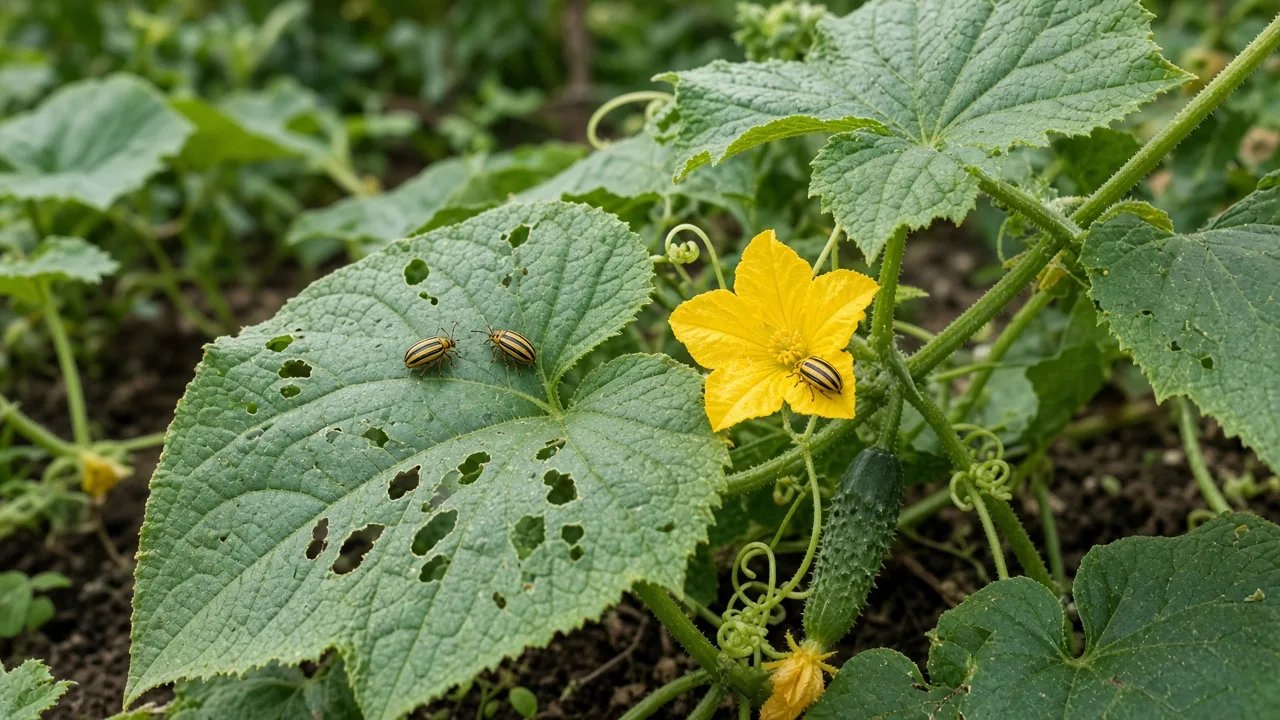
A zucchini leaf with holes does not always mean a caterpillar is chewing through it. Cucumber beetles and slugs remove leaf tissue, while squash bugs, aphids, mites, and whiteflies suck sap and leave pale specks, curling, or yellowing that can look like feeding damage. A vine borer works inside the stem, so the leaves may wilt even though no pest is eating them.
Start by checking the whole plant before reaching for a spray. Look at the newest and oldest leaves, flip over several leaves for eggs or insects, inspect the stem where it meets the soil, and check again near dusk if the damage looks fresh. A quick photo of the mark beside a coin can help you compare changes the next day and avoid treating a pest that is not there.
| What you see | Where to look next | Likely causes |
|---|---|---|
| Ragged holes or missing leaf edges | Soil, leaf undersides, and the plant at dusk | Slugs, snails, cucumber beetles |
| Small round holes or windowed patches | Leaf surface and undersides for beetles or larvae | Cucumber beetles, squash beetles |
| White or yellow stippling, curling, or sticky leaves | Undersides, stems, and leaf joints | Squash bugs, aphids, spider mites, whiteflies |
| Winding pale trails inside a leaf | The trail itself; a larva may be inside the leaf | Leafminers |
| One runner wilts while the rest looks firm | Vine base for a hole and sawdust-like frass | Squash vine borer |
Holes are not always an insect diagnosis. Older leaves can tear in wind, and fungal or bacterial diseases can create spots that dry and drop out. If a pattern spreads without visible pests, the leaves have water-soaked or angular spots, or several vines wilt at once, compare the symptoms with a local extension diagnosis before you treat.
10 zucchini pests to check for
1. Cucumber beetles
Striped and spotted cucumber beetles are small, yellow-green beetles with black markings. The striped species has three dark lines along its wing covers; the spotted species has black dots. Adults chew on leaves, blossoms, and fruit, so look for small irregular holes as well as beetles resting on flowers or leaf surfaces. A close check matters because other small beetles can make similar holes, but cucumber beetles are a particularly important cucurbit pest.
Young plants are less able to replace damaged tissue. Cucumber beetles may also carry the bacterium that causes bacterial wilt, so sudden, progressive wilt in a vine with beetles present deserves attention. A wilted plant is not proof of that disease, however: drought, stem injury, and vine borers can produce similar symptoms. Penn State Extension recommends monitoring cucurbits and notes that row covers can exclude beetles early, while Epic Gardening’s zucchini pest guide describes the beetles’ feeding on leaves and flowers.
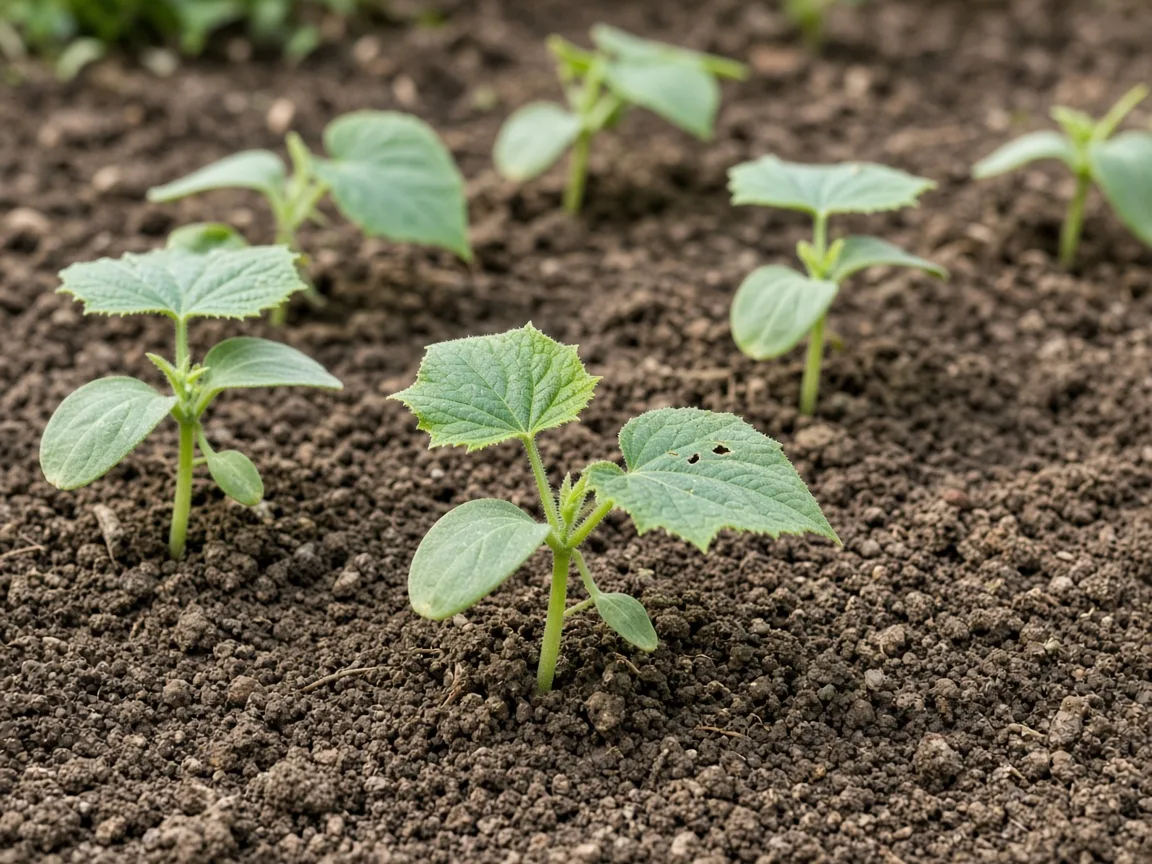
On a small planting, pick visible beetles into a container of soapy water or dislodge them over a bucket during the cooler part of the day. Protect seedlings with a secured floating row cover before beetles arrive, but remove it when flowers open unless you can pollinate by hand. Do not apply a broad-spectrum product to open zucchini flowers; bees visit them throughout the day.
2. Squash bugs
Squash bugs are not leaf-chewing beetles. Adults are flat, gray-brown insects with a shield-like outline, and their younger nymphs gather near clusters of bronze or copper-colored eggs on leaf undersides or stems. They pierce plant tissue and suck sap. The first clue is often a patch of pale dots that turns yellow, then brown or crisp as feeding continues; severe damage can make a vine look water-stressed.
Check where leaf veins meet the stem and beneath large leaves, since adults and nymphs hide in these protected spots. If the insects or egg clusters are present, remove eggs by crushing them or cutting away only the small portion of leaf that carries them. Handpick nymphs and adults, or place a board near the plant and inspect beneath it each morning. Penn State Extension and the University of Nevada Extension both recommend scouting and removing squash bugs and eggs; sanitation at season’s end helps reduce sheltered overwintering sites.
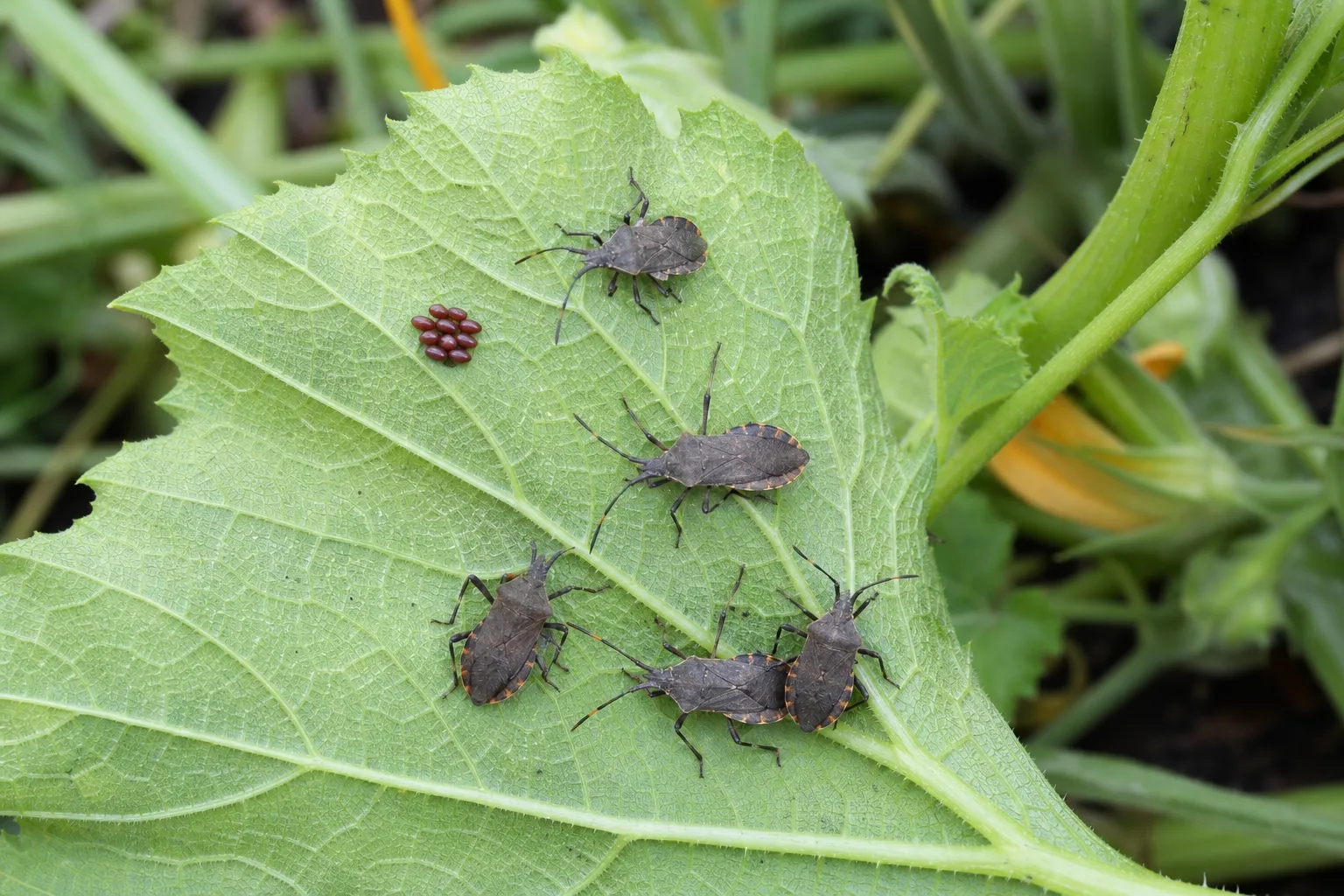
A few holes in a leaf are not the usual squash-bug signature. If you see missing chunks rather than stippling, keep looking for a chewing pest instead of treating the plant for squash bugs.
3. Squash beetles
The squash beetle, Epilachna borealis, is a yellow-orange lady beetle with a set of large dark spots. Its larvae are yellow and spiny. That appearance can cause confusion: many lady beetles are beneficial predators, but this species feeds on cucurbits. Check the underside of a leaf for larvae and the upper surface for adults, then look for scraped or skeletonized patches where the soft leaf tissue has been eaten while veins remain.
This pest is more common in parts of the eastern United States, and a small number usually does not justify a treatment. Penn State Extension notes that hand-picking can be enough when populations are low; the University of Connecticut’s squash beetle profile explains the telltale feeding trench and lacy damage. Confirm the markings before removing a lady beetle, since many similar-looking species prey on aphids and other garden pests.
If you find several squash beetles or larvae on one plant, remove them by hand and check nearby leaves for eggs. Monitor the plant over the next few days. A few chewed patches on a mature zucchini plant are usually less urgent than injury to a new seedling or damage that continues to spread.
4. Squash vine borers
A squash vine borer is a caterpillar inside the stem, not a pest that eats leaf blades. Its feeding blocks water movement through a runner, so one section may wilt suddenly while other parts of the same plant remain firm. Look for a small entry hole and moist, sawdust-like frass near the base of the vine. The adult is a day-flying moth with clear wings and an orange abdomen marked with black.
This pest is more common in some regions than others, and timing varies by climate. When the stem is affected, identify the runner before making a cut: normal midday droop across the whole plant can also reflect hot weather or dry soil. Penn State Extension’s squash insect guide describes the larvae, stem entry, frass, and early-season monitoring; UGA Extension’s summer-squash pest guidance discusses barriers and other preventive options.
Remove a plant that is fully collapsed and no longer recoverable, and discard infested material rather than leaving it in the bed. If only one runner is involved, ask your local extension office whether careful removal and burying a healthy section of the vine is appropriate for your region and plant stage.
5. Slugs
Slugs feed at night and on cool, damp mornings, leaving ragged holes, scraped edges, and sometimes a shiny slime trail. They often target seedlings and tender new leaves first. Search beneath leaves, boards, pots, and mulch after sunset or soon after sunrise; finding a slug close to fresh damage is stronger evidence than finding holes alone.
Reduce hiding places around the crown by clearing weeds and debris, and avoid keeping the soil surface constantly wet overnight. Hand-pick slugs during their active hours or check a simple board refuge in the morning and remove any that gather there. A barrier or bait only works if it suits the garden conditions and is used according to its label. The Epic Gardening guide likewise recommends scouting slugs when they are active and reducing nearby hiding places.
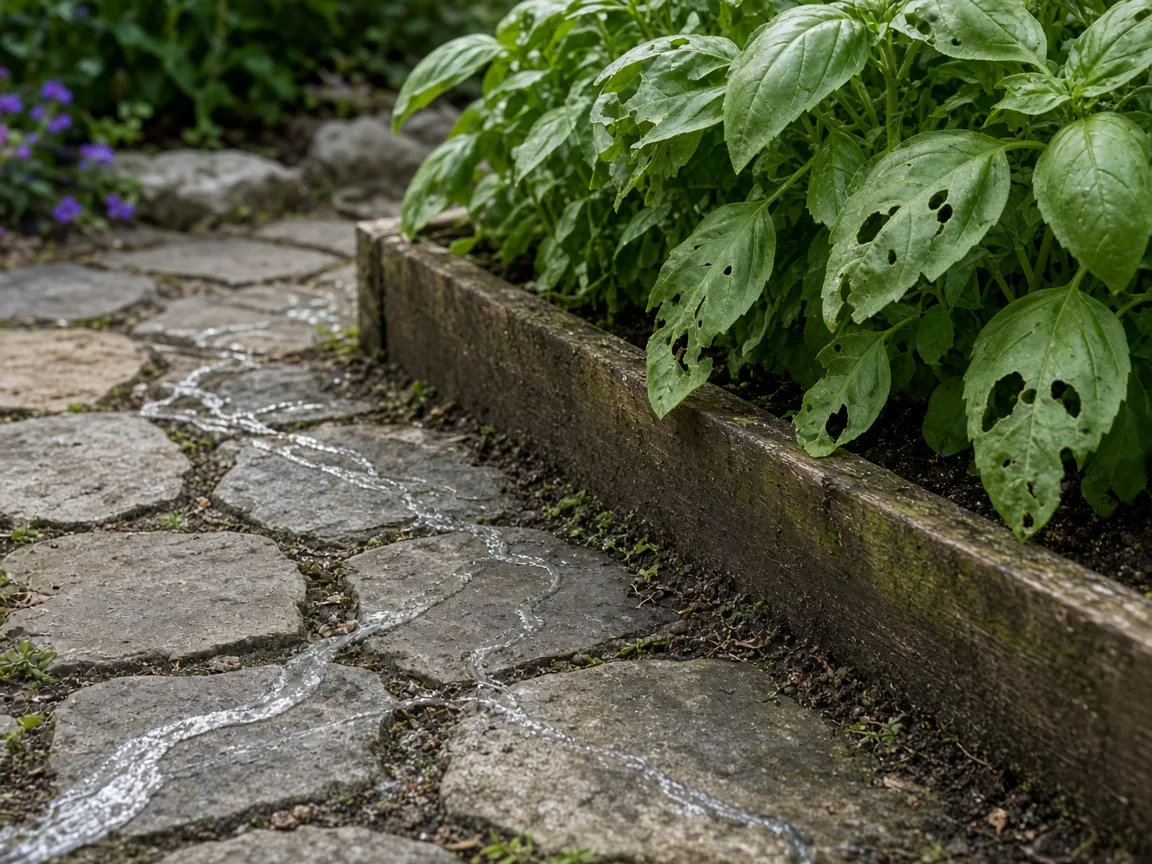
Salt is not a sensible garden treatment: it can injure plants and leave salt in the soil. A dry-looking plant with clean-edged spots and no trail may have another cause, so inspect at night before deciding slugs are responsible.
6. Snails
Snails make damage similar to slug damage, but adults carry a visible shell. They feed mostly at night or in damp weather and shelter under boards, pots, dense mulch, and leaf litter during the day. New leaves may disappear quickly, while older leaves show broad, irregular holes. A slime trail can cross soil, a bed edge, or the leaf itself.
Inspect the underside of broad zucchini leaves and the ground around the plant after dark. Remove snails by hand and clear only the dense hiding places that are keeping them beside young growth; mulch can still benefit soil, but pull it back from seedlings if it is staying wet and sheltering pests. If snails are not visible and no trail is present, continue checking other patterns in the table rather than repeating a slug treatment.
Slugs and snails are different animals, but the same inspection routine works for both. Their activity is most likely when the bed stays damp and shaded, so changing the conditions around the plant can make a small population easier to manage.
7. Aphids
Aphids are tiny, soft-bodied insects that gather on tender shoots and the undersides of leaves. They do not chew holes; they pierce plant tissue and remove sap. A cluster can make new leaves curl or cup, turn pale, and become sticky with honeydew. In humid weather, dark sooty mold may grow on the honeydew, but the mold is a secondary clue rather than the original pest.
Turn leaves over and inspect young stems with a hand lens. A few aphids on a vigorous plant may not need intervention, especially when lady beetles, lacewing larvae, or hoverfly larvae are already feeding nearby. If a colony is expanding, use a firm stream of water on the undersides of leaves and repeat the inspection in a day or two. The Harvest to Table squash guide describes aphids’ leaf curling and honeydew; Epic Gardening also recommends preserving natural predators.
Avoid spraying flowers or beneficial insects. Insecticidal soap is a contact product: it only affects pests it reaches, can injure plants if misused, and is not a cure for every yellow leaf. If you consider a labeled product, first confirm the pest and follow the directions for edible crops and pollinator protection.
8. Spider mites
Spider mites are arachnids, not insects, and are too small to identify by color alone. Their feeding produces pale stippling or a bronzed, dusty appearance, usually first on the underside of leaves. Fine webbing may appear when a population is heavy. Hot, dry conditions and a plant under water stress favor outbreaks, but a few specks do not confirm mites.
Tap an affected leaf over white paper and watch for tiny moving dots, or inspect the underside with a hand lens. Rinse the leaf undersides with water and keep the root zone evenly watered; avoid leaving the plant drought-stressed. Then check again after several days. Do not overreact to webbing from ordinary garden spiders or a few mites without ongoing damage. Epic Gardening and Harvest to Table describe stippling and the undersides of leaves as useful clues for mite feeding.
Broad insecticides can remove predators while leaving mite eggs or hidden colonies behind. If the infestation continues to expand, use only a product labeled for mites on edible squash, and protect flowers and other beneficial insects.
9. Whiteflies
Whiteflies are tiny, pale insects that usually gather under leaves. When a plant is disturbed, adults may lift off in a small cloud. Their immature stages stay attached to the leaf underside and feed on sap, which can cause yellowing, reduced vigor, and sticky honeydew. Because a yellow zucchini leaf can also result from age, uneven watering, disease, or root stress, look for the insects or their immature scales before treating.
Check several leaves rather than one. If only a few are affected, remove badly infested leaves without stripping the plant, then use water to dislodge adults and small colonies. Recheck the undersides of nearby leaves, since adults can recolonize quickly. Epic Gardening includes whiteflies among zucchini pests and notes that they feed from leaf undersides; treat that as a cue to inspect, not proof that every yellow leaf has whiteflies.
A spray that kills adult whiteflies but misses immature stages may give only temporary relief. If you reach for an insecticidal soap or oil, confirm that the label permits use on zucchini and follow its instructions for coverage, harvest interval, and pollinator protection.
10. Leafminers
Leafminers are fly larvae that feed between the upper and lower surfaces of a leaf. They leave narrow, winding pale lines or blotches that widen as the larva grows, rather than holes eaten all the way through. Hold a marked leaf toward the light: the trail is inside the leaf tissue, and a tiny larva may be visible near its newest end. A leafminer trail is very different from powdery mildew, which forms a surface coating.
Leafminers can occur on cucurbits, though their importance depends on the species and growing region. UC Statewide IPM’s cucurbit leafminer guide explains that larvae mine within leaves and that the crop and local population matter for management. If there are just a few mines on older leaves, keep scouting instead of spraying: a contact product cannot reliably reach a larva protected inside the leaf.
Remove only heavily mined leaves if the plant has plenty of healthy foliage left. If nearly every leaf is affected or plants are stunting, ask a local extension service to identify the leafminer species before choosing a control, because different leafminers can have different hosts and natural enemies.
Choose a response that fits the pest
Inspect and remove small populations
For a home garden, a short inspection every day or two is often more useful than a calendar-based spray. Check the leaf underside, stem joints, flowers, and soil line; note whether damage is increasing and whether the pest is still present. Hand-pick larger insects, remove squash bug eggs, and rinse sap feeders from leaves when those actions match the pest. Do not remove every damaged leaf: zucchini needs healthy foliage to support fruit, and old leaves can look rough without threatening the harvest.
Use clean pruning shears when you must remove a leaf, and do not compost material that is actively carrying a pest or disease you are trying to contain. If the likely cause is not visible, take a clear photo of the whole plant and the close-up to a county extension office or Master Gardener help desk. A second opinion is less costly than treating for the wrong pest.
Use row covers before flowers open
A floating row cover can block flying beetles and moths from reaching young plants, but the timing matters. Install it over seedlings before pests arrive and secure the edges so insects cannot crawl underneath. Once zucchini flowers open, remove the cover during the day so bees can pollinate them, or be prepared to hand-pollinate flowers yourself. Penn State Extension notes that cucurbit row covers should be removed at bloom; a cover left on without pollination can protect leaves while limiting fruit set.
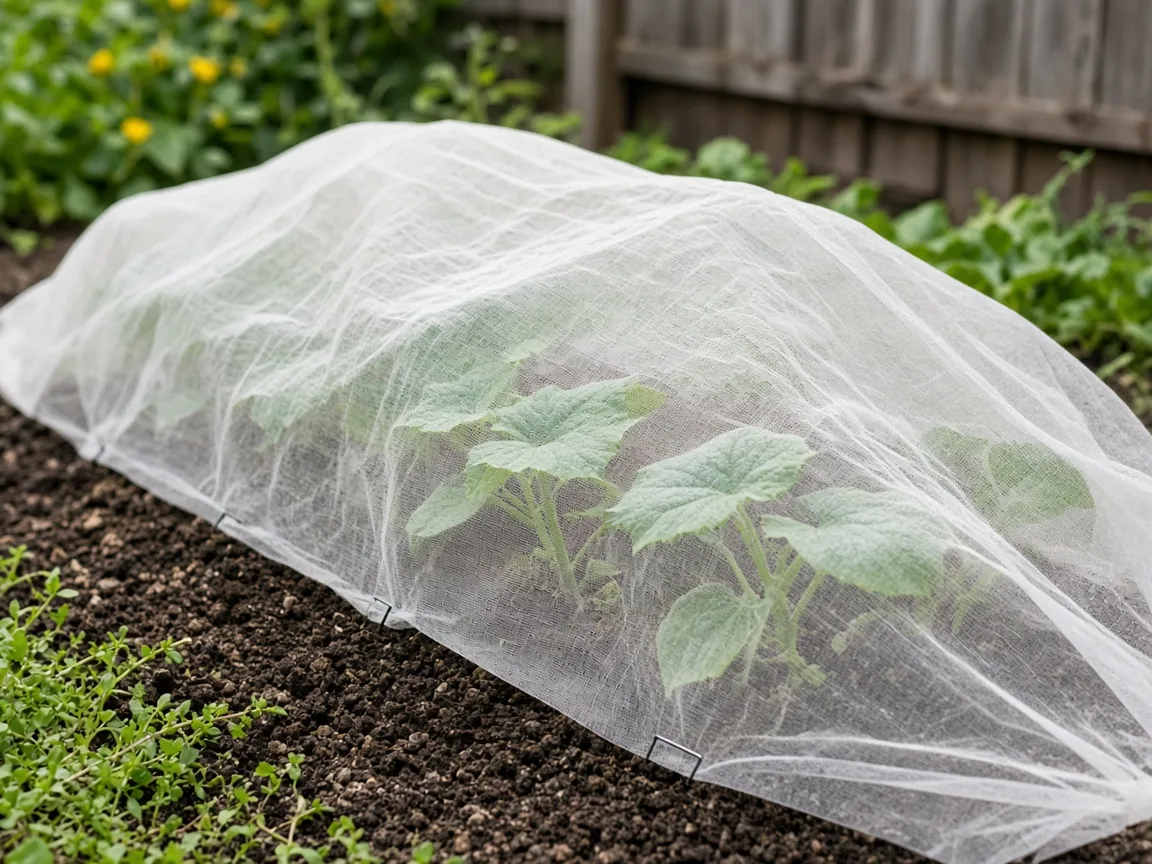
A cover does not remove pests already trapped beneath it. Inspect the plant before covering, and lift the fabric periodically to check for beetles, eggs, or wilting. Do not use a cover as a fix for squash bugs already established on a large vine or larvae already inside a stem.
Treat only when the pest and product match
There is no one spray that controls every cause of zucchini leaf damage. Insecticidal soap and horticultural oils must contact exposed pests; they do not work equally well on beetles, hidden eggs, caterpillars inside vines, or larvae inside leaf tissue. A product that controls one pest may do nothing to another, and a treatment that reaches an exposed aphid may not reach a larva inside a stem or leaf. Never assume a product is appropriate because it is labeled organic or homemade.
If you use any pesticide, including a soap, oil, or biological insecticide, read its label for the crop, target pest, application rate, personal precautions, re-entry time, and pre-harvest interval. Avoid treating open flowers or spraying when pollinators are visiting. UGA Extension advises choosing a product for the insect being controlled and following label and harvest instructions; when in doubt, contact your local extension office. Do not mix products or repeat applications more often than the label allows.
Prevent a repeat infestation
Keep the bed easy to inspect. Give plants enough spacing for air and access, remove weeds and old vines that shelter pests, and clear infested crop debris at the end of the season. Rotation can help where pests overwinter near their host plants, though a small home garden may not allow enough distance to prevent every pest from returning. Rotate cucurbits with unrelated crops when space permits, and check seedlings before planting them out.
Use floating covers early, scout newly planted vines, and keep water consistent so plants are not weakened by drought stress. Preserve flowering plants and habitat for beneficial insects rather than spraying broadly to create a pest-free garden. If one year brings severe pressure, consider a second planting, a cultivar suited to your region, or a less susceptible cucurbit type; no variety is immune, and local extension advice is more reliable than a universal planting calendar. Penn State Extension and UGA Extension both recommend combining observation, sanitation, barriers, and targeted decisions instead of expecting one control to solve every squash pest.
Conclusion
The fastest way to find what is damaging zucchini leaves is to match the mark with the pest’s location and feeding pattern. Chewed holes, sap-feeding stipple, leaf mines, and a suddenly wilted runner point to different problems. Inspect both sides of leaves and the vine base, then choose the smallest effective response. A careful diagnosis protects the harvest and avoids spraying pollinators or beneficial insects that are helping your garden.