What Kills Spiders Instantly? Safe Methods at Home
What kills spiders instantly? Learn which methods work on a visible spider, why sprays and home remedies take longer, and how to protect people and pets.
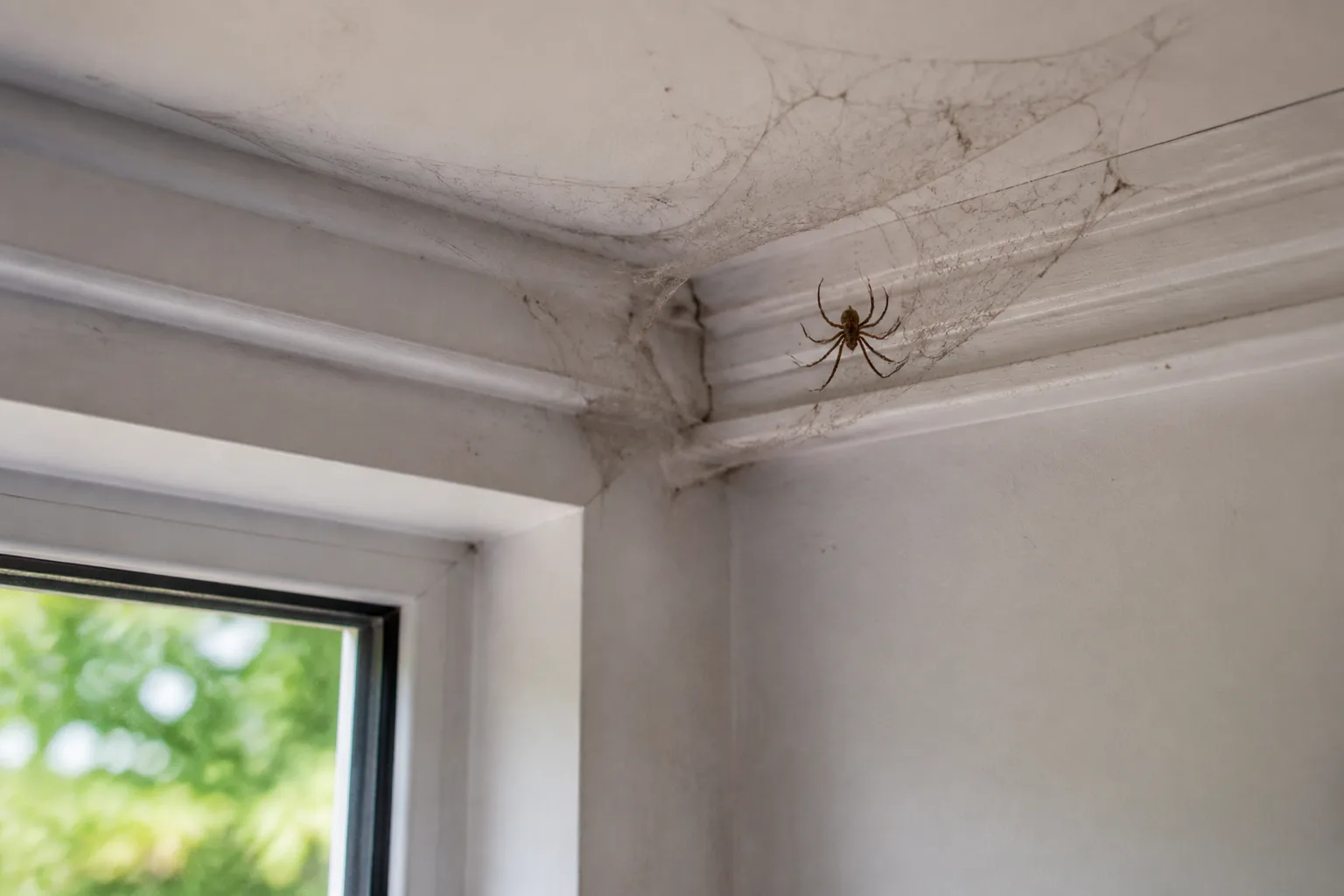
If you need a spider gone right now, the only practical method that can kill it immediately is a direct physical hit that crushes it. A spray, powder, essential oil, or vinegar solution cannot promise an instant kill: it may miss, irritate or repel the spider, or take time to work. If you want the spider out of the room without killing it, a cup and stiff card or a vacuum can remove it faster and with less contact.
The right move depends on three things: whether you can reach the spider without putting your hands near it, whether you can identify it, and whether children or pets could contact a treatment. A single spider on an open floor is a different problem from an unknown spider behind a dresser, a cluster of egg sacs, or repeated sightings in a basement. Start with the least complicated action that solves the immediate problem, then address the conditions that brought the spider inside.
What “Instant” Means in Spider Control
“Instant” is a high bar. A spider can stop moving because it has been injured, stunned, or exposed to a product, but still not be dead. A product’s active ingredient, formulation, dose, coverage, target species, and location all affect how quickly it works. A label may describe the intended use or a particular result, but that does not translate into a universal number of seconds for every spider in every room.
That distinction matters because the common household options do different jobs. A firm crush can kill a spider on contact if the blow lands accurately. A vacuum or catcher removes it, while a repellent is intended to discourage it from staying or crossing a treated area. A residual insecticide is applied to labeled surfaces where pests travel and may act over time; it is not a reliable way to make a visible spider vanish at once. Extension guidance also cautions that pesticide alone will not solve a recurring spider problem if favorable habitat remains. Colorado State University Extension recommends pairing treatment, when appropriate, with habitat changes and regular web removal.
So choose your outcome first. If you need immediate certainty that the spider is no longer in the room, physical removal is usually more predictable than spraying. If sightings keep happening, prevention and targeted inspection matter more than escalating to a stronger product after every encounter.
Fastest Ways to Deal With a Spider You Can See
For a spider in the open, the quickest route is often the simplest one. Before acting, move a child or pet out of reach, avoid touching the spider, and look at where it could go if startled. Do not climb onto a chair or lean over a bed to swat at a spider near your face; a fast, awkward strike can turn a nuisance into a fall or an accidental contact.
Crush It Only When You Can Do So Safely
If the spider is on a hard, open surface and you are comfortable killing it, a firm strike with a shoe, rolled paper, or another solid object is the fastest direct method. The impact needs to connect; tapping or brushing it may only injure the spider or send it under furniture. Keep your hand well away from the spider, and use a disposable barrier if you do not want to clean the surface afterward.
Do not try to crush a spider you cannot clearly see, one tucked into a shoe or folded fabric, or one in a narrow space where you would have to put your fingers close. That is a poor trade for a fast kill. Turn on the light, step back, and use a vacuum or a long-reach tool instead. If the spider looks unfamiliar or could be a medically significant local species, do not try to identify it by handling it. A photo taken from a safe distance may help an extension service or pest professional identify it later.
After the spider is no longer moving, check carefully before picking up anything. Use a tissue or disposable tool to lift remains, place them in a sealed trash bag, and wash the surface. If a pet is nearby, keep it from investigating the spider or the debris. This cleanup is a small step, but it prevents a dead spider from becoming a toy or an unpleasant surprise in a bare hand.
Vacuum or Capture It When Contact Is Not an Option
Vacuuming is a useful no-touch choice when the spider is on a ceiling, along a baseboard, or near a web you want to remove at the same time. A hose attachment gives you distance. However, vacuuming should be treated as removal, not a guaranteed kill: a spider may survive in a canister or bag. When finished, empty a bagless vacuum into a sealed outdoor trash bag or seal and discard a disposable bag according to the vacuum manufacturer’s directions. Do not open the canister over an indoor bin and assume the spider is dead.
If you would rather relocate a small, visible spider, place a clear cup or container over it and slide stiff card underneath, keeping the card flat against the surface as you lift. Carry the covered container outside before releasing it away from doors and windows. This works best on a flat wall or floor and only when you can keep your fingers outside the spider’s reach. Skip this approach when the species is uncertain, the spider is fast or inaccessible, or you would have to stand on furniture.
Sticky traps can help show where spiders are traveling, especially along a wall edge, but they are not an instant response to a spider you can already see. They can also catch other small animals. Place them only where children and pets cannot reach them, and inspect them regularly. For one spider in an open room, a vacuum or container is usually a more controlled choice.
Do Spider Sprays Kill on Contact?
Some pesticide sprays are formulated for spiders, but a spray does not guarantee that a spider will die at the moment it is hit. The product may need to contact the spider adequately, and the result depends on its label, formulation, and the target. A product marketed for ants or flying insects may not list spiders or the room you want to treat. Do not infer that “bug spray” covers every arachnid just because spiders are common household pests.
Before using any pesticide, read the label for the target pest, approved indoor or outdoor site, application method, amount, protective directions, and any re-entry or ventilation instructions. The National Pesticide Information Center explains that label directions define legal uses and are written to reduce the risk of problems; choosing a product for a different pest or location is not a safe shortcut. NPIC’s safe-use guidance recommends following the label and removing children, pets, and other people who are not applying the product from the area.
Contact Sprays and Residual Treatments Solve Different Problems
A contact spray is meant to reach the spider directly. It may be useful if the product is labeled for the spider and room, but spraying broadly around a room is unlikely to make a hidden spider appear or prove that every spider was killed. If you spray and the spider disappears behind a cabinet, do not keep adding product. Ventilate as the label directs, keep people and animals out for the label’s required interval, and locate the spider with a non-chemical method if needed.
A residual treatment is different: it is applied to certain surfaces or cracks and crevices so that a pest may encounter it later. The product label determines where and how it can be used. It will not clear a web or egg sac, and it is unlikely to solve a recurring problem if spiders still have shelter and prey indoors. Colorado State Extension notes that residual products may be used at corners or breeding sites, but only as directed on the label; it also cautions that total-release foggers probably have little effect on spiders. A fogger is therefore a poor choice for a single visible spider and adds broad indoor pesticide exposure without guaranteeing the result you want.
If a labeled product is the choice you make, use it only in the specified place and amount. Do not mix products, add dish soap or essential oil to a commercial pesticide, or apply an outdoor product indoors. Keep the original container and label available in case you need product-specific first-aid instructions. If you are not sure whether a product is appropriate for your space, skip the spray and ask a local extension office or licensed pest professional.
Why Common Home Remedies Are Not Instant Spider Killers
Vinegar, peppermint oil, citrus, chestnuts, and homemade soap mixtures appear in many “natural spider spray” recipes. The word natural does not establish that a treatment is effective, safe for every surface, or suitable around pets. A strong odor may prompt an animal to move away; that is not the same as killing it. Neither a scent barrier nor a spray mixture should be described as an instant lethal treatment without reliable product-specific evidence.
Vinegar may help with certain cleaning jobs, but spraying it at a spider is not a dependable instant-kill method. Essential oils can irritate skin or eyes, and concentrated oil or residue may be hazardous to pets. Homemade mixtures also lack the tested directions and exposure instructions found on registered products. If your goal is to kill one visible spider right away, a physical option gives a clearer result than experimenting with a kitchen recipe.
Vinegar, Essential Oils, and Homemade Mixes Have Limits
A repellent claim needs to be judged by what it actually promises. If a method only makes a spider less likely to linger in a spot, it does not answer the immediate “kill it now” problem. Even if an odor seems to work temporarily, it can fade, miss hidden areas, or shift the spider to another part of the room. Clean up webs and close entry gaps instead of layering scents around furniture.
Be cautious with online recipes that combine household cleaners, oils, pepper, or soap in a spray bottle. A homemade mixture has no tested directions for kill time or exposure, and it may stain finishes, leave slippery floors, or expose a pet that licks a treated surface. Concentrated essential oils are not automatically pet-safe; animals can be exposed by breathing a product, getting it on their skin, or licking it, as the NPIC fact sheet on pesticide exposure for pets explains. Practical home-prevention guidance on cleaning undisturbed areas and sealing gaps focuses on physical changes, which are more useful for prevention than assuming a scent will instantly kill a spider.
Dusts Such as Diatomaceous Earth Are Not Quick Knockdown Tools
Diatomaceous earth and other insecticidal dusts are sometimes suggested for crawling pests, but dusting a corner is not a fast way to neutralize a spider you can see. A dust must be applied where a target contacts it, and a spider may not cross a treated patch. Fine particles can also become airborne, so avoid spreading dust where it could be inhaled or tracked by children and pets. The National Pesticide Information Center’s pet-safety fact sheet describes breathing, skin contact, and ingestion as possible exposure routes. Use a dust only if the actual product label lists the target and site, and follow the label’s application and exposure precautions; do not assume that a “food grade” description makes any use harmless.
For an immediate encounter, vacuuming or trapping removes the spider without distributing powder. For a continuing issue, find the entry points, webs, egg sacs, and insects that explain where spiders are active. A measured plan usually does more than scattering more material in a room.
What to Do When You Cannot Identify the Spider
Most spiders people encounter indoors are not aggressive, and many are beneficial predators that feed on other arthropods. Still, risk depends on the species and where you live. A house spider’s appearance varies, common names can refer to different species, and online identification from a blurry photo can be misleading. Penn State Extension describes the common house spider as not medically important and notes that verified bites are uncommon, but that description applies to that species, not every spider everywhere. Penn State’s profile is a useful example of why an identification matters before making a broad claim about all spiders.
When you cannot identify it, distance is more useful than confidence. Do not pick it up, press your bare hand into a dark hiding place, or pull apart a web with fingers. Take a clear photo from several feet away if that is safe, include a size reference only if you can do so without approaching, and note the room and region. An extension office or licensed pest professional may be able to help, especially if you have found several spiders or a suspected medically significant species.
When to Avoid Getting Close
Avoid direct handling if the spider is behind stored items, in clothing or shoes, inside a utility area, or high above your head. Move children and pets out first. If a web is near firewood, boxes, a shed, or an outdoor structure, wear sturdy gloves and closed shoes before moving objects; do not place your hands where you cannot see them. If the task requires reaching into a cluttered or confined space, it is reasonable to stop and get help rather than force a quick kill.
If a person is bitten and the spider may be a widow or recluse, or if serious or worsening symptoms develop, seek medical advice promptly. Colorado State Extension notes that bites are difficult to diagnose and that medically important species vary by location; a presumed “spider bite” can have another cause. Avoid treating a worsening skin lesion at home as proof of a particular spider. For a suspected bite, describe symptoms and location to a medical professional and share a photo or specimen only if it can be collected safely.
Remove Webs and Egg Sacs Without Spreading Debris
When the spider is gone, inspect its immediate area for webbing and an egg sac. Some spiders leave an egg sac attached to a web; others carry it or hide it in a protected spot. A sac may contain many spiderlings, so removing the sac and surrounding web is more useful than killing the adult and leaving the next generation behind. Do not crush a sac with bare fingers or flick webbing into the air.
For a small, reachable web, use the vacuum hose or a disposable duster, then empty the vacuum outside into a sealed bag. For a sac above a doorway or in a difficult corner, use a long-reach vacuum tool from a stable position; do not balance on a chair or ladder while holding a hose. If you suspect a widow or another risky species, do not brush the web with your hand. A professional can remove it with appropriate equipment if access is difficult or repeated sacs appear.
Colorado State Extension recommends regularly vacuuming or brushing webs and limiting clutter in dark storage areas. That routine does two jobs: it removes current webs and makes it easier to notice new activity. A long-reach vacuum tool lets you remove a web or sac from a high corner without putting your hand close to the spider.
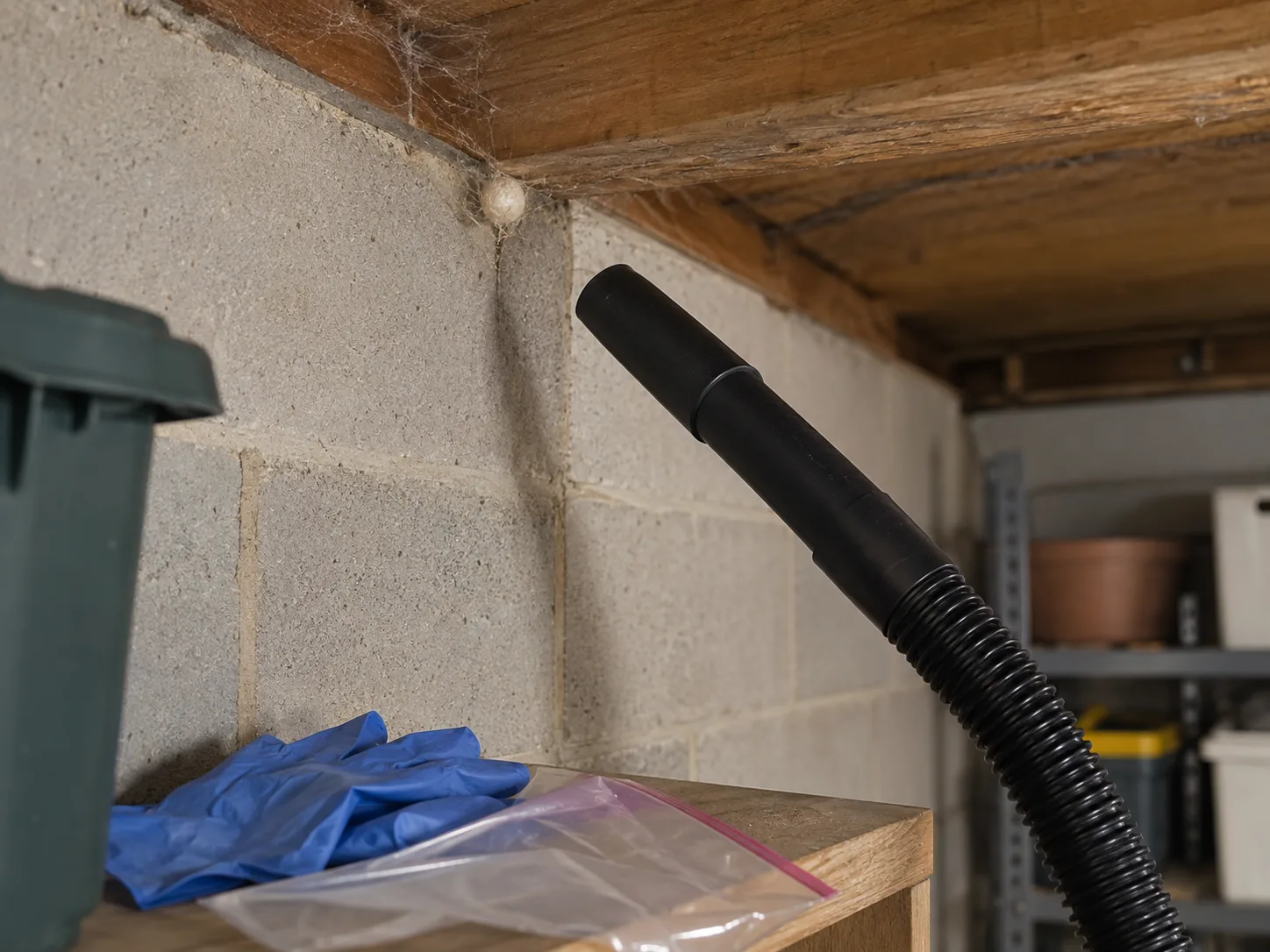
After web removal, check nearby corners, window frames, basement joists, and the backs of stored items. A single web may simply mark a quiet spot; several fresh webs and sacs in a concentrated area suggest the site is consistently favorable. Clean first and revisit the area in a few days rather than applying pesticide indiscriminately.
Make a Prevention Plan That Lasts
One dead or relocated spider does not tell you why it was there. Some spiders wander inside by chance; others are drawn to protected, undisturbed places with prey and moisture. The goal is not to sterilize a home of every arthropod. It is to make the rooms where people spend time less useful to spiders and reduce the number of routes they can use to enter.
Start where sightings cluster. If spiders show up in a basement, inspect stored boxes and foundation gaps; if they are around windows, check screens and sill cracks; if they gather near an exterior light, consider whether insects are collecting there. The right prevention step depends on the pattern. A spray in the middle of the room does not address a gap under a door, a pile of cardboard, or a porch lamp attracting prey.
Reduce Prey and Undisturbed Shelter
Vacuum along baseboards, corners, behind furniture, and around storage shelves. Remove old webs and egg sacs as you find them. Store seasonal items in lidded plastic containers rather than open cardboard, keep items off basement floors where practical, and leave enough room to inspect the walls behind them. These changes do not guarantee that a spider will never enter, but they reduce the protected, quiet sites that allow webs to persist.
Spiders depend on prey, so a recurring spider problem may point to another insect issue. Look for the source rather than treating spiders and ignoring the insects that support them: open food, moisture, leaking pipes, or gaps that allow flies and other small arthropods indoors. Fix the condition you find. Colorado State Extension notes that limiting other insects can limit spider development; this is why pest prevention works better as a system than as repeated spot spraying.
Outdoors, clear webs around porch lights and doorways, and avoid piling boards, leaves, or firewood directly against the house. If insects swarm around a light, switch it off when not needed or choose an outdoor fixture and placement that draws fewer insects toward doors. The aim is to reduce the food and shelter close to entry points, not to eliminate beneficial spiders from the entire yard.
Close Routes Into the Home
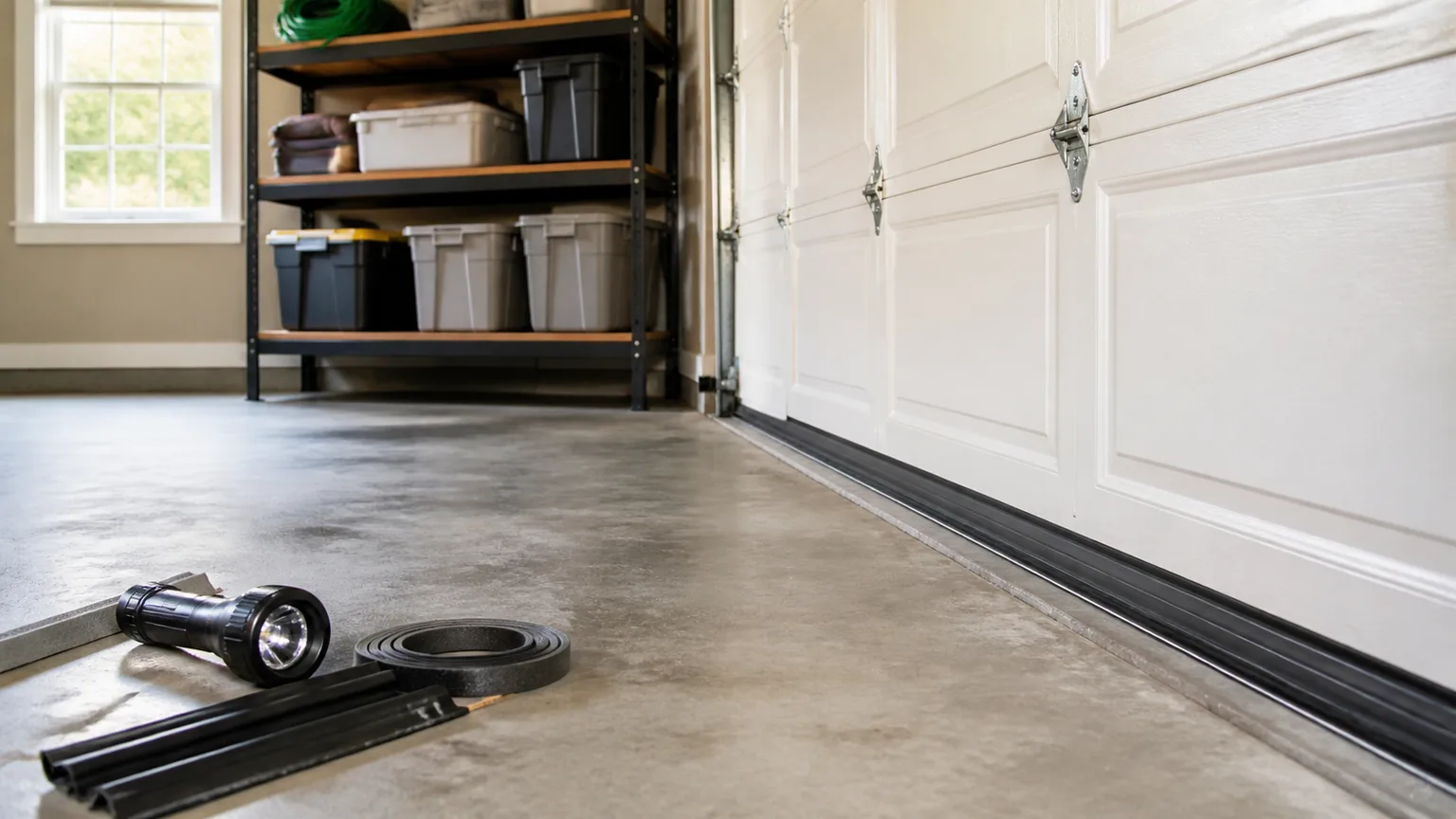
Repair torn window screens, make sure doors close flush, and use a door sweep where a visible gap remains. Seal small cracks around window frames, utility penetrations, and the foundation with an appropriate caulk or repair material; do not block vents or drainage openings designed for the building. If you are unsure whether an opening serves ventilation or drainage, have it checked before sealing it.
When bringing in boxes, firewood, outdoor cushions, or garden items, inspect them before carrying them into a bedroom or storage room. Practical advice on spider entry routes also emphasizes checking items brought indoors and repairing small openings around the house. Treat those measures as ways to reduce access, not proof that every spider can be excluded completely.
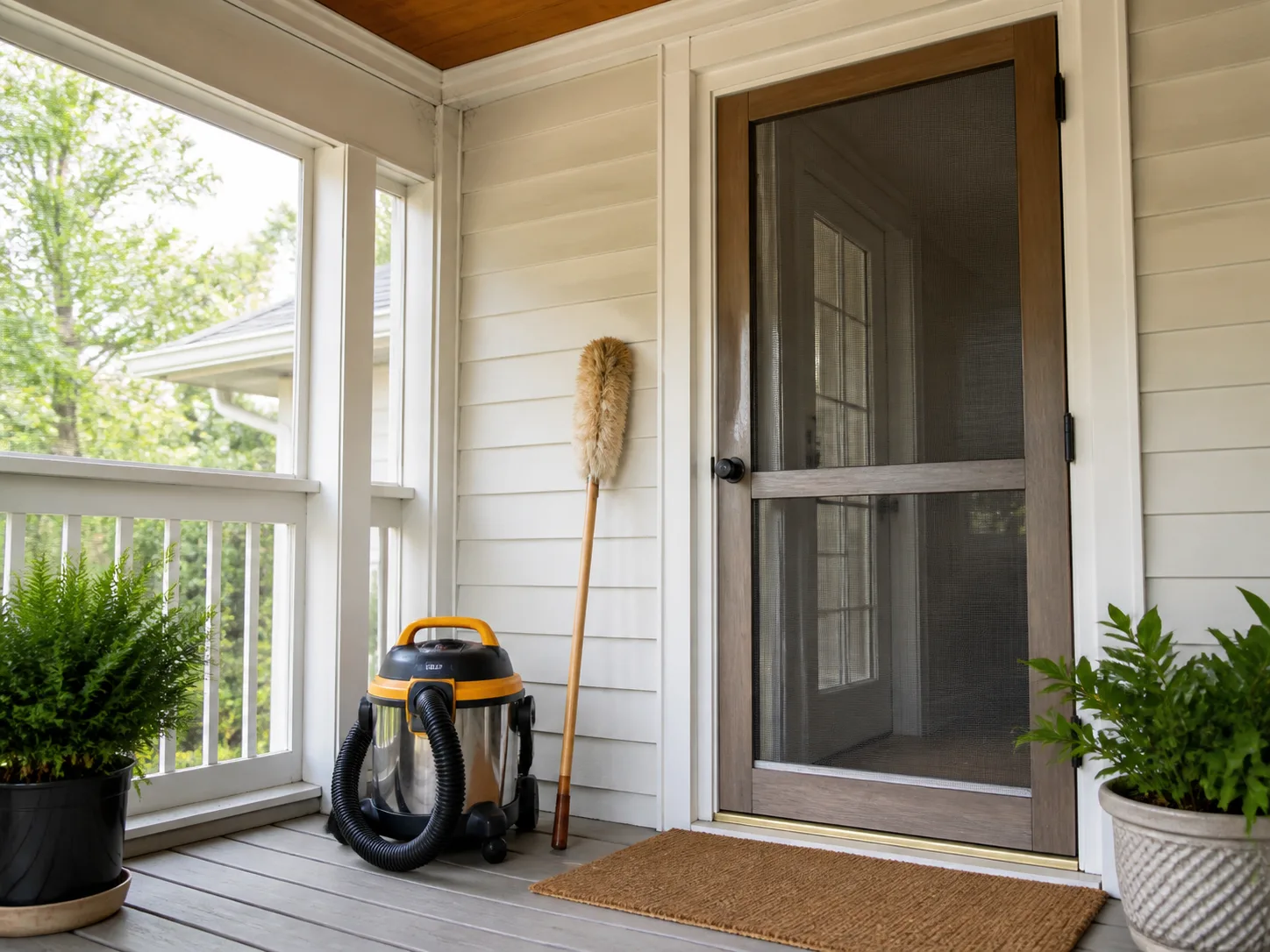
Build the routine around the room: clear webs as part of a weekly tidy-up in a problem area, store seasonal belongings in closed containers, and recheck repaired gaps after weather changes. If fresh webs return quickly in the same place, note the date and exact location. That record helps you distinguish a one-off visitor from a pattern that merits professional inspection.
When to Call Pest Management or Medical Help
Call a licensed pest professional if you keep seeing spiders despite cleaning and sealing, find repeated egg sacs, suspect a medically important species, or need treatment in a child’s room, a pet area, or a space that is hard to access safely. Ask what species or evidence they found, where a product would be applied, what the label allows, how long people and animals need to stay away, and what non-chemical changes should accompany treatment. A professional should be able to explain the plan and its limits, not promise that one visit will make every spider disappear permanently.
If you decide to use a pesticide yourself, treat product choice and household protection as part of the job. NPIC advises removing pets before application and keeping them away until the treated area is dry and ventilated, while the product label may impose more specific requirements. NPIC’s pesticide precautions for pets and NPIC’s pesticide precautions for children explain why exposure can happen through breathing, skin contact, or ingestion and why the label matters. MedlinePlus likewise advises trying nonchemical methods where practical and taking particular care around children and pets when a pesticide is used. MedlinePlus pesticide information summarizes those precautions.
For a suspected pesticide exposure, use the first-aid directions on the product label and contact Poison Control in the United States at 1-800-222-1222 for a person, or a veterinarian/animal poison resource for a pet. Do not wait for symptoms to worsen if the product label or a professional says to act immediately. If someone has severe symptoms, contact emergency services.
Conclusion
For a spider you can see, a direct, safe physical strike is the fastest way to kill it; a vacuum or cup-and-card method is usually the quickest no-contact way to remove it. Sprays and dusts have label-dependent results and should not be sold as guaranteed instant solutions, while vinegar and scented home remedies are not reliable substitutes for contact or prevention.
Once the immediate problem is handled, remove the web and any egg sac, reduce clutter and insect prey, and close practical entry gaps. Keep your distance when you cannot identify the spider or reach it safely. If activity repeats, a suspected risky species appears, or a pesticide exposure or serious bite concern arises, bring in the appropriate professional rather than escalating an improvised treatment.