What Is Electroculture Gardening—and Does It Work?
Electroculture gardening ranges from passive copper spirals to powered research devices. See which claims have evidence and what a fair garden trial looks like.
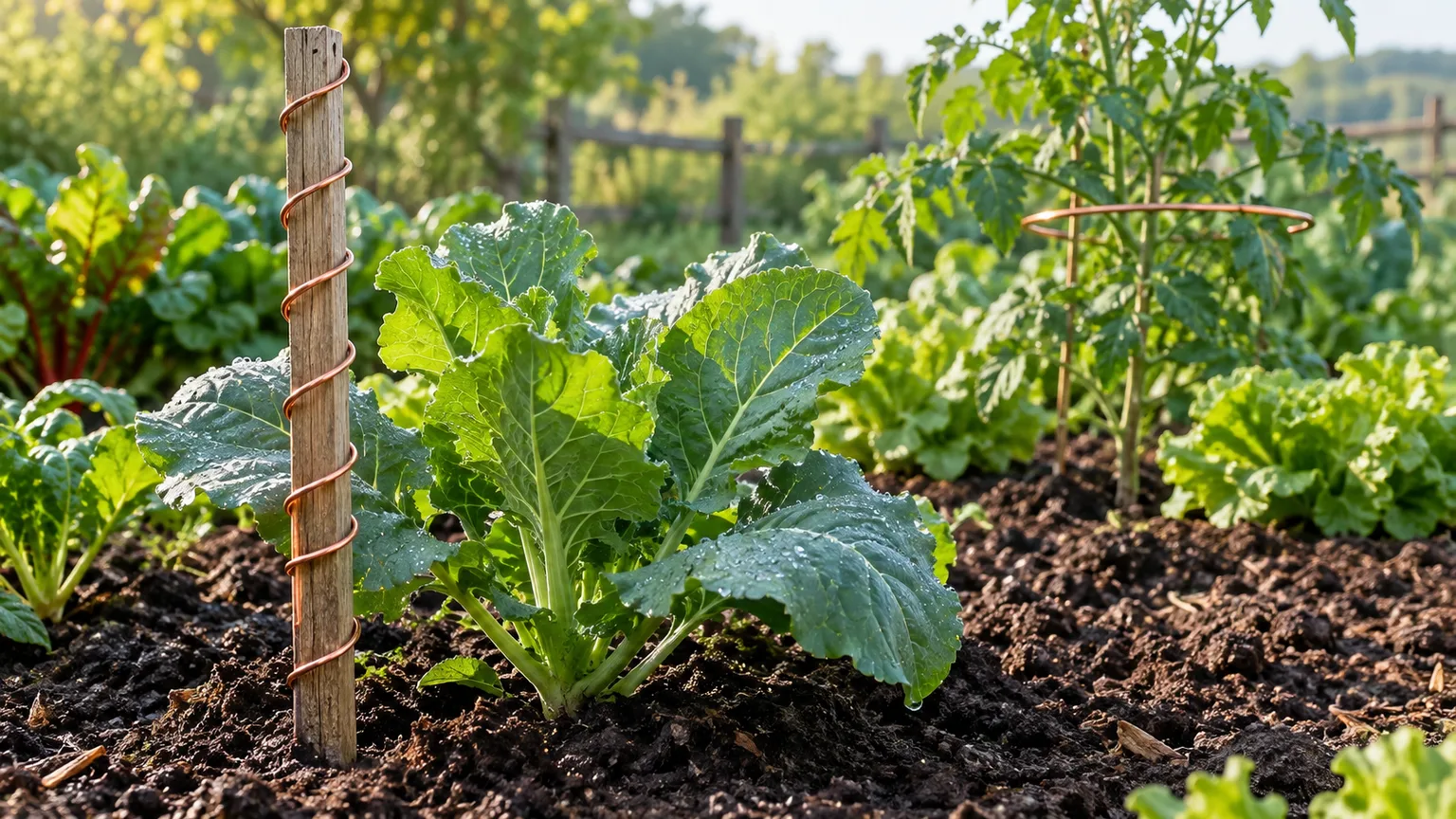
Electroculture gardening is a broad label for using electricity or electric fields around plants. The version most home gardeners see online is simple: wrap copper wire around a wooden stake, push it into soil, and let the spiral supposedly collect energy from the air. Advocates say this passive antenna can make plants grow faster, produce more, taste sweeter, resist pests, or need less fertilizer.
There is a real scientific field behind the broader idea that electrical treatments can affect plant processes. But that does not establish that an unpowered copper spiral delivers a useful treatment. Those are different methods, and the difference matters more than the word electroculture.
A controlled 2025 study tested copper-wrapped rods in container vegetables and found no consistent improvement in growth or yield. Other studies have reported plant responses to deliberately generated fields or specialized devices, but they used a measured electrical input that a passive garden stake does not provide. Here is what the evidence can—and cannot—tell you, and how to decide whether a small trial is worth doing.
Electroculture can mean two different methods
The word electroculture is used for practices that are not interchangeable. Before judging a claim, ask what was done: Was electricity measured and deliberately applied, or was a metal stake placed in soil and described as an antenna?
Passive copper stakes are the garden trend
A passive electroculture stake is usually a wooden dowel wrapped with bare copper wire, often formed into a spiral at the top. Some kits use a loop or several rods. The stake has no battery, generator, power supply, or connection to an electrical grid. Sellers and social-media advocates say that its shape gathers atmospheric energy, earth currents, wind, rain, or magnetic influence and redirects that energy toward roots.
That setup is inexpensive and visually distinctive, which makes it easy to demonstrate in a short video. It also makes the central claim easy to overlook: a copper wire can conduct electricity, but a conductor does not create a useful voltage by itself. To drive current through a plant or soil, a system needs an energy source and a voltage difference. Copper’s conductivity alone does not show that a spiral is collecting enough energy to change plant growth.
Some proponents add that the spiral’s form or orientation tunes the antenna to a particular frequency. That is a separate claim from the basic fact that copper conducts electricity. It needs a mechanism, a measurement, and repeatable crop trials of its own. A coil that looks like a radio antenna is not automatically functioning as one.
Active electrical treatments use a measured input
In experimental plant science, electrical stimulation generally means researchers apply a defined current, voltage, or electric field with equipment. They can specify the strength, duration, geometry, and position of the treatment, then compare treated plants with controls. Other research uses engineered devices to harvest wind or rain energy, convert it into an electrical field, and deliver that field to plants.
These are active, instrumented treatments even when a device collects energy from its surroundings. The energy harvester, electrodes, circuit, field strength, and exposure conditions do the work. That is not equivalent to putting an unmeasured copper spiral in a raised bed.
Electrical signals also occur naturally inside plants. Cells use changes in electrical potential as part of signaling, including responses to wounding or stress. That biological fact makes the subject worth studying; it does not mean any nearby metal object will improve a plant. In a garden claim, the practical question is whether a specific device creates a specific exposure and whether a controlled trial shows a useful result.
What the copper-antenna claim says
The most common explanation is that the spiral “captures” electricity from the atmosphere and sends it down the stake into the root zone. Some descriptions also refer to telluric currents, geomagnetism, or frequencies. A few claim that electricity produced by rain or wind around the structure enriches the soil with nitrogen.
These explanations combine several different physical processes. Atmospheric electrical fields exist, and rain, wind, and motion can be used by engineered devices to generate electrical output. Copper conducts current and can participate in electrochemical reactions when exposed to soil and moisture. None of those facts, on its own, demonstrates that a passive copper stake generates an exposure strong enough to change a crop.
What copper and electricity can—and cannot—do
Copper is an essential plant micronutrient in tiny amounts. Plants use it in enzyme activity and other biological processes. That does not make a copper wire a predictable fertilizer: the amount released depends on the material, surface condition, chemistry, and contact with the soil. A plant needing copper should be diagnosed through an appropriate soil or tissue test, not treated by guessing with metal objects. Too much copper can harm plants and soil organisms.
Electrical stimulation is also not a single treatment with a universal response. Outcomes may depend on species, growth stage, field strength, exposure duration, and electrode arrangement. A response in a laboratory does not tell you that a garden device has the same dose, or that the result will be larger vegetables in ordinary soil.
The most useful distinction is between possibility and proof. It is plausible that measured electrical fields can influence some plant processes; researchers have documented effects under certain conditions. It remains a much bigger leap to say a small passive stake reliably supplies such a field, improves harvests, suppresses pests, or replaces routine crop care.
What controlled research finds so far
The strongest evidence for the popular home-garden version is a direct test of copper-wrapped rods, not a general statement about all electrical research. A 2025 paper in PLOS One, “Passive electroculture using copper rods does not improve yield in home container vegetable gardening,” compared plants with no copper, exposed copper-wrapped rods, and rods buried under soil. Researchers grew mustard greens, kale, beets, and turnips in one-gallon containers, with ten plants per treatment for each crop, under managed light and watering over eight weeks. They measured height, leaf greenness, photosynthesis, and final biomass. The PLOS One study describes the design and results in detail.
The 2025 copper-rod container trial
The researchers found no consistent evidence that passive copper rods improved growth, photosynthesis, or yield across the four vegetables. Plant height and leaf greenness did not show a treatment effect. Leafy-green biomass did not improve. Some biomass differences appeared among root crops with buried copper, including greater turnip biomass in that treatment, but the effect did not appear in the exposed-copper group. That inconsistency makes it a poor basis for claiming that a copper antenna reliably increases root yield.
The researchers also measured electrical transmission. The rods produced about two millivolts in soil under ordinary room conditions; the measured output rose near a fluorescent light but remained very small. Their comparison is important: the paper reviews prior electrical-field studies using inputs from several volts into the hundreds or higher. A stake that transmits millivolts is not delivering those tested exposures.
This is one study, not the final word on every soil, crop, coil shape, or climate. It used container-grown plants in a controlled indoor environment, tested four vegetables for eight weeks, and had ten replicates per treatment and crop. A different design could be worth testing. Still, it directly examined a common product style and did not find a repeatable benefit. The limited scope supports a measured conclusion: current evidence does not justify buying passive copper stakes expecting bigger harvests.
The study’s unusual buried-copper result also illustrates why isolated statistical differences need context. When a result appears in one crop and treatment but does not line up with a proposed mechanism or repeat consistently across related outcomes, researchers do not simply declare the method successful. Replication, a plausible dose, and a similar result in follow-up trials are what make a finding dependable.
Why positive electrical studies are a different story
A 2022 study in Nature Food reported faster pea germination and greater pea yield after researchers exposed plants to an electric field generated by an engineered system that harvested energy from wind and raindrops. Its abstract reports about 26.3 percent faster germination and 17.9 percent greater yield in the tested setup. The Nature Food paper describes an all-weather triboelectric nanogenerator and a deliberately produced high-voltage field.
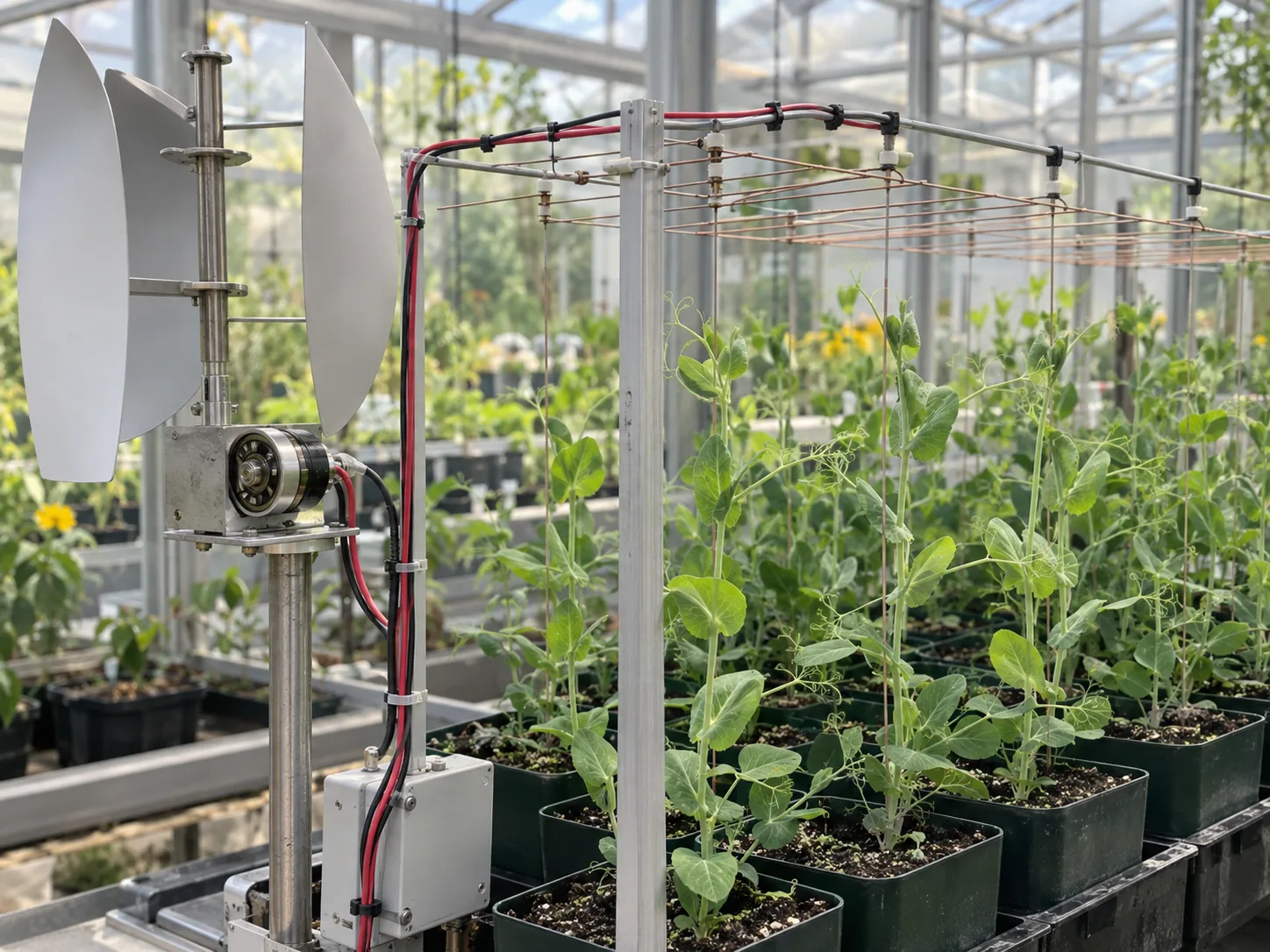
That result is interesting, but it does not test a copper stake. The research used a purpose-built energy-harvesting system, electrodes, and a field delivered to pea plants. It cannot substantiate claims about an unpowered spiral, fertilizer replacement, flavor, or pest deterrence. Nor does one crop experiment establish that the same treatment is ready for routine use in every home garden.
Other electrical-stimulation experiments also differ in their crop, equipment, field strength, timing, and outcome. A study that shocks seeds to examine germination is not a test of a stake around a mature tomato. A field experiment with wires and a power supply is not a test of a passive antenna. Science reporting on plant bioelectricity describes a growing and varied research area, but the results remain tied to the exact treatment and setup studied. BBC Future’s overview of crop electricity research offers useful examples of that broader field.
What electroculture cannot promise
A product or social post may promise several outcomes at once: faster growth, more flowers, sweeter produce, nitrogen-rich soil, fewer pests, and no need for fertilizer. Each claim requires its own evidence. A measured response in one crop or laboratory setup does not establish all of them.
Fertilizer replacement and soil nitrogen
There is no good evidence that a passive copper stake fixes enough nitrogen to nourish a garden crop or eliminates the need for fertilizer. Nitrogen fixation requires a specific biological or physical process. Lightning can convert atmospheric nitrogen into compounds that enter soil with rain, and engineered systems can use electrical discharge for other processes. That does not mean an ordinary copper coil is making nitrogen available to roots.
If a bed is struggling, assess fertility with a soil test and follow local recommendations. Soil tests can identify pH or nutrient imbalances and help prevent both underfeeding and unnecessary applications. For containers, start with a suitable potting mix and fertilize according to the crop’s needs and the mix label. A copper stake cannot tell you which nutrient is short.
Faster growth, larger harvests, and better flavor
The copper-rod trial did not find a consistent increase in height, photosynthesis, or harvest biomass. It did not measure flavor or nutrient density, so it cannot answer whether passive stakes alter taste. The responsible interpretation is not that no future experiment could ever find an effect; it is that current claims go beyond what has been demonstrated for the popular method.
A plant can look taller or greener in a before-and-after photo because of age, sun exposure, watering, weather, pruning, or camera angle. Yield is especially easy to misjudge by eye: one plant may look larger while producing less edible mass, or a crop may ripen at a different pace without producing more over the full season. Claims of faster maturity should use dates and consistent criteria; yield should be weighed across matched plants, not estimated from a memorable specimen.
Flavor also depends on cultivar, maturity, water stress, soil, harvest timing, and storage. To show an electrical treatment changed flavor, a study would need a blinded tasting or chemical measurement alongside a sound control. A testimonial that fruit tasted sweeter after installing a spiral cannot isolate the spiral as the cause.
Pest and disease control
Copper can affect some organisms at particular concentrations, which is why specific copper compounds are used in certain regulated products. That is not evidence that a small copper wire deters beetles, aphids, or plant disease. Pest-control claims need tests that identify the pest, compare treated and untreated plants, and measure damage or population over time.
Do not delay an established pest or disease response while waiting for an antenna to work. Identify the problem, inspect the whole plant, and use an integrated approach suited to the pest: sanitation, barriers, hand removal, biological controls, or a labeled treatment when appropriate. A copper spiral is not a replacement for diagnosis.
Where the idea came from
People have experimented with electricity and crops for centuries. In the 18th century, Jean-Antoine Nollet reported on electrical effects in plants. In the late 19th century, Finnish researcher Selim Lemström connected plant growth with atmospheric electricity and conducted experiments involving electrical equipment. Early enthusiasm produced field trials and competing claims, but findings were variable and the practice never became standard crop management. A historical field paper from the Journal of Agricultural Science shows that researchers were already trying to test electroculture systematically in 1924.
The history helps explain why a modern claim can feel familiar: the idea of harvesting atmospheric electricity has resurfaced in different forms. It should not be mistaken for a continuous record of dependable harvest gains. Old experiments used different equipment and controls, and their results should be read in their historical context rather than treated as proof for a modern product.
Today’s viral copper stakes are a newer, simpler practice. A Washington State University Extension article quotes horticulturist Linda Chalker-Scott and notes that reliable scientific evidence for the popular claims is lacking; it recommends soil testing and locally appropriate growing advice instead. Washington State University Extension’s electroculture article is a useful horticultural perspective alongside the direct PLOS experiment. For a practical overview that also checks the claims against the available research, see the BloomingExpert electroculture review.
Should you try electroculture in your garden?
If you are interested in the idea and already have a little copper wire, a small, controlled comparison can be a harmless garden curiosity. Treat it as an experiment, not a proven growing method. Do not pay a premium for a kit based on promises of guaranteed yield, pest control, or fertilizer-free gardening.
Decide what result would count before planting. If you care about harvested weight, weigh edible produce from every plant. If the claim is earlier maturity, record the date each plant reaches a predefined harvest stage. If the claim is faster germination, count emerged seedlings at the same time each day. Choose one main outcome so you do not search afterward among many measurements for whichever one happened to improve.
How to run a fair small-scale comparison
Start with one crop that grows reliably in your conditions, such as mustard greens or lettuce, and enough plants to create several pairs. One treated plant and one control plant are too few: ordinary differences between seeds can overwhelm a small effect. Use the same seed packet or cultivar, pot size, soil or potting mix, planting depth, and planting date. For a container comparison, prepare all pots together and use the same volume of mix.
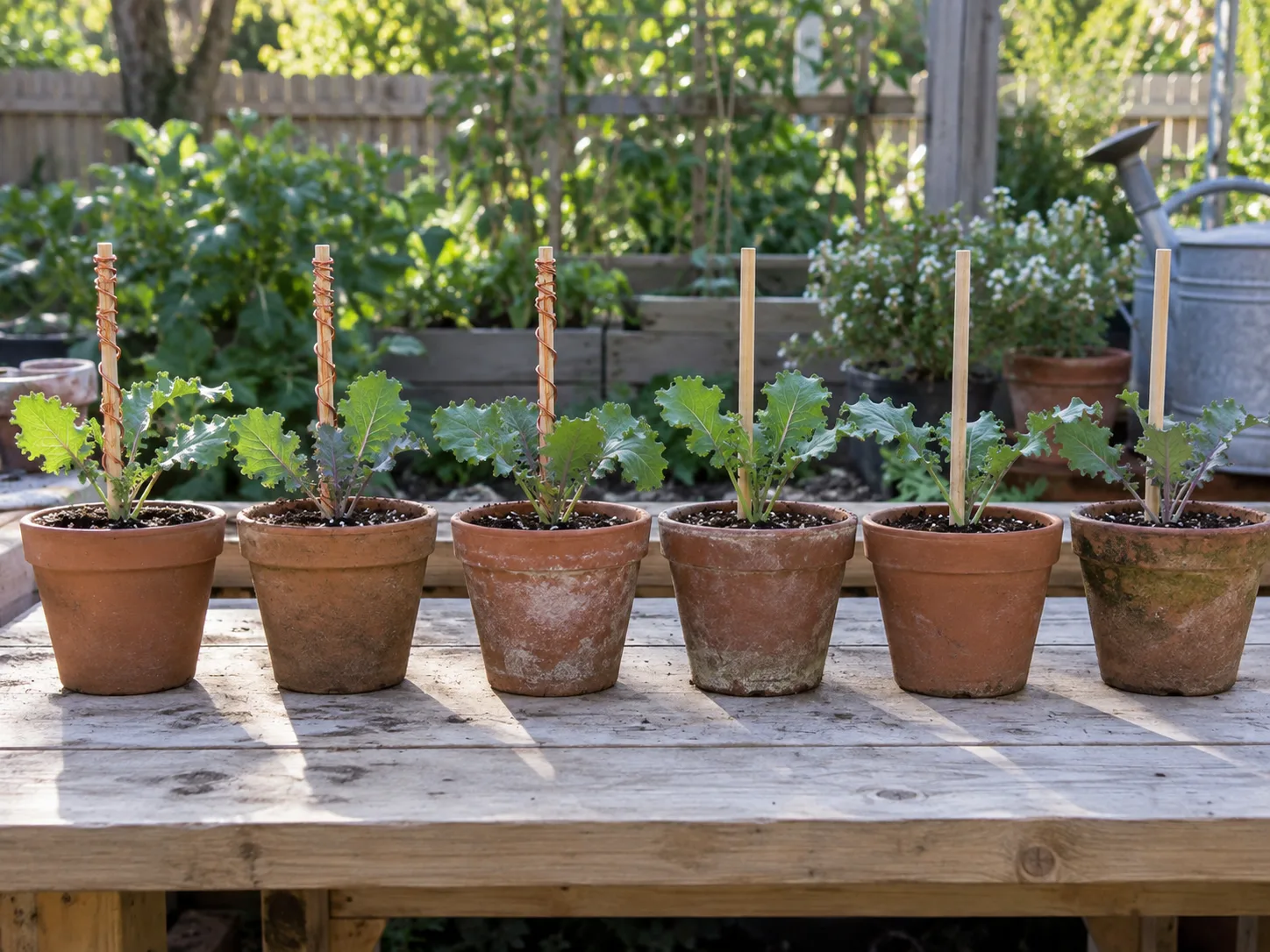
Randomly assign one plant in each pair to the copper stake and one to the control. Give the control a plain wooden stake if the copper treatment uses a stake, so you are comparing the copper wire rather than the support itself. Label pots with neutral codes if someone else can help with measurements. Randomly arrange them, then rotate their positions on a schedule so that the sunniest bench edge or brightest patch does not always favor one group.
Keep watering, light, fertilizer, pruning, and pest management the same. Do not add extra compost to the treated plants or move them into a better spot midway through the trial. Record the starting size and take photos from the same distance and angle at regular intervals. Note any plant lost to pests or damage rather than quietly removing it from the comparison.
At harvest, use a kitchen scale for edible yield. Compare the average across treated plants with the average across controls, and note the range too. If the stakes appear to help one plant but not the others, repeat the test in another planting rather than treating one lucky plant as proof. A strong result should show a meaningful difference, appear across multiple plants, and be repeatable in a second round.
Keep the trial separate from your whole garden so you are not risking an important crop. Don’t connect a stake to household wiring, batteries, capacitors, or improvised high-voltage equipment. Testing a passive copper coil does not require electrical hazards. If a method needs a power supply or produces high voltage, it is research equipment—not a casual garden project.
Better-supported ways to improve plant growth
For a larger harvest, begin with the factors that reliably shape growth. Match each crop to your season and available sunlight. Use a well-drained growing medium, give roots enough space, and water consistently rather than alternating drought with saturation. Check the seed packet or a local Extension guide for spacing and planting dates that fit your climate.
Build fertility from a soil test instead of assuming that more fertilizer is always better. Correct pH or a documented nutrient shortfall, and avoid applying amendments the soil does not need. Add organic matter when it suits the bed and local guidance. Keep weeds from competing with seedlings, monitor pests early, and choose varieties suited to local disease pressure.
These steps are less mysterious than an antenna, but they give you something electroculture kits do not: a clear reason for the intervention and a way to see whether it addressed the actual limit on your crop.
Safety, cost, and environmental cautions
An unpowered coil is not the same hazard as powered electrical equipment, but wire ends can be sharp and a stake can be a trip or eye hazard in a busy bed. Cap or bend cut ends safely, place stakes where people will not run into them, and remove wire before digging or composting the bed.
Copper is persistent in soil. A single small piece of wire is not equivalent to applying a copper pesticide, but repeated additions and corrosion are reasons not to scatter copper around a garden without a demonstrated need. Keep loose wire and small parts away from children and pets. If you use a product with a power source, follow the manufacturer’s safety instructions; do not improvise mains or high-voltage connections outdoors.
Consider the opportunity cost, too. A stake may be cheap, but money and attention spent on an unproven method cannot fix poor light, unsuitable varieties, dry soil, or an actual nutrient shortage. A small side-by-side trial is a reasonable way to satisfy curiosity. Replacing reliable care or purchasing expensive devices on the promise of dramatically larger crops is not.
Conclusion
Electroculture is not one method. There is early and continuing research on measured electrical treatments, and specialized powered or energy-harvesting systems have produced crop responses in particular experiments. Those findings do not validate passive copper spirals in home beds.
The most direct controlled test of copper-wrapped stakes found no consistent growth or yield benefit across four container vegetables. That evidence can change as more well-designed, replicated studies are published, but a gardener should not count on copper wire to replace fertilizer, increase harvests, or keep pests away. If you want to explore it, compare several treated plants with matched controls, keep all other care the same, and weigh the harvest. For dependable improvement now, focus first on light, water, soil, variety, and pest management.