Mustard Greens Care Guide: Grow Brassica juncea
Brassica juncea
Grow mustard greens (Brassica juncea) in India with winter sun, evenly moist fertile soil, cultivar-aware spacing, and outer-leaf harvesting. Includes container and succession-sowing tips.
Mustard Greens Care Guide: Grow Brassica juncea
Start with wateringThe most common care mistake for Mustard GreensWatering guide → →Mustard Greens care essentials
Light
Water
Keep the root zone evenly moist while leaves are developing, but never saturated. Water deeply when the top 2–3 cm feels dry and let excess drain.
Soil
Fertile, moisture-retentive but well-drained loam rich in organic matter. Aim for pH 5.5–7.0; steady moisture supports tender, less fibrous leaves.
Humidity
Temperature
Fertilizer
About Mustard Greens
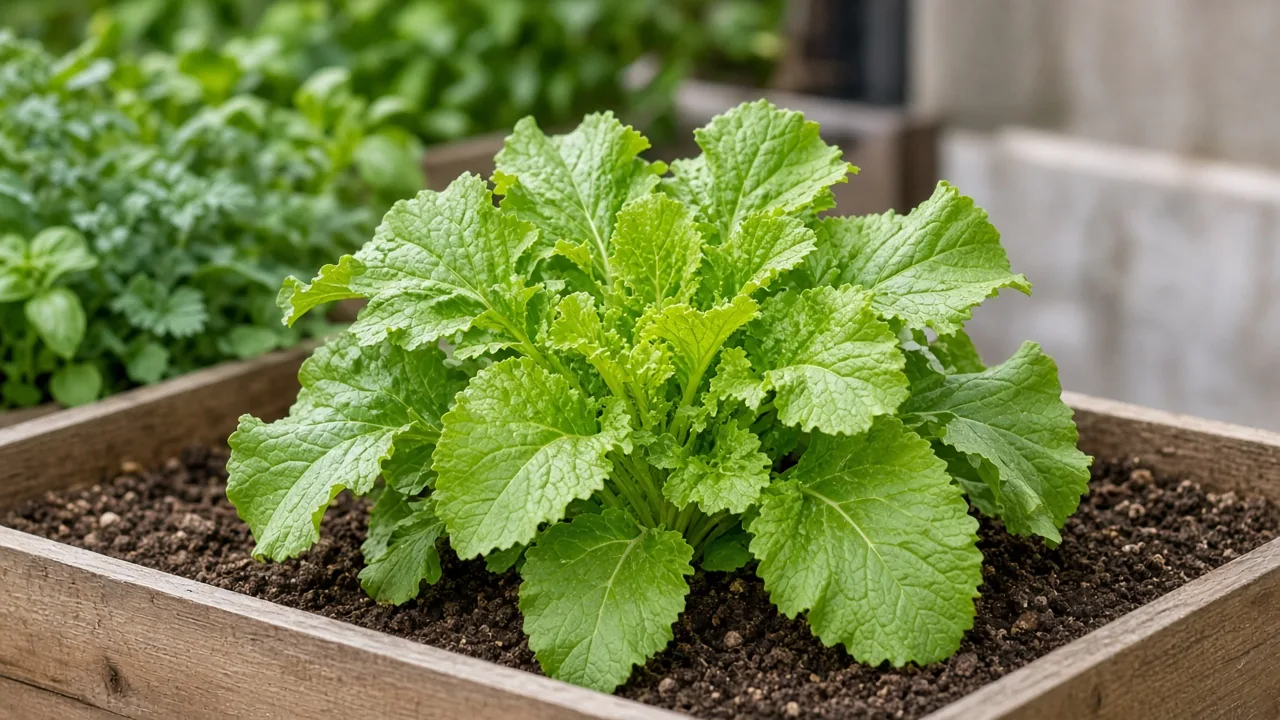
Mustard Greens is native to Temperate and subtropical Asia; long cultivated across India, Nepal, China, and Japan, typically reaches 30–60 cm tall and 30–60 cm wide; vigorous cultivars can reach about 90 cm indoors, with fast - baby leaves in about 3 weeks and usable harvests in 40–50 days growth. Mustard Greens has a herbaceous annual, sometimes biennial when left to flower growth habit and part of the Brassicaceae family. It is also known as Sarson, Indian Mustard, Rai Saag, Brown Mustard, Chinese Mustard, Leaf Mustard, and Gai Choi.
| Detail | Information |
|---|---|
| Also known as | Sarson, Indian Mustard, Rai Saag, Brown Mustard, Chinese Mustard, Leaf Mustard, Gai Choi |
| Native region | Temperate and subtropical Asia; long cultivated across India, Nepal, China, and Japan |
| Mature size | 30–60 cm tall and 30–60 cm wide; vigorous cultivars can reach about 90 cm |
| Growth rate | Fast - baby leaves in about 3 weeks and usable harvests in 40–50 days |
| Growth habit | Herbaceous Annual, Sometimes Biennial When Left To Flower |
| Scientific name | Brassica juncea |
| Family | Brassicaceae |
Mustard Greens Care Guide: Grow Brassica juncea
Mustard greens (Brassica juncea) are a fast cool-season brassica grown for peppery leaves used fresh, stir-fried, or cooked as saag. Unlike long-lived houseplants, they behave as a seasonal leaf crop: you sow when air is mild, harvest outer leaves for weeks, and plan a fresh planting when heat or bolting ends the useful run. Cornell Home Gardening classifies mustard greens as a cool-season cabbage-family vegetable with a distinct peppery bite in salads and cooked greens.
In India and Nepal you will see the same species sold as sarson, rai saag, brown mustard, Chinese mustard, or gai choi, depending on region and leaf type. All of those names still point to B. juncea for kitchen harvests—not to be confused with oilseed mustard (also B. juncea in many fields, called rai or raya for seed oil) bred for seed rather than tender leaves. Read the seed packet: leaf cultivars list days to harvest and mature spread; oil types will not give the same saag texture.
What Mustard Greens Are and How They Grow
Scientific identity, aliases, and brassica relatives
Brassica juncea belongs to Brassicaceae, the cabbage family. That family link matters for pests, soil diseases, and crop rotation—mustard grown beside cauliflower, broccoli, or kale every season invites recurring aphids, caterpillars, and clubroot pressure. NC State Extension Gardener Plant Toolbox notes the species is an annual herb introduced widely from Eurasia and cultivated for edible leaves, flowers, and seeds.
Garden mustard is not the same plant as yellow table-mustard seed from Sinapis alba (white mustard) or black mustard B. nigra, though all share pungent glucosinolates. For LeafyPixels care, assume leaf mustard packets unless the label specifies an oilseed type.
Growth habit, mature size, and annual life cycle
Plants form a low mound or short stem with large lobed or curled leaves, commonly 30–60 cm tall and wide on the hub profile, with vigorous cultivars stretching taller. Cornell Home Gardening lists typical garden height between 0.5 and 2 feet with a cushion-like clump. Growth is rapid: baby leaves can be ready in about three weeks, while full-size cooking greens often need 40–50 days on popular cultivars NC State Extension Gardener Plant Toolbox.
Mustard is botanically an annual. If you leave plants through lengthening days and heat, they bolt—flower stems rise, yellow four-petaled blooms open, and leaf flavor turns harsh. Most balcony growers finish the crop after bolting rather than saving seed, unless they deliberately grow a seed line.
Why Mustard Greens Are a Cool-Season Crop
Ideal temperatures and bolting triggers
Mustard develops its best texture in mild, cool air. LeafyPixels hub guidance centers on roughly 10–24 °C for steady leaf growth. NC State Extension Gardener Plant Toolbox describes mustard as a cool-season plant that performs in fall and spring, bolting with a stronger flavor in summer. Epic Gardening places the comfortable active band near 50–75 °F (10–24 °C) and notes that sustained heat above about 85 °F (29 °C) intensifies pepper and bitterness.
Moisture stress and heat stress both push leaves toward sharp, unpleasant heat NC State Extension Gardener Plant Toolbox. Light frost often sweetens leaves; a hard freeze kills the crop—plan protection only if your winter drops below what your cultivar tolerates. Cornell Home Gardening notes light frost tolerance, with curly types often handling cold better than straight-leaved forms.
Sowing windows for Indian plains and hills
On Indian plains (Delhi, Pune, Bengaluru lowlands, etc.), treat mustard greens as an October–March crop. Sow or transplant from October into November so most growth rides winter sun; harvest through late winter and expect quality to fall once sustained heat returns in March–April. In cooler hill districts, the season can start earlier and run longer with milder nights, though monsoon humidity still raises mildew risk.
This calendar is the core difference between mustard and generic “keep it on the windowsill forever” advice. Hot lowland summer sowings usually bolt before you get a useful saag harvest—start again when nights cool.
Light Needs in Brief
Mustard wants full sun during the cool season—about six or more hours of direct light on most days NC State Extension Gardener Plant Toolbox. Cornell Home Gardening allows part shade, especially as weather warms; light afternoon shade on an unseasonal warm winter day can reduce wilting. Deep shade produces thin, stretched leaves with weak flavor and slow regrowth.
On a north Indian winter balcony, a south- or west-facing rail often delivers enough light without the scorch risk of summer noon sun. For window orientation, reflectors, and heat-stress signs, use the dedicated Mustard greens light guide. This overview only sets the rule: bright winter sun, cautious shade when heat spikes.
Water and Root-Zone Basics
Mustard roots stay fairly shallow, so the top few centimetres of mix dry first. Keep the root zone evenly moist, never waterlogged. Push a finger 2–3 cm into the soil; water deeply when that layer feels dry while deeper mix remains slightly damp—the same finger test described on the Mustard greens hub and expanded in the Mustard greens watering guide.
NC State Extension Gardener Plant Toolbox recommends rich, consistently moist, well-drained soil and watering early in the day so foliage dries before night, which lowers fungal disease risk. Empty saucers after drainage so the crown does not sit in stagnant water. Severe drought speeds bolting and makes leaves fibrous and harsh; constant sogginess yellows lower leaves and invites stem rot at the soil line.
Soil, pH, and Container Choice
Fertility, drainage, and pot volume
Mustard thrives in fertile, moisture-retentive, well-drained loam high in organic matter. Cornell Home Gardening targets pH 6.0–7.5 with plentiful consistent moisture; Epic Gardening narrows to about 5.5–7.0—both ranges fit a compost-heavy container blend. NC State Extension Gardener Plant Toolbox lists neutral 6.0–8.0 soil pH with good drainage and moist conditions.
A workable mix mirrors the hub recipe: roughly 50% quality potting mix or loam, 30% mature compost, and 20% perlite or coarse coco chips. Extremely gritty mixes dry too fast for shallow roots; dense, airless mixes invite crown rot.
Match pot volume to vigor. One full-size plant deserves at least a 15–20 litre container with drainage holes; baby-leaf trays can be wide and shallow with denser seeding. Wide pots outperform narrow tall ones because mustard roots spread horizontally more than they dive deep. Repotting schedules and seedling pot-ups live in the Mustard greens repotting guide and Mustard greens soil guide.
Cultivars and Leaf Types on Seed Racks
Seed catalogs group mustard by leaf shape, color, and heat. Florida Broadleaf and tendergreen (mustard spinach types) tend toward milder, smoother leaves. Red Giant, Green Wave, and Southern Giant Curled build sharper pepper, especially as leaves mature or when water is withheld. Cornell Home Gardening highlights Green Wave and Red Giant as reliable garden types with varied leaf color and texture.
Mizuna and other Asian mustard greens are sometimes related brassicas with different species labels—still cool-season, but check spacing and days to harvest on each packet. Oilseed rai lines are the wrong choice if you want tender saag leaves.
Planting, Spacing, and Succession Sowing
You can direct-sow or transplant seedlings with 3–4 true leaves. Cornell Home Gardening advises sowing ¼–½ inch deep, thinning to about 6 inches for smaller types or up to 18 inches for large cultivars, with rows 6–8 inches apart in beds. Germination often occurs in 4–7 days once soil is warm enough—Cornell lists 45–85 °F germination temperatures, with seed viable for several years in cool dry storage.
Succession sow every two to three weeks during suitable weather NC State Extension Gardener Plant Toolbox so one bolting wave does not end your entire supply. On the plains, small October–January sowings beat one oversized January planting that matures all at once. Propagation timing, seed depth, and indoor starts are detailed in the Mustard greens propagation guide.
Harvesting Without Stopping Production
Mustard is a cut-and-come-again crop when you protect the central growing point. Pick the oldest outer leaves once they reach useful size and leave the bud intact so new foliage keeps emerging Epic Gardening. Baby leaves may be ready near 40 days or sooner for microgreen cuts; full-size bunches often land in the 40–50 day window on the hub profile.
Use young leaves raw in salads if heat is mild; larger leaves benefit from quick stir-fry or saag-style cooking that softens texture. Stop expecting good regrowth after bolting, severe root-binding, or sustained heat—succession sow the next cool window instead. Pruning damaged lower leaves without stunting the crown is covered in the Mustard greens pruning guide.
Pests, Diseases, and Brassica Rotation
Mustard attracts typical brassica pests: aphids and whiteflies on leaf undersides, caterpillars on foliage, and flea beetles on young seedlings Cornell Home Gardening. NC State Extension Gardener Plant Toolbox also lists slugs and snails. Inspect both sides of leaves weekly; hand-pick caterpillars on small plantings and isolate badly infested pots before pests spread to neighboring brassicas.
Downy mildew and other leaf diseases increase when foliage stays wet overnight—water at the base and improve airflow between pots. Cornell Home Gardening recommends not planting mustards or other cole crops in the same garden spot more than once every three to four years. Refresh container mix between seasons if last year’s brassica crop showed clubroot or persistent wilting.
Common Mustard Greens Care Mistakes
Growing through hot lowland summer is the most frequent error—plants bolt and leaves turn bitter regardless of extra watering. Overwatering during cool, cloudy weeks when evaporation is low causes yellow lower leaves and crown rot; confirm dryness before adding more water. Too little light on a shaded winter porch produces pale, stretched plants that never thicken.
Skimping on pot size for large curly cultivars leads to daily wilt and early bolting because roots cannot buffer moisture or nutrients. Harvesting the growing point by accident ends production—take outer leaves only. Ignoring packet spacing sets unrealistic expectations between baby-leaf trays and Southern Giant–scale plants that need half-metre width.
Pets, Pesticides, and Edible Leaves
Mustard greens are a human food crop, not an automatically pet-safe ornamental. Major pet-toxicity databases such as ASPCA Animal Poison Control do not provide a clear species-specific Brassica juncea listing; LeafyPixels treats cats, dogs, and other animals as caution until a veterinarian approves feeding. Prevent routine grazing, especially from pesticide-treated leaves, and seek veterinary advice for animals with thyroid, urinary, or digestive conditions.
Edibility for people is not proof of unlimited safety for every species. Glucosinolates that create mustard’s bite may be unsuitable in large or repeated animal servings.
When to Use This Page vs Other Mustard Greens Guides
Use this overview when you need the whole picture—identity, season, light and water summary, soil pH, harvest style, and mistake avoidance—before diving into a single topic. Open the Mustard greens light guide for sun hours, balcony placement, and heat-stress signs. Use Mustard greens watering when wilt, saucer habits, or seasonal frequency need troubleshooting.
Mustard greens soil and Mustard greens fertilizer cover mix recipes, pH tweaks, and nitrogen timing without repeating here. Mustard greens repotting and Mustard greens propagation walk through seedling pot-ups, sowing dates, and transplant care. For crown cleanup and harvest cuts, see Mustard greens pruning.
Related Mustard Greens Guides
- Mustard greens hub — profile, grower notes, and quick-care summary
- Mustard greens light — winter sun, shade in heat, leggy growth prevention
- Mustard greens watering — finger-test depth, container frequency, wilt clues
- Mustard greens soil — mixes, pH, drainage, wrong-soil signs
- Mustard greens fertilizer — nitrogen timing, dilution, overfeeding risks
- Mustard greens propagation — sowing dates, transplants, succession batches
Conclusion
Mustard greens reward growers who respect cool-season biology: sow or buy plants for winter sun on the plains, keep fertile soil near pH 5.5–7.0, and maintain even moisture without waterlogging. Harvest outer leaves, protect the central bud, and succession sow every few weeks while weather stays mild. Match container size and spacing to your cultivar, rotate away from other brassicas, and plan a fresh planting when heat or bolting ends the useful leaf phase. For deeper instruction on any single lever—light, water, soil, feed, propagation, or pruning—follow the sibling guides above rather than treating mustard like a generic evergreen houseplant.
How to care for Mustard Greens?
When should you water Mustard Greens?
Keep the root zone evenly moist while leaves are developing, but never saturated. Water deeply when the top 2–3 cm feels dry and let excess drain.
- Push a finger 2–3 cm into the mix and water when that layer feels dry while the soil below remains slightly moist - Water deeply when the top 2–3 cm feels dry and let excess drain.
- Drain excess water - Water deeply when the top 2–3 cm feels dry and let excess drain.
What soil works best for Mustard Greens?
Fertile, moisture-retentive but well-drained loam rich in organic matter. Aim for pH 5.5–7.0; steady moisture supports tender, less fibrous leaves.
- 50% good-quality potting mix or loam - Fertile, moisture-retentive but well-drained loam rich in organic matter.
- 30% mature compost
- 20% perlite, rice hulls, or coarse coco chips - Fertile, moisture-retentive but well-drained loam rich in organic matter.
Grower notes for Mustard Greens
Grow mustard greens in cool weather
Brassica juncea makes its best leaves in mild, cool conditions, roughly 10–24°C. In most Indian plains, sow from October into November and harvest through winter; cooler hills can stretch the season. Heat and lengthening days push plants toward bolting, after which leaves turn bitter and harvest quality drops quickly.
Expect peppery flavor from the cultivar
Mustard greens are more pungent than kale or cabbage. Smooth-leaf types such as Florida Broadleaf and tendergreen are milder, while Red Giant, Green Wave, and curly southern types build sharper heat, especially as leaves mature or when water is withheld. Read the seed packet so spacing and days to harvest match the variety you sow.
Match the container to vigor
Mature plants commonly reach 30–60 cm tall and wide, with large cultivars filling more space. Use at least a 15–20 litre pot for one full-size plant, or grow baby-leaf mixes densely in a wide shallow tray. Mustard roots stay fairly shallow, so wide containers often outperform narrow tall pots.
Give winter sun and steady moisture
Provide at least six hours of direct sun in the cool season. Light afternoon shade can reduce heat stress on warm winter days. Water at the base to keep foliage dry, and avoid saucers that leave the mix waterlogged. Mild frost can sweeten leaves; hard freezes kill the crop.
Harvest outer leaves and succession sow
Pick the oldest outer leaves once they reach useful size and leave the central bud intact for cut-and-come-again harvests. Baby leaves may be ready in about three weeks; full-size cooking greens often take 40–50 days. Sow small batches every two to three weeks during suitable weather instead of relying on one long-lived plant.
Keep edible leaves pet-aware
Mustard greens are a human food crop, but that does not establish unrestricted safety for every pet species. Major pet-toxicity databases do not provide a clear species-specific Brassica juncea listing. Prevent routine grazing, avoid pesticide-treated leaves, and ask a veterinarian before offering mustard greens as food.
Is mustard greens safe for pets?
Mustard greens are edible for people, but a clear species-specific classification for pets was not confirmed in the major poison-control database reviewed. Prevent unsupervised grazing and consult your veterinarian before feeding them.
Human edibility is not proof of pet safety. Mustard greens contain bioactive brassica compounds, including glucosinolates that contribute to their pungency, and large or repeated servings may be unsuitable for some animals. Keep pesticide-treated plants inaccessible and contact a veterinarian if a pet eats a large amount or develops digestive signs.
Watering Mustard Greens
For Mustard Greens, push a finger 2–3 cm into the mix and water when that layer feels dry while the soil below remains slightly moist and water check every 2–3 days in containers; water according to soil dryness, weather, pot size, and plant growth rather than a fixed calendar. Water more often during dry, sunny spells and less in cool or rainy weather; do not let winter containers stand in water.
| Detail | Information |
|---|---|
| How often | Check every 2–3 days in containers; water according to soil dryness, weather, pot size, and plant growth rather than a fixed calendar |
| How to check | Push a finger 2–3 cm into the mix and water when that layer feels dry while the soil below remains slightly moist |
| Seasonal changes | Water more often during dry, sunny spells and less in cool or rainy weather; do not let winter containers stand in water |
Signs of overwatering
- persistently wet soil with yellowing lower leaves
- soft or darkened stem at soil level
- wilting while the root zone is wet
Signs of underwatering
- limp leaves and dry soil
- tough, fibrous, or sharply peppery leaves
- browned leaf margins and stalled growth
Soil & potting for Mustard Greens
Use a mix of 50% good-quality potting mix or loam, 30% mature compost, 20% perlite, rice hulls, or coarse coco chips for Mustard Greens. Free drainage is essential, but an extremely gritty mix can dry too quickly for mustard greens' shallow, moisture-demanding roots. Target soil pH around 5.5–7.0. Repot usually grown for one cool season; pot up seedlings once or transplant them into their final container rather than routinely repotting, ideally in early autumn in most Indian plains; late winter or early spring where summers stay mild.
| Detail | Information |
|---|---|
| Recommended mix | 50% good-quality potting mix or loam, 30% mature compost, 20% perlite, rice hulls, or coarse coco chips |
| Drainage | Free drainage is essential, but an extremely gritty mix can dry too quickly for mustard greens' shallow, moisture-demanding roots |
| Soil pH | 5.5–7.0 |
| Repotting frequency | Usually grown for one cool season; pot up seedlings once or transplant them into their final container rather than routinely repotting |
| Best season to repot | Early autumn in most Indian plains; late winter or early spring where summers stay mild |
Signs it needs repotting
- seedlings have 3–4 true leaves and fill their nursery cells
- roots circle densely or emerge from drainage holes
- the final container dries out within a day