15 Shade-Tolerant Vegetables for Low Light
Got 3–6 hours of sun? These 15 vegetables can still produce in partial shade, with realistic harvest expectations, planting tips, and crops to avoid.
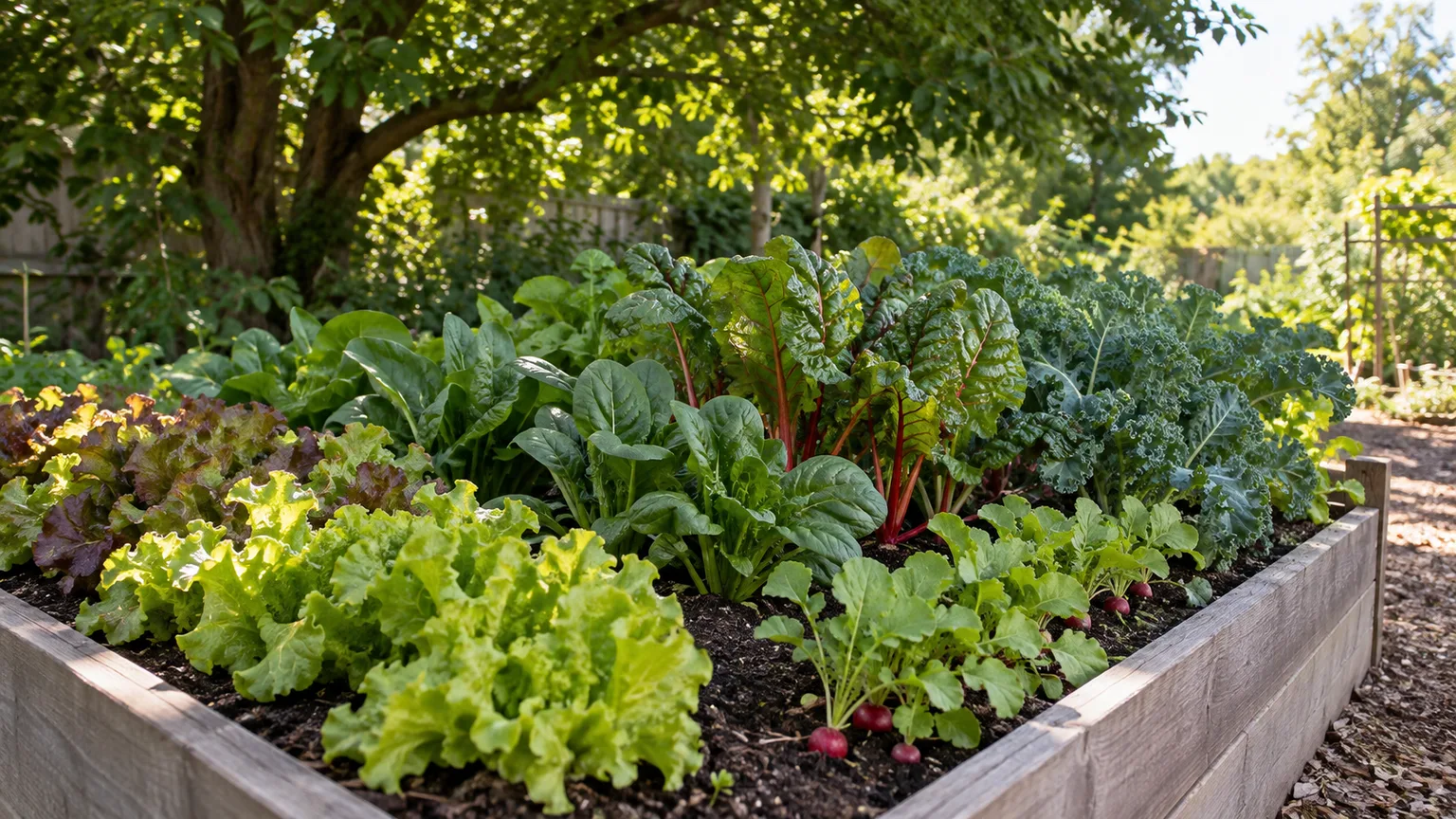
A shady yard can still grow dinner, but the crop list changes with the light. The most dependable choices are vegetables you harvest for leaves; root crops and head-forming brassicas can work when the bed gets more direct sun, but they usually take longer and may stay smaller. A dark spot beneath a dense evergreen canopy is a different challenge from a bed with four hours of morning sun.
The useful question is not simply “Which vegetables tolerate shade?” It is how many hours of direct sun reach the planting area, and what kind of harvest do you want? Use the crop profiles below as a practical ranking: start with leafy greens if your bed is dim, then try roots or larger heads only where the light is stronger.
What “shade tolerant” actually means for vegetables
Vegetable tags use “partial sun,” “partial shade,” and “light shade” inconsistently. For this guide, count only the hours when sunlight lands directly on the bed. Six or more hours is a workable full-sun baseline for many crops; about four to six hours is brighter partial shade; and three to four hours is a low-light edge where leafy crops have the best odds. Bright open-sky shade and dappled light can help, but they do not automatically replace direct sun.
That range is a starting point, not a promise. The University of Maine Cooperative Extension calls three to five hours of full sun close to the bare minimum for vegetables: it recommends leafy crops such as lettuce, spinach, chard, and other greens, and suggests testing quick radishes before committing scarce space to slower roots. Its guidance is especially useful because it separates “a plant may live” from “a crop is likely to repay the space.”
| Direct sun at the bed | Best starting point | What to expect |
|---|---|---|
| About 3–4 hours | Leaf lettuce, spinach, arugula, chard, kale, collards, mustard greens | Harvest leaves; growth is slower and succession sowing matters |
| About 4–5 hours | The greens above plus radishes, beet greens, turnip greens, small roots | Roots can form, but full-size bulbs are less dependable |
| About 5–6 hours | Carrots and selected cabbage-family crops in a cool season | Better chance of usable roots or heads, still slower than in full sun |
| Under about 3 hours | A small trial of greens, not a planned high-yield vegetable bed | Choose another site, use containers, or grow microgreens indoors |
The RHS guide to crops for shade notes that shade can be an advantage for cool-season leaves: spinach and lettuce are less likely to bolt or turn bitter when heat is moderated. But shade does not improve every crop. Plants that must build a dense head or a swollen root need more energy over a longer period, so their entry below comes with a higher light requirement. For a broader list of crops that can handle partial shade, see our guide to growing vegetables without full sun.
15 shade-tolerant vegetables, ranked by harvest reliability
The first seven are the safest bets for a bed that gets only a few hours of sun. This ranking follows the same broad distinction made in Gardening Know How’s shade-vegetable guide: leafy vegetables are generally more shade tolerant than crops grown for roots or fruit. The roots and brassicas below are worth testing as the light approaches five or six hours, especially in cool spring or fall weather. If your site gets only a brief sunbeam, do not expect every crop below to size up as it would in an open garden.
1. Leaf lettuce
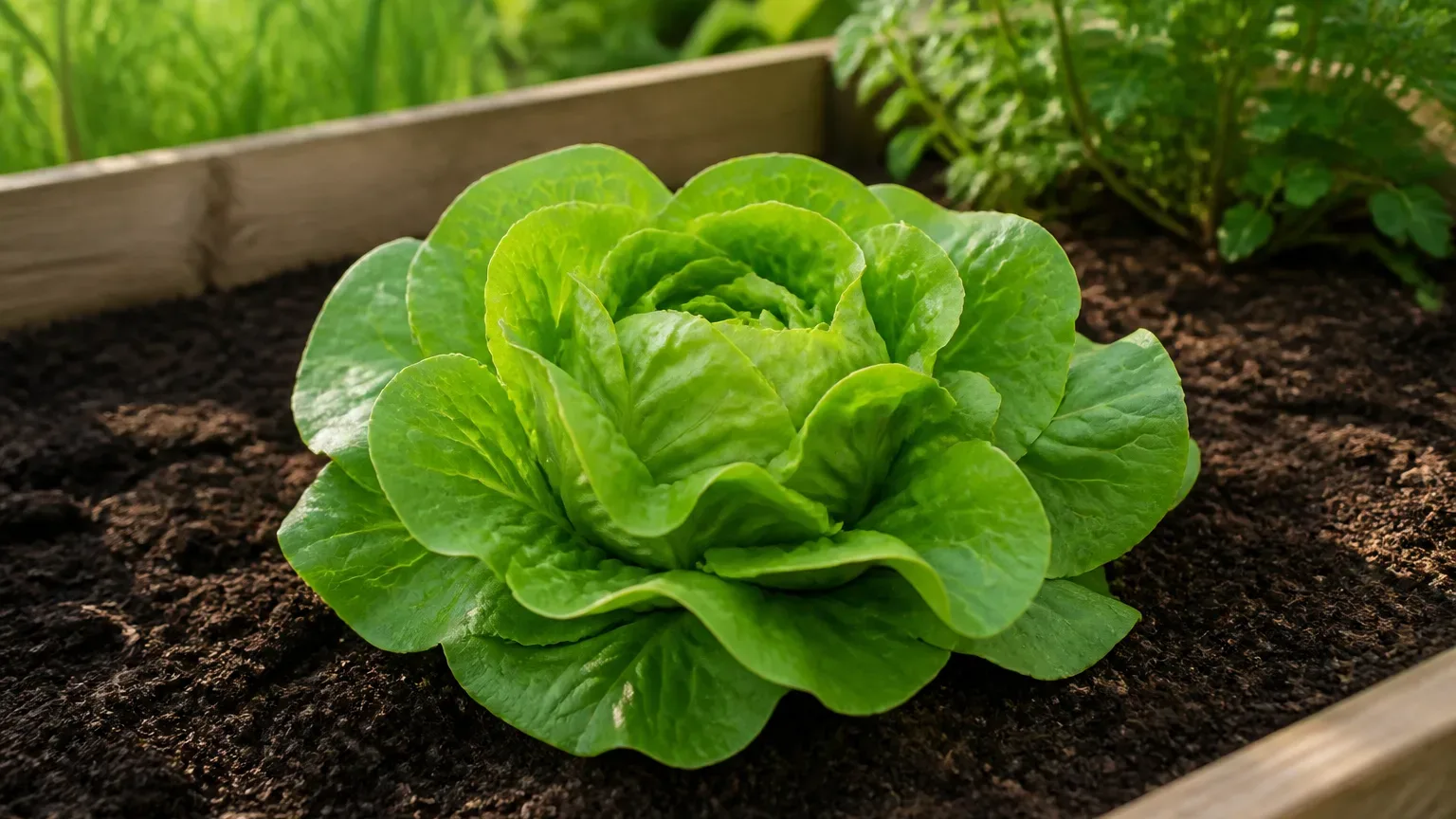
Leaf lettuce is one of the strongest choices for partial shade because you can harvest loose leaves without waiting for a dense head to form. Choose looseleaf or cut-and-come-again types, sow a short row every couple of weeks during cool weather, and pick the outer leaves while the center continues growing. Three to four hours of direct sun can produce a useful salad crop, although the plants may take longer to fill out than the days-to-maturity estimate on the packet.
Afternoon shade is particularly helpful where summer heat makes lettuce bitter or encourages it to bolt. Keep the seedbed evenly moist during germination, then check the leaves for slug damage; cool, damp beds can hide more slugs than sunny ones. Fine Gardening describes leaf lettuce producing successive harvests with three to four hours of sun, while noting that shade protects it from scorching in summer.
2. Spinach
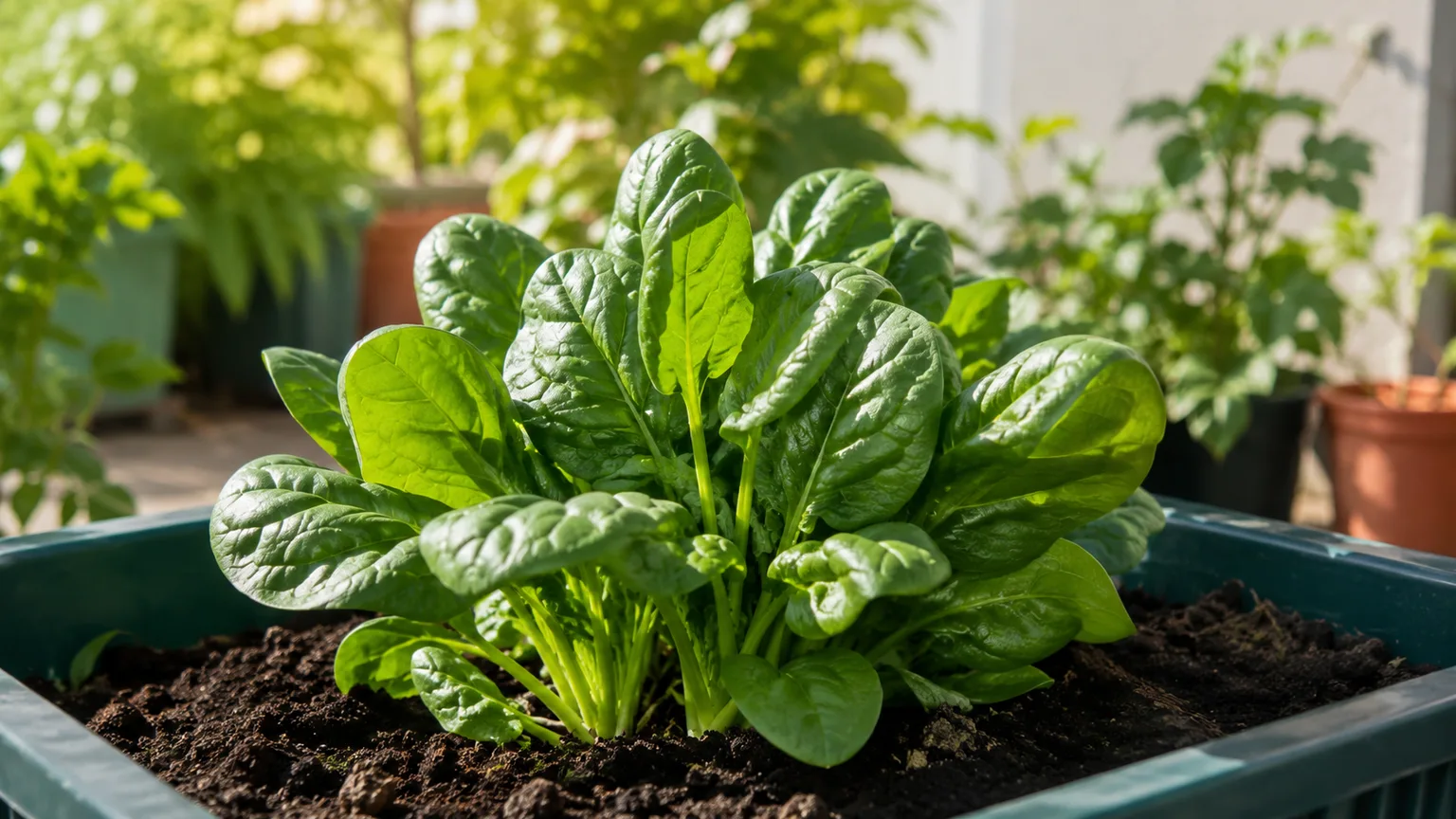
Spinach is a reliable low-light crop when you grow it in its preferred cool season. Sow it in early spring or late summer for fall harvests, and pick individual outer leaves before the plant tries to flower. Partial shade can stretch the spring harvest in a warm climate, but it will not stop bolting once days lengthen and temperatures climb; if stems begin rising from the center, harvest the remaining leaves promptly.
With only three or four hours of direct light, focus on baby leaves rather than a large, heavy bunch. A second sowing in late summer can work better than nursing a spring planting through hot weather. The RHS includes spinach among its shade crops and notes that spring-sown plants can benefit from shade because cooler conditions delay flowering.
3. Arugula
Arugula, also called rocket, earns its place in a shady garden because it is fast, compact, and useful as a young leaf. Sow a short row directly where it will grow, keep the soil consistently moist while seeds germinate, and start harvesting when leaves are still small. In partial shade, the plant may grow more slowly, but cooler conditions can keep the peppery leaves tender for longer.
Treat arugula as a succession crop, not a once-a-season planting. Re-sow a few feet of row every two or three weeks in cool weather, and stop or slow sowing when summer heat arrives. If the bed is very dim, harvest baby leaves rather than waiting for big plants; the older a leaf gets, the more assertive its flavor can become.
4. Swiss chard
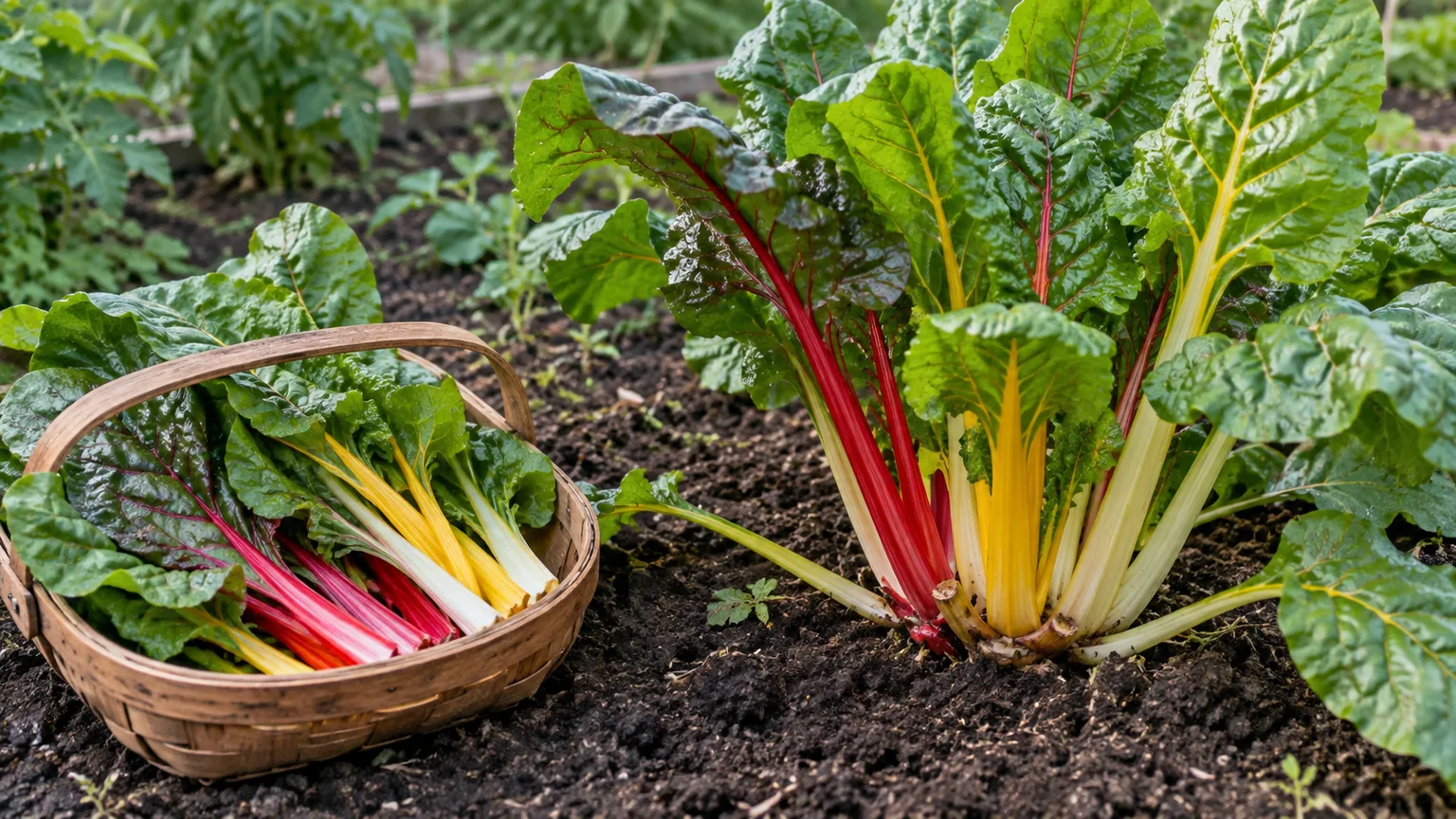
Swiss chard is a forgiving choice where the bed gets roughly three to five hours of direct sun. It gives you repeated leaf harvests instead of one head, and the colorful stems are a bonus rather than the reason it tolerates shade. Pick the outer leaves first, leaving the central growing point intact, and water during dry spells even if the area feels cool.
Chard usually handles warm weather better than spinach, so it can take over after spring greens begin to bolt. In very low light, expect slower growth and smaller leaves, not the same nonstop production you might see in a sunny raised bed. One well-spaced plant is more useful than several crowded seedlings competing for the few bright hours available.
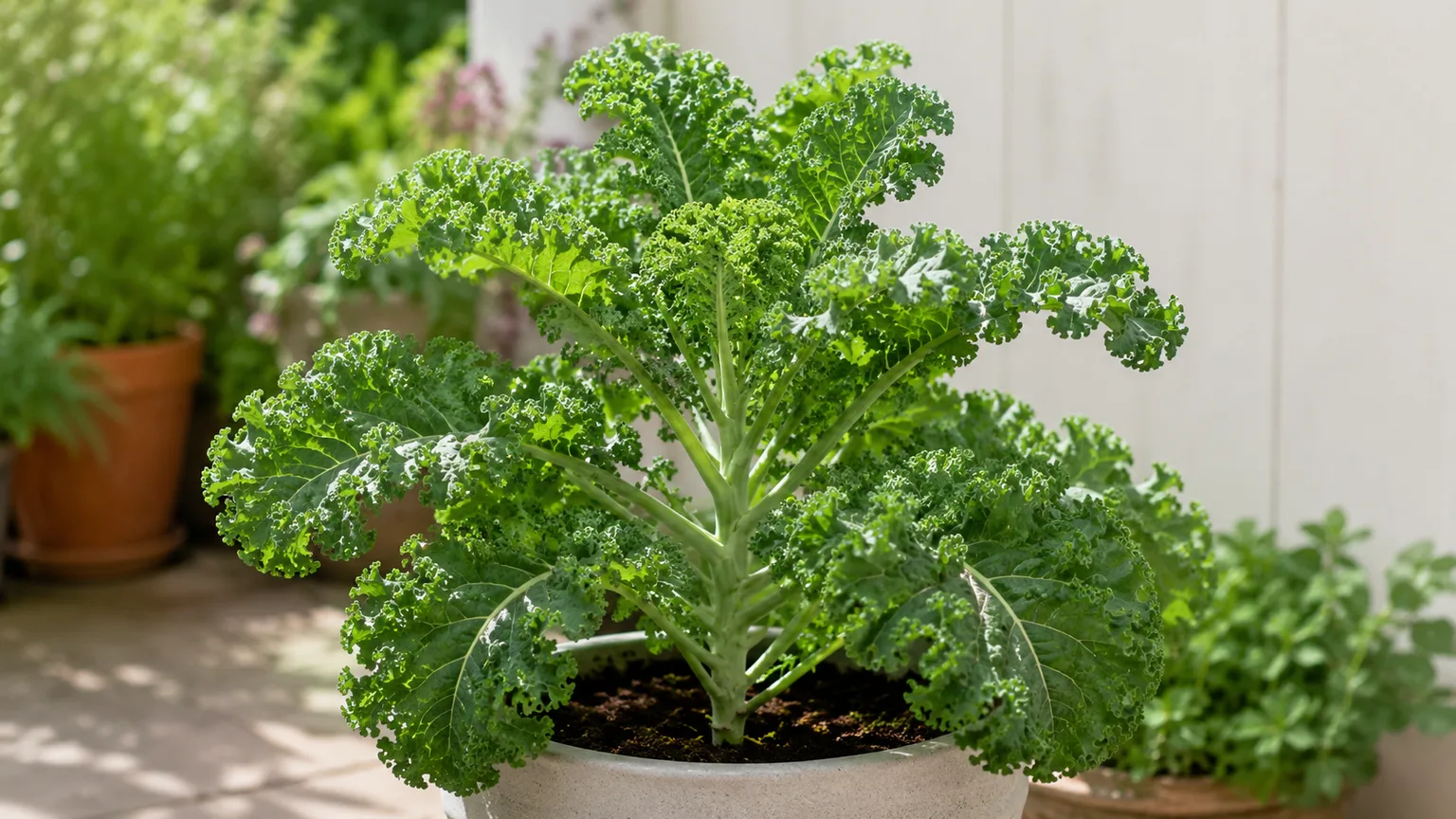
5. Kale
Kale is a steady option for partial shade, especially if you want tender leaves rather than enormous plants. Give it the brightest part of the bed, leave room around each plant for airflow, and harvest from the bottom upward. A plant receiving about four or five hours of sun can keep producing edible leaves, though it will build mass more slowly than kale in an open plot.
Use spring and fall to your advantage. Kale is a cool-season crop, and some varieties become sweeter after light frost; that does not mean frost is required for a good harvest. In warm regions, afternoon shade can protect the leaves from heat stress, but inspect the undersides for caterpillars and remove damaged leaves so they do not linger in a damp, crowded canopy.
6. Collard greens
Collards are worth growing for their leaves when the garden gets part of the day in sun. Their broad foliage can produce a useful harvest in a brighter shaded bed, but the plants need space and a long enough cool-to-mild growing window to become established. Start with healthy transplants if your spring is short; seedlings that spend their earliest weeks in dim conditions can remain undersized.
Pick a few mature leaves at a time rather than stripping the plant. In warm climates, use a spot with morning sun and afternoon shade; in cooler climates, give collards the sunniest edge of the bed. If a plant stretches toward a gap in the canopy and the leaves stay sparse, shift the next planting to a brighter location rather than compensating with extra fertilizer.
7. Mustard greens
Mustard greens are a useful fast-growing option for spring or fall, and their leaves can be harvested young for salads or larger for cooking. They tolerate partial shade better than crops grown for fruit, but they still need enough light to make steady leaf growth. Sow them in a short succession so the bed does not fill with mature leaves all at once.
Shade can keep mustard cooler in a warm spell, but hot weather and lengthening days can still trigger flowering. Once a central flower stalk appears, the leaves may become sharper and tougher. Try mustard in the brighter half of a low-light bed and use the most shaded edge for lettuce or spinach.
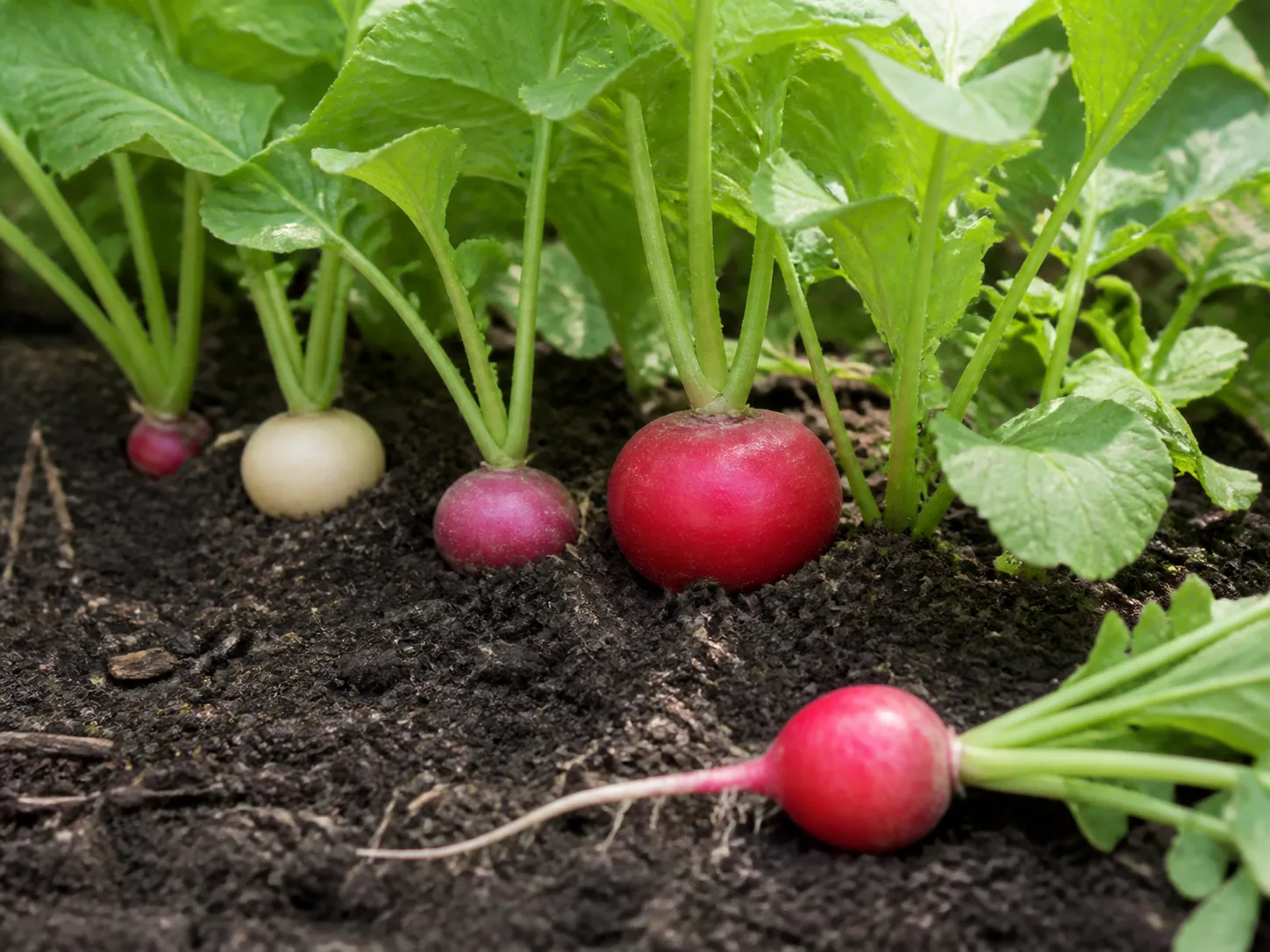
8. Radishes
Radishes are the best low-cost experiment for a shady bed because they mature quickly and tell you whether the site can support a swollen root. Sow a small test row first, thin seedlings to the spacing on the packet, and keep moisture steady. With roughly four or five hours of direct sun, many gardeners can harvest small, usable roots; with only three hours, you may get plenty of leafy tops and little root enlargement.
Pull one test radish when it looks close to size. If it is all top and no bulb, do not keep waiting indefinitely: the plant may become woody or split before the root improves. Re-sow in a cooler window, such as early spring or late summer, and use the leaves in salads or cooked dishes if the roots stay small.
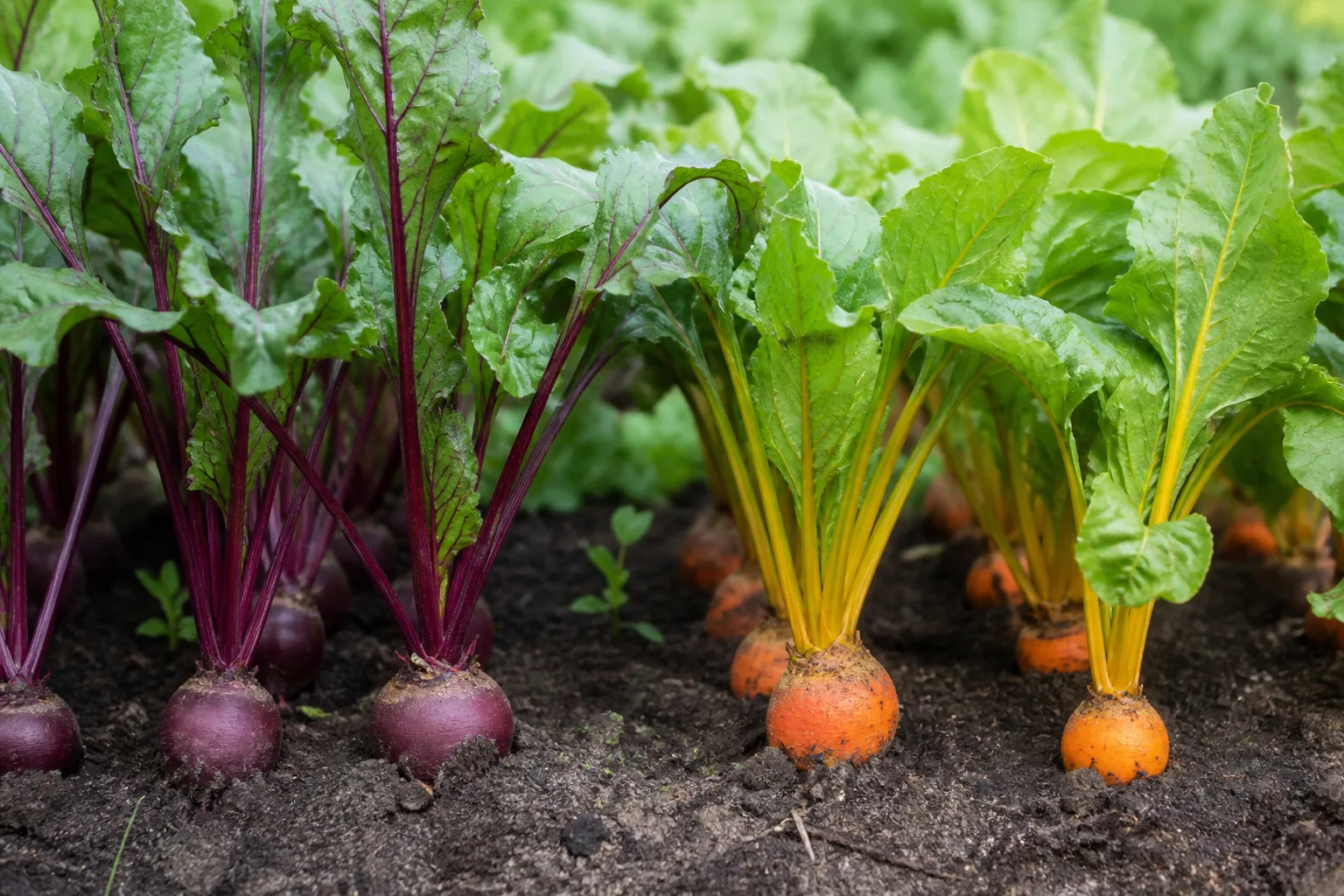
9. Beets
Beets can make two harvests: tender greens first, and roots later if the bed gets enough light. In a three- or four-hour site, plan on the leaves as the dependable crop and treat full-size roots as a bonus. Around four or five hours of direct sun gives roots a better chance to enlarge, but they may remain smaller than beets grown in an open bed.
Thin seedlings early; crowded beets compete for light and produce undersized roots even when the site is otherwise good. If you want roots, loosen the soil and avoid pushing the seed too close to a tree or hedge whose roots will steal moisture. Fine Gardening’s shade-growing profile puts beets in the four-to-five-hour range and says they may not size up as well as full-sun roots. Harvest the thinnings as greens instead of wasting them.
10. Turnips
Turnips are more useful in shade for their greens than for large roots. Sow in cool weather, thin seedlings according to the packet, and harvest a few leaves while the plant is young. If you have closer to five or six hours of sun, leave some plants to form small roots and pull a test plant before deciding whether the rest need more time.
Do not confuse “turnips tolerate some shade” with “a dark bed will produce full-size roots.” The leafy tops can look healthy while the roots stay thin. If that happens, enjoy the greens and use the same patch for another short sowing of lettuce or radishes rather than holding the bed for a crop that is not responding.
11. Carrots
Carrots are possible in partial shade, but they are a more conditional choice than leafy greens. Give them the brightest part of the bed—ideally five or six hours of direct sun—and use short-rooted or round varieties if your season is brief. Loose, stone-free soil matters as much as the variety: compact ground, fresh manure, and competing tree roots can leave roots forked, stubby, or too small to be worth the wait.
Carrot seed germinates slowly, so keep the surface evenly moist until seedlings appear. Once established, thin plants carefully and expect maturity to run past the packet estimate in low light. If the bed has only three hours of sun, grow carrots for baby roots or choose beets and turnip greens instead; the latter give a more reliable harvest from the same space.
12. Cabbage
Cabbage can grow in a brighter partial-shade bed, particularly in cool spring or fall weather, but forming a dense head takes more energy than producing loose leaves. Choose a compact variety suited to your season, space plants according to the packet, and put them where they receive the longest stretch of direct light. At four hours, you may get a smaller head or a plant that takes longer to mature.
Keep the soil evenly moist and avoid crowding the leaves against a fence or other plants. A sheltered site can slow drying after rain, so wider spacing and good airflow are important. If your priority is a dependable crop from a dim plot, harvest young outer leaves from kale or collards rather than expecting a full cabbage head.
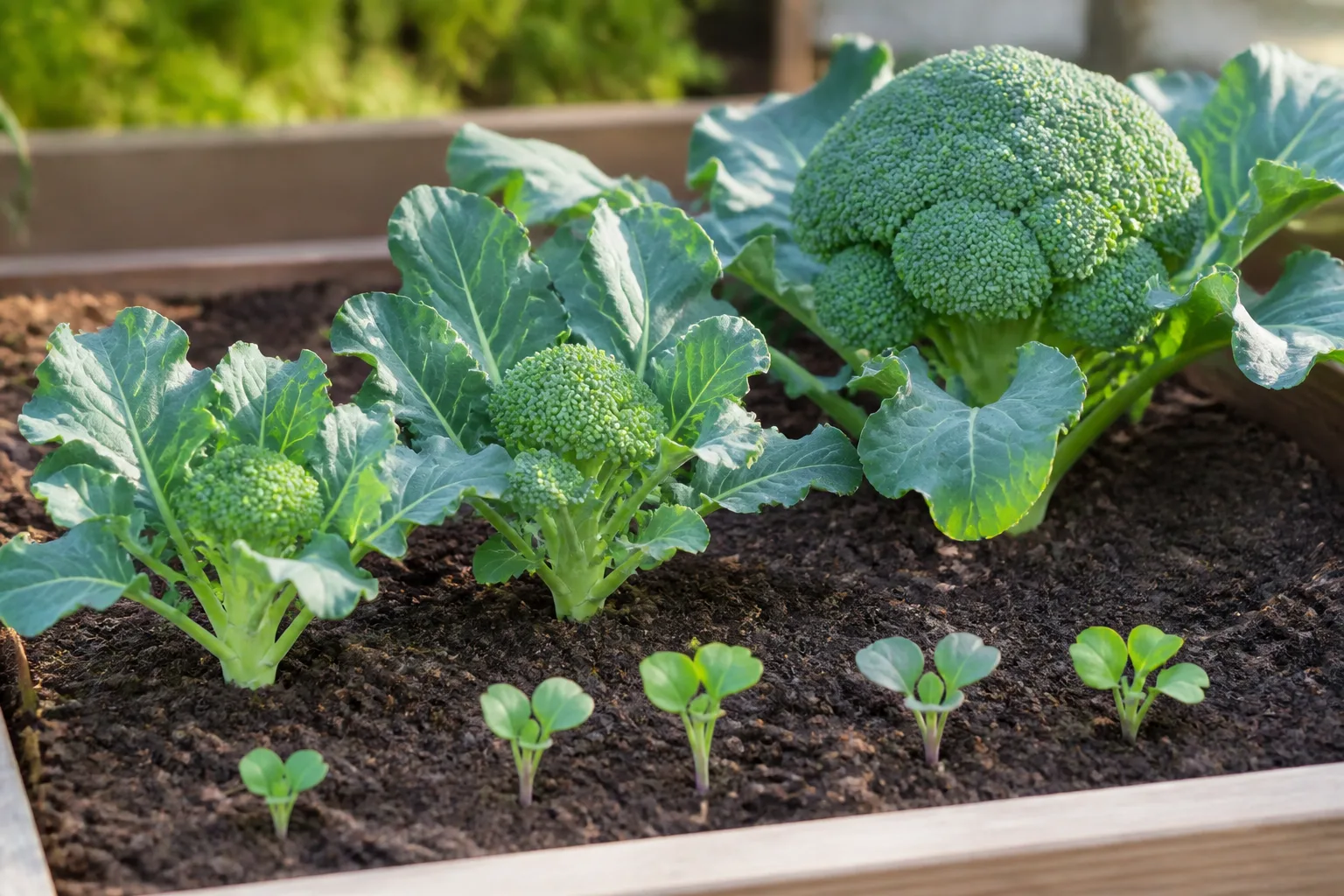
13. Broccoli
Broccoli is a reasonable trial when your bed gets about five or six hours of sun, especially in spring or fall. It can make edible heads in partial shade, but the central head may be smaller and slower to develop. Start with a transplant if the growing season is short, keep the soil from drying out, and harvest the central head while the buds are tight; side shoots may follow if the plant stays healthy.
With only three or four hours of direct light, do not make broccoli the main crop. The plant may grow plenty of leaves without building a large head, and a long wait can consume space that could produce repeated greens. The broader vegetable garden layout guide explains how to reserve the brightest zones for crops with larger light demands.
14. Cauliflower
Cauliflower is the most demanding crop on this list for a low-light gardener. It may tolerate light shade, but a reliable, compact curd is more likely when the plant gets close to full sun, cool temperatures, steady moisture, and a long enough season. If your site is around five or six hours of sun, try one plant as an experiment rather than filling the whole bed with it.
Keep the plant growing evenly: a dry spell followed by heavy watering can stress it, and heat can cause loose or premature heads. In a three-hour site, choose chard, lettuce, or mustard greens instead. That is not giving up; it is using the limited energy available in the bed for an edible part that is much more likely to form.
15. Brussels sprouts
Brussels sprouts are a long-season crop and need the brightest spot among your shade-tolerant choices. They can be attempted in light partial shade if the site still gets around six hours of direct sun and your cool season is long, but they are a poor bet for a dark corner. Expect slower stalk growth and fewer or smaller sprouts when light is limited.
If you try them, use a compact cultivar, set plants where they will not shade shorter greens, and keep the soil consistently moist. In a bed with less than five hours of sun, the time and space are usually better spent on repeated lettuce, spinach, or radish sowings. “Can grow” and “worth dedicating half a bed to” are not the same standard.
How to get a better harvest from a shady vegetable bed
Start with a sunlight map. On a clear day, check the bed once an hour from morning through late afternoon and mark whether each section is in direct sun or shade. Repeat the count on another clear day, then recheck after deciduous trees leaf out; a site that receives spring sun through bare branches can become much darker by summer. Count different parts of the bed separately because a few feet can change the light window.
Put the longest-light crops at the brightest edge and let the most shade-tolerant greens take the darker side. If a fence or wall blocks light, consider whether a movable container can sit outside its shadow for part of the day. A raised bed can improve access and drainage, but it cannot manufacture sunlight, and placing it directly over a mature tree’s root zone may create a separate competition for water. Where tree roots dominate, containers nearby are often easier to manage than digging into the root area.
Use cool seasons deliberately. Lettuce, spinach, arugula, and mustard greens often perform best in spring and fall, when lower temperatures reduce bolting pressure. In a hot summer, afternoon shade may be an advantage for leaves; in a cool, short-season climate, morning sun and the brightest possible position may be more important. Follow your local frost calendar rather than copying a planting date from a different region.
Expect slower growth and plan for smaller harvests. Seed-packet maturity dates generally assume favorable growing conditions, so check crops by size and condition instead of treating the printed day count as a deadline. Sow a small amount every couple of weeks when the weather suits the crop, harvest leaves young, and test one root before leaving an entire row in the ground. GrowVeg recommends starting with vigorous seedlings, avoiding crowding so light and air can reach leaves, and refreshing short-lived greens through successive sowings.
Water by the soil, not by the word “shade.” A bed protected from afternoon sun may dry more slowly, but trees can pull moisture from the same soil and make a shaded strip unexpectedly dry. Check a finger’s depth in the soil before watering, then give the root zone a thorough drink when it is beginning to dry. Avoid keeping leaves wet overnight; crowded, slow-drying foliage can invite disease.
Watch for pests and avoid trying to feed your way out of low light. Slugs and snails often favor cool, damp cover, so inspect leaf edges and the undersides of boards or pots, remove hiding debris, and use local integrated pest-management guidance if damage becomes persistent. Extra nitrogen cannot replace missing sun; it can push soft, stretched leaf growth without producing the root or head you wanted. The existing partial-shade vegetable guide covers additional crop options if you want to compare more choices.
Finally, do not spend the dimmest patch on crops whose edible part depends on heavy flowering or large fruit. Tomatoes, peppers, cucumbers, and squash may survive in shade, but reliable flowering and fruit production generally call for a much sunnier site; the University of Maine Cooperative Extension advises reserving eight or more hours of direct sun for those fruiting crops. Asparagus and Jerusalem artichokes are not quick fixes either: they occupy space for years or grow tall and broad, so put them in a brighter, well-planned location rather than treating them as short-season shade vegetables.
Conclusion
For a low-light vegetable garden, start with lettuce, spinach, arugula, Swiss chard, kale, collards, and mustard greens. Add radishes and other roots when you have closer to four or five hours of direct sun, and reserve cabbage, broccoli, cauliflower, and Brussels sprouts for the brightest, coolest part of the bed. The harvest may be slower and smaller, but choosing crops by light level is far more reliable than planting full-sun vegetables and hoping fertilizer will compensate.
Measure the sun before sowing, then treat the first season as a small, low-cost trial. Keep notes on which part of the bed produced usable leaves or roots, repeat the crops that earned their space, and move the marginal ones to a brighter spot next time.