How to Plan a Vegetable Garden Layout
Plan a vegetable garden layout for any yard size—raised beds, rows, square foot grids, and vertical setups—with sun maps, spacing rules, and rotation blocks.
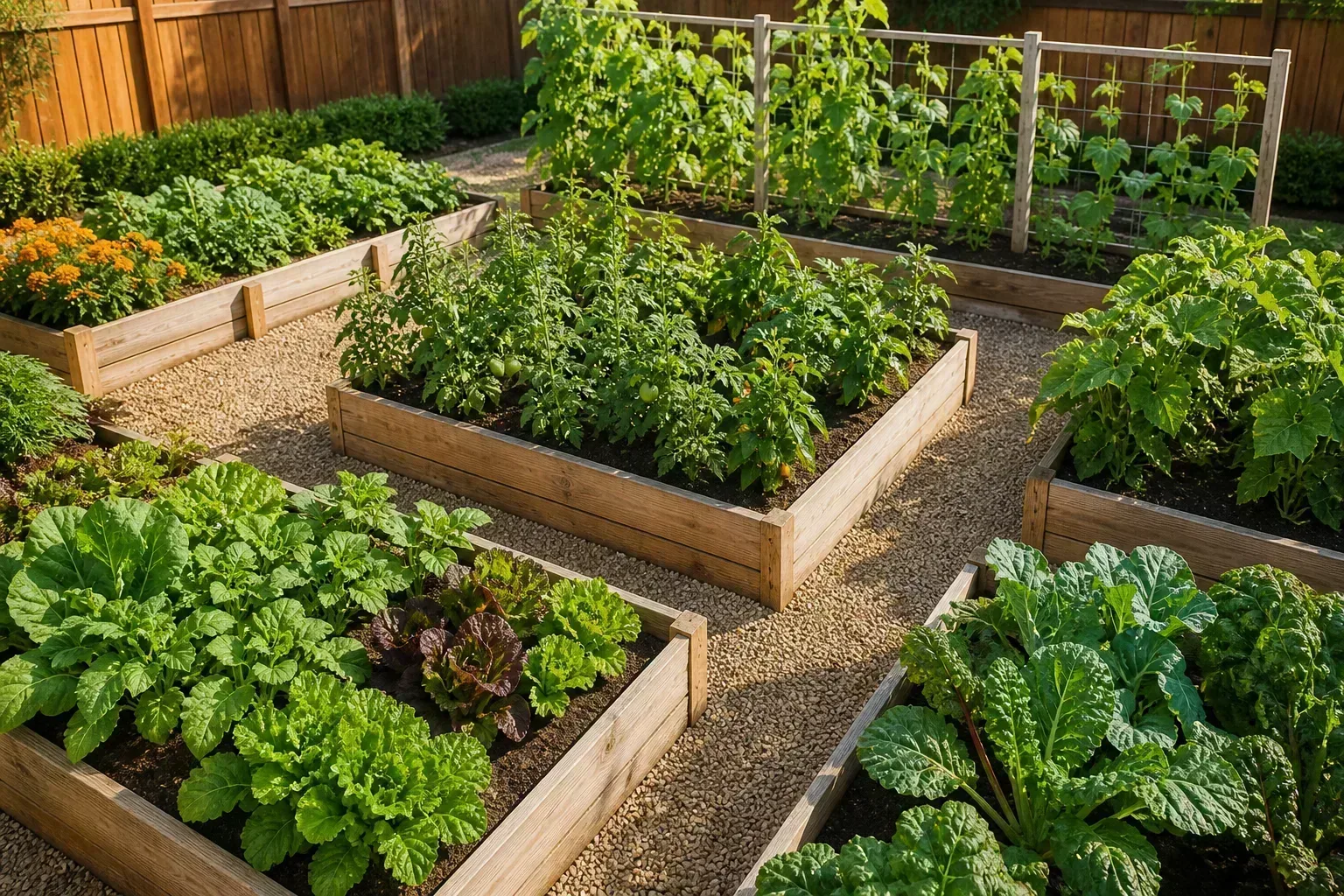
A vegetable garden layout is the blueprint that decides whether your tomatoes get six hours of sun or sit in shade by July, whether you can reach every plant without stepping on soil, and whether you harvest all summer or face one overwhelming glut in August. Layout is not decoration—it is logistics. Get the map right and watering, weeding, and harvesting take less time every week. Get it wrong and even healthy seedlings fight each other for light, roots, and airflow.
The goal is not to copy a pretty photo from a catalog. It is to match your sun pattern, soil, appetite, and available hours to a layout you can actually maintain from first frost to last harvest.
What Your Vegetable Garden Layout Actually Controls
Layout answers four questions before you buy a single seed packet: where sun lands at mid-season, how water moves through the site, how wide your paths need to be, and which crops share a bed without stealing from each other. Clemson Cooperative Extension’s planning a garden guide frames planning as a paper exercise first—draw the arrangement, then order seeds—because changing bed width on graph paper takes seconds; moving a mature tomato in July does not.
Site, Sun, and Drainage Come Before Bed Shape
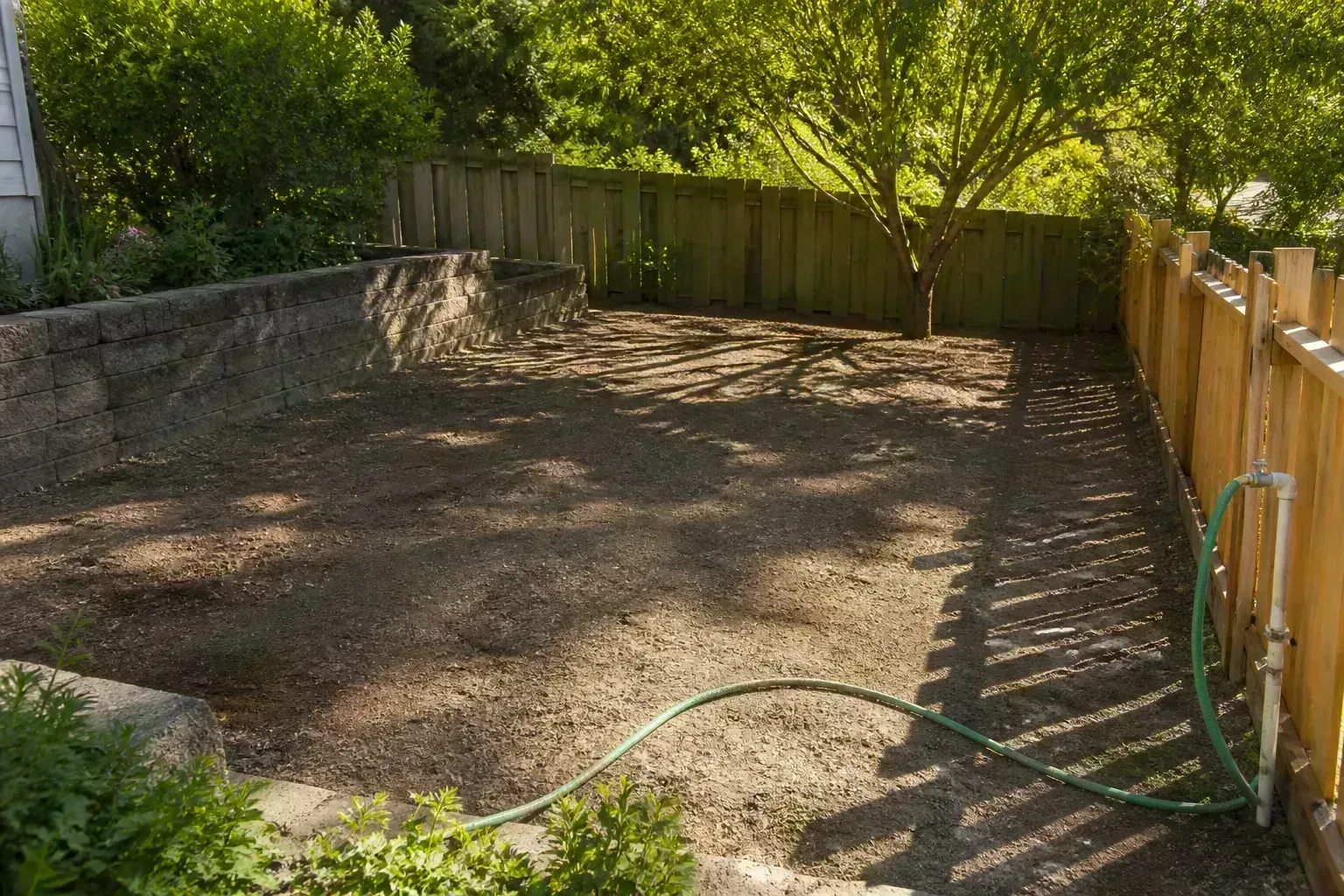
Fruiting vegetables—tomatoes, peppers, cucumbers, squash—need full sun, which Clemson defines as at least six hours of direct light daily. Leafy crops and root vegetables tolerate more shade; Clemson notes that plants grown for leaves or roots can succeed in partial shade while fruiting crops must have the sunniest spot.
Walk your site on a clear day at 9 a.m., noon, and 4 p.m. in spring. Mark shadows from fences, trees, and the house. Avoid planting under tree canopies where roots compete for water and nutrients. Choose a location near a water source—gardens close to the house get watered more consistently when life gets busy.
Drainage matters as much as sun. Vegetables need moisture but rot in standing water. If water pools after rain, plan raised beds or berm the soil rather than fighting clay in flat ground. Sloped sites can work when rows follow the contour (around the hill) rather than straight downhill, which accelerates erosion.
Size the Garden to What You Eat—not What Looks Good on Paper
RHS advice on planning a vegetable garden is blunt: gardens are usually too small for everything you want, so grow what your household actually eats—and what tastes dramatically better fresh. A small weed-free bed outproduces a large weedy one every time.
Before assigning dimensions, list favorite vegetables and how you use them: daily salads, weekend grilling, or preserving jars for winter. If you plan to can tomatoes or freeze beans, you need more linear feet of those crops than a fresh-eating household. If you cannot store surplus, undersize rather than oversize—wasted produce ends up in the compost and wasted effort in your back.
Clemson recommends asking who will do the work. A solo gardener with a busy summer should not sketch a quarter-acre row garden unless they enjoy the maintenance rhythm.
Pick a Layout Type With a Simple Decision Framework
No single layout wins every yard. Use this decision path:
- Poor, rocky, or compacted soil, or limited mobility? → Raised beds.
- Small yard or patio, want maximum variety per square foot? → Square foot grid or containers.
- Large open area, tiller available, preserving for winter? → Row garden or homestead blocks.
- Balcony, fence line, or no in-ground space? → Vertical trellises and containers.
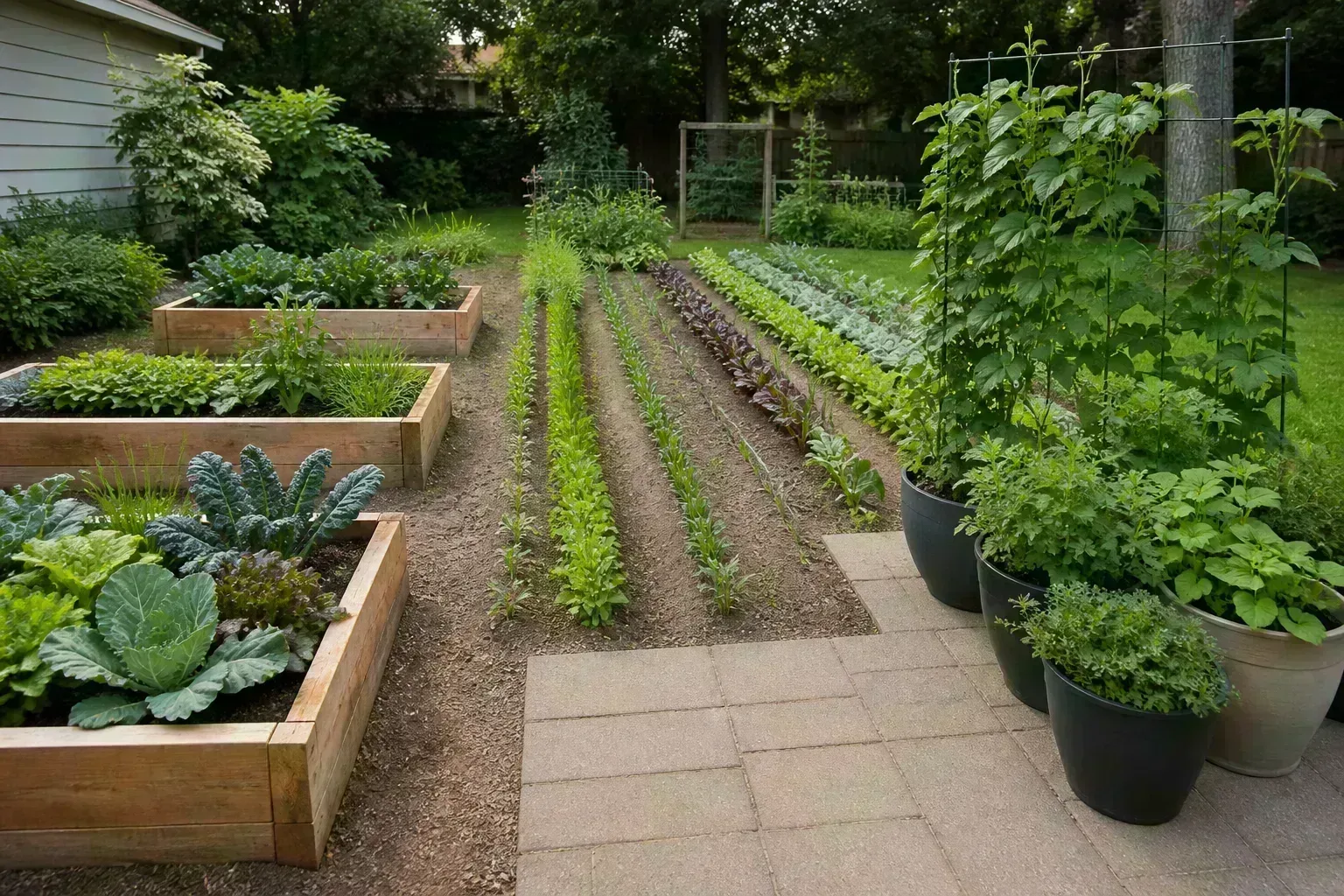
Each option below solves a different constraint. Mix them—a raised bed beside a row of pole beans on a trellis—is normal in real gardens.
Raised Beds When Soil or Access Is the Bottleneck
Raised beds sit above grade, filled with quality topsoil and compost. They warm faster in spring, drain better in wet climates, and keep soil loose because you never walk on the growing surface. Clemson Extension recommends beds 3 to 4 feet wide so you can reach the center from either side without stepping in.
Colorado State University Extension’s sample raised-bed planting guide demonstrates how a single 4×8-foot bed can hold a full season of mixed crops when spacing is respected—tomatoes on the north edge, bush beans and greens in the center, herbs along the south rim.
Raised beds cost more upfront (lumber, soil, fill) but save years of amendment on bad native soil. They are the default choice for renters who cannot till, gardeners with back or knee limitations, and anyone starting on heavy clay.
Square Foot Grids for Maximum Density in Small Yards
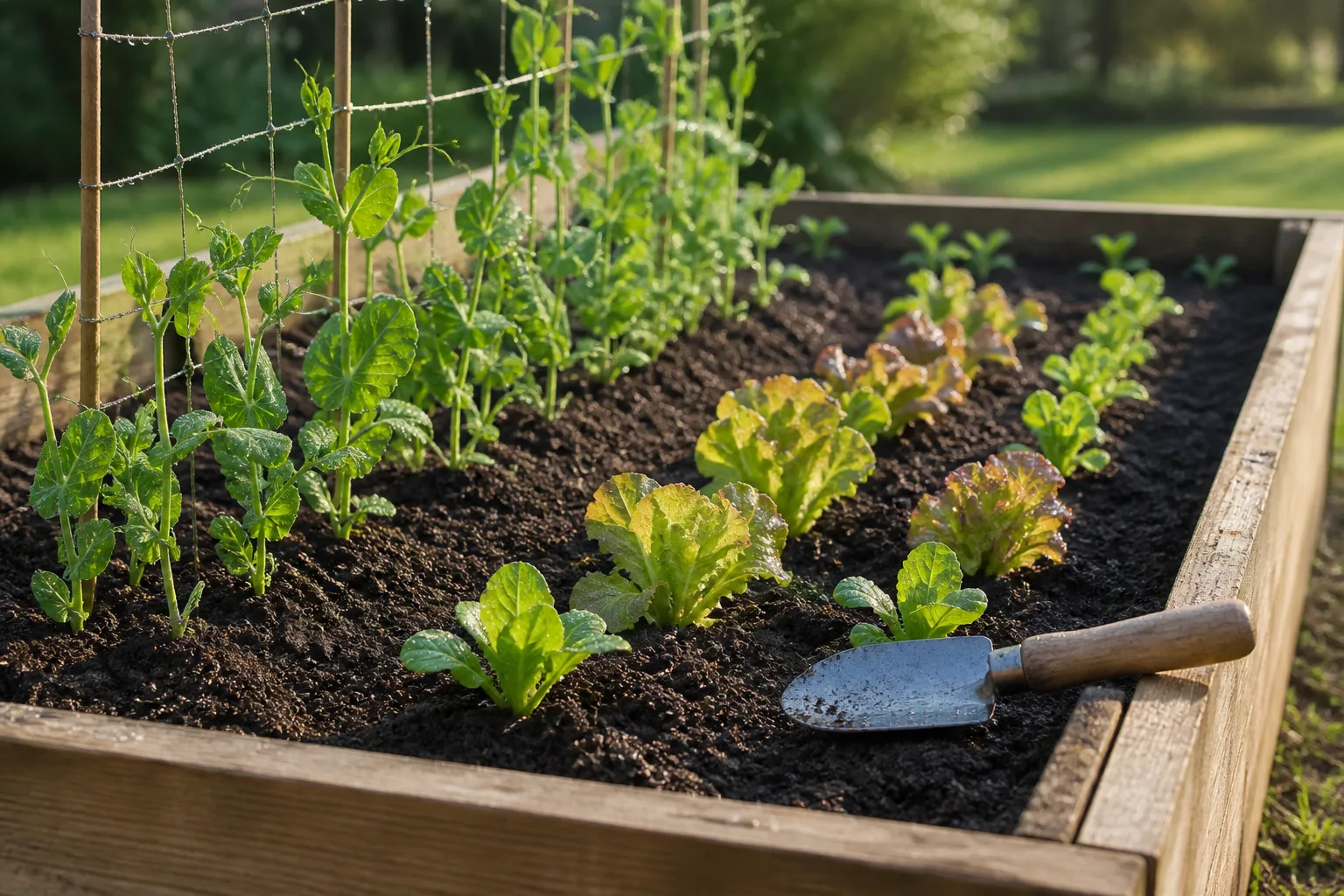
Square foot gardening divides a raised bed into 1-foot squares, each holding one crop type at prescribed density—one tomato per square, four lettuce heads per square, nine bush beans per square. Paths between beds stay permanent; you never widen rows mid-season.
The system excels when space is measured in feet, not acres. It forces spacing discipline: overcrowding is the most common beginner mistake, and a visible grid makes it obvious when you are squeezing in one zucchini too many. Choose compact varieties—cherry tomatoes over sprawling beefsteaks, bush beans over pole unless you trellis—because large plants break the grid math quickly.
Row Gardens for Large Plots and Season-Long Tilling
Traditional row gardens use long straight planting lines with 18- to 36-inch paths between rows—wider for squash, narrower for carrots and beans. Rows suit large backyards and homestead plots where a tiller can run down the paths and hose irrigation is simple.
Clemson’s spacing chart for a 100-foot row garden lists practical in-row distances: snap beans at 2 inches within rows 36 inches apart, tomatoes at 24 inches in 60-inch rows, cucumbers at 12 inches in 60-inch rows. Row layouts use more land per harvest than intensive beds but scale easily when you preserve food for winter.
Prepare row gardens in fall when possible—add compost and till so spring planting starts on loose soil. Stake or cage tomatoes and trellis vining crops to keep fruit off damp soil and improve airflow.
Vertical and Container Layouts When Floor Space Is Tight
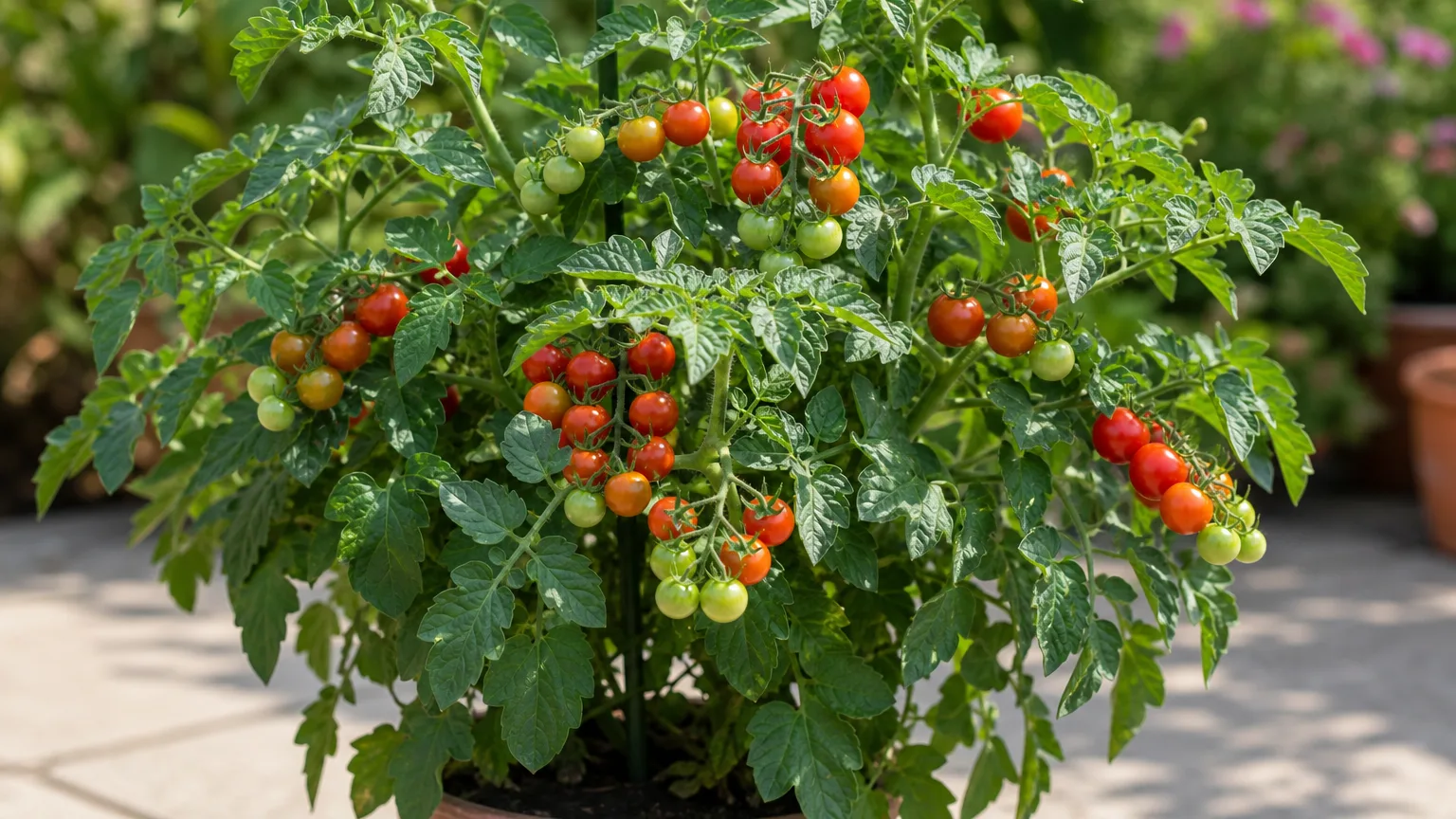
Vertical gardens use trellises, fence panels, or tiered planters to grow upward. They fit balconies, narrow side yards, and anywhere floor space is measured in square feet. Pole beans, indeterminate tomatoes, cucumbers, peas, and compact greens work well vertically.
The trade-off is water: elevated soil dries faster. Plan to water daily in heat, sometimes twice for small containers. Use large pots (at least 5 gallons for tomatoes) and quality potting mix—not garden soil alone, which compacts in containers.
Clemson notes that containers work anywhere light, water, and soil volume requirements are met: sidewalks, patios, and balconies. Match container size to mature root depth; shallow greens in window boxes, deep-rooted tomatoes in tall pots.
Orient Beds and Rows So Sun Reaches Every Plant
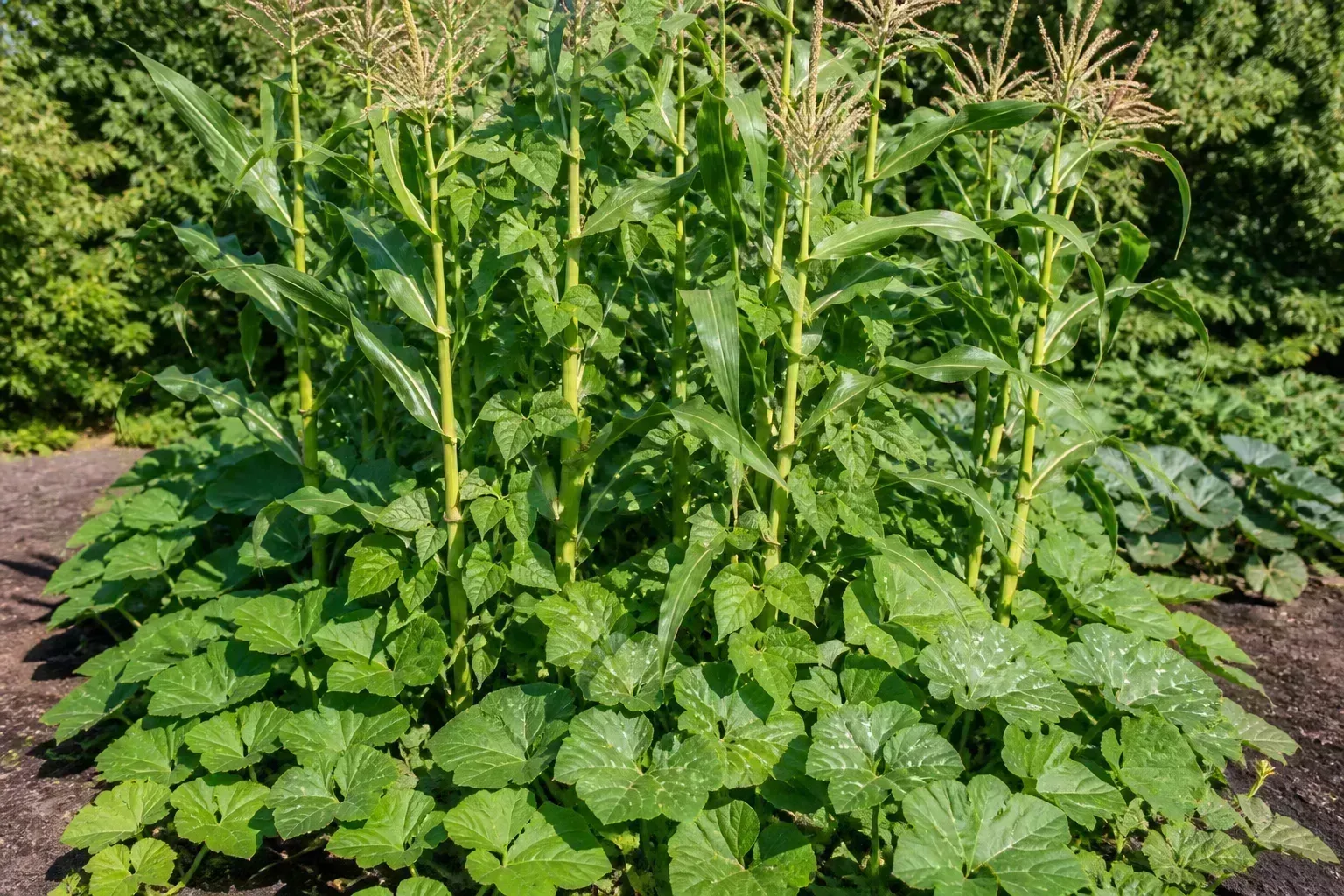
In the Northern Hemisphere, run rows or bed long axes north to south so sun sweeps across both sides through the day. Place tallest crops on the north side of the garden or bed—trellised tomatoes, pole beans, corn—so they do not shade shorter peppers, bush beans, or lettuce to the south. Clemson Extension lists this as a core planning rule. In the Southern Hemisphere, reverse the placement: tall crops on the south edge.
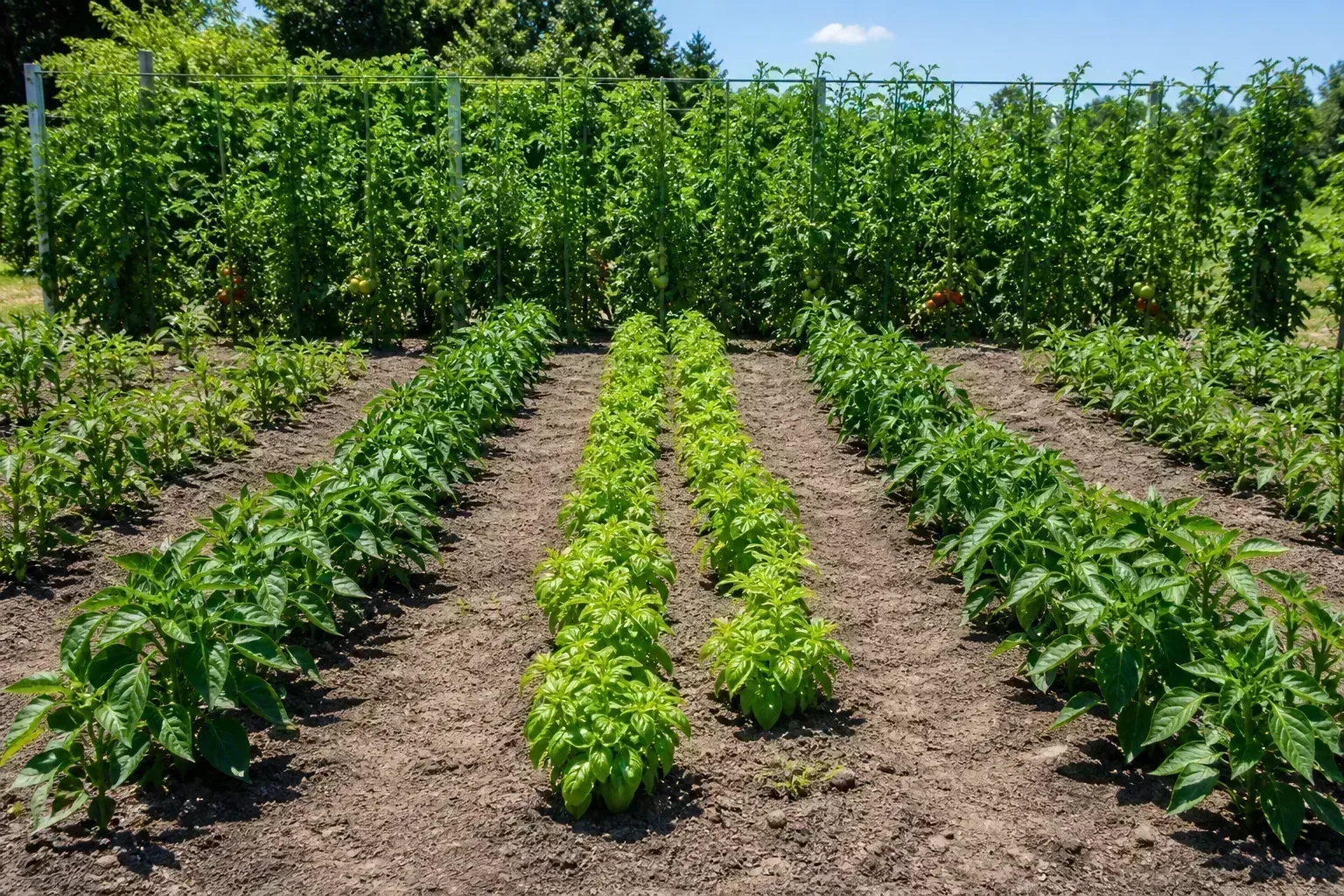
On sloped ground, orient rows across the slope (contour planting) to slow runoff and reduce erosion. Combine contour rows with mulch or swales on steep sites.
Draw sun arrows on your paper plan. If a neighbor’s tree shades the south end after June, assign shade-tolerant crops there—lettuce, kale, beets—not sun-hungry melons.
Draw Your Map: Paths, Spacing, and Crop Families
Use graph paper or a simple grid app with one square equal to one foot. Outline beds, paths, water spigots, and compost pile location before assigning crops.
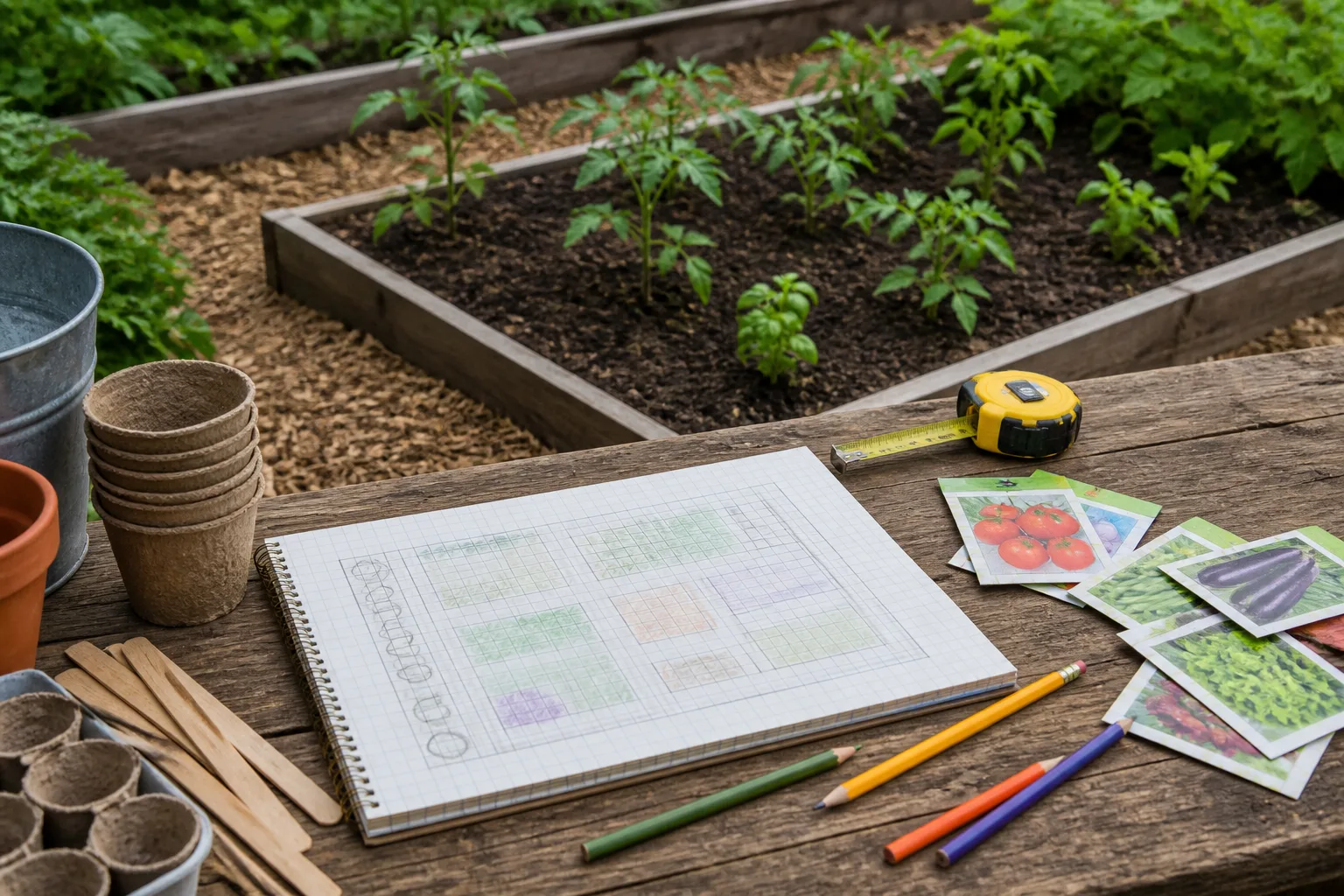
Path width rules:
- 18–24 inches minimum for kneeling and hand tools
- 30–36 inches if you push a wheelbarrow or cart
- Permanent paths of mulch, gravel, or mowed grass between raised beds—never plant in foot traffic zones
Bed width rules:
- 4 feet max for in-ground or raised beds accessed from both sides
- 2–3 feet for beds against a fence or wall (one-sided access)
Group plants by crop family for rotation: brassicas (broccoli, cabbage, kale), nightshades (tomato, pepper, potato, eggplant), legumes (beans, peas), cucurbits (cucumber, squash, melon), and alliums (onion, garlic, leek). Draw each family as a labeled block that will move to a different bed next year. Clemson advises not planting the same vegetable—or a close relative—in the same spot year after year.
Spacing Rules That Prevent Overcrowding
Seedlings look tiny; mature plants do not. Use mature spread, not transplant size, when placing symbols on your map.
| Crop | Typical in-row spacing | Row or bed notes |
|---|---|---|
| Bush beans | 4–6 inches | 18–24 inch paths between blocks |
| Snap peas | 1–2 inches | Trellis north side; 36-inch row spacing |
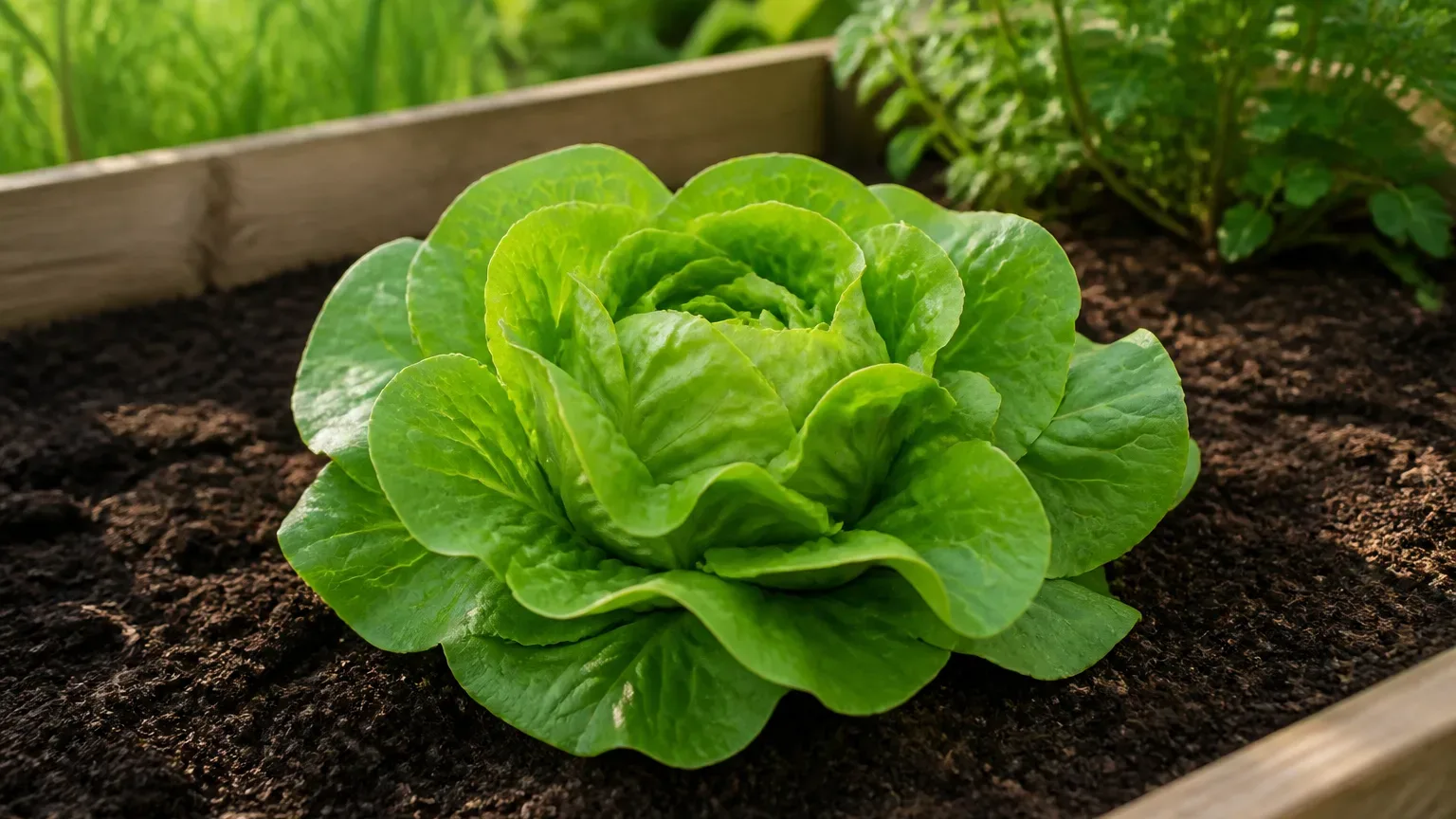
| Lettuce (leaf) | 6–12 inches | Succession sow every 2 weeks |
| Tomatoes (staked) | 24–36 inches | North edge; cage or stake at planting |
| Peppers | 18–24 inches | Full sun; avoid north shade |
| Cucumbers (trellised) | 12 inches | Vertical saves floor space |
| Summer squash | 36–48 inches | One plant feeds a household |
| Carrots | 1–2 inches | Loose soil; thin after germination |
| Sweet corn | 8–12 inches | Plant in blocks, not single rows, for pollination |
When in doubt, leave more space. Crowded plants stay humid, invite fungal disease, and yield smaller fruit. Thin ruthlessly two weeks after germination if you oversowed.
Succession Planting and Intercropping on the Same Plan
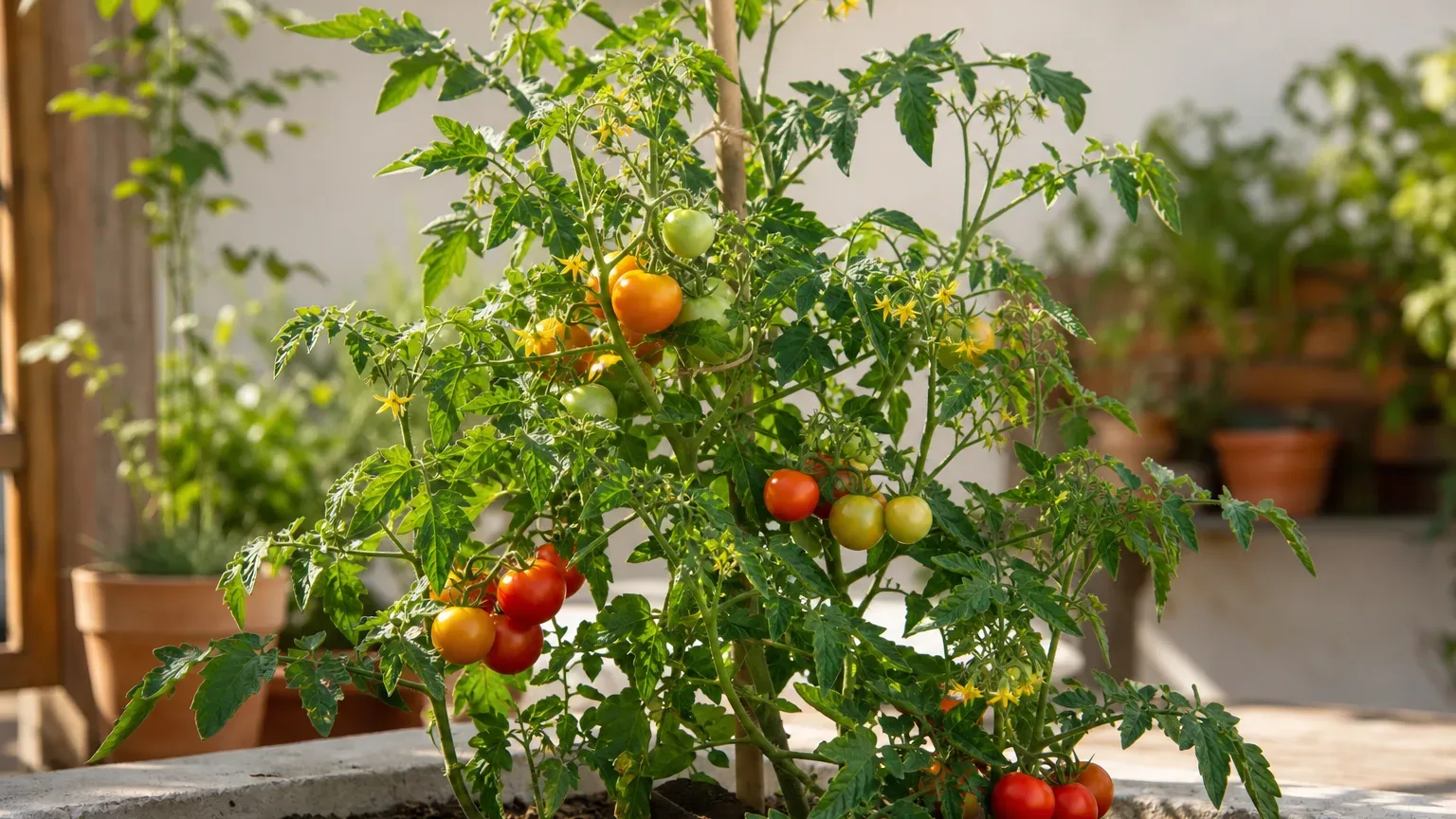
A single static map wastes mid-season space. Plan three layers on one drawing:
- Spring crops (peas, radish, spinach) in beds that flip to
- Summer crops (beans, basil, bush squash) after harvest, then
- Fall crops (kale, turnips, garlic) where summer plants finish.
RHS calls fast crops grown between slower ones catch crops and overlapping plantings intercropping—radish harvested in 30 days beside tomatoes that need 75, or lettuce under young pepper transplants before canopies close.
Mark planting week numbers on your map (week 12, week 18, week 32) so succession is scheduled, not improvised. Order enough seed for two sowings of beans and three of lettuce if you want continuous harvest.
Fold Companion Planting and Rotation Into the Geometry
Companion planting only works when it is drawn on the map—not sprinkled from a chart after planting. Positive companions should sit within two to three rows of each other; incompatible pairs need 24–36 inches or separate beds. Tomatoes and potatoes share blight risk and belong in different blocks, not neighboring squares. Beans and alliums (onion, garlic) are traditionally separated.
For a deeper bed-by-bed approach—including Three Sisters mounds, pollinator strips, and trap-crop placement—see our companion planting vegetable garden layout guide. On this page, the layout rule is simple: rotation blocks first, companions second. No pairing overrides moving nightshades to a new bed next year.
Add flower strips along bed edges—zinnias, calendula, sweet alyssum—to attract pollinators and beneficial insects. A single marigold in the bed center does less than a continuous edge planting.
Layouts for Partial Shade, Patios, and Homestead-Scale Plots
Partial shade (three to four hours of sun) still grows food. Clemson lists leafy vegetables—lettuce, spinach, collards, kale, Swiss chard—as partial-shade tolerant, along with radish, kohlrabi, beets, cabbage, cauliflower, and broccoli. Reserve the sunniest strip for any fruiting crop you attempt; expect smaller pepper and tomato yields in shade.
10×10-foot sunny plot example (row or block style):
- North row: two trellised indeterminate tomatoes or one tomato plus one cucumber
- Center: four pepper plants spaced 18 inches apart
- South: 12 bush bean plants or a block of leaf lettuce succession
- Edge strip: basil, marigolds, and radish catch crop
Homestead-scale gardens (quarter-acre and up) use the same sun and rotation rules at larger scale. Invest in drip irrigation to keep roots moist without wetting foliage, and till or broadfork paths only—never the planting zones once beds are established. Block planting (wide bands instead of single-file rows) can increase yield per foot on large plots while still allowing tractor or tiller access on main paths.
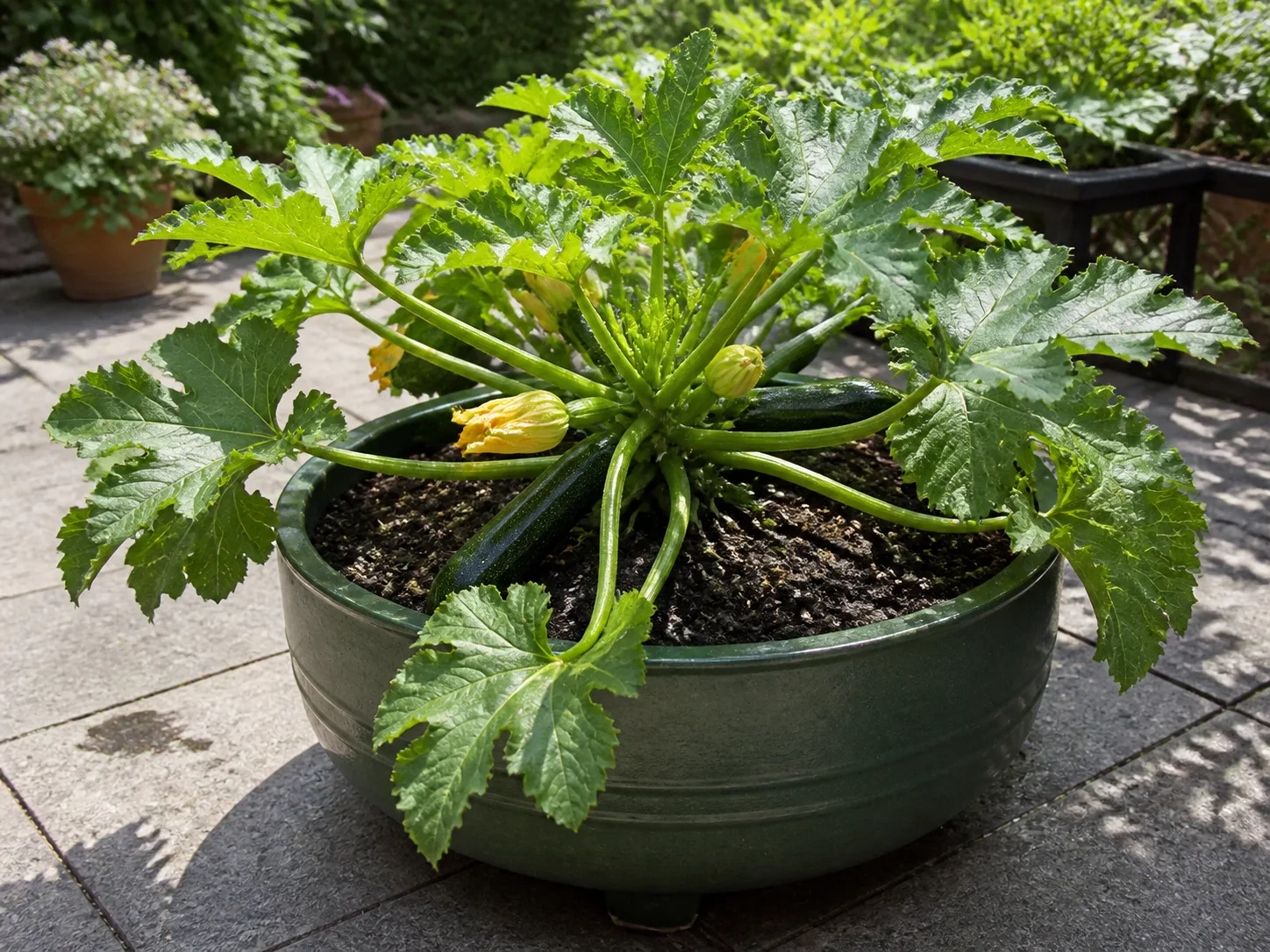
Container patios group pots by water need: thirsty cucumbers together, drought-tolerant herbs on the dry edge. Elevate pots on feet for drainage. Mirror in-ground spacing in the pot count—one tomato per 5-gallon minimum, not three in a decorative tub.
Vegetable Garden Layout Mistakes That Cost You a Harvest
Planting before mapping sun. A bed that is full sun in April may be half shade by August when deciduous trees leaf out. Walk the site at peak season if you are a first-year gardener on a new property.
Undersizing paths. A 12-inch path feels fine in May and impassable in July when squash leaves spill over. Plan wider than you think you need.
Ignoring mature height. Corn, sunflowers, or trellised beans on the south side shade everything behind them. Tall crops go north—non-negotiable in the Northern Hemisphere.
One giant planting date. Everything ripening the same week overwhelms harvest and preservation. Stagger sowings on the map.
Skipping rotation on paper. It is easy to plant tomatoes in the same bed because “that is where the trellis is.” Draw three-year rotation arrows now and move trellises or use removable stakes.
Overplanting zucchini and summer squash. One well-spaced plant feeds most households. Two without a plan means baseball-bat marrows and shaded neighbors.
Conclusion
A productive vegetable garden layout starts with honest site assessment—sun, drainage, water access, and the hours you can maintain beds—then matches those realities to a layout type: raised beds for soil problems, square foot grids for small spaces, rows for scale, vertical setups for tight footprints. Draw tall crops on the north, paths wide enough for summer foliage, and crop-family blocks that rotate year to year. Add succession dates so the map stays productive from spring through fall.
You do not need expensive software. Graph paper, a measuring tape, and an afternoon of observation beat a rushed spring planting every time. When the map is done, seeds and transplants have a home that fits—and you spend the growing season harvesting instead of rearranging plants you should never have placed there.



