How to Lay Out a Companion Planting Vegetable Garden
Plan a companion planting vegetable garden layout with bed maps, spacing rules, rotation blocks, and five proven systems—from rows to raised beds and Three Sisters.
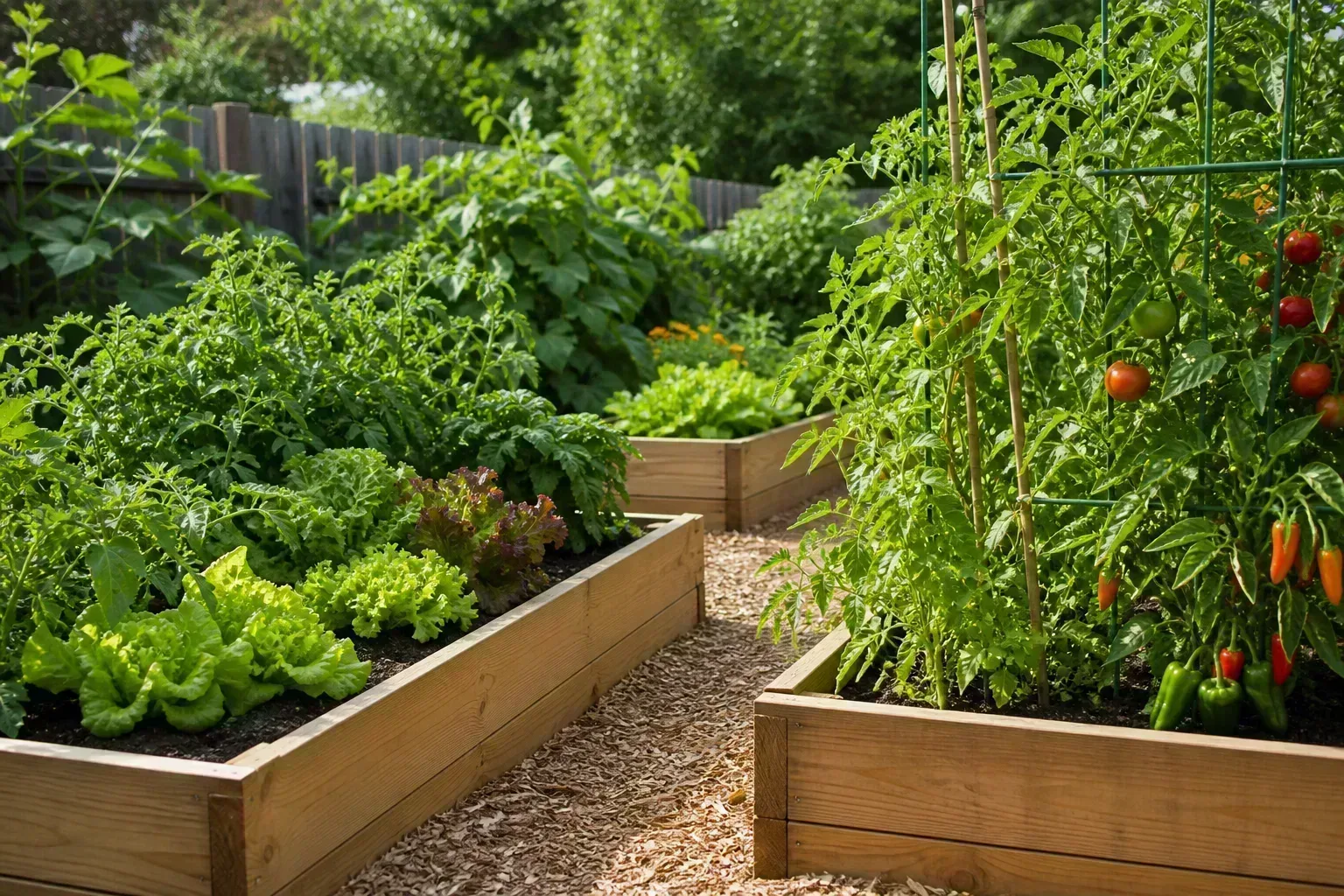
A companion planting vegetable garden layout is more than dropping basil beside tomatoes because a chart said so. Layout is where companions earn their space—or steal it. You are deciding which crops share a row, which get their own block, how tall plants cast shade, and where flowers sit so pollinators and beneficial insects actually visit your vegetables.
Get the map right and you use every square foot twice: fast crops harvested before slow ones expand, deep roots beside shallow ones, and pest-confusing mixes that extension guides describe as polyculture rather than single-crop strips. Get it wrong and you still follow a companion chart while plants fight for sun, nitrogen, and airflow.
What a Companion Layout Actually Does for Your Harvest
Companion planting means growing different species near each other for identifiable benefits—pest confusion, pollinator support, soil shading, physical support, or complementary root zones. Penn State Master Gardener material on good-neighbors companion planting frames it as deliberate diversity in the garden, not a magic pairing list.
Layout turns those ideas into geometry: who sits north of whom, which bed repeats next year, and whether your marigolds form a strip or a lonely dot at the corner.
Benefits You Can Plan For—Not Just Hope For
RHS Chief Horticulturist Guy Barter groups companion benefits into three layout-relevant categories on the RHS companion planting overview: space efficiency (intercropping fast and slow crops), pest and disease disruption (scent masking, trap crops, beneficial-insect flowers), and mutual support (corn holding beans, squash shading soil).
University of Minnesota Extension’s companion planting in home gardens notes that many pairings come from long observation—with research backing some combinations more than others. Plan for mechanisms you can see: a radish row harvested in 30 days beside tomatoes that need 75, or a north-side flower strip that blooms before cucumber flowers open.
WVU Extension’s companion planting guide adds practical spacing: plants with positive relationships should sit within two to three rows of each other; negative pairings need at least two to three rows between them. That distance rule belongs on your paper plan before you sow.
Map Your Site Before You Pick Companion Pairs
Charts fail when the bed does not match the crop. Full-sun vegetables want six or more hours of direct sun on fruiting crops; leafy greens tolerate a little afternoon shade in hot climates. Drainage matters as much as pairings—beans and squash rot in standing water; carrots fork in heavy clay unless you raise the bed.
Walk the plot at mid-morning and mid-afternoon in spring. Note shadows from fences, trees, and your house. Put tallest crops on the north side of in-ground beds (or the north edge of raised beds) so they do not shade shorter neighbors as the sun tracks south. In the Southern Hemisphere, reverse that: tall crops on the south side.
Sun, Drainage, and Path Rules That Shape Every Bed
Draw beds with 18–24 inch paths you can kneel in—or 30 inches if you wheel a cart. Keep beds no wider than 4 feet if you access from both sides; 2–3 feet for against-a-fence beds. Mark water spigots and hose reach so thirsty corners (cucumbers, squash) do not end up dry.
If soil is poor or compacted, plan raised beds now. They warm faster in spring—a real advantage for companions that need different planting dates (cool lettuce under warm-season tomatoes later). WVU Extension notes that interplanting works especially well in raised beds and large containers when maturity dates and nutrient needs align.
Use graph paper or a simple grid app: one square = one foot. Outline beds, paths, and vertical structures (trellis, teepee poles) before assigning crops. You will catch overcrowding when a second zucchini “companion” fills the only open square.
Build Layouts Around Crop Families and Rotation First
Companion charts rarely mention crop rotation, but layout must. Do not plant the same family in the same bed year after year—pest larvae and soil diseases build up. Brassicas (broccoli, cabbage, kale), nightshades (tomato, pepper, potato, eggplant), legumes (beans, peas), and cucurbits (cucumber, squash, melon) each get a block that moves around the garden on a three- to four-year cycle.
Label blocks on your map: Brassica block, Nightshade block, Legume block, Cucurbit block. Companion pairings happen inside a block or between blocks that will not swap families into diseased soil next season.
Incompatible Pairs—and How Far Apart They Need to Be
Some neighbors actively hurt each other or share pests so tightly that “companions” become co-infected hosts. WVU Extension and field observations commonly flag these separations:
| Pairing | Why to separate | Layout minimum |
|---|---|---|
| Beans/peas and onions/garlic | Allium compounds can stunt legume growth | 2–3 rows or 24–36 inches |
| Tomatoes and potatoes | Shared late blight and other nightshade diseases | Different beds or years |
| Tomatoes and brassicas | Different fertility timing; shared caterpillar pressure in tight quarters | Opposite ends of garden |
| Corn and tomatoes | Both heavy feeders; corn pollen and shade stress tomatoes | Separate blocks |
| Fennel and most vegetables | Allelopathic; attracts its own pest complex | Border only, or omit |
| Potatoes and squash/cucumber | Compete for space; shared soil-borne issues in some gardens | Separate blocks |
This is not superstition—it is spacing and rotation dressed as folklore. If yields drop when onions touch beans, move the allium block. If blight hits tomato and potato in the same bed, companions did not cause it; shared pathogens did.
Five Layout Systems for Companion Vegetable Gardens
The best system is the one your space, soil, and back can support. Most home gardens mix two: raised beds for intensively managed companions, plus a row or vertical zone for sprawlers.
Row Gardens, Raised Beds, and Square Foot Grids
Row gardening suits larger in-ground plots. Run primary crops in straight lines with companion strips between or alongside: carrots and onions in alternating rows; lettuce and radish between future tomato cages. Till or no-till prep three weeks before spring planting so compost settles. Fall prep is ideal if your ground freezes slowly.
For row layouts, think in zones rather than endless identical lines. A north-to-south row of corn or trellised peas can anchor the bed; east-west rows of shorter crops sit in front so afternoon sun still reaches fruit. Leave 30-inch aisles between row pairs if you plan to hoe or harvest from both sides. WVU Extension’s companion chart works well here: beans beside corn and cucumbers, potatoes separated from squash and tomatoes by several rows.
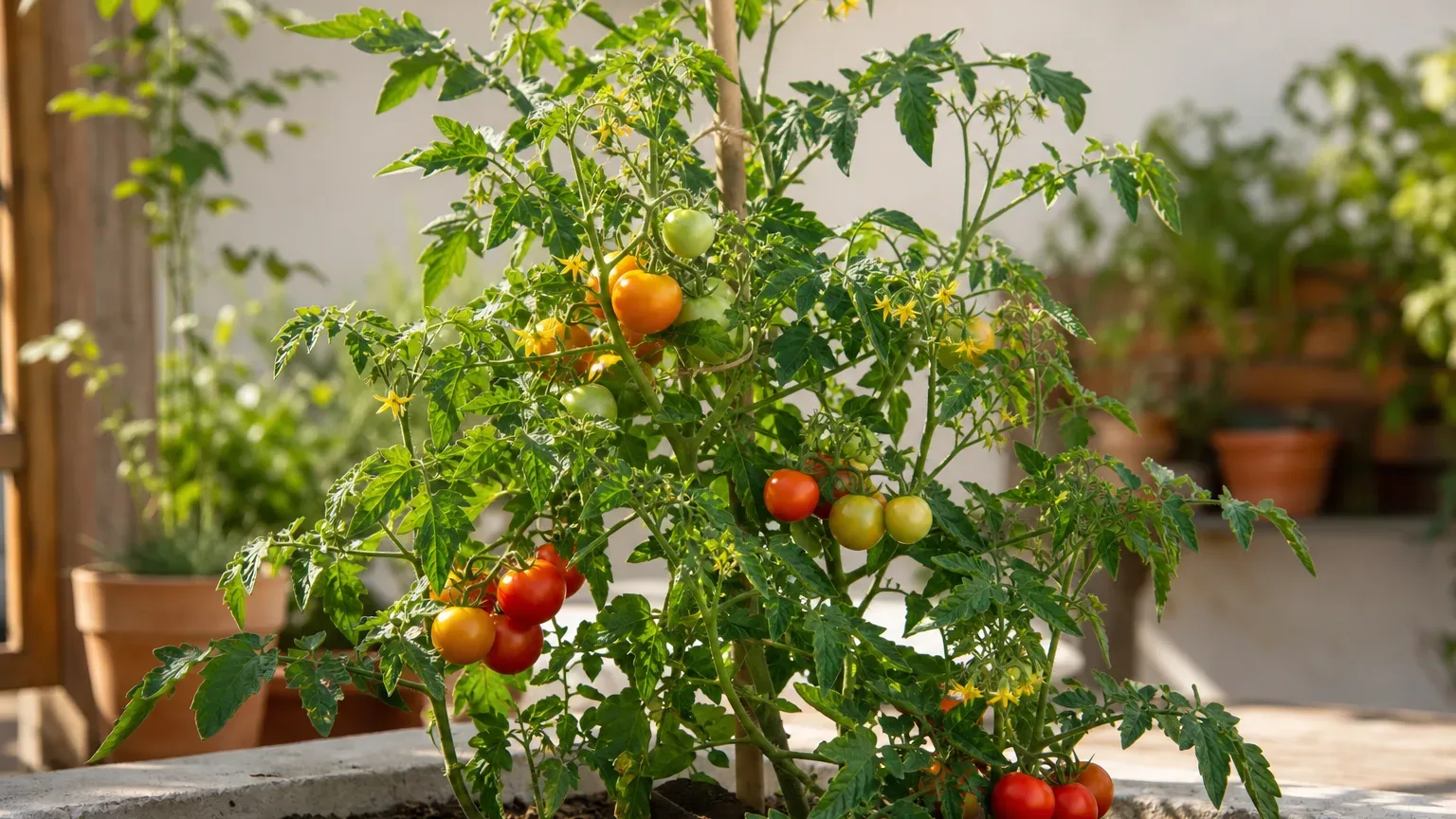
Raised beds concentrate companions where soil warms early and never gets stepped on. A 4×8-foot bed can hold two indeterminate tomatoes on the north edge, basil and calendula on the sunward side, and lettuce or radish in the gaps until tomato leaves expand. Root crops harvest without fork damage because you never compact the soil.
Standard raised-bed dimensions that pair well with companions: 4×4 for a single Three Sisters mound scaled down; 4×8 for a tomato–basil–lettuce summer block; 3×6 against a fence with trellised cucumbers north and bush beans south. Fill with a mix of 40% compost, 40% topsoil, 20% aeration (coarse bark or perlite) and top-dress with compost when swapping companion groups mid-season.
Square foot gardening divides raised beds into one-foot squares. Each square holds one large plant (tomato), four medium (lettuce heads), nine bush beans, or sixteen carrots. Companion rules become arithmetic: never put a spreader (summer squash) in the same square as anything else; pair one tomato square with four basil squares on the south face for air flow.
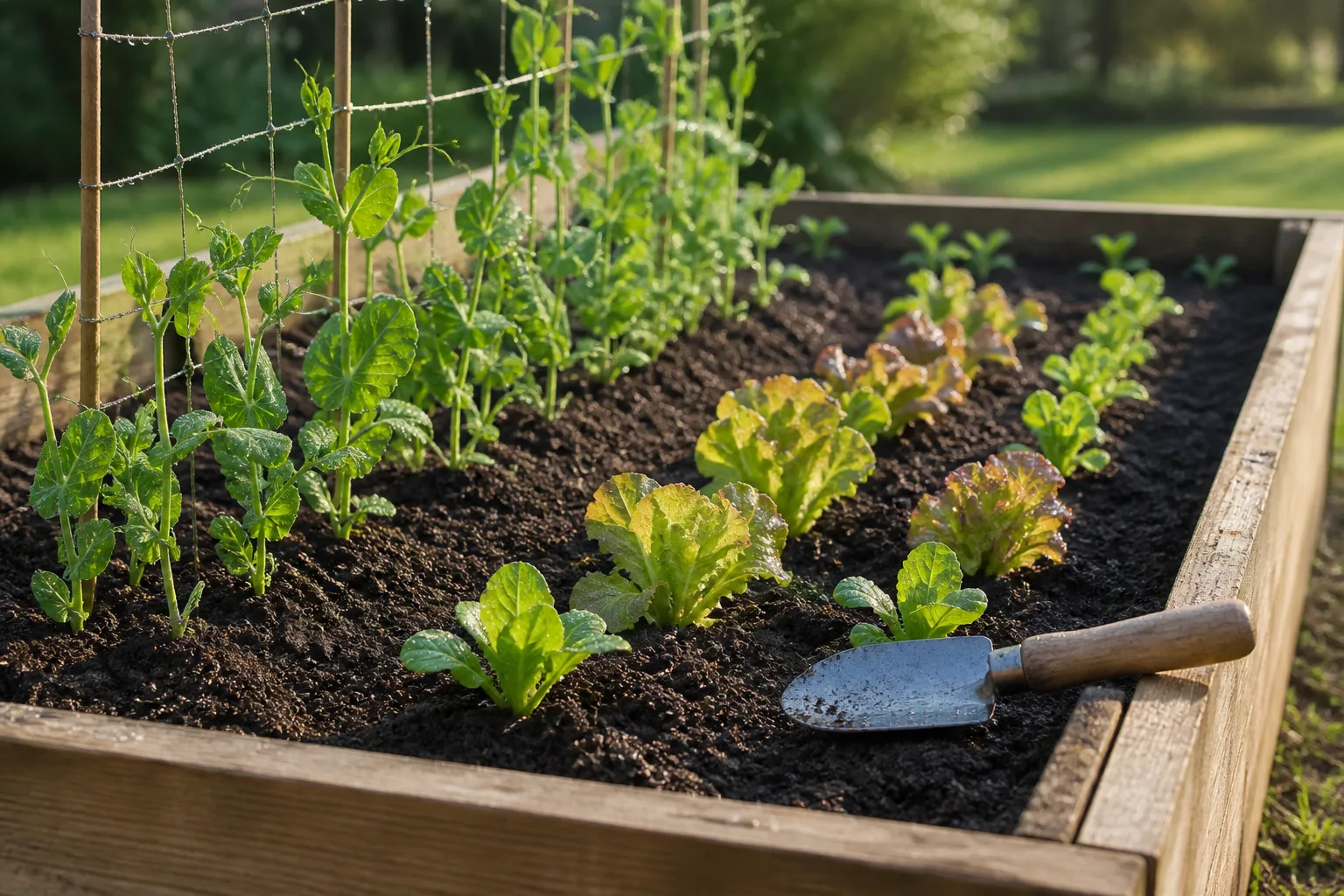
Mark squares with string or thin slats at planting time so you do not “borrow” a neighbor’s square when seedlings look small. In a 4×4 bed, dedicate the entire north row of four squares to vertical crops (tomato, pea, cucumber trellis) and use the southern twelve squares for companions that finish before shade closes—radish in week one, bush beans by week six, then fall spinach under slowing tomatoes.
RHS notes that intercropping—sowing beetroot or lettuce between widely spaced sweet corn—uses the empty space before the tall crop canopies close. Harvest the fast crop before shade becomes permanent.
Three Sisters and Other Space-Stacking Bed Plans
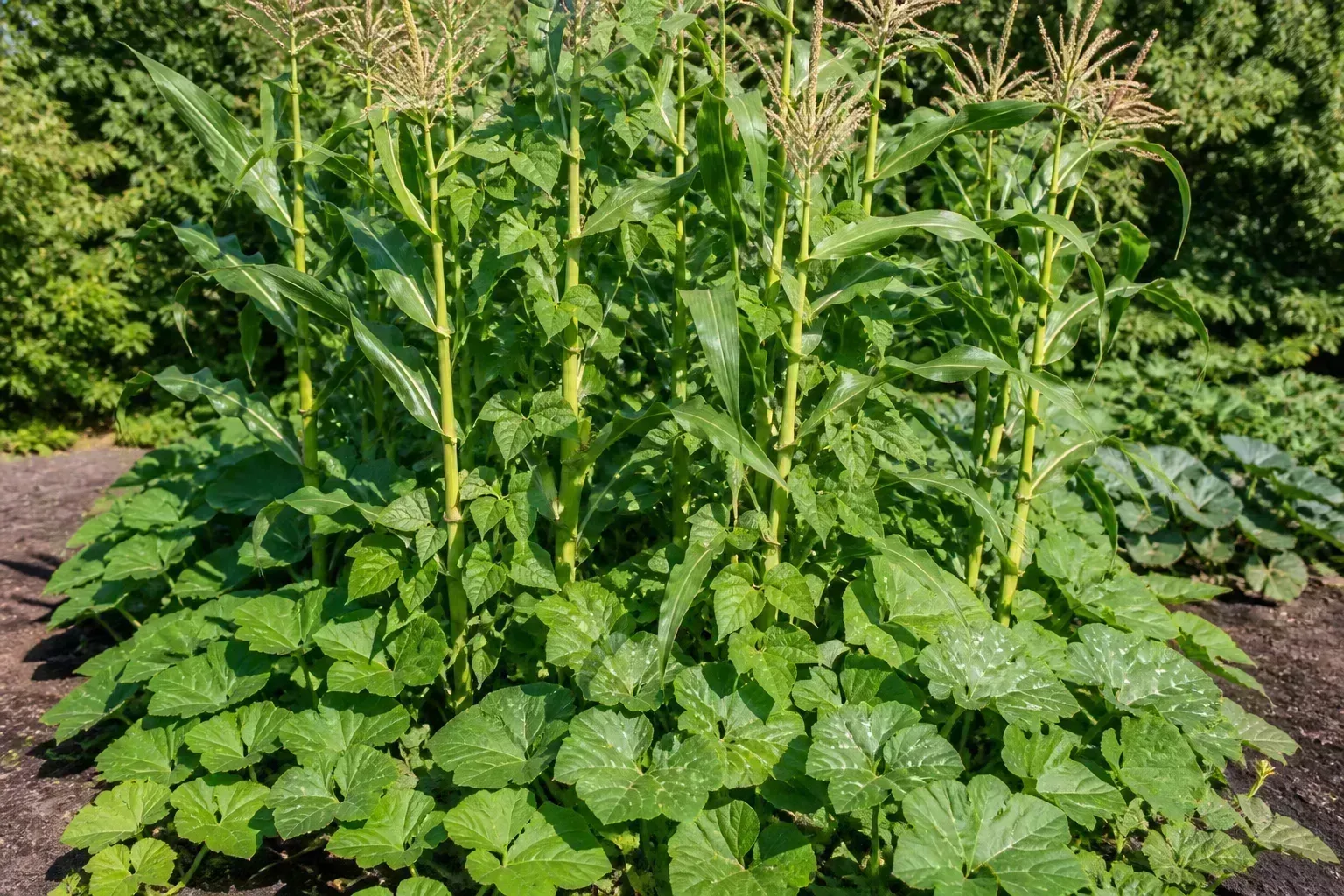
The Three Sisters—corn, beans, and squash—is the classic vertical-and-horizontal stack. Native American growers developed it; modern gardeners still use it when they have at least a 10×10-foot patch and enough fertility for three hungry crops.
The RHS Three Sisters guide recommends spacing sweet corn 45 cm (18 inches) apart in a block—not a single long row, which pollinates poorly. When corn reaches 30 cm (12 inches) tall, sow climbing French beans (not always runner beans, which can overwhelm small corn) at each stalk. Set one squash or pumpkin plant per square metre/yard of the scheme so vines can run between hills.
Corn supplies a trellis; beans fix nitrogen; squash leaves shade soil and suppress weeds. Add a “fourth sister”—sunflowers—for extra bean support and pollinator draw, as RHS suggests. Mound soil slightly for drainage if your ground is heavy.
A 10×10-Foot Beginner Companion Map
For a first-year small in-ground companion garden, divide a 10×10-foot sunny plot:
- North row (back): two tomato cages, 36 inches apart, with basil planted 12 inches south of each stem
- Center-left: three pepper plants, 18 inches apart; marigold or calendula strip on the west side
- Center-right: cucumber hill or trellis on the east edge; nasturtiums as trap crop on the outer side
- South front: ten bush bean plants in two rows, 6 inches apart; harvest before cucumbers vine over them if space is tight
- Edge squares: radish and lettuce between transplants; pull radish in 25–30 days
On your graph paper, draw this as a grid with 1-foot cells. The north row occupies cells 2–3 and 7–8 along the back edge (leave 1-foot path on the north side if a fence allows). Peppers land in cells (4,3), (5,3), (6,3); cucumber trellis spans cells (9,3) through (9,7). Beans fill the front two rows. That visual check shows you still have path access down the middle column—critical when you need to harvest beans without stepping on pepper roots.
Succession note: sow radish and lettuce the same day you set tomato and pepper transplants. Mark a calendar reminder at day 28 to pull radish—freeing light for beans and cucumbers. If you want a fall crop in the same 10×10, plan now to rotate the whole block to garlic and kale; do not follow tomatoes with peppers “because they are companions.”
This mirrors what many extension plans propose: productive companions in one season, with cole crops or garlic rotating into the bed next year—not repeated tomatoes in the same soil.
Vertical and Container Companion Setups for Tight Spaces
Vertical companion gardens stack upward when ground square footage is scarce. Use a trellis or cattle panel for pole beans, cucumbers, or indeterminate tomatoes on the north side of a patio bed. Plant dwarf peas, bush beans, or salad greens in the southern strip that still receives four to six hours of sun.
A workable patio layout on a 2×6-foot strip: north-end trellis with one cucumber or pole bean plant; middle section with two pepper or eggplant plants flanking a central basil clump; south edge with leaf lettuce and trailing nasturtium spilling over the rim. Water the trellis crop at the base, not over lettuce leaves, to reduce mildew.
Compact companions for vertical setups: leaf lettuce, bush beans, dwarf peas, thyme, parsley, and trailing nasturtium in a pot edge. Avoid pairing two full-size climbers on the same trellis—they tangle and shade each other.
Large containers can host a “pizza” or “salad” garden—tomato, pepper, basil, and oregano in one pot only if the container holds at least 15–20 gallons and you accept that tomatoes will dominate water and nutrients. WVU Extension suggests these themed containers as companion layouts at patio scale; give each heavy feeder its own pot if yields collapse.
Where Flowers, Trap Crops, and Pollinator Strips Go
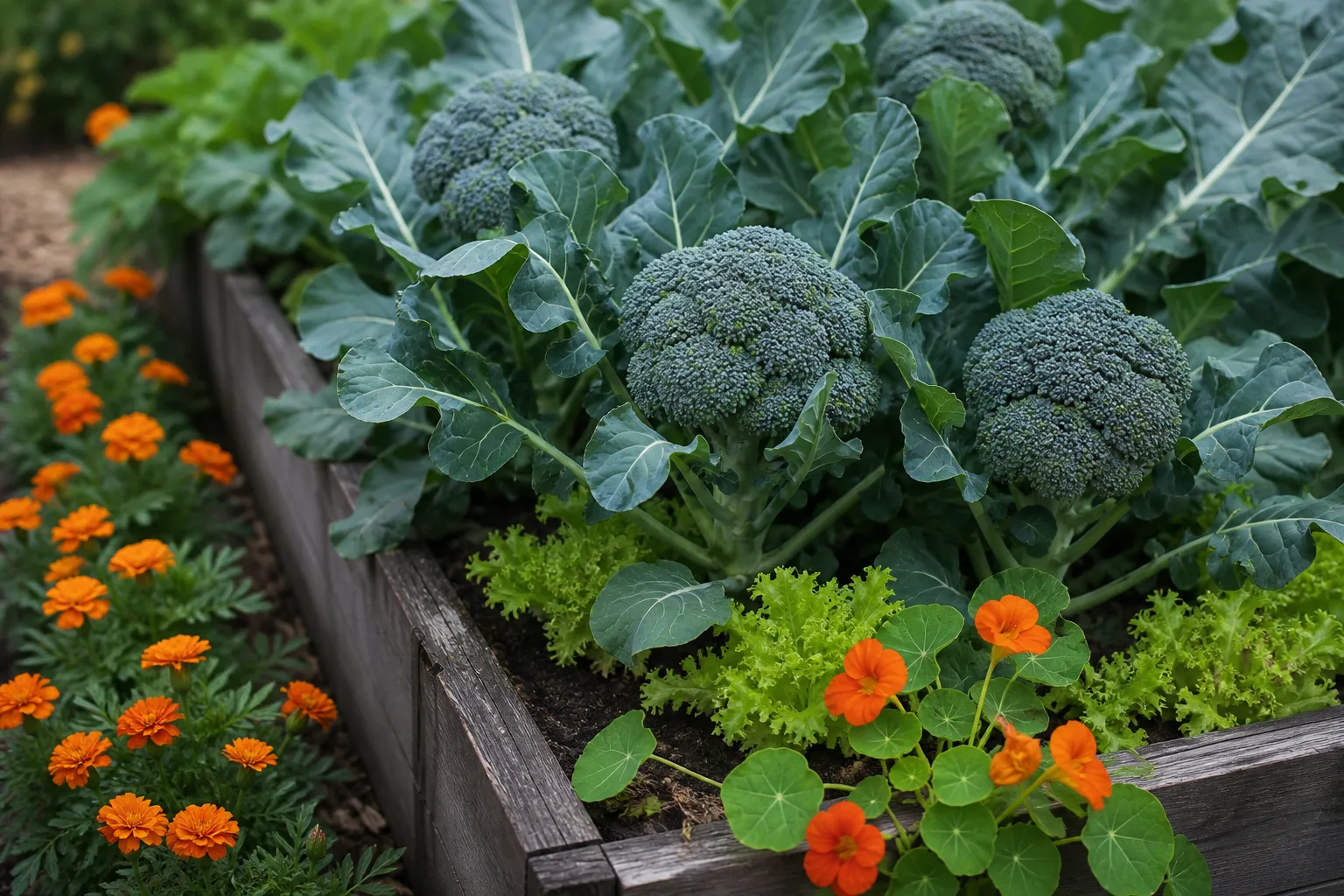
Flowers belong on the plan, not as afterthoughts. RHS research on French marigolds (Tagetes) found limonene can affect whitefly and thrips on tomatoes—but mixing tomatoes with diverse plants without marigolds also reduced pests compared to tomato monoculture. Layout lesson: continuous diversity along a row beats one marigold per cage.
Place pollinator strips on bed long edges or north borders where they will not shade fruiting crops. Use calendula, nasturtium, alyssum, or borage in drifts of three feet or longer, not single dots. For brassicas, low clover or trefoil between plants can disrupt cabbage root fly by breaking up the visual pattern of host leaves—another argument for edge planting and soil cover rather than bare dirt paths.
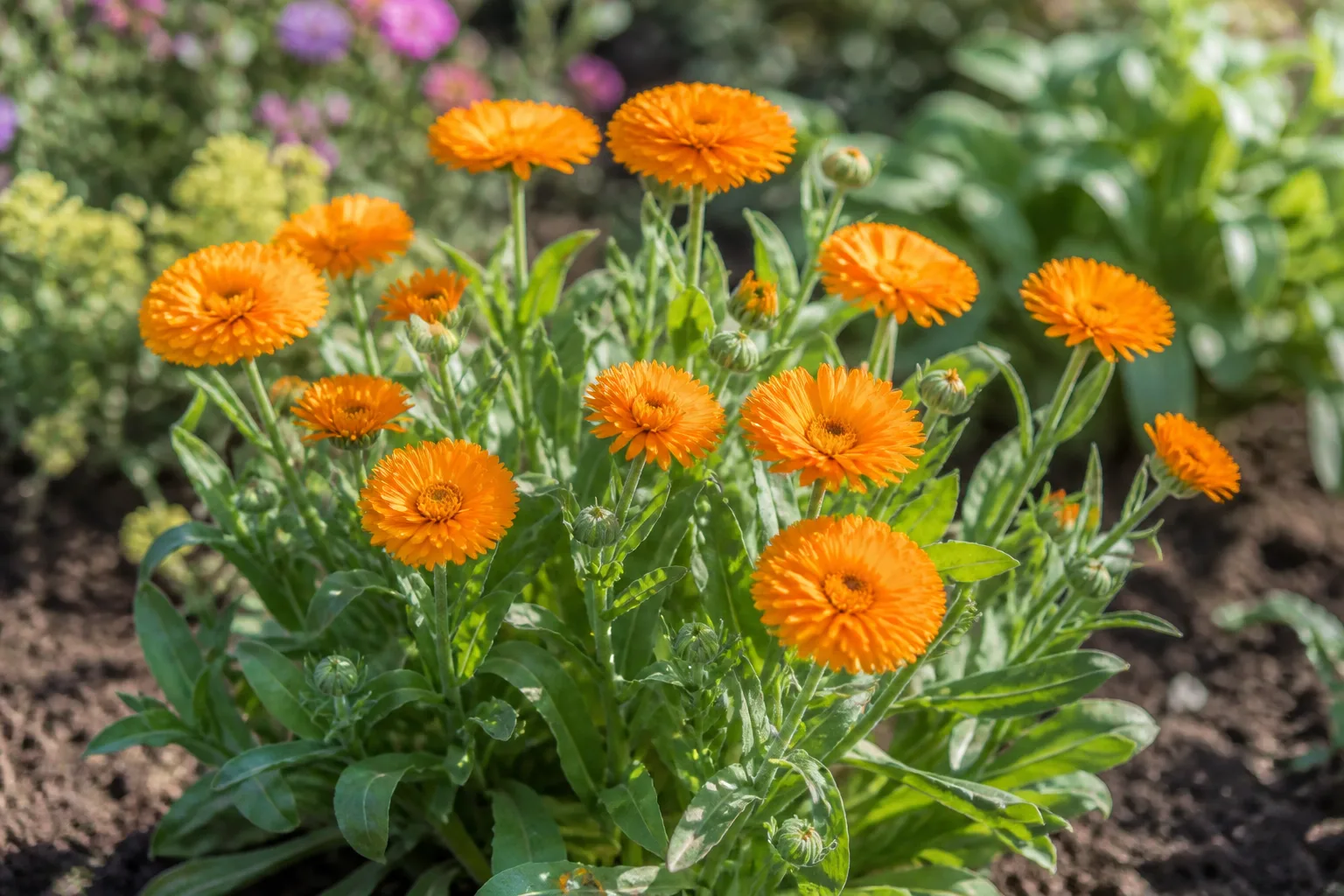
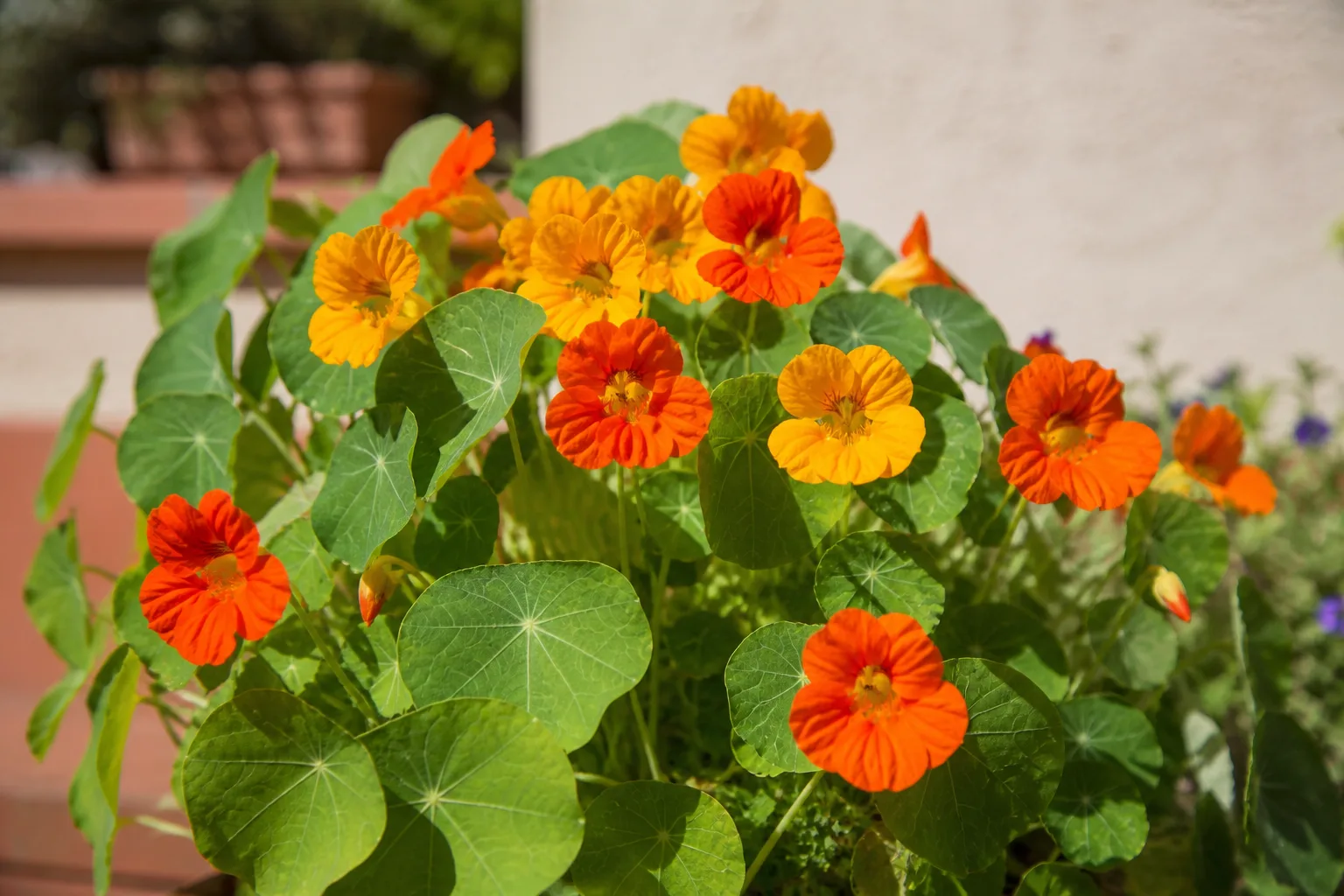
Trap crops need a sacrifice zone: nasturtiums along the outer edge of cucumber beds, or calendula beside tomatoes. Scout weekly; remove infested trap plants before pests spread. A trap crop in the center of a bed protects nothing—it only invites insects into the middle of your food.
Layout Mistakes That Cancel Companion Benefits
Monoculture with garnish: Twenty feet of tomato with two basil seedlings is not companion layout—it is decoration. Scale flowers and herbs to the bed.
Ignoring water and fertility: Corn and squash in a Three Sisters mound without compost or extra nitrogen produces weak beans and stunted corn. Layout without soil prep is a sketch, not a garden.
Shade stacking: Tall sunflowers west of peppers; indeterminate tomatoes south of lettuce in cool climates where lettuce already struggles with heat. Check mature heights on seed packets before you ink them in.
Same family, same bed, every year: Tomato beside pepper beside eggplant looks like diverse companions but shares pathogens. Rotate blocks even when companions “like” each other.
Allelopathy surprises: Black walnut kills many vegetables from root exudates. Some sunflowers inhibit neighbors. Keep experimental companions in containers first if you are unsure.
Overfilling square-foot grids: One squash plant needs 9–16 square feet at maturity—not one square with a “companion” carrot underneath. Give sprawlers their own block or path edge.
Conclusion
A strong companion planting vegetable garden layout starts with sun, drainage, and rotation blocks—not a Pinterest chart. Map beds to scale, separate incompatible pairs by two to three rows, and choose a system (rows, raised beds, square foot, Three Sisters, or vertical) that matches your space and stamina. Layer in flower strips and trap crops where you can maintain them, and treat companion planting as one part of integrated pest management—not a guarantee of record harvests.
Sketch your plan this week, label crop families for next year’s rotation, and plant the fast crops first. The best layout is the one you can weed, water, and harvest without fighting your own drawing.



