Radish Care Guide: Grow Mooli and Salad Types
Raphanus sativus
Grow radish and mooli in cool weather with loose well-drained soil, steady moisture, full sun, direct sowing, and frequent succession plantings for tender roots.
Radish Care Guide: Grow Mooli and Salad Types
Start with wateringThe most common care mistake for RadishWatering guide → →Radish care essentials
Light
Water
Keep the root zone evenly moist for tender, mild roots. Sandy or container mixes dry quickly, so check often and water before seedlings wilt.
Soil
Loose, well-drained loam or sandy loam with moderate fertility. Compacted or heavy clay produces rough, slow, or misshapen roots.
Humidity
Temperature
Fertilizer
About Radish
Radish is native to Mediterranean region, typically reaches 15–90 cm tall and 30–60 cm wide, depending on cultivar indoors, with very fast - many round types are harvest-ready in 3–6 weeks from sowing growth. Radish has a herbaceous annual vegetable growth habit and part of the Brassicaceae family. It is also known as Mooli, Daikon, Garden radish, and Table radish.
| Detail | Information |
|---|---|
| Also known as | Mooli, Daikon, Garden radish, Table radish |
| Native region | Mediterranean region |
| Mature size | 15–90 cm tall and 30–60 cm wide, depending on cultivar |
| Growth rate | Very fast - many round types are harvest-ready in 3–6 weeks from sowing |
| Growth habit | Herbaceous Annual Vegetable |
| Scientific name | Raphanus sativus |
| Family | Brassicaceae |
Radish Care Guide: Grow Mooli and Salad Types
Radish care is less about long-term pampering and more about catching a short cool-season window with loose soil and steady moisture. Raphanus sativus is an annual brassica grown for its swollen taproot and edible leaves, and many round salad types can go from sowing to harvest in roughly a month when weather cooperates. Get season, depth, and harvest timing right and most failures — bolted plants, pithy roots, or tops without filled radishes — become easier to diagnose.
If you garden in India or another warm lowland climate, treat radish as a cool-weather crop, not a monsoon filler beside heat-loving gourds. The Radish plant hub summarizes species traits and grower notes; this page is the full-path overview before you open topic-specific guides.
What radish is and how it grows
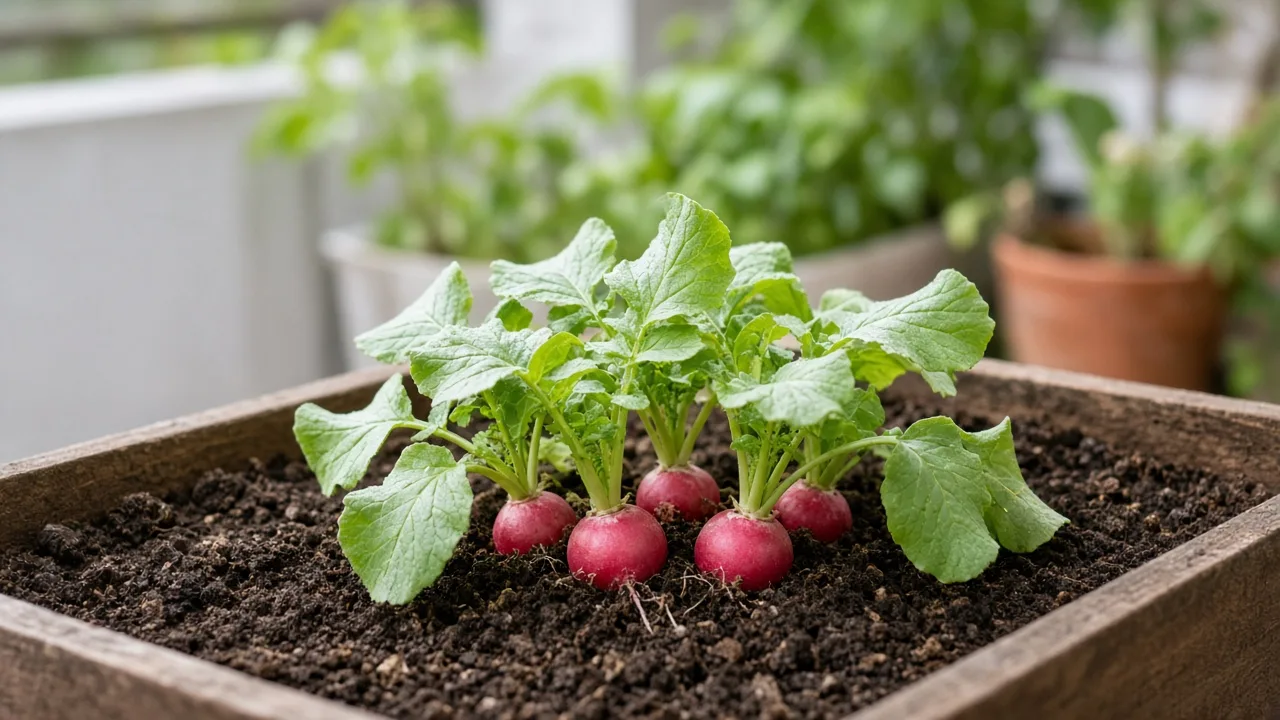
Garden radish is Raphanus sativus, a member of the mustard family (Brassicaceae) bred for crisp roots with peppery flavor. The RHS describes radishes as a cool-season crop that form rounded or elongated roots above a rosette of lobed leaves. Unlike long-lived houseplants, radish completes its life cycle in one season — sow, grow, harvest, then start again.
Raphanus sativus in the mustard family
The visible rosette is only half the story. Below ground, a taproot swells when soil is loose, competition is low, and temperatures stay mild. That anatomy explains why radish resents root disturbance, why compacted clay produces forked or slow roots, and why heat pushes the plant toward flowering instead of root filling. Wild relatives in the Mediterranean region are the botanical backdrop; kitchen cultivars range from cherry-sized rounds to long white mooli and daikon types.
Salad, winter, and oriental (mooli/daikon) types
Not every seed packet behaves the same. The RHS groups garden radishes into practical categories:
Salad (spring/summer) radishes are small, fast, and usually sown in spring and summer for harvest in weeks. Winter radishes are larger and slower, often sown in late summer for winter use. Oriental radishes — including Japanese, daikon, and mooli types — form long tapering roots and need more depth and a longer growing period.
Read the packet as the final authority on days to maturity, but choose the group before you prepare soil. A shallow balcony pot suits round salad types; forcing daikon into 15 cm of mix is how terraces end up with stunted or split roots.
Match the cultivar to your space
Radish failures often trace to space mismatch, not neglect. Length, shoulder shape, and days to maturity change how much depth and thinning room you need.
Container depth for round vs long roots
The RHS notes that short-rooted salad radishes can grow in containers at least 30 cm wide and deep filled with peat-free multi-purpose compost. Round cherry types can perform in somewhat shallower planters if harvested young, but long oriental roots need deep, friable mix — often 60 cm or more for full-sized mooli — with drainage holes that never block.
On a terrace, a tall grow bag or deep planter is a better investment than a wide shallow bowl that caps taproot growth. Match cultivar to depth before sowing; moving seedlings later rarely fixes a root that already hit a hard bottom.
In-ground beds and loose soil requirements
In the ground, radish wants open, sunny sites with soil worked loose and free of stones. The RHS warns that long-rooted winter and oriental types need deep soil — some roots exceed 30 cm in length. UC IPM recommends keeping soil at pH 6.0 to 6.5 and amending with organic matter so clay and sand both become easier to manage.
See the Radish soil guide for mix ratios, compost levels, and stone-removal steps before you open a seed packet.
Best season for radish in India and warm climates
Radish is a cool-season vegetable. UC IPM states that radishes grow best at roughly 50° to 70°F (10° to 21°C) with relatively short days, while above 80°F (27°C) bolting is common and roots are more often deformed. That temperature story matters more than copying a temperate-country sowing calendar verbatim.
India does not share one national sowing month. A Pune terrace, a Delhi raised bed, and a humid coastal plain differ in night temperature and drying speed. The transferable rule is to sow so most root filling happens while days are mild:
- Cool hill regions and north Indian winter often give the longest, most forgiving window for salad and mooli types.
- Warm lowlands usually do better in late autumn through winter, or in a brief pre-summer slot where nights stay cool enough for germination.
- Peak summer heat commonly triggers bolting even if seedlings survive; afternoon shade on containers and earlier harvest of baby roots are safer than waiting for supermarket size in hot soil.
Watch local soil temperature and forecast, then sow small batches every two to three weeks inside your cool period for staggered harvests, as the RHS recommends for continuous salad radish harvests. Avoid sowing salad types in hot, dry weather when plants tend to bolt before roots swell.
Radish care at a glance
Healthy radish foliage is lobed and upright; the diagnostic signs are underground and seasonal. Before you adjust fertilizer, confirm cultivar group, depth, moisture, and spacing. If tops are lush but roots stay pencil-thin, heat or excess nitrogen is a likelier culprit than “not enough feed.”
Light and root sizing
Radish performs best in full sun, though the RHS accepts light shade for salad types in midsummer. UC IPM lists at least 4 to 6 hours of sunlight daily as a minimum for vegetables in general; less light slows root development, so container growers should prioritize the brightest practical spot rather than a decorative corner.
Heat management is not the same as replacing a cool sowing window. Shade cloth or moving a pot may buy time, but it will not turn radish into a tropical rainy-season crop. For window placement, reflectivity on terraces, and grow-light limits, use the dedicated Radish light guide.
Water and even moisture
Radishes need consistent moisture through the root zone. The RHS emphasizes keeping soil evenly moist for rapid, even growth and succulent roots that do not split, while UC IPM notes that radishes should be kept moist throughout the root zone for proper growth and that dry or crusted seedbeds impair root development.
The failure modes are symmetric: soggy cool soil invites damping-off and poor flavor; drought or wild swings produce pithy, overly hot, or cracked roots. Sandy container mixes dry faster than in-ground beds, so check the top 2–3 cm often and irrigate before seedlings wilt. The Radish watering guide walks through wilt versus rot and the first fix when you are unsure.
Soil, pH, and fertility basics
Target loose, well-drained loam or sandy loam with moderate organic matter — not fresh manure that fuels leafy tops at the expense of roots. A neutral range around pH 6.0–7.5 matches both the LeafyPixels hub profile and extension guidance. Radish is a fast crop and rarely needs heavy feeding; light fertility details live in the Radish fertilizer guide.
Direct sowing, germination, and thinning
Radish is a direct-sow crop. Disturbed taproots and heat stress shorten the harvest window, so sow where the crop will finish rather than planning to move seedlings later.
The RHS reports germination in about 7–10 days for seed sown outdoors. Sow salad radishes about 1 cm deep and 2.5–5 cm apart, with roughly 15 cm between rows. Larger winter and oriental types need wider spacing — often 15 cm or more between plants after thinning.
When seedlings crowd, remove weaker plants early until spacing matches the cultivar. Snipping extras beats pulling neighbors and breaking roots. For sowing cadence, edible seed pods, and saving seed limits, open the Radish propagation guide. The Radish repotting guide explains why “moving up a pot” is rarely the right frame for this annual.
Growing radish in containers and on terraces
Containers are an excellent way to control texture on paved terraces. Choose depth by cultivar, use a free-draining quality potting mix with mature compost, and never block drainage holes. Expect more frequent watering than in-ground beds, and thin on schedule so airflow stays good around the rosette.
In hot districts, move pots to catch morning sun, shield roots from radiant heat off walls, and harvest baby salad roots early rather than fighting summer stall. Round cultivars are the honest choice when depth is limited. If you need step-by-step depth tables and mix tweaks, pair this page with the Radish soil guide and Radish watering guide.
Harvest timing and quality
Speed is the point — and the risk. UC IPM notes that radishes typically reach harvest in 3 to 6 weeks after planting depending on variety, and that roots left too long may crack, turn tough, or grow more pungent. The RHS advises harvesting salad radishes young, in as little as four weeks from germination, when roots are about 2.5 cm in diameter; early spring sowings may take six to eight weeks.
Pull when shoulders show at the soil surface and flavor is crisp. Delayed harvest, heat, and flowering make roots woody or overly spicy. Edible leaves and flowers are a bonus, but stripping too many leaves from a root crop can reduce quality. If plants bolt, seed pods are edible on some types, but for kitchen roots it is usually faster to start the next cool-season succession.
Leaf trimming for kitchen use is not ornamental pruning; see the Radish pruning guide for how to handle tops at harvest without storage mistakes.
Common radish care mistakes
Sowing in peak heat produces flowers instead of roots. If days stay above roughly 80°F, pause salad sowings or choose cooler microclimates and heat-tolerant cultivars where available.
Harvesting too late turns mild rounds hot and pithy. Set a calendar reminder at sowing time based on packet days, not guesswork.
Shallow soil for mooli or daikon caps length and encourages forked roots. Deepen mix or switch cultivar.
Crowding seedlings yields tops without usable roots. Thin early to packet spacing.
Uneven watering splits roots and invites bolting in dry spells. Containers amplify swings — check them daily in warm wind.
Overfeeding nitrogen grows lush leaves while roots lag. Confirm season and water before doubling fertilizer.
Pets, contact irritation, and kitchen use
Radish is grown for the kitchen, not as a verified pet-safe ornamental. NC State Extension classifies Raphanus sativus with low-severity poison characteristics for humans, noting contact dermatitis from isothiocyanates in leaves and roots. That edible-crop profile does not establish veterinary safety; the ASPCA database does not provide a species-specific radish listing. Prevent unrestricted pet grazing and ask a veterinarian before deliberately offering the plant as feed.
Wash harvests, avoid soil splash, and follow any pesticide label restrictions if you treat brassica pests.
When to use this page vs other Radish guides
Use this overview to choose season, cultivar depth, and the direct-sow workflow. When one variable needs depth, open the matching topic page: light for sun and heat management, watering for moisture diagnostics, and soil for mix, pH, and compaction fixes.
Use fertilizer when growth is pale after temperature and water look correct. Use propagation for sowing cadence and seed handling, repotting for why radishes stay in one final container, and pruning for harvest-time top management — not hedge trimming.
Related Radish guides
Start at the Radish plant hub for the species profile and grower notes. Terrace growers should read Radish watering next because pots dry faster than raised beds. Before your first sowing, read Radish soil and Radish propagation together — soil prep and seed placement are one continuous job for straight roots.
Conclusion
Good radish care is season-led, depth-aware, and harvest-fast. Sow in cool weather into loose, well-drained soil; keep moisture steady; thin on time; and pull roots when they reach usable size. In India, success usually means using the coolest realistic local window and repeating small sowings rather than forcing one planting through peak heat.
When roots stall or bolt, fix temperature, spacing, soil texture, and watering swings before chasing fertilizer. The cluster guides below this overview carry the step-by-step detail for each lever.
How to care for Radish?
When should you water Radish?
Keep the root zone evenly moist for tender, mild roots. Sandy or container mixes dry quickly, so check often and water before seedlings wilt.
- Press a finger 2–3 cm into the mix - Sandy or container mixes dry quickly, so check often and water before seedlings wilt.
- water when it feels barely damp rather than wet or dusty dry - Sandy or container mixes dry quickly, so check often and water before seedlings wilt.
- Drain excess water - Sandy or container mixes dry quickly, so check often and water before seedlings wilt.
What soil works best for Radish?
Loose, well-drained loam or sandy loam with moderate fertility. Compacted or heavy clay produces rough, slow, or misshapen roots.
- 50% quality potting mix or screened loam - Loose, well-drained loam or sandy loam with moderate fertility.
- 30% mature compost
- 20% perlite, coarse sand, or fine bark for aeration - Loose, well-drained loam or sandy loam with moderate fertility.
Grower notes for Radish
Match the container to the cultivar
Round salad radishes need only about 15–20 cm of depth, while daikon or mooli types need loose soil at least 60 cm deep. Shallow pots suit cherry types; forcing long roots into short, dense mix leads to forked or stunted harvests. Sow where the crop will finish rather than planning to move seedlings later.
Treat radish as a cool-season crop
Raphanus sativus grows fastest in mild weather. In hot Indian lowlands, use the cooler sowing window and choose heat-tolerant cultivars where available. Bolting and woody roots follow heat stress, drought, or age, so plan short successions instead of one long planting.
Keep moisture steady, not soggy
Even moisture produces the best flavor and texture. Light, sandy mixes need more frequent checks than heavy garden soil. Water at the soil surface, thin crowded seedlings for airflow, and avoid letting pots sit in standing water after irrigation.
Give enough sun for root sizing
Full sun is ideal, but radish can tolerate partial shade if it still receives at least about 4–5 hours of direct light. Less light slows root development, so container growers should prioritize the brightest practical spot rather than a decorative corner.
Sow little and often
Direct-sow seed about 0.5–1 cm deep for small round types and slightly deeper for large roots. Thin small varieties to roughly 3–8 cm apart and give daikon more room. Repeat sowings every two weeks during suitable weather keep harvests coming as earlier plantings bolt or are pulled.
Harvest by size, not patience
Pull roots when they reach usable size and the shoulders begin to show above the soil. Delayed harvest, heat, and flowering make roots woody or overly pungent. Edible leaves and flowers are a bonus, but repeated leaf stripping can reduce root quality on plants grown mainly for the taproot.
Edible crop - handle and limit pet access
Radish is grown as human food, but NC State notes low-severity contact irritation from isothiocyanates in leaves and roots. Prevent unrestricted pet grazing and ask a veterinarian before offering it as feed.
NC State Extension classifies Raphanus sativus as low severity for human contact dermatitis from isothiocyanates. That edible-crop profile does not establish veterinary safety for cats, dogs, or other pets.
Watering Radish
For Radish, press a finger 2–3 cm into the mix; water when it feels barely damp rather than wet or dusty dry and water check daily in shallow containers or hot weather; water when the upper 2–3 cm is just beginning to dry. Cool-season crops in the ground need less supplemental water; increase checks during warm, windy spells that speed drying.
| Detail | Information |
|---|---|
| How often | Check daily in shallow containers or hot weather; water when the upper 2–3 cm is just beginning to dry |
| How to check | Press a finger 2–3 cm into the mix; water when it feels barely damp rather than wet or dusty dry |
| Seasonal changes | Cool-season crops in the ground need less supplemental water; increase checks during warm, windy spells that speed drying |
Signs of overwatering
- seedlings collapsing at the soil line
- yellowing lower leaves in cool, wet conditions
- soft or cracked roots with poor flavor
Signs of underwatering
- limp foliage midday
- soil pulling away from the pot edge
- pithy, overly hot, or woody roots
Soil & potting for Radish
Use a mix of 50% quality potting mix or screened loam, 30% mature compost, 20% perlite, coarse sand, or fine bark for aeration for Radish. Good drainage is essential; saturated soil encourages damping-off and poor root quality. Target soil pH around 6.0–7.5. Repot no routine repotting - direct-sow this annual into its final bed or container at the correct depth for the cultivar, ideally in cool season - spring or autumn sowing windows, before heat or hard frost stress the crop.
| Detail | Information |
|---|---|
| Recommended mix | 50% quality potting mix or screened loam, 30% mature compost, 20% perlite, coarse sand, or fine bark for aeration |
| Drainage | Good drainage is essential; saturated soil encourages damping-off and poor root quality |
| Soil pH | 6.0–7.5 |
| Repotting frequency | No routine repotting - direct-sow this annual into its final bed or container at the correct depth for the cultivar |
| Best season to repot | Cool season - spring or autumn sowing windows, before heat or hard frost stress the crop |
Signs it needs repotting
- seedlings are overcrowded and need thinning, not transplanting
- the container is too shallow for the chosen cultivar
- mix stays waterlogged despite careful watering