Radish Fertilizer Guide: When and How to Feed
Radish Fertilizer Guide: When and How to Feed
Radish Fertilizer Guide: When and How to Feed
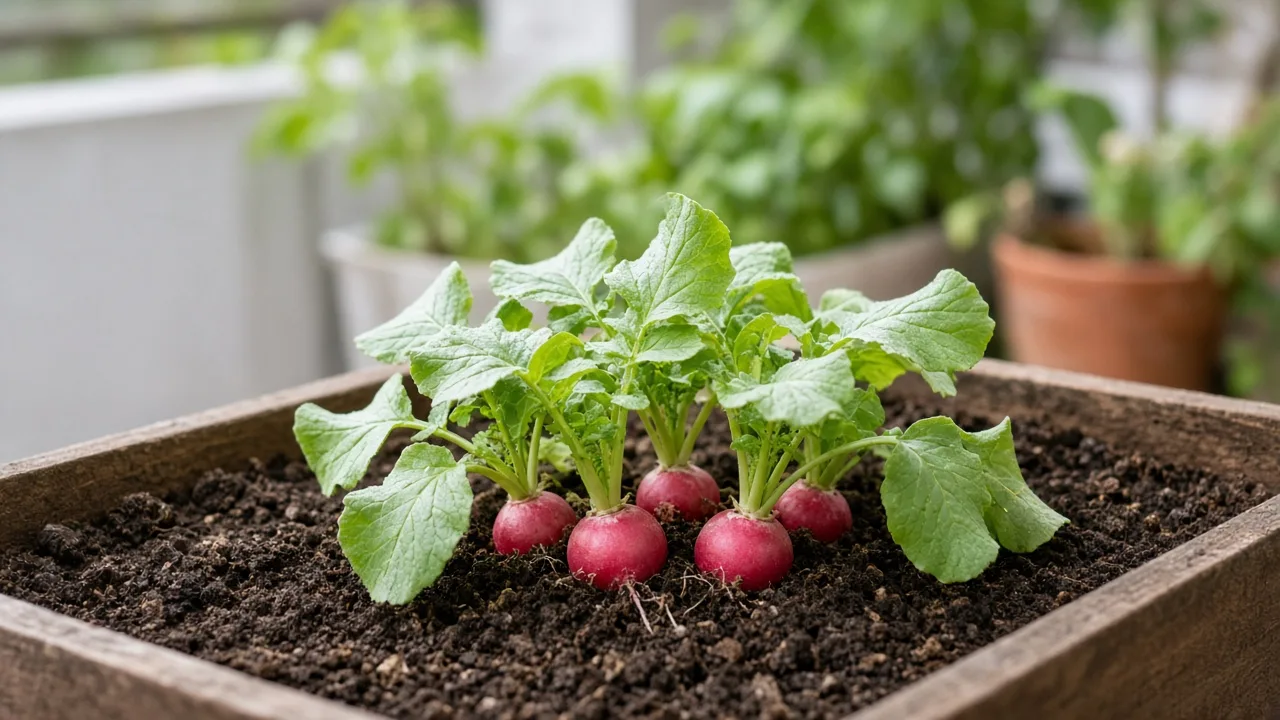
Radish (Raphanus sativus)—table radish, mooli, or daikon—is one of the fastest kitchen-garden crops you can sow, yet most fertilizer mistakes still show up in the root, not the label on the bottle. A forest of dark green leaves above a pencil-thin or hollow taproot usually means nitrogen arrived at the wrong rate or the soil was already rich, not that the plant is starving. Round salad types can be harvest-ready in roughly three to six weeks in cool weather; long mooli types need more depth and time, but the same biology applies: you want steady early growth and even root swell, not a late-season leafy explosion.
The practical rule matches other root crops: build fertility with mature compost and loose soil before sowing, then add bottled feed only to fill a gap you can see or measure. On many in-ground beds that already received compost or well-rotted farmyard manure (FYM), extra nitrogen is optional. On a shallow terrace pot filled with “premium” potting mix, the opposite problem appears—pre-charged fertilizer plus weekly liquid feed can burn seedlings or produce rank tops before the root ever sizes.
This page covers when, what, and how much to feed radish. For mix recipes, drainage, and depth for daikon, start with the Radish soil guide. For moisture that moves nutrients safely into roots, see Radish watering. For sowing depth, thinning, and succession planting, use Radish propagation and the Radish overview.
Why radish feeding is a short cool-season decision
Unlike tomatoes or ash gourd, radish rarely stays in the ground long enough for a complex multi-stage feeding program. You are working inside a narrow cool-weather window where the plant moves from germination to usable root size in weeks, not months. That timeline changes every recommendation about side-dressing, slow-release granules, and “feed every Friday” calendars copied from fruiting crops.
Root fill beats leafy-green nitrogen habits
Spinach, fenugreek, and coriander reward steady nitrogen because you harvest foliage. Radish is different: the crop finishes on root diameter, texture, and mild flavor, not leaf volume. NC State Extension describes garden radish as a fast-growing annual vegetable in the mustard family, preferring moist, fertile, well-drained soil—fertility matters, but so does restraint. Trusted grow guides for root vegetables repeatedly warn that excess nitrogen shifts growth upward; Gardening Channel’s radish growing guide notes that over-fertilization is a common reason for heavy tops with little root.
Round salad radish vs long mooli and daikon timing
Cherry-sized round cultivars live on a stopwatch: if soil is cold enough and moisture stays even, roots can size before you have time for a second side-dress. Long mooli or daikon types need 60 cm or more of loose soil and a longer cool run, so they may benefit from one measured top-up mid-season—but only while leaves are actively growing and roots are still swelling. Heat, drought, and bolting end the feeding story regardless of cultivar; see Radish light for how sun and temperature interact with root quality.
Build fertility before direct sowing
Long before choosing an NPK ratio, improve the root zone. Radish expands a taproot quickly; compacted, stony, or freshly manured soil produces forked, cracked, or overly pungent roots even when fertilizer labels promise miracles. The RHS grow-your-own radish guidance recommends a fine, stone-free seedbed and notes that short-rooted salad types can be grown in containers at least 30 cm wide and deep filled with peat-free multi-purpose compost—structure and baseline fertility come first.
Compost and well-rotted organic matter
Mature compost worked into the top 8–12 cm supplies slow nitrogen, feeds soil biology, and holds moisture for shallow roots. UC IPM cultural tips for radish advise that manures and compost can be applied at about 1 pound per 4–5 square feet and worked in several weeks before planting so material decomposes. Many Indian kitchen-garden beds perform well with compost incorporated one to two weeks before sowing and no further nitrogen if leaves look healthy green after thinning.
Fresh manure, hot FYM, and forked roots
Fresh cow or poultry manure is high in available nitrogen and salts. Worked into a radish row at sowing, it encourages side roots, branching, and lush tops—the classic “all leaves, no bulb” harvest. If FYM is your main organic input, compost it until crumbly and earthy-smelling, then mix shallowly before planting. Never band hot manure directly under the seed line; pairing manure with a commercial nitrogen source without decomposition is specifically discouraged in UC IPM radish guidance.
pH, soil tests, and “moderate fertility” targets
Target roughly pH 6.0–7.5, as NC State Extension lists for neutral garden soil. Radish is not a hungry cucurbit; it sits in the middle of the demand range—neither a “never feed” crop nor one that needs weekly high-nitrogen doses. A soil test, where available, tells you whether phosphorus and potassium are already adequate so you do not keep adding balanced 10-10-10 out of habit. On alkaline terrace mixes, pale leaves may trace to pH or compaction before a fourth soluble feed helps.
Macronutrients radish uses in a fast crop
Think in three macronutrients, but apply them across days, not an entire fruiting season.
Nitrogen for early growth without rank tops
Nitrogen drives chlorophyll and top growth—useful while seedlings are small and slow in cool soil. Once tops are deep green and seedlings stand a few inches tall after thinning, additional high-nitrogen feeds rarely improve a round radish harvest. UC IPM states that when soil has been properly amended with compost or manures, the only nutrient needed may be nitrogen, if anything—and even that is optional on rich beds.
Phosphorus and potassium during root swell
Phosphorus supports early root establishment; potassium helps overall plant function as roots approach maturity. You do not need exotic “root booster” marketing language—a modest pre-plant balanced fertilizer or compost-only bed covers most home gardens. Gardening Channel suggests working about one pound of 10-10-10 or 16-20-0 per 100 square feet into soil just before planting on depleted ground—a rate you can scale down proportionally for a 1 m × 1 m terrace box.
Read NPK labels for root vegetables
The three numbers on a bag describe percentages of nitrogen, phosphate, and potash in that product, not what your soil already holds (Gardening Know How on NPK numbers). A 10-10-10 and a 5-5-5 are both “balanced,” but the first is twice as concentrated; dose must follow the label and your bed area.
Balanced pre-plant blends and scaling rates
For home gardeners without a soil test, a single light incorporation of balanced vegetable fertilizer before sowing is enough on lean sand or old potting mix. If compost was heavy, skip the bag entirely. UC IPM lists common blends such as 5-10-5 or 12-12-12 at 1–2 pounds per 100 feet of row when manure has not been used—again, scale to your actual row length or container volume rather than copying field numbers blindly.
Organic liquids, granules, and potting-mix surprises
Fish emulsion, seaweed extracts, and compost tea can supplement a pale crop, but demand half-strength dilution on young seedlings. Slow-release vegetable granules mixed into the top 5 cm at planting suit busy growers; read whether your bagged mix already includes fertilizer—doubling up is a common container mistake. Synthetic soluble feeds act faster but raise salt risk in small pots; pair them with consistent moisture from the Radish watering guide.
When to fertilize from sowing to pull
Align feeding with cool active growth, not waterlogged soil, heat stress, or plants already bolting toward flower.
Pre-sow incorporation in beds and raised rows
Two weeks before sowing, spread mature compost or a measured granular vegetable fertilizer across the bed and rake it into the top 8–10 cm. Keep concentrated product away from where seeds will sit. In-ground growers can follow UC IPM’s compost or mixed-fertilizer prep; container growers should use less total product because the volume of mix is small and salts do not disperse.
Side-dressing: worth it on a three-week crop?
After plants are 3–4 inches tall, UC IPM allows sidedressing nitrogen in narrow bands beside the row, watering thoroughly afterward—roughly 0.5–1 pound of nitrogen per 100 feet of row, or light frequent nitrogen every 3–4 weeks on longer-season plantings. For round salad radish in cool weather, many beds never need that step if compost was incorporated and leaves stay healthy. Consider one light band only if growth clearly stalls after thinning on depleted sand or a reused lean mix.
Terrace containers and grow bags in India
Sow mooli and table radish during the coolest practical window on your plain—often October–November or late winter into early spring depending on city. Shallow 15–20 cm pots suit round types; daikon needs depth as described in the Radish soil guide. After monsoon weeks of daily rain, pale foliage may reflect nutrients leached out, not true nitrogen hunger—let soil drain before any feed. The Old Farmer’s Almanac radish planting guide reminds growers that radishes prefer cool soil and even moisture; fertilizer cannot substitute for heat management on a west-facing terrace in April.
Direct sowing means Radish repotting is rarely relevant—disturbed roots and heat shorten the harvest window, so fertility work happens before seed, not after transplant shock.
Warning signs of over- and under-feeding
Over-feeding shows as crusty fertilizer on the soil surface, leaf tip burn, exceptionally dark tops with thin or hollow roots, or sudden cracking when irrigation follows a heavy dose. Pause all feeds, confirm drainage, and resume only at lower strength if new growth pales after several weeks of normal watering.
Under-feeding on depleted sand or year-old potting mix appears as overall yellowing, stalled seedlings after thinning, or roots that never reach expected size despite good light and moisture. Compost incorporation or one measured pre-plant dose usually corrects it; chronic pale leaves on heavy clay may need a soil test before piling on nitrogen.
Fertilizer cannot fix heat, drought, or late harvest
Bolting, woody texture, and excessive pungency follow heat, drought, age, and flowering—not a missing micronutrient spray. Once flower stalks elongate, more nitrogen will not restore a crisp salad root. In warm Indian lowlands, choose bolt-resistant cultivars, sow in the cool window, and harvest promptly when shoulders show above soil. Steady moisture from proper watering matters more than weekly feed for flavor.
When to use this page vs other Radish guides
Use this page when you are choosing what to feed, how much, and when after soil is prepared. For seedbed texture, pH, and depth for mooli, start with the Radish soil guide. For how often to irrigate so fertilizer does not burn roots, see Radish watering. Sowing depth, spacing, and thinning mechanics live in Radish propagation and the overview; repotting is rarely relevant because radish is direct-sown.
Related Radish guides
- Radish overview — cool-season habits, cultivar depth, and harvest timing
- Radish soil — loose, stone-free mixes for straight taproots
- Radish watering — moisture checks that make fertilizer safe
- Radish light — sun and heat limits that affect root fill
- Radish propagation — direct sowing and thinning without disturbing neighbors
Conclusion
Radish fertilizer is less about chasing high NPK numbers and more about restraint timed to a fast root crop. Build fertility with mature compost before sowing, use balanced or modest feeds only while plants are actively growing in cool weather, and stop when tops look dark green but roots lag—or when heat pushes the crop toward bolt. Soil tests, extension rate examples scaled to your bed, and your own leaf color beat any generic “feed every week” calendar, especially in containers where salts do not disappear on their own.