Radish Repotting Guide: Pots, Depth & Direct Sow
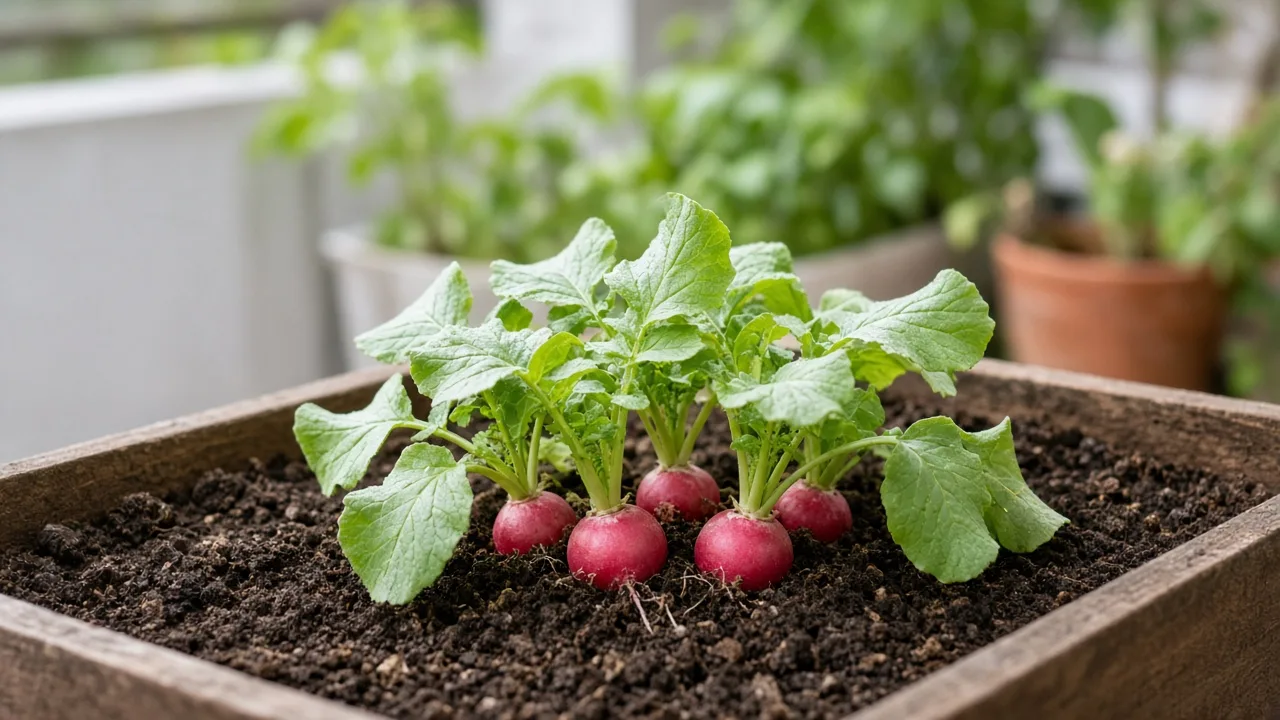
Radish Repotting Guide: Pots, Depth & Direct Sow
Radish Repotting Guide: Pots, Depth & Direct Sow
If you searched for radish repotting after lifting a tray of pink shoulders into a bigger pot, you already bumped into how Raphanus sativus actually grows. The edible radish is a swollen taproot on a fast cool-season annual, not a perennial you step up each spring. UF/IFAS Gardening Solutions recommends sowing seeds in rows directly in the soil and adds plainly that they do not recommend transplanting radishes, because moving plants disturbs the developing root. The practical job on a balcony is choosing a deep enough container before you sow, refreshing mix between short crops, and thinning in place—not mid-season upsizing the way you would a houseplant.
This guide covers when a mooli or salad-radish setup truly needs a change, how deep pots should be for round vs daikon types, how to replace soil without inviting rot, and what to do when overcrowding feels like a repotting problem but scissors and a new sowing are safer.
Radish repotting: the quick answer
Routine mid-season repotting is not part of radish care. Plan the final container at sowing time, keep drainage excellent, and when the crop ends empty, scrub, and refill the pot for the next direct seeding rather than upsizing while roots are swelling. NC State Extension notes that smaller varieties can grow in containers at least 2 quarts in size and 4–6 inches (about 15 cm) deep, while longer daikon/mooli types need deep soil—at least 2–3 feet—that raised beds or tall planters provide.
If seedlings are overcrowded, thin to the spacing on your seed packet instead of transplanting. If you need more roots, succession-sow a second pot every couple of weeks in cool weather, as extension guides suggest for extended harvest. Only attempt to move very young seedlings when absolutely necessary—ideally as a whole soil plug with minimal root disturbance, as container guides describe for rescue situations.
Why radishes are not a “repot every year” crop
Fast annual habit and harvest clock
Radishes are among the quickest vegetables you can grow from seed. NC State Extension lists 3–6 weeks to harvest for many types, with roots ready when shoulders peek through the soil. UF/IFAS targets harvest on the younger side, about 20–30 days after sowing for many varieties, with larger daikon taking several weeks longer depending on season. That short clock means a week of wilt after a rough move can eat the entire crop window.
Houseplant repotting assumes months of recovery. Radish culture assumes sow, thin, pull, repeat in the same season.
Root disturbance and transplant limits
Because the crop is the root, anything that bends, breaks, or checks the taproot shows up at harvest as forking, stunting, or pithy texture. UF/IFAS states transplanting disturbs the growing root—their guidance is to direct sow and thin. Gardening Channel likewise warns that delicate root systems make direct garden sowing preferable to starting indoors and moving plants later.
Epic Gardening allows a narrow exception: if you started indoors, minimize disturbance by sliding the whole cell plug out and planting a couple of inches apart. That is a rescue path, not the default for terrace growers.
Signs your container—not the seedling—needs attention
Repotting language still helps when the vessel or mix is wrong, even if individual plants should stay put. Watch the pot, not only leaf color.
- Water runs down the sides without wetting the root zone—common when a shallow window box dried out on a hot terrace. Cross-check habits on the Radish watering guide.
- The pot is too shallow for the cultivar; round types may stall above 15–20 cm of usable mix, while mooli needs far more depth per NC State Extension.
- Drainage holes are blocked or missing, leaving mix soggy while tops wilt—fix the container before blaming seed.
- Mix pulls away from the rim or smells sour after a wet spell—collapsed structure that needs a full refresh, not a gentle upsize.
- Crowded rosettes with small roots usually mean density, not “root bound” annuals. Thinning solves this more often than transplanting.
If poor drainage and wilting appear together, address the container or blend from the Radish soil page even when you are not lifting plants.
Choose the final pot before you sow
Depth by cultivar class (round, winter, daikon/mooli)
Match depth to the mature root length on the seed packet, not to how tall the leaves look today. Epic Gardening advises at least 6 inches (about 15 cm) of depth for most round salad radishes, while daikon types need roughly 2 feet (60 cm) of loose mix. Gardening Channel groups container advice as at least 8 inches (20 cm) for globe varieties and 10–24 inches for cylindrical types.
NC State Extension compresses the idea for small rounds: containers at least 2 quarts and 4–6 inches deep can work, but long cultivars still need 2–3 feet of friable soil. On Indian balconies, cherry-sized salad radishes fit 15–20 cm planters; long mooli belongs in deep grow bags or tall beds, not decorative shallow bowls.
Width, drainage holes, and balcony cachepots
Radishes do not need a tree tub, but they do need horizontal room to thin. Epic Gardening suggests a 12-inch (30 cm) diameter pot can hold about six radishes when thinned to 2–3 inches apart. Verify multiple drainage holes before filling. Use a saucer only if you empty runoff so roots are not sitting in water.
A pretty outer pot without holes is a cachepot—keep the planted liner removable so you never trap moisture against the crown.
Direct sowing vs trying to transplant
The reliable path is sow 0.5–1 cm deep for small rounds (deeper for large roots) in the final mix, keep the surface evenly moist until emergence, then thin. NC State Extension recommends ¼–½ inch depth for smaller cultivars and up to 1 inch for larger ones, with thinning small types to 1–3 inches and large types to 4–6 inches. UF/IFAS advises seeds no more than ¼ inch deep and succession sowing every few weeks for continuous harvest.
Moving established taproots mid-season is a gamble, not standard culture—especially in heat when plants bolt and roots turn woody, as NC State Extension notes for stressed plants.
The narrow whole-plug exception
If someone else started trays too thickly, slide the entire plug into prepared mix without crumbling the root ball, plant a few inches apart, and shade lightly for several days. Epic Gardening describes turning cell trays upside down and squeezing gently until plugs release. Expect some losses and odd shapes; a fresh direct sowing in a correctly sized pot often outperforms nursing stressed plants with only weeks left on the clock.
Container depth and cultivar matching
Depth is the non-negotiable variable for container mooli and table radish alike. Shallow decorative planters suit quick salad harvests harvested young; they are a poor match for long daikon unless you treat the crop as baby roots. Oversized volumes are not automatically better—a huge wet tub in cool, cloudy weather can stay cold and stagnant. Right-size to cultivar and refresh between crops instead of chasing one perpetual mega-container.
When depth is limited, choose round or heat-tolerant salad types and accept smaller roots rather than forcing long cultivars into 15 cm of mix—forking and stunting follow predictable physics, not bad luck.
Best season to set up or refresh a radish pot in India
Radish is a cool-season crop in hot climates. Set up or scrub pots at the start of your local cool sowing window, not during peak summer when disturbed roots recover slowly and flowering makes roots harsh. NC State Extension frames spring and fall as prime seasons; on many Indian terraces that translates to autumn through winter in the north and winter into early spring in warmer lowlands—align with your packet and local frost-free dates rather than calendar hype.
Match light to season: full sun in cool months, and afternoon shade or a movable pot when heat pushes toward bolting, as container guides recommend for summer stretches. Coordinate with the Radish light page so heat stress is not mistaken for a “too small pot.”
How to refresh a container between crops
Between harvests, full soil replacement is the closest analogue to “repotting” radishes. Old mix may harbor flea beetles, salt buildup, or collapsed structure. Empty the planter, brush away debris, wash with mild soap, rinse, and dry. Refill with fresh, free-draining blend before the next sowing.
Do not reuse compacted, stone-filled mix—work loose material to the depth your cultivar needs and pick out grit that causes forks. Light fertility belongs in the blend from the start; see Radish fertilizer before dumping extra nitrogen into a refreshed pot after a failed transplant.
Thinning is spacing work, not repotting
When seedlings crowd the surface, snip extras at soil level or pull only when young enough that neighbours will not be disturbed—extension thinning ranges of 1–3 inches for small types and 4–6 inches for large types from NC State Extension are the target. UF/IFAS reminds you to thin per the seed packet so roots can size.
If the pot is still too dense after thinning, harvest young roots early or start a second container on a staggered schedule instead of transplanting survivors. Detailed sowing spacing lives on Radish propagation.
Aftercare if you had to move young radishes
Water immediately with room-temperature water, firm mix gently around the plug without burying the crown, and keep plants out of harsh midday sun for several days. Hold fertilizer until new growth looks steady. Expect delayed root filling; if the crop clock is almost done, direct sowing anew may beat nursing wilted trays.
Compare wilting despite moist mix and stalled growth with careful watering per the Radish watering guide before assuming the new pot size was wrong.
Common balcony mistakes that look like repotting problems
Starting in tiny cups “to repot later” lets the taproot hit the wall before you move the plant. Decorative pots without holes trap water—use cachepots only. Upsizing during peak heat pairs disturbed roots with fast-drying foliage and bolting. Sowing daikon in 15 cm planters then blaming fertilizer—depth was wrong from day one. Leaving old root chunks in refreshed mix creates new fork points.
Treating microgreen trays as transplant stock without depth planning produces leggy tops and no usable roots unless you harvest greens only.
When not to move or upsize radishes
Skip disturbance when roots are near harvest size—loosen and pull instead of repotting. Avoid moves during active heat stress when containers already dry twice daily. Do not transplant leggy, overcrowded trays that should have been thinned weeks ago; sow anew.
If the only issue is wanting a prettier outer pot, slide the entire intact planter inside a cachepot without disturbing roots. Yellowing lower leaves late in a cool season may be normal senescence, not a call for a bigger pot.
When to use this page vs other Radish guides
Use this page when the question is container choice, soil refresh between crops, overcrowding, transplant limits, or post-move wilting—not daily watering or feeding. Use Radish watering for moisture checks and seasonal adjustments. Use Radish soil for mix ratios, pH, and bed preparation depth. Use Radish light for sun, shade, and bolting pressure. Use Radish fertilizer for low-nitrogen feeding. Use Radish propagation for sowing depth, succession timing, and seed handling. Start at the Radish overview if you have not yet matched cultivar to pot depth.
Related Radish guides
- Radish overview — cultivar choice, season fit, and harvest timing
- Radish watering — germination moisture and established plant checks
- Radish soil — loose, stone-free mixes for beds and pots
- Radish light — full sun on terraces and heat management
- Radish fertilizer — feeding without pushing leafy growth
- Radish propagation — direct sowing, succession, and spacing
Conclusion
Radish repotting is really container planning and soil renewal, not periodic upsizing of a long-lived plant. Choose a deep enough pot for salad rounds vs mooli before you sow, direct-seed into that final mix, and refresh the entire container between fast crops. Thin in place, succession-sow for continuous harvest, and treat any plug transplant as a whole-root, minimal-disturbance exception with realistic odds of forked roots. That approach matches how Raphanus sativus actually grows and keeps balcony radish crisp without the wilt-and-bolt cycle that follows mid-season moves.