How to Propagate Radish from Seed
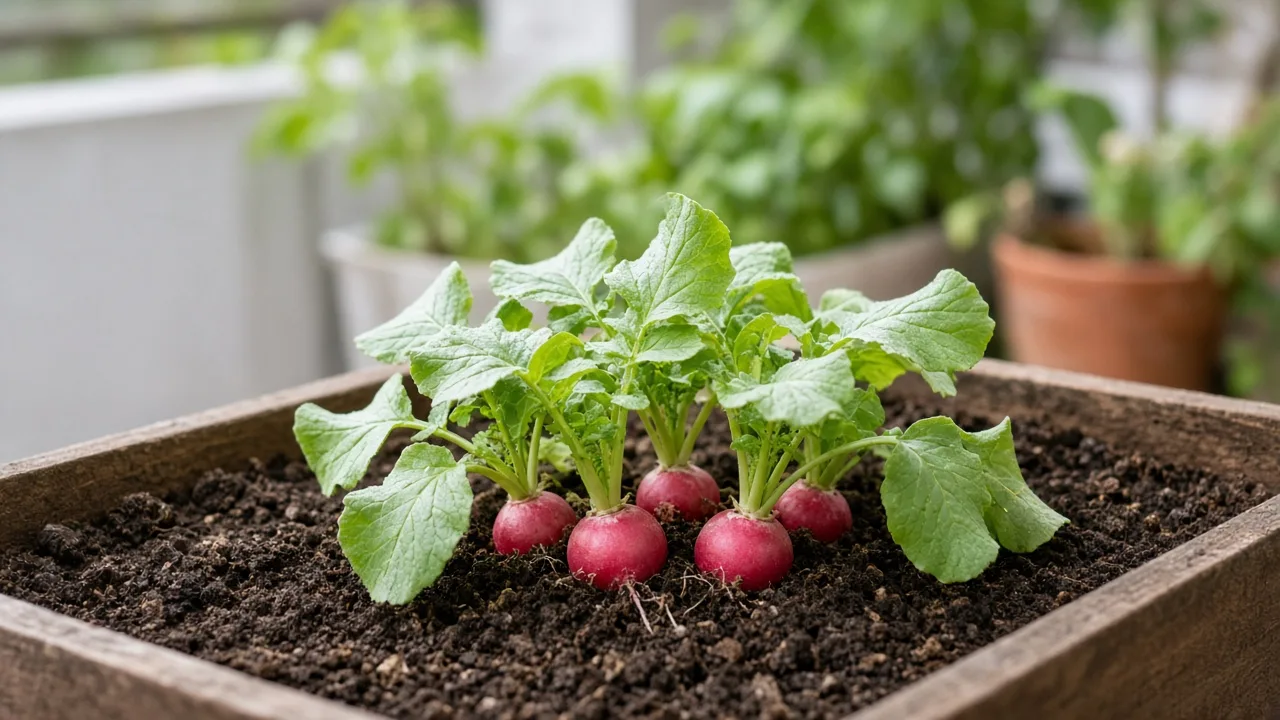
How to Propagate Radish from Seed
How to Propagate Radish from Seed
Garden radish (Raphanus sativus), including salad types, mooli, and daikon, is propagated almost exclusively from seed sown where the root will finish growing. The RHS radish guide describes salad radishes as quick crops from seed, ready in as little as four weeks when weather stays cool and moisture stays even. Unlike mint or coleus, you cannot root a stem cutting or divide a crown and expect a crisp taproot underground. That constraint shapes every decision on this page: final site or pot depth, sowing depth, germination watering, thinning, and how often to resow.
Best propagation method for Raphanus sativus
Direct sowing into loose, well-drained soil or a deep container is the reliable propagation path for radish. One seed yields one plant and typically one harvestable root when spacing, temperature, and moisture cooperate. Cornell’s vegetable growing guide lists radishes as propagated by seed with germination in about three to four days under favorable conditions and harvest in three to six weeks for spring types—propagation success here is really seed-to-root establishment, not vegetative cloning.
For how cultivar choice and seasonal habit fit your garden, start with the radish overview.
Why cuttings, divisions, and root scraps fail
Radishes are fast annual root vegetables (winter types may behave more like biennials in seed production). They do not produce adventitious roots from leaf or stem tissue the way many houseplants do. Burying pieces of harvested root or suspending a top in water may sprout leaves, but that does not rebuild a marketable taproot on a predictable timeline. If you need edible roots, buy fresh seed and direct sow rather than treating kitchen scraps as propagation stock.
Match the sowing plan to your radish type
Propagation details diverge by cultivar group. Pick the type before you measure row spacing or pot depth.
Salad and spring radishes
Small, round salad radishes are the fastest group. The RHS recommends sowing seeds about 1 cm (½ in) deep, 2.5–5 cm (1–2 in) apart in the row, with 15 cm (6 in) between rows, in spring, early summer, and late summer—not in hot dry weather when plants bolt. Germination typically takes 7–10 days. Harvest often arrives in four to six weeks when roots reach about 2.5 cm (1 in) across.
Winter, daikon, and mooli radishes
Winter and oriental types (Raphanus sativus var. niger and long-rooted cultivars) grow more slowly and need more space and depth. Cornell’s vegetable growing guide notes winter radishes often need two months or more to mature and produce larger cylindrical roots. The RHS sows winter types in July or August about 2 cm (1 in) deep, thinning to roughly 15 cm (6 in) apart. NC State Extension advises planting large cultivars up to 1 in deep, thinning big varieties to 4–6 in, and providing at least 2–3 ft of loose soil for long roots—shallow balcony pots are a common reason mooli propagation “fails” despite good germination.
Edible-pod and rat-tail types
Some cultivars are grown for spicy seed pods, not swollen roots. The RHS sows these 1 cm deep and 10 cm apart in spring and summer; they tolerate heat better than salad types and reward regular pod picking. Propagation is still by seed, but your success metric is pod production rather than root diameter.
When to sow radish seed
Timing is about cool weather and steady soil moisture, not copying a temperate calendar verbatim. Cornell’s vegetable growing guide describes best growth in cool, moist weather roughly 50–65°F, with quality dropping as heat and dryness increase.
Cool-season windows in India and similar climates
In warm Indian lowlands, sow during the coolest practical months when you can keep seedbeds evenly moist without baking the surface. At elevation or in a mild winter, you may have a longer window; on hot terraces, prioritize afternoon shade on containers and twice-daily moisture checks during the first week after sowing. NC State Extension illustrates a regional pattern—mid-February to early April for spring and August to mid-September for fall—which you should translate to your local cool slot rather than copy literally.
Succession sowing for steady harvests
Because individual roots mature quickly and then turn pithy, sow small batches every one to two weeks during suitable weather. Cornell’s vegetable growing guide recommends additional plantings every 1–2 weeks until average temperatures reach the mid-60s °F, then resume when weather cools in fall. The RHS successional sowing approach matches that rhythm for salad types in its climate; in yours, pause succession sowings once heat makes germination and root swell unreliable.
Transplanting vs direct sowing
Radishes tolerate transplanting better than carrots, but direct sowing still wins for speed and root quality. Disturbed taproots, heat stress, and delayed thinning shorten the already short harvest window. If you start modules indoors for pest protection, transplant at the two true-leaf stage with minimal root handling and immediately irrigate—then expect slightly slower swell than an in-place sowing. The radish repotting guide explains why this crop is usually sown into its final bed or container instead of moved later.
Depth, spacing, and container depth before you sow
Decide cultivar and container before sprinkling seed. Salad types can finish in pots roughly 30 cm wide and deep per RHS guidance; NC State suggests containers at least 4–6 in deep for small types but 2–3 ft of mix for long daikon. Match depth to root shape so propagation does not fail after perfect germination. Spacing and mix preparation tie directly to the radish soil guide.
Prepare the seedbed for direct sowing
Rake beds to a fine tilth, remove stones, and moisten before sowing so irrigation does not wash seed into deep cracks. Avoid fresh high-nitrogen bands at sowing time—Cornell’s vegetable growing guide warns that nitrogen-rich manure close to planting may produce lush tops at the expense of roots. Fertility timing for established plants lives in the radish fertilizer guide.
Step-by-step: direct sow radish
- Choose the final sunny site — full sun speeds root sizing; see the radish light guide if balcony shade is unavoidable.
- Mark a shallow drill — a pressed furrow helps place seed evenly at depth.
- Sow at cultivar depth — about ½ in for small types and up to 1 in for large roots per NC State; the RHS uses 1 cm for salad types.
- Cover and water lightly — mist or gentle irrigation until the surface stays evenly damp, not flooded.
- Label sowing date and cultivar — fast emergence makes it easy to forget which row is which; optional radish markers in a slow-germinating neighbor row (parsnip, carrot) can show line location until harvest.
- Plan thinning early — overcrowded seedlings compete for diameter and airflow.
Germination temperature, timing, and moisture
Cornell’s vegetable growing guide cites germination temperatures roughly 55–85°F with emergence in 3–4 days under ideal conditions; the RHS allows 7–10 days in typical outdoor sowings. The critical propagation window is surface moisture: do not let the top centimeters dry out until seedlings are up. After emergence, shift to the deeper moisture checks in the radish watering guide rather than constant surface soaking.
Thin seedlings for full roots
If seeds were sown thickly, remove weaker seedlings until salad types stand at least 2.5 cm (1 in) apart and winter or oriental types have 15 cm (6 in) or more per RHS spacing guidance. Use thinnings in salads when they are large enough to handle. Crowded tops without room to expand often yield small or misshapen roots even when germination looked perfect.
Aftercare from emergence to harvest size
Uniform moisture without wild wet–dry swings keeps roots mild and reduces splitting. Salad types are often harvest-ready in three to six weeks per NC State when shoulders peek above the soil; delay, heat, or flowering drive woody texture and sharp flavor. Leaf trimming for kitchen use—not propagation—is covered in the radish pruning guide.
Saving radish seed at home
Radishes can set seed after flowering, especially if plants bolt in heat. Open-pollinated varieties may produce viable seed when pods dry on the plant; hybrids may not breed true. Isolate types if you need predictable roots, and remember that bolting ends root quality for eating—treat seed saving as a side project, not your main propagation plan for kitchen harvests.
Common propagation failures and first fixes
No emergence after ten days: soil was too hot, too dry, or crusted. Gently scratch the row, resow fresh seed, and cover with fine compost while keeping moisture even.
Seedlings collapsed at the soil line: suspect damping-off in wet, stagnant mix—improve airflow and avoid saturating the surface. NC State’s damping-off bulletin describes fungi attacking overwatered seedlings at the hypocotyl.
Plants flowered with no usable root: heat, drought, or late sowing of winter types. Remove bolting plants unless you want pods, and resow in the next cool window.
Long roots forked or stunted in pots: depth or compaction—not bad seed. Choose a deeper container or loose bed before the next sowing.
When to use this page vs other Radish guides
Use this propagation guide for seed sowing, germination moisture, thinning, succession timing, cultivar-specific depth, and basic seed saving. Use the radish overview for identity, mature size, and seasonal expectations. After plants are established, move to watering, soil, light, and fertilizer for ongoing care.
Use repotting to understand final container choice, and pruning for leaf harvest—not for creating new plants.
Related Radish guides
- Radish care overview — cultivar groups, cool-season habit, and harvest basics
- Radish light needs — sun for stocky seedlings and root sizing
- Radish watering — even moisture from germination through harvest
- Radish soil — loose depth for round and long types
- Radish fertilizer — avoiding lush tops at the expense of roots
- Radish repotting — sowing into the final container instead of moving later
Conclusion
Propagate radish by direct sowing fresh seed into loose, appropriately deep soil during cool weather, then guard seedbed moisture until fast seedlings emerge. Thin on schedule, resow small batches every week or two while conditions allow, and match pot or bed depth to salad, mooli, or pod types before you plant. Cuttings and kitchen-top experiments do not replace seed for edible roots; when germination or spacing goes wrong, fix the seedbed and resow in the next cool window rather than relying on stressed transplants.
Related tool
Try the Propagation Success Calculator with radish pre-selected to estimate needs for your setup.